全国统一大市场建设

Search documents
六大品种期货集体跌停!焦煤、碳酸锂等遭遇监管限仓重击
Sou Hu Cai Jing· 2025-07-29 00:41
Group 1 - The domestic commodity futures market experienced significant volatility, with major contracts for coking coal, glass, coke, soda ash, industrial silicon, and lithium carbonate hitting the limit down [1] - Over ten varieties, including alumina and polysilicon, saw declines exceeding 3%, marking a shift from previous bullish sentiment driven by "anti-involution" policy expectations to panic selling [1][3] - The implementation of position limits by exchanges was a direct catalyst for the market reversal, coinciding with a period of heightened market enthusiasm [3] Group 2 - From July 1 to July 25, polysilicon futures prices surged by 52.31%, glass futures by 33.79%, and lithium carbonate futures by 28.46%, while coking coal futures rose by 49.44% over seven consecutive trading days [3] - The position limits imposed by exchanges directly impacted speculative trading, forcing speculative funds to reduce positions and exit the market [3] - Despite the market's sharp adjustment, the fundamental logic behind the "anti-involution" policy remains, aiming to improve the current state of vicious competition and promote the orderly exit of backward production capacity [4] Group 3 - The steel industry, as a key focus of regulatory measures, is expected to see a year-on-year production decline of 5% in the third quarter, which will positively affect the fundamentals of coking coal as a crucial raw material [4] - The situation in the new energy supply chain is more complex, with lithium and silicon facing weak fundamentals but supported by strong policy expectations, leading to a rebound despite high inventory levels and oversupply [4] - The glass industry faces ongoing supply pressure, with float glass production maintaining around 156,800 tons per day, and demand showing no significant improvement, leading to a pessimistic market outlook [5]


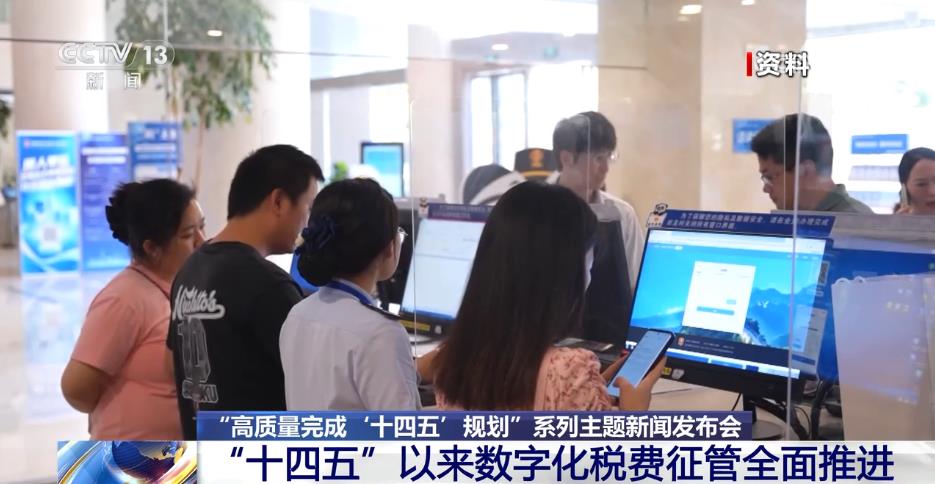
90%的高频业务3分钟内办结 我国办税缴费便利度持续提升
Yang Shi Wang· 2025-07-28 23:57
Core Viewpoint - The State Taxation Administration has reported significant advancements in tax administration efficiency and digitalization during the "14th Five-Year Plan" period, enhancing taxpayer convenience and compliance [1][2]. Group 1: Digital Tax Administration - A new unified electronic tax bureau has been launched, enabling 90% of high-frequency tax payment services to be completed within 3 minutes, with 70% of taxpayers able to finalize their tax declarations with minimal input [2]. - As of June 2023, over 61 million taxpayers have utilized electronic invoices, accounting for more than 90% of the total invoicing amount [4]. Group 2: Market Regulation and Compliance - The tax authorities have made progress in promoting a unified national market and have actively addressed tax-related issues in irregular investment promotions since early 2024 [5][6]. - To standardize tax policy enforcement and reduce discrepancies, the tax administration has issued a series of policy execution guidelines and unified administrative penalty standards across six major regions [8]. Group 3: Support for Foreign Investment - Over 630 billion yuan in profits from foreign enterprises have benefited from reinvestment tax incentives during the "14th Five-Year Plan" period, with new policies introduced to further support foreign reinvestment [10]. - The implementation of "immediate refund" services for departure tax refunds has improved efficiency by over 40%, bolstering inbound tourism and consumption [10].
经济增速与税收增速为何背离?
和讯· 2025-07-28 10:40
Core Viewpoint - The relationship between economic growth and tax revenue is complex, with economic performance generally driving tax revenue, but short-term discrepancies can occur due to various factors [1][3]. Group 1: Tax Revenue Projections - During the "14th Five-Year Plan" period, total tax revenue is expected to exceed 155 trillion yuan, accounting for approximately 80% of total fiscal revenue [2]. - Tax revenue, excluding export tax rebates, is projected to surpass 85 trillion yuan, while social insurance fees and land transfer fees collected by tax authorities are expected to exceed 70 trillion yuan [2]. - The proportion of direct taxes is anticipated to exceed 40%, reflecting an enhancement in the redistributive function of the tax system [2]. Group 2: GDP and Tax Revenue Discrepancies - In the first half of 2025, China's GDP is expected to grow by 5.3%, while tax revenue is projected to decline by 1.2%, resulting in a "scissor difference" of -6.5% [2]. - For 2024, the discrepancy is forecasted to widen to -8.4%, with tax revenue declining by 3.4% and GDP growth at 5% [3]. - The long-term correlation between GDP growth and tax revenue is generally positive, but short-term deviations can occur due to tax policies and economic structure [3]. Group 3: Influencing Factors on Tax Revenue - Price changes, particularly in the Producer Price Index (PPI), significantly impact tax revenue, with PPI fluctuations historically correlating with tax revenue changes [3]. - The PPI is expected to decline by 2.2% in 2024, with a notable drop in the second half of the year due to international commodity price fluctuations and insufficient domestic demand [4]. - In the first half of 2023, the PPI decreased by 2.8%, with June marking a significant decline of 3.6% [5]. Group 4: Structural Changes in Tax Sources - The decline in traditional industries, such as real estate, has led to a slowdown in tax revenue growth, while emerging sectors, although growing, currently contribute less to overall tax revenue [5]. - The "14th Five-Year Plan" emphasizes the need for a unified national market, which is expected to address these structural changes [5]. Group 5: Tax Administration and Compliance - The tax authorities are focusing on addressing irregularities in investment attraction, with a management system led by the State Taxation Administration [6]. - Since early 2024, there has been a crackdown on tax-related issues in irregular investment practices, ensuring that local tax authorities do not obstruct normal business operations [6].

国家税务总局:积极助力全国统一大市场建设
Zhong Guo Xin Wen Wang· 2025-07-28 09:11
Group 1 - The core viewpoint emphasizes the commitment of the tax authorities to resist behaviors that undermine tax fairness and disrupt market order, while actively supporting the construction of a unified national market [1][2] - Tax authorities are required to align their efforts to support the unified market construction, conducting special governance on tax issues related to irregular investment promotion since early 2024, and monitoring over 3,000 suspicious leads for timely investigation and correction [1] - A series of tax policy execution guidelines have been issued to standardize enforcement services and prevent discrepancies in tax enforcement across regions, ensuring a unified standard for administrative penalties [1] Group 2 - Tax authorities are advancing legal fairness by adjusting the tax location for personal transfers of restricted shares from the securities account opening location to the location of the listed company, preventing tax evasion through account transfers [2] - Clear operational standards have been established for regions implementing regional tax incentives, ensuring that only qualifying enterprises and individuals can enjoy these benefits, thus preventing unfair competition [2] - The implementation of the "Internet Platform Enterprises Tax Information Reporting Regulations" promotes lawful tax payment and compliance among platform operators, fostering fair competition between online and offline markets [2]
利好来了!外资,出手!
天天基金网· 2025-07-28 05:12
Core Viewpoints - Global asset management giants are increasing investments in China's real estate market, signaling confidence in the sector's recovery [1][4] - Multiple foreign financial institutions have raised their economic growth forecasts for China following the release of Q2 economic data, indicating a positive outlook for the Chinese economy [2][3] Group 1: Foreign Investment in Real Estate - Schroders Capital has partnered with Zhejiang-based Xizi International to launch a private real estate equity investment fund with a total scale of approximately 3 billion yuan, focusing on prime office buildings and consumer infrastructure in core cities of the Yangtze River Delta [4] - Other foreign entities, such as the Hans Group and Temasek, are also establishing private funds in China, reflecting a growing interest and investment willingness from foreign institutions [4][5] Group 2: Economic Growth Forecasts - Morgan Stanley and Goldman Sachs have adjusted their GDP growth forecasts for China, with increases of 0.3 and 0.6 percentage points for 2025, respectively [2] - Nomura and JPMorgan have also raised their GDP growth predictions for 2025 by 0.5 and 0.7 percentage points, respectively, indicating a consensus among foreign institutions regarding China's economic recovery [2] Group 3: Manufacturing Sector Insights - China's manufacturing sector remains a highlight of the economy, supported by a complete industrial system that provides a solid foundation for both domestic and global markets [3] - The acceleration of high-end, intelligent, and green development in manufacturing is drawing significant attention from foreign analysts, particularly in sectors like semiconductors and electric vehicles [3] Group 4: Market Trends and Investment Strategies - The A-share market has shown a recent upward trend, with a slight adjustment observed on July 25, indicating a potential for continued growth [6] - Analysts suggest that the "anti-involution" policy could become a sustained investment theme, with a focus on high-quality housing and core urban areas [7]




李迅雷:下半年增量政策可期
Sou Hu Cai Jing· 2025-07-27 09:09
Economic Growth and Policy Support - The GDP growth rate reached 5.3% in the first half of 2025, with a target of 5% for the entire year, indicating sustained policy support for the economy [1] Fiscal Policy - The fiscal policy will remain stable with an emphasis on optimizing existing resources without increasing deficits or issuing new bonds, focusing on precise measures to enhance employment and foreign trade [2] - The government plans to adjust budget allocations and expedite the issuance of special bonds for next year to support major economic provinces [2] Monetary Policy - A moderately loose monetary policy is anticipated, with potential for slight reductions in reserve requirements and interest rates, while maintaining stability in the RMB exchange rate against the USD [3] - Structural policy tools will be accelerated to support technological innovation and boost consumption [3] Consumer Promotion - Policies aimed at promoting consumption will focus on optimizing trade-in programs and removing unreasonable restrictions on consumer spending, particularly in major cities [4] - Initiatives may include childcare subsidies and local consumption voucher policies to stimulate spending [4] Investment Stability - Infrastructure investment is expected to rebound, supported by the completion of an 800 billion yuan construction project list and the initiation of significant projects [5] - New policy financial tools will be implemented to support key sectors such as digital economy and green transformation [5] Real Estate Market - The focus will shift from large-scale expansion to optimizing existing urban infrastructure, with an emphasis on safety and disaster prevention [6] - Attention will be given to policies that support the construction of quality housing and the revitalization of idle real estate [6] Employment and Market Governance - Policies to promote employment and consumption are expected to be rolled out, particularly in the service sector, as part of a broader effort to enhance market governance and competition [7]
7月26日周六《新闻联播》要闻25条
news flash· 2025-07-26 12:35
智通财经7月26日电,今天《新闻联播》主要内容有: 1、【新思想引领新征程】全国统一大市场建设迈向纵深 释放发展新活力; 2、李强出席2025世界人工智能大会暨人工智能全球治理高级别会议开幕式并致辞; 3、【锲而不舍落实中央八项规定精神】一体推进学查改 用实绩实效检验学习教育成果; 4、上半年我国西部地区进出口规模创新高; 5、上半年我国民航运输规模再创新高; 6、瓜果飘香 特色农产品助力农民增收; 7、各地有序推进城市更新 打造宜居城市; 8、职业技能培训激发就业新活力; 9、世运会火种采集仪式和火炬传递活动举行; 10、多地积极应对强降雨天气; 11、第三批支持消费品以旧换新资金已下达; 12、第八届进博会签约展览面积超33万平方米 筹备工作稳步推进; 13、6月份深圳进出口规模居全国内地城市首位; 14、我国最大的煤岩气田年产能突破25亿立方米; 15、全球最大单体绿氨装置投产; 16、湖北双柳长江大桥顺利合龙; 17、巴方称以军袭击加沙地带多地致89人死亡; 18、以媒称以军销毁大批加沙地带边境因滞留变质的人道物资; 19、英法德三国呼吁尽快结束加沙地带人道主义灾难; 20、俄称过去一周控制多个定居点 ...
7月26日《新闻联播》主要内容
Xin Lang Cai Jing· 2025-07-26 12:12
Group 1 - The construction of a national unified market in China is advancing, releasing new development vitality [1] - In the first half of the year, the import and export scale of China's western regions reached a record high [4] - The civil aviation transportation scale in China also reached a new high in the first half of the year [5] Group 2 - The third batch of funds to support the replacement of consumer goods has been allocated [11][11] - The eighth China International Import Expo has signed exhibition areas exceeding 330,000 square meters, with preparations progressing steadily [11] - China's largest coalbed methane field has achieved an annual production capacity of over 2.5 billion cubic meters [11] Group 3 - The global largest single green ammonia facility has been put into operation [11] - The Hubei Shuangliu Yangtze River Bridge has successfully completed its main structure [11] Group 4 - The vocational skills training is stimulating new employment vitality [8] - Various regions are actively promoting urban renewal to create livable cities [7]
新华时评·年中经济观察丨让外贸发展韧性更强活力更足
Xin Hua She· 2025-07-25 10:52
Core Insights - China's foreign trade report for the first half of the year shows a total import and export value of 21.79 trillion yuan, a year-on-year increase of 2.9% [1] - Exports of high-end equipment grew by over 20%, and the export of "new three types" products accelerated [1] - The report highlights the need for innovation and market vitality to enhance the resilience of foreign trade amid a challenging global environment [1] Group 1 - The total import and export value of China's goods trade reached 21.79 trillion yuan, with growth in trade with over 190 countries and regions [1] - The focus is on transforming price and cost advantages into technological comparative advantages, emphasizing the value of "Made in China" [1] - There is a call to enhance the independent controllability of strategic emerging industries and to strengthen core technologies [1] Group 2 - The strategy includes diversifying trade markets to mitigate risks associated with reliance on single markets [2] - The importance of responding to diverse consumer demands with customized products is emphasized to maintain competitiveness [2] - China's deep integration into global supply chains is highlighted, showcasing mutual benefits in various sectors such as textiles and agriculture [2]
这个省废止了招商引资激励办法
母基金研究中心· 2025-07-25 09:28
Core Viewpoint - The article discusses the ongoing transformation and standardization of investment attraction practices in various regions of China, emphasizing the shift from traditional tax incentives and subsidies to a more structured approach involving government investment funds and the promotion of local industries [3][4][5]. Group 1: Regulatory Changes - The Guangxi Zhuang Autonomous Region has abolished the "Guangxi Investment Attraction Incentive Measures," reflecting a broader trend of regulatory compliance in local investment practices [1][4]. - The implementation of the "Fair Competition Review Regulations" since August last year prohibits preferential treatment for specific operators without legal basis, aiming to create a level playing field [1][2]. Group 2: Shift in Investment Attraction Models - The traditional "tax incentive" and "reward-subsidy" models for attracting investment are being phased out, giving rise to a "fund investment" model that emphasizes the linkage between investment and attraction [5][6]. - Local governments are increasingly establishing specialized investment funds that prioritize collaboration with local investment attraction departments, indicating a shift towards a more integrated approach [5][6]. Group 3: Local Practices and Innovations - Guangdong Province has introduced measures that incorporate attracting venture capital and industry funds into the performance evaluation of investment attraction efforts, showcasing a commitment to nurturing local industries [7]. - The emergence of "merger and acquisition attraction" as a new strategy highlights the evolving landscape of investment attraction, with local governments exploring opportunities to acquire listed companies to strengthen local industries [9]. Group 4: Future Outlook - The emphasis on nurturing endogenous industrial ecosystems suggests that investment institutions will continue to find opportunities in project evaluation and investment empowerment, despite the shift away from investment attraction as a primary goal for government funds [8]. - The central government's focus on standardizing and increasing transparency in investment attraction practices is expected to further shape the landscape, leading to more structured and accountable approaches [10].