ESG

Search documents
从“附加题”到“必答卷”中国企业ESG实践创新趋势报告即将发布
Sou Hu Cai Jing· 2025-12-13 08:13
| | | 中国企业ESG实践12个重点议题 | | --- | --- | --- | | 维度 | 序号 | 议题名称 | | 环境领域 | 1 | 应对气候变化(包括温室气体排放管理、增强气候适应能力等) | | | 2 | 污染防治与生态系统保护(包括污染物排放、废弃物处理、生态系统和生物多样 | | | | 性保护、环境合规管理等) | | | 3 | 资源利用与循环经济(包括能源利用、水资源利用、循环经济等) | | | 4 | 乡村振兴与社会贡献(包括乡村振兴项目、公益事件捐款、公益重点领域、共同 | | | | 富裕投入、一带一路及海外履责等) | | | 5 | 产品责任与科技伦理(包括质量管理体系、客户满意度、召回管理、投诉管理、客 户隐私管理、数据安全管理、负责任营销等) | | 社会领域 | 6 | 供应链管理(包括供应链安全、平等对待中小企业、产品和服务安全与质量等) | | | 7 | 员工权益与发展(包括劳工管理、员工参与度与多样性、职业健康与安全) | | | 8 | 新质生产力(包括创新管理策略、创新目标、杰出创新项目及奖项;研发投入;环 | | | | 保创新技术等) | ...


让耐心资本敢于投入气候科技领域 2025中国可持续投资发展论坛在沪举行
Zheng Quan Shi Bao Wang· 2025-12-13 02:51
高金执行院长、会计学讲席教授、可持续投资研究中心理事长程仕军表示,当前,我们正站在一个由科 技重构未来的关键节点。全球可持续发展进程不断深化,以人工智能为代表的科技革命浪潮正蓬勃兴 起,这两股深刻影响未来世界发展格局的力量融合交汇。这就要求从根本上超越"先污染,后治理"的传 统路径,转而依托科技的颠覆性力量与金融的系统性赋能,共同构建一个更具韧性、更富效率、更为包 容的可持续发展新范式。在他看来,可持续未来的构建,离不开科技创新与绿色金融的协同共进。 联合国开发计划署可持续发展目标影响力指导委员会委员、招商银行原行长马蔚华说,攻克气候难题的 核心在于气候科技。气候科技是联合国气候变化框架公约定义的特定概念,指能减少温室气体排放、适 应气候变化影响、促进绿色低碳发展的一系列技术,覆盖能源生产、消费、存储、碳减排等全产业链。 针对全球气候融资缺口超2万亿美元、国内缺口同样较大的现状,马蔚华表示,气候科技攻关周期长、风 险高,部分基础理论研究可能长期无直接回报,需动员更多资本成为"耐心资本",不追求短期收益,注 重长期价值,与气候科技企业价值观保持一致,做好长期陪跑。他呼吁建立长期主义价值观、完善激励 约束机制与容 ...
2025年A股上市公司ESG评级分析报告
Sou Hu Cai Jing· 2025-12-13 02:05
Group 1 - The core viewpoint of the report is that A-share listed companies are experiencing a steady improvement in ESG performance, particularly among leading enterprises, while facing challenges in the transition from "disclosure-driven" to "performance-driven" approaches [1][7]. - The overall ESG rating of A-share companies is on the rise, with 14.13% of companies rated A- or above in 2024, a significant increase from previous years [2][15]. - The average ESG performance of the CSI 800 constituent stocks has grown by over 27% from 2018 to 2025, with the proportion of companies rated B+ or above increasing from less than 8% to over 81% [2][34]. Group 2 - There is a notable disparity in ESG performance across different industries, with water and environmental services, healthcare, and automotive manufacturing leading, while mining, information transmission, and real estate lag behind [3][19]. - The governance dimension scores the highest on average, while the environmental dimension remains a challenge for many companies, reflecting pressure in environmental data disclosure and actual performance [3][19]. - The disclosure rate of ESG reports among A-share companies has significantly increased, reaching 46.09% in 2025, with the average compliance with exchange guidelines exceeding 70% [4][19]. Group 3 - Climate change and governance issues are focal points, with many CSI 800 companies beginning to disclose carbon management goals, although few have set clear quantitative targets [5][19]. - Nearly 80% of companies have integrated ESG responsibilities into their board duties, but less than 30% link executive compensation to ESG performance [5][19]. - The management of supply chain issues remains relatively low-scoring, indicating a need for improvement in sustainable development across the industry chain [5][19]. Group 4 - The report indicates a positive correlation between ESG performance and long-term stock value, with ESG-leading companies showing excess returns compared to benchmark indices [6][30]. - Substantial ESG issues, such as energy consumption and emissions management, have a more pronounced impact on financial performance and stock prices in various industries [6][30]. - The overall ESG risk level is stabilizing, but the number of risk events remains high, indicating ongoing challenges in managing ESG risks [19].

安永:以“All in”姿态共绘绿色未来
Zhong Guo Jing Ying Bao· 2025-12-12 14:15
中经记者 杜丽娟 北京报道 (编辑:朱会珊 审核:朱紫云 校对:颜京宁) 依托"All in AI"战略,安永推出基于EY METIS平台的安永智能问答及智能风控平台"玄策"等AI工具, 将AI技术深度应用于风险管控与ESG治理,提升决策效率与透明度。 安永中国主席、大中华区首席执行官陈凯表示,安永大中华区已连续五年发布ESG报告,体现了安永积 极响应国家"双碳"目标和高质量发展战略的实践与探索。在全球可持续发展愿景和中国高质量发展交织 并行中,安永以"All in"的之志融入国家发展大局,以专业力量服务高水平对外开放,与时代同频,与 改革共振。 随着全球ESG发展进入标准趋同、监管强化与价值融合的新时期,中国在推动可持续金融、应对气候变 化等领域展现出积极行动力与国际影响力。 《安永大中华区2025财年环境、社会和治理报告》指出,2025财年,安永近期以"All in"战略推动业务 深度脱碳,远期通过自然友好实践,力争在2050年或更早实现净零排放。通过购买国际自愿碳标准项目 (VCS)及绿色电力证书,成功实现运营层面碳中和。 ...
上海交大高金严弘:多维深耕可持续发展领域 以研究、实践与交流助力ESG生态构建
Xin Lang Cai Jing· 2025-12-12 14:13
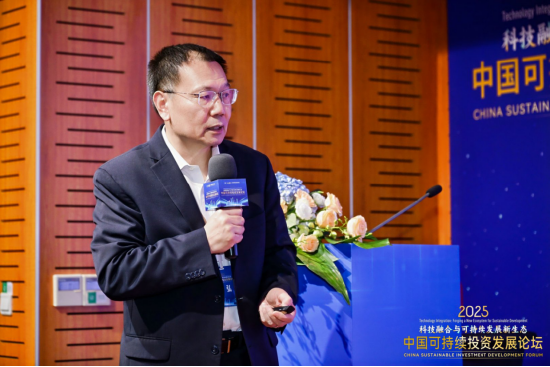
专题:2025中国可持续投资发展论坛 12月12日金融一线消息,2025中国可持续投资发展论坛今日召开,本次论坛的主题为"科技融合与可持 续发展新生态"。上海交通大学上海高级金融学院副院长、金融学讲席教授、可持续投资研究中心主任 严弘出席论坛并介绍了高金可持续投资研究中心最近一年的研究成果。 2025年中心应时代和行业之需开展了多项重大课题研究,完成了包括《2025上海ESG发展报告》《上海 市涉外企业ESG发展报告》《中国多层次REITsESG实践标准的设计和推广》在内的多项前沿课题,还 有一批专项研究正在紧锣密鼓推进中,如《沪滇协作框架下生物多样性保护机制研究》《生成式人工智 能如何影响企业估值:劳动力重塑的关键作用》等。中心聚焦金融赋能产业低碳转型、绿色价值创造等 议题举办多层次交流活动,以多渠道汇集国内外顶层智慧,探索引导资本投入可持续发展目标的最佳路 径与模式。 严弘表示,中心仍有多项在研项目持续推进,未来将继续深耕可持续发展领域,通过研究、实践与交流 的多元发力,为构建ESG良好生态、推动绿色高质量发展贡献力量。 责任编辑:曹睿潼 专题:2025中国可持续投资发展论坛 12月12日金融一线消息,2 ...
上财大滴水湖高金学院发布两大指数,为中国企业全球化装上“风险雷达”与“创新仪表”
Sou Hu Cai Jing· 2025-12-12 13:26
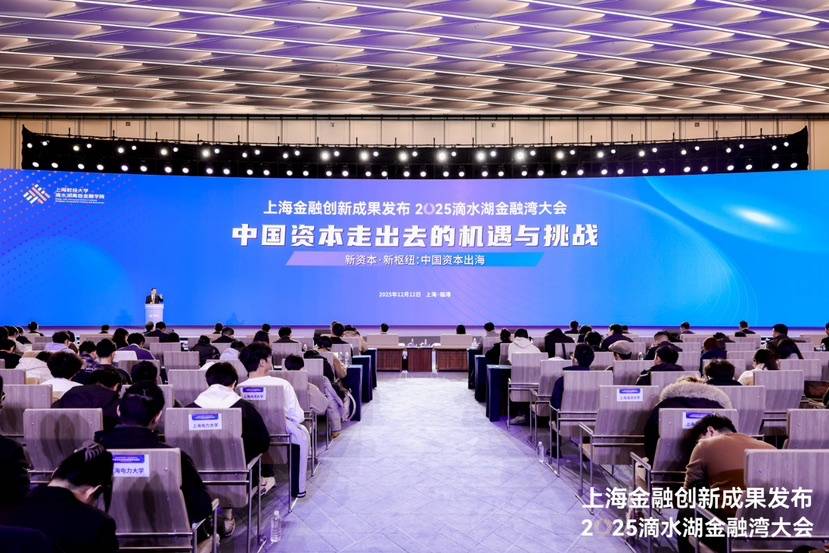
12月12日上午,上海财经大学滴水湖高级金融学院在"2025滴水湖金融湾大会·中国资本走出去的机遇与挑战"分论坛上 同步发布"中国科创金融指数"和"出海风险指数",分别从金融赋能新质生产力和出海风险防控两个维度,为中国企业 全球化提供全新解决方案,为中国企业全球化装上"创新仪表"与"风险雷达"。 指数背后的战略考量 在具体方法上,指数采用计量经济学分析模型,将五大维度的权重与其对实体经济实际贡献紧密关联,使指数体系更 能反映金融资源赋能产业后的真实成效。 出海风险指数的三大创新 "出海风险指数"对全球77个国家的出海风险进行了系统量化评估,其创新性体现在三个方面。传统风险指数往往更新 滞后,而该指数借助人工智能实时抓取政策文本和新闻舆情,使指数从"静态体检表"升级为"动态风险雷达"。 指数还将ESG、供应链、数字治理等新兴风险纳入框架,使企业能更精准评估不可见风险。这一设计契合了当前全球 产业链风险呈现的"高波动、强联动"特征。 指数采用鲜明的中国视角,通过"双边投资协定""对华关系"等指标,更契合中国企业的海外实践情境。指数发现,当 不同国家治理水平相近时,对华关系成为"风险调节器"。 中央金融工作会议提出 ...
东航物流可持续发展报告获“金蜜蜂”环境责任信息披露奖
Zhong Guo Min Hang Wang· 2025-12-12 12:40
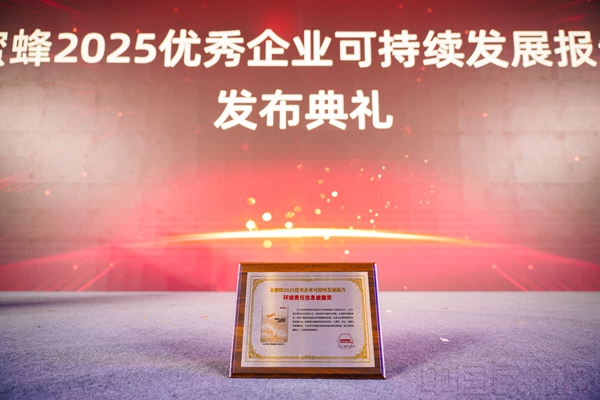
《中国民航报》、中国民航网 记者胡夕姮 报道:12月5日,第十八届中国可持续信息披露国际研讨会 暨"金蜜蜂2025优秀企业可持续发展报告榜"发布典礼在京举行。东航物流凭借其发布的《2024年可持续 发展(ESG)报告》,荣获"金蜜蜂2025优秀企业可持续发展报告·环境责任信息披露奖"。该奖项标志 着东航物流ESG报告的质量与规范性获得了权威肯定,也印证了公司在环境责任信息批露方面的实践成 效。 本次研讨会由金蜜蜂智库与中国可持续发展工商理事会联合主办,聚焦"全球标准与本土实践融合、自 然与气候风险应对"等核心议题,对企业可持续信息的实质性披露能力等提出更高要求。金蜜蜂智库自 2008年起已连续17年开展中国企业可持续发展报告评估,其构建的评价体系涵盖结构完整性、内容实质 性等六大维度和16项核心参数,在行业内具有广泛公信力。 此次获奖报告为东航物流发布的第三份ESG专项报告,以"创新领航 链接世界"为主题,紧密贴合航空 物流行业特色与企业发展战略。"创新领航"展现公司通过推进数字化转型、应用智慧系统以及创新商业 模式等一些列举措,系统构建航空物流新质生产力;"链接世界"则强调公司依托全球航线网络,积极融 入" ...

万物云“灵石”发布 以低碳、智慧提升资产回报
Zheng Quan Shi Bao Wang· 2025-12-12 12:36
Core Viewpoint - The company has launched the comprehensive commercialization of its "Lingstone 3.0" product, focusing on smart and low-carbon solutions to transition from a service-oriented model to a technology-driven approach in property management [1][2]. Group 1: Product Development and Features - "Lingstone 3.0" is positioned as the "AI brain for real estate management," integrating with various partners to form the "Lingstone Ecological Alliance" [1]. - The product has achieved commercial application in 44 scenarios and connects energy hardware clusters, enhancing energy management capabilities [2]. - The introduction of energy flow processing is key to helping property owners reduce costs and increase rental income through smart control of HVAC, elevators, and lighting [2]. Group 2: Financial Impact and ESG Opportunities - The company aims to leverage "Lingstone" for green finance and carbon trading opportunities, with high ESG-rated companies potentially reducing financing costs by 15% [3]. - A project at the company's headquarters demonstrated a return of 987,000 yuan from an investment of 215,000 yuan, showcasing the financial benefits of energy management [2]. Group 3: Future Plans and Market Expansion - The company plans to deploy 100,000 "Lingstone" devices nationwide, with a rental model priced at 18,000 yuan per month, promoting the concept of a "digital employee" [3]. - The strategic goal is to enhance property management efficiency and sustainability, transitioning from a service-focused model to a technology-driven approach [3].
从“单点输出”到“生态再造”:产业龙头企业家揭秘新出海范式
Mei Ri Jing Ji Xin Wen· 2025-12-12 11:29
Core Insights - The article discusses the historic moment for Hainan Free Trade Port as it prepares for full island closure operations, highlighting the significance of the 2025 14th Annual Development Conference for Listed Companies and the opportunities presented by the Hainan Free Trade Port [1] Group 1: New Paradigm of Chinese Enterprises Going Global - Chinese enterprises are evolving from competing on "products and costs" to focusing on "industrial chain capabilities and standard systems" for global expansion [1][2] - Nanshan Aluminum exemplifies the "chain-style going global" approach by establishing an industrial park in Indonesia, emphasizing a strategy of "chain operation, high-end manufacturing, and deep processing" [2] - The output of standards and regulations, as seen in the low-altitude economy proposed by Jifeng Technology, represents a shift towards exporting comprehensive operational standards rather than just products [3] Group 2: Integration of Green Standards - Shengxin Lithium Energy highlights the importance of meeting global ESG (Environmental, Social, and Governance) standards driven by major clients like BYD and Tesla, indicating a need for integrated resource, technology, and green standards in their global strategy [3] - The focus on carbon emission management and sustainable practices is becoming a critical aspect of the global expansion strategy for Chinese resource companies [3] Group 3: Future Competitiveness - Nanshan Aluminum is extending its high-end manufacturing advantages into the robotics industry, leveraging its expertise in aluminum alloy materials for lightweight applications [5] - Jifeng Technology aims to enhance its "ecological empowerment capability" by integrating regulations and ecological partners into its global expansion efforts, particularly in Indonesia's low-altitude economy [5] - Shengxin Lithium Energy emphasizes the importance of resource acquisition and development capabilities as the foundation for maintaining manufacturing advantages and market influence in the lithium battery sector [5][6]


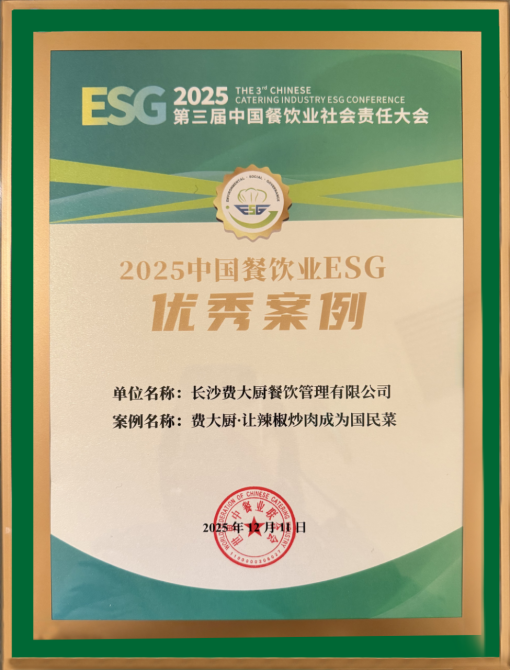
费大厨连续两年荣获中国餐饮业ESG优秀案例
Jin Rong Jie· 2025-12-12 11:05
Core Viewpoint - The company Fei Dazhu has been recognized for its commitment to Environmental, Social, and Governance (ESG) practices, receiving the "2025 China Catering Industry ESG Excellent Case" award for the second consecutive year, highlighting its role in promoting sustainable practices in the restaurant industry [1][4]. Group 1: Company Overview - Fei Dazhu is the first national Hunan cuisine chain brand to expand from Hunan, with over 200 direct-operated stores across major cities in China [3]. - The founder, Fei Lianghui, has over 20 years of experience in the culinary field, emphasizing the importance of chef talent development [3]. Group 2: Talent Development - The company has established a comprehensive chef training system, including a "school-enterprise training, professional training, internal assessment, and chef commitment" model to ensure that new store chef teams are composed of original staff from Hunan [3]. - Initiatives such as competitive salaries, internal skill competitions, and cultural heritage ceremonies have significantly enhanced the professional dignity and social recognition of chefs [3]. Group 3: ESG Practices - Fei Dazhu is actively engaged in multi-dimensional ESG integration, selecting high-quality ingredients like black pork and seasonal fresh peppers while optimizing its supply chain and exploring low-carbon operational paths [3]. - The company has innovated around its signature dish, spicy stir-fried pork with peppers, by pairing it with freshly cooked rice and lemon tea, enhancing the dining experience while maintaining high quality [3]. - In response to consumer demand for healthy eating, Fei Dazhu has upgraded its pork offerings to black pork and introduced a high-quality organic dish series, promoting green transformation in upstream agriculture [3]. Group 4: Industry Impact - The recognition of Fei Dazhu as an ESG excellent case for two consecutive years reflects the industry's acknowledgment of its long-term commitment to responsible practices and highlights the significant role of catering enterprises in serving the public and creating social value [4].