创新药

Search documents
科创板延续回调,科创板50ETF(588080)昨日“吸金”近3亿元
Mei Ri Jing Ji Xin Wen· 2025-12-10 06:52
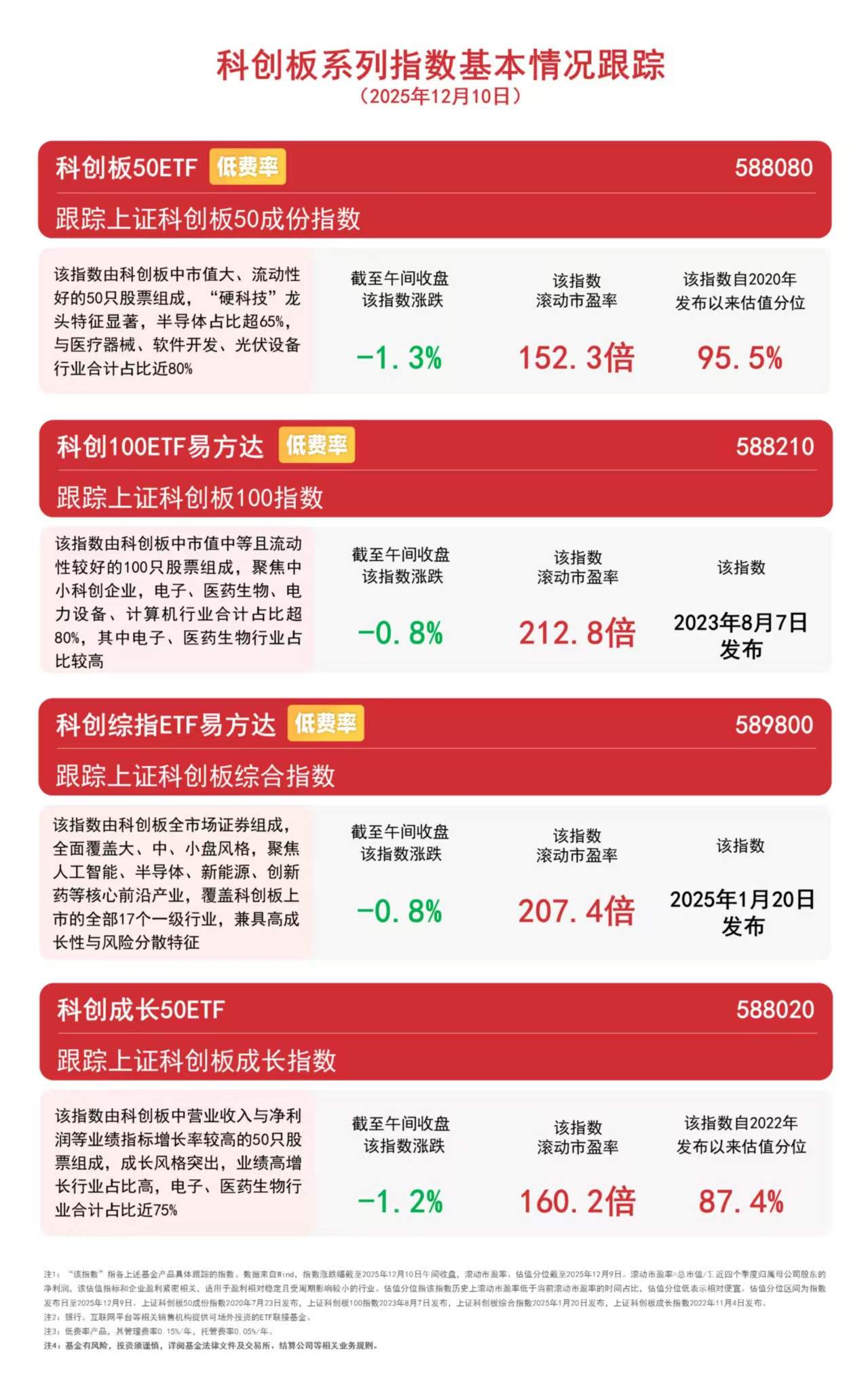
Core Viewpoint - The technology innovation sector is experiencing a decline, with major indices such as the Sci-Tech 100 Index and the Sci-Tech Comprehensive Index dropping by 0.8% and 1.2% respectively, while the Sci-Tech 50 Index fell by 1.3% [1][3]. Group 1: Index Performance - The Sci-Tech 50 Index saw a decrease of 1.3% as of the midday close [3]. - The Sci-Tech 100 Index and the Sci-Tech Comprehensive Index both declined by 0.8% [1][3]. - The Sci-Tech 50 ETF (588080) recorded a net inflow of nearly 300 million yuan yesterday [1]. Group 2: Sector Composition - The Sci-Tech 50 Index is composed of 50 stocks with significant market capitalization and liquidity, prominently featuring "hard technology" companies, with over 65% in the semiconductor sector and nearly 80% combined in medical devices, software development, and photovoltaic equipment [3]. - The Sci-Tech 100 Index focuses on 100 medium-sized stocks with good liquidity, primarily in the electronics, pharmaceutical, and electrical equipment sectors, which together account for over 80% of the index [3]. - The Sci-Tech Comprehensive Index covers all market securities in the Sci-Tech board, focusing on core industries such as artificial intelligence, semiconductors, new energy, and innovative pharmaceuticals, encompassing all 17 primary industries on the Sci-Tech board [3].

ETF盘中资讯 港股创新药水下盘整,520880逼近5个月低点!溢价率逆市走高,买盘资金汹涌
Jin Rong Jie· 2025-12-10 06:09
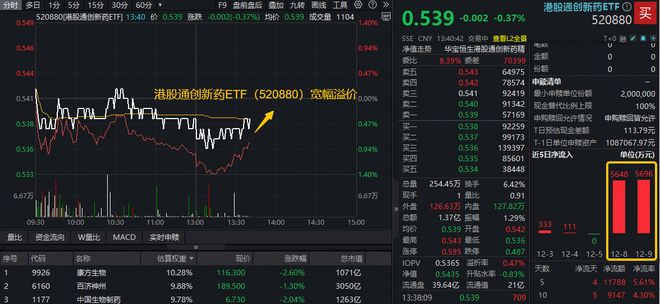
12月10日,港股创新药延续调整,核心标的港股通创新药ETF(520880)水面下方震荡,场内价格一度 逼近7月以来低点。阶段破位之际,低吸资金闻风而动,520880溢价飙升,显示买盘尤为活跃。 此前两日已有资金大举进场。数据显示,港股通创新药ETF(520880)近2日连续获超5600万元资金净 申购,合计超1.13亿元。 2、龙头占比大。前十大创新药龙头权重超72%,表征创新药硬核力量。 3、风险更可控。对流动性较差的成份股强制降权,有力管控尾部风险。 | | | 港股通创新药ETF (520880) 标的指数 | | | --- | --- | --- | --- | | | | 前十成份股权重高达72.57%, 龙头优势显著 | | | 代码 | 简称 | 权重(%) | 总市值(亿港元) | | 6160.HK | 百济神州 | 11.51 | 3,070 | | 1801.HK | 信达生物 | 10.19 | 1,613 | | 1177.HK | 中国生物制药 | 9.47 | 1,323 | | 9926.HK | 康方生物 | 8.99 | 1,132 | | 1093.HK | 石药集团 ...
创新药支付端开辟“第二战场” 资金连续9日加仓港股创新药ETF
Zhong Zheng Wang· 2025-12-10 05:43
对此,国信证券表示,此次商保创新药目录的发布,标志着我国商业健康保险在创新药支付领域迈出实 质性步伐,与基本医保目录形成错位互补,为创新药支付端开辟了"第二战场",同时有效缓解了医保控 费压力与药企创新需求之间的长期矛盾,为我国创新药产业的健康发展注入动力。国家通过统一目录把 分散的特药需求标准化、把碎片化的赔付数据集中化,为行业提供了可复用的"公共基础设施",相当于 为创新药市场提供了"销量加速器",有助于深化医疗产业投资机会。 与此同时,近期资金正持续布局头部创新药赛道。Wind数据显示,截至12月9日,港股创新药ETF (513120)在此前连续8日获加仓后,12月9日再获资金净买入2.15亿元;该ETF最新规模达249亿元, 年内日均成交额超53亿元,是全市场同类规模最大、流动性最好的港股创新药主题指数基金。同时,该 ETF还支持T+0交易,为投资者提供了便捷高效的配置工具。 Wind数据显示,港股创新药ETF(513120,联接A/C类019670/019671),高度聚焦港股市场优质生物科技 公司,覆盖创新药、基因治疗、前沿生物技术等细分领域龙头,"申万二级生物制品+化学制药"的合计 权重达90% ...
基因治疗行业周刊:五款CAR-T疗法进入首版商保创新药目录,再生元与新锐联手开发基因疗法
Chan Ye Xin Xi Wang· 2025-12-10 05:34
Group 1: Key Policies and Measures - Hubei Province's Medical Insurance Bureau and Health Commission launched 18 measures to support the high-quality development of innovative drugs, covering key aspects such as R&D support, inclusion in the medical insurance catalog, clinical application promotion, and strengthening payment systems [1][2][5] - The measures aim to alleviate public concerns regarding medical treatment and medication, while also establishing a solid foundation for the health industry in central China [1][5] Group 2: R&D and Innovation Support - The new measures extend the payment model from the end of the insurance process to the R&D phase, assisting pharmaceutical companies and research institutions in overcoming challenges and accelerating the market entry of effective drugs [2] - The initiative encourages commercial health insurance to invest in long-term capital through funds, alleviating the financial pressure on R&D for companies [2] Group 3: Access and Reimbursement - A dual-channel support system combining medical insurance and commercial insurance is being established to ensure innovative drugs are more accessible to the public [3] - The medical insurance department is committed to including all innovative drugs in the national medical insurance catalog and providing early intervention for eligible local innovative drugs [3] Group 4: Clinical Application and Training - The medical insurance department is optimizing processes to expedite the entry of innovative drugs into hospitals and directly to patients, including a green channel for drug listing and a two-month deadline for medical institutions to discuss new drug entries [4] - Training for healthcare professionals on the clinical use of innovative drugs will be conducted to ensure effective application and outcomes [4] Group 5: Market Expansion and Global Reach - The measures aim to create a multi-layered payment guarantee network, encouraging commercial insurance and mutual aid organizations to include innovative drugs in their coverage [5] - Hubei Province is actively promoting its innovative drugs in global markets, particularly in countries along the Belt and Road Initiative, enhancing the international influence of Hubei's pharmaceutical industry [5] Group 6: Commercial Insurance Directory - The first commercial health insurance innovative drug directory was published, focusing on high-value drugs that exceed the basic medical insurance's scope, including high-priced cancer drugs and gene therapies [6][7] - A total of 121 drug names were reviewed for inclusion, with 19 drugs from 18 innovative pharmaceutical companies successfully added to the directory, indicating a selection rate of approximately 15.7% [6][7] Group 7: CAR-T Therapies and Market Impact - Five CAR-T therapies were included in the first commercial health insurance innovative drug directory, which is expected to significantly reduce patient out-of-pocket expenses and improve accessibility [8][13] - The inclusion of CAR-T products is anticipated to have a positive ripple effect across the entire industry, enhancing market coverage and patient access [8][13]

实验猴涨至14万元一只!有商家预计还要涨 多家CRO企业有所布局
Ge Long Hui· 2025-12-10 03:39
Group 1 - The price of experimental monkeys has surged, with the cost for 3-5 year old crab-eating macaques reaching 140,000 yuan each as of December 9, indicating a supply-demand imbalance in the market [1] - The price of experimental monkeys previously experienced significant fluctuations, peaking at nearly 200,000 yuan in 2023 before dropping to as low as 50,000 yuan, but has now rebounded above 100,000 yuan [1] - The increase in monkey prices is linked to the rising cycle of innovative drugs and the recovery of orders in the CRO (Contract Research Organization) industry, with several CRO companies actively acquiring experimental monkeys [1] Group 2 - Companies like Zhaoyan New Drug and Yinuosi have substantial resources in experimental monkeys, reflecting a strategic positioning within the industry [1] - The previous surge in monkey prices led to a "hoarding" action in the market, with leading firms such as WuXi AppTec and Kanglong Chemical starting to acquire monkey breeding facilities since 2018 [1] - A significant increase in monkey prices could positively impact the fair value changes of biological assets held by companies in the industry [1]
东方证券:医保平稳商保可期 国产创新药龙头胜出
Zhi Tong Cai Jing· 2025-12-10 03:17
Group 1 - The core viewpoint of the report is that the National Medical Insurance Administration (NMI) is encouraging the high-quality development of innovative drugs, with a clear trend towards supportive payment policies for innovative drugs, indicating that leading domestic innovative drug companies are entering a commercial realization phase [1] - The 2025 National Medical Insurance Drug List includes 127 products participating in bidding, with 114 drugs successfully added, of which 50 are Class 1 innovative drugs, accounting for 44%, marking a historical high [1] - The overall negotiation success rate is 90%, the highest in nearly seven years, while the success rate for drug applications is 18%, up by 2.5 percentage points year-on-year [1] Group 2 - The Chinese innovative drug market is experiencing accelerated differentiation, with a few leading domestic innovative drug companies contributing significantly to the newly included innovative drugs, indicating a concentration effect [2] - Heng Rui is the biggest winner with 20 innovative drugs/indications included, including 10 new entries, while Innovent Biologics follows with 7 innovative drugs, 6 of which are newly included [2] - The first version of the commercial insurance directory has three key highlights: only 19 out of 121 new drugs passed the formal review, 5 domestic CAR-T therapies were included, and 14 out of 19 drugs are oncology-related, accounting for 74% [4]

医药行业跟踪报告:医保商保“双目录”落地,关注支付端增量
Shanghai Aijian Securities· 2025-12-10 02:34
Investment Rating - The report rates the pharmaceutical and biotechnology industry as "Outperforming the Market" [1][8]. Core Insights - The report highlights a significant increase in the success rate of negotiations for high-value innovative drugs, with the 2025 National Medical Insurance Directory adding 114 new drugs, including 50 innovative drugs, and achieving a negotiation success rate of 88%, up from 76% in 2024 [3]. - The introduction of a commercial insurance drug directory marks a new phase in healthcare, aiming to create a multi-layered insurance system that complements basic medical insurance, with 19 innovative drugs included in the first version [3]. - The report emphasizes the potential for Chinese innovative drugs to expand internationally, with a focus on ADCs, bispecific antibodies, small nucleic acids, and weight-loss drugs as key investment opportunities [3]. Summary by Sections Industry Performance - The SW Pharmaceutical and Biotechnology Index decreased by 0.74% in the week of December 1-7, underperforming the Shanghai and Shenzhen 300 Index, which increased by 1.28% [2]. - Within the pharmaceutical sector, the drug distribution (+6.48%) and offline pharmacy (+1.85%) segments performed relatively well, while raw materials (-2.54%), vaccines (-1.62%), and CXO (-1.29%) segments showed weaker performance [2]. National Medical Insurance Directory - The 2025 version of the National Medical Insurance Directory will officially implement on January 1, 2026, with a total of 3,253 drugs included, enhancing coverage for critical areas such as oncology, chronic diseases, mental health, rare diseases, and pediatric medications [3]. - Notably, 105 of the newly added drugs are exclusive products, including 98 Western medicines and 7 traditional Chinese medicines [3]. Commercial Insurance Drug Directory - The first version of the commercial insurance innovative drug directory includes 19 drugs, focusing on high clinical value and significant patient benefits, which are beyond the scope of basic medical insurance [5]. - This directory includes treatments for rare diseases, cancer therapies, and Alzheimer's disease, establishing a foundation for the development of a multi-tiered medical insurance system [3][5]. Investment Recommendations - The report suggests a positive outlook for the international expansion of Chinese innovative drugs and recommends monitoring ADCs, bispecific antibodies, small nucleic acids, and weight-loss drugs for investment opportunities [3]. - Key companies to watch include Yiming Biotechnology-B, WuXi AppTec, Maiwei Biotechnology-U, Kelun-Biotech, and Kangfang Biotech [3].
医保商保双“目录”发布
Zheng Quan Ri Bao· 2025-12-10 02:04
Core Insights - The release of the 2025 National Basic Medical Insurance, Maternity Insurance, and Work Injury Insurance Drug Catalog, along with the first edition of the Commercial Health Insurance Innovative Drug Catalog, marks a significant step in building a multi-tiered medical security system and supporting the development of the innovative drug industry in China [1] Group 1: Medical Insurance Coverage Expansion - The adjusted National Medical Insurance Drug Catalog now includes a total of 3,253 drugs, comprising 1,857 Western medicines and 1,396 traditional Chinese medicines [2] - The 2025 National Medical Insurance Drug Catalog includes drugs that fill gaps in basic medical insurance coverage for major diseases such as triple-negative breast cancer, pancreatic cancer, and lung cancer, as well as rare diseases and chronic conditions [2] - Notable companies like Innovent Biologics and Jiangsu Hengrui Medicine have multiple innovative products included in the 2025 catalog, covering various fields such as oncology and metabolic diseases [2] Group 2: Commercial Health Insurance Innovative Drug Catalog - The first edition of the Commercial Health Insurance Innovative Drug Catalog includes 19 drugs, focusing on high-innovation treatments for conditions like cancer, rare diseases, and Alzheimer's disease [3] - The introduction of this catalog aims to provide a transitional solution for high-priced innovative drugs that cannot be included in the basic medical insurance catalog, ensuring patient access to necessary treatments [3] Group 3: Policy and Capital Resonance - Recent policies have increasingly supported innovative drugs and medical devices, with 835 new drugs added to the medical insurance payment scope over the past seven years, including 149 innovative drugs [4] - The introduction of the Commercial Health Insurance Innovative Drug Catalog is seen as a crucial measure to address payment challenges and promote a diversified payment system [4] - Companies are encouraged to focus on developing clinically valuable drugs, leveraging their strengths in innovation and manufacturing [4] Group 4: Industry Outlook - The pharmaceutical industry is expected to enter a new phase of policy stabilization, industrial upgrading, and internationalization over the next five years, with the potential for high industry prosperity [6]
创新药又现大单,复星医药拿下10.6亿元里程碑付款!国际医药巨头辉瑞重磅押注,药品处于I期临床试验阶段
Jin Rong Jie· 2025-12-09 13:33
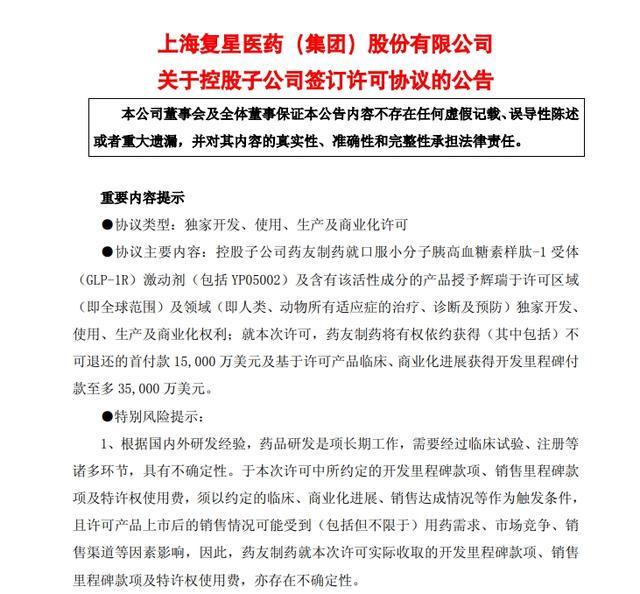
创新药又现大单,复星医药收获1.5亿美元里程碑付款! 12月9日晚间,复星医药公告称,公司控股子公司药友制药与辉瑞于2025年12月9日签订《许可协议》, 药友制药就口服小分子胰高血糖素样肽-1受体(GLP-1R)激动剂(包括YP05002)及含有该活性成分的 产品授予辉瑞于全球范围及领域独家开发、使用、生产及商业化权利。 在公告中,复星医药明确表示药友制药将有权获得不可退还的首付款1.5亿美元及至多3.5亿美元的开发 里程碑款项。此外,基于许可产品的年度净销售额达成情况,辉瑞将向药友制药支付至多15.85亿美元 的销售里程碑款项。该协议自2025年12月9日起生效。 值得注意的是,目前药友制药的小分子胰高血糖素样肽-1受体(GLP-1R)激动剂尚处于I期临床试验阶 段。无论最终该产品研发结果如何,复星医药都至少收获1.5亿美元(约合人民币10.6亿元)。至于此次重 磅押注,出钱的是国际医药巨头辉瑞。 公告显示,YP05002 为口服小分子胰高血糖素样肽-1受体(GLP-1R)激动剂;其主要通过激活人的GLP- 1R,促进胰腺的胰岛素分泌和降低胰高血糖素分泌,在胃肠道抑制胃排空和肠道的蠕动,并通过影响 中枢抑 ...

公募年度揭榜倒计时:主动权益重夺主场,“冠军基”呼之欲出
3 6 Ke· 2025-12-09 12:04
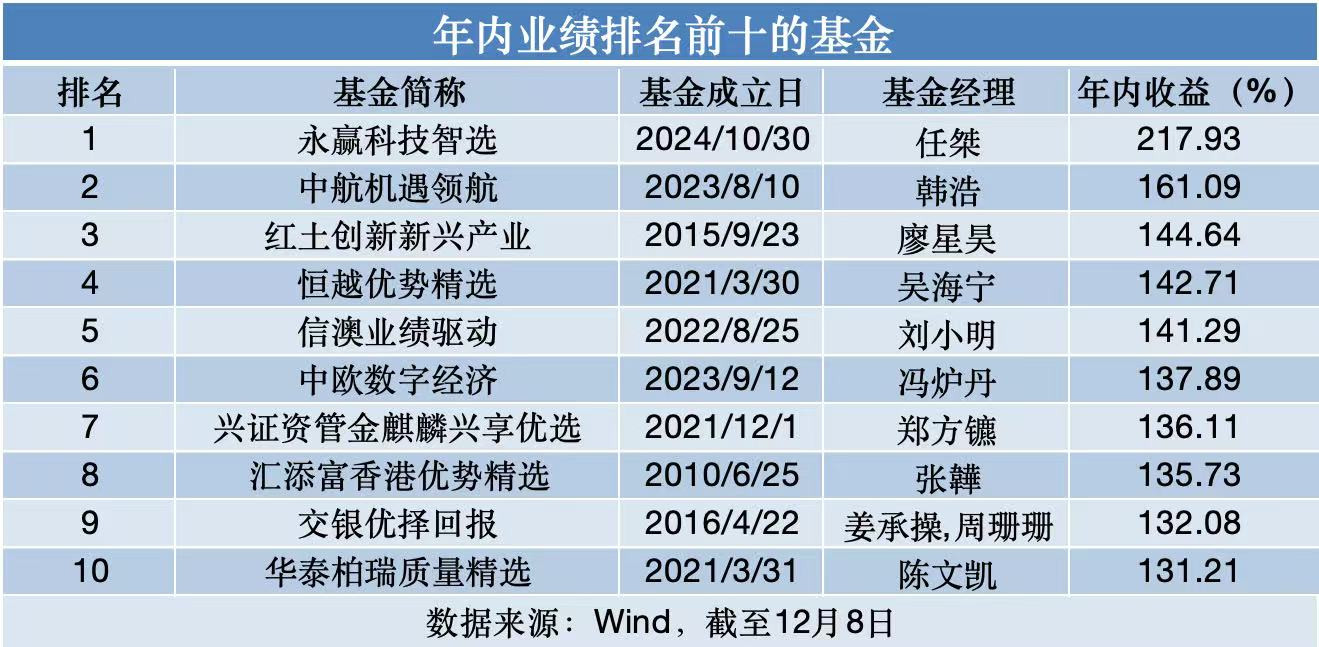
Core Insights - The year 2025 is anticipated to be a harvest year for public funds, with significant profit effects observed throughout 2023, particularly in innovative pharmaceuticals and technology sectors, leading to the emergence of numerous "doubling funds" [1][2] - Active equity funds are expected to regain their performance edge as the bull market returns, with 55 "doubling funds" primarily being actively managed products [2] Group 1: Fund Performance - As of December 8, 2023, 55 funds have achieved a doubling of returns, with the top performer, Yongying Technology Select, boasting a remarkable 217.93% annual return, significantly ahead of the second-place fund by 56.83% [3] - The top ten funds are predominantly focused on AI, with only one fund, Huatai-PB Quality Select, being a non-AI themed fund, which ranks eighth with a 135.73% return [4][5] Group 2: Market Trends - The AI sector has been a major driver of fund performance, with funds heavily investing in computing power and maintaining high positions, reflecting a strategy that amplifies returns during favorable market conditions [3][4] - Concerns about short-term volatility in the AI sector have been expressed by fund managers, indicating that while the fundamentals remain strong, the market may experience fluctuations as performance expectations are realized [9] Group 3: Capital Expenditure Insights - Analysts suggest that the likelihood of an "AI bubble" in China is low due to limited cyclical financing, prudent capital expenditures, and stable IDC deployment rates, with major internet companies focusing on ROI and operational efficiency [7][8]