
专业化发展

Search documents
多项标准助推网络表演行业健康有序发展
Xin Hua She· 2026-01-29 08:06
Core Viewpoint - The recent release of multiple standards, including the "Operational Service Requirements for Online Performance Brokerage Agencies" and "Management Requirements for Group Live Streaming Operations," aims to promote the standardized and professional development of the online performance industry [1][2]. Group 1: Industry Standards - The newly approved national standard by the State Administration for Market Regulation emphasizes the establishment of a protective mechanism for minors regarding tipping and consumption management [1]. - The standards prohibit false advertising, data fabrication, and fraudulent tipping, while encouraging rational consumption and discouraging users from spending through borrowing or overdrawing [1]. - The "group broadcast" format is identified as a significant growth point in the online cultural performance market, leading to the release of the "Management Requirements for Group Live Streaming Operations" to enhance industry self-regulation and content quality [1]. Group 2: Technical and Safety Requirements - Specific requirements for live streaming visuals, audio quality, equipment, and network environment are outlined in the standards [2]. - The standards emphasize the professionalism, safety, appropriateness, and cultural compatibility of costumes and props used in performances [2]. - Regulations concerning information security, protection of minors, and the physical and mental health of performers are also included [2]. Group 3: Industry Impact - The implementation of these standards is expected to help regulate market order, create a transparent and positive online ecosystem, protect the legitimate rights of industry personnel, and promote the sustainable development of new cultural formats [2].
基金忠言|长盛基金之痛:一基金跑输基准291%
Sou Hu Cai Jing· 2025-12-15 02:09
Group 1 - The core viewpoint emphasizes that the performance of actively managed funds should be compared against performance benchmarks rather than short-term relative rankings [2] - Recent regulatory drafts have been released to strengthen the constraints of performance benchmarks for funds, including the "Guidelines for Fund Performance Comparison Benchmarks" [2] - Among 5,506 non-monetary actively managed funds, 915 have underperformed their benchmarks by over 10%, representing a significant 16.62% of the total [2] Group 2 - The Changsheng Global Economic Industry Fund has the worst performance, with a return of -291.33% since its inception, significantly underperforming its benchmark [3] - The fund's net value growth rate is only 32.58%, compared to its benchmark's return of 323.91% over 15 years, indicating poor long-term investment results [3] - The fund has undergone four managers since its inception, highlighting the challenges of active management in outperforming benchmarks, especially in mature overseas markets [3] Group 3 - Changsheng Fund Company, established in March 1999, has faced governance issues and high agency costs, leading to a loss of competitive advantage [4] - The Changsheng State-owned Enterprise Reform Theme Fund has consistently underperformed, remaining below a net value of 1 yuan for nearly a decade, with a cumulative loss of 38% [4] - The company currently manages over 60 billion yuan in non-monetary funds, ranking 67th, with stock and mixed funds totaling less than 15 billion yuan [4] Group 4 - The company has expressed intentions to improve, with notable changes since the introduction of talented fund manager Guo Kun in 2019 [5] - Guo Kun currently manages seven funds with a total scale of approximately 6 billion yuan, achieving an annualized return of 11.91% since taking over the Changsheng Tongsheng Growth Fund [6] - The positive changes observed since Guo's arrival suggest that talent is a core competitive advantage for fund companies, and leveraging skilled managers could lead to significant improvements for Changsheng Fund [6]

年报“难产”致摘牌?华凯保险下月挥别新三板
Guo Ji Jin Rong Bao· 2025-11-26 14:50
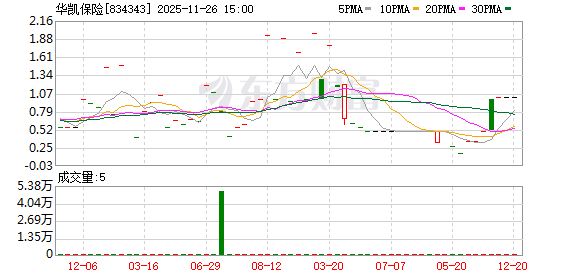
Core Viewpoint - Another insurance intermediary listed on the New Third Board, Huakai Insurance Sales Co., Ltd., has announced its delisting decision, reflecting ongoing regulatory pressures and market consolidation in the insurance intermediary sector [2][4]. Company Summary - Huakai Insurance received a notice of termination of its stock listing, with trading set to resume on December 8, 2025, before officially delisting on December 22, 2025 [5][6]. - The company was established in July 2012 with a registered capital of 56.5 million yuan and became one of the first insurance intermediaries to list on the New Third Board in November 2015 [6]. - Huakai Insurance experienced rapid revenue growth from 94 million yuan in 2015 to 551 million yuan in 2018, but governance issues began to surface [6][7]. - The company faced a significant decline in net profit, reporting a loss of 1.62 million yuan in the first half of 2024, compared to a profit of 835.8 million yuan in the same period the previous year [7]. Industry Summary - The insurance intermediary market is undergoing a significant transformation, with a reduction in the number of listed companies from over 30 to just 8, as many firms face operational challenges and regulatory scrutiny [8][9]. - Five of the remaining eight insurance intermediaries reported losses in the first half of the year, indicating a trend of financial difficulties within the sector [8]. - The decline in listed insurance intermediaries is attributed to a combination of high listing costs, regulatory pressures, and a shift from quantity expansion to quality transformation in the industry [9]. - Industry experts suggest that insurance intermediaries should focus on specialization, digital transformation, and service innovation to remain competitive [9].
高测股份20251029
2025-10-30 01:56
Summary of the Conference Call for Gaoce Co., Ltd. Company Overview - **Company**: Gaoce Co., Ltd. - **Date**: October 29, 2025 Key Points Financial Performance - **Net Profit**: For the first three quarters of 2025, the company reported a net loss of 81.63 million yuan, a year-on-year decline of 139%. However, in Q3, the net profit was 6.92 million yuan, showing a year-on-year increase of 110% and a quarter-on-quarter increase of 148% [2][3] - **Total Revenue**: The total revenue for the first three quarters was 2.431 billion yuan, a year-on-year decrease of 29%. Q3 revenue was 979 million yuan, a year-on-year increase of 24.71% and a quarter-on-quarter increase of 27.81% [3] - **Gross Margin**: The gross margin for the first three quarters was 12.49%, down 10.49 percentage points year-on-year. In Q3, the gross margin improved to 13.58%, up 1.39 percentage points year-on-year [3] Revenue Breakdown - **Revenue Composition**: - Slicing services accounted for 52% of total revenue - Diamond wire revenue accounted for 23% - Photovoltaic equipment revenue accounted for 5% - Innovative business revenue (including semiconductors and silicon carbide) accounted for 8.74% [2][4][5] Product Performance - **Diamond Wire Shipment**: In the first three quarters, the company shipped approximately 49 million kilometers of diamond wire, with tungsten wire accounting for 77.29% and carbon wire for 17.06% [6] - **Silicon Wafer Cutting Sales**: The silicon wafer cutting sales reached 43.9 GW for the year, with Q3 sales at 17.9 GW, significantly exceeding last year's total [6] Inventory and Cost Management - **Inventory Increase**: Inventory rose to 1.045 billion yuan by the end of Q3, primarily due to increased shipments of tungsten wire and inventory buildup to support the silicon rod segment [7] - **Price Adjustment Strategy**: The company intends to raise prices on some products to restore reasonable profits but will do so gradually through reduced discounts rather than large-scale price hikes [9] Industry Outlook - **Market Dynamics**: The company believes that specialized manufacturers will have advantages in the future industry landscape, focusing on cost control, quality, and delivery capabilities to enhance customer loyalty [12] - **Competition and Pricing**: The company does not foresee significant price reductions in the industry due to existing guidelines to maintain price stability. The focus will be on cost and quality competition [9] Future Projections - **Q4 Expectations**: Although Q4 customer production plans are not yet clear, the company anticipates that the situation will be more optimistic than Q3, despite potential slight declines in November due to customer scheduling uncertainties [29][26] - **Long-term Equipment Demand**: The company remains optimistic about future equipment market demand, particularly as existing equipment approaches the end of its useful life, leading to replacement needs [31] R&D and Innovation - **R&D Investment**: The company invested 132 million yuan in R&D in the first three quarters, indicating a commitment to innovation despite current financial challenges [3] - **Robotics Development**: The company is actively developing robotic technologies, including gear reducers, and is focused on enhancing automation and digital capabilities [17][20] Risk Management - **Accounts Receivable Risks**: The company maintains a strong customer structure to mitigate risks associated with accounts receivable and has strict controls over risky clients [10] - **Payment Terms**: The company continues to enforce standard payment terms of two to three months, with some flexibility based on market conditions [11] Conclusion - **Overall Performance**: The company has shown significant improvement in profitability in Q3, with a focus on enhancing operational efficiency and customer relationships. The outlook for the future remains cautiously optimistic, with strategic plans in place to navigate market challenges and capitalize on growth opportunities in both the photovoltaic and robotics sectors [28][32]

公募REITs周报(第37期):指数震荡下行,产权类跌幅较大-20251013
Guoxin Securities· 2025-10-13 03:38
Report Industry Investment Rating No relevant content provided. Core Viewpoints - This week, the China Securities REITs Index declined by 0.3%. The average weekly price changes of property - type REITs and franchise - type REITs were - 0.3% and - 0.1% respectively. In terms of the comparison of weekly price changes of major indices, China Securities All - Bond Index > China Securities Convertible Bond Index > China Securities REITs Index > CSI 300 Index. Most sectors ended in the red, with municipal facilities and ecological environmental protection leading the gains. As of October 10, the dividend yield of property REITs was 86BP higher than the average dividend yield of China Securities Dividend - paying Stocks, and the spread between the average internal rate of return of franchise - type REITs and the 10 - year government bond yield was 207BP. The first foreign - funded consumer REIT was officially listed, which is a benchmark case for the internationalization, diversification, and specialization of China's public offering REITs market [1]. Summary According to Related Catalogs Secondary Market Trends - **Index Performance**: As of October 10, 2025, the closing price of the China Securities REITs (closing) Index was 826.77 points, with a weekly change of - 0.3%, performing worse than the China Securities All - Bond Index (+0.1%) and the China Securities Convertible Bond Index (0.0%), but better than the CSI 300 Index (- 0.5%). Year - to - date, the ranking of price changes of major indices was: CSI 300 (+17.3%) > China Securities Convertible Bond (+17.0%) > China Securities REITs (+4.7%) > China Securities All - Bond (+0.1%). In the past year, the return rate of the China Securities REITs Index was 5.4% with a volatility of 7.2%. Its return rate was lower than that of the CSI 300 Index and the China Securities Convertible Bond Index, but higher than that of the China Securities All - Bond Index; its volatility was lower than that of the CSI 300 Index and the China Securities Convertible Bond Index, but higher than that of the China Securities All - Bond Index [2][6]. - **Market Capitalization and Turnover**: The total market capitalization of REITs decreased to 220.3 billion yuan on October 10, a decrease of 700 million yuan from the previous week. The average daily turnover rate for the whole week was 0.31%, a decrease of 0.11 percentage points from the previous week [2][10]. - **Sector Performance**: Most sectors ended in the red. From the perspective of different project attributes, the average weekly price changes of property - type REITs and franchise - type REITs were - 0.3% and - 0.1% respectively. From the perspective of different project types, most REITs sectors ended in the red, with municipal facilities and ecological environmental protection leading the gains. The top three REITs in terms of weekly price increase were E Fund Guangzhou Development Zone High - tech Industrial Park REIT (+1.93%), Huatai Zijin Nanjing Jianye Industrial Park REIT (+1.35%), and China Asset Management Jinyu Intelligent Manufacturing Factory REIT (+1.03%) [1][3][17]. - **Trading Activity**: Among different project types, new infrastructure REITs had the highest average daily turnover rate this week, with an average daily turnover rate of 0.7%. Consumer infrastructure REITs had the highest proportion of trading volume this week, accounting for 24.9% of the total REITs trading volume. In terms of capital flow of different REITs products this week, the top three in terms of net inflow of main funds were CICC Principal Agricultural REIT (8.79 million yuan), China Asset Management China Resources Commercial REIT (4.45 million yuan), and Southern Runze Technology Data Center REIT (3.29 million yuan) [3][24][25]. Primary Market Issuance - As of October 10, 2025, there was 1 REIT product in the "accepted" stage, 1 in the "declared" stage, 1 in the "inquired" stage, 4 in the "feedback received" stage, 7 in the "approved and awaiting listing" stage, and 12 first - issued products that had been listed on the exchange [27]. Valuation Tracking - **Valuation Metrics**: REITs have both bond - like and stock - like characteristics. From the bond - like perspective, the annualized cash distribution rate is concerned, and as of October 10, the average annualized cash distribution rate of public offering REITs was 6.5%. From the stock - like perspective, the relative net value premium rate, IRR, and P/FFO are used to judge the valuation of REITs. The relative net value premium rate reflects the relationship between the market value and the fair value of the fund, similar to the PB indicator of stocks; IRR is the internal rate of return calculated by the cash - flow discount method; P/FFO is the current price divided by the cash flow generated from operations. The relative net value premium rate is a long - term perspective, while P/FFO is a short - term perspective [29]. - **Valuation Comparison**: Property - type REITs focus on dividend yield, while franchise - type REITs focus on internal rate of return. As of October 10, 2025, the dividend yield of property REITs was 86BP higher than the average dividend yield of China Securities Dividend - paying Stocks, and the spread between the average internal rate of return of franchise - type REITs and the 10 - year government bond yield was 207BP [32]. Industry News - On September 29, the first foreign - funded consumer REIT, Huaxia CapitaLand Commercial REIT, sponsored by CapitaLand Investment headquartered in Singapore, was successfully listed on the Shanghai Stock Exchange. The fund was planned to raise 2.2872 billion yuan, and the cumulative subscription funds before proportional allocation exceeded 309.17 billion yuan. The effective subscription multiples of public investors and offline investors reached 535.2 times and 252.6 times respectively [4][38]. - Huaxia CNOOC Commercial REIT will be officially offered for sale from October 13 to October 14, 2025, with an offering price of 5.281 yuan per share and a planned total fundraising of 1.5843 billion yuan. The underlying asset, Foshan Yingyuehu Ring Mall, is a benchmark self - held property of CNOOC in the mature operation stage, with significant location advantages [38].

让“大而全”与“小而专”各美其美
Qi Huo Ri Bao· 2025-09-14 16:07
Core Viewpoint - The newly implemented "Futures Company Classification Evaluation Regulations" emphasizes both macro and micro perspectives, aiming to enhance industry quality and compliance while reducing burdens on futures companies [1][2]. Group 1: Key Changes in Regulations - The new regulations introduce a clear scoring basis, emphasizing legal compliance and changing the previous practice of deducting points without legal procedures [1][2]. - The regulations optimize the scoring system by including all business types of futures companies in the evaluation criteria, adding new performance indicators related to market competitiveness [1][2]. - The new rules encourage continuous compliance development by awarding additional points for companies maintaining high compliance and risk management scores over three evaluation periods [2]. Group 2: Industry Development Paths - The revised classification system balances the development paths of "scale" and "specialization," providing policy incentives for both large and specialized futures companies [2][3]. - Large futures companies with comprehensive licenses can gain significant advantages in scoring and innovation opportunities if they rank high across all business lines, while also facing increased management pressures [2][3]. - Smaller, specialized futures companies can achieve comparative advantages in classification results by maintaining high compliance and risk management, demonstrating that both "large and comprehensive" and "small and specialized" models can coexist and thrive in the industry [3].
医药零售半年报:转型深水区承压前行 从“规模”向“质量”转身
2 1 Shi Ji Jing Ji Bao Dao· 2025-09-02 23:08
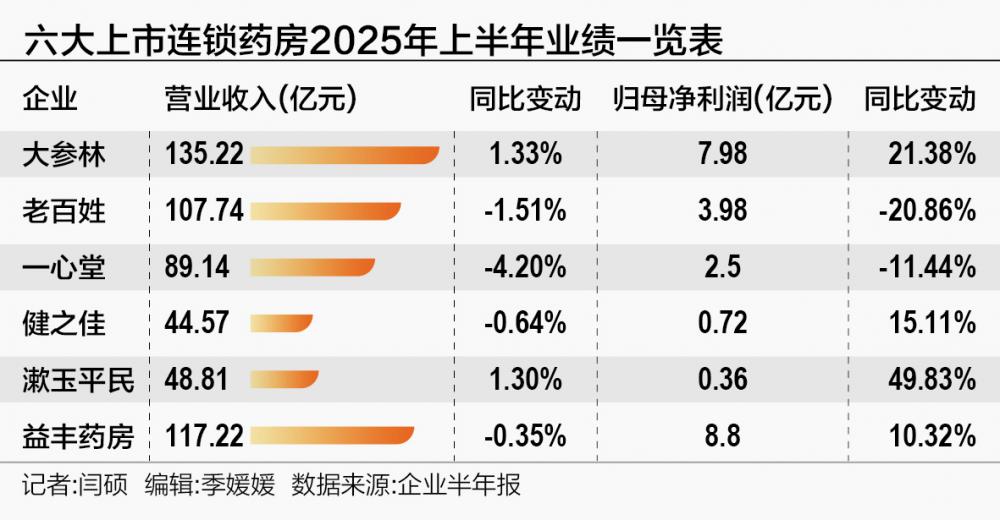
Core Viewpoint - The pharmaceutical retail industry is undergoing a structural transformation, moving from extensive growth driven by scale expansion to a focus on quality optimization and efficiency improvement in 2025 [1][5]. Group 1: Performance Overview - In the first half of 2025, six major listed pharmacy chains showed a polarized performance, with Dazhenglin and Shuyupingmin achieving both revenue and net profit growth, while Laobaixing and Yixintang experienced declines [1][3]. - Dazhenglin reported the highest revenue among the chains at 13.522 billion yuan, a year-on-year increase of 1.33%, and a net profit of 798 million yuan, up 21.38% [2][3]. - Shuyupingmin's revenue and net profit were 4.881 billion yuan and 36.25 million yuan, respectively, reflecting increases of 1.30% and 49.83% [3]. - Laobaixing and Yixintang saw revenue declines of 1.51% and 4.20%, with net profits dropping by 20.86% and 11.44% respectively [4][3]. Group 2: Store Expansion Trends - Dazhenglin continued to expand its store count, adding 280 stores, although this growth rate has significantly slowed compared to previous years [1][7]. - Yixintang and Jianzhijia experienced net decreases in store numbers, with Yixintang losing 126 stores and Jianzhijia losing 22 [7]. - The overall trend indicates a shift from rapid expansion to focusing on the efficiency of existing stores, with many chains emphasizing the importance of franchise models for growth [7][8]. Group 3: Strategic Shifts and Innovations - The industry is moving towards diversification and specialization, with companies like Yixintang planning to develop 30% specialized pharmacies and 70% multi-category stores [8][9]. - Shuyupingmin is focusing on high-potential product categories and optimizing its product range while exploring various store formats [9]. - The implementation of O2O (Online to Offline) strategies is gaining traction, with significant sales contributions from O2O channels across multiple chains [10][11]. Group 4: Digital Transformation and AI Integration - Companies are increasingly adopting digital transformation strategies, with AI becoming a focal point for enhancing operational efficiency and customer service [11][12]. - Laobaixing has initiated AI development as a key strategic project, deploying various AI assistants to improve business operations [11][12]. - Dazhenglin has integrated AI tools to provide intelligent customer service and data analysis, enhancing its operational capabilities [12][13].




奇楠沉香选购指南及手串消费趋势
Sou Hu Cai Jing· 2025-09-02 09:01
Core Insights - The market for agarwood, particularly Qi Nan agarwood, is experiencing a rise in popularity as a high-end consumer product due to its rarity and unique fragrance [1][3] - Consumers are increasingly focused on the purpose of their purchase, whether for collection or daily wear, influencing their selection criteria [1][5] Industry Trends - The agarwood market is evolving towards quality, experiential, and professional standards, with a growing emphasis on the sensory experience of the fragrance [5] - High-quality agarwood bracelets are becoming more sought after, representing unique cultural and identity values [1][5] Consumer Behavior - There is a shift in consumer perception, with buyers prioritizing the authentic experience of the fragrance over mere appearance and origin labels [1][3] - Offline experiences, such as visiting physical stores and attending tasting events, are becoming a new trend in the agarwood market, enhancing consumer engagement [3][5] Brand Practices - Brands like Xiang Zhi Zun Agarwood emphasize high quality and the importance of in-person experiences, hosting events in major cities to enhance consumer understanding of agarwood [3] - The founder highlights that the true allure of agarwood lies in its layered and changing fragrance, which can only be appreciated through personal experience [3] Market Challenges - There are concerns regarding the sale of cultivated agarwood being misrepresented as high-end Qi Nan agarwood, which lacks the complexity and collectible value of wild agarwood [3]

团播行业进入精品化阶段
Zhong Guo Jing Ji Wang· 2025-08-07 08:07
Core Viewpoint - The live streaming industry is taking steps towards healthy development, with Douyin Live hosting a conference to promote high-quality development and self-regulation among live streaming institutions [1][3]. Group 1: Industry Development - The live streaming industry has evolved into a stage of refinement and professionalism, generating diverse employment opportunities such as hosts, choreographers, and camera operators [1][2]. - The industry has faced challenges including vulgar content, fraudulent practices, and contract traps, prompting several institutions to advocate for self-regulation and compliance [1][2]. Group 2: Employment Opportunities - Quality content is identified as the core competitive advantage for the long-term development of the live streaming industry, with an average live streaming room creating over 30 job opportunities [2]. - Professional live streaming institutions are establishing clearer promotion mechanisms, transforming the role into a "growth-oriented" career [2]. Group 3: Regulatory Changes - Douyin Live has upgraded its management regulations for live streaming institutions, imposing stricter requirements on content, host behavior, and agency operations [3]. - The joint initiative by live streaming institutions reflects a shift from "passive compliance" to "active self-discipline" within the industry [3].