中国成分

Search documents
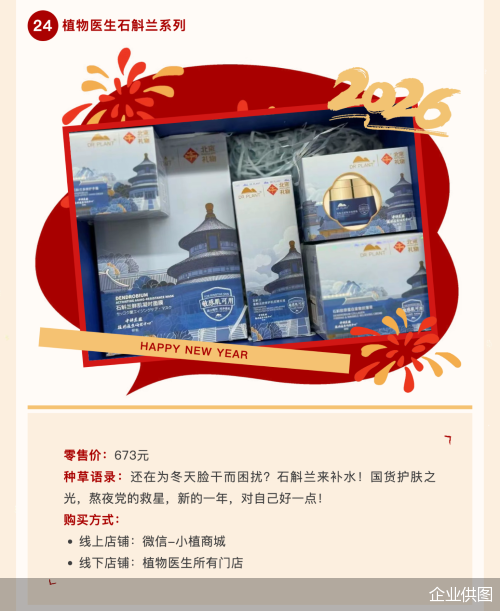
过年回家“有礼有面”!26款“北京礼物”发布,植物医生石斛兰系列入选
Bei Jing Shang Bao· 2026-02-04 06:46
Group 1 - The Beijing Cultural and Tourism Bureau has selected 26 "Beijing Gifts" for the upcoming Lunar New Year, with the Plant Doctor's Dendrobium Orchid series recognized as a top choice in personal care and wellness [1] - The Dendrobium plant, historically known as "immortal grass," contains active ingredients such as polysaccharides and polyphenols, offering multiple skincare benefits including anti-aging and moisturizing [3] - The Plant Doctor has innovatively transformed large molecular Dendrobium polysaccharides into smaller, more absorbable Dendrobium oligosaccharides, achieving a breakthrough in the application of active ingredients and securing European patent authorization [3] Group 2 - The Dendrobium Orchid series has shown strong market performance, with annual sales exceeding 5.8 billion yuan, including over 4.26 million units sold of the Dendrobium Orchid Firming Eye Cream and 220 million units of the Dendrobium Orchid Fresh Skin Mask [3] - Euromonitor International has recognized the Plant Doctor as the leading brand in Dendrobium skincare products for three consecutive years, affirming its market position [4] - The Plant Doctor represents a blend of Eastern wisdom and modern technology, showcasing Chinese brands and ingredients on international platforms, such as the 2025 China International Fair for Trade in Services [5] Group 3 - Since its establishment in 1994, the Plant Doctor has focused on transforming traditional Chinese plant resources into internationally competitive skincare products, emphasizing a commitment to nature and science [7] - The inclusion of the Dendrobium Orchid in the "Beijing Gifts" signifies not only product recognition but also a step forward in cultural confidence and technological self-reliance for Chinese brands [7] - The Plant Doctor operates over 5,000 single-brand stores globally, serving more than 29 million members, and aims to promote the innovation and breakthroughs of Chinese brands in the skincare sector [7]

植物医生IPO背后,聚焦“高山植物”,在变化中坚守核心赛道
Jiang Nan Shi Bao· 2026-01-09 05:14
Core Viewpoint - Beijing Plant Doctor Cosmetics Co., Ltd. is set to go public on the Shenzhen Stock Exchange, showcasing its strong brand power built over 30 years through strategic focus, research, and market expansion [1] Group 1: Company Overview - The Plant Doctor brand was established in 1994 and has focused on the "highland plant skincare" sector, successfully creating iconic product lines such as "Dendrobium," "Purple Ganoderma," and "Cordyceps" [1] - The company has achieved stable revenue growth and continuous profit increase even during challenging industry periods from 2022 to 2024, demonstrating resilience through long-term dedication [1] Group 2: Research and Development - The company has a long-term partnership with the Kunming Institute of Botany, signing a 20-year strategic cooperation agreement in 2014, which has led to significant advancements in research [2] - A key achievement includes the extraction of high-activity Dendrobium oligosaccharides, which has been validated for its effectiveness in promoting collagen production, breaking the monopoly of international brands on high-end skincare ingredients [2] Group 3: Brand Philosophy and Social Responsibility - The brand embodies the philosophy of "respecting nature, valuing science, and giving back to society," collaborating with the UN Development Programme since 2021 on biodiversity and highland plant protection initiatives [3] - Initiatives include the establishment of a biodiversity experience garden and the "Wu Zhengyi Botany Award" to encourage scientific innovation, transforming short-term commercial actions into long-term value investments [3] - The brand's growth strategy integrates ecological protection and social responsibility, enhancing its brand value system and ensuring sustainable development [3]
筑强根基锚定新质生产力,福瑞达生物面向“十五五”开启新章
Zhong Guo Jing Ji Wang· 2025-12-09 07:03
Core Insights - The global beauty industry is undergoing significant changes, with international giants maintaining dominance in the high-end market while emerging Chinese brands leverage local consumer insights and technological advancements to reshape the competitive landscape [1] - China's beauty industry has surpassed a market size of 1 trillion yuan for two consecutive years, with domestic brands accounting for over 55% of the market share, indicating a golden era for the industry [1] Industry Trends - The "14th Five-Year Plan" emphasizes the transition from rapid growth to high-quality development, with a focus on research and development as a key driver for companies [2] - The beauty industry is expected to see increased competition based on ecosystem advantages and policy benefits, with a strong emphasis on technological innovation and sustainable practices [7][8] Company Strategy - Furuida Biotech has established a strong foundation in the beauty industry over 40 years, focusing on a "medicine-cosmetics dual-source" research approach and a comprehensive industry chain layout [3] - The company plans to deepen its core technology research, particularly in the development of Chinese plant resources, aligning with national goals for high-quality development [5] Research and Development - Furuida's R&D investment for 2024 is projected to be 199 million yuan, a 20.05% increase year-on-year, with R&D expenditure accounting for 4.99% of revenue, surpassing the average of 3.2% for leading companies at the end of the "14th Five-Year Plan" [3] - The company has established a robust R&D innovation system covering new technologies, raw materials, and applications, which is difficult for competitors to replicate in the short term [4] Brand Development - Furuida's "5+N" brand strategy has shown success, with brands like Yilian and Aier Doctor demonstrating the value of technology-driven branding [6] - Future brand upgrades will focus on differentiation, youthfulness, and premium positioning, responding to consumer demand and consumption upgrades [6] Sustainability and Collaboration - The company is committed to sustainable practices, from raw material sourcing to low-carbon production processes, aligning with national green development goals [6] - Furuida aims to enhance collaboration within the industry ecosystem, leveraging its position as a key player in the Northern Beauty Valley industrial cluster [7] Future Outlook - The beauty industry is expected to evolve into a competition of ecosystems, with Furuida focusing on building a health skin microbiome database and establishing efficacy testing standards based on local population data [7] - The company is positioned to capitalize on policy changes that encourage innovation and global competitiveness, aiming to transform policy benefits into growth momentum [8]

又一家20亿级上市公司要来了
Sou Hu Cai Jing· 2025-11-27 02:08
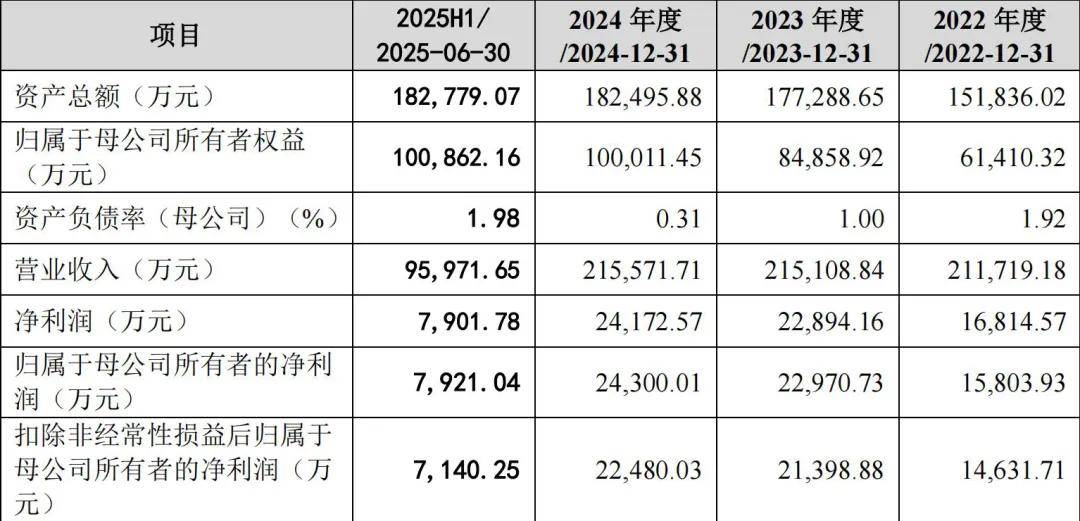
Core Viewpoint - The company "Plant Doctor," with over 4,000 offline stores, has updated its prospectus and is moving forward with its IPO application after a previous halt due to outdated financial data. This marks a significant step towards its listing on the Shenzhen Stock Exchange [1]. Group 1: Business Model and Market Position - Plant Doctor employs a unique "single brand + all-channel" model, allowing it to stand out in the competitive beauty market. However, its heavy reliance on a distribution system and a single brand poses risks for its IPO journey [1][4]. - The company has established a strong presence with 4,269 offline stores as of June 2025, including 3,787 authorized dealer stores and 482 direct stores, ranking second in the beauty and body care sector in the "Top 100 Chain Enterprises" by the China Chain Store & Franchise Association [2]. - Plant Doctor emphasizes an experiential consumption model, combining product sales with in-store services, which enhances customer loyalty and repurchase intentions [2]. Group 2: Financial Performance - The financial data shows resilience in Plant Doctor's business model, with revenues of 2.117 billion yuan, 2.151 billion yuan, and 2.156 billion yuan from 2022 to 2024, and net profits increasing from 158 million yuan to 243 million yuan, reflecting a compound annual growth rate of 24% [2][3]. - As of June 30, 2025, the total assets amounted to 1.827 billion yuan, with net profits reaching 79 million yuan for the first half of 2025 [3]. Group 3: Challenges and Risks - The company faces challenges due to its high dependence on distributors, with over 60% of its revenue coming from them. This reliance poses potential risks to performance and brand image if any distributor faces issues [4]. - The single-brand strategy may limit growth potential as the company has not outlined plans for a multi-brand strategy, which could be a significant concern for future resilience [4]. - The rapid expansion of stores in 2023 is expected to face a bottleneck, with a projected net decrease in stores from 2024 to 2025 as the company shifts focus from quantity to quality [5]. Group 4: Future Plans and Innovations - Plant Doctor plans to raise approximately 998 million yuan through its IPO, focusing on marketing, brand building, headquarters and R&D center construction, production base upgrades, and information system enhancements [5]. - The company aims to optimize its offline store structure while enhancing its online presence through the "Xiaozhi Mall" private domain platform, which currently accounts for about 36% of its revenue [6]. - Continued collaboration with research institutions to deepen the exploration of high-altitude plant active ingredients is a priority, with 223 domestic and international patents held as of October 2025 [6].
专访上海家化首席研发官贾海东:重押“中国成分”与合成生物
2 1 Shi Ji Jing Ji Bao Dao· 2025-09-18 06:08
Core Viewpoint - Shanghai Jahwa has successfully registered five new raw materials with the National Medical Products Administration, focusing on the development and application of Chinese characteristic plants, which is seen as a significant opportunity for the company to leverage its unique resources in the beauty industry [1][2]. Group 1: R&D Strategy and Achievements - The company reported a revenue of 3.478 billion yuan in the first half of 2025, representing a year-on-year growth of 4.75%, while the net profit attributable to shareholders was 266 million yuan, up 11.66% [1]. - R&D expenses increased by 26% during the same period, reflecting the company's commitment to innovation and development [1][11]. - The R&D structure is divided into three main areas: basic research, product development, and project support, covering the entire process from raw material development to product quality control [3]. Group 2: Focus on Chinese Characteristic Plants - The company aims to deepen the research and application of Chinese characteristic plants, which are perceived as complex systems with multiple components and mechanisms, rather than relying on single-target research approaches [4]. - Shanghai Jahwa has established a database for external beauty prescriptions based on traditional Chinese medicine, utilizing AI technology to explore the potential of "Chinese ingredients" [4]. Group 3: Collaboration and Innovation - The company has partnered with the Chinese Academy of Traditional Chinese Medicine to establish a joint laboratory focused on the skin health benefits of Artemisia annua and other Chinese characteristic plants [7]. - A new innovation R&D center focusing on synthetic biology has been established, aiming to leverage gene editing and microbial engineering to create new cosmetic ingredients [9][10]. Group 4: AI and Digitalization - The company is exploring AI and digital capabilities, including an AI skin detection program developed in collaboration with Megvii Technology, which analyzes skin conditions based on facial data [11]. - R&D investments have steadily increased from 151 million yuan in 2020 to 179 million yuan in 2024, with a focus on enhancing the R&D system, medical research collaboration, and product innovation [11].

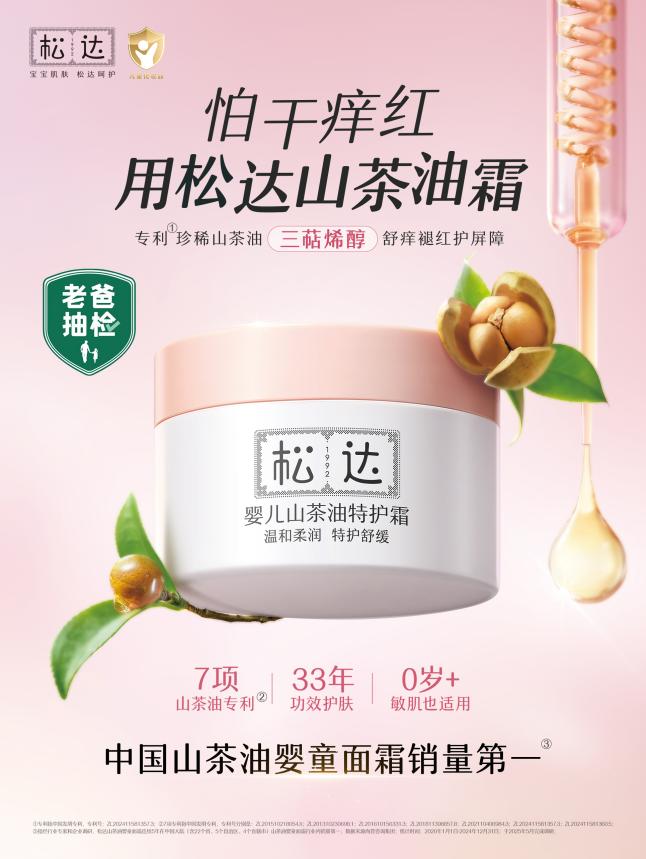
报告:松达连续5年位居山茶油婴童面霜全国销量第一
Jing Ji Wang· 2025-09-16 10:30
Core Insights - The Chinese baby skincare market is shifting towards gentle and natural "Chinese ingredients," with a focus on safety and efficacy in product formulations [1][2] - The brand Songda has established itself as a leader in the market by leveraging traditional Chinese ingredients like camellia oil, achieving the highest sales in the category for five consecutive years [1][2] Industry Overview - The camellia oil industry has received significant policy support since the implementation of the "National Camellia Industry Development Plan (2009-2020)," which aims to enhance the role of leading enterprises and promote industrial development [2] - The concept of "food and cosmetics from the same source" has led to the integration of camellia oil into baby skincare products, marking a shift from traditional culinary uses to modern cosmetic applications [2] Company Innovations - Songda has developed proprietary refining processes to retain the active components of camellia oil, achieving concentrations of 2000-3000 mg/kg of rare triterpenoids, which are crucial for skin benefits [4] - The company has established a comprehensive quality control system, ensuring product safety through extensive testing and adherence to strict formulation principles [5] Product Development - Songda's product line includes various camellia oil-based items designed to address specific skin needs, such as immediate relief from itching and long-lasting hydration [6] - Recent products have passed rigorous testing, including clinical evaluations, confirming their effectiveness in treating skin issues like dryness and redness [6][8] Market Potential - The children's skincare market in China is projected to grow at a compound annual growth rate of over 12% from 2025 to 2030, potentially exceeding 100 billion yuan by 2030 [8] - With the combination of favorable policies, scientific advancements, and consumer demand, camellia oil-based baby skincare products are positioned for significant growth [8]
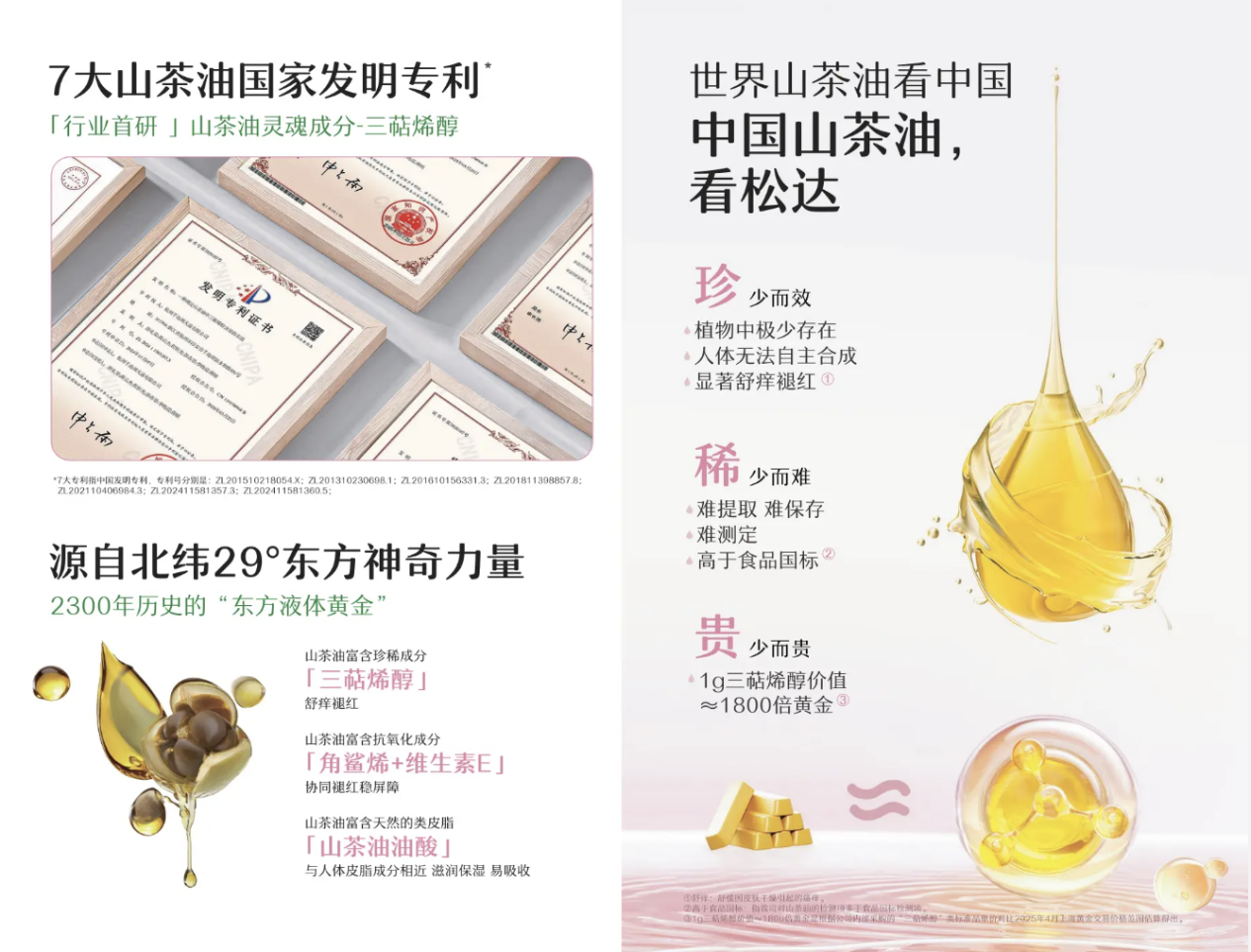
国货品牌松达,连续5年位居山茶油婴童面霜全国销量第一
Jiang Nan Shi Bao· 2025-09-16 02:39
Core Insights - The Chinese baby skincare market is entering a new phase, with "Chinese ingredients" like camellia oil gaining prominence, projected to double to 100 billion yuan in five years [1] - Brands focusing on safety, efficacy, and simplicity in formulations are increasingly innovating with natural and local ingredients, with camellia oil and pine pollen emerging as key components [1][3] Industry Overview - The camellia oil industry has a long history in China, with significant policy support since the 1950s to promote its production and commercialization [3][6] - Recent trends emphasize the "food and cosmetics share the same source" concept, leading to camellia oil's integration into baby skincare products [3][6] Company Highlights - Songda has been a leader in the camellia oil baby cream market for five consecutive years, establishing itself as a benchmark for balancing ingredient efficacy [1][4] - The company has developed proprietary technologies to enhance the stability and effectiveness of camellia oil, particularly focusing on the active component triterpenol [4][6] Research and Development - Songda collaborates with Tianxin Research Institute to advance its technology and product offerings, having launched its first camellia oil product in 2013 [4][6] - The company has secured seven patents in the camellia oil sector, contributing to the standardization and scalability of the industry [6] Product Innovation - Songda has implemented a comprehensive quality control system, ensuring safety and efficacy through extensive testing and adherence to strict formulation principles [7] - The brand's products are designed to address various skin concerns for infants, utilizing a specific blend of camellia oil components to provide effective skincare solutions [7][9] Market Potential - The Chinese children's skincare market is expected to maintain a compound annual growth rate of over 12% from 2025 to 2030, potentially exceeding 100 billion yuan by 2030 [9] - With the combination of policy support, scientific research, and consumer demand, camellia oil baby skincare products are positioned for significant growth [9]
植物医生以品质破局美妆行业内卷
Jiang Nan Shi Bao· 2025-06-04 14:48
Core Viewpoint - The e-commerce market is evolving with the upcoming 2025 618 shopping festival, which has been moved to mid-May, providing consumers with a longer shopping period. Plant Doctor is focusing on a "quality first" strategy, avoiding price wars, backed by strong capabilities and long-term strategic considerations [1][2]. Company Overview - Plant Doctor, established in 1994, has become a leading single-brand cosmetics company in China, with 24 million members and over 5,000 stores globally across more than 300 cities [1]. - The company emphasizes a unique in-store experience, allowing consumers to directly engage with product quality and effects, distinguishing itself from online brands [1]. Research and Development - Plant Doctor collaborates closely with the Kunming Institute of Botany, establishing a robust R&D system that enhances its research capabilities [1]. - The company has developed a unique ingredient, "Dendrobium Oligosaccharide," which addresses traditional anti-aging challenges by enabling effective skin penetration and promoting collagen synthesis [2]. Market Performance - The Dendrobium series has achieved significant market success, with Plant Doctor recognized as the global leader in Dendrobium skincare product retail sales, validating consumer trust in its product quality and unique ingredients [2]. Industry Impact - Plant Doctor's commitment to quality over price competition not only enhances its brand image but also sets a positive example for the beauty industry, encouraging a shift towards quality and innovation as core competitive advantages [3].
从青刺果和薇诺娜的千年奇缘看“中国成分”的三重跨越
FBeauty未来迹· 2025-05-30 11:13
Core Viewpoint - The article highlights the journey of the "Qing Ciguo" (青刺果) from a little-known plant in the mountains of Southwest China to a significant ingredient in skincare products, particularly through the efforts of the brand Winona (薇诺娜) [2][19]. Group 1: Qing Ciguo's Historical and Cultural Significance - Qing Ciguo has a history of over a thousand years in medicinal and culinary use among ethnic minorities in Yunnan, with documented medicinal use dating back approximately 500 years [2][6]. - The plant is known for its resilience, blooming in harsh winter conditions, symbolizing strength and beauty [2]. Group 2: Winona's Research and Development Efforts - Winona has been researching Qing Ciguo since its inception, selecting it as a core ingredient from over 6,500 medicinal plants in Yunnan [8][10]. - The brand has published 17 academic papers related to Qing Ciguo, with 13 being published and 4 presented at conferences, showcasing its commitment to scientific validation [10]. - Winona's research has transitioned Qing Ciguo from a traditional medicinal plant to a scientifically validated ingredient, establishing its efficacy in skin barrier repair [11][19]. Group 3: Product Development and Innovation - Winona has developed multiple iterations of its flagship product, the "Special Care Cream," utilizing advanced extraction and refinement techniques to enhance the stability and efficacy of Qing Ciguo oil [11][14]. - The introduction of new components like Qing Ciguo polysaccharides and flavonoids represents a shift from single-component to multi-component applications in skincare [14][16]. Group 4: Economic and Ecological Impact - The expansion of Qing Ciguo cultivation has positively impacted local economies, improving infrastructure and creating job opportunities in the region [20][21]. - Winona has implemented sustainable practices, including carbon footprint management and ecological restoration projects, contributing to environmental conservation [23][28]. Group 5: Industry Recognition and Future Prospects - Winona has received international awards for innovation in raw materials and research excellence, positioning itself as a leader in the Chinese cosmetics industry [17][19]. - The company plans to replicate its success with Qing Ciguo by exploring other local plants, further driving innovation and economic growth in the region [30][31].

抖音顶流、小红书种“钞”机,揭秘IPO美妆的流量炼金术
3 6 Ke· 2025-05-22 10:54
Core Viewpoint - The upcoming IPO of Gu Yu, a domestic beauty brand, highlights the changing dynamics in the Chinese beauty industry, shifting from a focus on GMV growth to customer lifetime value as investors become more discerning [1][16]. Industry Overview - The domestic beauty industry has experienced significant fluctuations over the past decade, transitioning from a period of rapid growth to a more rational market environment [1][5]. - The rise of brands like Perfect Diary and Huaxizi was fueled by social media, reaching a peak between 2020 and 2021, but the market soon recognized the unsustainability of the "traffic equals brand" model, leading to a decline starting in 2022 [2][5]. Financial Performance - In 2022, the beauty and personal care industry saw a dramatic drop in financing, with 74 investment events totaling approximately 7.949 billion yuan, a year-on-year decrease of 72.88% [5]. - Recent financial reports indicate that companies like Beitaini and Huaxi Biological have faced declining revenues and profits, with Beitaini's net profit dropping by 33.53% year-on-year [5][6]. Gu Yu's Growth Strategy - Gu Yu has achieved explosive growth in GMV, surpassing 5 billion yuan in 2024, with a year-on-year growth rate exceeding 40% [10]. - The brand has effectively utilized major social media platforms for marketing, starting with Taobao Live in 2016 and expanding to platforms like Xiaohongshu, Kuaishou, and Douyin [7][9]. Challenges and Risks - Gu Yu's reliance on a marketing-driven growth strategy mirrors that of earlier successful brands, raising concerns about profitability as marketing costs rise and consumer loyalty wanes [11][12]. - The brand faces significant challenges in product differentiation and market competition, particularly in the essence category where it primarily generates revenue [11][12]. Market Dynamics - The beauty industry is witnessing a shift in focus from traffic-driven growth to sustainable business models, emphasizing profitability and customer retention [16][18]. - The competitive landscape is intensifying, with new customer acquisition costs rising and customer lifetime value decreasing, leading to lower repurchase rates [18][20]. Regulatory Environment - Stricter regulations in the beauty industry, particularly regarding marketing claims, are expected to impact smaller brands that rely heavily on concept marketing [22]. - The evolving consumer preferences among younger generations indicate a shift towards valuing product efficacy over brand popularity, challenging traditional marketing strategies [22]. Conclusion - Gu Yu's IPO represents a critical moment for the domestic beauty industry, as it must navigate the transition from a focus on rapid growth to establishing a sustainable business model that can withstand market pressures and changing consumer expectations [23].