共封装光学(CPO)

Search documents
通信行业研究:GTC与OFC共同催化光通信赛道,阿里加速向A1基础设施商转型
SINOLINK SECURITIES· 2026-03-22 14:42
Investment Rating - The report suggests focusing on sectors driven by domestic AI development such as servers and IDC, as well as sectors driven by overseas AI development like servers and optical modules [5] Core Insights - NVIDIA's GTC conference highlighted a projected demand of at least $1 trillion by 2027 for AI computing power, indicating a robust growth cycle for AI demand [1][2][56] - The optical module industry is expected to see a market size increase of 1.5 to 2 times by 2026, with further doubling anticipated in 2027 [1][2] - Alibaba's cloud AI revenue has shown triple-digit growth for ten consecutive quarters, with a target to exceed $100 billion in cloud and AI revenue within five years [1][3][48] - The collaboration between Tower and NVIDIA aims to scale up the production of 1.6T silicon photonics, which is crucial for high-speed AI interconnects [1] Summary by Sections Server Sector - The server index decreased by 4.81% this week and 5.42% this month, but NVIDIA's GTC conference indicated strong AI computing demand [2][7] - Meta signed a $27 billion AI infrastructure agreement with Nebius, and AMD partnered with Celestica to launch the "Helios" AI platform [2][7] Optical Module Sector - The optical module index increased by 1.74% this week and 8.02% this month, with a projected shipment of 8 to 20 million 1.6T modules by 2026 [2][7] - High-end EML supply-demand gaps are widening, with domestic alternatives expected to fill the market [2][7] IDC Sector - The IDC index rose by 1.50% this week but fell by 3.77% this month, with Alibaba's AI-related product revenue growing by 36% [3][12] - The consumption of tokens on Alibaba's MaaS platform increased sixfold over the past three months, indicating a surge in demand for AI services [3][12] Core Data Updates - The telecommunications business revenue reached 1.75 trillion yuan in 2025, with a year-on-year growth of 0.7% [4][16] - The export value of optical modules in December increased by 0.9% year-on-year, although the cumulative annual export value decreased by 16% [4][30]


招银国际每日投资策略-20260319
Zhao Yin Guo Ji· 2026-03-19 03:41
Market Overview - Global markets showed mixed performance, with the Hang Seng Index closing at 26,025, up 0.61% for the day and 1.54% year-to-date [1] - The US markets experienced declines, with the S&P 500 down 1.36% and the Dow Jones down 1.63% [3] - The offshore RMB exchange rate remained weak, closing around 6.9 [3] Industry Insights Semiconductor Industry - The OFC 2026 highlighted structural changes in the industry driven by AI computing expansion, leading to a comprehensive restructuring of data center interconnect architectures [4] - The focus is on diverse interconnect solutions to meet the growing demands for computing power and system efficiency, with pluggable optical modules remaining a core mainstream solution [4] Company Analysis Tencent (700 HK) - Tencent reported a 13% year-on-year revenue growth to RMB 194.4 billion for Q4 2025, with non-IFRS operating profit up 17% to RMB 69.5 billion, aligning with Bloomberg consensus [4] - The company plans to double its AI product investment in FY26 to over RMB 36 billion, which may impact short-term profit growth but is expected to strengthen its core business [4] Kingdee International (268 HK) - Kingdee achieved a revenue of RMB 7 billion in 2025, a 12% increase year-on-year, meeting Bloomberg expectations [5] - The company reported a net profit of RMB 92.9 million, lower than the consensus estimate, but demonstrates its commitment to AI transformation [5] ZTO Express (ZTO US/2057 HK) - ZTO's net profit for 2025 grew by 3% to RMB 9.08 billion, with a guidance for 2026 package volume growth of 10-13% [6] - The company approved a new stock buyback plan with a budget of up to $1.5 billion over the next two years, aiming for shareholder returns of at least 50% of adjusted net profit [7] Geely Automobile (175 HK) - Geely reported a 22% revenue growth to approximately RMB 106 billion for Q4 2025, with a quarterly gross margin of 16.9% [8] - The company expects its gross margin to improve to 17.4% in 2026, supported by scale effects and export growth [8]

这种芯片,被数据中心看好
半导体芯闻· 2026-03-17 10:45
Core Viewpoint - The article discusses the launch of the world's first single-chip DWDM optical engine for AI infrastructure by Tower Semiconductor and Scintil Photonics, addressing the critical need for lasers in the co-packaged optics (CPO) ecosystem to meet the increasing bandwidth and power consumption demands of AI data centers [1][2]. Group 1: DWDM Technology and Its Importance - Dense Wavelength Division Multiplexing (DWDM) technology allows multiple optical signals to be transmitted over a single fiber, significantly reducing power consumption and latency when connecting multiple GPUs [1]. - The deployment of DWDM in AI data centers has been limited due to cost and scalability issues, which are now being addressed with new technological advancements [1][2]. Group 2: Integration and Manufacturing Process - Scintil's heterogeneous integrated photonic technology (SHIP) integrates lasers, photodiodes, and modulators onto silicon wafers for mass production, akin to CMOS processes in the photonics field [3]. - The manufacturing process involves using standard 300mm silicon photonic wafers, integrating passive optical components, and employing advanced lithography for precise control of spacing and wavelength stability [3]. Group 3: Next-Generation CPO Development - The next-generation CPO aims to facilitate vertical scaling by integrating lasers directly into the CPO chip, enhancing efficiency and performance in high-density GPU environments [5]. - The LEAF Light chip design allows for single-fiber transmission rates of 1.6Tbps by distributing 50Gbps across multiple channels, significantly improving overall capacity and energy efficiency [5]. Group 4: Future Plans and Market Readiness - Scintil and Tower plan to deliver tens of thousands of devices to customers by the end of 2026 and aim to increase production capacity by an order of magnitude next year [6]. - By 2028, the supply chain will be fully prepared for the deployment of DWDM in vertical scaling networks, opening new possibilities for the industry [6].


英伟达GTC前瞻:芯片架构路线图、CPO和推理产品成关注焦点
第一财经· 2026-03-16 01:00
Core Viewpoint - Nvidia's GTC conference is set to showcase significant advancements in AI and semiconductor technology, with a focus on the upcoming Rubin architecture and its implications for the future of AI development [6][7]. Group 1: Chip Architecture and Product Roadmap - Nvidia has announced its chip architecture roadmap, highlighting the Rubin architecture set to launch in the second half of this year, followed by Rubin Ultra in 2027 and Feynman in 2028 [6]. - Bank of America predicts that the GTC will clarify Nvidia's product line from Rubin to Feynman, providing visibility across three generations of products, which will strengthen Nvidia's competitive edge [6][7]. Group 2: Networking and Optical Technologies - Nvidia is expanding its focus beyond GPUs, showcasing six Rubin chips at CES, including various networking components, indicating a broader strategy in networking and storage [7]. - The concurrent timing of GTC and the OFC conference suggests Nvidia may reveal more about its co-packaged optics (CPO) technology, with a focus on the Quantum-X and Spectrum-X network architecture [8]. Group 3: Collaboration and New Technologies - Nvidia's recent partnership with AI chip startup Groq may lead to the integration of Groq's technology into Nvidia's offerings, particularly in AI inference chips [9]. - Market speculation suggests that OpenAI may adopt Nvidia's inference chips based on Groq technology, although this remains unconfirmed [9]. Group 4: Autonomous Driving and AI Applications - Ahead of GTC, Nvidia released a video demonstrating its full-stack autonomous driving software, DRIVE AV, showcasing its capabilities in real-world scenarios without human intervention [10]. - The developments in Nvidia's automotive and robotics sectors are expected to be key highlights at GTC, reflecting the company's ongoing commitment to physical AI applications [10].
芯片复杂度提升,测试架构如何进化?
半导体行业观察· 2026-03-09 01:07
Core Insights - The semiconductor industry is approaching the 2nm process node, where traditional electronic interconnects struggle to balance the demands of large-scale computing and strict power consumption controls. The rise of AI model training is pushing data centers towards "AI factories" with millions of GPUs, leading to bandwidth and thermal bottlenecks in inter-rack and chip-to-chip communications [1][2]. Group 1: Co-packaged Optics (CPO) and Its Impact - Co-packaged optics (CPO) is recognized as a strategic evolution in the semiconductor industry, especially after NVIDIA's announcement to integrate CPO technology into its next-generation high-speed interconnect architecture. CPO significantly reduces energy consumption to 1/3.5 of traditional pluggable optical modules while improving signal integrity and system reliability, resulting in over 20% enhancement in GPU cluster utilization [1][2]. Group 2: Testing Challenges and Solutions - The high integration of CPO presents a "black box challenge" for testing, as traditional hardware-centric testing devices are inadequate for real-time feedback and high integration verification environments. There is a pressing need for a digital reconfigurable testing architecture that can evolve with application scenarios [2][3]. Group 3: Moku Platform and Its Advantages - Liquid Instruments has developed the Moku platform, which utilizes a "reconfigurable hardware + software-defined instruments" architecture to address the complexity brought by CPO and heterogeneous integration. This platform integrates over 16 precision instruments into a single hardware core, significantly reducing the physical footprint of testing systems [3][4]. Group 4: Dynamic Reconfiguration and Automation - The reconfigurable capabilities of FPGA allow users to create low-latency, customized testing configurations, simplifying wiring and reducing signal loss. The Moku platform supports multi-instrument and multi-channel parallel testing, enhancing automation and testing efficiency while allowing for flexible adjustments to testing measurement schemes [4][5]. Group 5: Case Studies and Implementation - In Intel Labs' silicon photonics research, the Moku platform enabled the team to efficiently find optimal bias conditions for multiple phase tuners, which is crucial for achieving the best system performance. The platform's ability to run multiple lock-in amplifiers and PID controllers simultaneously on a single hardware platform significantly improved testing efficiency [6][7]. Group 6: AI Integration in Signal Processing - The Moku platform supports the deployment of pre-trained neural network models for online processing, enhancing signal feature recovery and deep noise reduction. This integration of AI with precision measurement provides new pathways for failure analysis and testing methods in semiconductor technology [10][13]. Group 7: Conclusion and Future Directions - As device complexity increases, testing architectures must evolve to include precise measurement, real-time feedback, and dynamic control capabilities. The Moku platform exemplifies the shift towards a reconfigurable testing architecture, becoming a critical direction for high-integration chip validation [16][17].
股价暴涨超12%!Coherent和Lumentum各接受20亿美元投资!英伟达“相信光”!
美股IPO· 2026-03-03 00:45
Core Insights - Nvidia has invested a total of $4 billion in two photonics technology companies, Lumentum and Coherent, with each receiving $2 billion, aimed at strengthening the core supply chain for Co-Packaged Optics (CPO) technology [1][4][9] - The investment is part of Nvidia's strategic push to enhance AI data center network architecture, which is expected to lower hardware procurement costs and significantly reduce network energy consumption [8][9] Group 1: Investment Details - Nvidia's investment includes multi-billion dollar procurement commitments and future capacity rights for advanced laser components from both companies [4][12] - Following the announcement, Lumentum's stock rose nearly 12%, while Coherent's stock increased by over 15%, and Nvidia's stock gained nearly 3% [5] Group 2: Strategic Intent - The investment aligns with Nvidia's previous deployment of CPO technology in its data center switch product line, which was introduced last year [9] - CPO technology integrates pluggable transceivers directly into switches, replacing traditional independent transceiver solutions, thereby reducing hardware layers and overall power consumption [9] Group 3: Company Profiles - Lumentum is a leading supplier of optimized laser modules for CPO, with a recent quarterly revenue of $665.5 million, and has initiated a capacity expansion plan for CPO components [10] - Coherent has launched laser transmitters optimized for CPO systems and is involved in the testing tools market, providing engineering development support for network equipment suppliers [12]


CPO,终于要来了?
半导体芯闻· 2026-02-28 10:08
Core Viewpoint - The competition in AI infrastructure is shifting from chip manufacturing processes to the efficiency of chip interconnections, with Co-Packaged Optics (CPO) emerging as a critical focus area in the industry [1][3]. Group 1: CPO Technology Overview - CPO, or Co-Packaged Optics, integrates high-speed optical engines/modules with switch chips or large-scale AI computing chips using advanced packaging technologies, aiming to solve issues like high power consumption and signal loss associated with traditional optical modules [3][6]. - CPO technology can reduce power consumption by over 40%, increase bandwidth by three times, and decrease latency by 50%, making it ideal for AI training clusters and large-scale data centers [6][7]. Group 2: Market Trends and Projections - The global Datacom CPO market is expected to grow from less than $70 million in 2024 to $8 billion by 2030, with a compound annual growth rate (CAGR) exceeding 120% [7]. - The interconnection rate is rapidly evolving from 400G/800G to 1.6T, with projections to exceed 3.2T by 2027, indicating that the traditional architectures are nearing their performance limits and CPO's large-scale application is inevitable [7][9]. Group 3: Financial Performance of Key Players - Lumentum reported a revenue of $665.5 million for Q2 FY2026, a 65% year-over-year increase, driven by strong demand in AI and cloud computing, highlighting the potential of CPO as a core growth engine [11][12]. - Coherent's revenue reached $1.686 billion in Q2 FY2026, a 17% increase, with the data center and communication sectors driving this growth, particularly through advancements in CPO technology [19][21]. Group 4: Supply Chain Dynamics - Lumentum's production capacity for CPO-related high-power laser wafers is nearly sold out, indicating a supply-demand imbalance that is expected to worsen as demand continues to rise [14]. - Coherent is expanding its production capacity for indium phosphide (InP) components, which are critical for CPO applications, and has secured significant orders from major AI data center clients [24][25]. Group 5: Future Outlook and Challenges - CPO is anticipated to transition from a technology validation phase to commercial application, with significant growth expected in the 2026-2027 period, potentially reaching hundreds of billions in market potential [33][39]. - Despite the promising outlook, challenges such as high manufacturing complexity, reliability concerns, and the need for industry standards may delay widespread adoption of CPO technology [36][38].
谁在金银“巨震”中稳健前行?银行理财产品1月榜单出炉
Zhong Guo Zheng Quan Bao· 2026-02-13 08:32
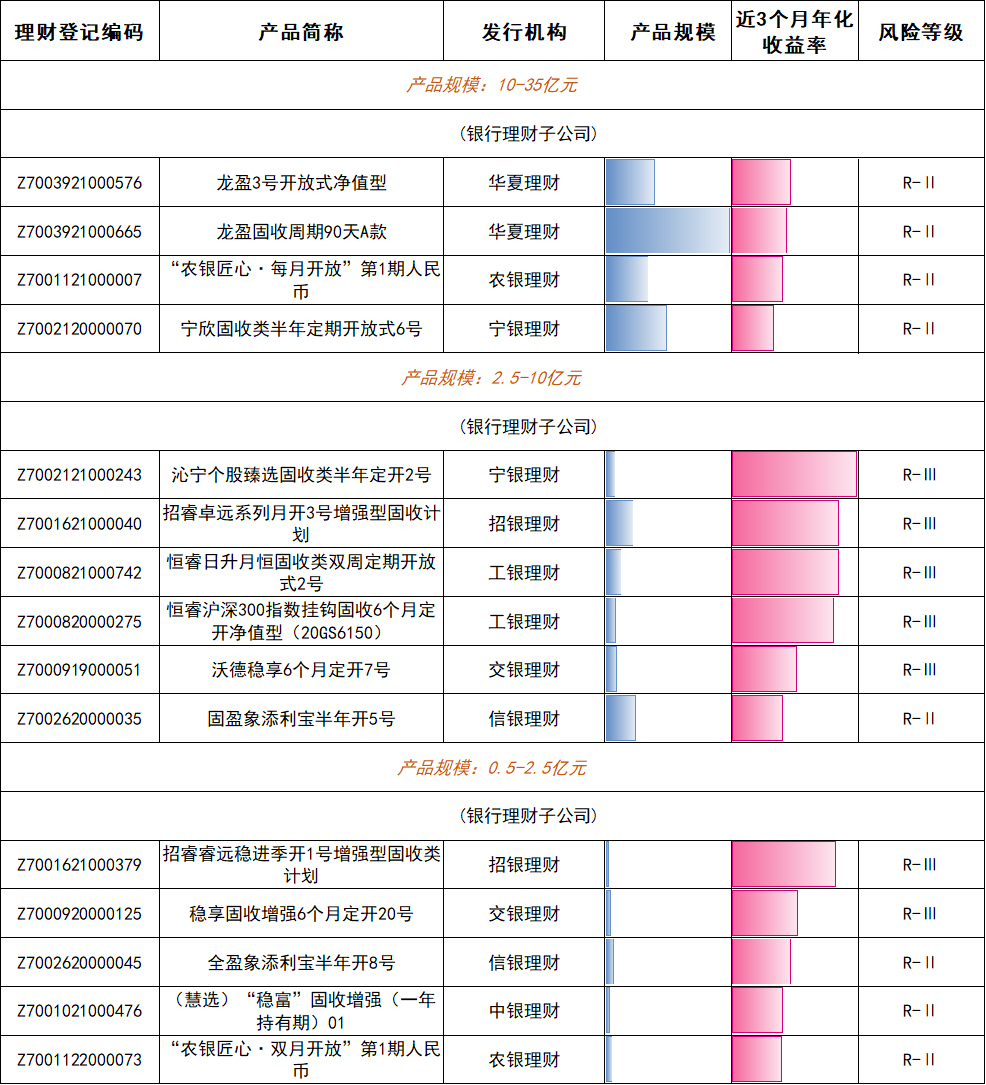
Group 1 - In January, the A-share market saw increased trading activity and risk appetite, with all three major indices achieving gains, notably the Shanghai Composite Index rising by 3.76% and the CSI 500 Index increasing by 12.12% [1] - The rise in cyclical industries such as precious metals, non-ferrous metals, chemicals, and oil and gas was driven by multiple factors including complex international dynamics, a weakening US dollar, and domestic industrial policy support, although there was significant volatility at the end of the month [1] - The technology sector, particularly AI applications, is expected to enter a critical validation window as large model technologies mature, with strong demand for computing power and investments in AI hardware like storage chips and semiconductor equipment [1] Group 2 - As of January 2026, the total number of bank wealth management products in the market reached 46,845, an increase of 553 from December 2025, with fixed-income products making up the majority at 43,215 [2] - In January, 2,969 new wealth management products were launched, a decrease of 305 from the previous month, with wealth management subsidiaries of banks accounting for 76.56% of the new issuances [2] - The overall risk level of wealth management products in January increased significantly, with 51 products rated as medium risk and 4 additional products rated as medium-high risk compared to the previous month [12] Group 3 - The asset allocation of wealth management products in January showed a high proportion of bonds and public funds, with a focus on cash, bank deposits, and short-term bond ETFs for liquidity and low risk [17] - Mixed wealth management products had diverse asset allocations, covering debt, convertible bonds, equity assets, and gold, with many products cautiously investing in gold ETFs to capture commodity investment opportunities [18] - The top five institutions accounted for 43.81% of the products listed, indicating a competitive advantage for state-owned and joint-stock bank wealth management subsidiaries [14]

雅博股份4连板,AI概念走强丨强势个股
2 1 Shi Ji Jing Ji Bao Dao· 2026-02-12 10:40
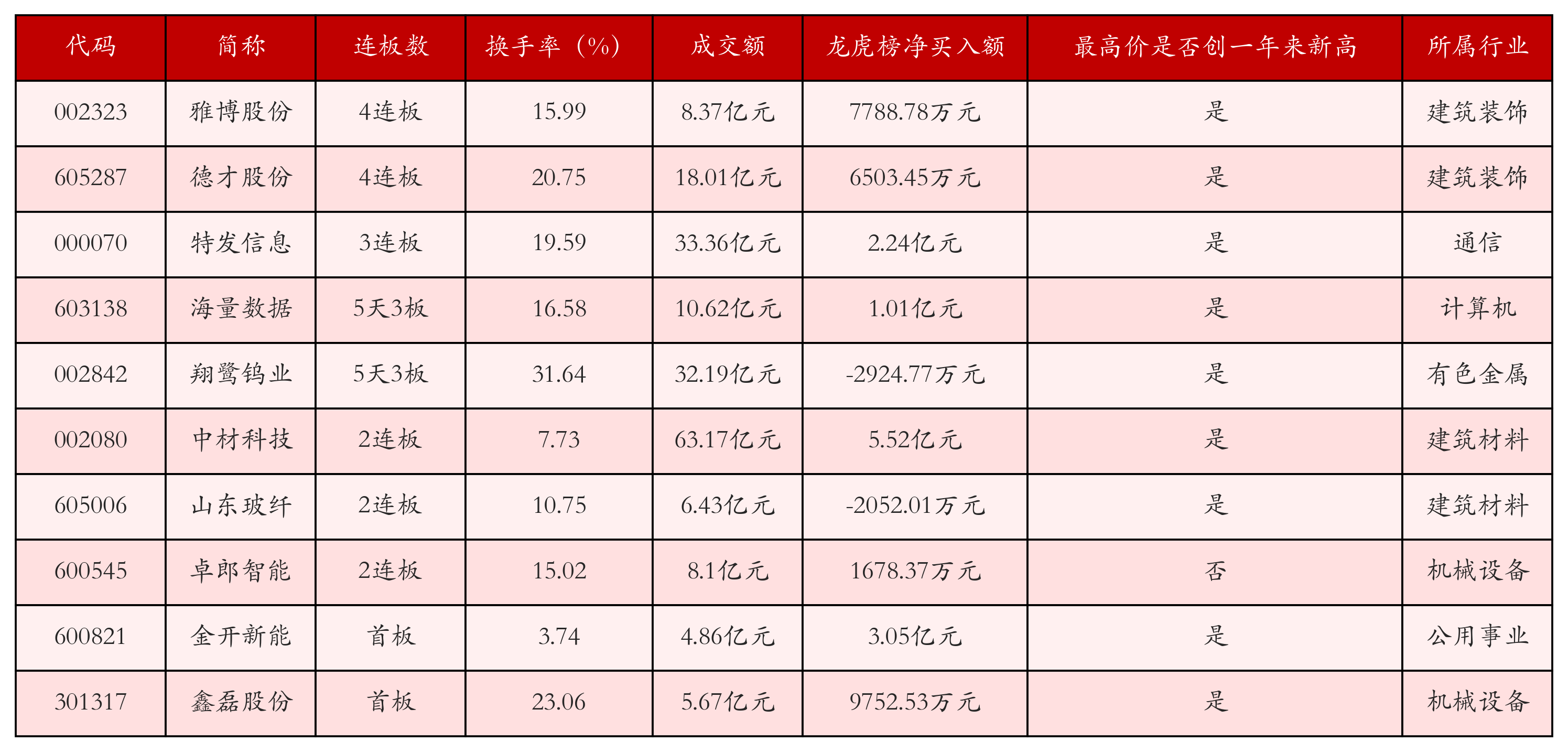
Group 1: Strong Stocks - As of February 12, the Shanghai Composite Index rose by 0.05% to close at 4134.02 points, the Shenzhen Component Index increased by 0.86% to 14283.0 points, and the ChiNext Index climbed by 1.32% to 3328.06 points [1] - A total of 70 stocks in the A-share market hit the daily limit up, with the top three strong stocks being Yabo Co., Ltd. (002323), Decai Co., Ltd. (605287), and TeFa Information (000070) [1] - The top 10 strong stocks based on consecutive limit-up days and turnover rates include: - Yabo Co., Ltd. (4 consecutive limit-ups, turnover rate 15.9%) - Decai Co., Ltd. (4 consecutive limit-ups, turnover rate 20.7%) - TeFa Information (3 consecutive limit-ups, turnover rate 19.5%) [1] Group 2: Concept Sectors - The top three concept sectors with the highest gains are: China AI 50 (up 2.92%), Liquid Cooling Servers (up 2.86%), and Co-Packaged Optics (CPO) (up 2.7%) [2] - The top 10 concept sectors based on their percentage changes include: - F5G Concept (up 2.5%) - Optical Fiber Concept (up 2.44%) - Copper Cable High-Speed Connection (up 2.2%) - Nvidia Concept (up 2.14%) - Flexible DC Transmission (up 2.13%) - Automotive Chips (up 2.12%) - Pumped Storage (up 2.08%) [2]


算力是人工智能的基础底座,低费率创业板人工智能ETF华夏(159381)早盘冲高涨超2.5%,天孚通信大涨超10%
Mei Ri Jing Ji Xin Wen· 2026-02-12 02:46
Group 1 - The A-share market saw a significant rise in computing hardware stocks, particularly in concepts like CPO, liquid-cooled servers, and optical fibers, with the AI ETF Huaxia (159381) increasing by over 2.5% [1] - Key holdings such as Taicheng Technology and Tianfu Communication surged by over 10%, while other companies like Guangku Technology, Zhishang Technology, and Changxin Bochuang also experienced notable gains [1] - The communication ETF Huaxia (515050) rose by more than 1% [1] Group 2 - Zhipu released its next-generation flagship model GLM-5, expanding its parameter scale from 355 billion (activated 32 billion) to 744 billion (activated 40 billion), and increasing pre-training data from 23 terabytes to 28.5 terabytes, significantly enhancing the model's general intelligence level [1] - The importance of computing power is increasingly emphasized in the AI era, with the State-owned Assets Supervision and Administration Commission (SASAC) urging central enterprises to strengthen investment traction, actively expand effective computing power investments, and promote the collaborative development of "computing power + electricity" [1] - The goal is to enhance data governance capabilities across the entire chain and continuously solidify the foundational base of the artificial intelligence industry [1]