
原油供应冲击

Search documents
高盛最新判断“油价短期或破2008年147高点” (复盘五轮原油冲击)
华尔街见闻· 2026-03-20 10:19
Core Viewpoint - Goldman Sachs predicts that Brent crude oil prices may exceed the historical high of 2008, with a rising risk of oil prices maintaining at $100 in the long term [4][6][25]. Group 1: Oil Price Trends - Goldman Sachs' commodity research team indicates that the upward trend in oil prices is likely to continue due to ongoing disruptions in the Strait of Hormuz [5]. - Brent crude oil reached a historical high of $147.50 per barrel in July 2008 [7]. - If the current low supply situation persists, concerns about prolonged supply disruptions could lead Brent crude prices to surpass the 2008 peak [6]. Group 2: Supply Chain and Production Risks - Goldman Sachs emphasizes that even after the Strait is reopened, production may take a long time to recover due to infrastructure damage [9]. - Historical analysis shows that major supply shocks often last for years, with affected countries typically experiencing an average of 42% production loss four years post-shock [12]. - If Iran and surrounding regions suffer significant production capacity damage, oil prices could remain above $100 for longer than current market expectations [13]. Group 3: Strategic Oil Reserves and Global Demand - The ongoing uncertainty from the Strait of Hormuz crisis may trigger accelerated construction of global strategic oil reserves starting in 2027 [16]. - Goldman Sachs identifies three reasons for this potential increase in reserves: low levels of existing reserves in OECD countries, heightened government reserve targets, and the need to replenish the U.S. strategic oil reserve [17]. - An accelerated pace of global strategic reserve construction could add approximately $12 per barrel to oil prices by the end of 2027 [17]. Group 4: Historical Context and Future Predictions - Historical experiences indicate that high oil prices can lead to increased energy efficiency and fuel substitution, ultimately reducing economic dependence on oil [22]. - The report suggests that the balance of risks for oil prices remains tilted towards the upside, with potential for sustained prices above $100 per barrel in scenarios of prolonged supply disruptions [24][25]. - Goldman Sachs' baseline forecast for Brent crude oil prices in Q4 2027 is $69 per barrel, with various risk scenarios indicating potential price deviations [26].



大越期货原油早报-20260312
Da Yue Qi Huo· 2026-03-12 05:48
1. Report Industry Investment Rating - Not provided in the given content 2. Core View of the Report - The IEA's release of 4 billion barrels of oil aims to curb the soaring oil prices caused by the war between the US, Israel, and Iran. Although the short - term negative news is exhausted, the war situation continues, and the Strait of Hormuz is blocked, so crude oil still has upward potential. SC2604 should be operated with a long - bias in the range of 730 - 760, and long - term investors can wait for opportunities to short at high prices [3]. 3. Summary by Directory 3.1 Daily Prompt - **Fundamentals**: The IEA released 4 billion barrels of oil. Three ships in the Strait of Hormuz were attacked, and the total number of attacked ships reached at least 14. OPEC predicts that global oil demand will increase by 1.38 million barrels per day this year, with its demand estimate for 2026 higher than other institutions [3]. - **Basis**: On March 11, the spot price of Oman crude oil was $119.71 per barrel, and that of Qatar Marine crude oil was $84.34 per barrel. The basis was 31.37 yuan per barrel, with the spot price higher than the futures price [3]. - **Inventory**: The US API crude oil inventory decreased by 1.678 million barrels in the week ending March 6, while the EIA inventory increased by 3.824 million barrels. The Cushing area inventory increased by 0.117 million barrels. The Shanghai crude oil futures inventory remained unchanged at 3.511 million barrels as of March 11 [3]. - **Disk**: The 20 - day moving average is upward, and the price is above the average [3]. - **Main Position**: As of March 3, the long positions of WTI and Brent crude oil main contracts decreased [3]. - **Expectation**: The IEA's release of 4 billion barrels of oil was beyond expectations. After the short - term negative news was exhausted, the oil price showed a V - shaped trend. The war situation continued, so crude oil still has upward potential. SC2604 should be operated with a long - bias in the range of 730 - 760, and long - term investors can wait for opportunities to short at high prices [3]. 3.2 Recent News - **Cease - fire requirements**: Iran requires the US to ensure that it and Israel will not attack Iran in the future. The US military operations against Iran continue [5]. - **Oil tanker attacks**: Two oil tankers in the northern Gulf near Iraq and Kuwait were attacked, causing concerns about shipping safety and a sharp rise in international oil prices [5]. - **IEA oil release**: The IEA agreed to release 4 billion barrels of oil. The US will release 172 million barrels, Japan about 80 million barrels, South Korea 22.46 million barrels, and Germany will release part of its oil reserves [5]. 3.3 Long - Short Concerns - **Bullish factors**: Strait passage is blocked; the Middle East situation deteriorates [6]. - **Bearish factors**: Trump intends to end the war quickly [6]. - **Market driver**: In the short term, focus on geopolitical changes; in the medium - to - long term, wait for the situation to ease before entering the market for reverse operations [6]. 3.4 Fundamental Data - **Futures market**: The settlement prices of Brent, WTI, and Oman crude oil increased, while that of SC crude oil decreased. The increases of Brent, WTI, and Oman crude oil were 4.76%, 4.55%, and 3.38% respectively, and the decrease of SC crude oil was 11.36% [7]. - **Spot market**: The prices of UK Brent Dtd, WTI, Oman, and Dubai crude oil increased, while that of Shengli crude oil decreased. The increases were 3.87%, 4.55%, 3.84%, and 3.55% respectively, and the decrease was 3.77% [9]. - **Inventory data**: The API inventory decreased by 1.678 million barrels in the week ending March 6, and the EIA inventory increased by 3.824 million barrels [3][10][12]. 3.5 Position Data - **WTI crude oil**: As of March 3, the net long position decreased by 562 [15]. - **Brent crude oil**: As of March 3, the net long position decreased by 35,358 [17].
霍尔木兹休克,油价会到多少?(国金宏观厉梦颖)
雪涛宏观笔记· 2026-03-08 09:09
Core Viewpoint - The article discusses the potential impact of the ongoing geopolitical tensions in the Middle East, particularly focusing on the implications for global oil supply and prices, emphasizing the critical role of the Strait of Hormuz in energy transportation [2][7]. Group 1: Potential Impact on Global Oil Supply - The Strait of Hormuz is a vital energy transport route, with approximately 15 million barrels per day expected to pass through in 2025, accounting for about 34% of global oil maritime trade [7]. - Most oil transported through the Strait is directed towards Asian markets, with China and India receiving about 44% of the total export volume. In contrast, Europe relies less on this route, with only about 600,000 barrels per day, representing roughly 4% of the total [7]. - Despite the absence of a formal blockade, actual shipping efficiency has significantly declined, with around 150 vessels currently anchored in the region awaiting clearer conditions [4]. Group 2: Buffer Mechanisms for Supply Disruptions - Gulf countries have alternative export routes through land pipelines, with Saudi Arabia and the UAE capable of rerouting some oil exports to the Red Sea or Oman Gulf. However, the available bypass capacity is limited to approximately 3.7 to 5.7 million barrels per day [12]. - Global idle capacity, primarily concentrated in OPEC countries, can provide a buffer against supply shocks. Saudi Arabia is often viewed as the "last supplier" due to its significant idle capacity. However, this buffer's effectiveness is limited if the Strait of Hormuz remains obstructed [14]. - Major consuming countries can release strategic oil reserves to mitigate supply shocks. For instance, IEA member countries collectively hold about 1.5 billion barrels in public reserves and 575 million barrels in industry obligations, which can be released in response to significant supply disruptions [17]. Group 3: Scenarios for Oil Supply Disruption - Three scenarios are outlined regarding the potential blockade of the Strait of Hormuz: 1. **Mild Disruption (Low Probability)**: Diplomatic interventions lead to a brief disruption of 2-4 weeks, resulting in a net supply disturbance of about 500,000 to 1 million barrels per day [20][21]. 2. **Sustained Disruption (High Probability)**: Continued commercial shipping obstacles could lead to a net supply gap of 2-4 million barrels per day, with two sub-scenarios based on the intensity of diplomatic negotiations [22]. 3. **Extreme Blockade (Tail Risk)**: A severe and prolonged disruption lasting over three months could result in a net supply shock of 7-10 million barrels per day, significantly impacting global oil markets [23]. Group 4: Impact on Global Oil Prices - Oil prices typically exhibit a two-phase response to geopolitical disruptions: an initial rise in risk premiums followed by a shift to reflect actual supply constraints as disruptions become evident [24]. - In the baseline scenario of sustained disruption, a net supply gap of 2.5-4 million barrels per day could maintain WTI prices in the range of $91-100 per barrel. If tensions escalate, this could rise to $100-103 per barrel [27]. - In extreme scenarios, if the conflict escalates significantly, WTI prices could surge to between $118-148 per barrel, affecting global inflation and central bank policies [27].

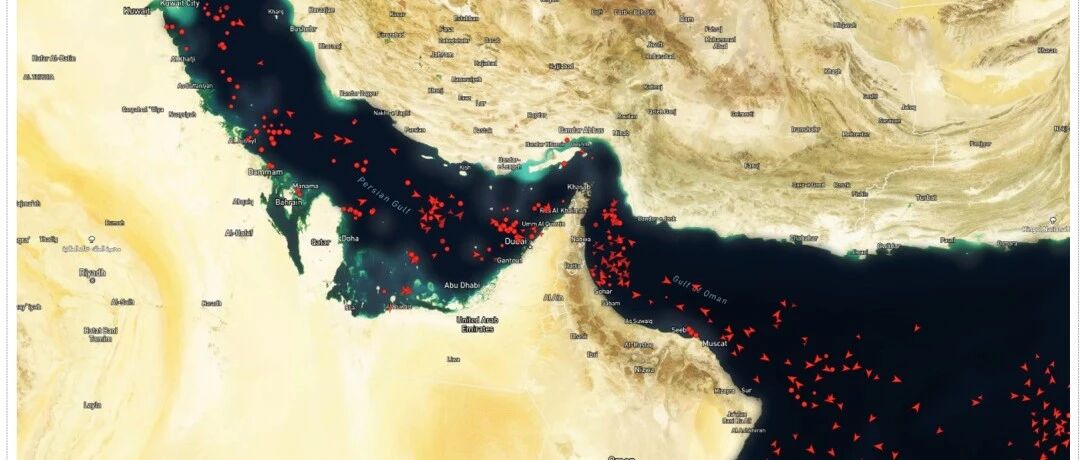
供应链专题分析报告:霍尔木兹海峡冲突下的原油供应冲击与油价路径
SINOLINK SECURITIES· 2026-03-08 07:54
Supply Impact - In a baseline scenario of sustained interruptions, a net supply gap of approximately 250,000 to 400,000 barrels per day is expected, with WTI prices projected to remain in the range of $91 to $100 per barrel[30] - If diplomatic negotiations do not yield substantial progress by mid-March, the supply gap could widen to 500,000 to 600,000 barrels per day, potentially pushing prices up to $100 to $103 per barrel[30] - In an extreme risk scenario involving large-scale mining in the Strait of Hormuz, WTI prices could surge to between $118 and $148 per barrel, significantly impacting global inflation and central bank policies[31] Shipping and Trade Dynamics - The Strait of Hormuz is critical for global oil transport, with approximately 15 million barrels per day passing through, accounting for about 34% of global seaborne oil trade[7] - Currently, around 150 vessels are anchored in the Strait and surrounding areas, indicating a de facto blockade due to safety concerns, despite no formal closure being announced[4] - Most oil transported through the Strait is directed towards Asian markets, with China and India receiving about 44% of the total exports[7] Buffer Mechanisms - Alternative export routes through land pipelines exist, with a capacity of approximately 3.7 to 5.7 million barrels per day, but their effectiveness remains uncertain due to logistical challenges[11] - Global idle capacity, primarily in OPEC countries, could provide some buffer against supply shocks, but much of this capacity is also located in the Gulf region, limiting its immediate utility[15] - Strategic oil reserves held by major consuming countries can be released to mitigate supply shocks, with IEA member countries having approximately 1.5 billion barrels in public reserves[20]
美军,突发!超10架KC-135起飞!美股全线大跌!印度率先遭冲击?
券商中国· 2026-03-03 06:18
Core Viewpoint - The article discusses the escalating military actions by the U.S. against Iran, highlighting the deployment of U.S. Air Force KC-135 refueling aircraft and the potential for increased military engagement in the region, which could impact global oil prices and supply chains [1][2]. Military Actions - Over 10 U.S. Air Force KC-135 refueling aircraft have taken off from multiple bases in the U.S., crossing the Atlantic and European airspace, likely heading to the Middle East for military operations against Iran [1][2]. - President Trump indicated that the military actions are expected to last "4-5 weeks," but the U.S. has the capability to extend this duration significantly [2]. - Secretary of State Rubio stated that the most intense strikes are yet to come, focusing on destroying missile production, drone capabilities, and naval assets [2]. - The Central Command (CENTCOM) confirmed the deaths of 6 U.S. soldiers due to Iranian retaliatory strikes on U.S. bases in the region [2]. Oil Price Pressure - The article notes that the ongoing military tensions are exerting pressure on oil prices, with reports indicating that if the conflict disrupts oil transportation in the Middle East, India would be particularly vulnerable due to its weak reserves [5][6]. - India imports approximately 55% of its crude oil from the Middle East, with a daily import rate of 2.74 million barrels, the highest since the end of 2022 [6]. - The Indian oil minister stated that the country's reserves could only last for 74 days, but current inventory levels may only support 20 to 25 days of supply [6]. Insurance and Shipping Concerns - Several maritime insurance companies announced the cancellation of war insurance for vessels operating in the Gulf region starting March 5, which could further hinder shipping activities [5][6]. - The article highlights that Japan and South Korea heavily rely on Middle Eastern oil, with respective dependencies of about 95% and 70%, but their reserves can sustain them for 254 days and approximately 208 days [6].

冠通期货资讯早间报-20250616
Guan Tong Qi Huo· 2025-06-16 01:59
Report Industry Investment Rating No relevant information provided. Core Viewpoints The report presents a comprehensive overview of overnight market trends, important macro - level news, and updates on various futures markets. It also touches on the impact of geopolitical events on the financial markets, especially the influence of the Iran - Israel conflict on the oil market. Summary by Directory Overnight Market Trends - Domestic futures: SC crude oil rose over 6%, palm oil rose over 3%, and soybean oil rose over 2%. Meanwhile, caustic soda, 20 - number rubber, and ethylene glycol (EG) fell over 1% [2] - International precious metals: COMEX gold futures rose 1.48% to $3452.60 per ounce, with a weekly increase of 3.17%. COMEX silver futures rose 0.21% to $36.37 per ounce, with a weekly increase of 0.64% [3] - International oil prices: US crude oil futures rose 7.55% to $73.18 per barrel, with a weekly increase of 13.32%. Brent crude oil futures rose 7.5% to $74.56 per barrel, with a weekly increase of 12.17% [4] - London base metals: LME copper fell 0.56% to $9647.5 per ton, with a weekly decrease of 0.47%. LME zinc fell 0.61% to $2626.5 per ton, with a weekly decrease of 1.48% [5] - International agricultural products: US soybeans rose 2.52%, US corn rose 1.43%, US soybean oil rose 6.30%, US soybean meal fell 1.09%, and US wheat rose 3.13% [6] Important Information - Macro - Geopolitical: Trump said the US may intervene in the Iran - Israel conflict. Israel had a chance to eliminate Iran's supreme leader, but Trump opposed it. Iran launched missile attacks on Israel, and Iran's response to Israel's attacks will be "unrestricted" [9][10][6] - Monetary: In the first five months, RMB loans increased by 10.68 trillion yuan, and RMB deposits increased by 14.73 trillion yuan. At the end of May, M2 balance was 325.78 trillion yuan, a year - on - year increase of 7.9%, and M1 balance was 108.91 trillion yuan, a year - on - year increase of 2.3% [10] - Shipping: As of June 13, the Shanghai Export Container Freight Index fell 152.11 points, while the China Export Container Freight Index rose 7.6% [10] - Fed: Allianz analysts expect the Fed to keep the policy rate at 4.25% - 4.50% until December before cutting interest rates [13] - Central bank operations: On June 16, 2025, the central bank will conduct a 400 - billion - yuan repurchase operation with a 6 - month term [14] - Commerce: The Ministry of Commerce will further expand opening - up and relax market access for foreign investment [14] - Regulation: The CSRC announced the "Regulations on the Administration of Programmed Trading in the Futures Market (Trial)", which will come into effect on October 9, 2025 [14] Energy and Chemical Futures - LPG: The maximum volume of LPG standard warehouse receipts of Ningbo Baidinian LPG Co., Ltd. was increased from 60,000 tons to 120,000 tons, and the daily shipping speed was increased from 4,000 tons to 8,000 tons [16] - Caustic soda: A large alumina plant in Shandong adjusted the purchase price of 32% ion - exchange membrane caustic soda, reducing it by 10 yuan per ton to 820 yuan per ton [16] - Oil supply: Iran's fuel distribution system is normal, and Goldman Sachs expects no disruption to Middle - East oil supply. It predicts WTI and Brent crude oil prices to drop to $55 and $59 per barrel respectively in Q4 2025, and to $52 and $56 per barrel in 2026 [19] - Oil reserves: The IEA's statement on releasing oil reserves was criticized by OPEC [20] - Nuclear talks: Iran cancelled the nuclear talks with the US [20] Metal Futures - Precious metals: Commerzbank expects gold prices to reach $3400 per ounce by the end of this year and $3600 per ounce by the end of next year. It also gives price forecasts for silver, platinum, and palladium. Goldman Sachs expects gold prices to reach $3700 per ounce by the end of 2025 and $4000 per ounce by mid - 2026 [22][27] - Zinc oxide: Environmental inspections in some regions led to production cuts in zinc oxide enterprises and difficulties in raw material procurement [22] - Metal inventories: Last week, copper, aluminum, zinc, and tin inventories decreased, while lead and nickel inventories increased. Japanese aluminum inventories increased by 3.3% to 331,000 tons by the end of May [23][26] - Silicon: From June 6 to June 12, the weekly output of sample silicon plants in Xinjiang was 31,670 tons, with a stable operating rate of 65% [25] Black - Series Futures - Ferroalloy: In June, HeSteel's 75B ferrosilicon tender price decreased by 300 yuan per ton, and the tender quantity increased by 65 tons. The first - round inquiry price of HeSteel's silicon - manganese in June was 5500 yuan per ton, down from 5850 yuan per ton in May [29] - Real estate: Guangzhou plans to optimize real estate policies, cancel purchase and sales restrictions, and lower down - payment ratios and interest rates. The State Council will optimize real - estate policies to promote the stable development of the real - estate market [29][33] - Iron ore: The total inventory of imported iron ore at 45 ports increased by 106.45 tons, and the daily handling volume decreased by 12.74 tons [29] - Steel production: In early June 2025, the average daily output of crude steel and pig iron of key steel enterprises increased, while that of steel products decreased [33] - Steel inventory: The total urban steel inventory decreased by 19.36 tons this week, with decreases in construction steel and hot - rolled coil inventories [33] Agricultural Futures - Soybean oil: A 9000 - ton soybean oil procurement auction by Cofco on June 13 failed [35] - Soybean crushing: In the 24th week (June 7 - 13), the actual soybean crushing volume of oil mills was 225.87 tons, with an operating rate of 63.49%, 2.86 tons lower than expected [35] - Cotton: As of June 12, the inventory of imported cotton at major ports decreased by 3.19% week - on - week to 443,100 tons [36] - Argentine soybeans: As of June 12, the soybean harvest rate in Argentina in the 2024/2025 season was 95% [37] - US soybeans: Analysts expect the US soybean crushing volume in May to reach a record high for the same period, 1.7% higher than in April and 5.4% higher than in May 2024 [40] - Pig farming: As of June 13, self - breeding and self - raising pig farming had a loss of 2.9 yuan per head, and purchasing piglets for farming had a loss of 210.64 yuan per head [40] - Biofuels: The US government proposes to increase the amount of biofuels blended into fuel in the next two years [40] - Palm oil: Malaysia's palm oil exports from June 1 - 15 increased by 26.3% compared to the same period last month [41] Financial Markets - Commodities: The intensifying conflict between Iran and Israel has led to a surge in global funds flowing into the crude oil market. On June 13, the total trading volume of US crude oil options reached 681,000 contracts [43] - Bonds: In the first month of the launch of science - and - technology innovation bonds, 147 institutions issued over 374.8 billion yuan. Chinese bond markets are becoming a key allocation direction for foreign public funds. Last week, 15 new funds were established, with bond - type funds accounting for 85.66% of the total issuance scale [46]