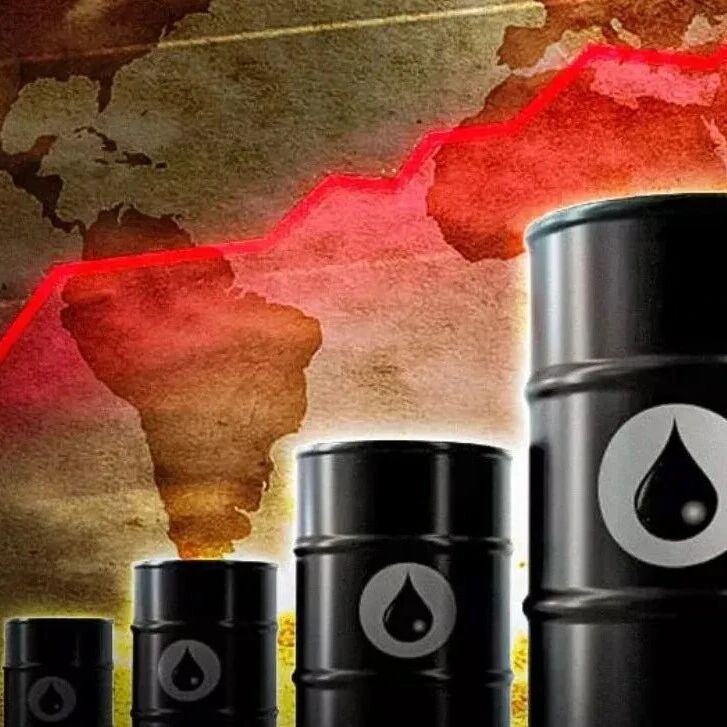
战略石油储备释放

Search documents
国泰君安期货·原油周度报告-20260329
Guo Tai Jun An Qi Huo· 2026-03-29 09:34
1. Report Industry Investment Rating - Not provided in the document 2. Core Viewpoints of the Report - The recovery of shipping in the Strait of Hormuz is difficult, and Brent may challenge $150 per barrel. The supply side of crude oil faces systematic risks due to the continuous closure of the Strait of Hormuz, while the demand side is in a serious regional shortage and under extensive policy intervention. In the short term, the market will be disturbed by the expectation of peace talks and show a volatile pattern. There is still a chance for oil prices at home and abroad to rise again. The potential downward trend risk may come from the negative feedback of the macro - economy, and the recovery of shipping is difficult in the short term. [5][6] - The short - term valuation is at a medium - high level. The recommended strategies are to hold long positions unilaterally, hold positive spreads in the inter - period, and stop profits at high levels as appropriate. For cross - varieties, it is recommended to wait and see for the time being due to the distorted pricing mechanism. [6] 3. Summary According to the Table of Contents 3.1 Overview - The supply side of crude oil is at risk due to the closure of the Strait of Hormuz. Saudi Aramco has adjusted its strategy, and the United States has released strategic oil reserves and provided temporary exemptions for Iranian oil. The demand side is in shortage, and countries have taken measures such as restricting exports and using strategic reserves. [6] - In the short term, the market is volatile, and there is a chance for oil prices to rise again. Brent and WTI may challenge the range of $130 - 160 per barrel, and SC may challenge 1000 yuan per barrel. [6] 3.2 Macro - The gold - oil ratio has dropped significantly. In the short term, inflation has risen, and attention should be paid to stagflation trading. The RMB exchange rate has strengthened again, and social financing has stabilized. [19][20][21] 3.3 Supply - OPEC+ decided to gradually exit the additional voluntary production cuts of 1.65 million barrels per day in April 2026 and implement a production adjustment of 206,000 barrels per day. [23] - The production and export situations of various countries are different. For example, the production of some countries such as the UAE and Saudi Arabia has been affected by attacks, while the production of some countries such as Guyana and Brazil has increased. The United States has released strategic oil reserves, but there is a geographical mismatch problem. [9][10] 3.4 Demand - The refinery operating rates in the United States and Europe have rebounded, while those of Chinese state - owned and private refineries have declined significantly. [66] - Global refinery capacity has changed, with a net increase of 360,000 barrels per day. [69] 3.5 Inventory - The commercial inventory in the United States and the inventory in Cushing have rebounded. The refining profit margin has soared. China has suspended refined oil exports, and there may be a shortage of global naphtha and diesel. The global in - transit crude oil inventory is at a high level, and the domestic refined oil profit margin has declined. [71][73][75][77] 3.6 Price and Spread - The uncertainty of the Iran - US peace talks has increased, and the market risk preference has fluctuated. The spot prices in different regions have different trends. The North American basis has strengthened, the monthly spread has risen significantly, and the SC monthly spread has declined. [81][91][92]
史上规模最大!石油储备开始入市
中国能源报· 2026-03-20 04:10
Core Viewpoint - The International Energy Agency (IEA) has announced the release of 400 million barrels of strategic oil reserves by its member countries to address global oil supply tensions caused by military actions involving the U.S. and Israel against Iran [1][2]. Group 1 - The IEA's announcement on March 11 indicated that 32 member countries unanimously agreed to release 400 million barrels of strategic oil reserves, marking the largest coordinated release to date [2]. - The released oil reserves will primarily consist of crude oil, with refined products being mainly allocated to Europe, while countries in the Americas will increase production to supplement market supply [1][3]. - Following the escalation of tensions in the Middle East, Brent crude oil futures rose above $116 per barrel, and European natural gas and oil prices also saw significant increases [2].


规模史上最大!石油储备开始入市
新华网财经· 2026-03-20 03:20
Group 1 - The International Energy Agency (IEA) announced that its member countries have agreed to release 400 million barrels of strategic oil reserves to the market, marking the largest coordinated release to date [2] - The released reserves will primarily consist of crude oil, with refined products being mainly allocated to Europe, while countries in the Americas will increase production to supplement market supply [2] - The decision to release reserves was made in response to global oil supply tensions caused by military actions by the US and Israel against Iran, which have escalated the situation in the Middle East [2] Group 2 - Following the announcement, Brent crude oil futures rose above $116 per barrel, and prices for natural gas and oil in Europe also saw significant increases [2] - The IEA indicated that the specific distribution ratio of crude oil and refined products, as well as the scale of supply from public reserves, may still be adjusted as countries refine their respective shares [2]

4亿桶战略石油储备开始投放市场
第一财经· 2026-03-20 03:12
Core Viewpoint - The International Energy Agency (IEA) has announced the release of 400 million barrels from strategic oil reserves by its member countries to address global oil supply tensions caused by military actions involving the US and Israel against Iran, marking the largest coordinated release to date [1] Group 1 - The release of strategic oil reserves will primarily consist of crude oil, with refined products being mainly allocated to Europe [1] - American countries are expected to increase production to supplement market supply during this period [1] - The specific distribution ratio of crude oil and refined products, as well as the scale of supply from public reserves, may still be adjusted as countries refine their respective shares [1]

国际油价破100美元是否会成为“基准情景”?
第一财经· 2026-03-13 06:34
Core Viewpoint - The article discusses the impact of escalating tensions in the Middle East on global oil prices, highlighting that oil prices have surged above $100 per barrel for the first time since August 2022, driven by supply concerns and geopolitical risks [2][3]. Group 1: Oil Price Trends - As of April 12, WTI crude oil futures reached $95.73 per barrel, marking a 9.72% increase, while Brent crude oil futures rose by 9.2% to $100.46 per barrel [2]. - The potential for oil prices to stabilize above $100 is contingent on the duration of supply disruptions and the extent of damage to production capabilities in the Middle East [3][6]. Group 2: Supply Chain and Geopolitical Factors - The International Energy Agency (IEA) announced a historic release of 400 million barrels from strategic reserves, which could mitigate supply disruptions for approximately 20 to 25 days, given a daily supply shortfall of about 15 million barrels due to geopolitical conflicts [4][5]. - The closure of the Strait of Hormuz, a critical oil transport route, has led to a significant reduction in oil shipments, with current transport volumes down over 90% from last year [4][5]. Group 3: Production Cuts and Market Reactions - Major Middle Eastern oil producers, including Saudi Arabia, Iraq, the UAE, and Kuwait, have collectively reduced their daily production by over 6.7 million barrels, approximately one-third of their total capacity [6]. - The IEA projects a global oil supply reduction of about 8 million barrels per day this month, totaling nearly 250 million barrels [4]. Group 4: U.S. Government Interventions - The U.S. government is exploring several intervention strategies to curb rising oil prices, including the release of strategic petroleum reserves, increasing shale oil production, and diplomatic efforts with OPEC [10][11]. - The effectiveness of these interventions may be limited by time lags in implementation and the current political landscape, particularly with the upcoming midterm elections [11][12]. Group 5: Future Scenarios - The article outlines two potential scenarios: a prolonged conflict leading to further price increases or a rapid resolution that could stabilize prices [13]. - Market expectations have already factored in some degree of conflict resolution, as indicated by a relatively modest decline in the S&P 500 index [12][13].
冠通期货早盘速递-20260312
Guan Tong Qi Huo· 2026-03-12 05:33
1. Hot News - Trump said that there are "almost no targets left to strike" in Iran and the US military action against Iran is "coming to an end", but US and Israeli officials said they haven't received any internal instructions to stop the military action. The US Central Command warned of possible attacks on Iranian civilian ports, and an Iranian military spokesman said they would strike all ports and terminals in the region if their ports are threatened [2] - The International Energy Agency (IEA) agreed to release 400 million barrels of strategic oil reserves. The G7 energy ministers supported using strategic reserves to stabilize the energy market if necessary. Trump said the US will "slightly" cut its strategic oil reserves, Japan will release about 80 million barrels starting March 16, and Germany will release 2.4 million tons [2] - In February, China's auto sales were 1.805 million, a 15.2% year - on - year decrease. New energy vehicle sales were 765,000, a 14.2% year - on - year decrease, while auto exports were 672,000, a 52.4% year - on - year increase [2] - Iranian President Pezeshkian reiterated Iran's commitment to regional peace in calls with Russian and Pakistani leaders, stating that the "only way" to end the war is to recognize Iran's legitimate rights, pay war reparations, and have international guarantees against future aggression [3] - Starting from the settlement on March 16, 2026, the trading margin for apple futures contracts 2604 and 2605 will be adjusted to 15%, and the daily limit will be adjusted to 13% [3] 2. Sector Performance Key Focus - Urea, Shanghai copper, p - xylene, crude oil, PP [4] Night - session Performance - Non - metallic building materials rose 2.25%, precious metals rose 30.75%, energy rose 6.91%, chemicals rose 12.92%, grains rose 1.02%, agricultural and sideline products rose 2.64%, oilseeds and fats rose 8.32%, non - ferrous metals rose 23.99%, soft commodities rose 2.53%, and coal, coking, steel and minerals rose 8.68% [4][5] 3. Sector Positions - The document shows the changes in commodity futures sector positions in the past five days, including Wind agricultural and sideline products, Wind grains, Wind chemicals, Wind energy, Wind coal, coking, steel and minerals, Wind non - ferrous metals, Wind comprehensive commodities, Wind soft commodities, Wind oilseeds and fats, Wind precious metals, and Wind non - metallic building materials [6] 4. Performance of Major Asset Classes Equity - The Shanghai Composite Index rose 0.25% daily, - 0.71% monthly, and 4.15% annually; the Shanghai 50 rose 0.12% daily, - 1.78% monthly, and - 1.51% annually; the CSI 300 rose 0.64% daily, - 0.13% monthly, and 1.61% annually; the CSI 500 fell 0.08% daily, - 2.95% monthly, and rose 12.56% annually; the S&P 500 fell 0.08% daily, - 1.50% monthly, and - 1.02% annually; the Hang Seng Index fell 0.24% daily, - 2.75% monthly, and rose 1.05% annually; the German DAX fell 1.37% daily, - 6.50% monthly, and - 3.47% annually; the Nikkei 225 rose 1.43% daily, - 6.50% monthly, and 9.31% annually; the UK FTSE 100 fell 0.56% daily, - 5.10% monthly, and rose 4.25% annually [7] Fixed - income - The 10 - year Treasury bond futures fell 0.04% daily, - 0.12% monthly, and rose 0.37% annually; the 5 - year Treasury bond futures fell 0.03% daily, - 0.06% monthly, and rose 0.17% annually; the 2 - year Treasury bond futures fell 0.01% daily, - 0.01% monthly, and 0% annually [7] Commodities - The CRB commodity index rose 1.99% daily, 13.53% monthly, and 18.81% annually; WTI crude oil rose 6.52% daily, 32.22% monthly, and 54.59% annually; London spot gold fell 0.14% daily, - 1.81% monthly, and rose 20.02% annually; LME copper fell 0.69% daily, - 1.86% monthly, and rose 4.42% annually; the Wind commodity index fell 1.38% daily, - 4.64% monthly, and rose 15.81% annually [7] Others - The US dollar index rose 0.32% daily, 1.66% monthly, and 1.01% annually; the CBOE volatility index fell 2.81% daily, rose 22.00% monthly, and 62.07% annually [7] 5. Stock Market Risk Preference and Major Commodity Trends - The document shows the trends of the Baltic Dry Index (BDI), CRB spot index, WTI crude oil, London spot gold, London spot silver, LME 3 - month copper, gold - oil ratio, copper - gold ratio, risk premium, CBOT soybeans, CBOT corn, and Wind All - A (ex - financials and oil & petrochemicals) [8]
IEA宣布史上最大释储行动,为何油价不跌反涨?
财联社· 2026-03-12 01:19
Core Viewpoint - The International Energy Agency (IEA) has agreed to release 400 million barrels of strategic oil reserves, marking the largest coordinated release in history, yet oil prices have increased by nearly 5% following the announcement, indicating market skepticism about the effectiveness of this measure in addressing supply disruptions caused by ongoing conflicts in the Middle East [1][3]. Group 1: IEA's Strategic Oil Reserve Release - The IEA's 32 member countries have consented to release 400 million barrels of strategic oil reserves to mitigate global energy supply risks due to conflicts in the Middle East [1]. - The release will be implemented in phases based on the specific circumstances of each member country, with further details to be announced later [1]. - Following the announcement, Brent crude futures rose by 4.8% to $91.98 per barrel, while WTI crude futures increased by 4.6% to $87.25 per barrel [1]. Group 2: Market Reactions and Analyst Opinions - Analysts and traders express skepticism regarding the adequacy of the released reserves, suggesting that the release may not sufficiently address the supply gap created by ongoing conflicts, particularly in the Strait of Hormuz [3][4]. - Josh Young from Bison Interests noted that the decision could actually be "extremely bullish" for oil prices, as it diminishes the market's ability to compensate for supply shortages [3]. - Fawad Razaqzada from StoneX indicated that the market seems to have already priced in the expectation of the 400 million barrels release, leading to minimal price fluctuations [3]. Group 3: Impact of Middle East Conflicts - Since the onset of the conflict on February 28, it is estimated that approximately 175 million barrels of oil supply have been lost due to disruptions [4]. - The daily oil supply loss is around 15 million barrels, highlighting the severity of the situation [3]. - Michael Lynch from Strategic Energy & Economic Research emphasized that the released reserves would only support slightly over three weeks of conflict, suggesting that further releases may be necessary if the situation persists [6][7].

几个小时内“180度转变”!美国从“反对”到“力促”史上最大规模战略油储释放,背后是特朗普的忧虑
华尔街见闻· 2026-03-12 01:03
Core Viewpoint - The article discusses a sudden policy shift by the Trump administration, moving from opposing to promoting a historic release of 400 million barrels of oil reserves by the International Energy Agency (IEA), which is more than double the previous largest release [2][5]. Group 1: Policy Shift - The U.S. Energy Secretary Chris Wright initially stated at the G7 meeting that large-scale market intervention was "premature" as oil prices had recently dropped below $90 per barrel [4]. - Within two hours, the U.S. reversed its stance, pressuring allies to support the unprecedented oil release, shocking European officials who ultimately complied [5]. - The decision was driven by concerns over potential disruptions in the Strait of Hormuz, a critical passage for global oil supply, which could severely impact the energy market if blocked [6]. Group 2: Market Reaction - Despite the historic scale of the intervention, market skepticism remains regarding its effectiveness, as oil prices rose over 5% on the day of the announcement [3][9]. - The 400 million barrels released is equivalent to only about 20 days of transit volume through the Strait of Hormuz, raising doubts about its ability to stabilize prices below $100 per barrel [9]. - Analysts noted that the speed of the release from IEA member countries would not sufficiently compensate for potential supply losses from the Middle East, even if hostilities were to cease quickly [9]. Group 3: International Contributions - The U.S. is set to contribute over 100 million barrels, with other countries like Japan, Canada, and Germany also participating, albeit with varying levels of enthusiasm [7]. - Germany's energy minister expressed skepticism about the intervention's effectiveness, highlighting that the market was still reacting actively to price changes [8]. - Some European nations initially hesitated to support the intervention, fearing limited impact on price reduction while the Strait remained potentially blocked [8].
格林大华期货早盘提示-20260312
Ge Lin Qi Huo· 2026-03-12 01:02
Group 1: Report Industry Investment Rating - No information provided Group 2: Core View of the Report - The short - term precious metals may fluctuate, and continuous attention should be paid to the evolution of the Iranian situation. The market has high short - term uncertainty, and investors should control positions and prevent risks [2] Group 3: Summary by Relevant Catalogs Market Quotes - COMEX gold futures fell 1.11% to $5183.90 per ounce, COMEX silver futures fell 4.11% to $85.91 per ounce. The Shanghai gold main contract fell 0.37% to 1151.48 yuan per gram, and the Shanghai silver main contract fell 2.8% to 21997 yuan per kilogram [1] - On Wednesday, the U.S. dollar index first fell and then rose, finally closing up 0.32% at 99.26; the yield of the benchmark 10 - year U.S. Treasury bond rose to 4.23%. ICE Brent crude oil closed up 6.64% to $93.63 per barrel [2] Important Information - On March 11, the holdings of the world's largest gold ETF - SPDR Gold Trust increased by 3.716 tons from the previous day, with the current holding at 1077.281 tons. The holdings of the world's largest silver ETF - iShares Silver Trust decreased by 115.51 tons from the previous day, with the current holding at 15539.06 tons [1] - According to CME's "FedWatch", the probability of the Fed cutting interest rates by 25 basis points in March is 0.6%, and the probability of keeping interest rates unchanged is 99.4%. The probability of the Fed cutting interest rates by 25 basis points cumulatively by April is 11.9%, the probability of keeping interest rates unchanged is 88.1%, and the probability of cutting interest rates by 50 basis points cumulatively is 0.1%. The probability of cutting interest rates by 25 basis points cumulatively by June is 33.8% [1] - The U.S. consumer price index (CPI) in February increased by 2.4% year - on - year, in line with expectations and the same as the previous value. The U.S. core CPI in February increased by 2.5% year - on - year, in line with expectations and the same as the previous value; it increased by 0.2% month - on - month, in line with expectations and lower than the previous value of 0.30% [1] - On March 11, the U.S. government launched a new round of 301 trade investigations on the industrial over - capacity of 16 major trading partners to re - impose tariff pressure [1] - U.S. Energy Secretary Wright issued a statement on the release of strategic petroleum reserves. The 32 member countries of the International Energy Agency agreed to Trump's request to coordinate the release of 400 million barrels of crude oil and refined oil from their reserves to reduce energy prices. As part of this action, Trump authorized the Energy Department to release 172 million barrels of crude oil from the strategic petroleum reserve starting next week, and it is expected to take about 120 days to complete the delivery [1] - Trump said that Iran has "nothing left to fight", and the war will end soon. The Iranian president put forward three necessary conditions for ending the war: recognizing Iran's legitimate rights, paying war compensation, and providing firm guarantees from the international community to prevent future acts of aggression. Three ships were reported to have been attacked in the Gulf waters on Wednesday. The Iranian Revolutionary Guard said its forces fired on ships that did not obey orders in the Gulf region [1] Market Logic - The conflict between the U.S., Israel and Iran continues, and the market's risk - aversion sentiment provides some support for gold prices. Affected by the strengthening of the U.S. dollar and the market's expectation of rising interest rates, COMEX gold had a slight correction on Wednesday, and COMEX silver had a larger decline [2] Trading Strategy - The market has high short - term uncertainty, and investors should control positions and prevent risks [2]
IEA批准释放创纪录原油储备,4亿桶规模较2022水平高出超一倍!
美股IPO· 2026-03-12 00:38
Core Viewpoint - The International Energy Agency (IEA) has approved the largest emergency oil reserve release plan in history, responding to soaring oil prices due to the conflict between the U.S. and Iran, with a total of 400 million barrels to be released by member countries [4]. Group 1: Contributions from Member Countries - Germany will release nearly 20 million barrels of oil reserves [4][7] - The UK will contribute 13.5 million barrels of crude oil [4][7] - France plans to release up to 14.5 million barrels, with President Macron stating that the release will be arranged in the coming days [4][7] - The U.S. is set to release 172 million barrels from its strategic oil reserves, starting next week, with the process expected to last about 120 days [4][10] Group 2: Market Impact and Oil Prices - IEA's release of strategic oil reserves is expected to significantly lower oil prices, with President Trump stating that prices are already declining and will continue to do so [4][10] - Following the announcement of the record oil reserve release, oil prices briefly fell but then rose slightly, with WTI crude returning to the $90 per barrel mark [4] Group 3: Supply Chain and Market Concerns - The IEA's 32 member countries hold over 1.2 billion barrels of public emergency reserves, with an additional 600 million barrels in government-controlled corporate inventories [6] - The release details, including the speed and duration, remain uncertain, which is critical for the energy market [9] - There are concerns that the release may not fully cover the supply gap, with estimates of daily supply losses in the Persian Gulf ranging from 11 million to 16 million barrels [9][11]