技术性卖盘

Search documents
金价“上蹿下跳”:大跌后能否迎来反弹?
Sou Hu Cai Jing· 2025-11-10 03:30
Core Viewpoint - Recent fluctuations in gold prices have caused significant concern among investors, with international gold prices dropping below $4000 and $3900, leading to a sharp decline in domestic gold jewelry prices [1][3] Group 1: Price Movements - On October 27 and 28, international gold prices fell below $4000 and $3900, causing a stir in the financial markets [1] - Domestic gold jewelry prices, such as those from well-known brands like Chow Tai Fook and Chow Sang Sang, dropped to 1198 yuan per gram, a decrease of 25 yuan from the previous day [1] Group 2: Factors Influencing Price Decline - Geopolitical factors have played a significant role in the recent decline of gold prices, as easing trade tensions among major economies have reduced market demand for safe-haven assets like gold [3] - Increased technical selling has also contributed to the price drop, as investors who previously profited from rising gold prices began to liquidate their positions in response to changing market conditions [3] Group 3: Optimistic Outlook - Despite the current downward pressure, there are optimistic forecasts for gold prices, with Citibank raising its three-month gold price prediction due to deteriorating U.S. economic and inflation prospects [3] - A weaker dollar is expected to support gold prices, as the relationship between the dollar and gold is typically negative; a weaker dollar enhances gold's attractiveness [3] - Adrian Day suggests that increased employment data raises the likelihood of a Federal Reserve rate cut, which could lead to increased market liquidity and potentially drive gold prices higher in the near term [3]


下周金价看点:15 年历史走势或重现,提前做好心理准备不踩坑
Sou Hu Cai Jing· 2025-10-31 04:46
Core Viewpoint - The recent fluctuations in the gold market have been dramatic, with prices reaching a historical high of $4,381 per ounce on October 20, followed by a sharp decline to below $3,900 per ounce by October 28, marking a significant drop of nearly $500 and the largest single-day decline in 12 years [1][2]. Group 1: Reasons for Gold Price Decline - The decrease in global "risk aversion" sentiment has played a crucial role, as positive developments in U.S.-China trade relations and signs of easing in the Russia-Ukraine conflict have reduced the urgency for investors to seek gold as a safe haven [2][4]. - Technical selling pressure has emerged, with early investors cashing in on profits after a significant price increase from around $3,600 to nearly $4,400 per ounce, leading to a chain reaction of sell-offs [4][5]. - The breach of the psychological and technical support level of $4,000 triggered automated selling orders, further exacerbating the price decline as many investors had set strategies to sell upon reaching this threshold [5][6]. Group 2: Impact on Related Markets - The silver market has also experienced a significant drop, with prices falling from approximately $54 per ounce to around $46, reflecting a 16% decline, which is closely tied to the movements in the gold market [6][7]. - Changes in central bank attitudes towards gold have been noted, with some officials suggesting a reconsideration of high gold reserves, potentially leading to selling pressure that could further impact gold prices [7][8]. Group 3: Domestic Market Reactions - Domestic gold jewelry and investment bar prices have adjusted downward in response to international price changes, providing opportunities for consumers who were previously deterred by high prices [8][10]. - The adjustment in investment bar prices offers new reference points for potential investors, encouraging them to reassess their entry into the gold market [10][11]. Group 4: Institutional Perspectives - Different institutions have varying outlooks on gold prices, with some analysts predicting further declines due to improved trade agreement expectations and potential government shutdown resolutions, while others maintain that long-term upward trends remain intact due to ongoing global uncertainties [12][13]. - HSBC and Standard Chartered have raised their long-term price forecasts, citing strong demand from central banks and geopolitical risks as key factors supporting gold prices [14][15].
金价跌破3900美元,未来会是什么走势?
Sou Hu Cai Jing· 2025-10-28 13:37
Core Viewpoint - International gold prices have recently fallen below key psychological and technical support levels, indicating a shift in market sentiment and potential selling pressure from investors [1][2]. Group 1: Price Movements - As of October 28, international gold prices dropped to $3901.3 per ounce on COMEX, with a maximum decline of 2.95%, while London spot gold fell to $3886.199 per ounce, with a maximum decline of 2.4% [1]. - Domestic gold jewelry prices have also seen significant reductions, with brands like Chow Tai Fook and Chow Sang Sang lowering their prices to 1198 RMB per gram and 1199 RMB per gram, respectively, reflecting a decrease of 25 RMB and 24 RMB per gram from the previous day [1]. Group 2: Influencing Factors - The decline in gold prices is attributed to three main factors: easing trade tensions among major economies, increased technical selling due to profit-taking after a rapid price increase, and the market's full digestion of Federal Reserve interest rate cut expectations [1][2]. - The breach of the $4000 mark is seen as a critical psychological threshold that could trigger algorithmic selling, further exacerbating the downward trend and affecting investor confidence [2]. Group 3: Market Outlook - Despite the current downward pressure on gold prices, the situation differs from historical long-term bear markets, as factors such as a potentially weaker dollar, ongoing global liquidity expansion, central bank gold purchases, geopolitical risks, and inflation expectations may support gold prices in the long run [4]. - After the short-term pressure is released, there is potential for gold prices to stabilize and consolidate [4].

10月黄金价格跌宕起伏!4000美元关口失守,背后原因是?
Sou Hu Cai Jing· 2025-10-28 07:51
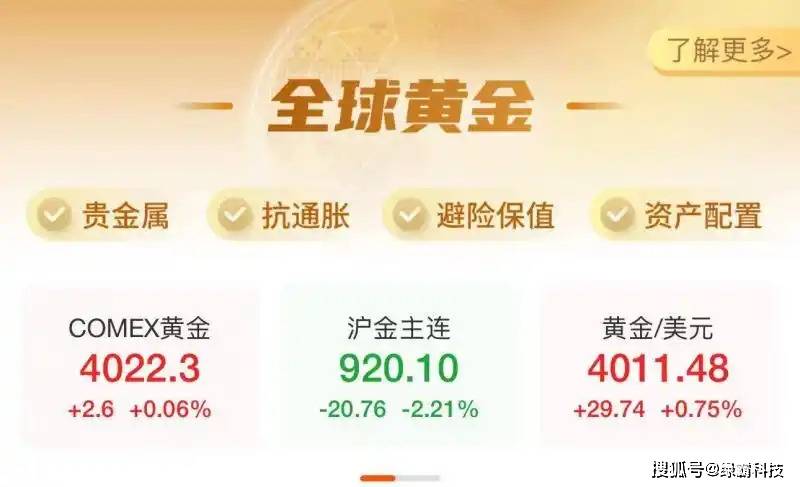
Core Viewpoint - Gold prices have experienced significant fluctuations, recently breaking below and then recovering above the $4000 per ounce mark, influenced by geopolitical factors and market sentiment [1][3][4]. Price Movements - On October 28, spot gold opened at $3981.66 per ounce and later rose to $4011.48 per ounce, recovering from a dip below $4000 on October 27, where it reached a low of $3973 per ounce [1][5]. - On October 27, gold prices fell by 2.8%, marking the first time since October 10 that prices dropped below $4000 per ounce [1]. Market Influences - The recent decline in gold prices is attributed to a reduction in safe-haven demand due to easing U.S.-China trade tensions and complex expectations regarding the Federal Reserve's interest rate decisions and global economic outlook [3]. - Technical selling pressure contributed to the drop, as investors took profits after a rapid increase in gold prices from $3800 to $4400 in the first three weeks of October [3]. Future Outlook - Analysts suggest that gold prices may continue to face downward pressure in the short term due to strong global stock markets, rising U.S. Treasury yields, and reduced safe-haven appeal [4]. - Despite short-term pressures, long-term factors such as geopolitical risks, inflation expectations, and ongoing central bank gold purchases may provide support for gold prices [4].
FPG财盛国际:黄金遭猛烈抛售 金价暴跌131美元 如何交易?
Sou Hu Cai Jing· 2025-10-28 02:15
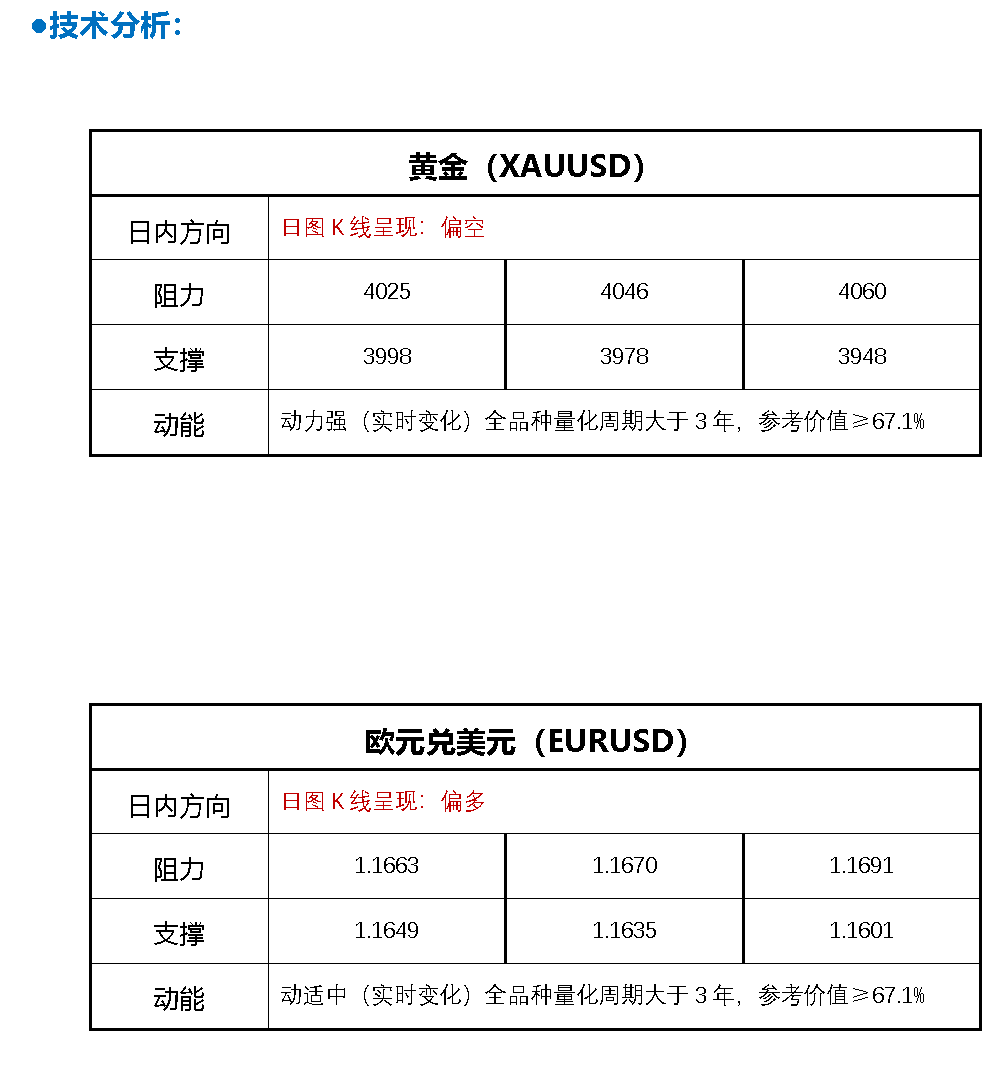
Group 1 - The core viewpoint of the article indicates that the easing of tensions in the US-China trade war has led to improved risk appetite, resulting in gold prices dropping below $4000 per ounce for the first time since mid-October, reaching a low of $3971 per ounce [1] - The US Treasury Secretary stated that a "very substantial framework agreement" was reached during the two-day talks in Kuala Lumpur, and the US is "no longer considering" imposing a 100% tariff on China [1] - Market expectations suggest a 97% probability of a 25 basis point rate cut by the Federal Reserve this week, which typically benefits gold as it does not yield interest [2] Group 2 - FPG analyst Felix noted that aside from technical selling, gold is declining further due to the fading trade tensions that previously drove prices from $3800 to $4400 per ounce in the first three weeks of October [3] - The Relative Strength Index (RSI) remains bullish but is about to turn bearish, with gold prices likely to consolidate in the $3900-$4000 per ounce range [3] - The discussions in Malaysia led to preliminary agreements on issues such as export controls and fentanyl, renewing market optimism regarding a US-China trade agreement, which may have contributed to the recent drop in gold prices [3] Group 3 - FPG analyst Chad pointed out that with gold closing below $4000 per ounce, short sellers may target the October 9 low of $3944 per ounce, and if that level is breached, the next target would be the October low of $3899 per ounce [4] - If gold rebounds and stays above $4000 per ounce, the next resistance level would be $4100, followed by the October 22 high of $4161 per ounce [4] Group 4 - Current market indicators for gold (XAUUSD) show a bearish daily direction with resistance levels at $4025, $4046, and $4060, while support levels are at $3998, $3978, and $3948 [5]
金属普跌 期铝创近两周新低,因俄罗斯供应或增加【8月19日LME收盘】
Wen Hua Cai Jing· 2025-08-20 00:17
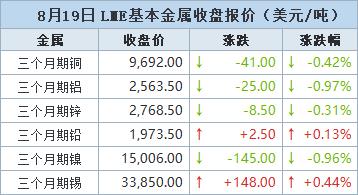
Group 1 - LME aluminum prices have declined for three consecutive days, reaching their lowest level in nearly two weeks due to the potential end of the Russia-Ukraine conflict, which may increase supply from Russia [1] - As of August 19, LME three-month aluminum fell by $25, or 0.97%, closing at $2,563.5 per ton, with an intraday low of $2,561, the lowest since August 6 [1] - The LME has banned the inclusion of aluminum produced in Russia after April 2024 in its warehousing system, leading many companies to refuse Russian materials [6] Group 2 - Other base metals also experienced price changes, with three-month copper down by $41, or 0.42%, closing at $9,692 per ton, and three-month zinc down by $8.5, or 0.31%, closing at $2,768.5 per ton [2][3] - Three-month tin saw an increase of $148, or 0.44%, closing at $33,850 per ton, with Indonesia's refined tin exports in July rising by 11.2% year-on-year [8] Group 3 - The strengthening of the US dollar has made dollar-denominated commodities more expensive for buyers using other currencies, adding pressure to the metals market [7] - Investors are awaiting policy cues from the Federal Reserve's annual symposium in Jackson Hole, contributing to market volatility [6]