新能源车补贴

Search documents
德国电车补贴重启
数说新能源· 2026-01-21 03:19
Group 1 - Germany plans to reintroduce electric vehicle subsidies with a total budget of €3 billion (approximately 24 billion RMB) by 2026, extending tax reductions for new electric vehicles until 2035 [1] - The subsidy for each electric vehicle will range from €1,500 to €6,000, targeting low to middle-income families with taxable income ≤ €80,000, and applicable to vehicles priced under €45,000 [1] - The expected subsidy will support the purchase of 1 million vehicles, averaging 250,000 vehicles per year, which will account for 29.5% of the projected new energy vehicle sales in 2025 [1] Group 2 - The decline in electric vehicle sales in Germany is anticipated due to the reduction of subsidies, with sales dropping by 14.1% in 2023 and 18.2% in 2024 [2] - In 2025, electric vehicle sales are expected to rebound to 847,000 units, representing a 48.3% year-on-year increase, with a penetration rate of 26.8%, up by 8.6 percentage points [2] - The overall new energy vehicle sales in Europe are projected to reach 3.9 million units in 2025, a 32.7% increase year-on-year, with a penetration rate of 22.2%, up by 5 percentage points [2] Group 3 - The reintroduction of subsidies in Germany is seen as a significant benefit for domestic automakers looking to expand into Europe, particularly for companies like BYD and SAIC that produce vehicles priced below €45,000 [3]


崔东树:2025年11月乘用车零售降8% 大幅低于批发2%的增长
Zhi Tong Cai Jing· 2025-12-11 14:28
Core Viewpoint - The automotive market is shifting towards a trend of "price reduction and moderate promotions," with retail sales of passenger cars declining by 8% in November 2025, significantly lower than the 2% growth in wholesale sales [1] Group 1: Market Trends - The retail sales of passenger cars fell by 8% in November 2025, while wholesale sales increased by 2% [1] - The A0-class sedans and C-class SUVs became the main retail drivers in November, with strong performance in high-end SUVs [1] - The retail environment is influenced by consumer urgency due to the expiration of tax exemptions for new energy vehicles, leading to increased sales in December [2] Group 2: Economic Vehicle Market Performance - A00-class sedans saw wholesale of 171,900 units in November 2025, with a year-on-year decline of 1% and a month-on-month increase of 4% [4] - A0-class sedans had wholesale of 183,500 units in November 2025, showing a year-on-year growth of 25% [5] - A0-class SUVs experienced a wholesale decline of 9% year-on-year in November 2025, with retail sales also down by 22% [6] Group 3: A-Class Vehicle Market - A-class sedans had wholesale of 445,800 units in November 2025, with a year-on-year decline of 7% [8] - A-class SUVs had wholesale of 880,000 units in November 2025, with a year-on-year decline of 2% [9] Group 4: B-Class Vehicle Market - B-class sedans had wholesale of 380,500 units in November 2025, with a year-on-year growth of 3% [10] - B-class SUVs saw wholesale of 454,200 units in November 2025, with a year-on-year growth of 10% [11] - The high-end SUV market is witnessing a rapid rise in autonomous new energy vehicles, while traditional fuel vehicles are losing their competitive edge [12] Group 5: MPV Market Trends - B-class MPVs had wholesale of 45,100 units in November 2025, with a year-on-year growth of 40% [13] - C-class MPVs experienced a year-on-year decline of 20% in wholesale in November 2025 [14] - The MPV market is transitioning from a high-growth phase to a low-growth trend, with strong performances from brands like BYD and Tengshi [14]



汽车早餐 | 金龙汽车副总裁吴文彬辞任;闻泰科技要求恢复对安世的控制权;欧盟将减少对华原材料依赖
Zhong Guo Qi Che Bao Wang· 2025-12-02 01:43
Group 1: Domestic News - The China Passenger Car Association reported that the subsidy policy encourages mid-to-low-end economic vehicles, leading to a recovery in this segment [2] - The association noted that with the promotion of scrapping and trade-in subsidies, new energy vehicles receive higher subsidies compared to fuel vehicles, benefiting lower-priced models [2] Group 2: Energy Storage and Technology - A semi-solid lithium battery energy storage project in Wuhai, Inner Mongolia, has successfully connected to the grid, marking a significant milestone in China's semi-solid storage technology [3] Group 3: International News - Russia's automotive production has decreased by 12% in the first ten months of the year, with over 677,000 vehicles produced, indicating severe challenges in the automotive sector [4] Group 4: European Union Policies - The European Commission plans to announce measures to reduce reliance on Chinese raw materials, aiming to enhance self-sufficiency in European industry [5] Group 5: Automotive Industry Developments - Tata Motors, Mahindra, and Hyundai have called on the Indian government to remove emission incentives for small cars, arguing that such policies could hinder electric vehicle development [6] - German Chancellor Merz has urged the EU to relax the 2035 ban on fuel vehicles, citing the need for greater flexibility for automakers amid increasing competition from Chinese companies [7] Group 6: Corporate News - Wentech Technology has appealed to the Dutch Supreme Court to regain control over Nexperia, a semiconductor manufacturer, following a government intervention [8] - Xiamen King Long Motor Group announced the resignation of Vice President Wu Wenbin, effective December 1, 2025, due to retirement [10] - SAIC Group's subsidiary plans to establish an investment fund focused on the smart electric vehicle industry, with an initial capital commitment of 1.09 billion yuan [11] - Dong'an Power reported a 21.83% year-on-year increase in engine sales for November, with total sales reaching 390,500 units for the year [12] - Lichung Group signed a technical agreement for the processing of humanoid robot components, focusing on material selection and design [13] - Changhua Group received a development notification from a domestic automaker, with an expected total sales amount of approximately 732 million yuan over the project's lifecycle [14]





31省公布出生率数据,保时捷前三季利润暴跌99% | 财经日日评
吴晓波频道· 2025-10-28 02:15
Group 1: US-China Economic Talks - The recent US-China economic talks in Kuala Lumpur led to preliminary consensus on key issues such as maritime logistics, shipbuilding, and agricultural trade, setting the stage for the upcoming leaders' meeting [2][3] - Both sides expressed a willingness to resolve differences through respectful dialogue and cooperation, indicating a potential thaw in trade tensions [2][3] Group 2: Industrial Profit Growth - In the first nine months of the year, China's industrial enterprises achieved a total profit of 53,732 billion yuan, a year-on-year increase of 3.2%, with September alone seeing a profit growth of 21.6% [4][5] - The profit growth was driven by strong export demand and a slight recovery in domestic demand, although the sustainability of this growth remains uncertain [5] Group 3: Birth Rate Statistics - In 2024, China's birth population is projected to be 9.54 million, an increase of 520,000 from the previous year, with a birth rate of 6.77‰, up by 0.38‰ [6][7] - The data indicates that western regions have higher birth rates compared to eastern regions, with Guangdong continuing to lead in total births [6][7] Group 4: New Energy Vehicle Subsidies - A competitive subsidy "war" among car manufacturers has emerged, with companies like Chery and Xiaomi offering to cover the additional purchase tax costs for consumers due to policy changes [8][9] - This trend reflects the intensifying market competition in the new energy vehicle sector, as companies aim to boost sales before the tax reduction policy takes effect [8][9] Group 5: Meituan's Bond Issuance - Meituan plans to launch its largest bond issuance to raise approximately $3 billion, primarily for refinancing existing debts and general operational needs [10][11] - The company faces significant competition in the food delivery sector, prompting the need for financial maneuvers to alleviate cash flow pressures [10][11] Group 6: Porsche's Profit Decline - Porsche reported a staggering 99% drop in profit for the first three quarters, with a loss of 9.66 billion euros in Q3, attributed to declining sales in China and Europe [12][13] - The company is undergoing organizational restructuring and plans to cut jobs as part of its strategy to cope with the challenges posed by the shift towards electric vehicles [12][13] Group 7: SoftBank's Investment in OpenAI - SoftBank has approved an additional $22.5 billion investment in OpenAI, part of a larger commitment to invest $40 billion, aiming to capitalize on OpenAI's potential IPO [14][15] - This investment comes amid SoftBank's ongoing financial challenges and highlights the risks associated with high-stakes investments in the tech sector [14][15] Group 8: Stock Market Performance - The stock market experienced a significant rise, with the Shanghai Composite Index reaching a ten-year high, driven by positive sentiment from US-China trade negotiations [16][17] - Despite the overall market uptrend, there were fluctuations, indicating cautious investor sentiment as the index approached the psychological 4000-point mark [16][17]

比亚迪插电混动车加速驶向世界
3 6 Ke· 2025-09-19 03:32
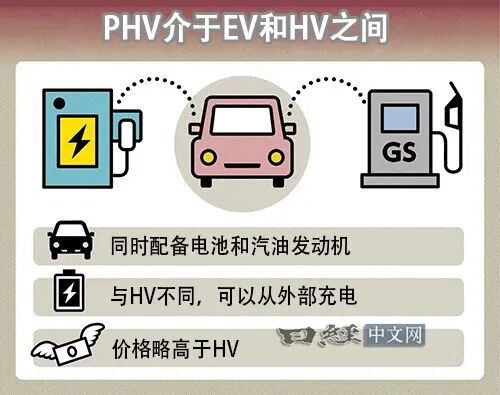
Core Insights - BYD plans to launch its first plug-in hybrid vehicle (PHV) in the Japanese market around January 2026, specifically the "Sea Lion 6" model, as part of its strategy to capture market share in Japan [1][6] - The company believes there is significant demand for alternatives to electric vehicles (EVs), particularly among consumers hesitant about EVs due to concerns over range and charging infrastructure [1][4] - BYD's strategy includes promoting PHVs as a viable alternative to EVs, especially in markets like Japan where hybrid vehicles (HVs) are already popular [2][4] Group 1 - The PHV market is seen as a bridge between EVs and HVs, offering the ability to charge externally while also being able to run on gasoline, which alleviates range anxiety [2][9] - BYD's PHV sales are expected to be significant, with projections indicating that 58% of its total vehicle sales in 2024 will be PHVs, amounting to approximately 2.48 million units [4] - The company aims to position its PHV offerings at a competitive price point, below 5 million yen (approximately 241,300 yuan), to attract consumers in Japan [2][4] Group 2 - The global market share of PHVs is comparable to that of HVs, with PHVs accounting for 7.6% of new car sales in the first half of 2025, closely trailing EVs at 14.1% [7] - In China, PHVs have a market share of 15.9%, significantly higher than HVs at 3.0%, indicating strong consumer acceptance [7] - The compatibility of PHVs with advanced automotive technologies, such as autonomous driving, positions them favorably in the evolving automotive landscape [9][11] Group 3 - The environmental impact of PHVs is a critical factor for their future adoption, with estimates showing that PHVs have 20% higher CO2 emissions than EVs but 10% lower than HVs [11] - The development and sales strategies for PHVs must align with regional policies and incentives, as seen in different market responses to subsidies for PHVs in countries like China and Australia [11]

韩环境部制定次年预算 电动车和氢能车补贴一升一降
Shang Wu Bu Wang Zhan· 2025-09-05 17:34
Core Insights - The South Korean Ministry of Environment has announced a budget of 15.9 trillion won for 2026, representing a 7.5% increase year-on-year [1] Electric Vehicle and Hydrogen Vehicle Subsidies - To promote electric vehicle adoption, the budget includes 177.5 billion won for electric vehicle transition subsidies, 73.7 billion won for new energy vehicle financing subsidies, 74 billion won for charging infrastructure funds, and 2 billion won for electric vehicle insurance [1] - The planned subsidies aim to support the purchase of 260,000 passenger cars and 36,000 trucks [1] - In contrast, due to decreased demand and low budget execution rates, the hydrogen vehicle subsidy has been reduced by 145 billion won compared to the previous year [1] Climate Disaster Response and Water Resource Management - The largest portion of the budget is allocated to addressing climate disasters such as floods and droughts, as well as managing water resources including rivers and sewage systems [1]
电力设备新能源行业点评:英国政策支持新能源车及充电设施,新兴市场储能大有可为
Guoxin Securities· 2025-07-17 01:20
Investment Rating - The investment rating for the electric equipment and new energy industry is "Outperform the Market" (maintained) [2][3]. Core Insights - The UK government has restarted subsidies for new energy vehicles and is supporting the construction of charging infrastructure, with a total investment plan of £63 million (approximately 600 million RMB) announced on July 13 [4]. - The GGII data indicates that in the first half of 2025, China's energy storage system and battery shipments are expected to continue to achieve high year-on-year growth, with emerging markets likely becoming significant export destinations for the energy storage industry [2][5]. Summary by Sections New Energy Vehicles - In the first half of 2025, cumulative sales of new energy vehicles in the UK reached 332,000 units, a year-on-year increase of 33%. The cumulative sales in nine European countries reached 1.3544 million units, up 26% year-on-year [4]. - The UK government announced a subsidy policy worth £650 million (approximately 6.2 billion RMB) to support the purchase of vehicles priced below £37,000 (approximately 355,000 RMB), effective from July 16, 2025, until the 2028-2029 fiscal year [4]. Energy Storage - According to GGII data, the shipment volume of energy storage systems is expected to reach 110 GWh in the first half of 2025, nearly matching the total for the entire year of 2024, with a year-on-year increase expected [5][7]. - The shipment volume of energy storage batteries in the first half of 2025 is projected to be 265 GWh, a year-on-year increase of 128%, with an expected total shipment of over 500 GWh for the entire year, reflecting a growth rate of nearly 50% [7][11]. Market Opportunities - Emerging markets are anticipated to become important export destinations for Chinese energy storage companies, with significant growth in energy storage installations expected in regions such as the Middle East, Southeast Asia, and Latin America [15][16]. - GGII forecasts that energy storage installations in Australia will reach 7 GWh in 2025, a year-on-year increase of 192%, while combined installations in the Middle East, Southeast Asia, South Asia, Latin America, and Africa are expected to reach 37 GWh, a year-on-year increase of 256% [16]. Investment Recommendations - Recommended companies in the battery segment include CATL and Yiwei Lithium Energy; in the materials and equipment segment, recommended companies include Keda Li, Zhongwei Co., Rongbai Technology, and Dangsheng Technology; in the charging pile segment, Shenghong Co. is recommended [3].





【乘联分会论坛】2025年5月乘用车区域市场流向分析
乘联分会· 2025-07-01 08:36
Core Viewpoint - The article highlights the strong growth of the passenger car market in China, driven by favorable government policies and regional disparities, with northern regions showing significant gains compared to southern regions [1][6][11]. Group 1: Passenger Car Market Trends - In 2025, the national retail sales of passenger cars are expected to grow by 9% year-on-year, with a strong performance observed from February to May, maintaining a growth rate of around 13% [4][5]. - In May 2025, retail sales reached 1.932 million units, a year-on-year increase of 13.3% and a month-on-month increase of 10.1%, with cumulative sales for the year at 8.811 million units, up 9.1% year-on-year [5][6]. Group 2: Regional Market Characteristics - The northern car market is showing a clear strength, with market share increasing by 2.8 percentage points year-on-year in May 2025, and by 2.1 percentage points compared to 2019 [7][8]. - The northeastern and northwestern regions are experiencing significant growth, while the southern regions, particularly the eastern and central areas, are lagging behind [6][8]. Group 3: Policy Impact on Market Structure - Government subsidies are favoring the development of low-end and economic vehicles, particularly benefiting A00 and A0 class electric vehicles in northern regions [1][9]. - The article emphasizes the importance of policy fairness in promoting the adoption of small and micro electric vehicles, which is crucial for their widespread acceptance [1][9]. Group 4: New Energy Vehicle Market Analysis - The new energy vehicle market is showing strong performance, particularly in pure electric and plug-in hybrid vehicles, with traditional fuel vehicles still holding a significant share in the northern and midwestern regions [14][15]. - In May 2025, the proportion of new energy vehicles in regions like Hainan and Tianjin reached around 60%, indicating robust growth [14][15].