
沃什冲击

Search documents
宏观分析与商品研判
Zhao Shang Qi Huo· 2026-03-25 02:00
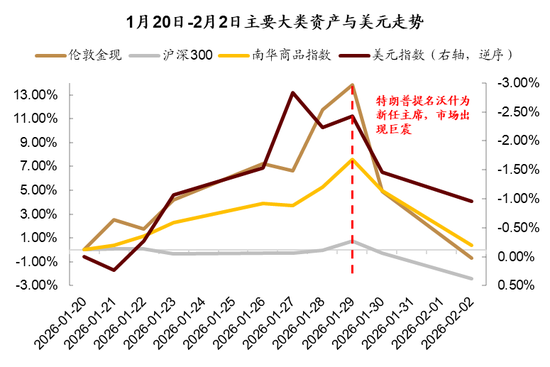
Group 1: Investment Rating - No investment rating information provided in the report Group 2: Core Views - The global trend is towards fiscal expansion, with the US having a tax - cut bill and a bipartisan consensus on fiscal deficit, Europe entering a fiscal expansion cycle, Japan implementing a loose fiscal policy with 27% high - level people's livelihood expenditure, and China stating that "fiscal intensity will only increase" [7][8] - The Fed will end its balance - sheet reduction on December 1st, with current monthly reductions of $500 million in US Treasuries and $3.5 billion in MBS; Europe is essentially expanding its balance sheet, and China is implementing a moderately loose monetary policy [9] - The closure of the Strait of Hormuz may lead to global "stagflation", and the stock market may be overly optimistic [14] - Capital market stability depends on the easing of the US - Iran conflict, which requires the softening of US and Iranian attitudes and a "major exchange" among major powers, but this is difficult to achieve [23] - The dollar's fate may be tied to the Strait of Hormuz, likely resulting in a short - term positive and long - term negative outcome [28] - The RMB's strength reflects China's risk - resistance ability, with inflation repair, energy independence, and strong exports contributing to it [29][31] - The fundamentals of non - ferrous metals are weak in the near term but strong in the long term, and the next liquidity node is April 1st when the Fed lowers the eSLR, theoretically releasing $3.2 trillion [32] Group 3: Summary by Related Catalogs 1. Last June's Performance of Major Asset Classes - Gold and stocks are relatively synchronous due to the liquidity logic, except in September last year when the US government - shutdown expectation was related to fiscal and US dollar credit; stocks and bonds show a seesaw effect, with intermittent co - movement from November to January due to the liquidity logic; gold and stocks were under pressure in early February (due to the new Fed chair) and March (due to the Strait of Hormuz blockade, also a liquidity logic) [5][6] 2. Benchmark Scenario: Global Fiscal Stimulus - The US has a tax - cut bill and a bipartisan consensus on fiscal deficit; Europe enters a fiscal expansion cycle and relaxes military - expenditure deficit constraints; Japan has a loose fiscal policy with high people's livelihood expenditure; China emphasizes that "fiscal intensity will only increase" [7][8] 3. Benchmark Scenario: Decline in Monetary Price and Expansion in Quantity - The Fed will end balance - sheet reduction on December 1st, currently reducing $500 million in US Treasuries and $3.5 billion in MBS monthly; Europe is expanding its balance sheet, and China has a moderately loose policy [9] 4. Wash Shock - There was a one - time reaction at the end of January, but due to many restrictions on balance - sheet reduction, it is not considered a benchmark scenario [12] 5. Strait of Hormuz Closure - The closure of the Strait of Hormuz may lead to global "stagflation", and the stock market may be overly optimistic. The current daily supply gap of crude oil is about 11 million barrels per day, and after considering releases from various sources, there is still a 7% gap [14][16] 6. Historical Lessons - The end of the Iran - Iraq War involved multiple factors such as UN resolutions, military actions, and super - power intervention. During the Iran - Iraq War, the Strait of Hormuz was not blocked for a long time, and after US and international - community intervention, it was reopened [20][21] 7. Market Outlook - Capital market stability requires the easing of the US - Iran conflict, which is difficult to achieve. Seeking NATO's military force to open the Strait of Hormuz is unlikely to quell the conflict [23][25] 8. Currency Analysis - The US dollar's safe - haven property is prominent, and the current market liquidity is more tense, which supports the US dollar. However, the dollar's fate may be tied to the Strait of Hormuz, likely resulting in a short - term positive and long - term negative outcome. The RMB shows strength, and the main Asia - Pacific currencies are clearly differentiated, with the Australian dollar, Malaysian ringgit, and RMB appreciating [27][28][29] 9. Non - Ferrous Metals Outlook - The fundamentals of non - ferrous metals are weak in the near term but strong in the long term. The next liquidity node is April 1st when the Fed lowers the eSLR from 5 - 6% to 3 - 4.5%, theoretically releasing $3.2 trillion [32]
券商晨会精华:继续坚定看好中国资产重估进程
Xin Lang Cai Jing· 2026-02-06 00:17
Group 1 - The three major indices narrowed their declines after initially dropping over 1%, with the North Stock 50 Index falling over 2% [1] - The total trading volume in the Shanghai and Shenzhen markets was 2.18 trillion, a decrease of 304.8 billion compared to the previous trading day [1] - Over 3,700 stocks in the market declined, while the consumer sector saw significant gains, particularly in food and beverage, retail, film and television, and tourism [1] Group 2 - CITIC Securities predicts faster profit growth in sectors such as aerospace, electricity, and non-ferrous metals based on industrial indicators [2] - The Industrial Prosperity Index, constructed using six industrial indicators, shows a strong correlation with profit growth in manufacturing companies [2] - The index indicates that over 60% of industry prosperity indices correlate with corresponding profit growth rates above 50% [2] Group 3 - Huatai Securities reports that the ongoing negotiations regarding Indonesia's coal production quotas for 2026 are impacting spot coal exports [3] - The reduction in Indonesian coal spot exports is estimated to affect China's monthly average thermal coal consumption and import volumes by 0.5% and 4.2%, respectively [3] - The timing of the quota negotiations coincides with the Lunar New Year, which may amplify the emotional impact on coal consumption beyond the fundamental effects [3]
中金深度:“沃什冲击”如何改变全球市场?
Xin Lang Cai Jing· 2026-02-05 23:45
Group 1 - The Federal Reserve is unlikely to initiate "balance sheet reduction" in the short term, but the threshold for continued "balance sheet expansion" and QE has significantly increased [1][5][63] - If the Federal Reserve is unwilling to support fiscal easing through "balance sheet expansion," a new temporary monetary-fiscal coordination method may involve increasing the rate of interest cuts and the issuance of short-term bonds by the Treasury [1][10][69] - The potential for the Federal Reserve to cut interest rates may exceed market expectations, leading to a return of dollar easing trades in the short term [1][59][88] Group 2 - The nomination of Waller as the next Federal Reserve Chair has caused significant global asset volatility, with gold and silver prices dropping by 20% and 40% respectively, and a broad sell-off in stocks and commodities [2][60] - The past year has seen AI technology and dollar liquidity as the two main themes in global markets, with a restructuring of monetary order leading to a depreciation of the dollar [4][62] - If Waller successfully reduces the Federal Reserve's balance sheet, it could partially restore the dollar's credibility and delay the "de-dollarization" process, impacting global market trends [4][62] Group 3 - The "rate cut + balance sheet reduction" policy combination proposed by Waller is seen as contradictory, as balance sheet reduction is a tightening measure that conflicts with the current administration's goals of economic growth and reduced debt costs [5][63] - Market constraints indicate that balance sheet reduction would withdraw liquidity from the financial system, potentially leading to financial risks due to insufficient bank reserves [6][66] - Historical precedents show that previous balance sheet reductions have led to liquidity crises in the money market, suggesting that current financial conditions do not support Waller's proposed balance sheet reduction [8][66] Group 4 - The Federal Reserve's short-term policy focus may lean towards interest rate cuts rather than balance sheet reduction, with a dovish stance expected rather than a hawkish one [11][71] - Waller's potential policy priorities may include relaxing financial regulations to facilitate future balance sheet reductions, which could also help restore liquidity in the Treasury market [12][72] - The current financial regulatory framework constrains banks' balance sheet usage, and relaxing these regulations could improve efficiency and lower market-making costs [12][72] Group 5 - The U.S. banking sector may benefit from the "Waller shock," as continued interest rate cuts without QE or balance sheet expansion could steepen the yield curve, improving bank profitability [25][84] - The potential for a temporary economic overheating in the U.S. could support the banking sector, as traditional cyclical stocks may gain traction [28][87] - The dollar may experience a temporary strengthening, but the long-term trend of "de-dollarization" remains uncertain, influenced by the broader economic policies under Waller's leadership [29][39]

中金深度:“沃什冲击”如何改变全球市场?
中金点睛· 2026-02-05 23:41
Core Viewpoint - The Federal Reserve may find it difficult to "taper" in the short term, but the threshold for continued "expansion" and QE has significantly increased. If the Fed is unwilling to support fiscal easing through "expansion," a new temporary monetary-fiscal coordination method may involve increasing the rate of interest cuts while the Treasury increases short-term debt issuance [1][4][10] Group 1: Federal Reserve Policy Implications - The nomination of Waller as the next Fed Chair has caused global asset volatility, with markets reacting negatively to his hawkish stance on "rate cuts + tapering" [1][4] - The Fed's previous tapering cycle reduced its balance sheet from $8.9 trillion to $6.6 trillion, leading to liquidity issues in the money market, which prompted a shift back to "expansion" [5][7] - The current financial conditions do not support the initiation of a tapering process in the short term, as previous tapering led to liquidity shortages [7][9] Group 2: Market Reactions and Predictions - The market's simplistic interpretation of Waller as hawkish may lead to significant discrepancies in expectations, as the Fed's future policy may be more dovish than currently priced in [10][13] - The Fed's potential focus on rate cuts rather than tapering aligns with political pressures to lower debt costs, suggesting a possible increase in the magnitude of rate cuts beyond market expectations [10][11] - The Fed's future policy path may involve easing financial regulations to prepare for tapering without compromising financial stability [14][18] Group 3: Asset Class Implications - U.S. bank stocks may benefit from the "Waller shock," as a steepening yield curve would improve bank profitability [24][27] - The dollar may strengthen in the short term due to the Fed's potential actions, but the long-term trend of "de-dollarization" remains uncertain [28][34] - Chinese stocks and global commodities are currently under pressure but are expected to rebound as easing expectations return [34]

西部证券晨会纪要-20260204
Western Securities· 2026-02-04 02:39
Group 1: Market Strategy and Economic Outlook - The "Walsh Shock" marks the beginning of the dollar's credit enhancement process, with potential actions from Trump to restore dollar credibility, possibly leading to higher oil prices and a favorable position for US-China assets [1][10] - The report maintains a positive outlook on RMB assets such as AH shares and government bonds, focusing on sectors that benefit from cyclical recovery and abundant liquidity, including oil, chemicals, liquor, and technology [1][10] - Short-term gold prices may struggle to rise significantly, but a strategic allocation is recommended [1][10] Group 2: CDN Industry Growth and AI Integration - The demand for CDN services is expected to grow rapidly in line with the increasing number and usage of AI Agents, as these agents require low-latency, high-concurrency content delivery [13][14] - CDN is evolving towards edge computing, with nodes transitioning from mere transmission units to distributed intelligent units capable of computation, storage, and AI inference [14] - Recent price increases in cloud services, including CDN, indicate a potential new growth cycle for the industry, with significant price hikes reported by major providers like Google Cloud and AWS [15] Group 3: Company Performance and Strategic Initiatives - Bosideng's core down jacket business saw an 8.3% year-on-year revenue increase to 6.568 billion yuan, accounting for 73.6% of total revenue, outperforming the industry [19][20] - The company is enhancing its brand image through innovative product lines and collaborations, while also expanding its seasonal product offerings to mitigate seasonal fluctuations in down jacket sales [19][20] - Bosideng is leveraging AI technology across design, retail, and supply chain operations, and is expanding its international presence to support brand globalization and supply chain development [21]
沃什冲击-后-市场怎么看
2026-02-03 02:05
Summary of Conference Call Records Industry Overview - **Federal Reserve Policy and Market Impact**: The potential implementation of Kevin Warsh's balance sheet reduction plan may lead to rising long-term interest rates and reduced liquidity, putting pressure on stock and commodity markets. However, the actual execution remains uncertain due to potential conflicts with the economic goals of the Trump administration [1][2][4]. - **Long-term Investment Value of Gold**: In the context of global geopolitical restructuring and low economic growth with high debt, gold remains an attractive long-term investment as a stabilizer and tool against uncertainty, especially as the dominance of the US dollar declines [1][5]. - **Stock Market Bullish Foundation**: Despite recent market volatility, the foundation for a bull market in 2026 remains intact due to factors such as the Federal Reserve's interest rate cuts, ongoing US fiscal expansion, China's economic transformation, and inflows of long-term capital [1][6]. Sector-Specific Insights Non-Ferrous Metals Market - **Market Outlook**: The non-ferrous metals market may experience short-term fluctuations, but industrial metals and chemicals typically perform well in mid-to-late market cycles. After market stabilization, focus should be on clear industrial trends rather than simple risk aversion [1][7]. Chemical Industry - **Cyclical Opportunities**: The chemical industry is undergoing a new tight cycle supported by improving supply-demand dynamics, declining interest rates, and ample liquidity, suggesting upward valuation potential. Attention is recommended on leading companies in specific segments like PTA and polyester filament for better allocation [1][13][15]. AI Industry - **AI Agent Explosion Year**: 2026 is anticipated to be the year of AI Agent explosion, with multi-agent collaboration enhancing application value. Investment opportunities are seen in major tech companies, AI Agent niches, and domestic computing power supply chains [1][28]. Robotics Industry - **Key Milestones**: The release of Tesla's V3 robot is expected to be a significant milestone, with attention on related companies in the supply chain. Companies with low valuations and marginal changes are also expected to achieve breakthroughs [1][21][22]. Energy Sector - **Oil and Gas Market Changes**: Recent changes in the oil and gas market are driven more by expectations than fundamentals, with oil prices around $65 and natural gas prices rising due to weather impacts. The overall market is expected to remain influenced by anticipated economic conditions [1][16]. Coal Industry - **Investment Opportunities**: The coal industry is expected to see improved demand driven by economic recovery, with a projected 10% increase in earnings per share compared to 2025. Despite recent declines in coal stock indices, this presents a favorable investment opportunity [1][18]. Innovative Pharmaceuticals - **Market Opportunities**: The innovative pharmaceutical sector is significantly influenced by overseas liquidity, with current valuations appearing low. The sector is expected to benefit from a large market space as many drugs approach patent cliffs in the coming years [1][19]. Additional Insights - **Market Volatility and Stock Performance**: Despite recent stock market fluctuations, the overall bullish foundation remains, with specific sectors like AI technology and resource products expected to perform well in the coming months [1][6][7]. - **Valuation Adjustments in Equity**: The equity revaluation process is ongoing, with a focus on identifying new equilibrium points in the non-ferrous sector, which has seen significant price movements recently [1][9]. - **Demand Elasticity for Base Metals**: Demand for base metals is expected to increase significantly as global manufacturing rebounds, with strategic reserves in various countries also contributing to demand [1][10][11]. - **Chemical Sector's Long-term Outlook**: The chemical sector is expected to continue its upward trend, supported by stable product prices and anticipated price increases in the upcoming seasons [1][13][14]. This summary encapsulates the key points from the conference call records, providing a comprehensive overview of the discussed industries and their respective outlooks.
黄金续跌,投资者如何风控?
3 6 Ke· 2026-02-02 23:49
Core Viewpoint - The precious metals market, particularly gold and silver, has experienced significant volatility, with sharp declines in prices leading to concerns about market stability and investor risk management [2][3][4]. Price Movements - As of February 2, 2026, gold prices fell to $4421.31 per ounce, down over 9% for the day, while silver dropped to $72.21, down over 15% [2]. - Earlier in the day, gold had broken below $4800 per ounce, marking a 3.35% decline, and silver had seen a drop of 6% to $79.57 per ounce [2]. - The day also saw gold reach a new low of $4450 per ounce, the lowest since January 8, 2026, while silver approached levels that erased its gains for the year [2]. Market Analysis - Analysts noted that the sharp decline in precious metals prices indicates a potential market frenzy, with increased positions and leverage leading to widespread sell-offs [3]. - The volatility in precious metals has been accompanied by declines in other commodities, including WTI crude oil, palladium, copper, and platinum, with WTI oil dropping over 6% to $61.69 per barrel [3]. Risk Management by Financial Institutions - Major state-owned banks in China have issued multiple risk warnings regarding precious metals price fluctuations, with the Industrial and Commercial Bank of China (ICBC) issuing four warnings in a week [4]. - ICBC advised investors to adopt a long-term perspective and diversify their investments to manage risks effectively [4]. - Other banks, such as China Construction Bank, have raised the minimum investment amounts for gold accumulation and implemented limit management for gold investment products [4]. Influencing Factors - The precious metals market has been affected by liquidity issues and market expectations surrounding potential policy changes following the nomination of Kevin Warsh as the next Federal Reserve Chair by President Trump [5]. - Analysts believe that while the immediate impact of Warsh's nomination may be short-term, the long-term fundamentals for precious metals remain intact, with a focus on stable monetary policy and low inflation [5]. Long-term Outlook - Despite recent volatility, some analysts maintain a positive long-term outlook for precious metals, particularly gold, due to ongoing geopolitical shifts and concerns over fiscal sustainability [6]. - The World Gold Council reported that global gold demand is expected to exceed 5000 tons for the first time in 2025, with a significant increase in demand value, indicating strong market fundamentals [6].