
消费者物价指数(CPI)

Search documents
美联储穆萨勒姆:关注个人消费支出(PCE)通胀,而非消费者物价指数(CPI)。
Sou Hu Cai Jing· 2026-02-20 20:53
Group 1 - The Federal Reserve's Musalem emphasizes the importance of monitoring Personal Consumption Expenditures (PCE) inflation rather than the Consumer Price Index (CPI) [1]
CPI Report Live: Today's Inflation Data Was a 'Welcome Surprise'
Investopedia· 2026-02-13 17:03
Economic Outlook - Economists are optimistic about inflation moving towards the 2% target as tariff effects and labor market pressures ease, although further confirmation is needed before the Federal Open Market Committee (FOMC) resumes rate cuts [1] - The Consumer Price Index (CPI) rose 2.4% year-over-year in January, down from a 2.7% increase in December, marking the lowest rate since May [10][21] - Core inflation decreased to a 2.5% annual increase from 2.6% in December, the lowest since March 2021, indicating a potential stabilization in price trends [11][22] Inflation Trends - Headline CPI inflation was softer than expected in January, providing a positive surprise at the start of the year, with residual seasonality and delayed price adjustments affecting previous forecasts [2][12] - Certain food items experienced significant inflation, such as canned vegetables at 5.5%, while categories like eggs and pork chops saw deflation of -7% and -4.1% respectively [4][9] - The report indicated that tariff-induced price hikes have not fully worked through the data, suggesting that inflation pressures may still be present but are closer to resolution [4] Market Reactions - Stock futures rose slightly following the inflation report, with the Dow Jones Industrial Average and S&P 500 each up about 0.1% in early trading [6] - Treasury yields fell after the report, with the yield on the 10-year Treasury decreasing to 4.09% from 4.11% [6] Federal Reserve Considerations - Softer inflation readings may provide the Federal Reserve with the flexibility to assess economic conditions before making further interest rate decisions [7] - The CME Group's FedWatch Tool indicates a 70% probability of a rate cut at the June meeting, up from 66% prior to the report [8] - Federal Reserve officials remain cautious about inflation, with some expressing concerns that inflation could stabilize around 3% rather than returning to the 2% target [14]


印尼1月CPI同比上涨3.55%
Jin Rong Jie· 2026-02-02 05:30
Group 1 - The core point of the article is that Indonesia's Consumer Price Index (CPI) increased by 3.55% year-on-year in January, which is lower than the expected increase of 3.78% [1]
PPI“失去十五年”之谜
李迅雷金融与投资· 2026-01-18 09:39
Core Viewpoint - The Producer Price Index (PPI) in China has shown a prolonged period of decline, with a year-on-year decrease of 1.9% reported for December 2025, marking 39 consecutive months of decline since October 2021. This trend raises questions about the underlying reasons for the stagnation in PPI despite significant GDP growth of 250% over the past 15 years [1][2][5]. Group 1: PPI Trends and Historical Context - The PPI has been in negative territory for 111 months from 2012 to 2025, indicating a long-term weakness in price levels despite substantial economic growth [1][2]. - The PPI index, set at 100 in December 2010, remained unchanged by December 2025, suggesting that the index has not increased over the past 15 years [1][5]. - Historical data shows that PPI experienced significant fluctuations, particularly influenced by production material prices, which have seen a cumulative increase of zero over the past 15 years [5][6]. Group 2: Economic Factors Influencing PPI - The 2008 financial crisis led to a surge in PPI due to government investment in infrastructure, but this effect was temporary, and PPI turned negative after March 2012 due to limited demand from final consumption [2][3]. - The divergence between Chinese and U.S. PPI post-2012 can be attributed to rapid capacity expansion in China, leading to a significant drop in export ratios relative to total industrial output [9][10]. - The prices of production materials, particularly in the upstream mining sector, have been volatile, heavily influenced by fluctuations in coal and oil prices [17][20]. Group 3: Demand and Supply Dynamics - The transmission of price changes from upstream to downstream sectors has been hindered by weak demand, particularly in the context of a competitive downstream market where prices are more sensitive to market conditions [23][24]. - Export dynamics play a crucial role in influencing midstream product prices, with a significant portion of revenue from industries like electronics and transportation being dependent on exports [27][28]. - The overall weak demand, especially in real estate, has contributed to a persistent decline in PPI, as seen in the correlation between real estate investment trends and PPI movements [38][39]. Group 4: Recommendations for Economic Adjustment - To address the long-term weakness in PPI, it is essential to adjust the supply-demand relationship, particularly by expanding effective demand through increased income for lower and middle-income groups [45][56]. - Stabilizing the real estate market is highlighted as a critical measure to boost consumption and alleviate overcapacity issues, with a focus on maintaining housing prices to prevent further declines [45][56]. - The government is encouraged to optimize fiscal spending to enhance residents' income, thereby supporting consumption and improving overall economic conditions [56].

生产者物价指数(PPI)对汇率有什么影响
Jin Tou Wang· 2026-01-05 04:09
Core Viewpoint - The Producer Price Index (PPI) serves as a leading indicator for the Consumer Price Index (CPI), influencing currency exchange rates through its impact on inflation and monetary policy [1]. Group 1: Transmission Mechanisms - Positive Transmission: Rising PPI indicates increased production costs, leading to higher CPI, prompting potential interest rate hikes by the central bank, which can strengthen the domestic currency [1]. - Blocked Transmission: If PPI rises but CPI remains stable due to competitive market pressures, the central bank may not need to raise rates, resulting in a lack of significant currency movement [2]. - Negative Transmission: Continuous negative PPI growth suggests economic contraction, leading to potential interest rate cuts and depreciation of the domestic currency [3]. Group 2: PPI Structure Analysis - Input-driven PPI Increase: If PPI rises due to higher import prices of commodities, it may worsen trade balances and not lead to currency appreciation, potentially causing depreciation [4]. - Demand-driven PPI Increase: A rise in PPI due to strong domestic demand can lead to higher CPI, increasing the likelihood of interest rate hikes and strengthening the domestic currency [5]. Group 3: Key Influencing Variables - Market Reaction to PPI: The foreign exchange market's response to PPI data is primarily based on the deviation of actual values from market expectations rather than the data's absolute changes [6]. - Significant Positive Deviation: A much higher-than-expected PPI can heighten inflation and interest rate hike expectations, leading to a rapid appreciation of the domestic currency [6]. - Significant Negative Deviation: A much lower-than-expected PPI can alleviate inflation concerns, potentially leading to interest rate cuts and a weakening of the domestic currency [7]. Group 4: Long-term Implications of PPI and CPI Divergence - Persistent PPI above CPI: This scenario can squeeze corporate profits, suppressing investment and income growth, which may hinder long-term economic growth [10]. - Persistent PPI below CPI: This situation can expand corporate profits but may create inflationary pressures, requiring the central bank to balance growth and inflation [10]. Group 5: Summary of PPI's Impact on Currency - Short-term Impact: The effect of PPI on currency is influenced by the deviation from expectations, with unexpected increases in demand-driven PPI likely to strengthen the currency, while input-driven increases or lower-than-expected PPI may suppress it [11]. - Long-term Impact: The transmission of PPI to CPI is crucial; smooth transmission leading to policy adjustments can result in currency fluctuations, while blocked transmission diminishes PPI's influence on currency [11].
消费者物价指数(CPI)的解读要点是什么
Jin Tou Wang· 2026-01-05 04:09
Core Trends - The distinction between year-on-year (YoY) and month-on-month (MoM) inflation is crucial for understanding inflation trends, with YoY reflecting long-term trends and MoM capturing short-term price changes [1][2] - Core CPI, which excludes food and energy prices, provides a clearer picture of underlying inflation pressures driven by domestic demand and wage levels [3] Structural Analysis - The CPI is composed of eight major categories, and identifying which categories are driving CPI changes is essential; structural inflation driven by food prices has a limited impact on the overall economy, while increases in housing, healthcare, and education prices indicate stronger inflationary pressures [4] - Observing the proportion of goods in the CPI basket that are experiencing price increases helps assess the breadth of inflation; if over 60% of items are rising, it indicates widespread inflation pressure [5] Statistical Considerations - Different countries have varying CPI weightings based on their economic structures, and these weightings are periodically adjusted to reflect changes in consumer behavior; historical data must be corrected accordingly for accurate trend analysis [6] - The nominal CPI may not accurately reflect individual experiences of inflation, as it represents the average changes in prices for a typical household [8] Policy and Market Implications - CPI is a key indicator for central banks in formulating monetary policy; sustained CPI above targets typically leads to interest rate hikes, while prolonged low CPI may prompt rate cuts or quantitative easing [9] - The impact of CPI on different markets includes potential currency appreciation with rising core CPI, declining bond prices with increasing inflation, and varying effects on stock market performance depending on the inflation environment [10] Summary of Key Insights - Understanding trends (YoY + MoM), structural components (core + categories), statistical adjustments (weighting + revisions), and policy implications (expectations + actions) is essential for accurately interpreting CPI and its inflation signals [11]
苏丹11月份年化通胀率达74.02%
Shang Wu Bu Wang Zhan· 2025-12-22 03:32
Core Insights - The annual inflation rate in Sudan reached 74.02% in November, influenced by ongoing fluctuations in the prices of goods and services [1] - Urban areas experienced a higher inflation rate of 80.61%, while rural areas had a rate of 71.16%, indicating differing impacts of price increases on urban and rural populations [1] - The Consumer Price Index (CPI) for Sudan in November was recorded at 624,364.35 points, showing a slight month-on-month decrease of 0.72% from October's 628,917.80 points [1]
NY Fed President Williams says some 'technical factors' distorted November's CPI reading downward
CNBC· 2025-12-19 13:36
Core Viewpoint - The inflation data for November was likely distorted due to technical factors, leading to a lower Consumer Price Index (CPI) reading than expected [1][2]. Group 1: Inflation Data Analysis - The consumer price index rose at a 2.7% annualized rate in November, which was below the Dow Jones economists' expectation of a 3.1% increase [3]. - The October CPI release was canceled, resulting in the November report lacking several standard data points typically included in a CPI report [3]. - The Bureau of Labor Statistics indicated that it could not collect October survey data, relying instead on "nonsurvey data sources" to construct the index [3]. Group 2: Economic Interpretation - Economists may be cautious in interpreting the November CPI report as clear evidence of a sustained downward trend in inflation due to the absence of an October comparison [4]. - John Williams noted that the data distortion could have pushed down the CPI reading by approximately a tenth of a percentage point [2].

领峰环球金银评论:CPI爆冷利多 黄金刷破4350关口
Sou Hu Cai Jing· 2025-12-19 04:55
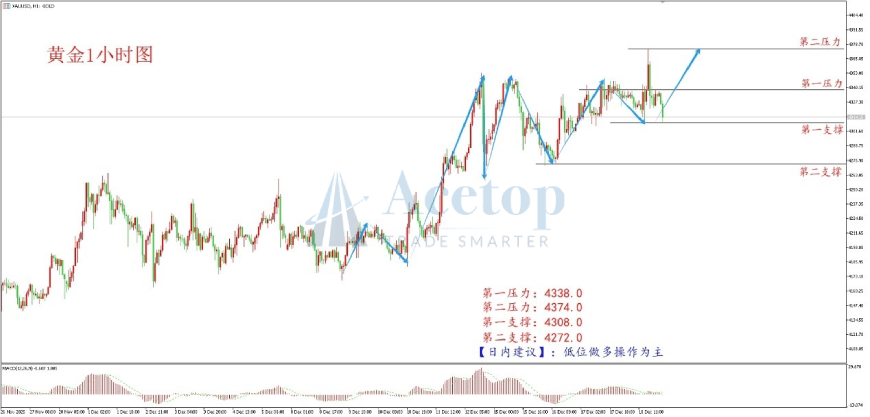
Fundamental Analysis - The U.S. consumer price index (CPI) rose by 2.7% year-on-year in November, lower than the expected 3.1%, indicating ongoing affordability challenges for households due to rising prices of essential goods and services like beef and electricity [1] - The report from the Bureau of Labor Statistics (BLS) noted that the CPI increase slowed, partly due to a 43-day federal government shutdown that delayed data collection until late November, coinciding with holiday season discounts from retailers [1] - White House officials welcomed the report, with economic advisor Hassett stating that the U.S. economy is showing high growth and declining inflation, while Chicago Fed President Goolsbee highlighted positive aspects of the latest CPI data, suggesting it could pave the way for further rate cuts next year if the trend continues [1] - Economists cautioned against over-interpreting the report, while additional data showed a decrease of 13,000 in initial jobless claims for the week ending December 13, adjusted to 224,000, indicating stable labor market conditions in December [1] - Gold prices fell as the market absorbed the lower-than-expected U.S. inflation data, reducing gold's appeal as an inflation hedge, although rising unemployment rates provided some support, with spot gold down 0.2% to around $4,331.89 per ounce [1] Technical Analysis - The current gold price (XAUUSD) is viewed as having initiated a new upward wave from the support level of 4,170, with expectations for a fifth wave upward following a corrective phase [4] - The overall trend indicates that gold has completed a prolonged period of consolidation and has confirmed a breakout, showing a stepwise upward movement [4] - The MACD indicator suggests a decrease in trading volume, and the recommendation is to focus on long positions during dips [4] Trading Strategy - For gold, a long position is suggested around 4,308.0, with a stop loss at 4,288.0 and a target range of 4,328.0 to 4,348.0 [5] - For silver (XAGUSD), a new upward movement has started from the support level of 56.40, currently in a corrective phase, with expectations for a follow-up upward movement [7] - The MACD indicator shows that bullish momentum is significantly stronger than bearish momentum, and the recommendation is to focus on long positions during dips for silver as well [7]
Stocks Spike, Bond Yields Drop as CPI Inflation Comes in Cooler Than Expected
Barrons· 2025-12-18 13:38
Core Insights - Wall Street reacted positively to the November inflation reading, leading to a spike in stocks and a drop in bond yields [1] - The consumer price index (CPI) for November increased at an annual rate of 2.7%, which was lower than the expected 3% [1] - The core CPI, excluding food and energy prices, rose at an annual rate of 2.6%, compared to the anticipated 3.1% increase by economists [1]