生产者物价指数(PPI)

Search documents
生产者物价指数(PPI)与汇率的关联
Jin Tou Wang· 2026-02-05 04:33
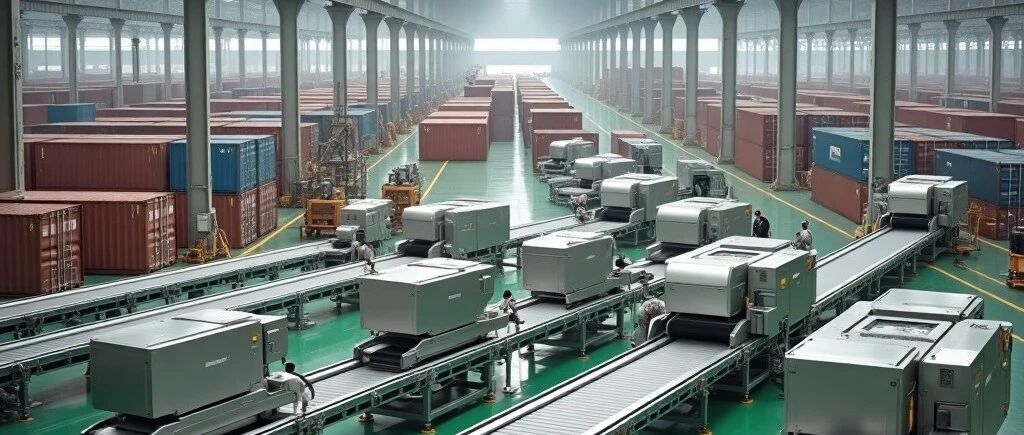
Group 1 - The core viewpoint indicates that rising PPI leads to increased domestic industrial product prices and higher export costs, which weakens export competitiveness and results in pressure on the currency, potentially leading to depreciation [1] - An increase in PPI may also elevate CPI, prompting the central bank to tighten monetary policy, which could raise interest rates and create upward pressure on the currency [1] - Conversely, a decline in PPI suggests industrial deflation and enhanced export cost advantages, improving the current account and indicating a tendency for currency appreciation [1] Group 2 - If PPI remains low, it may trigger expectations for monetary easing, leading to lower interest rates and a tendency for currency depreciation [1] - The medium to long-term PPI reflects the internal and external supply-demand dynamics and inflation cycles, serving as a crucial indicator for the fundamentals of exchange rates [1]
PPI“失去十五年”之谜︱重阳荐文
重阳投资· 2026-01-26 07:32
Core Viewpoint - The Producer Price Index (PPI) in China has shown zero growth over the past 15 years, despite a significant GDP increase of 250% during the same period, indicating a persistent weakness in PPI and underlying demand issues [1][5]. Group 1: PPI Trends and Historical Context - The PPI has been in a declining trend since October 2021, with a year-on-year decrease of 1.9% reported for December 2025, marking 39 consecutive months of decline [1][5]. - Historical data shows that from March 2012 to August 2016, PPI experienced negative growth for 54 months, and from July 2019 to January 2021, there were 18 months of negative growth [1][5]. - The PPI index, set at 100 in December 2010, remained at 100 by December 2025, indicating no overall price increase in 15 years [1][5]. Group 2: Factors Influencing PPI - The PPI's long-term decline is attributed to an oversupply in production capacity, particularly after China's entry into the WTO, which led to a significant drop in export dependence [12][13]. - The fluctuation in PPI is primarily influenced by the prices of production materials, which have shown a cumulative increase of zero over the past 15 years, while living material prices have increased by 4.4% [8][11]. - The prices of living materials peaked at 108.4% in November 2022 before declining, likely due to the end of pandemic-related restrictions [9]. Group 3: Demand and Supply Dynamics - The weak demand in the downstream market, particularly after the real estate sector peaked in 2021, has hindered the transmission of price increases from upstream to downstream sectors [41][42]. - The relationship between real estate investment and PPI is evident, with a significant drop in real estate investment correlating with the decline in PPI [36][38]. - The overall demand for consumer goods has been on a downward trend, with industrial value-added growth outpacing terminal demand growth since 2020, indicating a supply surplus [31][33]. Group 4: Recommendations for Economic Adjustment - To promote a moderate recovery in price levels, it is essential to adjust the supply-demand relationship, particularly by expanding effective demand [42]. - The focus should be on increasing the income of middle and low-income groups to stimulate consumption, while stabilizing the real estate market to alleviate oversupply issues [52]. - The government should optimize fiscal spending structures to enhance direct transfers to residents, thereby increasing disposable income and consumption [52].


PPI“失去十五年”之谜
李迅雷金融与投资· 2026-01-18 09:39
Core Viewpoint - The Producer Price Index (PPI) in China has shown a prolonged period of decline, with a year-on-year decrease of 1.9% reported for December 2025, marking 39 consecutive months of decline since October 2021. This trend raises questions about the underlying reasons for the stagnation in PPI despite significant GDP growth of 250% over the past 15 years [1][2][5]. Group 1: PPI Trends and Historical Context - The PPI has been in negative territory for 111 months from 2012 to 2025, indicating a long-term weakness in price levels despite substantial economic growth [1][2]. - The PPI index, set at 100 in December 2010, remained unchanged by December 2025, suggesting that the index has not increased over the past 15 years [1][5]. - Historical data shows that PPI experienced significant fluctuations, particularly influenced by production material prices, which have seen a cumulative increase of zero over the past 15 years [5][6]. Group 2: Economic Factors Influencing PPI - The 2008 financial crisis led to a surge in PPI due to government investment in infrastructure, but this effect was temporary, and PPI turned negative after March 2012 due to limited demand from final consumption [2][3]. - The divergence between Chinese and U.S. PPI post-2012 can be attributed to rapid capacity expansion in China, leading to a significant drop in export ratios relative to total industrial output [9][10]. - The prices of production materials, particularly in the upstream mining sector, have been volatile, heavily influenced by fluctuations in coal and oil prices [17][20]. Group 3: Demand and Supply Dynamics - The transmission of price changes from upstream to downstream sectors has been hindered by weak demand, particularly in the context of a competitive downstream market where prices are more sensitive to market conditions [23][24]. - Export dynamics play a crucial role in influencing midstream product prices, with a significant portion of revenue from industries like electronics and transportation being dependent on exports [27][28]. - The overall weak demand, especially in real estate, has contributed to a persistent decline in PPI, as seen in the correlation between real estate investment trends and PPI movements [38][39]. Group 4: Recommendations for Economic Adjustment - To address the long-term weakness in PPI, it is essential to adjust the supply-demand relationship, particularly by expanding effective demand through increased income for lower and middle-income groups [45][56]. - Stabilizing the real estate market is highlighted as a critical measure to boost consumption and alleviate overcapacity issues, with a focus on maintaining housing prices to prevent further declines [45][56]. - The government is encouraged to optimize fiscal spending to enhance residents' income, thereby supporting consumption and improving overall economic conditions [56].
美零售及PPI利空、金价日内回撤仍视为多头机会
Sou Hu Cai Jing· 2026-01-15 04:31
Core Viewpoint - International gold prices rebounded and reached a new historical high, indicating a bullish outlook for the market, with support levels at the 5-day or 10-day moving averages for buying on dips [1]. Price Movement - Gold opened slightly higher at $4588.21 per ounce, marking the day's low, and subsequently strengthened, facing resistance around $4640. The price fluctuated during the U.S. trading session, peaking at $4642.63 before closing at $4626.26, up $39.83 or 0.87% from the previous close of $4586.43, with a daily range of $56.2 [3]. Influencing Factors - The rise in gold prices was driven by geopolitical tensions and criticism of the Federal Reserve by the Trump administration. However, strong U.S. retail sales and Producer Price Index (PPI) data limited further gains for gold, causing it to encounter resistance [3]. Outlook - On January 15, gold prices initially declined due to technical adjustments, despite the previous day's strong retail sales and PPI data. Political uncertainties surrounding the Federal Reserve's independence and ongoing geopolitical tensions continue to provide support for gold. Traders maintain expectations for two rate cuts by the Federal Reserve within the year, suggesting that bullish factors remain, and any temporary pullbacks could present further buying opportunities [3].
生产者物价指数(PPI)对汇率有什么影响
Jin Tou Wang· 2026-01-05 04:09
Core Viewpoint - The Producer Price Index (PPI) serves as a leading indicator for the Consumer Price Index (CPI), influencing currency exchange rates through its impact on inflation and monetary policy [1]. Group 1: Transmission Mechanisms - Positive Transmission: Rising PPI indicates increased production costs, leading to higher CPI, prompting potential interest rate hikes by the central bank, which can strengthen the domestic currency [1]. - Blocked Transmission: If PPI rises but CPI remains stable due to competitive market pressures, the central bank may not need to raise rates, resulting in a lack of significant currency movement [2]. - Negative Transmission: Continuous negative PPI growth suggests economic contraction, leading to potential interest rate cuts and depreciation of the domestic currency [3]. Group 2: PPI Structure Analysis - Input-driven PPI Increase: If PPI rises due to higher import prices of commodities, it may worsen trade balances and not lead to currency appreciation, potentially causing depreciation [4]. - Demand-driven PPI Increase: A rise in PPI due to strong domestic demand can lead to higher CPI, increasing the likelihood of interest rate hikes and strengthening the domestic currency [5]. Group 3: Key Influencing Variables - Market Reaction to PPI: The foreign exchange market's response to PPI data is primarily based on the deviation of actual values from market expectations rather than the data's absolute changes [6]. - Significant Positive Deviation: A much higher-than-expected PPI can heighten inflation and interest rate hike expectations, leading to a rapid appreciation of the domestic currency [6]. - Significant Negative Deviation: A much lower-than-expected PPI can alleviate inflation concerns, potentially leading to interest rate cuts and a weakening of the domestic currency [7]. Group 4: Long-term Implications of PPI and CPI Divergence - Persistent PPI above CPI: This scenario can squeeze corporate profits, suppressing investment and income growth, which may hinder long-term economic growth [10]. - Persistent PPI below CPI: This situation can expand corporate profits but may create inflationary pressures, requiring the central bank to balance growth and inflation [10]. Group 5: Summary of PPI's Impact on Currency - Short-term Impact: The effect of PPI on currency is influenced by the deviation from expectations, with unexpected increases in demand-driven PPI likely to strengthen the currency, while input-driven increases or lower-than-expected PPI may suppress it [11]. - Long-term Impact: The transmission of PPI to CPI is crucial; smooth transmission leading to policy adjustments can result in currency fluctuations, while blocked transmission diminishes PPI's influence on currency [11].
11月份CPI同比涨幅扩大 居民消费持续恢复
Yang Shi Wang· 2025-12-10 07:54
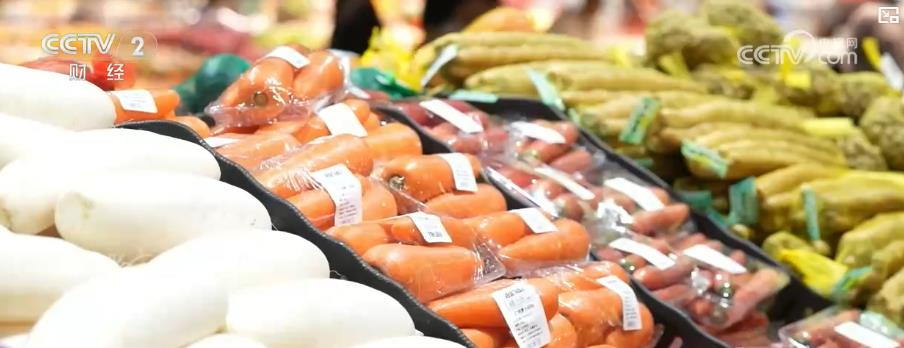
Group 1 - The core consumer price index (CPI) increased by 0.7% year-on-year in November, marking the highest growth since March 2024, with a month-on-month increase of 0.5 percentage points [3] - The rise in CPI was primarily driven by a turnaround in food prices, with fresh vegetable prices increasing by 14.5% after nine consecutive months of decline, contributing approximately 0.49 percentage points to the year-on-year CPI increase [3] - Other food items, such as fresh fruits, beef, and lamb, also saw price increases, while service prices and industrial consumer goods prices excluding energy showed an upward trend [3][5] Group 2 - In November, the producer price index (PPI) rose by 0.1% month-on-month, marking two consecutive months of increase, driven by seasonal demand in certain domestic industries [6] - The increase in PPI was influenced by the collaborative effect of expanding domestic demand and optimizing supply, leading to significant price increases in sectors such as non-ferrous metal mining and processing, as well as cultural and sports goods manufacturing [6]
美国9月PPI环比上涨0.3%,能源成本上升推动通胀抬头
Sou Hu Cai Jing· 2025-11-25 15:22
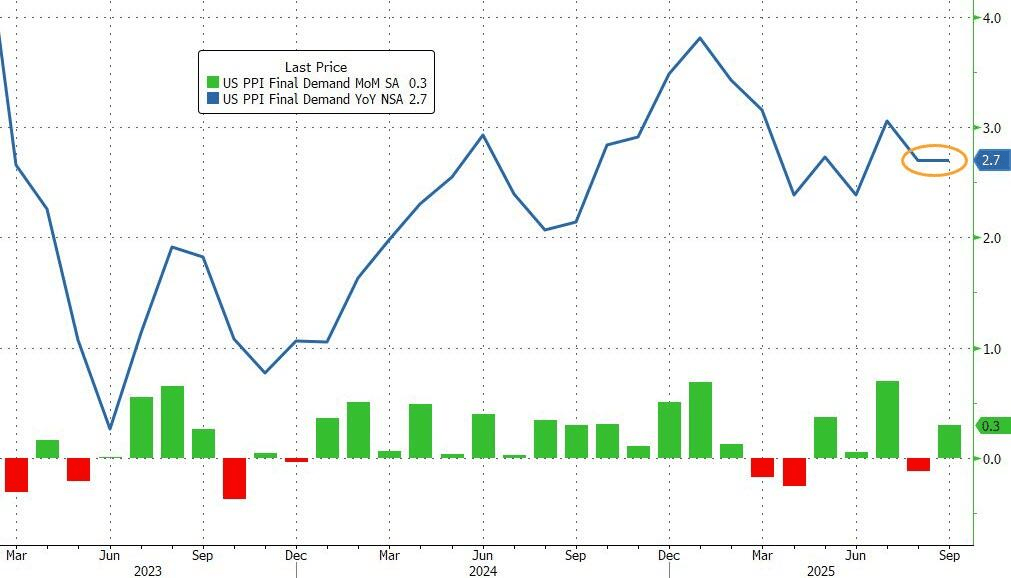
Core Insights - The Producer Price Index (PPI) in the U.S. rose by 0.3% month-over-month in September, indicating a resurgence of inflation driven primarily by increases in energy and food prices [1] - Year-over-year, the PPI increased by 2.7%, slightly above the expected 2.6% [1] - The core PPI, excluding food and energy, rose by 0.1% month-over-month, below the expected 0.2% increase, and showed a year-over-year increase of 2.6%, marking the lowest growth since July 2024 [2] Price Trends - Wholesale prices for goods increased by 0.9% in September, with 60% of this increase attributed to rising gasoline costs [4] - Energy price fluctuations continue to be a major driver of wholesale inflation, while service costs remained flat month-over-month after a decline in August [4] - Within the service category, there was a decline in profit margins for machinery and equipment wholesalers, while food wholesalers saw an increase in profit margins [4] Market Dynamics - The report highlights a divergence in pricing power and cost transmission across different service industries, suggesting that companies may be limiting price increases to avoid losing customers amid rising costs [5] - Businesses are reportedly cautious about raising prices significantly due to concerns over customer retention, especially in the context of higher import tariffs [5]
6月消费品零售总额增9% 消费对经济增长贡献率达78.5%
Mei Ri Jing Ji Xin Wen· 2025-11-24 04:09
Group 1: Economic Growth and Consumption - Consumption has become the primary driving force of China's economic growth, with a contribution rate of 78.5% in the first half of the year, an increase of 14.2 percentage points year-on-year [1] - In June, the total retail sales of consumer goods reached 30,842 billion yuan, showing a nominal growth of 9.0%, which is an improvement from May's 8.5% [1][5] - The first half of the year saw total retail sales of consumer goods amounting to 180,018 billion yuan, with a year-on-year growth of 9.4% [5] Group 2: Price Trends and Consumer Prices - The Consumer Price Index (CPI) rose by 2.0% year-on-year in the first half of the year, with food prices increasing by 1.4% and a notable 12.5% decrease in pork prices [2][4] - The Producer Price Index (PPI) increased by 3.9% year-on-year, which is considered reasonable for maintaining industrial profit growth while alleviating cost pressures on downstream products [4] - The stable performance of CPI is attributed to the influence of pork and agricultural product prices, despite rising oil prices that may take time to affect CPI [4] Group 3: Retail Sector Insights - The increase in retail sales in June is supported by a rebound in dining consumption and essential goods, with dining consumption up by 1.3 percentage points from the previous month [5][6] - The sales of food, beverages, tobacco, and clothing showed significant improvement, alongside a recovery in sales related to online shopping for furniture, home appliances, and communication equipment [5] - The decline in automobile sales due to the adjustment of import tariffs has temporarily affected overall retail sales, with automobiles accounting for approximately 13% of total retail sales [6]
帮主郑重:美国8月PPI意外降温!美联储降息的底气更足了?
Sou Hu Cai Jing· 2025-09-10 16:12
Group 1 - The core point of the article is the recent decline in the U.S. Producer Price Index (PPI) for August, marking the first decrease in four months, which may provide a rationale for the Federal Reserve to consider interest rate cuts [1][3] - The August PPI data showed a month-on-month decrease of 0.1% and a year-on-year increase of 2.6%, indicating a potential easing of inflationary pressures [3][4] - The decline in PPI is primarily attributed to a drop in service costs, with service prices falling by 0.2% in August after a 0.7% increase in July, and wholesale and retail profit margins decreasing by 1.7%, the largest drop in over a year [4][5] Group 2 - The market reacted to the PPI data, with the 2-year Treasury yield falling by 4 basis points to 3.52% and the 10-year yield dropping by 2 basis points to 4.07%, indicating market expectations for a potential interest rate cut by the Federal Reserve [3][4] - The article emphasizes that the cautious pricing behavior of companies reflects their uncertainty about the economic environment, which could influence future inflation trends and the Federal Reserve's policy decisions [5] - The focus for investors should be on whether companies will begin to pass on tariff costs to consumers; if they do, inflation may experience fluctuations, but if they remain hesitant, the likelihood of steady interest rate cuts by the Federal Reserve increases [5]

FPG财盛国际:这份报告令市场震惊!黄金突然猛烈回调的原因在这
Sou Hu Cai Jing· 2025-08-15 02:48
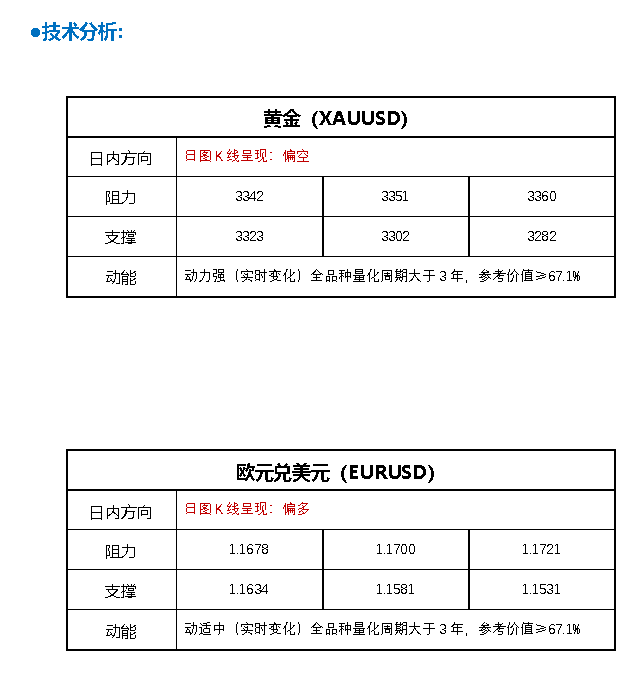
Group 1 - The US dollar index rebounded by 0.5% from a two-week low, reducing the attractiveness of gold for buyers holding other currencies [1] - The US Producer Price Index (PPI) for July surged by 3.3% year-on-year, significantly exceeding the market expectation of 2.5% [1] - The core PPI for July increased by 3.7% year-on-year, up from 2.6% in June and above the expected 2.9% [1] - The month-on-month PPI for July rose by 0.9%, far surpassing the market forecast of 0.2%, marking the largest increase since June 2022 [1] - These data points dampened hopes for a Federal Reserve rate cut in September, with the probability of a 25 basis point cut dropping from 94.3% to 90.4% after the PPI release [1] Group 2 - The daily chart for gold shows prices below the flat 20-day simple moving average (SMA) around $3357 per ounce, indicating dynamic resistance [2] - The 100-day SMA is still moving upward but has lost upward momentum near $3301.80 per ounce [2] - Technical indicators remain neutral, with the Relative Strength Index (RSI) slightly declining, consistent with the ongoing weakness in gold prices [2] Group 3 - In the short term, the risk for gold prices is tilted downward, with prices trading below all moving averages [3] - The 20-period SMA is gaining downward traction between the directionless 100-period and 200-period SMAs [3] - Technical indicators are flattening but remain in negative territory, reflecting a recent rebound from lows without indicating further recovery [3] Group 4 - The daily chart for gold (XAUUSD) indicates a bearish bias [4] - Resistance levels are identified at 3342, 3357, and 3360, while support levels are at 3323, 3302, and 3282 [4] - Momentum is strong, with a quantitative cycle greater than three years and a reference value of ≥67.1% [4] Group 5 - The daily chart for the Euro against the US dollar (EURUSD) shows a bullish bias [5] - Resistance levels are at 1.1678, 1.1700, and 1.1721, while support levels are at 1.1634, 1.1581, and 1.1531 [5] - Momentum is moderate, with a quantitative cycle greater than three years and a reference value of ≥67.1% [5] Group 6 - Key economic indicators to watch include US retail sales for July, industrial production for July, initial expectations for the one-year inflation rate in August, and June commercial inventory month-on-month [5]