
货币政策预期

Search documents
A股何时企稳?机构建议→
第一财经· 2026-03-23 16:18
Core Viewpoint - The article discusses the recent significant decline in A-shares and Hong Kong stocks, attributing it to heightened geopolitical risks and market adjustments, suggesting potential investment opportunities once market sentiment stabilizes [3][5]. Market Performance - On March 23, A-shares experienced a sharp decline, with the Shanghai Composite Index falling by 3.63% to 3813.28 points, the Shenzhen Component Index down 3.76% to 13345.51 points, and the ChiNext Index down 3.49% to 3235.22 points [3]. - The total trading volume in the Shanghai and Shenzhen markets exceeded 2.4 trillion yuan, an increase of over 150 billion yuan compared to the previous trading day [3]. - Over 5000 stocks in the market declined, with 29 out of 31 industry indices falling, while only coal and oil & petrochemical sectors saw gains [3]. Geopolitical Risks - The article highlights a shift in market perception regarding the Middle East conflict, which is now viewed as a prolonged issue rather than a temporary disturbance, leading to increased global inflation expectations [5]. - The U.S. Federal Reserve's recent decision to maintain interest rates, coupled with an upward revision of the year-end policy rate forecast from 2.0% to 2.5%, indicates tightening liquidity expectations [5]. Market Adjustment - The current market downturn is characterized as a phase of adjustment within a bull market, with historical data suggesting that corrections of 20% to 30% are normal [7]. - The rapid pace and intensity of the current decline have created a perception of a market end, although it is primarily driven by emotional responses rather than fundamental weaknesses [8]. Investment Strategies - Investors are advised to maintain a stable mindset and avoid panic-driven trading, focusing on controlling positions and potentially stepping back from the market to avoid short-term volatility impacts [10]. - Key indicators for assessing market stabilization include a decrease in trading volume below 1.7 trillion yuan and increased inflows into broad-based ETFs, signaling institutional support [10]. Long-term Outlook - Despite short-term pressures, the long-term outlook for Chinese assets remains positive due to strategic energy security initiatives and improvements in fundamental stability [11].


每日商品期市纵览-20260323
Dong Ya Qi Huo· 2026-03-23 10:11
1. Report Industry Investment Rating No relevant information provided. 2. Core Views of the Report - The overall commodity futures market is significantly affected by geopolitical conflicts, especially the situation in the Middle East, which has led to price fluctuations in various commodities [1][2][3]. - For most commodities, short - term price trends are mainly influenced by geopolitical factors, while medium - to long - term trends depend on supply - demand fundamentals and macro - economic conditions [11][12][15]. 3. Summary by Related Catalogs Financial Futures - **Stock Index**: Affected by external disturbances and low market sentiment, the stock index has been continuously adjusted. There is a possibility of a technical rebound in the short - term, and it is relatively strong in the medium - to long - term [2]. - **Treasury Bonds**: Inflation concerns caused by the Middle East situation and high oil prices suppress long - term bond trends, while short - term bonds benefit from stable capital. If the stock market decline expands, the bond market may rise due to risk - aversion sentiment [2]. Container Shipping on European Routes The market has entered a high - level wide - range shock. The core logic has shifted from trading geopolitical conflicts to weighing risk premiums and the reality of the off - season. Near - month contracts are subject to repeated games between events and spot markets, and far - month contracts price in long - term conflicts, with high volatility risks [3]. Non - ferrous Metals - **Platinum and Palladium**: Geopolitical conflicts in the Middle East have pushed up oil prices, leading to inflation concerns. The shift in monetary policy expectations suppresses platinum and palladium prices. There are short - term price fluctuations [4]. - **Gold and Silver**: Reversal of the Fed's interest - rate hike expectations, rising US dollar index and real interest rates of US bonds, and the escalation of Middle East conflicts have put pressure on gold and silver prices. There is a lack of upward momentum in the short - term [5]. - **Copper**: Tightening macro - expectations and weak industrial reality have caused copper prices to break through key ranges. In the short - term, the price remains weak, and in the medium - to long - term, attention should be paid to marginal changes in macro - expectations and industrial supply - demand [5]. - **Aluminum**: Geopolitical factors initially pushed up prices, but then concerns about economic recession and liquidity tightening, along with a significant cooling of the Fed's interest - rate cut expectations, have made aluminum prices fluctuate weakly. There is a possibility of price increases if raw material shortages lead to more production cuts [6]. - **Alumina**: Domestic production capacity has declined, narrowing the oversupply situation, but new production capacity in Guangxi has brought supply pressure. Overseas, geopolitical factors in the Middle East have affected orders, and shipping costs have risen. The fundamentals are mixed, and cost and policy expectations provide phased support [6]. - **Cast Aluminum Alloy**: It strongly follows the price of Shanghai aluminum, and has strong support below due to raw material shortages and the impact of tax refund policies [7]. - **Zinc**: The price is at the lower end of the range, with some support from downstream purchases. The supply pressure from domestic smelting is increasing, and the demand recovery is delayed. In the short - term, it runs weakly [7]. - **Nickel and Stainless Steel**: Fluctuate following macro - guidance. The cooling of the Fed's interest - rate cut expectations and the uncertainty of the US - Iran conflict have put pressure on prices. The fundamentals are in a more intense game, and attention should be paid to demand release and Indonesian policies [8]. - **Tin**: Suppressed by both macro - panic sentiment and fundamentals. In the short - term, there is no obvious turning point, and in the medium - to long - term, the price center moves upward [8]. - **Lithium Carbonate**: The supply is in a loose pattern, and the demand is mainly for rigid procurement. The market is jointly dominated by supply - demand fundamentals and capital sentiment [9]. - **Industrial Silicon and Polysilicon**: The industry is in a situation of weak supply and demand. Polysilicon has entered a loss - making range. The current is the bottom of the production - capacity cycle, and attention should be paid to production - capacity clearance and supply - demand optimization [10]. - **Lead**: The price fluctuates and adjusts. The supply side brings upward pressure, and the demand side recovers slowly. The price oscillates within a range [10]. Black Metals - **Rebar and Hot - Rolled Coil**: Geopolitical conflicts in Iran have pushed up oil and coking coal prices, providing cost support. However, high inventory and high warrants of hot - rolled coils form upward pressure. The short - term rebound height is limited [11]. - **Iron Ore**: The price is strong in the near - term and weak in the long - term. The cost side provides support, but in the medium - to long - term, new production capacity will make the fundamentals looser [11]. - **Coking Coal and Coke**: There is a short - term surplus of coking coal, and the supply - demand contradiction of coke may deteriorate. Overseas energy price increases provide bottom support, but the surplus problem restricts price elasticity [12]. - **Ferrosilicon and Silicomanganese**: Hurricane disturbances in Australia have affected manganese ore shipments, and coking coal provides cost support. The demand for ferroalloys from steel mills is weak, and the inventory of silicomanganese is at a historical high, with large de - stocking pressure [12]. Energy and Chemicals - **Crude Oil**: The continuous escalation of the US - Iran conflict has increased the risk of navigation in the Strait of Hormuz, and short - term upward momentum still exists. The price fluctuates at a high level [13]. - **Fuel Oil**: Geopolitical conflicts in the Middle East have restricted the inflow of regional oil. The supply of low - sulfur fuel oil has tightened significantly, and the inventory is decreasing. The supply gap will support the spot premium and refinery profits in the short - term [13][14]. - **Asphalt**: Geopolitical disturbances have led to short - term price increases in crude oil, and in the short - term, geopolitical factors are the core determinants [14]. - **Pure Benzene - Styrene**: Geopolitical conflicts in the Middle East have provided cost support, and there are risks of reduced production in refineries. The market is short - term volatile and strong [15]. - **LPG**: The futures price has risen significantly driven by capital sentiment. The fundamentals provide limited support, and it enters a high - level shock in the short - term [15]. - **Methanol**: The situation in Iran threatens production and transportation, and geopolitical games are the core logic. The supply - demand pattern is dominated by geopolitics, and device uncertainties increase volatility [16]. - **PP and Propylene**: The fundamentals are still strong, and they are expected to maintain a volatile and strong trend before the geopolitical risks are eliminated [17]. - **Plastic**: If the conflict continues, it is expected to run strongly; if the situation eases, some risk premiums will be withdrawn, but it is difficult to fall back to the pre - event level in the short - term [17]. - **Rubber**: Synthetic rubber has risen significantly driven by energy costs and geopolitics, while natural rubber is under pressure from weak macro - sentiment. In the medium - to long - term, the supply - demand structure supports the valuation [18]. - **Soda Ash**: The daily production remains high, and the demand is stable but weak. The inventory performance is better than expected, and the price movement is restricted by supply - demand and macro - factors [18]. - **Glass**: The cold - repair expectation of float glass continues, and the supply return expectation and high inventory limit the price increase. The price oscillates under the combined action of supply - demand and cost [19][20]. - **Caustic Soda**: The supply has tightened marginally, and the demand has improved marginally. The overall supply - demand pattern has improved, and the futures price is jointly driven by fundamentals and market sentiment [20]. Agricultural Products - **Hog**: The market is in a complex game stage. In the short - term, the hog price may continue to bottom around 10 yuan/kg, and the subsequent trend depends on whether cash - flow pressure can force capacity out - clearing [21]. - **Oilseeds**: The Sino - US negotiation in April has been postponed. In the short - term, the spot price is firm, but the medium - term large - supply logic remains unchanged. The price difference between soybean meal and rapeseed meal is being repaired [21]. - **Oils**: In the short - term, it oscillates. The price of crude oil is the core influencing factor, and attention should be paid to the bio - fuel policies of Indonesia and the US [22]. - **Cotton**: Geopolitical conflicts have led to crude - oil fluctuations and increased macro - risks. In the short - term, the price has fallen, but in the medium - to long - term, the downstream demand has resilience, and the lower support is stable [23]. - **Sugar**: The expected sugar production in Brazil has been lowered, and the geopolitical situation in the Middle East has made capital cautious. The domestic supply - demand pattern is stable, and the sugar price oscillates [23]. - **Egg**: The supply of small - sized eggs is tight in some areas, and the feed price provides cost support. The short - term price adjusts slightly, and the upward space is limited [24]. - **Apple**: The Tomb - Sweeping Festival stocking is progressing, and the market is polarized. The fundamentals and delivery logic support the futures price, which maintains a strong - oscillating pattern [24]. - **Jujube**: The market focus is on the demand side, and the downstream sales are mediocre. The price is under pressure and may oscillate at a low level [25].
全球市场周报:地区冲突升级,估值重新定价-20260318
Guoyuan Securities· 2026-03-18 10:12
Group 1: Market Overview - Global capital markets entered a high volatility period driven by geopolitical conflicts, energy supply chain disruptions, and macroeconomic data divergence from March 7 to March 13, 2026[1] - The MSCI Global Index fell by 1.79% during this week, with the Nasdaq down 1.26%, S&P 500 down 1.60%, and Dow Jones down 1.99%[13] - European markets continued to decline due to geopolitical risks and monetary policy expectations, with major indices like DAX and CAC40 showing declines of 0.61% and 1.03% respectively[16][23] Group 2: Geopolitical and Economic Impacts - The escalation of conflicts in the Persian Gulf, particularly the blockade of the Strait of Hormuz, has led to increased energy costs and heightened economic risk premiums in Europe[3] - The International Energy Agency (IEA) reported that the Middle East conflict has caused the largest oil supply disruption in history, with a reduction of at least 10 million barrels per day, nearly 10% of global demand[47] - Emerging markets (excluding China) faced significant differentiation in performance, with India experiencing a 5.52% decline, while Brazil's decline was more moderate at 0.95%[4][16] Group 3: Investment Recommendations - In Asia, investors should focus on domestic policy beneficiaries amidst ongoing geopolitical tensions[5] - In Europe, a rebalancing between defensive and cyclical sectors is recommended due to the pressures from inflation and geopolitical risks[5] - In emerging markets, it is advised to avoid markets with high external vulnerabilities like India, while selectively investing in markets with internal buffers like Brazil[5]
每日商品期市纵览-20260313
Dong Ya Qi Huo· 2026-03-13 10:31
Report Industry Investment Rating No relevant content provided. Core View of the Report The report analyzes the market conditions of various commodities, including daily and weekly price changes, and elaborates on the influencing factors and future trends of each commodity. The overall market is affected by geopolitical conflicts in the Middle East, especially the situation in the Strait of Hormuz, which has a significant impact on the prices of energy, metals, and agricultural products. Summary by Category Financial Futures - **Stock Index**: Geopolitical conflicts in the Middle East suppress interest - rate cut expectations, but domestic policy expectations form a bottom support. After the Two Sessions, the release of the 15th Five - Year Plan may bring unexpected information and drive the market stronger [2]. - **Treasury Bonds**: Domestic monetary policy is favorable for the bond market, and the US - Iran conflict increases trading activity [2]. Shipping - **Container Shipping on the European Line**: Geopolitical risks in the Strait of Hormuz support spot freight rates, but regulatory pressure and market caution lead to short - term high - level oscillations [3]. Non - ferrous Metals - **Platinum and Palladium**: The US - Iran conflict and US tariff policies bring uncertainties. Rising production costs in South Africa provide a long - term upward basis, but short - term adjustment risks exist due to delayed interest - rate cut expectations [4]. - **Gold and Silver**: Tensions in the Strait of Hormuz weaken the Fed's interest - rate cut expectations, and the rising US dollar and bond yields suppress precious metal prices. Attention should be paid to panic selling under liquidity risks [5]. - **Copper**: The approaching FOMC meeting and geopolitical conflicts suppress copper prices. Demand shows structural characteristics, and inventory reduction speed is the key to price trends [5]. - **Aluminum**: The supply of natural gas in Qatar affects the production of electrolytic aluminum. Short - term trends are dominated by the war situation [6]. - **Alumina**: Affected by the prices of aluminum and other varieties, it shows short - term price rebounds but a long - term surplus situation. Attention should be paid to new production capacity in March [6]. - **Cast Aluminum Alloy**: It follows the price of Shanghai aluminum and has strong support below [7]. - **Zinc**: Supply may be affected by the Iran situation, and demand is facing inventory pressure. Short - term prices may be suppressed, and future trends depend on the development of the Iran situation and inventory reduction [8]. - **Nickel and Stainless Steel**: Supply fluctuations in Indonesia increase uncertainty. The market is in the peak season, and attention should be paid to the release rhythm of demand [9]. - **Tin**: Geopolitical factors are the main driver. Supply is tight, and demand is gradually recovering. High inventory suppresses prices, and attention should be paid to the development of the Iran situation [10]. - **Lithium Carbonate**: Short - term market is affected by the Middle East situation, but long - term demand growth supports prices. Attention should be paid to downstream production and inventory reduction in March [11]. - **Industrial Silicon and Polysilicon**: The long - term development prospects are clear, but the short - term market is in a wide - range oscillation due to capacity cycle and supply - demand changes [12]. - **Lead**: The current supply - demand situation is weak, and prices are expected to oscillate. Attention should be paid to the impact of this week's delivery and secondary lead delivery [12]. Black Metals - **Rebar and Hot - Rolled Coil**: Geopolitical conflicts in Iran drive up the prices of raw materials, providing cost support. However, high inventory and export resistance limit the short - term rebound [13]. - **Iron Ore**: Tight spot liquidity drives up prices, but concerns about supply sustainability increase the probability of short - term reversal [13]. - **Coking Coal and Coke**: The terminal demand verification period in March - April is affected by the late Spring Festival and geopolitical factors. The overall price of the black series may face downward pressure, and the price elasticity of coal and coke is restricted [14]. - **Ferrosilicon and Ferromanganese**: Although the cost support is increasing, weak downstream demand and high inventory limit the upward space [15]. Energy and Chemicals - **Crude Oil**: The core driving factor is the geopolitical situation in the Middle East. The closure of the Strait of Hormuz and different attitudes of the conflicting parties increase price fluctuations [16]. - **Fuel Oil**: Supply constraints support the market, and the short - term strong situation is difficult to change [17]. - **Asphalt**: Supply is expected to decrease, and inventory is seasonally increasing. Prices follow the cost of crude oil, and geopolitical factors are the main driver. Attention should be paid to price drops after the situation eases [17][18]. - **LPG**: The closure of the Strait of Hormuz supports prices. Supply and demand are both increasing, and the short - term market is oscillating strongly [18]. - **Methanol**: Geopolitical conflicts and industry profit repair are the core driving factors. Attention should be paid to risks when the situation eases [19]. - **Plastics**: Middle - East conflicts lead to supply reduction expectations, and the market is turning to "supply decrease and demand increase", with prices rising [19]. - **Rubber**: Geopolitical and macro factors have a negative impact on demand. Synthetic rubber is oscillating strongly, and natural rubber is rising [20]. - **Soda Ash**: Supply pressure is high, and demand is relatively stable. Inventory is better than expected. The price space is limited, and attention should be paid to the accumulation of industrial contradictions [21]. - **Glass**: Cold - repair expectations continue, but high intermediate inventory and supply return expectations limit the price increase. Demand needs to be verified [22]. - **Caustic Soda**: Supply is at a high level, demand is differentiated, and inventory is high. Export expectations and geopolitical emotions drive the market, but high inventory and weak domestic demand limit the upward space [23]. Agricultural Products - **Pigs**: The market is mainly affected by weak post - Spring Festival demand, and price decline is limited, but the upward driving force is weak [24]. - **Oilseeds**: The expected Sino - US negotiation in April, rising planting costs, and improved export expectations drive up soybean prices. The domestic market follows the US soybean market [24]. - **Oils and Fats**: The market rebounds following crude oil, and policies in Indonesia and the US are favorable. Attention should be paid to the development of the Iran situation and the US bio - fuel policy review [25]. - **Cotton**: Tight domestic supply - demand expectations support prices, but the high price difference between domestic and foreign cotton and geopolitical conflicts pose pressure. Attention should be paid to subsequent developments [25]. - **Sugar**: Rising oil prices drive up the price of Brazilian ethanol, leading to expectations of tightened sugar supply. The short - term strong situation is expected to continue [26][27]. - **Eggs**: Concentrated demand release supports prices, but high egg - laying hen inventory limits the upward space [27]. - **Red Dates**: The market focus is on demand, and the current downstream sales are weak. Prices are expected to oscillate at a low level [27].
贺博生:2.19黄金原油今日行情价格涨跌趋势分析及最新独家操作建议
Sou Hu Cai Jing· 2026-02-19 13:31
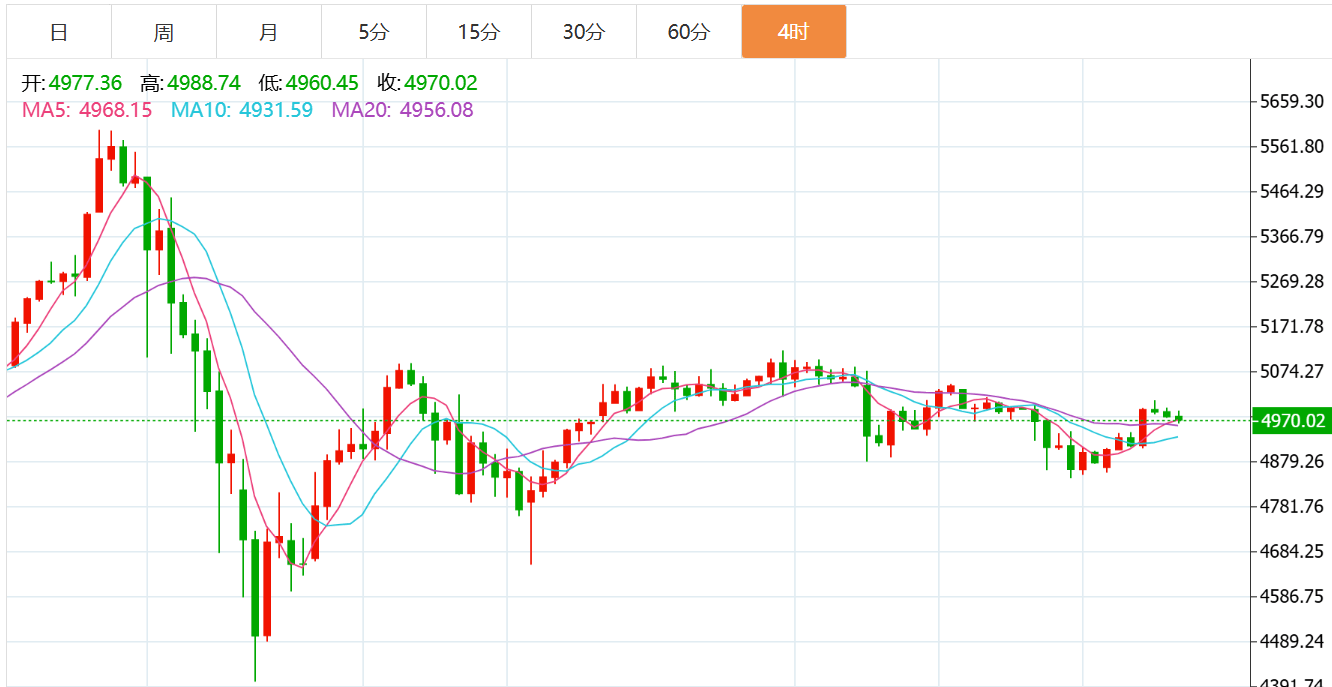
Group 1: Gold Market Analysis - Gold prices stabilized around $4960, driven by geopolitical uncertainties and renewed safe-haven buying [1] - The potential for gold prices to test the $5000 mark is contingent on ongoing tensions in the Middle East and the Federal Reserve's monetary policy signals [1] - Technical analysis indicates that gold is in a bullish phase, with a potential upward movement if it breaks above $5100 [2][4] Group 2: Oil Market Analysis - Brent crude oil prices have risen above $70 for the first time in over two weeks, primarily due to geopolitical tensions rather than a shift in supply-demand dynamics [5] - The market is experiencing a risk premium re-evaluation, with potential risks in the Strait of Hormuz providing upward momentum for oil prices [5] - Technical indicators suggest a possible downward trend following a small breakout, with key resistance at $66.5-$67.5 and support at $64.0-$63.0 [5] Group 3: Trading Strategies and Insights - The importance of minimizing speculative trades is emphasized, as frequent trading can increase the probability of losses [1] - Investors are advised to adopt a strategy of buying on dips and selling on rallies, focusing on key support and resistance levels [4][5] - The significance of following market trends rather than attempting to time market tops and bottoms is highlighted, as this can lead to missed opportunities and increased losses [6][7]
五矿期货贵金属日报-20260213
Wu Kuang Qi Huo· 2026-02-13 02:09
1. Report Industry Investment Rating - No relevant information provided 2. Core View of the Report - Short - term monetary policy expectations suppress precious metals, but they remain in a high - level oscillation pattern supported by global central bank gold purchases, COMEX gold inventory reduction, and geopolitical risks. The market focus has shifted to the upcoming US January CPI data, and the inflation path will be the key to pricing Fed policies and precious metal trends in the next stage. Due to the decline of US technology stocks and profit - taking by some investors, precious metal prices dropped. The strategy is to remain on the sidelines for now, with the reference operating range for the main contract of Shanghai gold being 950 - 1100 yuan/gram and that for the main contract of Shanghai silver being 18500 - 21000 yuan/kilogram [3][4] 3. Summary by Relevant Catalogs 3.1 Market Quotes - Shanghai gold dropped 2.42% to 1100.96 yuan/gram, and Shanghai silver dropped 1.88% to 19188.00 yuan/kilogram. COMEX gold dropped 3.08% to 4941.40 dollars/ounce, and COMEX silver dropped 10.62% to 75.25 dollars/ounce. The US 10 - year Treasury yield was 4.09%, and the US dollar index was 96.91 [2] - The Thursday plunge of precious metals might be due to the decline of US technology stocks, forcing some investors to close positions to replenish liquidity, combined with CTA trading strategies and profit - taking by investors. The initial jobless claims in the US for the week ending February 7 were 227,000, higher than the expected 222,000. The continuing jobless claims for the week ending January 31 were 1.862 million, slightly higher than the expected 1.85 million. The annualized total number of existing home sales in the US in January was 3.91 million, a month - on - month decrease of 8.4%, which might ease the hawkish market expectations brought by previous non - farm employment data [2] 3.2 Strategy Views - Due to the decline of US technology stocks forcing investors to close positions for replenishment and profit - taking by some investors, precious metal prices dropped. But supported by global central bank gold purchases and geopolitical risks, they are still in a high - level oscillation. The key market game has shifted to Friday's CPI data. Temporarily stay on the sidelines, with the reference operating range for the main contract of Shanghai gold being 950 - 1100 yuan/gram and that for the main contract of Shanghai silver being 18500 - 21000 yuan/kilogram [4] 3.3 Key Data Summary - **Gold**: COMEX gold's closing price (active contract) was 5107.80 dollars/ounce, up 1.19%; trading volume was 125,400 lots, up 23.12%; open interest was 409,700 lots, down 16.13%; inventory was 1080 tons, down 1.40%. LBMA gold's closing price was 5077.85 dollars/ounce, up 0.92%. SHFE gold's closing price (active contract) was 1126.12 yuan/gram, down 0.38%; trading volume was 324,400 lots, up 14.97%; open interest was 302,700 lots, down 0.63%; inventory was 105.07 tons, unchanged; precipitated funds were 5.4533 billion yuan, down 1.01%. AuT + D's closing price was 1122.92 yuan/gram, down 0.14%; trading volume was 24.71 tons, down 14.71%; open interest was 255.19 tons, down 3.12% [7] - **Silver**: COMEX silver's closing price (active contract) was 84.09 dollars/ounce, up 4.35%; open interest was 143,200 lots, down 8.59%; inventory was 11868 tons, down 1.22%. LBMA silver's closing price was 86.10 dollars/ounce, up 4.64%. SHFE silver's closing price (active contract) was 20,626.00 yuan/kilogram, down 1.52%; trading volume was 1,109,100 lots, up 2.31%; open interest was 540,200 lots, down 2.84%; inventory was 349.63 tons, up 2.20%; precipitated funds were 3.0082 billion yuan, down 4.32%. AgT + D's closing price was 19,670.00 yuan/kilogram, down 1.15%; trading volume was 220.35 tons, down 5.23%; open interest was 3143.492 tons, down 1.42% [7] 3.4 ETF Holdings - **Gold**: iShare US's holding was 499.84 tons, up 0.08%; GBS UK's holding was 30.80 tons, down 0.22%; PHAU UK's holding was 54.48 tons, down 0.21%; GOLD UK's holding was 29.92 tons, up 0.04%; SGBS Switzerland's holding was 36.12 tons, unchanged [65] - **Silver**: SLV US's trading volume was 96.4592 million shares, up 29.09%; ETPMAG Australia's holding was 489.86 tons, down 1.18%; PSLV Canada's holding was 6747.30 tons, unchanged; CEF Canada's holding was 1610.16 tons, unchanged [65]
TMGM外汇:避险降温遇上降息预期,国际金价持续震荡
Sou Hu Cai Jing· 2026-02-10 07:34
Core Viewpoint - The gold market is experiencing significant fluctuations, with prices recently retreating below the psychological level of $5,000, reflecting complex market sentiments influenced by various factors [1]. Group 1: Political and Geopolitical Factors - The outcome of Japan's early elections has reduced political uncertainty, providing some stability to the market [3]. - Signs of easing tensions in the Middle East, particularly the conclusion of indirect negotiations between the U.S. and Iran regarding nuclear plans, have alleviated concerns over geopolitical conflicts, enhancing investor risk appetite and applying pressure on gold as a safe-haven asset [3]. Group 2: Monetary Policy Expectations - Market expectations indicate that the Federal Reserve may implement at least two rate cuts of 25 basis points each by 2026, with the first cut potentially occurring in June [3]. - This anticipation has kept the U.S. dollar near its lowest point in over a week, and discussions regarding the independence of the Federal Reserve have added uncertainty to the monetary policy outlook [3]. - A weaker dollar typically benefits gold priced in dollars, partially offsetting the pressure from improved risk sentiment [3]. Group 3: Technical Analysis - From a technical perspective, gold prices faced resistance near recent swing highs, leading to a cautious stance among bulls [4]. - The moving average convergence divergence (MACD) indicator remains positive but has contracted, indicating a weakening upward momentum [4]. - The relative strength index (RSI) is at a neutral level of 55, suggesting a balanced market [4]. - A rising trend line starting from $4,397.52 provides support near $4,819.19; maintaining this support could lead to a continuation of the rebound, while a close below it may open up deeper retracement towards $4,397.52 [4]. Group 4: Demand Factors - The People's Bank of China has continued its gold purchases for the 15th consecutive month, reflecting stable demand for gold amid global economic uncertainties [4]. - Traders are currently adopting a cautious approach, refraining from making aggressive directional bets ahead of significant economic data releases [4]. - Key U.S. economic data to watch this week includes monthly retail sales, non-farm payroll reports, and consumer inflation data, which will provide insights into the Federal Reserve's future policy direction and impact on both the dollar and gold prices [4].

IC Markets官网:美元兑瑞郎震荡,受货币政策预期影响
Sou Hu Cai Jing· 2026-02-10 06:27
Group 1 - The current exchange rate of USD/CHF is around 0.7670, reflecting a temporary balance of market forces before the release of macroeconomic information [1] - The recent pressure on the USD is closely related to a shift in global perceptions of risk associated with USD-denominated assets, particularly following reports of Chinese regulators urging financial institutions to limit their holdings of US Treasury bonds [1][3] - The market is currently reassessing the pace of the US economy and policy outlook, with expectations for the Federal Reserve's interest rate path being a core variable [3] Group 2 - The market anticipates that the Federal Reserve will maintain interest rates in March, with the first rate cut expected in June, reflecting a balance between signs of slowing inflation and economic resilience [3] - The median one-year inflation expectation in the US has dropped to 3.1%, the lowest in six months, indicating a reduction in consumer perception of price pressures [3] - The labor market's uncertainty is highlighted by the San Francisco Fed President's comments on potential shifts from "low hiring, low firing" to "no hiring, high layoffs," which could significantly impact income expectations and consumption behavior [4] Group 3 - Switzerland's macroeconomic environment is characterized by low inflation, with analysts expecting an annual inflation rate of 0.1%, which is notably mild compared to other major economies [4] - The Swiss National Bank's Chairman emphasized the challenges posed by persistently low inflation and a 0% policy interest rate, indicating limited room for traditional policy tools [4] - The Swiss National Bank is prepared to intervene in the foreign exchange market to manage the Swiss franc's value, highlighting the importance of exchange rate stability for the open and exchange-sensitive Swiss economy [4][5]
黄金反弹收复失地 警惕政策抑上行
Jin Tou Wang· 2026-02-04 04:08
Group 1 - The core viewpoint of the article highlights the rebound of spot gold prices, which rose over 2% to $5053.10 per ounce during Asian trading, recovering from last week's significant sell-off, with market focus on U.S. economic data and changes in risk aversion [1][1] Group 2 - Geopolitical tensions are identified as a key support for gold prices, with the U.S. military shooting down an Iranian drone near the aircraft carrier Abraham Lincoln, and reports of Trump considering military action against Iran, escalating tensions in the Middle East [1][1] - Iran's request to limit discussions with Turkey to nuclear issues and to move talks to Oman adds uncertainty, further increasing risk aversion in the market [1][1] Group 3 - The nomination of hawkish Kevin Walsh as Federal Reserve Chairman is seen as limiting the upside potential for gold prices, leading to a reduction in interest rate cut expectations, with the probability of a rate cut in June dropping to 66% according to CME data [1][1] - Short-term gold prices are expected to remain influenced by a combination of geopolitical risks and monetary policy expectations, resulting in continued volatility [1][1]
暴跌后“闪腰式”反弹 美联储政策大山前金价踌躇
Jin Tou Wang· 2026-02-03 06:01
Core Viewpoint - The international gold price experienced a technical rebound after a rare and severe adjustment, but market sentiment remains cautious, with investors showing concerns about the short-term environment [1][2]. Macroeconomic Factors - Monetary policy expectations are a key factor constraining gold prices, with uncertainty surrounding the Federal Reserve's personnel and policy direction leading to a strong wait-and-see sentiment in the market [1][2]. - The nomination of Kevin Warsh as the new Federal Reserve Chairman has made the market more cautious, with expectations that he may favor maintaining high interest rates and pushing for balance sheet reduction, which typically benefits the dollar but weakens the appeal of non-yielding assets like gold [2]. Market Dynamics - Market liquidity tightening has intensified short-term selling pressure, as the Chicago Mercantile Exchange raised margin requirements for gold and silver, forcing high-leverage traders to liquidate positions, which amplifies price volatility and suppresses gold price rebounds [2]. - Geopolitical factors, such as potential diplomatic contacts between the U.S. and Iran, could influence gold prices, as any resurgence of tensions may lead to a return of safe-haven flows into gold [2]. Technical Analysis - Following a rapid increase, gold prices have shown significant volatility, indicating concentrated profit-taking at high levels. Although prices have rebounded from recent lows, they remain below previous highs, suggesting that the market has not fully digested the prior uptrend [3]. - The daily structure indicates that after a sharp decline, gold has entered a corrective rebound phase, with K-line entities shortening and shadows lengthening, reflecting increased divergence between bulls and bears [3]. - Gold prices are currently stabilizing around the $4800 mark, which has become a critical support level for short-term bulls. The stability of this level will directly impact future price movements [3]. - Short-term moving averages are showing signs of turning, but have not yet formed a clear downward arrangement, indicating a preference for high-level fluctuations rather than a straightforward downward trend [3]. - The $4850–$4900 range presents significant technical resistance, as it corresponds to both the starting point of previous accelerated declines and important pressure zones at the daily level. Until this range is effectively broken, any rebound in gold prices is likely to be viewed as a technical correction [3]. - If the $4800 support level is breached, prices may retest previous low points, increasing short-term volatility risks. Overall, the daily structure of gold indicates a high-level wide fluctuation with an unclear direction, necessitating new fundamental catalysts for guidance [3].