宠物鲜食

Search documents
给“毛孩子”吃好点,为什么难成好生意?
凤凰网财经· 2026-02-26 06:28
Core Viewpoint - The article discusses the challenges faced by the pet food industry in China, particularly focusing on the failure of the fresh pet food brand, Pet Fresh, which closed all its stores within ten months of operation. It highlights the difficulties in penetrating a market that is not only small but also requires significant consumer education and trust [4][5][6]. Group 1: Market Overview - The pet consumption market in urban China is projected to reach 312.6 billion yuan by 2025, with a year-on-year growth of 4.1% [2]. - The global pet fresh food market is expected to exceed $4.5 billion by 2025, with a compound annual growth rate of 21.3%, significantly outpacing traditional dry food [5]. - In China, the penetration rate of fresh pet food is less than 5%, compared to 36% in the United States, indicating a substantial gap in market maturity [5][6]. Group 2: Challenges Faced by Pet Fresh - Pet Fresh's business model, which mirrored that of Hema Fresh, failed due to the high costs associated with fresh food production, making it significantly more expensive than traditional dry food [7][8]. - The price of Pet Fresh's 80g fresh food meal is 9.9 yuan, equating to 61.88 yuan per kilogram, which is three times the price of mid-range domestic dry food [7]. - The complexity of the fresh food preparation process, which requires freezing and heating, is not convenient for pet owners with busy lifestyles [10][11]. Group 3: Consumer Behavior and Trust Issues - Many pet owners prefer homemade fresh food due to concerns about the hygiene and safety of commercial products, making it difficult for brands like Pet Fresh to gain consumer trust [11][12]. - The market is characterized by a divide where some consumers prioritize cost-effectiveness and convenience, while others engage in high-involvement cooking for their pets [12][19]. Group 4: Competitive Landscape - The pet food industry in China is highly fragmented, with the top ten companies holding only 32.1% of the market share, compared to 76.1% in the U.S. [15]. - Online sales dominate the market, accounting for approximately 70% of pet food sales, leading to increased competition and marketing costs for brands [17]. - Established companies like Guai Bao Pet and Zhong Chong Co. are experiencing rising sales expenses that outpace revenue growth, indicating a challenging environment for profitability [14][18]. Group 5: Regulatory and Safety Concerns - The regulatory framework for pet food in China is underdeveloped, with only nine national standards, most of which are recommendations, leading to a lack of consumer confidence in product safety [24]. - The article suggests that as more pets age and require medical care, pet owners will become more aware of the importance of food safety and quality, potentially leading to a demand for higher-end products [24].


不靠吃喝靠“社交”,宠物咖啡店如何打开都市年轻人的心房与钱包?
Xin Lang Cai Jing· 2026-01-22 05:49
Core Insights - The article highlights the rising popularity of pet social spaces, particularly in urban areas, where young people gather with their pets for social interaction and community building [1][6][20] Group 1: Business Model - Pet cafes are adopting a "low threshold for customer attraction, relying on professional services for profit" strategy, with an average dining cost of approximately 30 yuan per person to lower entry barriers [16][18] - Revenue is primarily generated from a range of specialized pet services, including grooming and daycare, rather than food and beverages [16][18] - Services such as dog bathing are priced based on weight, ranging from 60 to 160 yuan, while grooming services vary from over 100 to 300 yuan [18] Group 2: Customer Demographics and Social Interaction - The primary clientele consists of young professionals and pet enthusiasts aged 20 to 40, who are drawn to the social aspects of these spaces [6][20] - Customers often form connections through their pets, leading to new friendships and social gatherings, as evidenced by patrons meeting at the cafe specifically for their dogs to interact [6][20] - Social media plays a significant role in promoting these venues, with many customers sharing their experiences on platforms like Xiaohongshu, which helps attract more visitors [15][20] Group 3: Future Trends - The growth of pet ownership and evolving consumer attitudes suggest that more cities will see the emergence of these multifunctional spaces that blend commercial activity with social and emotional needs [20] - The success of these venues reflects a broader urban desire for relaxed social interactions and emotional companionship, positioning them as more than just commercial enterprises [20]

2026年第3周:食品饮料行业周度市场观察
艾瑞咨询· 2026-01-22 00:07
Industry Environment - The emergence of diverse business formats such as fresh food restaurants, smart products, and health management is noted, with the pet economy driving demand for quality and refined consumption [3][4] - The Chinese baking market has expanded to 365,000 stores, with a focus on health-conscious options and social experiences, while pet baking is growing rapidly with a year-on-year growth rate of 51.43% [5] - A report by Hema outlines five consumer trends for 2025, including the rise of night economy, increased demand for health products, and the popularity of new Chinese-style products among young consumers [6] - The ready-to-drink coffee market is being reshaped by local brands like Dongpeng and Nongfu Spring, with a sales growth of 50.49% and a shift towards affordable pricing and innovative flavors [7] Key Brand Dynamics - The acquisition of yogurt brand Suan Nai Guan by Mo Yogurt reflects a trend of consolidation in the ready-to-drink tea and coffee industry, as brands adapt to a competitive landscape [25] - Yili is engaging in significant capital operations, including repaying 36 billion yuan in short-term debt and establishing five investment subsidiaries, amidst a challenging dairy market [26][27] - Huabin Group is revitalizing its "War Horse" brand to compete with Dongpeng, launching new sugar-free products to align with health trends [28] - The retail market in Shanghai is witnessing a shift from traditional hypermarkets to new hybrid formats that integrate supermarkets, markets, and restaurants, emphasizing supply chain integration [29] Emerging Trends - The market for sugar-free beverages is expected to double in the next five years, driven by rising health awareness, with a projected market size of 22.74 billion yuan by 2025 [21] - The new trend of "lazy health" is emerging, with new Chinese health drinks gaining popularity, indicating a shift towards convenient health solutions [11][12] - The rise of community bakeries is characterized by precise targeting and emotional connections with customers, enhancing loyalty and operational efficiency [10]






5家消费公司拿到新钱;小红书暂停试运营“小红卡”;霸王茶姬联名Hello Kitty|创投大视野
36氪未来消费· 2025-12-14 12:29
Financing Activities - Ningkang Ruizhu completed over 100 million RMB Series A financing, led by Longpan Investment, with funds aimed at accelerating technology platform expansion and clinical research [3] - Anlan Power secured millions in angel financing, focusing on the iterative development and testing of electric and intelligent leisure boat products [4] - Jiang Liutong Pet Fresh Food raised 20 million RMB in angel financing, primarily for product R&D upgrades and capacity expansion [6] - Jiyouyou completed 10 million RMB in angel financing, with plans to deepen its "front store, middle clinic, back platform" strategy and digital upgrades [8] - Hualiao finished several million RMB in angel financing, aimed at enhancing its core product "Hualiao" social app and preparing for a potential listing on the Beijing Stock Exchange [9] Company Developments - Xiaohongshu announced the suspension of its "Xiaohong Card" trial operation starting January 1, 2026, due to unmet user expectations [10] - Mingming Hen Mang's listing application has been approved by the China Securities Regulatory Commission [11] Market Trends - Mixue Ice City launched a breakfast set priced at 7.9 RMB, including breakfast milk and bread, indicating a new product line [12] - Heytea closed over 600 stores within a year, with a net decrease of 711 stores, reflecting a 15.41% year-on-year decline [14] - Super Box NB, a community supermarket under Hema, opened its first production warehouse in Shandong, enhancing its supply chain [15] Consumer Insights - A recent oil price adjustment will reduce consumer costs by approximately 2 RMB for a full tank of gasoline [18] - The price of a trivalent flu vaccine has dropped to 5.5 RMB, highlighting intense competition and oversupply in the vaccine market [19]


下场直播 侯毅再战生鲜
Bei Jing Shang Bao· 2025-12-08 15:46
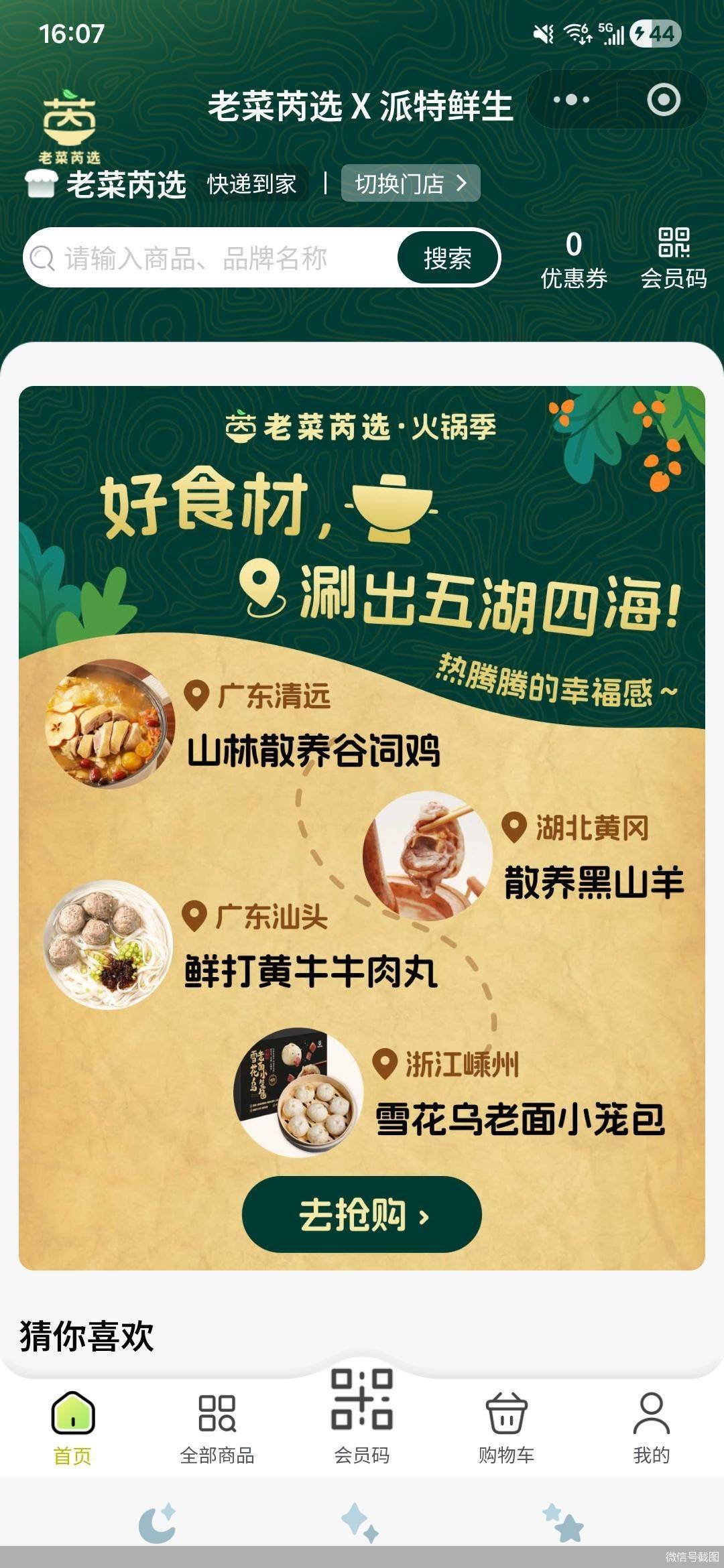
Core Insights - The article discusses the return of Hou Yi, former CEO of Hema Fresh, to the fresh food market through a new live-streaming venture called "Lao Cai Rui Xuan" [1][3] - The fresh food market is experiencing significant segmentation, with major players focusing on "instant delivery" and quality, while local suppliers cater to basic needs, leaving a gap for quality demand in the middle ground [1][8] Group 1: Business Model and Strategy - Hou Yi's new venture leverages his expertise in product selection and supply chain management, focusing on live-streaming as a lighter operational model without the burden of physical store costs [1][3] - The live-streaming format allows Hou Yi to act as a professional buyer, connecting quality products with targeted consumer groups [3][8] - The initial performance of "Lao Cai Rui Xuan" includes over 1,600 items sold, with more than 200 repeat customers and a high rating of 4.85 [3][4] Group 2: Market Trends and Competition - The live-streaming e-commerce sector is highly competitive, with agricultural products and fresh food accounting for a significant portion of the market [4][5] - In the first half of the year, China's agricultural e-commerce transaction volume exceeded 2.18 trillion yuan, with fresh products making up 35.6% of this market [4] - Live-streaming e-commerce has seen a remarkable growth rate of 47.2%, capturing 28.4% of total transaction volume [4][5] Group 3: Future Outlook - The sustainability of Hou Yi's personal brand in driving consumer trust and establishing a viable business model in fresh food live-streaming remains uncertain [5] - Experts suggest that the model of professional buyers in fresh food live-streaming must validate the "trust premium + repurchase" strategy for sustainable growth [5][9] - The future landscape of fresh food retail is expected to feature a coexistence of large comprehensive platforms and specialized vertical platforms, each catering to different consumer needs [9]
侯毅三度创业再战生鲜,亲自充当专业买手!直播间开播,赛道早已是“红海”…
Bei Jing Shang Bao· 2025-12-08 14:28
Core Viewpoint - The article discusses the return of Hou Yi, former CEO of Hema Fresh, to the fresh food market through his new venture "Lao Cai Rui Xuan," which utilizes live streaming for sales, focusing on his expertise in product selection and supply chain management [4][5][13]. Group 1: Company Overview - "Lao Cai Rui Xuan" is a live streaming platform selling various fresh food products, with prices ranging from tens to hundreds of yuan [4][5]. - The platform has seen significant engagement, with over 1,600 items sold, more than 200 repeat customers, and a customer rating of 4.85 [5][13]. - Hou Yi's approach leverages his personal brand as a trusted buyer, aiming to fill the gap in the fresh food market where quality demands remain unmet [4][13]. Group 2: Market Context - The fresh food market in China is highly segmented, with major players like Sam's Club and Hema focusing on "instant delivery" and quality, while local retailers cater to basic needs in lower-tier markets [18]. - A report indicates that by mid-2025, China's agricultural e-commerce transaction volume is expected to exceed 2.18 trillion yuan, with fresh products accounting for 35.6% of this market, reflecting a 21.3% year-on-year growth [13]. - Live streaming e-commerce is rapidly growing, with a 47.2% year-on-year increase, making up 28.4% of total agricultural e-commerce transactions [13]. Group 3: Future Outlook - The sustainability of Hou Yi's model will depend on validating the "trust premium + repurchase" strategy in the fresh food live streaming sector [14]. - The future landscape of fresh food retail is expected to feature a coexistence of large comprehensive platforms and specialized vertical platforms, each catering to different consumer needs [21].


侯毅三度创业再战生鲜:IP只能赢得入场券,供应链才是持久战
Sou Hu Cai Jing· 2025-12-08 11:49
Core Insights - The former CEO of Hema, Hou Yi, has launched a new venture called "Lao Cai Rui Xuan," focusing on live-streaming sales of fresh produce, leveraging his expertise in product selection and supply chain management [1][4][19] - The fresh produce market is experiencing significant segmentation, with major players competing on "instant delivery" and quality, while a gap remains for high-quality products in the middle market [1][19] - The live-streaming e-commerce sector is highly competitive, with fresh produce accounting for a substantial portion of the market, and the growth of live-streaming sales is notable, with a year-on-year increase of 47.2% [11][19] Company Overview - "Lao Cai Rui Xuan" operates without the burden of physical store costs, focusing on Hou Yi's strengths as a buyer and utilizing established live-streaming channels to connect products with targeted consumers [11][19] - The sales during a recent live-stream event included over 1,600 items, with more than 400 participants and a customer satisfaction rating of 4.85 [4][11] Market Dynamics - The Chinese agricultural e-commerce market is projected to exceed 2.18 trillion yuan by mid-2025, with a 14.7% year-on-year growth, indicating a robust demand for online agricultural products [11] - Fresh produce has become a dominant category, representing 35.6% of the market share, with a year-on-year growth of 21.3% [11] - The need for a sustainable business model in the fresh produce live-streaming sector hinges on establishing "trust premium" and repeat purchase rates [12][19] Challenges and Future Directions - Hou Yi's previous venture, "Paiteshengsheng," faced challenges leading to the closure of several physical stores, prompting a shift to online operations with a new brand "Chong Tiantian" [16][17] - The retail landscape is evolving, with a blend of traditional and innovative approaches, as companies seek to meet the growing consumer demand for quality, safety, and traceability in fresh produce [19]
「宠物界盒马」将全部闭店,侯毅的宠粮生意为何匆匆收场? | 声动早咖啡
声动活泼· 2025-12-03 10:04
Core Viewpoint - The article discusses the challenges faced by the pet fresh food brand, Pat Fresh, which aimed to replicate the success of Freshpet in the Chinese market but ultimately struggled to maintain its business model and closed stores after less than nine months of operation [6][11]. Market Overview - The pet market in China was valued at 97.8 billion yuan in 2015 and is expected to exceed 811.4 billion yuan by this year, with pet food accounting for over half of the market [4]. - Freshpet, founded in 2006, dominates the U.S. fresh pet food market with a 95% share, driven by consumer trends favoring fresh, minimally processed foods [5]. Business Model and Challenges - Pat Fresh aimed to leverage experience from Hema Fresh to address high cold chain costs and strict quality control in the fresh pet food sector, but faced limitations due to the low monthly spending of pet owners, which averages around 300 yuan [7][8]. - The fresh food segment only holds a 3.6% share of the overall dog food market in the U.S., indicating a significant challenge for new entrants in a market dominated by dry food, which accounts for 60% of the Chinese pet food market [8][9]. Consumer Behavior - Many pet owners in China prefer dry food for its convenience, using fresh food as a supplement rather than a primary diet, which affects the repeat purchase rate of fresh food products [7][8]. - The perception of fresh food as a premium product contrasts with the reality of lower consumer trust in industrial processes, leading to a preference for homemade options among some pet owners [8][9]. Competitive Landscape - Pat Fresh's pricing strategy aimed to offer competitive prices, but it struggled against established brands that could offer lower prices during promotional events [10][11]. - The shift towards online sales in the pet food industry, where 70-80% of pet food is sold through e-commerce, presents a challenge for brick-and-mortar stores like Pat Fresh, which required significant capital investment for physical locations [10][11].

仅营业276天!派特鲜生上海首店今晚十点正式关门
Bei Ke Cai Jing· 2025-11-25 11:28
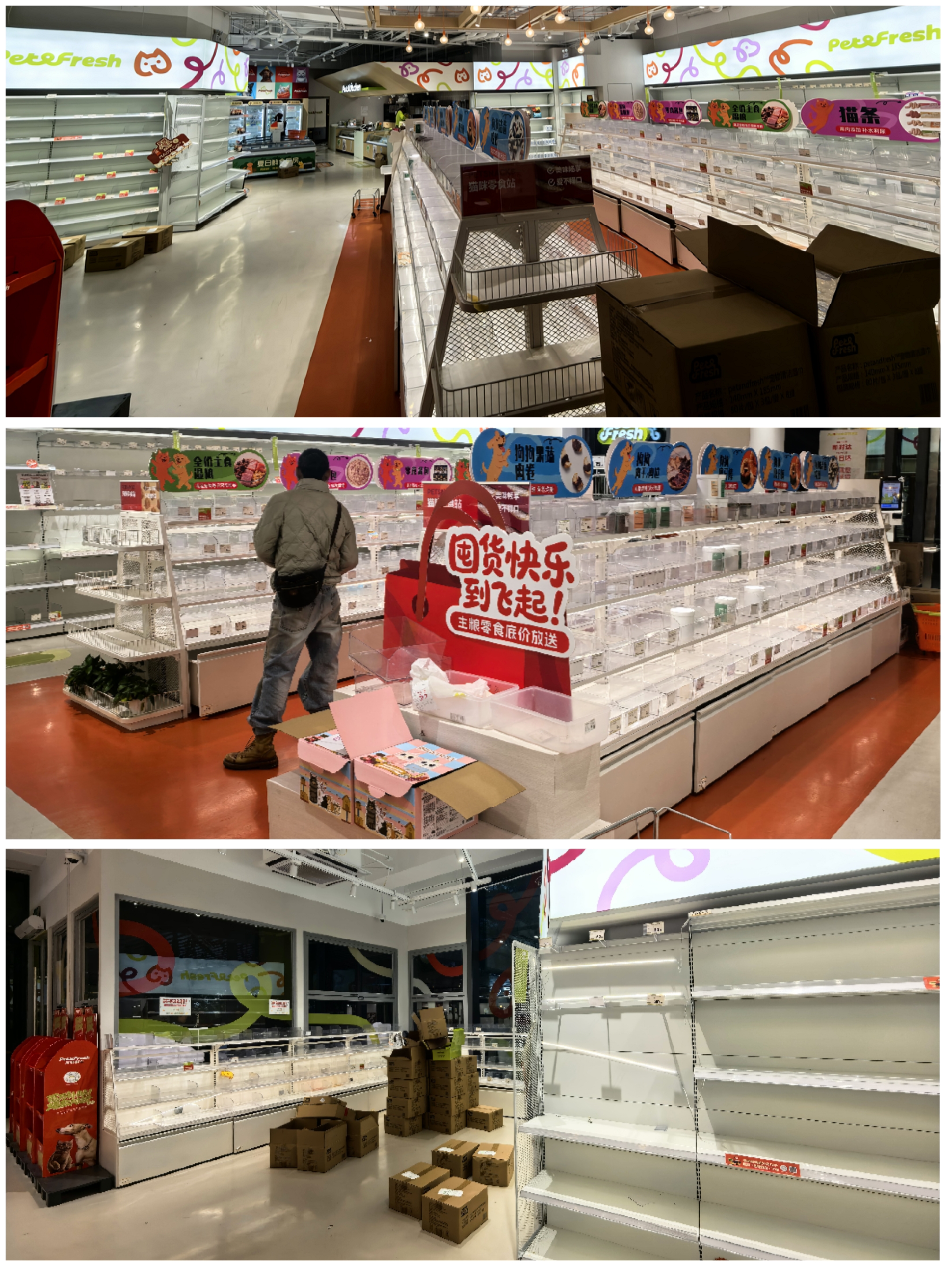
Core Insights - The first store of Pat Fresh in Shanghai's Haicu Cultural Plaza has closed after 276 days of operation, with the pet food shelves nearly empty at the time of closure [4][7][10] - The store initially experienced high customer traffic and was located in a pet-friendly area, but ultimately faced significant losses leading to the decision to exit physical retail [11][12] Group 1: Store Performance - The store opened on February 22 and featured a 200 square meter space with a fresh food area and over 300 types of bulk snacks for pets [10] - Despite a promising start, the company has struggled to meet its expansion goals, with only a fraction of the planned 100 stores opened by 2025 [11] Group 2: Future Plans - The company plans to transition some of its stores to a new brand called "Pet Tian Tian," which will continue to operate in the pet food sector [13][15][16] - The founder, Hou Yi, aims to focus on supply chain efficiency and effective store operations rather than aggressive expansion [11]
关闭全部门店,盒马创始人又失败了
创业家· 2025-11-23 09:43
Core Viewpoint - The article discusses the rapid decline of the pet retail brand "Paiteshengsheng," founded by Hou Yi, highlighting the challenges faced in the physical retail space and the decision to close all offline stores while retaining online operations [5][16][20]. Group 1: Company Overview - "Paiteshengsheng" was launched by Hou Yi in February 2023, with plans to open 100 stores in Shanghai, focusing on new retail, discounting, and pet-owner socialization [10][13]. - The brand aimed to innovate in pet food retail by combining fresh food preparation with a social space, offering a variety of pet products and emphasizing high-quality, personalized feeding options [14][20]. Group 2: Business Challenges - Within 9 months of operation, 7 out of over 10 stores in Shanghai were closed due to high operating costs, including rent and labor, and a lack of customer traffic [5][16][18]. - The shift in consumer behavior towards online shopping for pet products has further strained the viability of physical stores, making it difficult to achieve profitability despite lower pricing strategies [19][20]. Group 3: Market Insights - The overall pet economy in China is projected to grow, with the market size expected to exceed 300 billion yuan in 2024, indicating potential for future opportunities despite the struggles of "Paiteshengsheng" [20][21]. - The penetration rate of fresh pet food in China remains low at under 5%, suggesting significant room for growth compared to markets like the U.S., where it stands at 36% [21][22].