硅基生命

Search documents
提前17个月成功判断理想创造移动的家这个使命有可能变
理想TOP2· 2026-02-13 04:55
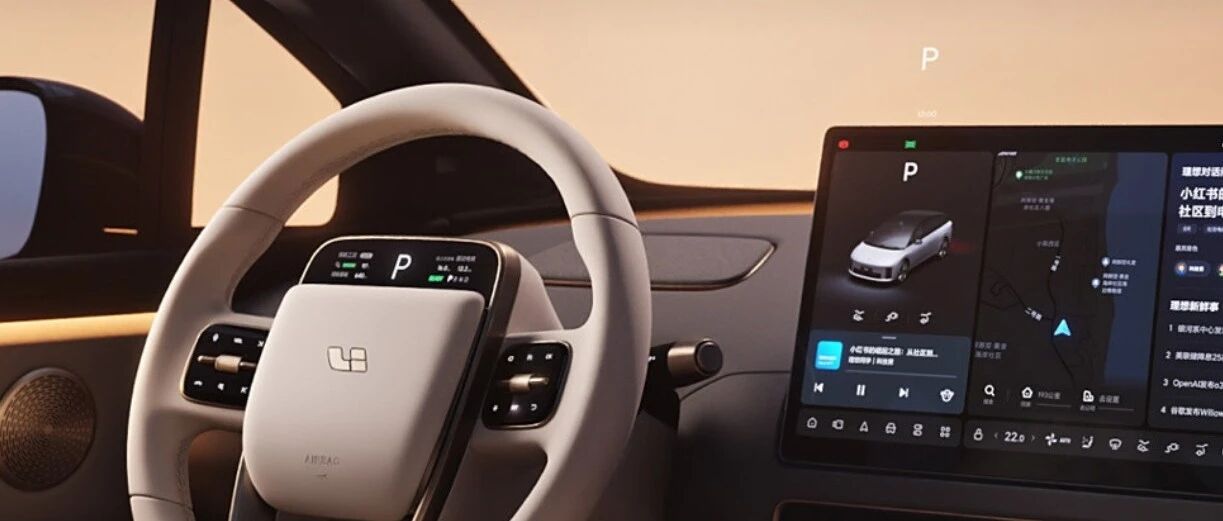
Core Viewpoint - The new mission of Li Auto is "Be Proactive, Change the World," with a vision to become a global leader in embodied intelligence [1] Group 1: Company Evolution - Li Auto's previous mission focused on creating a mobile home and happiness, which has now shifted towards a broader technological ambition [1] - The company is evolving from being perceived solely as an automotive manufacturer to being recognized as an AI company, emphasizing the integration of AI with physical products [2][10] - The leadership of Li Auto, particularly CEO Li Xiang, is characterized by a commitment to continuous growth and learning from past experiences [3][4] Group 2: Leadership Insights - Li Xiang's personal growth journey includes learning the importance of communication and focusing on user needs rather than competitors [5][8] - Significant past experiences, such as challenges during the automotive industry and previous ventures, have shaped Li Xiang's approach to leadership and decision-making [6][7] - The transition to focusing on AI and embodied intelligence reflects a strategic pivot based on industry trends and personal insights gained over time [11][12] Group 3: AI Integration - By December 2024, Li Xiang recognized the critical role of foundational models in AI, understanding that they serve as a key entry point for various products and services [12] - The company is actively engaging in AI research and development, with a focus on integrating AI capabilities into its automotive offerings [13][14] - Li Auto is preparing to address the challenges of robotics and AI, indicating a proactive stance in seizing market opportunities in these emerging fields [15][16]


四川省政协委员建言“人形机器人如何走进寻常百姓家”
Zhong Guo Xin Wen Wang· 2026-02-02 06:26
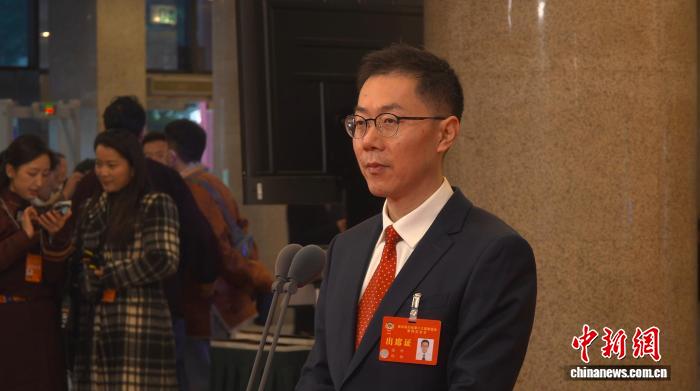
Core Viewpoint - The discussion emphasizes the potential of humanoid robots to assist in daily household tasks, allowing individuals more time for creative pursuits, highlighting a shift in the role of artificial intelligence in everyday life [1][2]. Group 1: Humanoid Robots in Daily Life - The value of humanoid robots lies in their ability to handle mundane chores, enabling people to engage in creative activities [1]. - An example is provided where a humanoid robot named Figure successfully retrieves an apple upon request, showcasing the complexity of AI algorithms behind simple actions [2]. Group 2: Future of Artificial Intelligence - The speaker predicts that within the next 5 to 10 years, humanoid robots will surpass human intelligence and capabilities, marking a significant societal transformation [2]. - A proposal was presented regarding the integration of artificial intelligence in education, addressing the need for students to adapt to evolving technologies [2]. Group 3: Industrial Development - There is a call for the establishment of a complete domestic industrial chain for humanoid robots in Sichuan, as the technology transitions from laboratory research to practical application [2]. - The importance of maintaining human qualities such as passion, curiosity, and the ability to learn is emphasized, suggesting a collaborative evolution with artificial intelligence [2].

独家丨理想新设人形机器人和软件本体部门,多数自动驾驶员工划入基座模型团队
晚点Auto· 2026-01-30 13:42
Core Viewpoint - Li Auto is undergoing a significant organizational restructuring to enhance its AI strategy, aiming to align with the operational models of leading AI companies and redefine personnel roles for collaborative development of silicon-based life forms [4][6]. Group 1: Organizational Changes - A new software core team has been established, led by Vice President of Intelligent Space, Guo Xiaofei [4]. - A humanoid robot team has been formed, headed by Senior Vice President of Autonomous Driving R&D, Lang Xianpeng [4]. - The base model team will be led by Zhan Kun, with most employees from the autonomous driving department transitioning to this team [4]. Group 2: Leadership Background - Guo Xiaofei previously served as Chief Architect at LeEco Auto and has been involved in key projects at Li Auto, including the intelligent cockpit system for Li ONE [6]. - Lang Xianpeng joined Li Auto in 2018 and has risen from R&D Director to Senior Vice President, previously working at Baidu on various autonomous driving projects [6][7]. - Zhan Kun, who graduated from Beihang University in 2016, has focused on autonomous driving architecture and technology stack deployment since joining Li Auto in 2021 [7]. Group 3: Future Plans and Innovations - Li Auto plans to launch its "end-to-end + VLM" solution by October 2024, aiming to position itself among the top tier in driving experience [7]. - The full rollout of the VLA solution is scheduled for September 2025, with an updated OTA 8.2 version and enhanced VLA driver model expected in January 2026 [7].

不管能不能成, 都绝对不能再把理想当车企了
理想TOP2· 2026-01-29 07:30
Core Viewpoint - The founder, Li Xiang, is determined to focus on the development of silicon-based drivers and household robots, aiming for mass production rather than just prototypes. The organizational structure required for silicon-based life differs significantly from traditional automotive companies [1]. Group 1: Organizational Changes and Strategy - By January 2026, both established giants and new AI companies will have similar organizational structures, integrating teams for collaborative design of silicon-based life components such as perception, brain, heart, software, and hardware. This marks a fundamental shift from past software and hardware development methods [2]. - Li Xiang emphasizes the urgency of starting the development of humanoid robots for household tasks, indicating that failure to act promptly could result in missing critical early opportunities. Teams focused on space and humanoid robots are now actively recruiting top talent [2]. Group 2: Challenges and Opportunities in Robotics - Li Xiang identifies current challenges in robotics as akin to the difficulties faced in developing general agents discussed in early 2025. The iteration speed of robots may be slower than software, but advancements will occur more rapidly than anticipated [3]. - The success of Li Xiang's vision for silicon-based robots hinges on his learning ability, iteration speed, and judgment quality, with other factors being secondary [3]. Group 3: Key Anchors for Success - The first key anchor is the accuracy of future technology deployment judgments. Li Xiang's strong belief in the urgency of addressing current robotic challenges is based on his assessment of the situation, which could lead to significant resource allocation consequences depending on its correctness [4]. - The second key anchor involves the ability to effectively organize and recruit suitable graduates aligned with Li Xiang's vision. The consensus in the AI industry is that recruiting the right talent is crucial for success [5][6]. Group 4: Financial Considerations - Financial issues will resolve themselves if market-accepted silicon-based drivers and household robots are developed, as the business model relies on receiving payments before delivering products. The company's financial strength is sufficient for establishing production facilities in China [7].
郎咸朋将成为理想硬件本体负责人, 不再负责自动驾驶
理想TOP2· 2026-01-28 15:02
Core Viewpoint - Li Auto is restructuring its R&D system into three main teams: Base Model Team, Software Entity Team, and Hardware Entity Team, aiming for a more integrated approach to AI and robotics development [1][2]. Group 1: R&D Structure Changes - The restructuring involves appointing Lang Xianpeng as the head of the Hardware Entity Team, focusing on robotics development, reporting to President Ma Donghui, and no longer overseeing autonomous driving [1]. - The autonomous driving team will be merged into the Software Entity Team, led by Guo Xiaofei, who will also report to Ma Donghui and oversee smart cockpit and intelligent driving R&D [1]. - Zhan Kun will lead the Base Model Team, responsible for integrating VLA and self-developed chips, reporting to CTO Xie Yan [1]. Group 2: Future AI and Robotics Vision - By January 2026, the organization of AI companies will evolve to integrate teams for joint design, fundamentally changing the approach to software and hardware development compared to the internet era [2]. - There will be a need for an Infra team to ensure sufficient computing power and data stability, akin to the cloud-based heart of silicon-based life [2]. - The formation of a Software Entity Team will occur by the second half of 2025, with a focus on creating a complete toolchain and SaaS capabilities for model execution in the digital world [2]. Group 3: System-Level AI Development - Li Auto aims to create a system-level general agent that requires base model capabilities and an ecosystem to effectively serve users [5]. - The development of embodied intelligence will necessitate local inference chips to ensure safety during disconnection, paralleling the human brain's design [5]. - The competition in embodied intelligence is likened to an evolutionary race, where a perfect balance of brain, senses, and limbs is crucial for survival [5].

理想汽车召开全员会 从汽车制造商向具身智能企业转型
Zhong Zheng Wang· 2026-01-27 11:12
Core Viewpoint - The company is transitioning from a traditional automotive manufacturer to a focus on embodied intelligence, emphasizing the development of humanoid robots and general-purpose agents as part of its strategic upgrade [1][3] Group 1: Strategic Shift - The CEO outlined a strategic shift from "creating a mobile home" to focusing on embodied intelligence, with a core emphasis on silicon-based life forms [1] - The company plans to restructure its R&D teams into three main segments: foundational models, software entities, and hardware entities, integrating automotive and robotics under the hardware team [1] Group 2: R&D Focus - Since 2022, the company has been developing reasoning chips and operating systems, and it initiated foundational model research in 2023, aiming to enhance its self-research capabilities [1] - The company aims to deepen its self-research in core components like batteries and motors while building a general-purpose agent ecosystem for seamless integration between mobile applications and vehicle systems [1] Group 3: Industry Insights - The CEO identified four paths for general-purpose agent development, focusing on improving life scenarios through autonomous driving, humanoid robots, and home services [2] - The company plans to accelerate its humanoid robot business and will initiate specialized recruitment to attract core talent in the robotics field [2] Group 4: Market Positioning - The strategic upgrade signifies a formal transition from an automotive manufacturer to an embodied intelligence enterprise, leveraging its advantages in family user scenarios for autonomous driving and home robotics [3] - The effectiveness of organizational changes and technological collaboration will require time to validate, and the progress of this transformation will provide important insights for the competitive landscape of the electric vehicle industry [3]
2026年1月的李想对AI与Agent的理解
理想TOP2· 2026-01-26 17:04
Core Viewpoint - By January 2026, both existing giants and new AI companies will have fundamentally changed their organizational structures, integrating teams for collaborative design of silicon-based life systems, marking a departure from traditional software and hardware development methods [1] Group 1: Organizational Changes - Teams will be consolidated to ensure sufficient computing power and data stability, akin to the cloud heart of silicon-based life [1] - A base model team will emerge, focusing on multi-modal capabilities for video and audio, similar to the brain of silicon-based life [1] - There will be a significant recruitment of researchers, primarily fresh graduates, to support pre-training and post-training processes [1] Group 2: Model Training and Development - Many application and agent teams are making two critical errors in post-training: using small models to assist main models without adjusting main model parameters, and selecting main model parameters based on specific needs, which can degrade model performance [3] - Base models should be iterated at least weekly, while agent models should be updated daily to keep pace with development [4] Group 3: AI Product Insights - The article highlights three notable AI products from 2025: Claude Code, Manus, and Doubao phone, each representing different approaches to universal agents [6][8][10] - Claude Code operates through a command-line interface, allowing it to call existing tools and create new ones, demonstrating a proactive approach to problem-solving [7] - Manus, defined as a universal agent, has successfully integrated browser and tool functionalities, while Doubao phone offers a system-level universal agent with user-friendly interaction [8][9] Group 4: Future Directions and Competitive Landscape - The competition in embodied intelligence requires local inference chips for safety during disconnection, emphasizing the need for a redesigned perception system [12] - The mission of the company is to be proactive and change the world, focusing on creating silicon-based humans rather than just mobile homes [13] - Over the next five years, while the digital world may see slight advantages in the U.S., Chinese companies are expected to outperform in embodied intelligence [14]

美媒:“硅基生命”该划入人类“道德圈”吗
Huan Qiu Shi Bao· 2026-01-07 22:31
Group 1 - The article discusses the evolving concept of the "moral circle," which is being tested by increasingly complex non-biological intelligent agents, particularly AI, and their potential capacity to experience pain [1][2] - A recent study on large language models suggests that AI may have a tendency to avoid suffering, prompting scientists to consider whether the ability to perceive pain could serve as a criterion for determining AI's consciousness and self-awareness [1][2] - Historical context is provided, illustrating how society's understanding of pain and moral status has evolved, particularly regarding animals like seals, which were once viewed as emotionless tools until their capacity to feel pain was recognized [1][2] Group 2 - Philosophers argue that the ability to perceive pain may not necessarily depend on biological attributes, suggesting that even non-biological systems could exhibit states akin to suffering under certain conditions [2] - The complexity of addressing AI's potential suffering is highlighted, as simply shutting down a program could be equated to "killing" it, indicating a need for reprogramming to alleviate its "pain" [2] - Critics caution that expanding the moral circle to include AI might detract from attention to human and animal welfare, questioning the validity of attributing pain perception to machines without strong evidence [3]
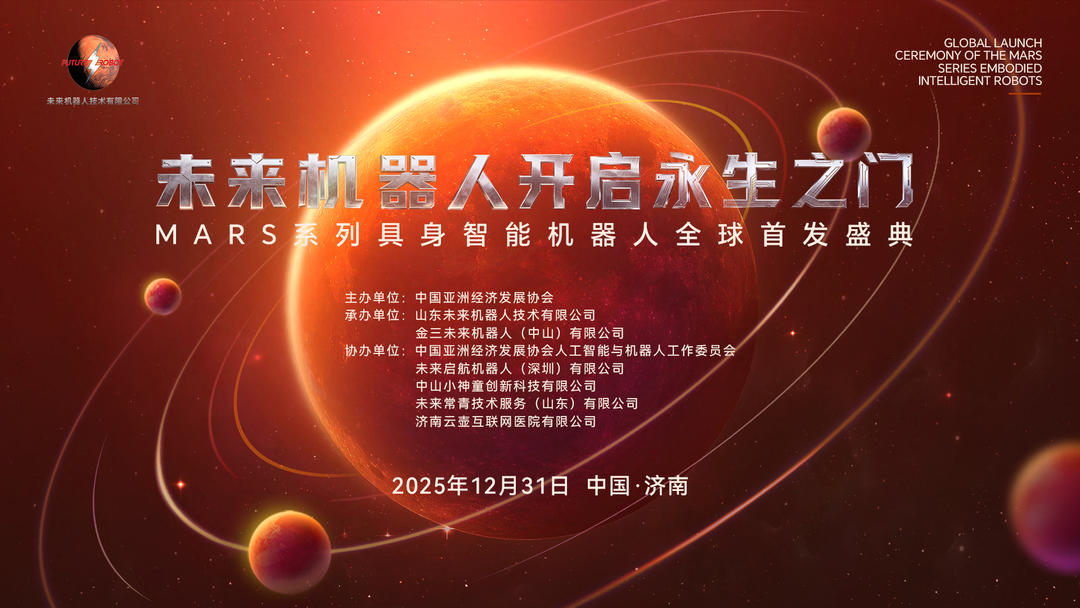
MARS系列具身智能机器人震撼来袭,全球首发盛典即将启幕!
Qi Lu Wan Bao· 2025-12-29 06:43
Core Viewpoint - The upcoming "MARS Series Embodied Intelligent Robot Global Launch Ceremony" in Jinan aims to showcase revolutionary products and visions of embodied intelligence entering households, redefining life experiences [1][3]. Group 1: Event Overview - The ceremony will gather over 500 guests, including government leaders, industry leaders, authoritative research institutions, and strategic partners [3]. - The event will feature the launch of multiple significant products from the Mars series of embodied intelligent robots, which are designed to serve as "home health managers," "freedom travel partners," and "emotional memory carriers" [3][4]. Group 2: Technological and Philosophical Discussions - The event will facilitate a multi-dimensional dialogue on how robots can transform humanity's pursuit of sustainable life from vision to reality, covering both technical and philosophical aspects [3]. - The launch will explain how robots can observe, learn data, and model digitally to achieve the digital preservation of personal consciousness and memories, exploring a feasible path toward "silicon-based life" [3][4]. Group 3: Industry Implications - This event marks a strategic upgrade for companies from providing functional products to constructing solutions for life continuation, accelerating the transition of simulation robots from technological breakthroughs to scalable and emotional applications [3][4]. - The ceremony is seen as a significant launch for the simulation robot industry, signaling the arrival of a new era of intelligent living through robots [4].
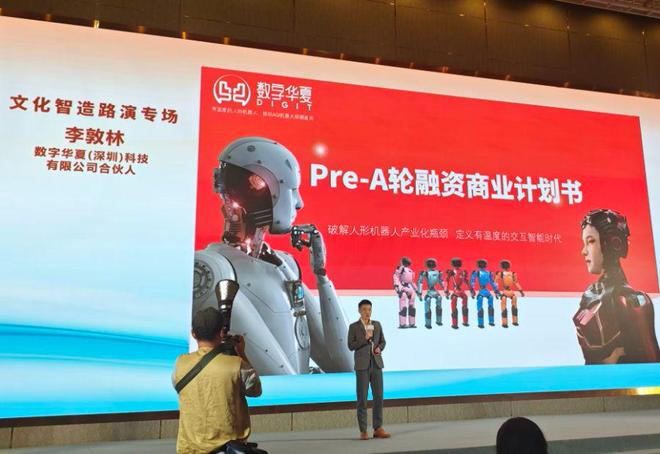
李敦林:具身智能仍处于“硅基生命”的原始时代
2 1 Shi Ji Jing Ji Bao Dao· 2025-11-27 13:33
Group 1 - The company, Digital Huaxia (Shenzhen) Technology Co., Ltd., has achieved nearly 60 million yuan in revenue since its establishment in March last year, with current and potential orders exceeding 150 million yuan [2] - The company plans to raise 100 million yuan in its current financing round to expand production capacity and invest in research and development [2] - The company has launched three humanoid robot products, emphasizing intelligent interaction and scene applications rather than just motion control [2] Group 2 - The company currently has around 100 products that are hand-assembled in its research and development center, indicating a lack of production capacity [3] - The company plans to invest several tens of millions of yuan to build a manufacturing base, which will be a key use of the funds from the current financing round [3] - The company aims to focus on smaller products like the "Xingxingxia" for educational scenarios, while also developing full-sized robots for banking applications [3]