
经济刺激措施

Search documents
日本国债期货小幅走高 投资者评估日本第四季度GDP初值数据
Xin Lang Cai Jing· 2026-02-16 00:29
Core Viewpoint - Japanese government bond futures rose slightly in early Tokyo trading as investors assessed the preliminary GDP data for the fourth quarter, which showed a growth of 0.1%, lower than the 0.4% predicted by economists surveyed by Quick [1] Group 1: Economic Data Impact - The 0.1% GDP growth may lead to speculation that the Bank of Japan could slow down its interest rate hikes [1] - The disappointing GDP figure could prompt the Japanese government to introduce more economic stimulus measures, potentially worsening the country's fiscal situation [1] Group 2: Market Reaction - The ten-year Japanese government bond futures increased by 0.19 yen, reaching 131.99 yen [1]
泰国汽车出口量下降了12%
Shang Wu Bu Wang Zhan· 2025-12-26 17:13
Group 1 - The core viewpoint of the articles highlights a significant decline in Thailand's automotive exports, with a 12% year-on-year decrease from January to November, totaling 78,692 vehicles, primarily due to the global shift from internal combustion engine vehicles to electric vehicles [1] - The Thai automotive industry is facing increased competition, with major manufacturers halting production of internal combustion engine models and countries imposing new carbon emission taxes on fuel vehicles, contributing to the decline in sales [1] - Exports to Asia decreased by 5.64%, to Australia by 16%, and to the European Union by 33%, while the Middle East showed a slight growth of 0.45% [1] Group 2 - Domestic automotive sales in Thailand increased by 5.2% year-on-year, reaching 546,045 vehicles, with November sales alone growing by 20.6% to 51,044 vehicles [1] - The growth in domestic sales is attributed to more affordable electric vehicle prices, lower loan costs due to reduced interest rates, and promotional activities during the Thailand International Motor Expo [2] - The automotive industry aims to produce 1.45 million vehicles by 2025, with 950,000 for export and 500,000 for the domestic market, although export volumes may not meet expectations [2] Group 3 - The Thai automotive production in November increased by 11% year-on-year to 130,222 vehicles, despite a total production decline of 1.6% from January to November, amounting to 1,341,714 vehicles [2] - Following the upcoming elections, the Thai Industrial Federation anticipates that the new government will introduce more economic stimulus measures to boost economic growth and investor confidence, positively impacting the automotive industry [3]
中短期宏观研判:国内外经济态势与财政货币政策走向
Mei Ri Jing Ji Xin Wen· 2025-11-25 14:29
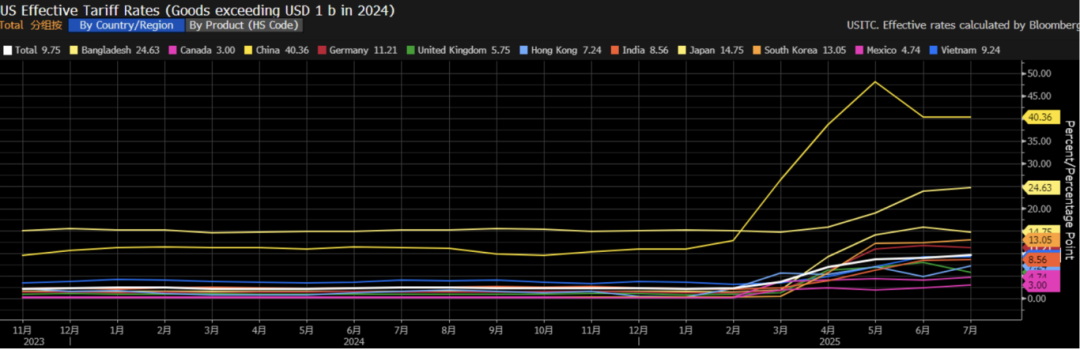
Economic Overview - The US economy is experiencing a slow downward trend, with overall inflation remaining stable and limited transmission effects from tariffs on inflation [1] - Recent data from Harvard's Pricing Lab indicates that the price increase of Chinese goods imported to the US has been limited, even after tariff hikes [1] - The US has recently reduced tariffs on Chinese imports by 10%, further diminishing the impact of tariffs on inflation [1] - There is a potential concern regarding rising electricity prices due to significant investments in the AI industry, which may affect the US CPI [1] Labor Market Insights - The US is currently in a government shutdown, leading to a lack of official economic data, with reliance on private statistics like the ADP report [2] - The latest ADP data shows a rebound in job creation to over 40,000 in October, but this is still below the previous average of over 100,000, indicating a weak labor market [2] - The stable inflation and weakening labor market create conditions for potential monetary policy easing, with expectations for a rate cut by the Federal Reserve in December [2] China-US Trade Relations - Despite the recent reduction of tariffs on Chinese goods, China still faces significant tariff pressures, with its goods having the highest tariff rates among countries exporting to the US as of July [3] Domestic Economic Conditions - China's economy is showing a diverging trend compared to the US, with stable high growth in exports, social financing, and industrial value added, while retail sales and fixed asset investment face uncertainties [5] - The GDP growth rate for the fourth quarter is expected to decline further, potentially falling between 4.4% and 4.6% [5] - The impact of previous economic stimulus measures is leading to a decline in consumer purchasing power, with some sectors experiencing negative sales growth [5] Inflation and Price Trends - The fourth quarter is expected to see a "bottoming out and recovery" in inflation, influenced by base effects, with gold's rising weight in the CPI contributing to this trend [6] - Gold's weight in the CPI has increased to 4%, indicating its significant impact on overall inflation metrics [6] - Core CPI is projected to remain stable between 0.5% and 1.6% [6] Social Financing Trends - Social financing growth is expected to gradually decline towards the end of the year due to a lack of large-scale debt issuance compared to the previous year [7] - The recent discussions from the Fourth Plenary Session indicate a cautious approach to economic policy, with no expectation of large-scale stimulus measures [7] Fiscal and Monetary Policy Developments - There has been a noticeable decrease in fiscal bond issuance in October, with expectations for a potential rebound in November or December [8] - The government has implemented incremental policies to address the economic downturn, including the issuance of local government bonds [8] - Policy-oriented financial tools have been fully utilized to counter economic pressures, with a focus on supporting key sectors [9] Market Outlook - The bond market is expected to experience a narrow fluctuation pattern, with potential for policy-driven movements in early next year [10] - The ten-year government bond is highlighted as a stable investment option, suitable for both long-term allocation and short-term trading strategies [10]

泰央行预测刺激措施将推动第四季度的GDP增长
Shang Wu Bu Wang Zhan· 2025-10-23 19:23
Economic Growth Outlook - The Bank of Thailand expects the "Khon La Khrueng Plus" co-payment scheme to boost GDP growth in Q4 of this year, projecting a quarter-on-quarter increase of 0.5% after a contraction in the previous quarter [1] - The central bank anticipates a year-on-year GDP growth rate of 1.3% in Q4, down from 1.5% in Q3, primarily supported by government stimulus measures aimed at encouraging shared healthcare costs and boosting domestic tourism [1] Sector Performance - The economic recovery is expected to be bolstered by an expansion in exports, driven by companies ramping up production and previously closed factories resuming operations [1] - Temporary production halts in various sectors, including oil, automotive, and alcoholic beverages, contributed to a 0.5% quarter-on-quarter decline in GDP in Q3 [1] Currency and Tourism - The Bank of Thailand has revised down its GDP growth forecasts for 2025 and 2026 to 2.2% and 1.6%, respectively, due to domestic and international economic challenges [2] - Despite a strong Thai baht, which appreciated by 7.8% earlier this year, its recent depreciation of 4.4% against the US dollar has negatively impacted Thailand's export and tourism competitiveness [2] - The central bank projects an increase in foreign tourist arrivals in Q4, estimating a total of 33 million foreign visitors for the year, with expectations to rise to 35.5 million by 2026 [2] Chinese Tourist Recovery - Following a significant decline of 55% in April, the number of Chinese tourists is showing signs of recovery, with a projected reduction in decline to 28.9% this month [3] - The central bank forecasts that the number of Chinese tourists will reach 4.4 million by 2025 and increase to 6.6 million by 2026 [3]
刚刚,开盘大涨!
中国基金报· 2025-10-20 02:06
Group 1 - The Nikkei 225 index in Japan has risen by 2.47%, reaching a new historical high [4][3] - The ruling Liberal Democratic Party (LDP) and the Japan Innovation Party have reached a basic agreement to form a coalition government, potentially paving the way for economic stimulus measures [5][6] - Risk appetite has improved due to positive developments in trade relations and regional banks in the U.S. [6] Group 2 - The Seoul Composite Index opened high but fell by 0.52%, closing at 3729.47 [6][7] - Citigroup economists predict that the current interest rate cut cycle in South Korea may be ending, with the Bank of Korea expected to maintain the benchmark rate at 2.5% [8] - Future interest rate cuts are anticipated in November 2026 and May 2027, with a potential final rate of 2% [8] Group 3 - Gold prices have dropped, with spot gold falling below $4230 per ounce, down 0.54% [10] - Platinum futures have decreased by 1.54%, currently priced at $1594.6 per ounce [12] - Palladium futures have also seen a decline of 2.42%, now at $1485.5 per ounce [13] Group 4 - Signals of tariff easing continue, with reports indicating that the Trump administration is quietly relaxing tariff policies and exempting dozens of products from tariffs [14]

2025年上半年香港多项经济及金融数据表现理想
Zhong Guo Xin Wen Wang· 2025-09-29 23:24
Economic Performance - Hong Kong's economy showed robust growth in the first half of 2025, driven by strong merchandise exports and improved local demand [1] - Future export growth may face pressure due to tariff factors, but economic stimulus measures from mainland China are expected to enhance business confidence [1] Financial Sector - The pre-tax operating profit of Hong Kong's retail banks increased by 13.4% year-on-year, primarily due to higher revenues from foreign exchange and derivatives, as well as increased fees and commissions [1] - The banking sector maintained high liquidity and ample capital [1] Stock Market and Capital Activity - The Hang Seng Index rose by 9.3% from late February to the end of August, recovering after a sharp decline in early April [2] - Initial public offering (IPO) financing in Hong Kong reached HKD 107.1 billion in the first half of the year, eight times that of the same period last year [2] Currency and Debt Securities - The Hong Kong dollar experienced a strong performance following active capital market activities, with bank credit returning to positive growth and total deposits continuing to rise [2] - The total issuance of Hong Kong dollar debt securities increased by 11.5% year-on-year, reaching HKD 28,287 billion in the first half of the year [2]
日本新首相热门候选人高市早苗:若胜选,将减税与发放现金补贴
Zhi Tong Cai Jing· 2025-09-19 07:48
Group 1 - The core viewpoint of the articles is that Kato Sanae, a prominent candidate for the leadership of Japan's ruling Liberal Democratic Party (LDP), plans to implement tax incentives and cash subsidies for families if elected [1][2] - Kato Sanae aims to raise the tax-exempt income threshold and eliminate gasoline taxes as part of her economic stimulus measures [1] - Kato Sanae's leadership could mark a significant shift in Japan's political landscape, potentially making her the first female Prime Minister of Japan [1] Group 2 - Kato Sanae's political stance is characterized by a strong conservative approach, advocating for aggressive economic stimulus to promote growth [1] - In a recent poll conducted from September 12 to 15, Kato Sanae received 19.7% support among LDP supporters, ranking second behind her competitor, Koizumi Shinjiro, who garnered 31.8% [1] - Kato Sanae has not addressed monetary policy in her recent statements, despite her previous opposition to interest rate hikes [2]
泰财政部准备刺激措施以应对关税
Shang Wu Bu Wang Zhan· 2025-08-12 15:06
Core Viewpoint - The Thai Ministry of Finance is preparing to implement stimulus measures to counteract the negative impacts of U.S. tariffs while accelerating regulatory reforms to enhance national competitiveness [1] Group 1: Economic Stimulus Measures - The Ministry plans to implement stimulus measures to compensate for the potential negative effects of a slowdown in net export income on economic growth [1] - If net export income declines and affects economic growth, the government is ready to consider measures to stimulate domestic consumption and investment [1] Group 2: Infrastructure and Tax Policies - Proposed measures may include accelerating public investment budget payments for various infrastructure projects to stimulate economic activity and create domestic job opportunities [1] - Tax policies may be introduced to encourage consumption, such as tax reductions for domestic tourism or shopping, to offset the slowdown in foreign demand [1] Group 3: Support for Key Economic Sectors - There will be support for the tourism and service sectors, which are critical engines of the Thai economy [1]
德法怒批欧美贸易协议,经济担忧再度笼罩欧洲市场
Jin Shi Shu Ju· 2025-07-29 02:13
Group 1 - The recently announced US-EU trade agreement has faced strong criticism from Germany and France, with warnings that it could harm the EU economy and lead to increased inflation [1][2] - The agreement, described by EU Commission President Ursula von der Leyen as the "largest trade agreement in history," covers nearly 44% of global GDP and aims to prevent a transatlantic trade war [2] - The agreement secures a lower tariff rate for the EU compared to the threatened 30% tariffs by the US, but the new 15% tariff is still three times higher than the average tariffs prior to Trump's "Liberation Day" announcement in April [3] Group 2 - European stock markets reacted negatively to the agreement, with the German DAX index falling by 1% and the French CAC40 index down by 0.4%, as initial optimism was overshadowed by concerns over the EU's economic outlook [3] - The automotive sector, significantly impacted by the tariffs, saw a decline of 1.8% in the Stoxx Europe 600 index after an initial rise [3] - The US Chamber of Commerce welcomed the agreement but noted that the 15% tariff still represents a significant increase in trade costs, suggesting that more industries should be included in the zero-tariff list [4]
日本首相:对出台更多刺激措施持开放态度,但不会削减消费税
news flash· 2025-05-12 03:42
Core Viewpoint - The Japanese Prime Minister expressed an open attitude towards implementing further stimulus measures to mitigate the economic impact of increased U.S. tariffs, while remaining cautious about reducing the consumption tax rate [1] Group 1: Economic Measures - The government is prepared to take additional measures to alleviate the economic pain caused by U.S. tariff increases [1] - Any measures taken must specifically target the households most affected, rather than being broadly applied [1] Group 2: Consumption Tax - There are calls from opposition parties and some ruling party members for the government to lower the consumption tax to help families cope with rising living costs [1] - The current consumption tax rate in Japan is 10%, with a reduced rate of 8% for food [1]