职业经理人模式

Search documents
理想汽车的“新10年”:创业精神是根基,经营模式是关键
Sou Hu Cai Jing· 2026-03-23 11:57
Core Viewpoint - Li Auto faces significant challenges as its Q3 2025 financial results reveal a decline in revenue, gross profit, and net profit, marking the first loss after surpassing 100 billion yuan in revenue [3][4][8] Financial Performance - In Q3 2025, Li Auto reported revenue of 27.4 billion yuan, a year-on-year decrease of 36.2% and a quarter-on-quarter decrease of 9.5% [3] - Gross profit fell to 4.5 billion yuan, down 51.6% year-on-year and 26.3% quarter-on-quarter [3] - The net loss was 624 million yuan, contrasting with a profit of 2.8 billion yuan in the same quarter of 2024 [3] - Vehicle deliveries totaled 93,211 units, a 39% year-on-year decline, failing to reach the 100,000-unit mark for the quarter [3][4] Comparison with Competitors - Competitors such as XPeng and NIO showed strong growth, with XPeng's revenue reaching 20.38 billion yuan, a year-on-year increase of over 100%, and NIO's revenue at 21.79 billion yuan, a 16.7% increase [4][5] - Li Auto's performance contrasts sharply with XPeng's delivery of 116,007 units and NIO's 87,071 units, both achieving significant year-on-year growth [4][5] Strategic Insights - Li Auto's Q3 loss is partly attributed to a recall of over 11,000 units of the 2024 MEGA model, which incurred an estimated loss of 1.1 billion yuan [8] - The company is focusing on transitioning to pure electric products and enhancing its supply chain, with R&D expenses exceeding 3 billion yuan in Q3 [9][10] - Li Auto's cash reserves stood at 98.9 billion yuan as of Q3 2025, providing a financial buffer for strategic decisions [10] Management Philosophy - CEO Li Xiang emphasized a return to an entrepreneurial management model, suggesting that the current professional management approach has not suited the company's needs [15][19] - The entrepreneurial model is characterized by deep dialogue, user value focus, efficiency enhancement, and addressing key issues directly [19][21] Future Outlook - Li Auto aims to leverage its cash reserves and shift its operational model to adapt to the evolving automotive landscape, particularly in the realm of embodied intelligence [31] - The company is set to invest heavily in AI and self-developed technologies, including the M100 AI chip and a comprehensive battery system, to support its transition [26][30]


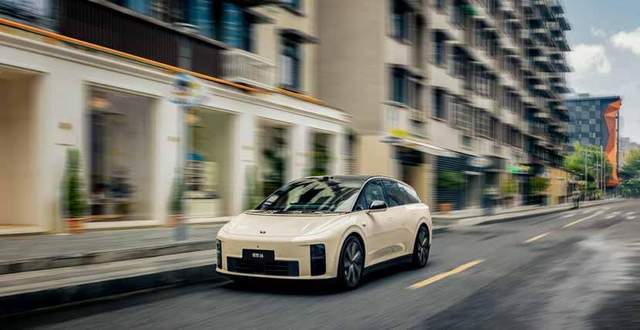
遭遇成长“阵痛”理想汽车向内“动刀”
Zhong Guo Jing Ying Bao· 2026-01-12 08:24
Core Viewpoint - Li Auto is undergoing significant changes in management and product strategy due to declining sales and operational challenges, shifting from a professional management model back to a startup management approach to enhance agility and responsiveness to market changes [2][3][4]. Management Strategy - The company has decided to abandon the professional management model, which is seen as too rigid and slow, in favor of a startup model that emphasizes innovation, agility, and rapid iteration [3][5]. - Li Auto's CEO, Li Xiang, believes that the previous management approach led to longer decision-making chains and slower product iterations, which hindered the company's competitiveness [4][5]. - The new management strategy focuses on deep dialogue for decision-making, user value, efficiency improvement, and identifying key issues rather than creating information asymmetry [6]. Product Line Adjustment - In early 2026, Li Auto will restructure its product lines from three to two, aiming to simplify operations and improve supply chain efficiency [6][7]. - The company plans to return to a simplified SKU model for its L series products, addressing previous issues with complex configurations that led to customer dissatisfaction [7]. - The i8 model's initial product strategy highlighted the necessity for SKU simplification, as its complex options led to negative user feedback [7]. Sales Performance - In 2025, Li Auto's total vehicle deliveries are projected to be 406,300, representing an 18.81% year-over-year decline, falling short of the target of 640,000 units [2]. - The company reported a net loss of 624 million yuan in Q3 2025, attributed to the costs associated with the recall of the Li Auto MEGA [2]. - The L series products faced significant sales pressure in 2025, with internal competition from the newly launched i series and external competition from rivals in the extended-range vehicle market [9][10]. Future Outlook - Analysts suggest that revitalizing the L series is crucial for Li Auto to overcome current challenges and improve sales performance in 2026 [8][10]. - The company aims to enhance the product strength of the L9 model, which has been on the market for over three years and requires significant upgrades to remain competitive [10].
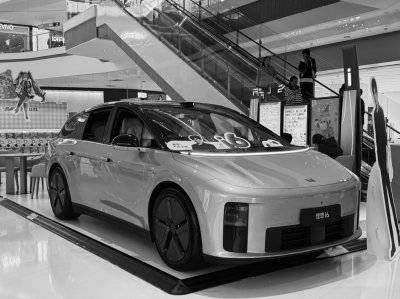
全球上演“创始人”回归潮
3 6 Ke· 2025-11-28 05:56
Core Viewpoint - Li Auto's CEO, Li Xiang, acknowledged the company's struggles and announced a return to a startup management model, moving away from the professional manager governance system that has led to a decline in performance [1][6][32] Group 1: Company Performance - In Q3 2025, Li Auto reported a revenue of 27.4 billion yuan, a year-on-year decline of 36%, marking the end of 11 consecutive quarters of profitability [1][6] - The company faced a significant loss attributed to the MEGA recall cost, which symbolically represented a retreat in performance [6][12] Group 2: Management Philosophy Shift - Li Xiang emphasized the need to adopt a startup management style, which focuses on deep dialogue, user value, and efficiency rather than rigid processes and task completion [6][29] - The shift reflects a broader trend among Chinese companies, where founders are reclaiming leadership roles to navigate uncertain business environments [2][12] Group 3: Global Context - The article discusses a global trend of founder returns, highlighting examples from companies like Airbnb and Disney, where founders have stepped back in to address operational challenges [19][20] - This trend is seen as a response to the limitations of professional management in rapidly changing technological landscapes [26][28] Group 4: Future Considerations - The article suggests that the return of founders is not merely nostalgic but a necessary adjustment to ensure companies can adapt to new challenges [30][32] - It raises questions about how organizations can institutionalize the founder's mindset to maintain agility and user focus in the long term [30][31]

李想终于承认,他们走错了方向
3 6 Ke· 2025-11-27 23:34
Core Viewpoint - Li Auto's recent financial report reveals significant challenges, including a 36.2% year-over-year revenue decline, a 5 percentage point drop in vehicle gross margin, and a shift from profit to loss in net income, alongside negative free cash flow [1][2][8] Financial Performance - Vehicle sales revenue for Q3 2025 was RMB 41.32 billion, down 37.4% year-over-year and 10.4% quarter-over-quarter [5] - Total revenue decreased to RMB 42.87 billion, reflecting a 36.2% year-over-year decline [5] - Vehicle gross margin fell to 15.5%, down from 20.9% in the same quarter last year [6] - Operating profit turned into a loss of RMB 1.18 billion, compared to a profit of RMB 3.43 billion in the previous year [5] - Net profit shifted from a gain of RMB 2.82 billion to a loss of RMB 624 million [5] - Free cash flow was negative at RMB 8.91 billion, indicating a significant cash outflow [8][9] Strategic Shift - Li Auto announced a return to a "startup" management model, ending the "professional manager" approach adopted over the past three years, which was deemed ineffective [2][10] - The company aims to enhance decision-making efficiency by reducing bureaucratic processes and fostering direct communication [11][13] Product Transition Challenges - The company is experiencing difficulties transitioning from range-extended vehicles to a mix of range-extended and pure electric models, leading to a decline in sales and market dominance [6][8] - The new pure electric model i8 has received lukewarm market response, while the i6 model faces production and supply chain challenges [6] AI and Future Vision - Li Auto is focusing on developing "embodied intelligent robots" rather than just electric vehicles, aiming to differentiate itself in a saturated market [14][15] - The company plans to introduce self-developed M100 chips and shift to advanced 3D ViT technology for enhanced vehicle intelligence [15][17] - Future products may include AI glasses and speakers, indicating a broader vision for integrating AI into users' daily lives [17]
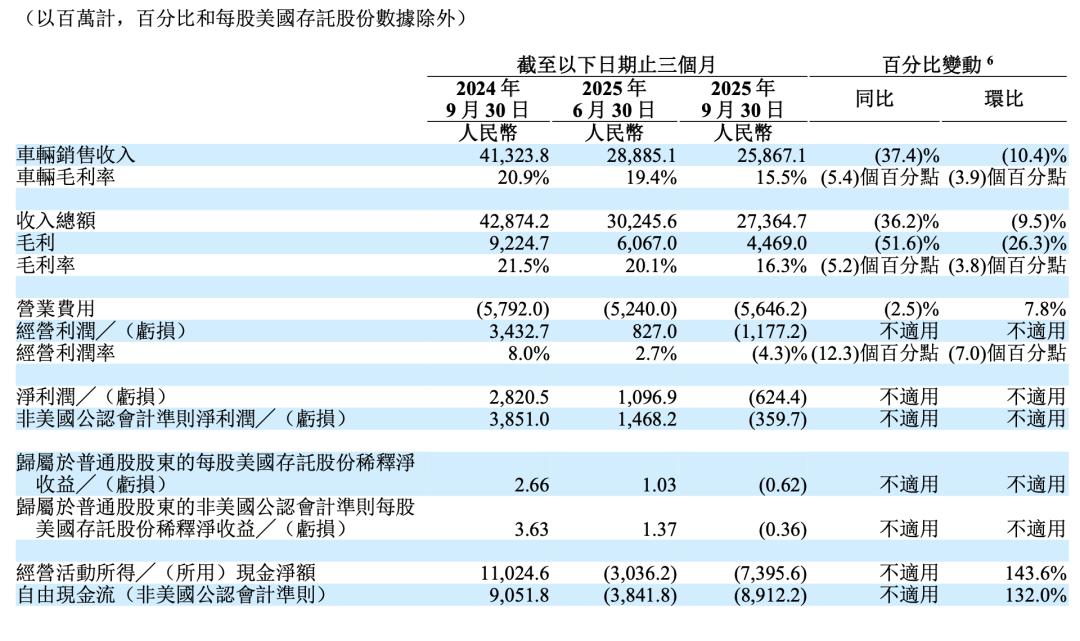
李想反思“最差的自己”,理想汽车三季度由盈转亏,具身智能撑起下一个十年?
3 6 Ke· 2025-11-27 04:51
Core Viewpoint - Li Auto reported a significant decline in revenue and a net loss for Q3 2025, primarily due to a recall of the 2024 Li MEGA model, which impacted profit margins and overall performance [1][3][7]. Financial Performance - Q3 2025 revenue was 27.4 billion RMB, a year-on-year decrease of 36% [1]. - The net loss for Q3 2025 was 624 million RMB, marking a shift from profit to loss compared to previous periods [1]. - Total vehicle deliveries in Q3 2025 were 93,211 units, down 39% year-on-year [3]. Product and Market Challenges - Li Auto's market share in the extended-range electric vehicle segment has been declining, with a drop to 7.5% in October 2025 [3]. - The company is facing increased competition as new entrants shift towards pure electric vehicles, raising the proportion of pure electric models in their offerings from 49% to 74% [3]. - Sales of the i8 and i6 models have not met expectations, with i8 selling 5,749 units in October and i6 only 5,775 units in September [3][4]. Recall Impact - A fire incident involving the 2024 Li MEGA led to a recall of 11,411 vehicles, which significantly affected Q3 profit performance [3][4]. Management and Strategic Adjustments - Li Auto's founder, Li Xiang, emphasized the need to redefine product and technology strategies moving forward [2][12]. - The company is transitioning back to a more agile management style, moving away from the "professional manager model" to a more entrepreneurial approach [12][13]. - Li Auto plans to enhance its organizational efficiency and adapt to market changes by reverting to the OKR management model [13]. Research and Development Focus - Li Auto has maintained high R&D investment, with Q3 2025 R&D expenses reaching 3 billion RMB, and an expected total of 12 billion RMB for the year, with a significant portion allocated to AI technology [8][11]. - The company is focusing on developing its VLA large model for advanced autonomous driving capabilities, achieving a monthly usage rate of 91% in October [8]. Future Outlook - Li Auto aims to leverage its substantial cash reserves, which stood at 98.9 billion RMB, to navigate through the current challenges and invest in future growth [7][15]. - The company is committed to creating innovative products that integrate embodied intelligence, moving beyond traditional electric vehicle offerings [14][15].
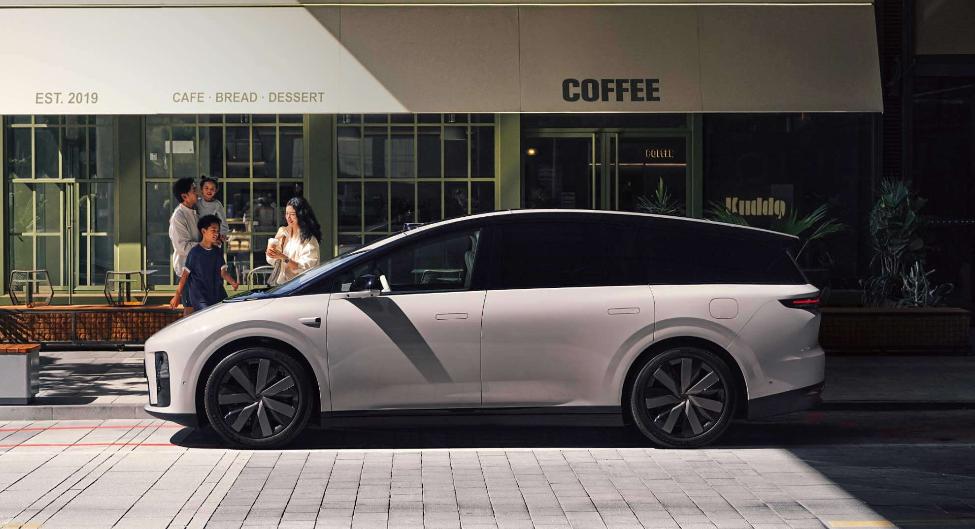
理想汽车
数说新能源· 2025-11-27 02:03
Company Strategy Choices - The company will return to an entrepreneurial organizational model led by the founding team starting from Q4 2025, abandoning the professional management model attempted over the past three years. This decision is based on the rapidly changing industry technology and competitive environment, as well as the founder's extensive experience in startups [18][19]. - The product direction will focus on embodied AI robots rather than just electric vehicles or smart devices. This choice is made to avoid competition based solely on parameters like range and price, and to address user needs in high-frequency life scenarios [18][19]. Technical Route Selection - The company will build a full-stack AI system oriented towards the physical world instead of a language model route. Key breakthroughs will focus on enhancing perception capabilities with 3D Vision Transformers, which could increase effective perception range by 2-3 times [19][20]. - The model layer will aim to optimize the operating frequency of models, with a target to increase the current 10Hz frequency of a 4 billion parameter MOE model by 2-3 times, requiring customized GPU architecture and operating systems [20]. - The hardware layer will develop the Drive Biowire system to reduce the response time from 550 milliseconds to 350 milliseconds, potentially lowering accident rates by over 50% [21]. Q3 2025 Financial and Operational Data - Total revenue for Q3 was 27.4 billion RMB, a year-on-year decrease of 36.2% and a quarter-on-quarter decrease of 9.5%. Vehicle sales revenue was 25.9 billion RMB, down 37.4% year-on-year and 10.4% quarter-on-quarter [22]. - The overall gross margin was 16.3%, down 5.2 percentage points year-on-year and 3.8 percentage points quarter-on-quarter. Excluding recall costs, the gross margin was 20.4% [23]. - The net loss for the quarter was 624.4 million RMB, compared to a net profit of 2.8 billion RMB in the same quarter last year [26]. Product and Technology Progress - The I series models (I8/I6) are positioned to cover mainstream and high-end family markets, with significant order growth since September. Production capacity is expected to increase to about 20,000 units per month by early 2026 [30]. - The VLA system has been fully deployed, enhancing path selection at complex intersections, with further upgrades planned to improve safety and perception capabilities [44]. Market Strategy and Response - The company anticipates a significant drop in deliveries in Q1 2026 due to consumers rushing to take advantage of policy incentives before they expire. Long-term strategies include ensuring all models meet new energy consumption standards to qualify for subsidies [33][40]. - The company plans to operate approximately 4,800 supercharging stations by 2026, with 35% located in highway service areas, to enhance user experience and support the transition to new energy vehicles [40].