逆全球化浪潮

Search documents
节后金价能否持续走强 | 投研报告
Zhong Guo Neng Yuan Wang· 2026-02-26 02:43
Core Viewpoint - The recent fluctuations in U.S. tariff policies reflect the political dynamics within the U.S. as Trump seeks to leverage tariffs as a tool for foreign economic strategy and geopolitical maneuvering, especially with the upcoming 2026 midterm elections [2] Industry Events - On February 20, the U.S. Supreme Court ruled 6-3 that the large tariffs imposed by the Trump administration under the International Emergency Economic Powers Act were illegal; on February 24, the Department of Homeland Security confirmed the cessation of related import tariffs [1] - To replace the illegal tariffs, Trump signed a document on February 20 imposing a 10% tariff on goods from all countries and regions, which was later increased to 15% on February 21, based on the Trade Act of 1974 [1] Market Analysis - The recent surge in gold prices is driven by two main factors: increased market uncertainty due to the tariff policy changes, which has heightened concerns about global trade, and rising geopolitical risks, particularly regarding potential military actions against Iran [3] - As of February 24, the London spot gold price closed at $5,132 per ounce, with an intraday high of $5,250 per ounce, marking a 2.74% increase compared to pre-Spring Festival levels [2] Price Outlook - Short-term gold prices are expected to maintain a strong upward trend, despite the Supreme Court ruling on tariffs, as the Trump administration's commitment to its economic policies remains firm [3] - However, the potential for gold prices to break previous highs is limited due to several factors: the limited impact of tariff policy changes on market sentiment, unclear Fed rate cut paths, and signs of easing U.S.-China relations [4]
节后金价能否持续走强
Zhong Guo Neng Yuan Wang· 2026-02-26 01:21
Core Viewpoint - The recent fluctuations in U.S. tariff policies reflect the political dynamics within the U.S. as the Trump administration navigates its second term, with tariffs serving as a key tool in its foreign economic strategy and geopolitical maneuvering [3] Industry Events - On February 20, the U.S. Supreme Court ruled 6-3 that the tariffs imposed by the Trump administration under the International Emergency Economic Powers Act were illegal [2] - On February 24, the U.S. Department of Homeland Security confirmed the cessation of related import tariffs [2] - To replace the illegal tariffs, Trump signed a document on February 20 imposing a 10% tariff on goods from all countries and regions, which was later increased to 15% on February 21 [2] Event Commentary - The Supreme Court's ruling on tariffs can be interpreted as a systemic constraint imposed by establishment forces on the Trump administration at a critical political juncture [3] - The ruling does not signify the end of trade frictions but rather indicates a potential adjustment in the rhythm and implementation of tariff policies, suggesting a more structured and phased conflict over tariffs in the future [3] Gold Price Performance - As of February 24, the London spot gold price closed at $5,132 per ounce, with an intraday high of $5,250 per ounce, marking a 2.74% increase compared to pre-Chinese New Year levels [4] - The strong performance of gold prices is driven by increased market uncertainty due to fluctuating U.S. tariff policies and rising geopolitical risks, particularly concerning potential military actions against Iran [4] Factors Influencing Gold Prices - The uncertainty from U.S. tariff policy has heightened concerns about global trade, boosting demand for gold as a safe-haven asset [4] - Geopolitical tensions, especially regarding Iran, have catalyzed a renewed influx of capital into the precious metals market, supporting upward momentum in gold prices [4] Price Outlook - Short-term gold prices are expected to maintain a strong upward trend, although the potential for significant breakthroughs above previous highs is limited due to several factors [5] - The impact of recent tariff policy changes on market sentiment has been relatively muted, as prior price increases have already accounted for these events [5] - The unclear path of Federal Reserve interest rate cuts and potential easing of U.S.-China relations may also temper gold price increases [5]
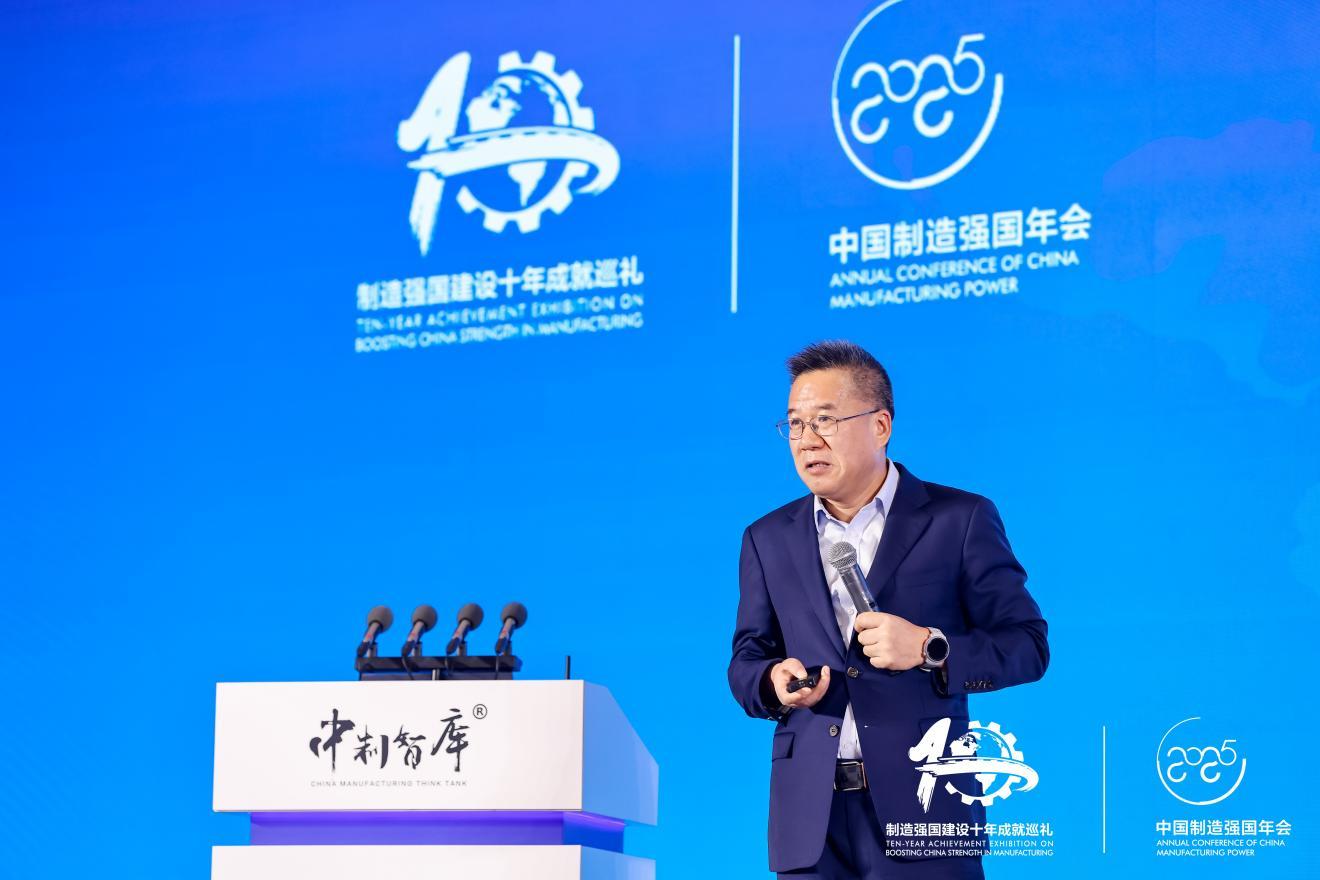
马光远:未来决定全球格局的是这四个力量
Feng Huang Wang Cai Jing· 2025-12-29 06:26
Core Viewpoint - The 10th China Manufacturing Power Conference emphasizes the theme "Rooted in Reality, Moving Towards Innovation," focusing on the high-quality development path of China's manufacturing industry during the 14th and 15th Five-Year Plans, marking a critical juncture in the "Made in China 2025" initiative [1] Group 1 - The conference was successfully held on December 28, 2025, at the Wanda Vista Hotel in Beijing, organized by the China Manufacturing Power Conference Committee and the China Manufacturing Think Tank [1] - The event aims to explore the high-quality development of China's manufacturing industry in the context of the 14th and 15th Five-Year Plans, as well as the conclusion of the "Made in China 2025" action plan [1] Group 2 - Renowned economist Ma Guangyuan delivered a keynote speech titled "The Future of Chinese Manufacturing and Supply Chains under the Super Cycle," highlighting that the Chinese economy should be viewed within a larger super cycle rather than just annual performance [3] - Ma pointed out that the Chinese economy is entering a new super cycle influenced by factors such as the "Trump 2.0 tariff war," artificial intelligence, and the wave of de-globalization [3] - He identified four key forces that will shape the future global landscape: US-China relations, Chinese manufacturing, the restructuring of global supply chains, and artificial intelligence [3] - Over the next five years, China needs to undergo five major transformations: shifting from investment-driven to innovation-driven growth, transitioning from a manufacturing powerhouse to a consumer powerhouse, upgrading from low-end to high-end manufacturing, moving from an export-oriented economy to one focused on domestic demand, and addressing social security gaps to build a welfare state [3]

马光远:中国经济进入“超级大周期”,未来由制造、供应链与AI决定
Xin Lang Cai Jing· 2025-12-29 04:14
Core Viewpoint - The conference emphasizes the need for China to transition into a new economic cycle driven by innovation and domestic consumption, moving away from traditional manufacturing and export reliance [3][5]. Group 1: Economic Transition - China is entering a new "super cycle" influenced by artificial intelligence and de-globalization, necessitating a departure from past economic models [3][5]. - The future global landscape will be shaped by three main forces: Chinese manufacturing, the restructuring of global supply chains, and advancements in artificial intelligence [3][5]. Group 2: Five Key Transformations - China must shift from investment-driven growth to innovation-driven growth [3][5]. - The country needs to evolve from being a manufacturing powerhouse to becoming a consumer-driven economy [3][5]. - There is a need to upgrade from low-end manufacturing to high-end manufacturing [3][5]. - China should transition from being an export-oriented economy to one focused on domestic demand [3][5]. - Addressing social security shortcomings is essential for building a robust welfare state [3][5].
多维度解码贵金属史诗级行情 | 破译金属新主线
Qi Huo Ri Bao· 2025-12-27 12:49
Core Viewpoint - The global precious metals market is experiencing a significant bull market driven by multiple factors, with prices reaching historical highs by Q4 2025, presenting both opportunities and challenges for market participants [1][3]. Group 1: Driving Logic - The bull market in precious metals is a result of three main factors: the restructuring of the global monetary credit system, historical mismatches in supply and demand, and advancements in trading technology [2][3]. - The first factor involves the interplay between the reconfiguration of the global monetary system and the rise of protectionism, leading to a depreciation of currency purchasing power relative to physical assets, with gold being revalued as a key asset against inflation and geopolitical risks [3]. - The second factor highlights the shift of silver from a precious metal to a strategic key mineral, driven by increased demand from the photovoltaic industry and technological advancements that raise silver consumption in solar cells [3]. - The third factor emphasizes the diversification of market participants and the complexity of trading instruments, which allows for global resonance in response to market changes [3]. Group 2: Behavioral Finance Perspective - The acceleration in precious metal prices can be understood through behavioral finance, where market mechanisms react to paradigm shifts, leading to rapid price corrections [4][5]. - The "anchoring effect" becomes ineffective as prices break through historical highs, allowing for a new price discovery phase characterized by high premiums [5]. - The reversal of the "disposition effect" occurs as traders, fearing missing out, hold onto positions rather than selling early, leading to forced short-covering that drives prices higher [5][6]. - The "representativeness bias" accelerates market consensus formation, as traders begin to view rapid price increases as the new norm, leading to a swift transition from skepticism to certainty [6]. Group 3: Rational Response Strategies - Market participants are advised to avoid trying to predict market tops and instead focus on maintaining a trend-following discipline while implementing dynamic profit-taking strategies [7][9]. - Dynamic profit-taking is essential to protect gains while allowing for continued participation in upward trends, with strategies involving trailing stop-loss orders [9]. - Utilizing non-linear tools, such as buying out-of-the-money put options, can help manage risk while preserving core positions, aligning with the investment philosophy of cutting losses and letting profits run [9]. Conclusion - The precious metals market in 2025 reflects long-term changes in monetary credit and industrial structure, requiring traders to understand macro narratives and respect market mechanisms while adhering to disciplined risk management practices [11].
再也没有比这更全的中企出海全流程解析了!
梧桐树下V· 2025-05-12 09:44
Core Viewpoint - The article discusses the challenges and strategies for Chinese companies going overseas amid rising tariffs and trade tensions, emphasizing the need for effective compliance, risk management, and tax planning to navigate the complexities of international expansion [1]. Group 1: Overseas Investment and Financing Approval - The approval process is crucial for the successful initiation of overseas projects, requiring companies to understand both domestic and international approval procedures in detail [2][3]. Group 2: Core Risk Management for Chinese Companies Going Abroad - Companies must prioritize awareness of political environments, legal differences, and data security risks, developing strategies to mitigate these risks for stable overseas operations [5][6]. Group 3: Compliance Management for Overseas Operations - Compliance is fundamental for establishing a presence abroad, with violations potentially leading to significant fines or market exclusion. Companies should stay updated on compliance requirements and build a robust compliance system [7][8]. Group 4: Tax Considerations for Overseas Expansion - Tax issues directly impact profitability, and effective tax planning can enhance competitiveness. Companies need to focus on tax treatment in areas such as equity structure, cross-border transactions, and profit distribution [12][14]. Group 5: Popular Destinations for Overseas Expansion - Selecting the right destination is critical, as different regions present unique opportunities and challenges. Companies should gather comprehensive information about target countries, including policies, markets, and cultures, to align with their strengths [15][16]. Group 6: Overview of Overseas Expansion - A holistic understanding of compliance, risk, and tax issues is essential for building an effective overseas strategy, enabling companies to integrate resources and identify their positioning in the global market [17][18]. Group 7: Strategic Advantages of Going Abroad - Companies can benefit from foreign government incentives, resource acquisition, technology cooperation, and diversified operations, which can help in restructuring supply chains and enhancing competitiveness [20]. Group 8: Key Elements and Main Models for Overseas Expansion - Key factors include funding sources, personnel allocation, and major pathways for expansion, such as project agreements and overseas mergers and acquisitions [20][22]. Group 9: Compliance Challenges and Guidelines - Companies face new compliance challenges and should adhere to national guidelines and international standards to ensure effective compliance management [25][26]. Group 10: Tax Planning and Risk Mitigation - Effective tax planning involves understanding the implications of equity structure, cross-border transactions, and the regulatory environment in target countries to safeguard investments and optimize tax liabilities [28][29]. Group 11: Course Offerings - The article promotes a comprehensive course on overseas expansion strategies, covering various aspects such as compliance, tax, and investment approval processes, aimed at equipping companies with the necessary tools for successful international operations [22][23].

dbg markets盾博:关税不确定性令美债市场谨慎,长债收益率走高
Sou Hu Cai Jing· 2025-05-06 05:58
Group 1 - The U.S. bond market is currently influenced by uncertainties surrounding trade policies, leading to a re-evaluation of risk by investors [1][3] - The 10-year Treasury yield has returned to levels seen a month ago, indicating a "mean reversion" that masks deeper market anxieties related to trade negotiations [3][4] - The recent comments from President Trump regarding tariffs on foreign films have added complexity to the already tense trade discussions, making it difficult for the market to establish a coherent narrative [3][4] Group 2 - The market is experiencing a chain reaction due to policy uncertainties, as evidenced by the decline in U.S. stock indices, ending a nine-day streak of gains for the S&P 500 and Dow Jones [3][4] - The Federal Reserve's upcoming two-day meeting is anticipated to maintain short-term interest rates in the 4.25%-4.5% range, but there is a notable expectation for a rate cut by December, reflecting a tension between market expectations and reality [3][4] - The long-end yield movements suggest a shift in market logic, as the 10-year Treasury yield is becoming a reflection of trade policies, fiscal deficits, and geopolitical tensions rather than being directly controlled by the Federal Reserve [4][5] Group 3 - The upcoming supply of U.S. Treasuries, including $42 billion in 10-year notes and $25 billion in 30-year notes, will test market resilience amid growing concerns about the sustainability of U.S. fiscal policies and geopolitical risks [4][5] - The uncertainty surrounding tariff policies is seen as a "preventive tax" on global capital flows, exacerbated by the Federal Reserve's inaction, leading to market pain during this policy vacuum [5] - The ongoing tensions in global trade and financial pricing mechanisms are creating a fragile balance that could be disrupted, posing challenges for modern financial markets in the face of de-globalization [5]