锂电回收

Search documents
西磁科技2025年业绩预降,募投项目延期至2026年9月
Jing Ji Guan Cha Wang· 2026-02-14 03:16
Core Viewpoint - The company has reported a significant decline in both revenue and net profit for the year 2025, alongside updates on project timelines and strategic shifts towards becoming a comprehensive solution provider in emerging markets [2][3][4] Group 1: Financial Performance - The company expects a revenue of 96.08 million yuan for 2025, representing a year-on-year decrease of 23.05% [2] - The net profit attributable to the parent company is projected to be 4.67 million yuan, reflecting a year-on-year decline of 76.74% [2] - Detailed data and management's explanation for the performance decline will be available in the upcoming annual report [2] Group 2: Project Progress - The core fundraising project, "Digital Workshop Transformation Project for Annual Production of 20,000 Magnetic Filtration Devices," has had its expected completion date postponed from December 31, 2025, to September 30, 2026, due to construction schedule adjustments and digital system optimization needs [3] - The current investment progress for this project stands at 43.39% [3] Group 3: Business and Technical Development - The company plans to transition from being a device supplier to an "overall solution provider" and aims to accelerate its overseas market expansion, particularly in emerging fields such as lithium battery recycling and solid-state batteries [4] - The effectiveness of these strategic shifts will need to be observed through the orders and capacity release in 2026 [4]
碳酸锂 回归基本面主导
Qi Huo Ri Bao· 2026-02-13 03:37
Core Viewpoint - The lithium carbonate market is experiencing significant fluctuations in 2026, with prices initially rising to 190,000 CNY/ton before retreating, and then stabilizing around 150,000 CNY/ton as key policies and market dynamics come into play [1] Group 1: Market Dynamics - The lithium carbonate market is characterized by a large divergence in bullish and bearish sentiments, with a focus on two key variables: the upcoming recycling policy and Australia's mining policies [1] - A new regulation on battery recycling will take effect on April 1, 2026, aiming to create a standardized and efficient recycling system, which is expected to reshape the competitive landscape of the recycling industry [1] - Australian lithium mining companies are responding to price increases by considering production expansions, with companies like Mineral Resources and Liontown planning to increase output and restart operations [2] Group 2: Demand and Supply - Demand for lithium carbonate remains strong, with China's new energy vehicle market showing stable growth, producing 1.041 million vehicles in January, a year-on-year increase of 2.5% [3] - China is projected to maintain its leading position in global energy storage deployment, accounting for 54% of global installed capacity by 2025, driven by renewable energy goals and strong domestic manufacturing capabilities [3] - The rising costs of lithium and other metals are impacting the automotive industry, with the cost of an electric vehicle increasing by approximately 3,800 CNY due to higher lithium prices [4] Group 3: Industry Adjustments - The increase in lithium carbonate prices is affecting the internal rate of return (IRR) for energy storage projects, with a projected decrease of 0.15 to 0.2 percentage points for every 10,000 CNY increase in lithium prices [4] - The recycling of lithium resources is expected to gradually increase supply, helping to stabilize price fluctuations and optimize profit distribution within the industry [5] - The core contradiction in the lithium battery industry is shifting from total supply to structural optimization, with a focus on product consistency and stability, leading to a concentration of enterprises in the supply chain [5]
景津景气度回升+出海+成套耗材新成长,固废出海推进,UCO价格上行稀缺性渐显
Zhong Guo Neng Yuan Wang· 2026-02-10 01:06
Group 1 - The core viewpoint of the report emphasizes the recovery in the environmental protection industry, particularly in lithium battery recycling, with a noted decline in lithium and cobalt prices leading to improved profitability [1][7] - Key recommendations include companies such as Longjing Environmental (龙净环保), High Energy Environment (高能环境), and others, indicating a strong focus on firms with growth potential in the environmental sector [2] - The report highlights the performance of Jingjin Equipment (景津装备) as a leading filter press manufacturer, with a market share exceeding 40% and a projected dividend of 6.1 billion yuan for 2023-2024, reflecting a dividend yield of 4.5% [3] Group 2 - The 2026 strategy focuses on value and growth resonance, emphasizing the importance of market-oriented improvements and operational value reassessment in the solid waste sector [4] - The report identifies three main themes: value-driven growth, quality growth, and dual carbon initiatives, with specific recommendations for companies involved in renewable energy and waste management [5] - The sanitation equipment sector is projected to see significant growth, with a 150% increase in unmanned sanitation project bids and a 71% increase in sales of new energy sanitation vehicles [6][7]
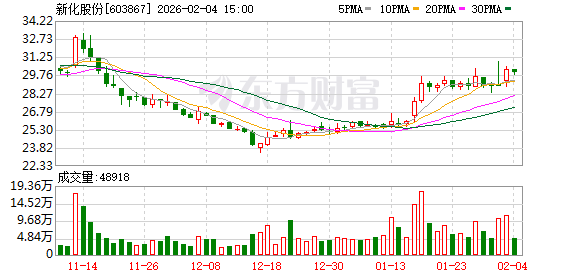
新化股份:公司的萃取技术已在锂电回收领域体现出高回收率、工艺简洁、安全环保等多重优势
Zheng Quan Ri Bao· 2026-02-04 12:41
Core Viewpoint - The company has demonstrated high recovery rates and advantages in extraction technology for lithium battery recycling, and is expanding this technology into precious metal recovery [2] Group 1: Extraction Technology - The company's extraction technology shows high recovery rates for metals such as lithium, nickel, cobalt, and manganese [2] - The extraction process is characterized by simplicity, safety, and environmental friendliness [2] Group 2: Market Expansion - The company is actively working to apply its extraction technology in the precious metals recovery sector [2]


环保行业跟踪周报:关注矿山绿电和再生战略资源,垃圾焚烧出海新成长启航-20260126
Soochow Securities· 2026-01-26 08:14
Investment Rating - The report maintains an "Overweight" rating for the environmental protection industry [1] Core Insights - The report emphasizes the growth potential in waste incineration and the opportunities for companies to expand overseas, particularly in Southeast Asia and India, where there is a projected increase in waste incineration capacity [10][15] - The report highlights the significant increase in sales of new energy sanitation vehicles and the growth of unmanned sanitation projects, indicating a shift towards automation and electrification in the industry [17][20] - The 2026 strategy focuses on the dual drivers of value and growth, emphasizing the importance of marketization and efficiency improvements in the environmental sector [24][28] Industry Trends - Waste Incineration Growth: The report estimates a potential increase of approximately 500,000 tons/day in waste incineration capacity in ASEAN countries and India, corresponding to an investment scale of about 250 billion yuan [10] - Unmanned Sanitation Equipment: In 2025, the total amount of contracts for unmanned sanitation projects exceeded 12.6 billion yuan, with a year-on-year increase of over 150% [17] - New Energy Sanitation Vehicles: Sales of new energy sanitation vehicles increased by 70.9% in 2025, with a penetration rate of 21.11%, reflecting a growing trend towards electrification in the sanitation sector [20][30] Company Recommendations - Key companies recommended for investment include Longjing Environmental, Gao Neng Environment, Sains, and others, focusing on their growth potential in both domestic and international markets [4][15] - The report suggests that companies like Weiming Environmental and Sanfeng Environment are expected to benefit significantly from overseas expansion and high-value projects [15][24] - The report also highlights the importance of dividend increases and return on equity (ROE) improvements for companies such as Huanlan Environment and Green Power [15][24] Market Dynamics - The report notes that the profitability of waste incineration projects in Indonesia is significantly higher than in China due to favorable pricing and operational conditions [12][15] - The report indicates that the market for lithium battery recycling is improving, with rising metal prices and better margins for recycling projects [38][39]


头部企业大动作!锂电回收行业迎来转机 能源金属涨价推升“城市矿山”价值
Xin Lang Cai Jing· 2026-01-11 05:54
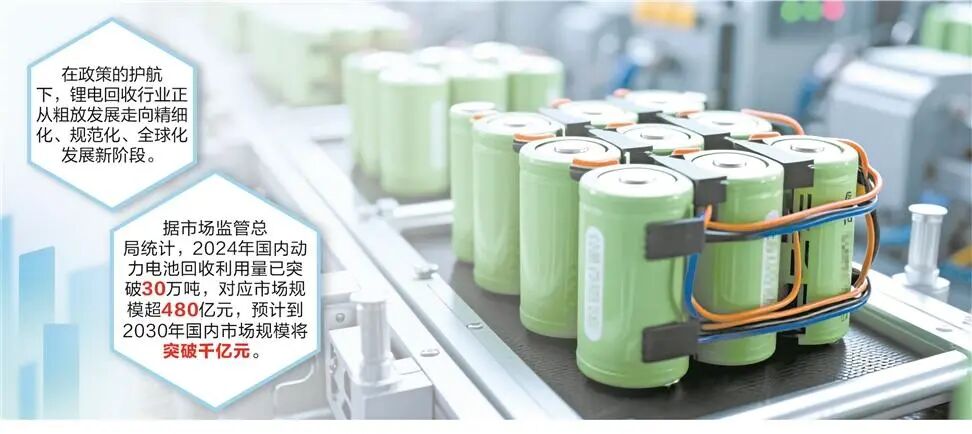
Core Viewpoint - The lithium battery recycling industry is transitioning from extensive development to a new phase characterized by refinement, standardization, and globalization, driven by rising prices of lithium and cobalt, along with supportive policies [1][9]. Industry Overview - Lithium battery recycling is likened to the development of "urban mines," converting waste batteries into valuable, recyclable resources [1]. - The industry is witnessing a transformation that is reshaping the resource supply landscape of the new energy sector, with a green circular market exceeding 100 billion yuan already formed [1][9]. Profitability and Market Dynamics - Since 2025, the prices of key metals like lithium, cobalt, and nickel have remained high, positively impacting the cash flow and profitability of recycling companies [3]. - For instance, a company reported a 59% year-on-year increase in battery recycling volume, reaching 36,000 tons in the first three quarters of 2025, leading to improved profit margins due to increased retired battery volumes and rising metal prices [3][9]. Policy and Regulatory Changes - In June 2025, a joint announcement by the Ministry of Ecology and Environment, the Ministry of Industry and Information Technology, and the State Administration for Market Regulation stated that recycled black powder meeting national standards is not classified as solid waste, facilitating imports [3][4]. - This policy change addresses previous challenges in importing materials and allows the domestic battery recycling industry to participate in global resource allocation [3][4]. Capital and Capacity Expansion - Leading companies are adopting a dual strategy of "capacity + capital" to seize market opportunities, including new base construction, technological cooperation, and capital financing [4][5]. - For example, a company announced a 400 million yuan acquisition to enhance its circular economy strategy, while another company has established a processing capacity of 100,000 tons for waste lithium batteries [5][7]. Technological Advancements and Industry Collaboration - The industry is evolving from merely end-of-life disposal to becoming a crucial player in the entire battery lifecycle, with companies developing comprehensive value chains from battery recycling to remanufacturing [8]. - One company has achieved a lithium recovery rate exceeding 96.5% and has established partnerships with over 1,000 automotive and battery manufacturers, creating a closed-loop supply chain [8]. Market Outlook - The lithium battery recycling market is expected to grow significantly, with an annual growth rate exceeding 50% projected over the next 3 to 5 years, potentially reaching a market size of over 100 billion yuan by 2030 [9].


能源金属涨价引爆千亿市场,头部企业加码锂电回收布局
Huan Qiu Wang· 2026-01-11 02:40
Core Viewpoint - The lithium battery recycling industry is undergoing a value reassessment driven by high energy metal prices, increased demand for energy storage, and supportive policies, leading to the formation of a green circular market exceeding 100 billion yuan by 2025 [1][6]. Industry Overview - The prices of key metals such as lithium, cobalt, and nickel are expected to remain high due to global mineral development cycles and a second surge in downstream energy storage demand [1]. - The industry is transitioning from extensive development to a more refined, standardized, and globalized phase, with a market size projected to exceed 100 billion yuan [1]. Company Performance - Companies like Greeenme and Tianqi have reported significant improvements in profitability due to increased retirement volumes and rising metal prices, with Greeenme's battery recycling volume reaching 36,000 tons, a 59% year-on-year increase [2]. - Tianqi's lithium battery recycling segment has turned profitable, aided by the lifting of black powder import restrictions and rising metal prices [2]. Strategic Initiatives - Leading companies are adopting a "capacity + capital" dual-drive strategy to capture market opportunities, with Greeenme planning to invest 400 million yuan to acquire shares in Henan Recycling Group and pursue a Hong Kong listing [4]. - Tianqi has established a processing capacity of 100,000 tons of used lithium batteries, with another 100,000 tons under construction, indicating a strong commitment to expanding its recycling capabilities [4]. Technological Advancements - Greeenme has achieved a lithium recovery rate exceeding 96.5% through its nine global recycling bases and has established partnerships with over 1,000 automotive and battery manufacturers [5]. - The industry is focusing on technological iteration and collaboration across the supply chain, with non-compliant small operations exiting the market, leading to a concentration of market share among companies with technological and environmental advantages [5]. Market Outlook - The lithium battery recycling industry is expected to experience accelerated growth over the next 3 to 5 years, with an annual growth rate projected to exceed 50%, potentially surpassing 100 billion yuan by 2030 [5][6]. - The industry's growth is not only driven by short-term fluctuations in energy metal prices but also by the necessity of closing the loop in the new energy industry chain, ensuring resource security and alleviating mining pressures [6].
新化股份(603867):业绩符合预期,推动新兴项目落地
SINOLINK SECURITIES· 2025-08-28 15:21
Investment Rating - The report maintains a "Buy" rating for the company, indicating an expected price increase of over 15% in the next 6-12 months [5][13]. Core Insights - The company reported a slight decline in revenue for the first half of 2025, with total revenue of 1.48 billion RMB, a year-on-year decrease of 0.07%, while net profit attributable to shareholders increased by 0.66% to 148 million RMB [2]. - The performance of the fatty amine and fragrance business segments remains stable, with fatty amines achieving a revenue of 768 million RMB, a year-on-year growth of 4.62% [3]. - The company is focusing on strategic emerging industries, particularly in lithium extraction technologies and specialized chemicals, which are expected to contribute to future growth [4]. Summary by Sections Financial Performance - In Q2 2025, the company generated revenue of 720 million RMB, a year-on-year decline of 3% and a quarter-on-quarter decline of 6%, while net profit was 77 million RMB, reflecting a year-on-year increase of 8% and a quarter-on-quarter increase of 7% [2]. - The company's revenue projections for 2025-2027 are adjusted to 288 million RMB, 355 million RMB, and 395 million RMB, respectively, with a significant downward revision of 36% for 2025 and 2026 [5]. Business Segments - The organic solvent segment saw a significant revenue drop of 28.06% to 173 million RMB due to falling prices influenced by acetone trends [3]. - The synthetic fragrance segment achieved a revenue of 382 million RMB, marking a year-on-year growth of 2.31% despite a decrease in average prices [3]. Strategic Initiatives - The company is actively developing new catalyst technologies and expanding applications in the mining chemicals sector, particularly in lithium extraction [4]. - New projects, including the third phase of Jiangsu Xinrui Fragrance and lithium recovery projects, are progressing and expected to enter trial production in the second half of the year [4].
宁德时代联手吉利;亿纬锂能向港交所主板递交申请;珠海冠宇两大项目公示;特斯拉将自产磷酸铁锂电池;10万吨高压密磷酸铁锂项目将落地
起点锂电· 2025-07-06 11:25
Group 1 - The fifth "Starting Point Two-Wheeled Vehicle Battery Swap Conference" will be held on July 11, 2025, in Shenzhen, focusing on battery swap technology and lightweight power battery technology [2] - The event is sponsored by various companies including Yadi Technology Group, New Day Co., and others, indicating strong industry interest and collaboration [2] Group 2 - CATL and Geely have signed a comprehensive electrification strategic cooperation agreement to deepen collaboration in battery technology and supply chain [4] - CATL has been involved in Geely's electric vehicle product layout since 2013, providing high-quality battery solutions [4] Group 3 - Chinese battery company Zhengli New Energy has reportedly secured a new battery order from Volkswagen, expanding its presence in the automotive supply chain [5] - This move indicates Volkswagen's increasing localization efforts in China [5] Group 4 - CATL's joint venture battery project in Indonesia has officially broken ground, with an expected total battery capacity of 15 GWh, capable of powering 250,000 to 300,000 vehicles [6] - The project is a collaboration between CATL and an Indonesian battery company [6] Group 5 - EVE Energy has submitted an application for an H-share listing on the Hong Kong Stock Exchange, indicating its plans for international expansion [7] - The company has also launched a new cylindrical battery production base with a planned capacity of 40 GWh and a total investment of 10 billion yuan [8] Group 6 - Zhuhai Guanyu has announced two lithium battery projects, including a new production line with an investment of 300 million yuan, aimed at increasing its production capacity significantly [9] - The projects reflect the growing demand for lithium batteries in consumer electronics [9] Group 7 - Far East Group has won two lithium battery-related projects, with a total contract value of nearly 90 million yuan, indicating strong market demand [10] - The projects involve battery cells and energy storage systems [10] Group 8 - Northvolt's 6 GWh factory in Poland is set to be acquired by Lyten, a Silicon Valley startup, as part of its expansion strategy [11] - This acquisition follows Northvolt's bankruptcy due to insufficient funds and production capacity [11] Group 9 - Tangshan Hengwang's 200,000-ton lithium iron phosphate project has entered trial production, with a total investment of 5.5 billion yuan [13] - The project aims to meet the growing demand for lithium iron phosphate materials in the battery industry [13] Group 10 - A collaboration agreement has been signed between Fulian Precision and Chuanfa Longmang to establish a joint venture for a 100,000-ton high-pressure lithium iron phosphate project [14] - This partnership aims to enhance production capabilities in the lithium battery sector [14] Group 11 - Defu Technology has entered into supply agreements with leading companies in the photovoltaic and consumer battery industries, indicating a strong demand for lithium battery copper foil products [15] - The company is also expanding its overseas market presence [15] Group 12 - The first half of 2025 saw Shida Shenghua forecast a net loss of 52 million to 60 million yuan, reflecting challenges in the lithium battery sector [17] - The company has a significant market share in high-end carbonate solvents, indicating its established position in the industry [17] Group 13 - YouSheng Co. has submitted its IPO registration for the main board, focusing on lightweight automotive components [18][19] - The company has established stable partnerships with major automotive manufacturers [19] Group 14 - Gree has built a pilot production line for 20,000 tons of lithium manganese iron phosphate, indicating advancements in battery material technology [20] - The company emphasizes a long-term commitment to shareholder value through consistent dividends [20] Group 15 - The Chinese domestic lithium battery winding equipment market is projected to exceed 11 billion yuan by 2027, driven by increasing demand for cylindrical batteries [22] - The market is expected to grow at a compound annual growth rate of 22.1% over the next three years [22] Group 16 - The first all-solid-state lithium battery cell direct hard-rolling equipment has been successfully developed, marking a significant technological breakthrough [23] - This innovation could enhance production efficiency in the solid-state battery sector [23] Group 17 - Xiaomi has applied for a patent for a battery pack casing designed to prevent thermal runaway, showcasing advancements in battery safety technology [38] - This innovation aims to enhance the safety of electric vehicle battery systems [38] Group 18 - Tesla is set to produce its own lithium iron phosphate batteries at a new facility in Nevada, indicating a strategic move towards in-house battery production [39] - This facility will complement Tesla's existing production capabilities and support its electric vehicle manufacturing [39]


研客专栏 | 湖南省碳酸锂产业链调研报告
对冲研投· 2025-06-25 12:43
Core Viewpoint - The lithium carbonate market is experiencing a downward price trend, currently stabilizing around 60,000, with expectations of oversupply in 2023, but slow capacity clearance [1][3]. Group 1: Research Background - The purpose of the research is to analyze the current market conditions for lithium carbonate, focusing on supply and demand dynamics, production costs, and the impact of tariffs [1]. - The research was conducted in Hunan Province, which has significant lithium production and recycling capabilities [2]. Group 2: Industry Insights - Companies in the lithium industry remain optimistic about the future, focusing on cost reduction through technological upgrades and collaboration, despite the oversupply of production capacity [3]. - The cost curve for lithium is not fixed, and companies need to monitor when mines will reduce production to manage costs effectively [3]. Group 3: Company A - Lithium Carbonate Trading - Company A transitioned to the lithium sector in 2015 due to oversupply in traditional chemical markets and has since developed strong relationships with upstream suppliers [4]. - The company provides customized products to domestic cathode manufacturers and employs a robust risk management system to mitigate market volatility [4][7]. - In 2024, the company aims to sell over 20,000 tons of lithium carbonate, with a target of 50,000 tons by 2025 [6]. Group 4: Company B - Lithium Recycling - Company B, established in 2016, focuses on high recovery rates and efficient processing, but faces challenges in raw material supply and costs [12][13]. - The company anticipates a significant increase in recycling business post-2027, despite current losses in the sector [16]. - The recycling industry is currently operating at low capacity due to cost challenges, with only 10% of phosphate lithium recycling lines active [15]. Group 5: Company C - Cathode Material Production - Company C, founded in 2016, has a strong market presence with a 40.20% year-on-year increase in phosphate cathode material sales, reaching 710,600 tons in 2024 [20]. - The company employs financial tools to manage risks and aligns its hedging strategies with actual orders [21]. - The demand for lithium batteries is expected to grow due to new applications in energy storage and electric vehicles [22]. Group 6: Company D - Lithium Production - Company D, established in 1998, has recently entered the lithium battery market and plans to increase production capacity significantly by 2025 [24][26]. - The company is optimistic about the future of energy storage, driven by government policies aimed at increasing renewable energy sources [29]. Group 7: Company E - Lithium Recycling - Company E, founded in 2016, is expanding its production capacity and aims to reach a total of 100,000 tons after completing several projects [31]. - The company is currently facing challenges due to cost overruns and market conditions, leading to a cautious outlook on the recycling sector [32][34]. - The company believes that significant growth in the recycling market may not occur until after 2027, as battery lifespans extend [34].