FOMO效应

Search documents
黄金白银暴涨暴跌启示录:从5%涨幅到17%暴跌,投资者的“人性考卷”
Sou Hu Cai Jing· 2026-02-02 12:36
Core Insights - The recent surge in gold prices, surpassing $5,500, and the dramatic drop in silver prices highlight complex wealth dynamics rather than simple market fluctuations [1][3] - Factors influencing these price movements include the Federal Reserve's interest rate policy, geopolitical tensions, and speculative market behavior [3][4] Price Movements - On January 29, COMEX gold futures reached $5,600.8 per ounce, a 5% increase from the previous day, while domestic gold jewelry prices rose from 1,614 yuan to 1,708 yuan per gram, marking a 5.8% increase [3] - In contrast, silver experienced extreme volatility, with spot silver prices plummeting from $87.75 to $71.17 per ounce, a fluctuation exceeding 18% within 24 hours. Shanghai silver futures closed at 24,832 yuan per kilogram, down 5,087 yuan, a 17% drop, the largest single-day decline in nearly a decade [3] Market Sentiment and Predictions - Consumer behavior reflects the psychological impact of price volatility, with essential buyers opting for staggered purchases to manage costs, while non-essential buyers shifted to silver and alloy products, resulting in a 30% drop in gold jewelry sales [4] - Institutions have differing forecasts for gold prices, with Goldman Sachs raising its 2026 year-end target to $5,400 per ounce, and Bank of America projecting $6,000 per ounce. However, warnings exist about potential corrections of 10%-20% if geopolitical tensions ease or if the Fed's rate cuts fall short of expectations [4][5] Investment Philosophy - The price fluctuations serve as a reminder of the cyclical nature of asset values, emphasizing the importance of a balanced investment approach rather than speculative bets [5] - Experts recommend limiting gold and silver investments to 10% of a portfolio to benefit from long-term appreciation while mitigating exposure to price volatility [5] - Investors are cautioned against leveraging positions, as market conditions can rapidly change, leading to significant losses for those who act on fear of missing out (FOMO) [5][6] Conclusion - The recent market events underscore the need for a reassessment of wealth management strategies, emphasizing that there are no perpetually rising assets, only informed and disciplined investors [6]

2025年这场白银逼空大戏:印度大V,中国假期与伦敦挤兑
华尔街见闻· 2025-10-19 12:01
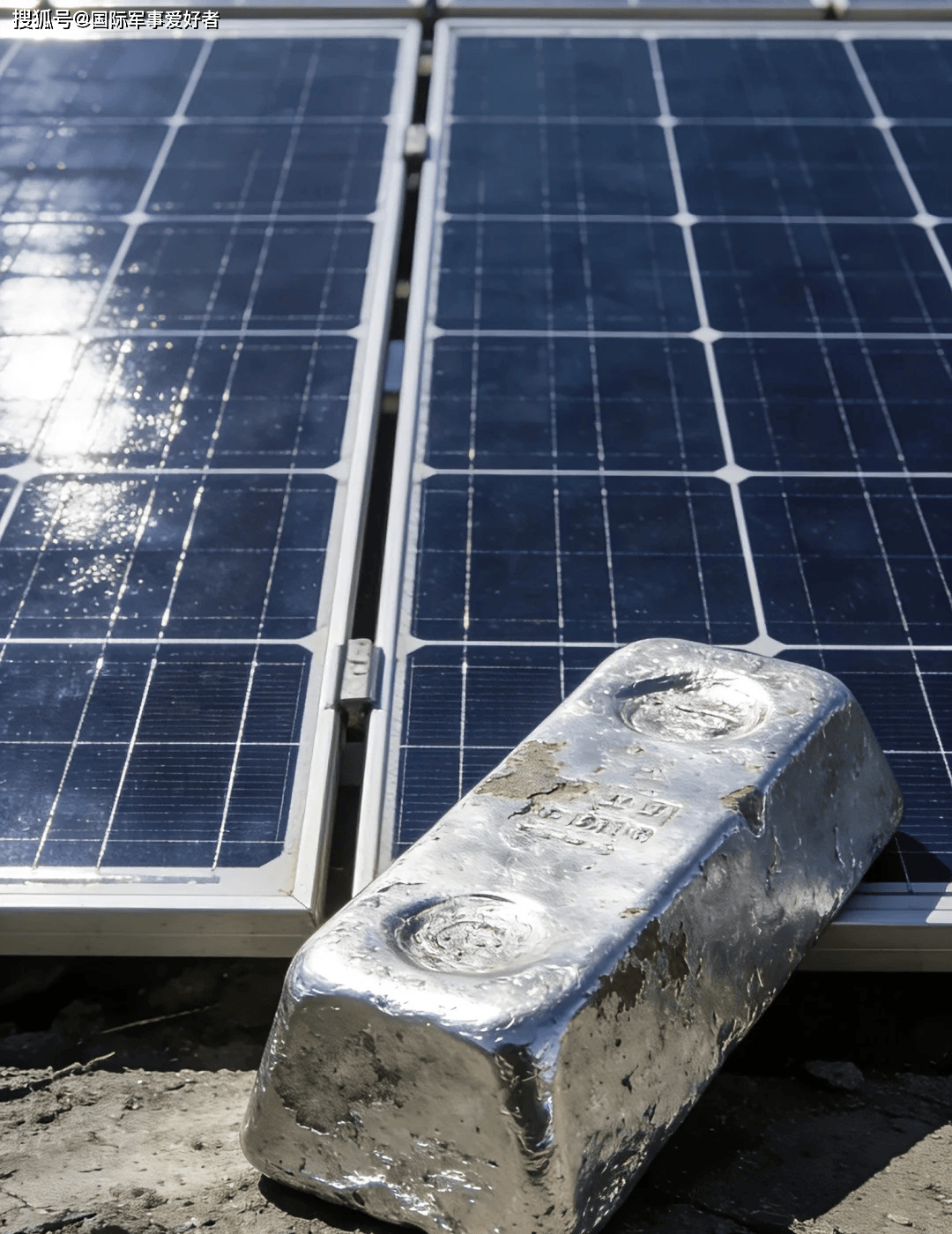
Core Viewpoint - The global silver market is experiencing a severe crisis, the worst since the Hunt brothers' manipulation in 1980, driven by a perfect storm of factors including retail investor frenzy in India, supply disruptions due to holidays in China, and depleted London gold inventories [2][5]. Group 1: Market Dynamics - Silver prices reached a historical high of $54 per ounce before plummeting by 6.7%, indicating extreme market pressure [2]. - The largest precious metal refinery in India has exhausted its inventory, with its trading head stating that such a chaotic market has not been seen in 27 years [3]. - Major banks like JPMorgan have temporarily halted silver supplies to India, with deliveries not expected until November [4]. Group 2: Retail Investor Behavior - Ahead of the Diwali festival, Indian social media influencer Sarthak Ahuja sparked a retail buying frenzy by claiming silver was undervalued compared to gold, leading to unprecedented demand [7][8]. - The silver premium surged to over $5 per ounce, significantly higher than the usual few cents, as buyers prioritized supply over price in the Mumbai gold market [9]. - Fund companies were forced to suspend new subscriptions for silver funds due to the overwhelming demand [10]. Group 3: Supply Chain Issues - The London market faced a liquidity crisis, with available inventories dropping below 150 million ounces, while daily trading volumes were around 250 million ounces [12]. - The borrowing costs for silver skyrocketed, with annualized overnight borrowing rates reaching 200%, causing banks to withdraw from quoting [12]. - Comex inventories in New York saw a reduction of over 20 million ounces in two weeks, marking the largest decline in 25 years [14]. Group 4: Structural Imbalances - The crisis is attributed to a long-term structural imbalance in the silver market, with demand consistently outpacing supply by 678 million ounces over the past five years, largely driven by the booming photovoltaic industry [18]. - Concerns over potential tariffs from the Trump administration led traders to preemptively move over 200 million ounces of silver into New York warehouses [19]. - Global ETFs absorbed over 100 million ounces of silver in the first nine months of the year, contributing to the depletion of London reserves [20]. Group 5: Analyst Insights - Analysts have warned about the impending liquidity crisis in the London market for over a year, with predictions of a peak in the market pressure [21]. - As silver begins to flow into the market from various sources, further price pressures are anticipated due to complex logistics and potential customs delays [23].

2025年这场白银逼空大戏:印度大V,中国假期与伦敦挤兑
美股IPO· 2025-10-19 03:24
Core Viewpoint - The silver market is experiencing a severe crisis due to a long-standing structural imbalance, exacerbated by a surge in retail demand in India, supply disruptions from China, and depleted inventories in London [3][4][10]. Group 1: Retail Demand Surge - A social media influencer in India sparked a retail buying frenzy for silver ahead of the Diwali festival, leading to unprecedented demand and a significant price premium of over $5 per ounce [5][6]. - Traditional gold purchases during the festival shifted towards silver, causing a dramatic increase in silver demand [5]. Group 2: Supply Chain Disruptions - Concurrently, Chinese factories were closed for holidays, which redirected global supply to London, where available inventory dropped to less than 150 million ounces against a daily trading volume of approximately 250 million ounces [7]. - The overnight borrowing rate for silver surged to an annualized 200%, causing major banks to withdraw from quoting prices, leading to a widening bid-ask spread [7][8]. Group 3: Long-term Structural Imbalance - The crisis is attributed to a cumulative supply-demand gap of 678 million ounces over the past five years, primarily driven by the booming photovoltaic industry, which saw demand more than double [10]. - Concerns over potential tariffs from the Trump administration prompted traders to move over 200 million ounces of silver into New York warehouses, further straining London’s reserves [10][11]. Group 4: Market Reactions and Predictions - Analysts had warned of a liquidity crisis in the London market, predicting that the situation would lead to a price drop, which occurred with a 6.7% decline after reaching a historical high of $54 per ounce [3][11]. - As silver began to flow into London from various sources, including New York and China, further price pressures are anticipated due to complex logistics and potential customs delays [12].

2025年这场白银逼空大戏:印度大V,中国假期与伦敦挤兑
Hua Er Jie Jian Wen· 2025-10-19 02:46
Core Insights - A perfect storm has hit the global silver market, driven by a surge in retail demand in India, supply disruptions due to holidays in China, and depleted London gold inventories, leading to the most severe silver market crisis since the Hunt brothers' manipulation in 1980 [1] - Silver prices reached a historical high of $54 per ounce before plummeting by 6.7%, highlighting extreme market pressures [1] - The crisis is attributed to a long-standing structural imbalance in the silver market, which has now erupted [1] Group 1: Indian Retail Demand - Ahead of the Diwali festival, a prominent Indian social media influencer encouraged buying silver, leading to unprecedented demand [2] - Silver premiums surged to over $5 per ounce, significantly higher than the usual few cents [2] - Major fund companies were forced to suspend new subscriptions for silver funds due to the overwhelming demand [2] Group 2: London Market Liquidity Crisis - The surge in demand from India coincided with supply disruptions from China, causing a liquidity crisis in the London market [3] - London’s freely available inventory dropped to less than 150 million ounces, while daily trading volume was around 250 million ounces [3] - Borrowing rates for silver skyrocketed to an annualized 200%, and major banks withdrew from quoting prices, leading to a widening bid-ask spread [3] Group 3: Long-term Structural Imbalance - The crisis is not a sudden event but a culmination of years of structural imbalance, with demand consistently outpacing supply by 678 million ounces over the past five years [4] - The photovoltaic industry has significantly contributed to this demand, with its growth exceeding 100% during this period [4] - Concerns over potential tariffs under the Trump administration prompted traders to move over 200 million ounces of silver into New York warehouses [4] Group 4: Market Predictions and Reactions - Analysts have warned about the impending liquidity crisis in the London market for over a year, with predictions of a peak in the market [6] - Despite early predictions of a price peak, silver prices continued to rise until a significant drop occurred last Friday [6] - As silver begins to flow back into the market from various sources, further price pressures may emerge due to complex logistics and potential tariff implications [6]
Best Way To Join Gold's Record-Breaking Rally
Benzinga· 2025-10-10 16:41
Core Viewpoint - Gold is experiencing a significant surge in 2025, reaching $4,000 per troy ounce, with year-to-date gains of 50%, making it one of the best-performing investable assets [1][4]. Economic Factors - The Federal Reserve's recent rate cuts, a weakening U.S. dollar, and heightened geopolitical tensions are contributing to the demand for gold [1][4][6]. - Inflation pressures and ballooning government deficits are creating an environment reminiscent of the 1970s, which historically favored gold investments [2][6]. Market Dynamics - Gold ETF inflows have surged to $64 billion year-to-date, a stark contrast to the $23 billion outflows seen in the previous four years, indicating strong market demand [5]. - The uncertainty surrounding tariffs and fiscal deficits is expected to keep conditions favorable for gold, with limited pullbacks observed recently [6]. Investment Strategies - Experts suggest that it is not too late to invest in gold, with predictions from analysts like JP Morgan and Goldman Sachs indicating potential prices of $4,900 by 2026 [8][10]. - Investors are encouraged to consider fractional gold investments to lower the barrier to entry, allowing for smaller purchases [9]. Historical Context - Historical data shows that gold's bull markets have produced returns significantly exceeding typical equity returns, with a notable example being a 700% gain from 1976 to 1980 [12]. - The current cycle is expected to mirror past performance, reinforcing the argument for gold as a core portfolio position [12].

A股突破3900点,投资者的狂欢与焦虑
Sou Hu Cai Jing· 2025-10-10 05:40
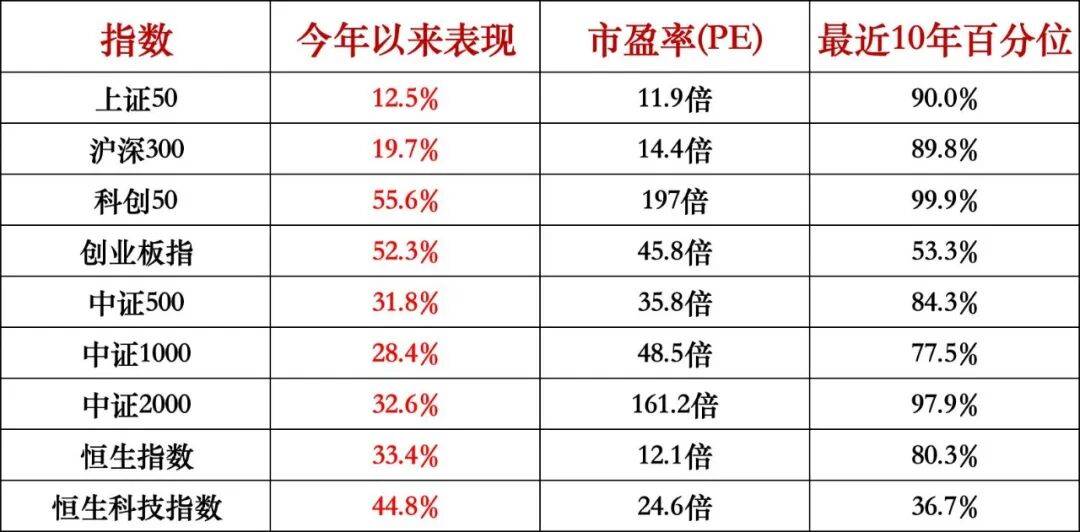
Core Insights - The A-share market has reached a significant milestone with the Shanghai Composite Index breaking through 3900 points for the first time in 10 years since 2015, indicating a major shift in market sentiment [1][2] Market Sentiment and Investor Behavior - The breakthrough has not only technical significance but also a profound psychological impact, reflecting a complete transformation in market sentiment [2] - Investors are experiencing a divided mindset, with those already invested worried about potential pullbacks, while those with lighter positions face anxiety over missing out [2] - Common mistakes made by investors during a bull market include premature selling after recovering losses, chasing hot stocks, over-leveraging, and having overly diversified portfolios [2] Market Phases and Trends - Historically, A-share bull markets follow a four-phase evolution: initiation, main rise, diffusion, and conclusion. The current market is transitioning from the main rise to the diffusion phase, characterized by heightened market enthusiasm and a rotation of funds towards cyclical and undervalued stocks [2][3] Sector Performance and Valuation - The A-share market has shifted from a "technology-led" narrative to a "cyclical and technology rotation" framework, with significant performance in the non-ferrous metals sector driven by rising prices and policy support [3] - Various indices have shown strong performance this year, with the ChiNext Index up 52.3% and the STAR 50 Index up 55.6%, indicating robust market activity [4] Valuation Comparisons - The Hang Seng Technology Index has risen 44% this year but remains undervalued compared to historical averages, with a current PE ratio of 24.6, significantly lower than the NASDAQ 100's 37 [5][8] - If the Hang Seng Technology Index returns to its 10-year median PE of 30, it could theoretically reach 7800 points, representing a potential upside of over 20% [8] Capital Flows and Market Dynamics - The expectation of a Federal Reserve rate cut is seen as a key driver for capital flows into the Hong Kong market, with significant net inflows recorded in the Hong Kong Stock Connect [8] - The domestic policy environment is shifting towards supporting technology industries, which is expected to enhance market dynamics and investor confidence [8] Investment Strategies - Effective risk management strategies include maintaining a diversified investment portfolio, using index ETFs, and setting stop-loss points during market speculation [11][12] - Investors are advised to keep sufficient liquidity for personal needs and to control their investment pace, ensuring they maintain a balance between risk and opportunity [12]
注意!A股投资者呈现新变化,多家机构最新研判
券商中国· 2025-08-16 15:53
Core Viewpoint - The article discusses the heightened anxiety among investors in the A-share market as indices break through significant levels, emphasizing the importance of wealth management institutions in guiding investors through market volatility [1][2]. Group 1: Investor Sentiment and Behavior - Investor anxiety has increased significantly, with many feeling they have missed opportunities or are uncertain about when to exit their positions [2][3]. - Three main groups of anxious investors are identified: those without accounts, those unsure of what to buy, and those already holding positions but feeling left out [2]. - The phenomenon of FOMO (Fear of Missing Out) is highlighted as a key driver of anxiety, leading to poor decision-making and potential losses [2][3]. Group 2: Common Mistakes in Bull Markets - Common mistakes made by investors during bull markets include premature exits after breaking even, chasing hot stocks, and over-leveraging without understanding risks [3][4]. - Investors often engage in excessive trading, which can lead to decreased average returns, and many lack awareness of the need for diversified asset allocation [3][4]. Group 3: Understanding Risk and Long-term Goals - A fundamental cause of investor anxiety is the lack of clear understanding of asset values and personal risk tolerance, leading to indecisive actions [4][5]. - Financial institutions stress the importance of defining risk tolerance and long-term investment goals to mitigate anxiety and improve decision-making [5][6]. Group 4: Strategies for Market Navigation - Establishing a disciplined approach to asset allocation and maintaining a balanced portfolio is recommended to navigate market fluctuations effectively [6][7]. - The concept of "account dynamic balance" is proposed as a strategy to prevent irrational trading behaviors and maintain a stable investment approach [6][7]. Group 5: Recommendations for New Investors - New investors are advised to avoid high-risk strategies and instead focus on long-term holding, utilizing compounding effects, and maintaining a calm demeanor [7][8]. - Suggestions include investing in diversified products like ETFs and regularly reviewing and adjusting investment portfolios to align with market dynamics [7][8].

Macro巨汇黄金市场多维分析:避险驱动、历史优势与投资策略
Sou Hu Cai Jing· 2025-05-23 12:50
Core Insights - The strong performance of the gold market is driven by a combination of global economic weakness and heightened risk aversion, with gold returns significantly outperforming U.S. stocks as of April 2025, marking the largest return gap in two years [1][3] - The current market environment is complex, with factors such as a weak dollar and geopolitical risks enhancing gold's appeal as a safe haven [1][4] Market Trends - Historical data shows that gold has consistently delivered excess returns during financial crises, high inflation, and geopolitical conflicts, with the current situation resembling the 2018 trade war but with more intricate driving factors [3][4] - The end of the Federal Reserve's interest rate hike cycle is expected to reduce the pressure on gold from real interest rates, potentially leading to a stronger rebound [4] - Institutional investors' gold holdings remain below historical peaks, indicating significant room for increased allocation [5] Supporting Factors - Geopolitical risks, such as conflicts in the Middle East and disruptions in energy supply chains, are likely to persist, maintaining gold's "insurance premium" [6] - Economic data volatility, particularly in U.S. employment and inflation, raises doubts about a "soft landing," thereby increasing demand for safe-haven assets [6] - Central banks in emerging markets continue to increase their gold reserves, providing a hidden support for gold prices [7] Investment Strategies - For new investors, a three-step approach is recommended: define investment goals, consider a 5%-15% allocation to gold as a portfolio stabilizer, and regularly review market conditions to avoid overconfidence [10][11] - Advanced strategies should combine event-driven opportunities with technical signals, particularly during the initial 48 hours of geopolitical conflicts [11] - Key technical levels include $3,300 as a psychological barrier, with a potential breakout leading to a target of $3,500, while a pullback to $3,200 could present a buying opportunity [12] Conclusion - The analysis from Macro Global Markets suggests that gold's investment logic in 2025 balances defensive and offensive strategies, emphasizing the importance of patience and systematic accumulation during market volatility [14]
如何让年轻人看得起音乐节?
3 6 Ke· 2025-05-07 00:11
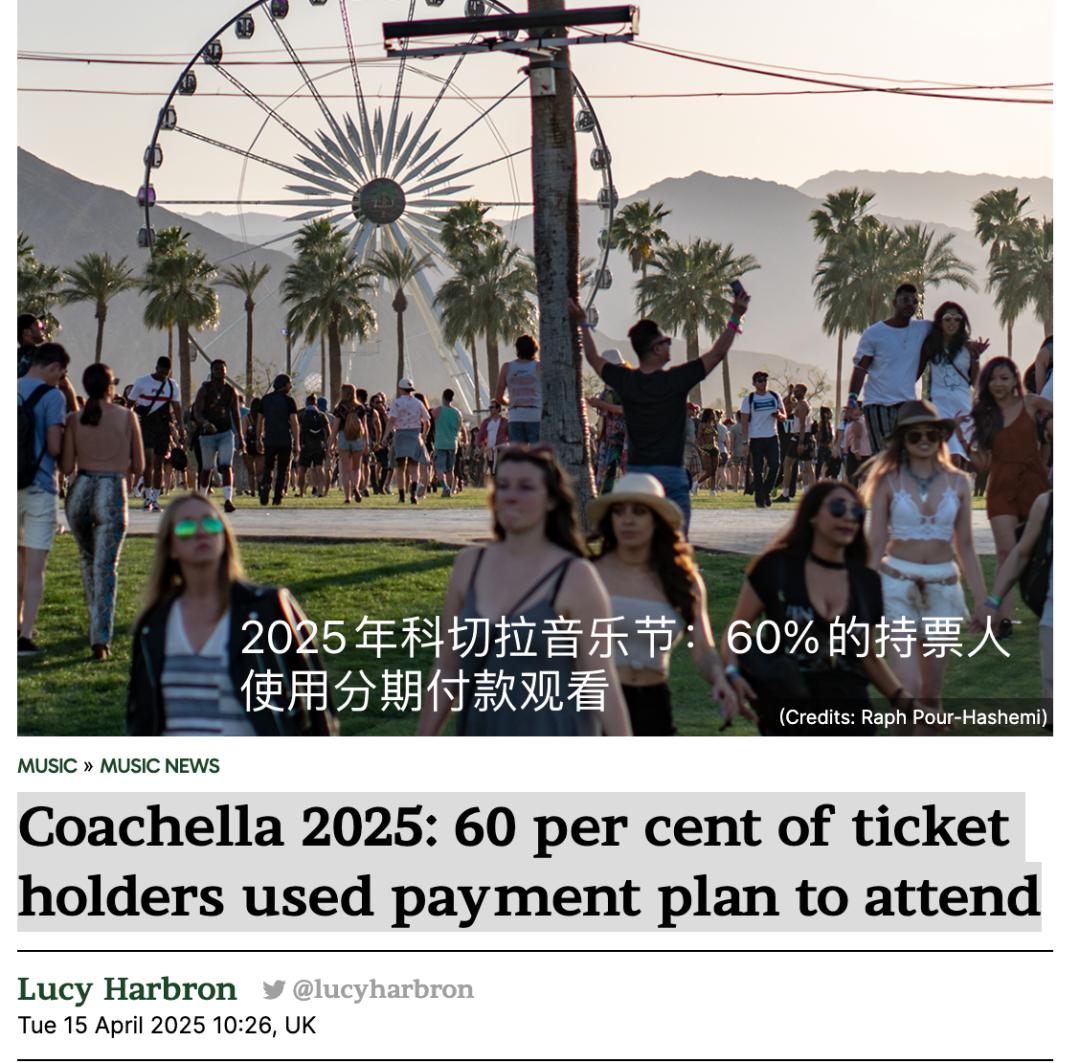
Core Insights - The Coachella Valley Music & Arts Festival has seen a significant increase in ticket purchases through installment payments, with approximately 60% of attendees opting for this method, compared to only 18% in 2009 [1][4][12] - The rising ticket prices, which have increased nearly 40% over the past decade, have led to a growing financial burden on younger audiences, prompting the shift towards installment payments as a means to afford attendance [1][4][12] - The trend of installment payments is not limited to Coachella, as many music festivals globally are adopting similar payment options to attract younger audiences facing financial pressures [7][14] Ticket Pricing Trends - Coachella's three-day general admission ticket price has risen from $375 in 2015 to $649 in 2025, marking a 73% increase [4][12] - The average ticket price for major tours has increased by 20.6% over the past two years, contrasting with the slower growth of music festival ticket prices [17] - A report indicates that ticket prices for 15 major music festivals have outpaced inflation over the last decade [12][14] Financial Behavior of Young Audiences - The high percentage of installment payment users indicates a concerning trend in financial health, with many admitting to overspending and feeling out of control regarding their finances [7][14] - The phenomenon of "FOMO" (Fear of Missing Out) drives young people to prioritize attendance at music events, often leading to financial strain [12][14] - A survey revealed that 86% of Generation Z attendees have overspent at events, primarily due to FOMO [14] Industry Response and Marketing Strategies - Music festivals are shifting their marketing focus from artists and lifestyle to affordability, emphasizing that attendees can still enjoy the experience despite rising costs [9][16] - The installment payment model is seen as a crucial link between fans' financial capabilities and the funding needs of large music festivals [16] - As ticket prices continue to rise, festivals are increasingly reliant on installment payment options to maintain attendance and revenue [19] Challenges Facing Music Festivals - Despite rising ticket prices, festivals like Coachella are experiencing challenges in ticket sales, with reports of declining attendance [17][19] - The competition for top artists has intensified, with many preferring to conduct their own tours for better financial returns, leading to a decrease in available talent for festivals [17][19] - The reliance on installment payments reflects a broader struggle within the festival industry to balance consumer affordability with operational costs [19]
短剧推广轻松月入过万?“最强副业”套路深
Bei Jing Shang Bao· 2025-03-25 12:39
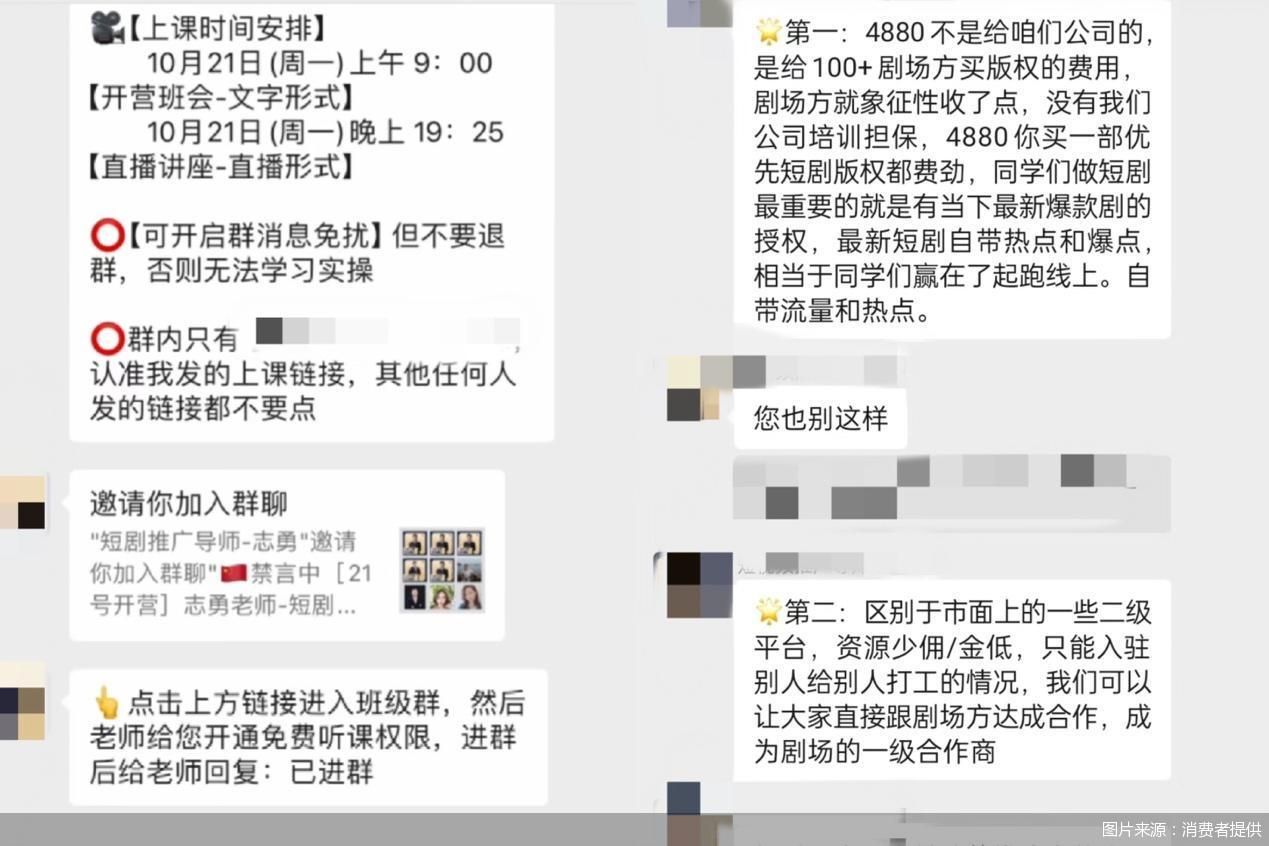
Core Viewpoint - The article highlights the deceptive practices surrounding short video promotion, which is marketed as a lucrative side job but often involves hidden costs and misleading promises [1][2][15]. Group 1: Deceptive Marketing Tactics - Many businesses promote short video marketing as a "zero-cost money-making" opportunity, attracting users with claims of high earnings without prior experience [1][2]. - Free courses are often used as bait, leading to expensive "authorization" fees that users must pay to participate in the promotion [2][4]. - Users are misled into believing they can earn commissions by referring new members, but they face high withdrawal thresholds and additional fees that prevent them from accessing their earnings [5][7]. Group 2: Financial Barriers and Withdrawal Issues - Users are required to pay promotional fees upfront, with promises of refunds and earnings that rarely materialize [9][12]. - The platforms impose minimum withdrawal limits, which often trap users into spending more money to reach the threshold for cashing out [12][13]. - Complaints about these platforms indicate widespread issues with false advertising and difficulties in withdrawing funds, suggesting a pattern of consumer exploitation [13][15]. Group 3: Legal and Ethical Concerns - The practices described may violate consumer protection laws, as they impose unfair trading conditions and modify transaction rules without consent [7][12]. - Experts suggest that these schemes resemble a form of a Ponzi scheme, where profits are concentrated at the top, leaving most participants with losses [7][15]. - There is a call for regulatory measures to ensure transparency and fairness in the marketing of short video promotion services [15].