
2025清华五道口全球金融论坛

Search documents
证监会原主席肖钢:建设高质量金融数据市场,核心是数据要素
Nan Fang Du Shi Bao· 2025-05-19 05:45
Core Insights - The digital economy in China has shown strong growth in Q1 2023, significantly supporting the macroeconomic outlook, with the core industries' added value growth rate exceeding 10%, notably higher than GDP growth [3][4] - Investment in core industries of the digital economy has also performed well, driven by policies and market demand recovery, particularly in emerging fields like artificial intelligence and humanoid robots [3][4] Digital Consumption - Digital consumption has experienced steady growth, with innovations in digital technology improving consumer experiences and driving online consumption, particularly in food and trade-in models [4] - The eastern region of China leads in digital economy metrics, contributing over 90% of revenue and net profit from A-share listed companies in core digital industries, indicating strong industrial clustering effects [4] Digital Finance - The emergence of AI models like DeepSeek has democratized access to AI capabilities for small and medium financial institutions, enhancing innovation and efficiency in the financial sector [5] - Financial institutions are focusing on optimizing technology investments, with a slowdown in growth for banking tech investments but increased intensity in securities sector investments [5] Policy Outlook - Recommendations for future development include improving the digital economy ecosystem, fostering collaboration between technology, industry, and finance, and establishing governance frameworks for generative AI applications in finance [6] - Emphasis on consumer rights protection in the AI era is crucial, with financial institutions needing to ensure the safety and compliance of AI technology usage [6]

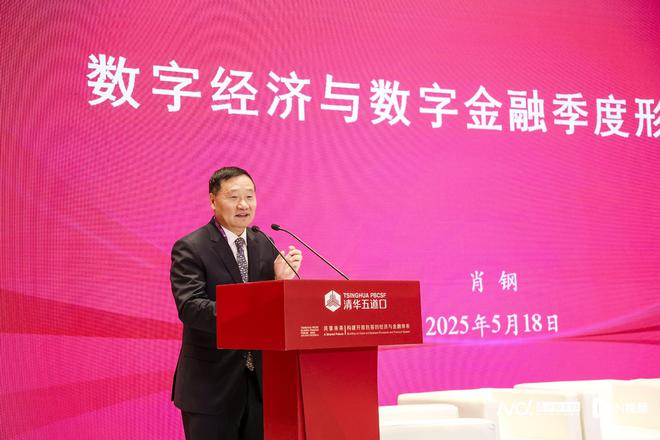
激辩经济金融新秩序,肖钢、周延礼、黄奇帆、迈克尔·斯宾塞等热议→
Sou Hu Cai Jing· 2025-05-19 02:13
Core Viewpoint - The 2025 Tsinghua Wudaokou Global Financial Forum held in Shenzhen focused on building an open and inclusive economic and financial system, addressing challenges in international trade, investment, and financial governance in the context of a fragmented global economy [1]. Group 1: Digital Economy and Financial Innovation - The development of the digital economy aims to enhance the efficiency of the real economy, necessitating deeper integration between digital and traditional sectors, and the implementation of the "AI+" strategy [5]. - Key areas to address in the digital economy include improving the industrial ecosystem, establishing a governance framework for generative AI applications in finance, and creating a high-quality financial data market to resolve data silos [5][3]. Group 2: Pension System Development - The establishment of a three-pillar pension system is essential for creating an efficient social security foundation in China, with personal pensions playing a significant role in this structure [6][10]. - The personal pension system is designed to benefit low- and middle-income individuals, particularly the youth, with an annual contribution limit of 12,000 yuan [10]. Group 3: Financing Challenges for SMEs - The integration of industrial internet and financial technology is crucial for addressing the financing difficulties faced by small and medium-sized enterprises (SMEs) [11]. - The development of industrial internet can create a comprehensive service center for production factors, which is vital for local governments and foreign trade enterprises [11][13]. Group 4: Global Economic Dynamics - The unilateralism of the U.S. government poses significant risks to the global economy, with potential for a fragmented trade system if countries pursue individual agendas [14][16]. - Despite challenges, China retains unique advantages in attracting foreign investment, including low domestic company valuations and a large, skilled labor force [17][19]. Group 5: Innovation and Financial Support - The construction of a modern industrial system relies heavily on the deep integration of technological and industrial innovation, with financial support being a key factor [20][22]. - The current environment is seen as a prime opportunity for the venture capital industry, driven by significant industry transformations [23][25].
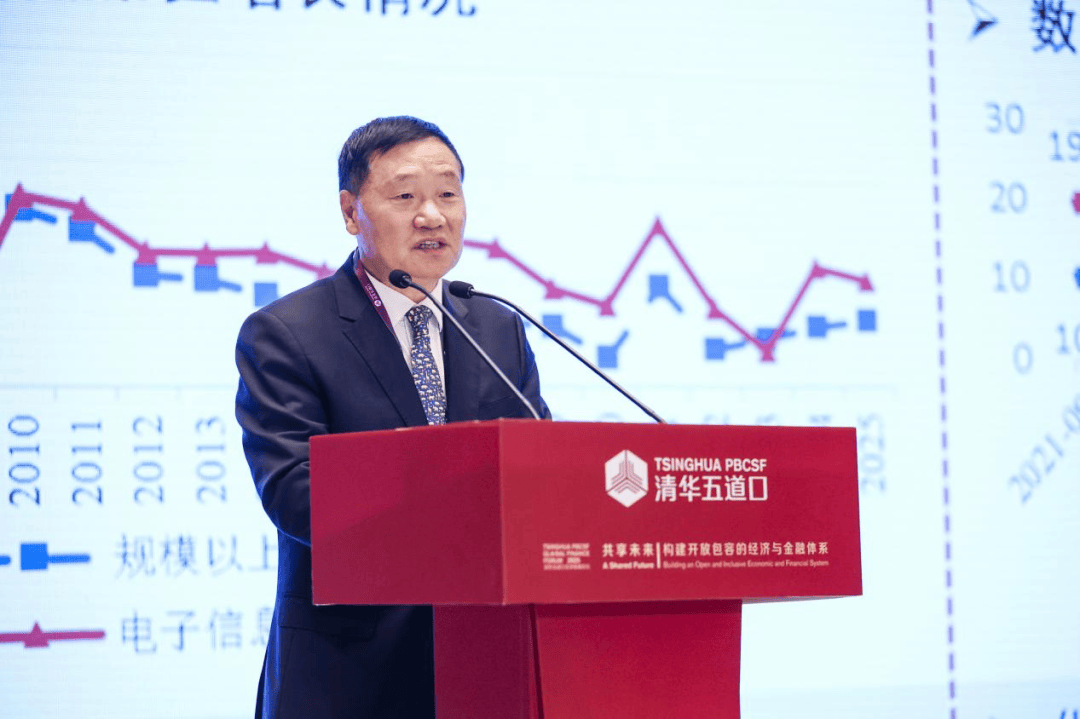
倪泽望:以Deepseek为代表的AI大模型,提高了金融效率和客户体验
Sou Hu Cai Jing· 2025-05-19 01:03
2025清华五道口全球金融论坛于5月17—18日在深圳举办。在"人工智能时代下的数字金融"主题讨论环节,中国证券监督管理委员会原主席肖钢,围绕2025 年一季度我国数字经济与数字金融发展情况发表主旨报告。 极目新闻记者 何佳仪 数字金融发展方面,一季度DeepSeek等大模型的应用成为重要突破,"通过不断应用以DeepSeek为代表的各种AI大模型,金融机构进一步创新了数字金融发 展生态,也提高了金融效率和客户体验。"肖钢表示。此外,金融机构科技投入更注重效益,银行业增速放缓但讲究投入产出比,证券业投资强度居首;金 融数据市场建设深化,机构探索数据空间基础设施建设以激活数据要素价值。 政策展望方面,肖钢指出需从三方面破解数字经济发展存在的堵点:一是完善数字经济产业生态,推动传统产业转型,培育"科技、产业、金融"三者良性循 环,破除数字经济消费约束;二是构建生成式 AI 金融应用治理闭环,严格执行AI算法备案制度,细化场景细则,防范技术滥用风险;三是建设高质量金融 数据市场,探索数据要素权属、定价等机制,构建可信数据空间,平衡数据利用与隐私安全。 (来源:极目新闻) 肖钢指出,数字经济发展方面,一季度核心产业增 ...

普惠金融如何突破 “最后一公里”?中外嘉宾共话破局之道
Sou Hu Cai Jing· 2025-05-18 15:31
【大河财立方 记者 徐兵】"当金融服务像水电一样'随地可接、随需可用',普惠金融才算真正触及'包容共进'的本质。" 5月18日,在 深圳举行的2025清华五道口全球金融论坛上,全国社会保障基金理事会原副理事长、深圳市金融稳定发展研究院理事长王忠民的论 断,揭开了"普惠金融促进包容共进"主题讨论的核心命题。 来自中国、老挝、普惠金融联盟(AFI)的嘉宾,以技术创新、区域实践和制度协同为支点,探讨如何让金融服务跨越地理鸿沟与制 度壁垒。 技术赋能,AI重塑金融服务的"零边际成本"时代 "AI时代的普惠金融,本质是让技术红利转化为人人可及的金融平权。"王忠民以三大场景诠释技术颠覆性:"AlphaFold开源蛋白质结 构库让全球新药研发成本下降90%,如果金融反欺诈模型也能免费共享,中小银行就能零成本提升风控能力。" 他山之石可以攻玉,王忠民建议:"可借鉴拼多多下沉市场策略,通过'零收费数字支付+本地化服务'激活末端需求,中国经验表明, 这类模式能使县域金融覆盖率年均提升6%。" 彭立峰介绍中国"普惠+养老"创新:"我们设立5000亿元消费与养老再贷款,同时整治拒收现金,要求银行网点保留现金服务窗口。数 据显示,适老 ...

2025五道口金融论坛|中国贸促会原副会长张慎峰:对中国进一步扩大开放、拥抱全球化充满信心
Bei Jing Shang Bao· 2025-05-18 15:10
Group 1 - Recent policies aim to improve listing standards, enhance inclusivity and competitiveness, promote mergers and acquisitions, and attract long-term capital to support the development of quality companies while facilitating the exit of underperforming firms [1][6] - China has achieved significant success as an emerging market economy, with a strong momentum towards further opening up and embracing globalization [1][6] Group 2 - The Hong Kong Hang Seng Index has shown a strong performance recently, leading the mainland market, with an increasing correlation between the index and A-share market trends [3][4] - The A-share market has seen rapid development over the past 30 years, with approximately 5,400 companies listed [4] Group 3 - The current market is in a Kitchin contraction phase, which typically lasts around 11 to 12 months, with the U.S. market experiencing volatility and potential further declines [4][5] - Despite the trend of de-globalization, there is confidence that China's capital market will continue to thrive, supported by various measures aimed at stabilizing the market [5][6] Group 4 - The increasing number of companies listing in Hong Kong and the U.S. reflects China's ongoing integration into the global market, with a focus on enhancing market systems and regulatory frameworks [6]
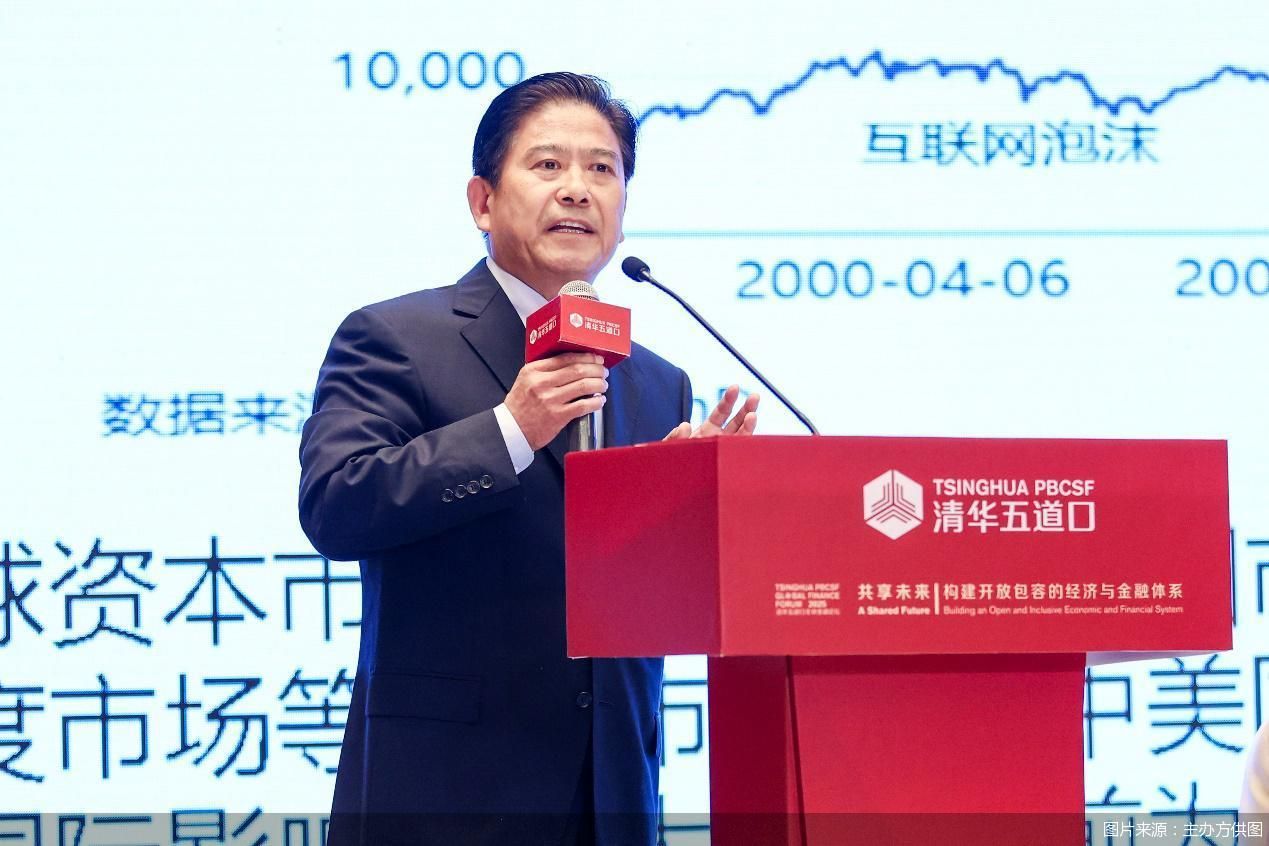
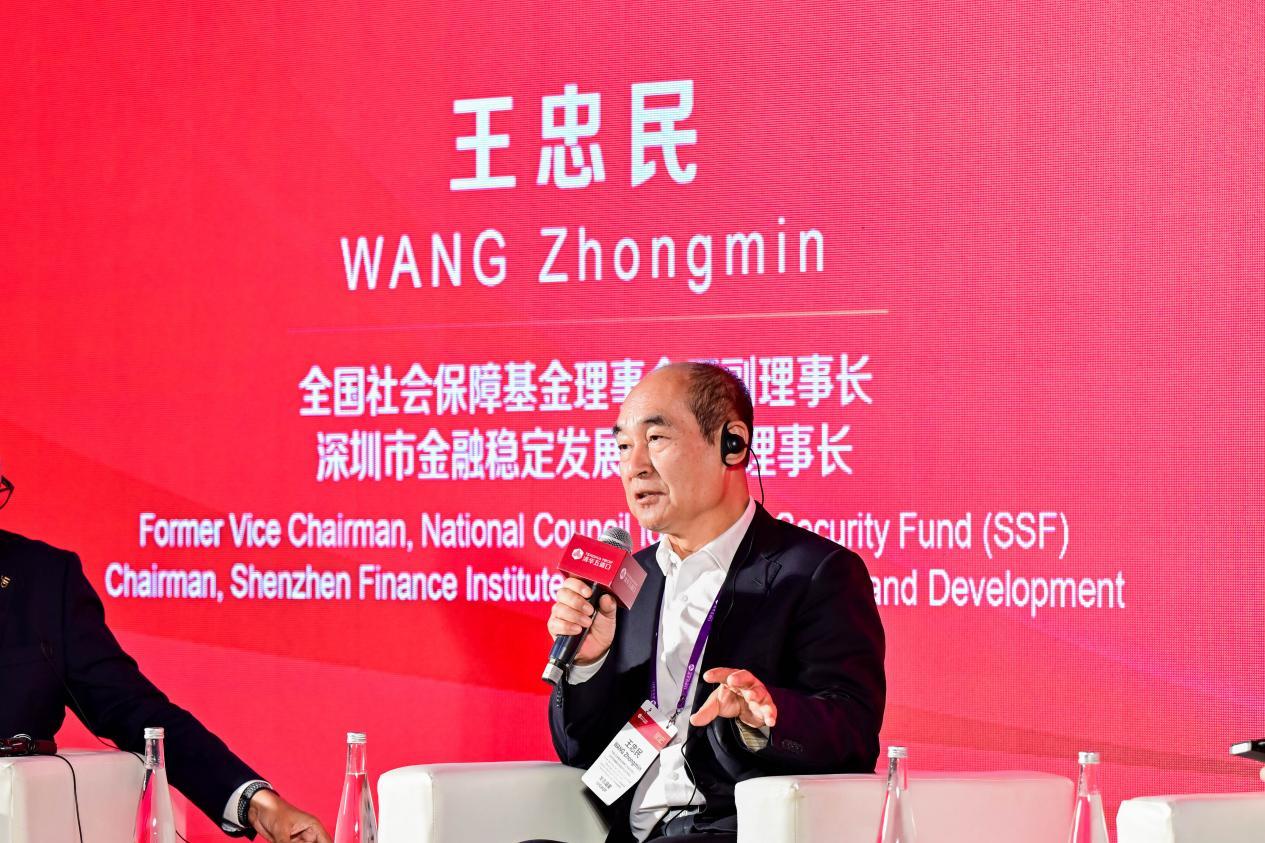
王忠民:数字账户打通家庭经营与金融服务,推动普惠金融多元化延展
Feng Huang Wang Cai Jing· 2025-05-18 14:35
全国社会保障基金理事会原副理事长、深圳市金融稳定发展研究院理事长 王忠民 他指出,以微信支付和支付宝为代表的数字账户不仅具有低成本、零收费的特征,还具备数据自动积累功能。个人和家庭用户可以基于自身日常消费、支付 和现金流情况,在平台上构建出简易的复式财务账户,涵盖收入、支出、资产与负债等关键维度。该账户既可支撑家庭创业、经营,也便于金融机构开展信 用评估与尽职调查,为信贷、投资乃至上市服务提供基础数据。 王忠民强调,这一模式不仅实现了从消费金融向生产金融的自然延伸,也体现了普惠金融的范围经济与规模经济效应。平台化的现金管理工具正在提升资产 配置效率,在部分场景下,其短期现金管理收益甚至高于传统固收类资产。 他补充指出,在当前社会零售总额和内需增速承压的背景下,消费金融平台反而呈现30%、100%、甚至300%的高速增长,说明在低成本、高效率、风险可 控的机制下,数字金融已成为宏观经济调整周期中的稳定力量和创新源泉。 凤凰网财经讯 5月17-18日,2025清华五道口全球金融论坛在深圳举办,本届论坛主题为"共享未来:构建开放包容的经济与金融体系",凤凰网财经全程报 道。 全国社会保障基金理事会原副理事长、深圳市 ...
香港中文大学施康:把握内需“主动力”,消费创新潜力大
Nan Fang Du Shi Bao· 2025-05-18 13:21
Core Viewpoint - Chinese companies are facing increased difficulties in expanding overseas due to heightened external tariff impacts and global supply chain adjustments, necessitating a shift towards new international markets and emphasizing economic reforms to better unleash domestic consumption potential [1][3]. Group 1: Challenges and Opportunities - The impact of tariff increases has hindered Chinese exports to the U.S., despite a temporary 90-day lower tariff window, leading companies to consider exploring emerging international markets or focusing on domestic demand [3]. - China is aware of how to respond to external shocks like trade wars, and even in adverse scenarios, the vast domestic consumption market can sustain economic growth [3]. Group 2: Economic Transition - The Chinese government recognizes the need to transition from an export-driven economy to a consumption-driven one, which is essential for both current growth stabilization and long-term high-quality development [3]. - There is significant potential for innovation in Chinese consumption, with new consumer demands being met by an evolving supply landscape, as evidenced by recent trends in various consumption sectors [3]. Group 3: Policy Initiatives - Various regions in China are implementing local consumption promotion plans based on the national "Consumption Promotion Action Plan" issued in March, focusing on optimizing new consumption supply [4]. - The government is also working to enhance consumer confidence by improving the social security system and has prioritized consumption in the 2025 government work report, allocating 300 billion yuan for initiatives like trade-in programs for consumer goods [4]. Group 4: Future Outlook - While some policies may have uncertain short-term effects, the long-term impact is expected to be positive, with gradual changes requiring time to materialize [5]. - As new policy effects continue to unfold and market confidence improves, the internal economic momentum in China is anticipated to strengthen, leading to a positive economic outlook [5].
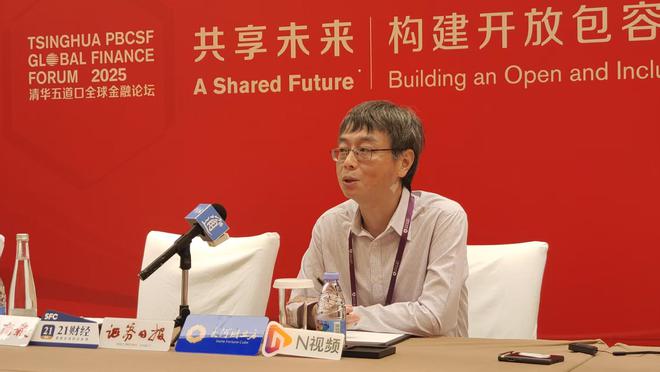
彭立峰:推动普惠金融与养老金融相结合,做好适老化服务,维护老年人权益|快讯
Hua Xia Shi Bao· 2025-05-18 13:13
Core Insights - The People's Bank of China emphasizes the importance of inclusive finance, focusing on special groups such as small and micro enterprises, farmers, low-income urban residents, the poor, disabled individuals, and the elderly [2][3] Group 1: Development Focus - The future development of inclusive finance will concentrate on integrating policies and enhancing the "Five Major Articles" to create a supportive policy environment [2] - Significant progress is expected in six areas: 1. Increased accessibility of basic financial services with improved efficiency and digital service levels [2] 2. Enhanced financing convenience for small and micro enterprises, individual businesses, and new agricultural operators [3] 3. Improved financial services for rural development, with a stronger rural financial service system and increased support for rural infrastructure [2][3] 4. Better financial consumer education and protection mechanisms, with a focus on the usability and safety of digital financial products [3] Group 2: Risk Management and Evaluation - Enhanced risk prevention capabilities for key institutions and sectors, particularly for small and medium-sized financial institutions [3] - A comprehensive evaluation index system for the high-quality development of inclusive finance is being established [3] - The financing scale in the inclusive finance sector is growing rapidly, with an increase in the number of credit accounts and a decrease in financing costs [3] Group 3: Future Initiatives - Future initiatives will include strengthening the integration of inclusive finance with pension finance [3] - Continuous upgrades to bank branches and client services to ensure accessibility, particularly for the elderly who prefer cash transactions [4]

日本央行前行长白川方明:日本经验表明,人口减少与老龄化会降低生产率
Hua Xia Shi Bao· 2025-05-18 13:11
Core Insights - The former Governor of the Bank of Japan, Masaaki Shirakawa, highlighted that Japan's declining population and aging demographic are significant challenges that reduce productivity, which is a critical issue for Japan [2][3] - Shirakawa emphasized that the most important factor for living standards is per capita GDP, which is determined by productivity, rather than the commonly held belief that Japan's low growth is primarily due to deflation [2] Summary by Relevant Categories Impact of Demographic Changes on Productivity - Aging populations lead to a shift in consumption preferences towards healthcare rather than education, resulting in a decline in productivity growth [2] - An aging society may hinder the acceptance of new technologies, which are essential for enhancing productivity [2] - In economies with declining populations, overall productivity tends to slow down due to the increased difficulty in reallocating resources across different regions [2] - A decrease in population size results in a smaller future talent pool, which correlates positively with the number of innovators, thereby slowing down the pace of innovation [2] Lessons for China - China has the advantage of observing Japan's experiences in dealing with demographic challenges and can learn from these insights [3] - The critical factor for economic growth is the ability to rapidly reallocate resources to enhance productivity; failure to do so may lead to economic decline [3]

大湾区进出口商业总会会长林龙安:对下半年大湾区外贸走势持谨慎乐观态度
Jing Ji Guan Cha Wang· 2025-05-18 11:11
对于出口企业的相关应对措施,林龙安有以下几点建议: 一是持续优化市场布局。一方面积极开拓新兴市场,如东盟、拉美、中东等,降低对美国单一市场的依 赖,可通过建立海外销售网络和参加国际展会的方式,提升市场占有率。比如,部分企业通过在东盟国 家设立销售办事处,直接面向当地市场,取得了良好的市场反馈。另一方面,重视国内市场,实现"外 贸+内销"的战略转型,将部分出口产品转内销,满足国内消费升级需求。 二是产业升级与创新。企业要通过加大技术创新投入,提升产品附加值,降低对价格竞争的依赖,增强 产品的刚性需求。比如,一些企业通过引入人工智能、智能制造等前沿技术,优化生产流程,提高生产 效率,提升产品竞争力。 经济观察报 记者 老盈盈 5月18日,大湾区进出口商业总会会长林龙安在"2025清华五道口全球金融论坛"上接受媒体采访时表 示,尽管中美暂缓关税政策落地,但美方政策在90天后仍然存在"不确定性",依赖单一市场的出口模式 不可持续;此外,企业出海合规成本在不断攀升,需提升规则应对能力,这方面可善用香港的国际化专 业服务体系来进行支撑。 基于当前形势,林龙安对下半年大湾区外贸走势持谨慎乐观的态度。 三是强化供应链管理。林 ...