大豆种植与加工

Search documents
豆粕月报:进口成本、估值抬升,连粕震荡偏强-20260309
Tong Guan Jin Yuan Qi Huo· 2026-03-09 11:40
1. Report Industry Investment Rating There is no information in the report regarding the industry investment rating. 2. Core Views of the Report - The export sales of US soybeans in the current year have slowed down. Attention should be paid to the progress of the sixth round of China - US trade consultations and Trump's visit to China. Policy uncertainty has increased, and there is a focus on whether China will increase its purchase of US soybeans. The crushing demand for US soybeans is strong, currently higher than the USDA's expected target. Geopolitical conflicts have escalated, leading to a sharp increase in oil prices, which boosts the demand for vegetable oil as bio - fuel. Coupled with the positive bio - diesel policies in the US, US soybean oil has continued to strengthen, and the crushing demand is expected to be adjusted upwards. Attention should be paid to the March USDA report and the end - of - month intended planting area report. The soybean harvest progress in Brazil is expected to exceed 50%, with increased export supply. Although the yield in the southern产区 has been slightly adjusted downwards due to drought, the overall harvest is still expected to be good. In the next two weeks, the cumulative precipitation in the Argentine产区 will be lower than the average, but the crop conditions are generally good, and the yield is estimated to be between 48 - 49 million tons [3][62]. - In China, the procurement of soybeans for the March shipment has basically been completed, and about 80% of the April shipment has been procured. The arrival of soybeans in March is relatively low. After the Spring Festival, due to sufficient downstream inventory, the market trading is relatively light. As the inventory is digested, it is expected that there will be a concentrated restocking boost in March, with a short - term tightening supply - demand expectation. The crushing operation rate of oil mills has returned to normal, and the inventory of soybeans and soybean meal is at a high level compared to the same period. The arrival of Brazilian soybeans in the distant future will also increase, resulting in an increase in medium - term supply [3][63]. - In summary, the strengthening of US soybean oil supports the rise of US soybeans, increasing the import cost. Low - valued agricultural products such as soybean meal have seen an increase in the allocation demand from macro funds, and long - position funds have entered the market. The crushing operation rate of domestic oil mills has recovered, and there may be a concentrated restocking demand downstream, with a short - term tightening supply - demand expectation. However, the arrival of Brazilian soybeans will increase significantly in April, leading to an increase in supply. Under the continuous influence of the US - Iran conflict, it is expected that the Dalian soybean meal will fluctuate and strengthen in March [3][63]. 3. Summary According to the Directory 3.1 Market Review of Soybean Meal - Since February, US soybeans have shown a fluctuating upward trend, and domestic soybean meal has been supported at a low level, continuing to fluctuate as a whole. At the end of February, the May contract of soybean meal rose 66 to 2,833 yuan/ton, an increase of 2.39%. The spot price of soybean meal in South China fell 40 to 3,080 yuan/ton, a decrease of 1.28%. The May contract of CBOT US soybeans rose 92.75 to 1,170 cents/bushel, an increase of 8.61%. In early February, the price of soybean meal fluctuated downward, mainly due to the significant increase in the loading of Brazilian exports, which improved the expectation of tight supply in the distant future in China. The expected good harvest in South America remained unchanged, and the overall supply was expected to be loose. The high inventory of soybean meal in domestic oil mills and sufficient supply suppressed the price. From mid - to late February, soybean meal fluctuated upward. After the Spring Festival in China, the spot market trading was relatively light, mainly driven by the external market. The continuous rise of US soybeans increased the import cost, strengthening the support. In addition, market news reported that the clearance time for imported soybeans was extended, and funds and sentiment boosted the price increase. The external US soybeans generally continued to fluctuate upward. The US President stated that China would additionally purchase 8 million tons of US soybeans this year, and the export prospects were promising. Trump's visit to China at the end of March also led to market expectations of strategic purchases of US soybeans. In addition, the positive bio - diesel policy in the US boosted the crushing demand. Near the end of the month, 50% of the exemptions for small refineries would be redistributed, increasing the demand for bio - diesel fuel, which drove the sharp rise of US soybean oil. Moreover, the drought in the southern part of Brazil and the central part of Argentina in the middle and late February caused concerns and boosted the bullish sentiment [9]. 3.2 International Situation 3.2.1 Global Soybean Supply and Demand - According to the February USDA report, the global soybean production in the 2025/2026 season was 428.18 million tons, an increase of 2.5 million tons compared to the January estimate. The global soybean crushing demand was 368.03 million tons, an increase of 1.6 million tons compared to the January estimate. The global soybean ending inventory in the 2025/2026 season was 125.51 million tons, an increase of 1.1 million tons compared to the previous month, and the stock - to - consumption ratio was 29.55%, indicating a slightly bearish supply [11]. 3.2.2 US Soybean Supply and Demand - The February USDA report on the US soybean balance sheet had a neutral impact. In the 2025/2026 season, the US soybean yield per acre remained at 53 bushels. The crushing demand was 2.57 billion bushels, and the export demand was 1.575 billion bushels, which were the same as the previous month's estimates. The ending inventory was 350 million bushels, and the stock - to - consumption ratio was 8.22% [15]. 3.2.3 US Soybean Crushing Demand - Data from the National Oilseed Processors Association (NOPA) showed that the US soybean crushing volume in January 2026 was 221.564 million bushels, a 1.52% decrease compared to December. The soybean crushing volume in December 2024 was 200.383 million bushels, a 10.6% increase compared to the same period last year. From September 2025 to January 2026, the cumulative US soybean crushing volume was 1.088106 billion bushels, an 11.32% increase compared to the same period last year. The USDA's estimated growth target for the 2025/2026 season was 5.11%. At the end of January 2026, the US soybean oil inventory was 190 million pounds, compared to 168.6 million pounds in the previous month and 127.4 million pounds in the same period last year. Based on the calculation results of the USDA's crushing weekly report, as of the week ending February 27, 2026, the US soybean crushing gross profit (the spread between soybeans, soybean oil, and soybean meal) was $3.04 per bushel, compared to $2.74 per bushel in the previous week. The spot price of 48% protein soybean meal at soybean processing plants in Illinois was $321.92 per short ton, compared to $308.37 per short ton in the previous week. The truck quote for crude soybean oil in Illinois was 60.61 cents per pound, compared to 58.98 cents per pound in the previous week. The average price of No. 1 yellow soybeans was $11.59 per bushel, compared to $11.39 per bushel in the previous week [18]. 3.2.4 US Soybean Export Demand - As of the week ending February 26, 2026, the net export sales of US soybeans in the 2025/2026 season were 383,000 tons, compared to 811,000 tons in the previous week. The cumulative export sales of US soybeans in the 2025/2026 season were 36.03 million tons, with a sales progress of 84.1%, compared to 44.39 million tons in the same period last year, with an overall progress of 87.0%. China's net purchase volume in that week was 153,000 tons. China's cumulative purchase volume this year was 10.82 million tons. Considering the purchases from unknown destinations, China's total purchase of US soybeans this year was 12 million tons [20]. 3.2.5 Brazilian Soybean Situation - The February USDA report showed that the Brazilian soybean production in the 2025/2026 season was increased by 2 million tons to 180 million tons, mainly due to the suitable weather conditions during the growth and development stage of Brazilian soybeans. However, the recent low precipitation in the southern part of Brazil may lead to a decline in crop yields, and continuous attention should be paid to weather changes. The export demand remained at 114 million tons, and the crushing demand was further increased by 1 million tons to 61 million tons. The ending inventory was 37.91 million tons, and the stock - to - consumption ratio was 21.13%. According to official Brazilian export data, the Brazilian soybean export volume in January 2026 was 1.88 million tons, compared to 3.38 million tons in December 2025. The Brazilian soybean export volume in January 2025 was 1.07 million tons, an increase of 810,000 tons compared to the same period last year, and the average over the past five years was 1.45 million tons. In terms of soybean exports to China, the Brazilian soybean export volume to China in January 2026 was 1.07 million tons, compared to 2.61 million tons in December 2025. The export volume to China in January 2025 was 800,000 tons, an increase of 270,000 tons compared to the same period last year, and the average over the past five years was 1.05 million tons. Data from the Brazilian National Association of Grain Exporters showed that the estimated Brazilian soybean export volume in February was 10.69 million tons. Conab data showed that as of February 28, the Brazilian soybean harvest rate was 41.7%, compared to 31.9% the previous week and 48.4% in the same period last year, with a five - year average of 38.4%. The AgRural agricultural consulting company said that the Brazilian soybean production in the 2025/2026 season was expected to reach 178 million tons, a decrease from the previous forecast of 181 million tons due to the loss of yield per acre in Rio Grande do Sul due to drought. The StoneX institution lowered its forecast of Brazilian soybean production in the 2025/2026 season to 177.8 million tons, compared to the previous forecast of 181.6 million tons [23][29][32]. 3.2.6 Argentine Soybean Situation - The February USDA report showed that the Argentine soybean production in the 2025/2026 season remained unchanged at 48.5 million tons, the export demand remained at 8.25 million tons, the crushing demand remained at 41 million tons, the ending inventory was 22.92 million tons, and the stock - to - consumption ratio was 40.60%. According to data from the Buenos Aires Stock Exchange, the Argentine soybean export volume in November 2025 was 2.19 million tons, compared to 1.68 million tons in the previous month. The Argentine soybean export volume in November 2024 was 96,000 tons. From April to November 2025, the cumulative Argentine soybean export volume was 11.3 million tons, an increase of 6.76 million tons compared to the same period last year. The Argentine soybean meal export volume in November 2025 was 2.71 million tons, compared to 2.43 million tons in the previous month. The Argentine soybean meal export volume in November 2024 was 2.38 million tons. From April to November 2025, the cumulative Argentine soybean meal export volume was 19.95 million tons, a decrease of 50,000 tons compared to the same period last year. The Buenos Aires Stock Exchange reported that as of the week ending February 25, 2026, the proportion of normal and excellent crops was 71%, compared to 75% the previous week and 68% in the same period last year. The weather forecast showed that in the next 15 days, the cumulative precipitation in the Argentine产区 would be slightly higher than normal, and the soybean yield estimate would not change much from the previous estimate, ranging from 48 - 50 million tons [34][38][40]. 3.3 Domestic Situation 3.3.1 Imported Soybeans and Other Situations - According to customs data, the Chinese soybean import volume in December 2025 was 8.04 million tons, of which the import volume of Brazilian soybeans was 5.66 million tons, accounting for 70.4%, and the import volume of Argentine soybeans was 1.65 million tons, accounting for 20.5%. The soybean import volume in November was 8.11 million tons, a decrease of 70,000 tons compared to the previous month. The soybean import volume in December 2024 was 7.94 million tons, an increase of 100,000 tons compared to the same period last year, and the average over the past five years was 8.94 million tons. The total Chinese soybean import volume in 2025 was 111.82 million tons, an increase of 6.79 million tons compared to the same period last year. In terms of the ship - buying rhythm, as of the week ending March 3, 2026, the procurement plan for the March shipment was 12 million tons, and 11.59 million tons had been procured, with a completion rate of 96.6%. The procurement plan for the April shipment was 11.5 million tons, and 8.59 million tons had been procured, with a completion rate of 74.7%. The procurement plan for the May shipment was 11.5 million tons, and 4.86 million tons had been procured, with a completion rate of 42.2% [46][47]. 3.3.2 Domestic Oil Mill Inventory - As of the week ending February 27, 2026, the soybean inventory of major oil mills was 5.9669 million tons, an increase of 771,500 tons compared to the previous week and an increase of 1.8129 million tons compared to the same period last year. The soybean meal inventory was 701,200 tons, a decrease of 141,300 tons compared to the previous week and an increase of 71,900 tons compared to the same period last year. The unfulfilled contracts were 2.9152 million tons, a decrease of 243,900 tons compared to the previous week and an increase of 135,800 tons compared to the same period last year. The national port soybean inventory was 6.3 million tons, an increase of 706,000 tons compared to the previous week and an increase of 1.6965 million tons compared to the same period last year. As of the week ending February 27, the national weekly average daily trading volume of soybean meal was 35,640 tons, of which the spot trading volume was 32,040 tons and the forward trading volume was 3,600 tons. The average daily total trading volume in the week before the Spring Festival was 34,860 tons. The weekly average daily pick - up volume of soybean meal was 110,960 tons, compared to 125,180 tons in the week before the Spring Festival. The crushing volume of major oil mills was 588,600 tons, compared to 1.6879 million tons in the week before the Spring Festival. The inventory days of soybean meal in feed enterprises were 9.89 days, compared to 12.59 days in the previous week [49][50]. 3.3.3 Feed and Livestock Farming Situation - The total output of the national industrial feed was 342.253 million tons, an 8.6% increase compared to the previous year. Among them, the output of compound feed was 319.46 million tons, an 8.8% increase; the output of concentrated feed was 13.381 million tons, a 3.4% increase; and the output of additive premixed feed was 7.527 million tons, an 8.3% increase. In terms of different varieties, the output of pig feed was 166.394 million tons, a 15.6% increase; the output of egg - laying poultry feed was 32.82 million tons, a 1.4% increase; the output of meat - poultry feed was 100.977 million tons, a 3.5% increase; the output of ruminant feed was 14.758 million
黑河 攻坚破局绘就振兴新画卷
Xin Lang Cai Jing· 2026-02-08 22:43
Group 1: Agricultural Development - Black River City achieved a total grain production of 118.92 billion pounds, with soybean yield reaching a historical high of 4.1% increase in 2025 [2] - The city optimized its soybean breeding varieties from over 440 to 260, focusing on breakthrough new varieties [2] - The establishment of national-level agricultural platforms has led to the emergence of high-yield, quality, and early-maturing soybean varieties, positioning Black River as a "Silicon Valley" for northern soybean breeding [2][3] Group 2: Industrial Growth and Investment - Black River has successfully attracted nearly 60 billion yuan in social capital by promoting five major soybean-producing counties to national-level modern agricultural industrial parks [3] - The number of soybean processing enterprises in Black River has increased to 82, with an annual processing capacity exceeding 3.5 million tons, pushing the annual output value of the soybean industry towards 10 billion yuan [4] - A series of investment projects exceeding 1 billion yuan in soybean deep processing have been signed and implemented in 2025 [3][4] Group 3: Cold Region Testing Industry - Black River, known as the "first city for cold region testing," has seen an annual growth rate of 10% in cold region automotive testing [6] - The city has established a high-standard cold region testing facility and a closed autonomous driving testing ground, filling gaps in high-cold testing and achieving a significant shift from winter to year-round testing [8] - The local testing enterprises have participated in the formulation of 47 national and industry standards related to cold region testing [8] Group 4: Tourism and Cultural Development - In 2025, Black River received 24.4 million tourists, generating a total tourism revenue of 18.446 billion yuan, benefiting from the China-Russia visa-free policy [10] - The city has implemented a "cadre capability enhancement project" to improve the professional quality of its workforce in cross-border tourism [11] - The establishment of a public legal service center and the development of a multilingual legal service robot have significantly improved cross-border legal service capabilities [11][12] Group 5: Goose Industry Development - The goose industry in Beian City has transformed into a billion-yuan industrial chain covering incubation, breeding, slaughtering, processing, and sales [13] - The government has coordinated resources to resolve issues related to water, electricity, and heating for the newly established goose processing plant [14] - The complete industrial chain has resulted in a production value exceeding 300 million yuan, benefiting local farmers through subsidies and technical support [15]
吉林敦化:黑土地产出“金豆子”
Jing Ji Ri Bao· 2026-02-04 09:18
Core Viewpoint - The city of Dunhua in Jilin Province is enhancing its soybean industry through a comprehensive approach that includes the entire supply chain from cultivation to processing, aiming to improve quality and expand market reach both domestically and internationally [1][2]. Group 1: Soybean Cultivation and Quality Improvement - Dunhua has established itself as a significant producer of high-protein, quality soybeans, with local breeding teams developing 17 superior soybean varieties that have a protein content of around 42%, which is approximately 2 percentage points higher than the national average [1][2]. - The area under cultivation for these improved soybean varieties has reached 1.5 million acres, highlighting the importance of quality seeds in ensuring farmers' profitability and strengthening the industry [1]. Group 2: Agricultural Practices and Technology - The integration of "good land, good opportunities, and good technology" has been a focus in Dunhua, leading to improved agricultural standards and convenience for soybean planting [2]. - The city has 226 agricultural machinery cooperatives, providing integrated services for plowing, planting, and harvesting, supported by a total of 360 million yuan in subsidies for machinery purchases over the past five years [2]. - Local agricultural technicians are actively promoting advanced planting techniques, resulting in a 10% increase in soybean yield, positioning Dunhua among the top in Northeast China for comprehensive planting indicators [2]. Group 3: Storage and Distribution - Dunhua has developed a robust storage and distribution network for soybeans, with a dedicated storage facility that utilizes advanced monitoring technologies to ensure quality and stability in the market [3]. - The storage facility has established a comprehensive collection network covering all grain-producing towns in Dunhua, with annual transaction volumes exceeding 600,000 tons [3]. Group 4: Processing and Value Addition - The deep processing of soybeans is crucial for enhancing their added value, with local companies like Yanming Lake Biotechnology utilizing innovative drying techniques to significantly increase product value [4]. - A total investment of 720 million yuan has been made in a non-GMO soybean industry chain project, which has begun operations and focuses on functional soybean protein products [4]. Group 5: Product Innovation and Market Expansion - Dunhua is also innovating traditional soybean products, creating popular items like pancakes and pickles that leverage local high-quality soybeans, thus expanding the market through both industrial and tourism integration [5]. - The soybean industry in Dunhua is continuously evolving, aiming for higher added value and contributing to local economic growth [5].
吉林敦化 黑土地产出“金豆子”
Jing Ji Ri Bao· 2026-02-04 02:36
Group 1 - Dunhua City in Jilin Province is enhancing its soybean industry through a comprehensive supply chain approach, focusing on quality improvement and expanding market reach both domestically and internationally [1][4] - The unique climatic conditions in Dunhua, with an average annual temperature of 2.6 degrees Celsius and a frost-free period of about 120 days, contribute to the cultivation of high-protein soybeans [1] - The local agricultural authorities have collaborated with research institutions to develop 17 high-quality soybean varieties, achieving a stable protein content of around 42%, which is approximately 2 percentage points higher than the national average [1] Group 2 - The implementation of high-standard farmland construction since 2019 has improved land conditions and optimized the growth environment for soybeans [2] - The mechanization of farming is increasing, with 226 agricultural machinery cooperatives providing integrated services for planting and harvesting, supported by a total of 360 million yuan in subsidies for machinery purchases over the past five years [2] - Dunhua has achieved a soybean yield increase of about 10%, positioning itself among the top in Northeast China for comprehensive planting indicators [2] Group 3 - The deep processing of soybeans is crucial for enhancing their added value, with local companies developing innovative products such as high-enzyme natto freeze-dried powder, which has seen a 30% increase in enzyme activity [3] - A significant investment of 720 million yuan in a non-GMO soybean industry chain project has been made, focusing on functional soybean protein, which has opened new avenues for local deep processing [3] - Traditional soybean products are being innovated, with local specialties like pancakes and pickles gaining popularity through various sales channels, contributing to the overall growth of the soybean industry [3][4]
资讯早班车-2026-01-23-20260123
Bao Cheng Qi Huo· 2026-01-23 02:21
1. Report Industry Investment Rating No relevant content provided. 2. Core Viewpoints of the Report - China's central bank will continue to implement a moderately loose monetary policy in 2026, with room for reserve requirement ratio cuts and interest rate cuts [2][13]. - The financial support for equipment renewal using 936 billion yuan of ultra - long - term special treasury bonds will drive total investment over 460 billion yuan [3][13]. - The implementation period of the personal consumption loan fiscal discount policy will be extended to December 31, 2026, and the actual interest rate for consumers may drop to around 2% [2][13]. - The global silver market is in a structural deficit, and industrial demand for silver is expected to grow in the next five years [6]. - The U.S. natural gas price has risen significantly due to cold weather, and the global LNG supply is expected to increase by 10% this year [8]. 3. Summary by Directory 3.1 Macro Data Quick View - In December 2025, GDP growth rate at constant prices was 4.5% year - on - year, lower than the previous quarter's 4.8% and last year's 5.4% [1]. - The manufacturing PMI in December 2025 was 50.1%, slightly higher than the previous month's 49.8% and the same as last year [1]. - The non - manufacturing PMI in December 2025 was 50.2%, slightly higher than the previous month's 50.0% but lower than last year's 52.2% [1]. - The social financing scale in December 2025 was 220.75 billion yuan, lower than the previous month's 352.99 billion yuan and last year's 285.37 billion yuan [1]. - The CPI in December 2025 increased by 0.8% year - on - year, turning positive from the previous month's - 0.3% [1]. - The PPI in December 2025 decreased by 1.9% year - on - year, a smaller decline compared to the previous month's - 2.3% [1]. 3.2 Commodity Investment Reference 3.2.1 Comprehensive - The central bank will implement a moderately loose monetary policy in 2026, with room for reserve requirement ratio cuts and interest rate cuts [2]. - The personal consumption loan fiscal discount policy will be extended to December 31, 2026, and the actual interest rate may drop to around 2% [2]. - 936 billion yuan of ultra - long - term special treasury bonds for equipment renewal have been allocated, driving total investment over 460 billion yuan [3]. - In Q4 2025, FOF continued to prefer low - risk products, with short - term bond ETFs as the top - held variety, and shifted from gold ETFs to gold stock ETFs [3]. - On January 22, 33 domestic commodity varieties had positive basis, and 36 had negative basis [3]. 3.2.2 Metals - On January 23, spot gold reached a new high of $4,963 per ounce, with a 0.5% intraday increase, and silver price also hit a new high [5]. - As of January 21, copper inventory reached a new high in over 8 months, while lead, tin, zinc, and nickel inventories decreased [5]. - Global silver industrial demand is expected to grow in the next five years, and the market has been in a structural deficit for five years [6]. - The Q4 sales of Alcoa were $3.45 billion, and it expects alumina and aluminum shipments in 2026 [6]. - As of January 22, the holdings of SPDR Gold Trust increased by 0.19% [6]. 3.2.3 Coal, Coke, Steel, and Minerals - The CAPSTONE copper mine in Chile has been shut down due to a strike [7]. 3.2.4 Energy and Chemicals - U.S. natural gas futures have risen by 81% in three days due to cold weather [8]. - The U.S. energy minister calls for doubling global oil production [8]. - Ukraine has purchased most of the natural gas needed for the 2025/26 winter [8]. - The global LNG supply is expected to increase by 10% this year [8]. - U.S. natural gas inventory decreased by 120 billion cubic feet in the week ending January 16 [8]. - U.S. EIA crude inventory increased by 3.6 million barrels last week [9]. 3.2.5 Agricultural Products - Draft standards for pre - made dishes will be open for public comment [10]. - U.S. exporters sold 192,350 metric tons of soybeans to an unknown destination [10]. - Brazil's soybean production in the 2025/26 season is expected to reach 177.124 million tons, and exports in 2026 are expected to reach 111.5 million tons [11]. 3.3 Financial News Compilation 3.3.1 Open Market - On January 22, the central bank conducted 210.2 billion yuan of 7 - day reverse repurchase operations, with a net injection of 3.09 billion yuan [12]. - On January 23, the central bank will conduct 900 billion yuan of 1 - year MLF operations, with a net injection of 700 billion yuan [12]. 3.3.2 Important News - The central bank will implement a moderately loose monetary policy in 2026, with room for reserve requirement ratio cuts and interest rate cuts [13]. - 936 billion yuan of ultra - long - term special treasury bonds for equipment renewal have been allocated, driving total investment over 460 billion yuan [13]. - The personal consumption loan fiscal discount policy will be extended to December 31, 2026, and the actual interest rate may drop to around 2% [13]. - China will take measures to safeguard the rights of Chinese enterprises if the EU discriminates against them [14]. - In December 2025, the unemployment rate of the 16 - 24 age group was 16.5%, 6.9% for the 25 - 29 age group, and 3.9% for the 30 - 59 age group [15]. - The second - round land contract will be extended by 30 years in 7 provinces, and China's grain output reached a new high in 2025 [15]. - The second - hand housing market in some areas has shown a warming trend at the beginning of 2026 [15]. - Trump said the Greenland agreement will give the U.S. military access, and threatened to retaliate if European countries sell U.S. assets [16]. - The U.S. Q3 2025 GDP grew by 4.4% annually, and inflation indicators met expectations [16]. - The market expects the Bank of Japan to maintain the policy rate at 0.75%, but there may be a hawkish stance [16]. - Japanese government bonds rebounded, but the selling pressure remains [17]. - There are some bond - related events, such as corporate restructuring investment and bond redemption [17]. - Some overseas credit ratings have been adjusted [18]. 3.3.3 Bond Market Summary - The Chinese bond market adjusted slightly, with interest - rate bond yields rising slightly [19]. - Treasury bond futures declined slightly, and the money market tightened slightly [20]. - In the exchange - traded bond market, Vanke bonds were strong, while industrial and financial bonds were weak [20]. - The convertible bond index rose, and some convertible bonds had significant price changes [21]. - Most money market interest rates rose [21]. - Shibor short - term varieties showed mixed performance [22]. - Bank - to - bank repurchase rates mostly rose [22]. - The yields of some financial bonds were announced [23]. - European and U.S. bond yields showed different trends [23][24]. 3.3.4 Foreign Exchange Market - The on - shore RMB against the U.S. dollar rose 22 points, and the central parity rate was adjusted down 5 points [25]. - The U.S. dollar index fell 0.50%, and most non - U.S. currencies rose [25]. 3.3.5 Research Report Highlights - The central bank's balance sheet expanded in 2025, and the timing of reserve requirement ratio cuts can be focused on when MLF and reverse repurchase mature [26]. - The bond investment in 2016 - 2017 provides lessons on risk management [27]. - The bond market has been strong recently, and different bond investment strategies are recommended [27]. - The U.S. and Japanese bond markets are volatile, and financial suppression policies may be used [27]. - The recent rise in U.S. bond yields is due to multiple factors, and there are investment opportunities after the pressure is released [28]. 3.3.6 Today's Reminders - 194 bonds will be listed on January 23 [29]. - 128 bonds will be issued on January 23 [29]. - 131 bonds will be settled on January 23 [29]. - 196 bonds will pay principal and interest on January 23 [30]. 3.4 Stock Market News - On Thursday, the A - share market was narrowly sorted, with the Shanghai Composite Index rising 0.14%, the Shenzhen Component Index rising 0.5%, and the ChiNext Index rising 1.01% [31]. - The Hong Kong stock market was narrowly sorted, with the Hang Seng Index rising 0.17% and the Hang Seng Tech Index rising 0.28% [31].
Abiove上调2025/26年度巴西大豆总产量预估
Jin Rong Jie· 2026-01-22 16:19
Group 1 - The Brazilian soybean crushing industry association (ABIOVE) forecasts that Brazil's soybean production for the 2025/26 season will reach 177.124 million tons, an increase from 171.481 million tons in the previous year [1] - It is expected that Brazil's soybean export volume will reach 111.5 million tons in 2026, up from 108.2 million tons in 2025 [1] - The soybean crushing volume in Brazil is projected to hit a record 61 million tons in 2026, compared to 58.5 million tons in 2025 [1] Group 2 - The expected ending stocks for Brazilian soybeans in the 2025/26 season are estimated at 9.195 million tons, an increase from 7.071 million tons in the previous year [1]
清风为伴产业兴丨大豆变“金豆”
Zhong Yang Ji Wei Guo Jia Jian Wei Wang Zhan· 2025-11-16 00:22
Core Insights - The soybean harvest in Nenjiang City, Heilongjiang Province, has been successful this year, with stable selling prices and effective agricultural subsidies ensuring farmers' confidence [1][2] - The local government has implemented strict supervision over agricultural subsidy processes to ensure that benefits reach farmers accurately and timely [1] - The Nenjiang soybean processing industry park is nearing completion, with efficient project management and oversight from local authorities contributing to timely progress [2] Group 1 - The soybean harvest in Nenjiang City has yielded high-quality beans, with farmers expressing satisfaction over both the harvest and stable prices [1] - The local government has maintained a high subsidy standard for soybean production in 2025, encouraging farmers to continue planting [1] - The Nenjiang City Discipline Inspection and Supervision Commission has established a comprehensive supervision model to monitor the entire process of agricultural subsidies and project implementation [2] Group 2 - The soybean processing industry park is in the final stages of equipment installation, with project leaders noting the positive impact of local government oversight on project timelines [2] - The Discipline Inspection and Supervision Commission has identified and resolved 48 issues related to the soybean industry this year, enhancing the operational framework [2] - The ongoing supervision efforts include regular visits and checks to ensure the effective use of funds and the successful implementation of rural revitalization projects centered around the soybean industry [2]
美国用一半价格"喂饱"我们20年,直到中储粮亮出那把“秘密武器”
Sou Hu Cai Jing· 2025-10-25 07:54
Core Insights - The article discusses the evolution of China's soybean industry from dependency on imports to achieving self-sufficiency, highlighting the strategic importance of food security in the context of international trade dynamics [1][16]. Historical Context - In 2001, China opened its soybean market as part of its WTO accession, leading to a significant influx of cheaper U.S. soybeans, which caused 80% of domestic farmers to abandon soybean cultivation [3]. - By 2004, China became the world's largest soybean importer, accounting for one-third of global trade, while foreign firms controlled 85% of China's crushing capacity [6]. Price Volatility and Market Manipulation - A drought warning in 2003 led to a spike in soybean prices from 2300 RMB/ton to 5500 RMB/ton, followed by a crash to 2200 RMB/ton, resulting in significant losses for Chinese companies [4]. - This price volatility was perceived as a targeted attack by international capital on China's soybean industry [6]. Strategic Responses - In response to the crisis, China initiated a strategic reserve plan in 2004, leading to large-scale purchases of domestic soybeans and market stabilization efforts [7]. - By 2006, China began to counteract speculative pressures by releasing reserves, which helped to stabilize domestic prices and demonstrated China's capacity to withstand food crises [7]. Industry Self-Sufficiency Initiatives - China has diversified its soybean import sources, increasing from 2 countries in 2001 to 12 countries by 2023, focusing on Brazil, Argentina, and emerging markets [8]. - Technological advancements have been made, such as the development of high-protein soybean varieties with protein content exceeding that of U.S. genetically modified soybeans [8]. Future Outlook - By 2024, China's domestic soybean production is expected to stabilize above 20 million tons, with a steadily increasing self-sufficiency rate [9]. - China's approach to trade disputes has matured, emphasizing a dual strategy of domestic support and diversified imports to mitigate risks [13]. Conclusion - The transformation of China's soybean industry reflects a broader narrative of food security as a cornerstone of national security, showcasing resilience and strategic foresight in the face of international challenges [16].


从被做局遭“血洗”,到如今一粒不买:中国停购美国大豆背后,局面为何反转?
Sou Hu Cai Jing· 2025-10-21 05:46
Core Viewpoint - The article discusses the severe crisis faced by American soybean farmers due to a complete halt in orders from China, which has historically been their largest customer, leading to significant economic repercussions for the agricultural sector in the U.S. [1][3][5] Group 1: Current Situation of U.S. Soybean Farmers - Despite record-high soybean production, farmers are experiencing a "devastating blow" with empty shipping docks and a 30% reduction in dock workers' hours [1] - North Dakota reports that 70% of soybean storage facilities are full, forcing some farmers to store soybeans outdoors, risking spoilage and further losses [1] - Illinois has approved the construction of 12 temporary storage facilities, yet there remains a shortage of at least 3 million tons of storage space, leading to over $500 million in insurance claims due to unsold soybeans [1][5] Group 2: Impact of China's Import Policies - China has not placed any orders for U.S. soybeans this year, marking the first time in nearly 20 years that there have been zero orders [3][5] - Historically, China accounts for over 50% of U.S. soybean exports, contributing more than $10 billion in revenue to American farmers [5] - The lack of orders has led to financial distress among farmers, many of whom relied on agricultural loans to sustain operations, now facing potential regional agricultural credit risks [5][7] Group 3: Historical Context and Trade Dynamics - The article outlines a historical shift where China transitioned from a soybean exporter to the largest importer, largely due to U.S. agricultural policies and the introduction of genetically modified soybeans [7][8] - U.S. agricultural subsidies and aggressive marketing strategies have led to a significant decline in China's domestic soybean industry, with major U.S. firms controlling a large portion of the Chinese oilseed market [8][10] - The article highlights the long-term consequences of U.S.-China trade tensions, particularly the impact of tariffs on U.S. soybeans, which have rendered them less competitive in the Chinese market [12][13] Group 4: Future Implications for U.S. Soybean Industry - As of 2025, Brazil has overtaken the U.S. as China's largest soybean supplier, capturing 71.6% of the market share, while U.S. exports have plummeted to 12% [16][19] - The U.S. soybean industry faces a critical situation with storage capacities nearing full, and many farmers are forced to sell equipment to survive financially [19][21] - The article concludes that the U.S. agricultural model, heavily reliant on the Chinese market, is at risk, with potential losses estimated at $20 billion if orders do not resume [23][26]
企业收购不积极 价格低开低走
Qi Huo Ri Bao Wang· 2025-10-17 01:15
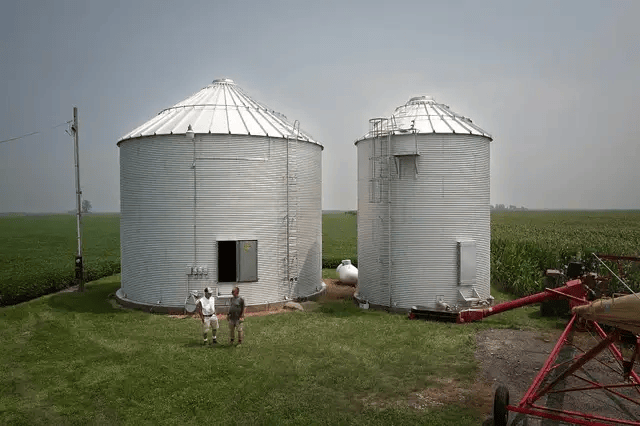
Core Viewpoint - The soybean production in Heilongjiang is experiencing an increase in planting area and stable yield, while the market faces challenges with low opening prices and trade dynamics affecting pricing strategies [4][7][9]. Group 1: Planting Area and Yield - The soybean planting area in Heilongjiang has increased significantly due to factors such as planting profitability, policy subsidies, and crop rotation requirements, with eastern regions seeing a 10% increase and western regions a 7% increase compared to last year [3][4]. - The overall soybean yield is expected to remain stable compared to last year, with reports indicating yields of 400 to 560 jin/mu in various regions [3][4]. Group 2: Cost and Subsidies - The cost of soybean cultivation has decreased, primarily due to a drop in land rental prices, which are now around 11,000 yuan/hectare, a 10% decrease from last year [5][6]. - After subsidies, the effective cost of soybean cultivation in Heilongjiang ranges from 5,500 to 9,239 yuan/hectare, translating to approximately 1.5 to 1.7 yuan/jin for production costs [6]. Group 3: Market Dynamics - The opening price for the new season's soybeans in Heilongjiang has shown a downward trend, with current purchase prices ranging from 1.8 to 2.0 yuan/jin, influenced by low protein content and expectations of increased production [7][9]. - Domestic soybean consumption is stable, with food processing and oil extraction being the primary sectors, while the increase in domestic soybean production is mainly absorbed by the oil extraction sector [8][9]. Group 4: Trade and Pricing - Trade tensions have led to increased tariffs on U.S. soybeans, prompting China to source more soybeans from South America, particularly Brazil, where prices are competitive but do not offer a significant advantage over domestic soybeans [8][9]. - The pricing dynamics for domestic soybeans are influenced by the balance between production increases and market demand, with potential upward pressure on prices if South American imports decrease [9]. Group 5: Industry Operations - The soybean processing industry in China is characterized by a preference for non-GMO soybeans, with processing operations heavily reliant on profit margins, leading to sporadic operational schedules based on market conditions [10][11]. - The trading sector exhibits flexibility in purchasing strategies, with smaller traders facing challenges in adapting to market fluctuations and traditional trading models [11][12].