
智能辅助驾驶

Search documents
2026智驾迎来“价值深化”新一年
Zhong Guo Qi Che Bao Wang· 2026-01-23 09:15
Core Insights - The automotive industry is increasingly focusing on intelligent assisted driving, with companies like BYD investing over 100 billion yuan and forming specialized teams to enhance their capabilities [2] - The shift in the industry is moving from scale and accessibility to user experience, emphasizing the importance of value creation in the competitive landscape [3][12] Investment and Development - BYD has established a team of over 5,000 for assisted driving and aims to deploy its "Tian Shen Zhi Yan" system in over 2.5 million vehicles by December 2025, generating over 150 million kilometers of effective driving data daily [3] - The establishment of new companies, such as the joint venture between BAIC and Horizon Robotics, indicates a growing trend towards collaboration in the intelligent driving sector [2][4] Technological Pathways - Companies are adopting full-stack self-research as a key strategy to deepen their understanding of technology and user needs, with BYD exemplifying this approach through significant investment and team size [3][5] - Open collaboration with third-party solution providers is also becoming a vital strategy, allowing companies to enhance their systems' performance and functionality through shared resources [4][5] User Experience and Market Trends - The concept of "intelligent driving equity" is emerging, indicating a shift towards making advanced driving features accessible in the mid-range vehicle market, particularly in the 100,000 to 150,000 yuan price range [12][14] - User feedback highlights the importance of stability in high-frequency scenarios, ease of use in interaction design, and the need for cost-effective solutions [13][14] Industry Dynamics - Suppliers are transitioning from providing single hardware products to offering integrated software and hardware solutions, becoming deep partners in the development of intelligent driving systems [6][8] - The competitive focus is shifting from merely having intelligent driving capabilities to ensuring their reliability, safety, and user-friendliness in complex driving environments [7][11] Future Outlook - The industry is expected to evolve towards a model where technology is not only usable but also provides a good user experience, ultimately leading to a sustainable business model [14] - As regulations and infrastructure improve, the Chinese intelligent driving industry is poised for high-quality development on a global scale, driven by technology and user experience [14]

佑驾创新获地平线附属公司增持H股,总计为68.8万股
Ju Chao Zi Xun· 2026-01-08 03:51
Core Viewpoint - Horizon Together Holding Ltd. has increased its stake in Youjia Innovation by acquiring a total of 688,200 H-shares, reflecting confidence in the company's long-term business development [2][3] Group 1: Investment Details - Horizon Together, a wholly-owned subsidiary of Horizon Robotics, has made this purchase in the open market [2] - The acquisition is based on the strong collaborative foundation between Horizon Robotics and Youjia Innovation over the years [3] Group 2: Business Collaboration - Youjia Innovation and Horizon Robotics have a deep partnership in the development of intelligent driving solutions and L4 unmanned logistics vehicle solutions [2] - Youjia Innovation's auxiliary driving domain controller products, developed based on Horizon Robotics' processing hardware, have achieved large-scale production and are being utilized by several leading domestic and international passenger and commercial vehicle manufacturers [2]
地平线机器人-W涨近3% 与战略股东欧摩威集团追加投资智驾大陆neueHCT
Zhi Tong Cai Jing· 2026-01-08 03:15
Core Viewpoint - Horizon Robotics-W (09660) has seen a nearly 3% increase in stock price, currently trading at HKD 9.56 with a transaction volume of HKD 563 million, following the announcement of a nearly USD 200 million financing completion by its subsidiary, neueHCT, set for December 31, 2025 [1] Financing and Investment - neueHCT completed nearly USD 200 million in financing, with participation from leading industry capital and market-oriented funds, including Yunfeng Fund, Dacheng, and others, alongside strategic investors like Omnivision Group [1] - This financing follows an earlier round of market-oriented financing in early 2025, which included investments from Hillhouse Capital, CICC Porsche, and Zhejiang Jin控, indicating strong recognition from investment institutions [1] Product Development and Market Position - neueHCT has developed a product matrix consisting of "Star HCT Astra urban intelligent driving assistance" and "Moon HCT Luna high-performance ADAS solutions," leveraging its core technological capabilities [1] - The new generation Star HCT Astra system offers a human-like driving experience tailored for complex urban conditions, aiming to make urban driving assistance accessible for vehicles priced around RMB 100,000 [1] - By 2025, the company has secured over 10 model partnerships, demonstrating significant efficiency in commercial implementation [1] Global Expansion - neueHCT has achieved commercial breakthroughs in overseas markets, conducting product validation in multiple countries and regions, promoting the globalization and accessibility of intelligent driving assistance technology [1]

行者卓驭,做好“智驾合伙人”
汽车商业评论· 2026-01-07 23:06
Core Insights - The article discusses the evolution and growth of the Chinese intelligent driving industry, highlighting key players and their advancements in technology and market presence [3][6][10]. Group 1: Industry Overview - By 2025, the Chinese intelligent driving industry is expected to enter a consolidation phase, with major suppliers transitioning from behind-the-scenes roles to more prominent positions [3]. - Huawei's "QianKun" intelligent driving brand has achieved a leading market share of 27.8% in urban navigation [3]. - The article emphasizes the importance of collaboration and competition among companies to drive technological advancements and establish a global leadership position in intelligent driving [6][10]. Group 2: Company Development - Zhuoyue Technology, founded from a DJI internal project, has developed a comprehensive self-research capability across software and hardware, enabling them to provide robust product delivery to automotive companies [6][8]. - The company has successfully covered nine major clients and 15 brands in the passenger vehicle sector, with annual shipments reaching hundreds of thousands of units and maintaining a 200% compound annual growth rate since 2022 [8][10]. Group 3: Technological Innovations - Zhuoyue made a significant strategic shift to an end-to-end technology route, abandoning traditional rule-based systems to overcome technical challenges in urban navigation [11][13]. - The company has achieved a breakthrough in fuel vehicle intelligence, successfully launching the first mass-produced intelligent fuel vehicle in Q2 2024 [15][17]. - Zhuoyue's innovative use of Qualcomm's SA8775P chip allows for a dual-system architecture that integrates intelligent cockpit and driving assistance, reducing space usage by 52% and overall vehicle costs by approximately 20% [19][20]. Group 4: Strategic Vision - Zhuoyue aims to expand its business beyond passenger vehicles to include commercial vehicles and logistics, addressing industry pain points related to safety and efficiency [24][26]. - The company has a clear strategic focus on core model and solution capabilities, opting not to produce chips, which reflects a deep understanding of the industry's dynamics [26].

佑驾创新(02431)获基石投资者Horizon Together增持68.82万股H股
智通财经网· 2026-01-07 22:33
Core Viewpoint - Horizon Together, a cornerstone investor, has purchased a total of 688,200 shares of Youjia Innovation (02431) in the open market, reflecting confidence in the company's long-term business development [1][2] Group 1: Investment Activity - Horizon Together, fully owned by Horizon Robotics, has made this investment based on a long-standing collaboration with Youjia Innovation and a positive outlook on the company's future [2] - The acquisition of shares is seen as a demonstration of confidence in the company's future prospects and long-term development [2] Group 2: Company Collaboration - Youjia Innovation and Horizon Robotics have a deep collaboration in the development of intelligent driving solutions and L4 unmanned logistics vehicle solutions [1] - The partnership has led to the mass production of auxiliary driving domain controllers based on Horizon Robotics' processing hardware, which are now deployed in various leading passenger and commercial vehicle manufacturers both domestically and internationally [1]
卓驭科技“跨界”:乘用车之外,拓展重卡NOA、无人车等泛自动驾驶
Jing Ji Guan Cha Wang· 2026-01-05 01:00
Core Insights - Zhuoyu Technology celebrated its 10th anniversary in Shenzhen, unveiling a new multimodal end-to-end world model as a "data-driven spatial intelligent mobility foundation" for the future [2] - The company, founded in 2016 and spun off from DJI in 2023, has transitioned to an independent player in the driver assistance solutions market [2] - CEO Shen Shaojie emphasized the shift from a "rule-driven" approach to an end-to-end model, which has improved the company's situation amid financial pressures [2] Technology and Market Position - Zhuoyu's end-to-end approach draws inspiration from Tesla's philosophy, breaking down the VLA into interpretable, modular components, effectively addressing industry challenges like causal reasoning and low-frequency data generation [3] - The company boasts a competitive edge in computational power and sensor optimization, achieving performance comparable to dual Orin X chips while maintaining lower computational requirements [3] - Zhuoyu has successfully implemented L2+ driver assistance using a mid-computational power visual solution, launching the world's first high Qualcomm 8775 integrated cockpit solution, which enhances cost efficiency in the industry [3] Client Base and Industry Strategy - Zhuoyu has secured nine major clients, serving 15 brands and covering over 50 vehicle models in the passenger car sector [3] - The company targets the mass-market passenger vehicle segment, offering affordable driver assistance solutions, which has earned it the nickname "price butcher" [4] - Zhuoyu aims to transition from L2+ to L3 driver assistance, believing that consumer trust in fully developed products will shift pricing logic from BOM cost to value in time savings and attention release [4] Future Expansion and Business Model - The company plans to extend its business beyond passenger vehicles into heavy-duty trucks and unmanned logistics vehicles, indicating a shift towards a more comprehensive mobility technology enterprise [5] - Zhuoyu has initiated a heavy-duty truck highway NOA project to enhance logistics safety and efficiency, collaborating with leading industry players for mass production by mid-2026 [6] - Despite diversifying, Zhuoyu expects that the majority of its revenue will continue to come from passenger vehicles in the near term, with any new ventures being carefully evaluated for resource allocation [6]
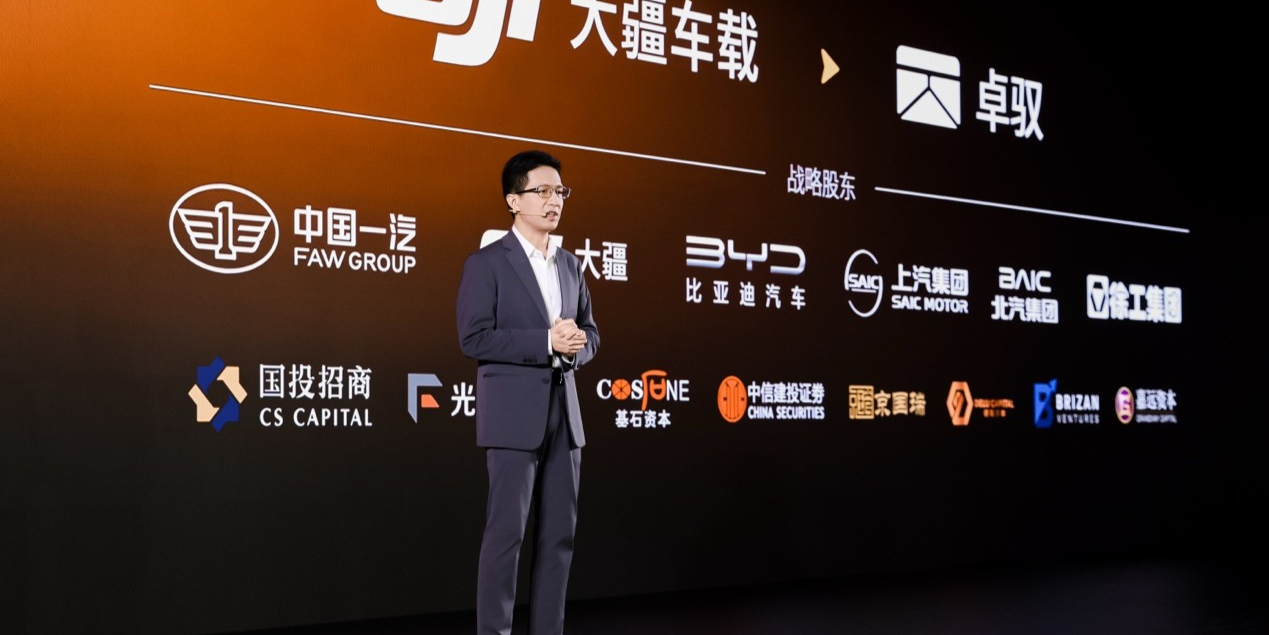
沈劭劼:从辅助驾驶供应服务商转型多元移动智能体生态科技企业
Yang Shi Wang· 2025-12-31 11:05
Core Insights - The event marked the 10th anniversary of Zhuoyu, highlighting its evolution from a DJI subsidiary to an independent entity focused on intelligent mobility solutions [1][3] - CEO Shen Shaojie announced the launch of a new multimodal end-to-end world model, emphasizing the company's transition from a supplier of driver assistance systems to a comprehensive technology enterprise [3][11] Company Development - Zhuoyu was established in 2016 and has expanded its business from passenger vehicle driver assistance to include heavy-duty trucks and unmanned logistics vehicles [3][11] - The company has partnered with nine clients in the passenger vehicle sector, covering 15 brands and achieving mass production for over 50 models [3][5] Technological Advancements - Zhuoyu has shifted its technical approach from rule-based development to an end-to-end technology route, overcoming challenges in urban navigation systems [3][8] - The company has achieved significant breakthroughs, including the first global mass production of a Qualcomm 8775 integrated cockpit solution and advancements in fuel vehicle intelligence [8] Market Strategy - Zhuoyu aims to make intelligent driver assistance accessible for low-cost vehicles, targeting A0-class electric cars priced under 100,000 yuan [5] - The company is focused on creating a competitive edge in the intelligent driver assistance market by ensuring safety and usability at low costs [5][8] Future Outlook - Zhuoyu is expanding its capabilities beyond passenger vehicles, initiating projects for heavy-duty trucks and collaborating with leading commercial vehicle manufacturers for unmanned logistics solutions [11][13] - The company is committed to enhancing its brand and mission, aiming to provide safe and convenient mobility solutions while leading the autonomous mobile robot era [13]
Horizon SuperDrive?|写入《2025 汽车行业影响力年鉴》
Jing Ji Guan Cha Bao· 2025-12-31 07:52
Core Viewpoint - The article discusses the emergence of Horizon SuperDrive as a significant player in the high-level urban assisted driving market, highlighting its role in transitioning from technology validation to mass production and real-world application [1][2][3]. Group 1: Industry Context - The Chinese automotive industry is entering a new development phase as the "14th Five-Year Plan" concludes, with a focus on the evolution of high-level urban assisted driving technology [1]. - High-level urban assisted driving is at a critical stage where technical validation is moving towards mass deployment, but there is still a lack of unified standards and limited companies with mature capabilities [1]. Group 2: Horizon SuperDrive's Role - Horizon SuperDrive offers a comprehensive high-level urban assisted driving solution, allowing automakers to acquire advanced capabilities without starting from scratch, thus reducing systemic risks associated with self-research [2]. - The implementation of Horizon SuperDrive has begun to reflect in mass production, with models like the Xingtu ET5 and Deep Blue L06 entering the delivery phase, marking the first real-world testing of these capabilities [2]. Group 3: Industry Evolution - Horizon SuperDrive represents an evolutionary direction in intelligent assisted driving, transitioning from a heavy asset capability of a few companies to a more accessible engineering capability for a broader range of automakers [2]. - The inclusion of Horizon SuperDrive in the "2025 Automotive Industry Influence Yearbook" underscores its substantial impact in advancing global intelligent assisted driving from capability demonstration to industrial application [3].
临港机器人企业,完成3亿融资!| 融资周报(2025年第45期)
Sou Hu Cai Jing· 2025-12-09 07:32
Financing Overview - A total of 22 financing events occurred in Shanghai this week, with 10 districts involved, and Pudong New District having the highest number of events at 10 [4] - Among the 22 events, 8 disclosed financing amounts, totaling approximately 1.05 billion yuan [4] - This week's financing events decreased by 5 compared to the previous week, which had 27 events [4] Financing Rounds - The majority of financing rounds this week were Series A, with 11 occurrences, followed by 5 angel rounds [6] Notable Financing Events - Sai Shen Pharmaceutical completed a strategic financing round of 53 million USD on December 4, led by Eli Lilly Asia Fund and ARCH Venture Partners, with participation from several other investors [12] - The funds will be used to advance the company's innovative treatment pipeline for central nervous system diseases [13] - Youliqi Robotics secured 300 million yuan in angel financing on December 5, with investments from various funds and listed companies [14] - The financing will support team building and production line expansion for the company, which focuses on humanoid robot development [15] - Bozhi Biotechnology completed over 30 million USD in Series A+ financing on December 1, aimed at accelerating global clinical development of its core product [16][17] - Nullmax completed a multi-million dollar Series C financing on December 6, focusing on smart driving technology [18][20] Industry Focus - Five financing events occurred in the advanced manufacturing sector this week, including one related to smart sensors [21] - The Shanghai Intelligent Sensor Industrial Park was recognized as a pilot park for intellectual property construction, highlighting its strong foundation in IP work and innovation [21] - The park is part of Shanghai's strategic layout for the integrated circuit industry and focuses on MEMS semiconductor technology for various sensor applications [21]

比较研究系列:AI智驾2.0,迈向智能涌现
Ping An Securities· 2025-11-24 12:22
Investment Rating - The report maintains a "Strong Buy" rating for the industry [1] Core Insights - The evolution of intelligent driving has entered the AI 2.0 phase, focusing on scalable capabilities and the ability to autonomously handle extreme edge scenarios, which will further enhance the commercial viability of intelligent driving systems [1] - Major players in the high-level intelligent driving sector are accelerating their entry into the Robotaxi business, leveraging mass-produced vehicles to optimize model training and performance in extreme scenarios [1][79] - The report highlights the importance of diverse real-world data and robust R&D resources as key competitive advantages for players in the AI driving space [81] Summary by Sections 1. Tesla's Software and Hardware Iterations - Tesla's FSD (Full Self-Driving) software has achieved significant milestones, with over 60 billion miles driven cumulatively, showcasing its leading position in intelligent driving [7] - The next-generation AI5 chip is expected to greatly enhance the performance and energy efficiency of Tesla's driving systems [8][9] 2. Development Stages of High-Level Intelligent Driving in China - The industry has transitioned from a rule-based system to a fully data-driven approach, marking the arrival of the AI driving era [15][12] - The current phase emphasizes end-to-end models that utilize extensive data for improved driving performance and user experience [18][19] 3. Technical Architecture: Mainstream Player Directions - The VLA (Vision-Language-Action) model integrates visual, language, and action modalities, enhancing the system's ability to understand and interact with the physical world [27][28] - Huawei's ADS 4.0 emphasizes a scene-driven approach, utilizing cloud simulations to train AI drivers without relying on large language models [49][50] 4. Business Model: Acceleration of Robotaxi Initiatives - The Robotaxi business is seen as a critical avenue for data collection and model optimization, with major players planning to leverage mass-produced vehicles for this purpose [65][66] - The report outlines two main technological routes for Robotaxi operations: the "crossing route" represented by Waymo and the "gradual route" represented by Tesla, each with its own advantages and challenges [67][68] 5. Investment Recommendations - The report recommends investing in companies such as Seres, Horizon Robotics, Great Wall Motors, Li Auto, and Xpeng Motors, which are well-positioned to capitalize on the advancements in AI driving technology [81]



