
保险

Search documents
2026年“亚洲科技变革”峰会:解码创新机遇,驱动商业增长
Di Yi Cai Jing Zi Xun· 2026-02-26 10:15
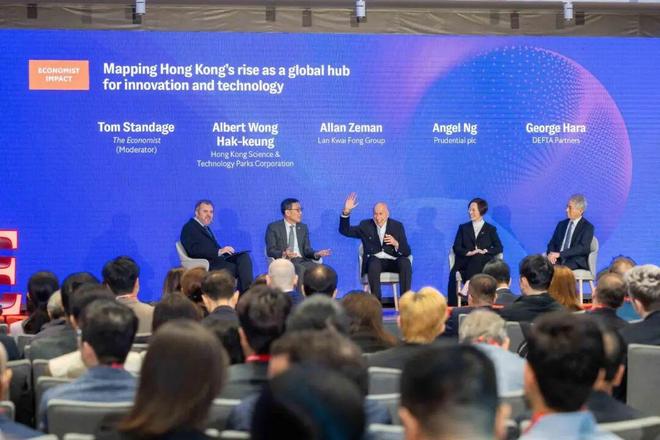
Group 1 - The Economist Impact will host a summit in Hong Kong from March 11 to 12, 2026, gathering over 700 representatives from business and government to explore pathways for corporate prosperity in an era of rapid technological change [1] - The 2026 agenda will focus on the practical applications of artificial intelligence, discussing regulatory differences across Asia, the scaling of autonomous intelligent agents, opportunities within the Greater Bay Area's innovation ecosystem, and the impact of smart mobility technologies on reshaping global supply chains [1] Group 2 - The 2025 Asia Technology Transformation Summit will see over 600 industry and government leaders convene to discuss the transformative impact of technological innovation in the region [3] - Tom Standage, Deputy Editor of The Economist, emphasized the uncertainty in geopolitics, international trade, and financial markets, stating that business leaders have the power to influence their external macro environment through technology application [3] - Confirmed speakers include prominent figures such as Yang Yi from Tuya Smart, James Elwes from HSBC, and Aseem Puri from Unilever, among others [3][4]

港股26日跌1.44% 收报26381.02点
Xin Hua Wang· 2026-02-26 10:08
Market Performance - The Hang Seng Index fell by 384.7 points, a decrease of 1.44%, closing at 26,381.02 points [1] - The H-share Index dropped by 220.46 points, closing at 8,814.29 points, a decline of 2.44% [1] - The Hang Seng Tech Index decreased by 151.17 points, closing at 5,109.33 points, down by 2.87% [1] Blue Chip Stocks - Tencent Holdings decreased by 2.01%, closing at 512 HKD [1] - Hong Kong Exchanges and Clearing rose by 0.78%, closing at 415.4 HKD [1] - China Mobile fell by 0.88%, closing at 78.6 HKD [1] - HSBC Holdings increased by 1.61%, closing at 145 HKD [1] Local Hong Kong Stocks - Cheung Kong Holdings rose by 3.04%, closing at 48.06 HKD [1] - Sun Hung Kai Properties fell by 0.07%, closing at 136.3 HKD [1] - Henderson Land Development decreased by 0.4%, closing at 34.44 HKD [1] Chinese Financial Stocks - Bank of China fell by 0.64%, closing at 4.65 HKD [1] - China Construction Bank decreased by 1.6%, closing at 8 HKD [1] - Industrial and Commercial Bank of China fell by 0.62%, closing at 6.42 HKD [1] - Ping An Insurance dropped by 4.64%, closing at 67.85 HKD [1] - China Life Insurance decreased by 4.1%, closing at 31.38 HKD [1] Oil and Petrochemical Stocks - Sinopec fell by 1.63%, closing at 5.43 HKD [1] - PetroChina decreased by 1.46%, closing at 9.46 HKD [1] - CNOOC dropped by 3.22%, closing at 24.66 HKD [1]






北水动向|北水成交净卖出73.66亿 北水再度抛售芯片股 全天减持中海油(00883)近9亿港元
智通财经网· 2026-02-26 09:59
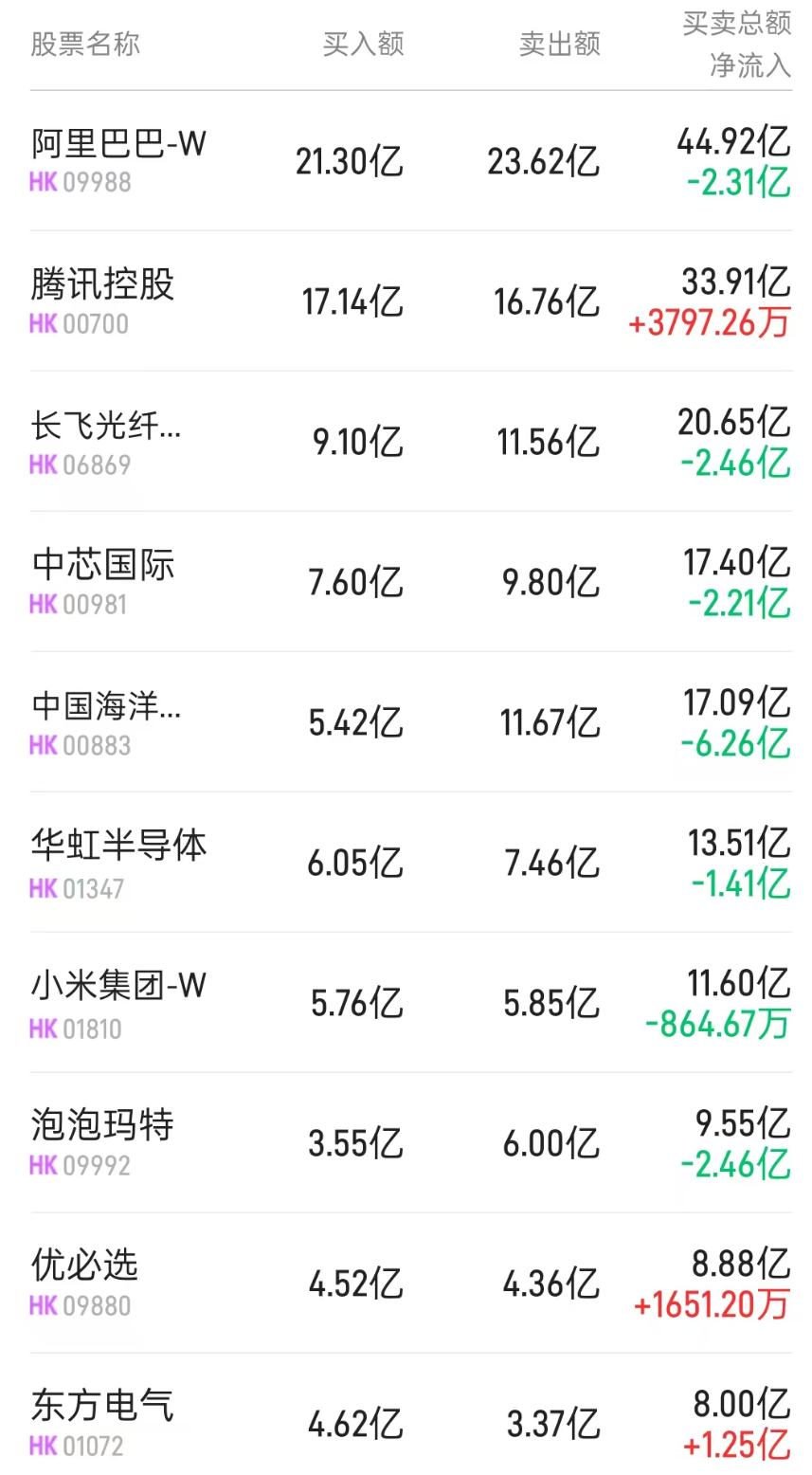
Core Viewpoint - The Hong Kong stock market experienced significant net selling from northbound capital, totaling HKD 73.66 billion, with notable net sell-offs in major stocks like Alibaba and CNOOC [1][2]. Group 1: Northbound Capital Flow - Northbound capital recorded a net sell of HKD 73.66 billion, with HKD 23.11 billion from the Shanghai Stock Connect and HKD 50.55 billion from the Shenzhen Stock Connect [1]. - The stocks with the highest net buying were Meituan (03690), Dongfang Electric (01072), and Xiaomi Group (01810) [1]. - The stocks with the highest net selling included CNOOC (00883), Alibaba (09988), and Changfei Optical Fiber (06869) [1]. Group 2: Individual Stock Performance - Alibaba (09988) had a buy amount of HKD 21.30 billion and a sell amount of HKD 23.62 billion, resulting in a net outflow of HKD 2.31 billion [2]. - CNOOC (00883) faced a net sell of HKD 8.93 billion, influenced by a drop in WTI crude oil prices below USD 65 per barrel and an increase in commercial crude oil inventory [6]. - Xiaomi Group (01810) saw a net buy of HKD 183.5 million, with the CEO emphasizing a focus on core technologies over the next five years [5]. Group 3: Market Reactions and Trends - The semiconductor sector is experiencing a divide due to AI demand, with upstream manufacturers benefiting while downstream PC and mobile manufacturers face cost pressures [5]. - Dongfang Electric (01072) received a net buy of HKD 1.25 billion, linked to the upcoming signing of a power supply commitment by major tech companies [4]. - Meituan (03690) had a net buy of HKD 3.11 billion, indicating strong investor interest [7].



砸新高 | 谈股论金
水皮More· 2026-02-26 09:47
Market Overview - A-shares showed mixed performance with the Shanghai Composite Index down 0.01% closing at 4146.63 points, while the Shenzhen Component Index rose 0.19% to 14503.79 points, and the ChiNext Index fell 0.29% to 3344.98 points [3] - The total trading volume in the Shanghai, Shenzhen, and Beijing markets reached 25.568 billion, an increase of 756 million compared to the previous day [3] Market Manipulation - Significant selling pressure was observed, particularly in the Shanghai Composite Index, which was notably influenced by major sectors including "three oil companies," four major banks, "two liquor companies," five major insurance stocks, and brokerage heavyweights [4] - Despite the selling pressure, the Shenzhen Component Index managed to reach a new high, primarily driven by strong performance from key stocks like Ningde Times, Sunshine Power, BYD, and others [4] Stock Performance - Approximately 2800 stocks declined while around 2400 stocks rose, with a total market turnover of 2.5 trillion, an increase of 800 billion from the previous day, and a net outflow of 47.2 billion from major funds [5] - The strong performance of the Shenzhen Component Index was attributed to the impressive results from Nvidia, which exceeded expectations and positively influenced the AI sector, leading to increased activity in technology stocks [5] Sector Analysis - The insurance sector experienced significant selling pressure, marking seven consecutive days of decline, which is unusual even in a bear market context [6] - The technology hardware sector, including various equipment and components, showed strength, while the real estate sector exhibited a one-day rally, and the AI application sector faced a downturn due to increased competition and lowered industry barriers [6] Hong Kong Market Dynamics - The Hong Kong market saw the Hang Seng Index open about 1% higher but ultimately closed down approximately 1%, with the Hang Seng Tech Index dropping nearly 3% [7] - The decline in Hong Kong stocks was largely driven by significant sell-offs in major internet technology stocks such as Tencent, Alibaba, and others, with a notable outflow of southbound funds exceeding 80 billion [8] Conclusion - Overall, the A-share market remains in a bullish trend, contrasting sharply with the bearish sentiment in the Hong Kong market, creating a rare divergence in market behavior [8]


伯克希尔减持苹果1029万股,新建仓纽约时报投资3.5亿美元
Jing Ji Guan Cha Wang· 2026-02-26 09:42
Core Insights - Berkshire Hathaway's recent focus has been on portfolio adjustments and macroeconomic changes, with significant moves in its holdings reported for Q4 2025 [1] Group 1: Portfolio Adjustments - Berkshire reduced its stake in Apple by approximately 10.29 million shares, a decrease of 4.32% quarter-over-quarter [1] - The company significantly cut its investment in Amazon by 77.24% [1] - In contrast, Berkshire increased its holdings in Chevron and Aflac, and initiated a new position in The New York Times with an investment of about $350 million [1] Group 2: Macroeconomic Context - Recent geopolitical developments, such as progress in U.S.-Iran nuclear talks, have eased some regional risks, impacting the macro environment [1] - International oil prices have faced pressure amid these developments [1] - The AI sector has gained momentum, highlighted by a partnership between Nvidia and Meta, which may indirectly affect Berkshire's technology holdings [1] Group 3: Stock Performance - Berkshire's stock price exhibited a downward trend from February 17 to February 24, 2026, falling from $754,910 to $734,149.43, representing a decline of 2.30% [2] - The stock dropped by 0.92% on the day the holdings report was released (February 18) and continued to decline by 0.82% on February 24 due to broader market pressures [2] - Compared to the performance of major U.S. indices, Berkshire underperformed, with the Dow Jones falling by 0.88% and the Nasdaq rising by 0.61% during the same period [2]



平安人寿:董事长杨铮因到龄退休辞任
Cai Jing Wang· 2026-02-26 09:28
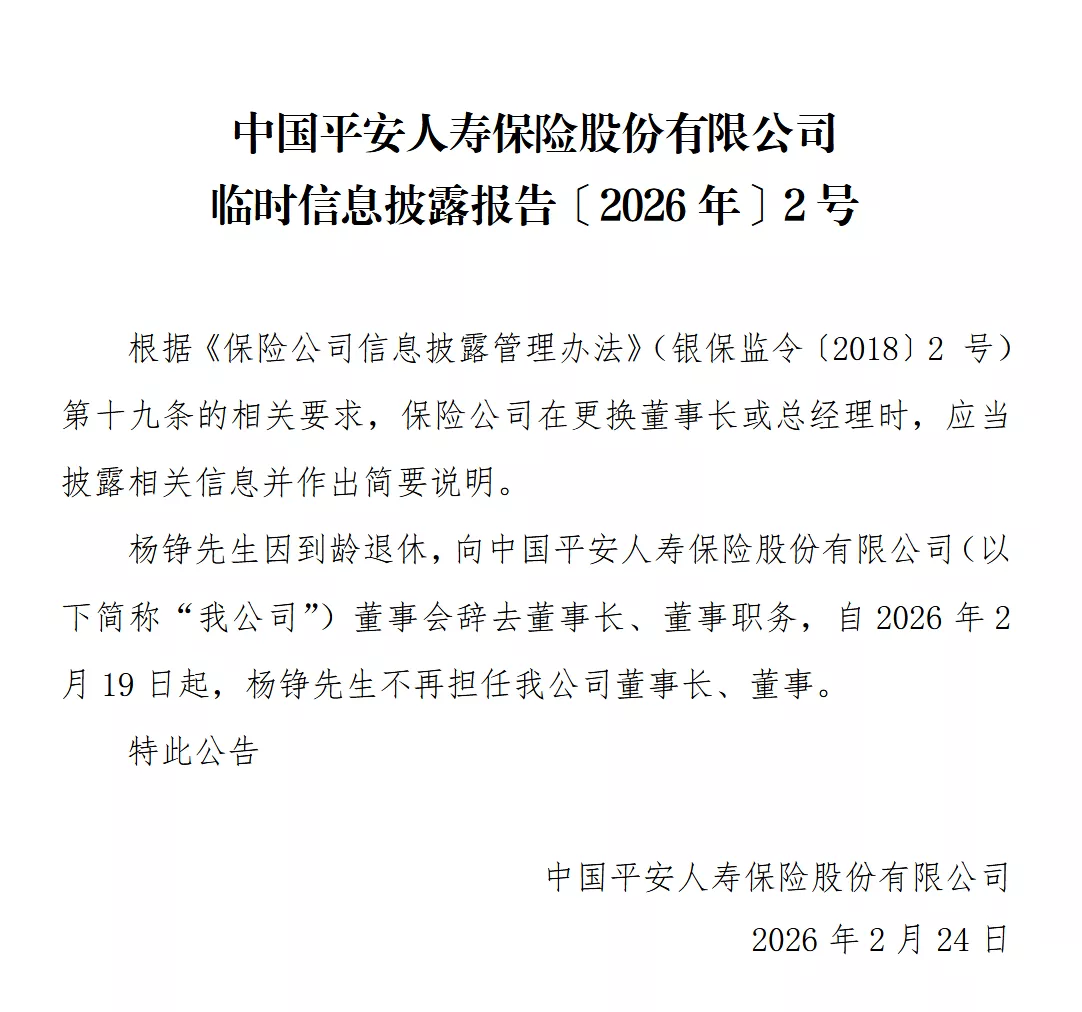
近日,平安人寿发布公告称,杨铮因到龄退休,向该公司董事会辞去董事长、董事职务,自2026年2月19日起,杨铮不再担任公司董事长、董事。 (平安人寿) ...
2025宠物保险保费规模预计突破30亿元,却为何“叫座”难“叫好”?
Sou Hu Cai Jing· 2026-02-26 09:20
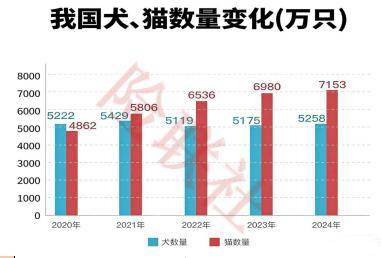
Core Insights - The pet insurance industry in China is experiencing rapid growth, with premium income expected to exceed 3 billion yuan in 2025, marking a year-on-year increase of 76.47% and achieving scale doubling for five consecutive years [1][6][21] - Despite the promising growth figures, the industry faces significant structural challenges, including a penetration rate of less than 3%, high product homogeneity, frequent claims disputes, lack of medical risk control, and an unclear profit model [1][22] Industry Overview - 2025 is identified as the year of scale for the pet insurance industry in China, transitioning from early market cultivation to a phase of rapid growth [2] - The number of urban pet dogs and cats is projected to surpass 126 million, with the pet consumption market reaching 312.6 billion yuan [5] Growth Metrics - The pet insurance premium was only 50 million yuan in 2020, increasing to 1.7 billion yuan in 2024, and is expected to exceed 3 billion yuan in 2025 [6] - Ant Group's pet insurance platform is expected to handle over 2 million claims in 2025, while ZhongAn Insurance has insured over 5.6 million pets and processed over 1 million claims [8] Competitive Landscape - The market is characterized by a three-way competition among internet insurance companies, traditional insurers, and pet medical chains, with online channels dominating customer acquisition [9] - ZhongAn Insurance leads the market with a premium income of 563 million yuan in the first half of 2025, showing a year-on-year growth of over 51.3% [9] Consumer Demographics - The primary consumers of pet insurance are young individuals, with over 60% of pet owners being born in the 1990s and 1995s, and 75% holding a bachelor's degree or higher [10] Product and Penetration Issues - The industry suffers from a significant mismatch between product supply and user demand, with a penetration rate hovering between 1.2% and 3%, far below levels in developed markets [11][12] - There are approximately 90 pet insurance products available, but they are highly similar, primarily offering basic medical coverage with limited annual coverage and high exclusions [13] Claims and Risk Control Challenges - Claims processing is a major pain point, with complaints about vague exclusion clauses, frequent changes in designated hospitals, and lengthy processing times averaging over 15 working days [18][20] - The lack of effective medical risk control contributes to high claim costs, with over 20% of additional costs arising from non-standard diagnoses and user fraud [21] Profitability Concerns - The industry faces a dilemma of high claim rates, high customer acquisition costs, and high operational costs, leading to a comprehensive cost ratio exceeding 100% for most companies [21] - The growth of the pet insurance market, while promising, is overshadowed by underlying structural issues that need to be addressed for sustainable development [22]

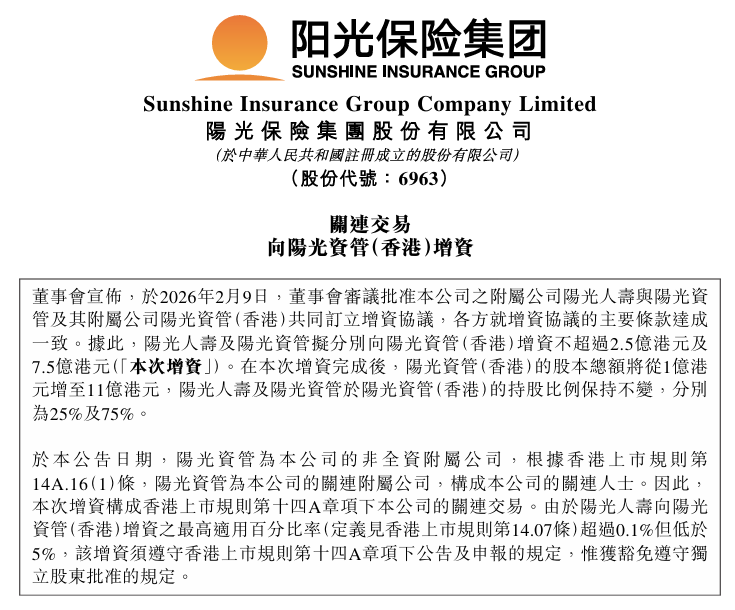
阳光保险全球化布局加速!旗下寿险、资管两大子公司联袂向阳光资管(香港)增资10亿港元
Xin Lang Cai Jing· 2026-02-26 09:13
Core Viewpoint - Sunshine Insurance is accelerating its global layout by increasing capital in Sunshine Asset Management (Hong Kong) by 1 billion HKD, highlighting the importance of global asset allocation for insurance funds amid increasing uncertainty in global capital markets [1][11]. Group 1: Capital Increase Details - Sunshine Life and Sunshine Asset Management plan to invest 250 million HKD and 750 million HKD respectively in Sunshine Asset Management (Hong Kong), raising its total capital to 1.1 billion HKD [4][12]. - The capital increase is priced at 1 HKD per share, and the ownership structure will remain unchanged, with Sunshine Life holding 25% and Sunshine Asset Management holding 75% [4][14]. Group 2: Business Context and Necessity - The announcement emphasizes that global asset allocation and institutional globalization are essential for the professional and international development of China's insurance asset management industry [1][6]. - The necessity for this capital increase is attributed to four factors: alignment with global trends in insurance asset management, meeting the internal demands of China's rapidly developing insurance industry, reducing single market risk exposure, and proactively addressing challenges in the era of globalization and large-scale asset management [4][14]. Group 3: Financial Performance and Market Trends - Sunshine Asset Management (Hong Kong) has faced financial pressure, reporting total assets of approximately 42.28 million HKD and net assets of about 34.68 million HKD as of December 31, 2025, with losses reported for three consecutive years [5][15]. - The insurance asset management industry is witnessing a significant trend towards global asset allocation, with 70% of insurance capital targeting H-shares and participation in seven Hong Kong IPO cornerstone investments in early 2026 [1][6]. Group 4: Domestic Market Developments - As of the end of 2025, the total balance of insurance funds reached 38.48 trillion CNY, with stock investment balance surpassing 3.51 trillion CNY, marking a historic high of 10.12% of total assets [8][18]. - The confidence index for equity investment among banking and insurance institutions has increased, indicating a collective optimism towards A-share assets in 2026 [8][18]. Group 5: Regulatory Environment - The insurance asset management industry is supported by a multi-layered regulatory framework, with recent regulations aimed at adjusting risk factors for long-term holdings of quality stocks and establishing unified disclosure rules for asset management products [10][20].
市场分析:通信电子行业领涨,A股震荡整固
Zhongyuan Securities· 2026-02-26 09:10
Investment Rating - The industry is rated as "stronger than the market," indicating an expected increase of over 10% in the industry index relative to the CSI 300 index over the next six months [16]. Core Insights - The A-share market experienced slight fluctuations with a high opening followed by a retreat, finding support around 4127 points. Key sectors such as electronic components, communication equipment, power supply equipment, and grid equipment performed well, while sectors like film and television, tourism retail, insurance, and real estate lagged behind [3][4][8]. - The average price-to-earnings ratios for the Shanghai Composite Index and the ChiNext Index are 17.04 times and 53.74 times, respectively, indicating a suitable environment for medium to long-term investments [4][15]. - The total trading volume on the two exchanges reached 25,568 billion, above the median of the past three years, suggesting a healthy trading environment [4][15]. - There is a notable inflow of overseas mutual funds into A-shares, reaching a multi-month high, which enhances the attractiveness of Chinese assets for global allocation [4][15]. - The market is expected to maintain a slight upward trend, with a focus on sectors such as communication equipment, electronic components, grid equipment, and general equipment for short-term investment opportunities [4][15]. Summary by Sections A-share Market Overview - On February 26, the A-share market faced resistance after a high opening, with the Shanghai Composite Index closing at 4146.63 points, down 0.01%. The Shenzhen Component Index closed at 14,503.79 points, up 0.19% [8][9]. - Over 50% of stocks declined, with electronic components, special steel, wind power equipment, communication equipment, and power supply equipment showing the highest gains [8][10]. Future Market Outlook and Investment Recommendations - The market is expected to experience a broad fluctuation with structural differentiation, with the Shanghai Composite Index likely to maintain a slight upward trend [4][15]. - Investors are advised to closely monitor macroeconomic data, changes in overseas liquidity, and policy developments, with a short-term focus on investment opportunities in communication equipment, electronic components, and grid equipment [4][15].
Gjensidige Forsikring (OTCPK:GJNS.Y) 2026 Capital Markets Day Transcript
2026-02-26 09:02
Gjensidige Forsikring 2026 Capital Markets Day Summary Company Overview - **Company**: Gjensidige Forsikring (OTCPK:GJNS.Y) - **Event**: 2026 Capital Markets Day - **Date**: February 26, 2026 Key Industry Insights - **Nordic Non-Life Insurance Market**: The market is influenced by demographic changes, technological advancements, and climate change, which are expected to drive demand for personal, health, and pension-related solutions [7][8] - **Customer Expectations**: Nordic customers expect seamless digital interactions, which necessitates efficient processes across pricing, distribution, and claims [9] Core Company Goals and Strategies - **Ambitions through 2028**: Focus on operational excellence, disciplined capital management, and profitable growth [3][4] - **Financial Targets for 2026**: - Combined ratio below 82% - Cost ratio around 13% - Return on equity above 24% - Solvency ratio between 140% and 190% - Insurance service result exceeding NOK 7.5 billion and DKK 750 million in Denmark [17] Operational Highlights - **Growth and Efficiency**: Strong revenue growth driven by pricing discipline and operational efficiency, with a 31% increase in distribution efficiency since 2023 [40] - **Customer Retention**: Retention rates remain high at around 90% in Norway, despite necessary price increases [41] - **Technological Advancements**: - 67% of claims processing is automated, leading to reduced manual handling and improved customer experience [24] - AI and machine learning are integrated into pricing, risk assessment, and claims handling, enhancing efficiency and accuracy [11][33] Strategic Priorities 1. **Customer Empathy**: Focus on personalized customer interactions and damage prevention to strengthen trust and relationships [12] 2. **Resilience**: Enhance underwriting precision and risk models to absorb shocks from geopolitical tensions and economic volatility [14] 3. **Profitable Growth**: Expand in home insurance, pension, and health sectors, leveraging existing capabilities and strong brand recognition [15][22] Technology as a Key Enabler - **IT Infrastructure**: Simplification of IT systems and leveraging shared platforms to enhance operational efficiency [27] - **Data Utilization**: A group-wide data platform provides real-time data access, supporting personalized customer interactions and operational decisions [31] - **AI Integration**: Continuous investment in AI to improve customer service, claims processing, and operational efficiency [33][37] Market Position and Competitive Advantage - **Strong Brand and Customer Loyalty**: Gjensidige is recognized as one of the most trusted brands in the Nordic markets, which aids in customer acquisition and retention [10] - **Cross-Selling Opportunities**: Integrated offerings across various insurance products enhance customer value and loyalty [10][22] Future Outlook - **Growth Opportunities**: Focus on expanding market share in the mobility, property, and life/health insurance sectors, particularly through new technology and customer-centric approaches [39][47] - **Sustainability Commitment**: Aligning with the Paris Agreement and focusing on sustainable claims handling to reduce environmental impact [16] Conclusion - **Positioning for the Future**: Gjensidige is well-positioned to capitalize on emerging trends in the insurance market, leveraging technology, strong customer relationships, and operational efficiencies to drive growth and profitability [10][57]