
科技服务

Search documents
10万美元H-1B签证费?黄仁勋:我家当年根本掏不出
财联社· 2025-10-09 03:12
Core Viewpoint - The article discusses the impact of recent changes in U.S. immigration policy on the technology sector, particularly focusing on NVIDIA's CEO Jensen Huang's comments regarding the H-1B visa program and its implications for foreign talent in the industry [4][6]. Group 1: Immigration Policy Changes - Jensen Huang criticized the recent increase in fees for H-1B visa applications to $100,000, which previously were only a few thousand dollars [4]. - The U.S. currently has an annual cap of 85,000 new H-1B visas, with major companies like Amazon, Tata Consultancy Services, Microsoft, Meta, and Apple being the largest recipients [4][5]. Group 2: Impact on NVIDIA and the Tech Industry - NVIDIA currently sponsors 1,400 H-1B visa holders and plans to continue covering the costs for its immigrant employees [7]. - Huang emphasized the importance of immigration in achieving the "American Dream," stating that opportunities in the U.S. have significantly changed the lives of many, including his own family [6][8].








港股开盘 | 恒指高开0.12% 恒生银行(00011)涨近15% 汇丰建议将恒生银行私有化
智通财经网· 2025-10-09 01:41
Group 1 - The Hang Seng Index opened up 0.12%, and the Hang Seng Tech Index rose by 0.41%, with New Oriental, Meituan, and JD Group all increasing by over 1%. Hang Seng Bank surged nearly 15% following HSBC's suggestion to privatize the bank [1] - Guotai Junan Securities noted that the Federal Reserve's increasingly dovish stance is likely to improve overseas liquidity, contributing to the recent rise in Hong Kong stocks despite earnings downgrades in August and September. The firm raised its 2025 target for the Hang Seng Index to 29,000 points based on a weighted risk premium assessment [1] - Zheshang International observed that the Hong Kong stock market has shown a strong upward trend over the past five months, although the overall fundamentals remain weak. The firm maintains a cautiously optimistic outlook for the market, particularly favoring sectors like automobiles, new consumption, innovative pharmaceuticals, and technology that are expected to benefit from policy support [1] Group 2 - According to CMB International, the Hong Kong stock market continued its upward trend in September, driven by the resumption of US-China negotiations and expectations of overseas interest rate cuts. The technology sector's rotation has also provided significant support to the market [2] - The external environment remains favorable with the resumption of US-China trade talks, which has led to increased market expectations regarding progress on key issues such as tariff reductions and export controls. However, the market may enter a "quiet season" due to the National Day and Mid-Autumn Festival holidays, along with uncertainties surrounding the US government's short-term financing bill [2] - There are still divergences in market expectations regarding the timing and extent of potential interest rate cuts by the Federal Reserve, which may lead to market volatility in the short term [2]

“流量”变“留量”“网红”变“长红” 国庆中秋假期激活多元文旅消费
Shang Hai Zheng Quan Bao· 2025-10-08 17:55
Core Insights - The article highlights the transformation of tourism consumption from mere "check-in" experiences to "deep cultural experiences," driven by emotional value and creative engagement [1][2] Group 1: Tourism Consumption Trends - During the National Day and Mid-Autumn Festival holiday, key retail and catering enterprises in China saw a sales increase of 2.7% year-on-year [1] - Foot traffic and sales in 78 monitored pedestrian streets increased by 8.8% and 6.0% year-on-year, respectively [1] - In Jingdezhen, the unique marketing approach of the "Chicken Chop Guy" led to a 15% year-on-year increase in travel bookings, with 50% of the visitors being aged 20 to 30 [2] Group 2: Cultural and Technological Integration - The integration of "culture and tourism" through various models such as "culture + performance," "culture + technology," and "culture + food" is creating diverse consumption scenarios [3] - In Beijing, 2,497 commercial performances attracted approximately 670,000 attendees, generating ticket sales of about 218 million yuan, a year-on-year increase of approximately 118% [3] - The use of technology in tourism, such as AI guides and AR interactions, is fostering new business models and enhancing traditional celebrations [3] Group 3: Policy and Market Dynamics - The outbound and inbound tourism markets are experiencing significant activity, with a notable increase in hotel bookings in countries like Japan, Thailand, and Vietnam [5] - Domestic cities are actively distributing consumption vouchers to stimulate spending, with Haikou issuing 13.5 million yuan in vouchers, primarily for tourism [5] - The issuance of consumption vouchers is aimed at boosting various sectors, including dining, accommodation, and entertainment, thereby enhancing overall consumer engagement [5]
华兴源创两股东拟合计减持不超400万股,占总股本不超0.90%
Xin Lang Zheng Quan· 2025-10-08 08:20
减持方式上,若通过集中竞价交易,在任意连续90个自然日内减持股份的总数不超过公司股份总数的 1%;若通过大宗交易方式减持,在任意连续90个自然日内减持股份的总数不超过公司股份总数的2%。 若公司在减持计划实施期间发生派发现金红利、送股、转增股本等股本变动、除权除息事项,减持数量 也将相应调整。 近日,苏州华兴源创科技股份有限公司发布股东减持股份计划公告。公告显示,公司股东苏州源客企业 管理合伙企业(有限合伙)与苏州源奋企业管理合伙企业(有限合伙)因自身资金需求,计划减持公司 股份。 截至公告披露日,苏州源客与苏州源奋各持有公司股份3198.1万股,各占公司总股本的7.18% 。二者均 为公司员工持股平台,所持股份为公司首次公开发行前取得,已于2022年7月22日起上市流通。 2025年9月30日,公司收到苏州源客、苏州源奋出具的《关于减持公司股份计划的告知函》。两股东计 划自公告披露之日起15个交易日后的3个月内,即2025年10月30日至2026年1月29日,通过集中竞价交 易、大宗交易方式减持其所持有的公司股份数量合计不超过400万股,占公司总股本的比例不超过 0.90%。其中,苏州源客与苏州源奋拟减持股 ...

美国这次输定了?特朗普一声令下,帮了中国一个大忙
Sou Hu Cai Jing· 2025-10-08 07:58
Core Insights - The recent increase in H-1B visa fees to $100,000 has created a talent crisis for U.S. tech companies, leading to a backlash from the industry and foreign workers, particularly from India [1][4][9] - In contrast, China's introduction of the K visa aims to attract global tech talent with lower barriers and attractive benefits, positioning itself as a favorable destination for skilled workers [1][10][12] Group 1: U.S. Policy Impact - The H-1B visa fee hike is expected to cost U.S. tech companies an additional $14 billion annually, disproportionately affecting small and medium-sized enterprises [8] - Major tech firms like Microsoft and Amazon are responding by advising employees against leaving the country and arranging return flights for overseas engineers [6][8] - The new policy has led to a perception among global tech talent that the U.S. is becoming an "untouchable" destination for employment [9] Group 2: China's K Visa Initiative - The K visa program, effective from March 2025, targets tech talent under 35, offering a streamlined application process without employer sponsorship and quick approvals within 15 days [9][10] - The program includes benefits such as housing subsidies, educational support for children, and research funding, making it attractive for international talent [9][10] - Following the launch of the K visa, applications surged by 40%, and the AI sector in China is experiencing an annual growth rate exceeding 25% [13] Group 3: Global Talent Dynamics - The shift in visa policies is contributing to a transition from a U.S.-centric tech landscape to a more multipolar global tech environment [15][18] - China's open policies are not only attracting talent but also fostering international tech collaborations, exemplified by projects like the Sino-European semiconductor initiative [12][16] - The overall trend indicates that future technological competition will hinge on how countries facilitate talent development rather than solely on technological advancements [16][18]
禾川科技连亏1年半 2022年上市募8.9亿元
Zhong Guo Jing Ji Wang· 2025-10-07 01:29
中国经济网北京10月7日讯 禾川科技(688320.SH)近日披露2025年半年度报告。报告期内,该公司实 现营业收入50,855.44万元,同比增长5.32%;实现归属于上市公司股东的净利润-3,816.23万元,上年同 期为-2,919.47万元;实现归属于上市公司股东的扣除非经常性损益的净利润-5,743.52万元,上年同期 为-3,312.22万元;经营活动产生的现金流量净额为3,685.19万元,上年同期为-5,960.65万元。 禾川科技首次公开发行股票募集资金总额为8.93亿元,募集资金净额为8.07亿元。该公司最终募集 资金净额比原计划多525.56万元。禾川科技于2022年4月25日披露的招股说明书显示,该公司拟募集资 金8.01亿元,分别用于数字化工厂项目、杭州研究院项目、营销服务网络建设项目、补充流动资金。 禾川科技首次公开发行股票的发行费用总额为8690.09万元,其中,保荐及承销费用5553.88万元。 (责任编辑:蔡情) 2024年,禾川科技实现营业收入81,066.87万元,同比下降27.39%;实现归属于母公司所有者的净 利润为-16,509.44万元,上年为5,355.53万 ...

恒生指数早盘跌0.61% 贵金属板块逆市上涨
Zhi Tong Cai Jing· 2025-10-06 04:08
Group 1 - The Hang Seng Index fell by 0.61%, down 164 points, closing at 26,976 points, while the Hang Seng Tech Index dropped by 1.2% [1] - International gold prices reached a new historical high, with the precious metals sector showing strong gains. China Silver Group (00815) surged over 20%, and Zijin Mining International (02259) rose more than 5% [1] - Xinjiang Xinxin Mining (03833) increased by over 12%, with a cumulative rise of over 300% this year, and plans to issue A-shares [2] - Bitcoin surpassed $125,000, setting a new historical high, leading to a collective rise in cryptocurrency-related stocks. OK Blockchain (01499) rose over 14%, and Boya Interactive (00434) increased by over 10% [2] - Hesai Technology (02525) rose over 4%, marking the production of its one millionth LiDAR unit by the end of September [3] - Beijing University Blue Sky Universe (08095) surged over 58% as its subsidiary JBD partnered with AMAT and Thunderbird Innovation to enhance AR glasses display quality [4] - Yunfeng Financial (00376) increased by over 7%, collaborating with Anthea to explore blockchain-based insurance products [5] - Dingdang Health (09886) soared by 26%, as the company continues to expand its innovative drug portfolio, recently launching multiple new drugs [6] - Shuangdeng Co., Ltd. (06960) rose over 9%, driven by increased energy demand for AIDC, being a major supplier for Alibaba's data center energy storage [7] - Hua Hong Semiconductor (01347) increased by over 5%, achieving an eight-day consecutive rise, with institutions noting advanced manufacturing capacity as a scarce resource [8] Group 2 - Gaming stocks experienced a significant decline, with Macau's September gambling revenue growing by 6%, which was below expectations, and further impacted by a typhoon during the Golden Week. New World Development (00200) fell by 5.4%, and MGM China (02282) dropped by 4.45% [8]
从假日中国看经济发展活力
Xin Hua Wang· 2025-10-06 03:10
Economic Resilience and Growth - The holiday economy during the National Day and Mid-Autumn Festival showcases the strong resilience and vitality of China's economy, reflecting confidence in high-quality development [1] - The first half of the holiday saw a record high in cross-regional personnel flow, with approximately 1.243 billion people traveling, averaging over 310 million daily [5][9] Cultural and Tourism Integration - Cultural activities and tourism are intertwined, with over 12,000 cultural events held nationwide during the holiday, enhancing consumer experiences and meeting diverse demands [3] - The integration of culture and tourism is evident in various locations, such as the vibrant atmosphere at the Beijing National Museum and local cultural events in cities like Tangshan and Guizhou [2][3] Urban-Rural Economic Linkage - The holiday economy reflects the potential of urban-rural consumption linkage, with significant increases in visitor numbers to rural areas and traditional markets [6] - Popular tourist destinations include county-level cities like Jiuzhaigou and Buerjin, with some local businesses experiencing over 300% increase in foot traffic [6] Policy Support and Market Activation - The government has implemented policies to stimulate domestic consumption, including the issuance of 690 billion yuan in special bonds to support consumer goods [9][10] - Various local initiatives, such as consumption vouchers and credit-based travel options, have been introduced to enhance the convenience and attractiveness of travel [10] Technological Integration in Tourism - The use of technology in tourism is on the rise, with AI-driven platforms and interactive experiences enhancing visitor engagement and satisfaction [9][10] - Innovations like the "Starfire Companion Tour" AI guide and immersive 3D projections are attracting both domestic and international tourists [10]
港股低开,恒生科技跌超1%,小鹏汽车跌超4%,紫金矿业涨超3%
Hua Er Jie Jian Wen· 2025-10-06 02:01
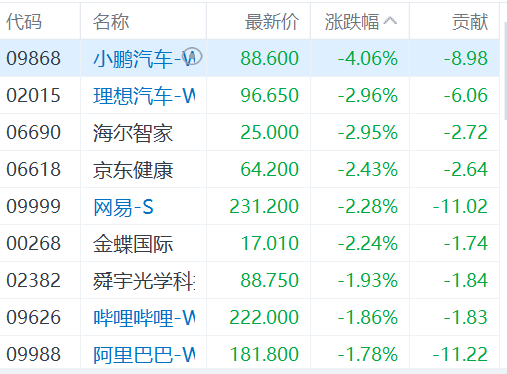
Market Overview - The Hong Kong stock market opened lower on October 6, with the Hang Seng Index down 0.5% and the Hang Seng Tech Index down 1.12% [1] - The technology sector experienced a general decline, with Alibaba down 1.8%, Baidu down 1.4%, and Xiaomi down 0.9% [2] Company Performance - Notable declines in specific companies include: - Xpeng Motors down 4.06% to HKD 88.600 - Li Auto down 2.96% to HKD 96.650 - Haier Smart Home down 2.95% to HKD 25.000 - JD Health down 2.43% to HKD 64.200 - NetEase down 2.28% to HKD 231.200 - Kingdee International down 2.24% to HKD 17.010 - Sunny Optical down 1.93% to HKD 88.750 - Alibaba down 1.78% to HKD 181.800 [3] Semiconductor Sector - The semiconductor sector saw initial gains followed by declines, with Hua Hong Semiconductor rising over 2% before turning negative, and SMIC dropping over 3% [3] - Goldman Sachs raised the target prices for SMIC and Hua Hong Semiconductor to HKD 117, citing opportunities from China's expanding AI ecosystem [4] New Energy Vehicles - The new energy vehicle sector remained sluggish, with Li Auto down over 3% and Xpeng Motors down over 4% [6] Precious Metals - The precious metals sector saw collective gains, with China Silver Group rising over 11%, and other companies like Datang Gold and Shandong Gold also experiencing increases. Zijin Mining opened high and rose over 3% [8] - Concerns over the U.S. fiscal outlook and dollar value have led to a popular "devaluation trade," boosting gold and Bitcoin prices to historical highs [8]



高淳发布“先使用后付费”实施体系
Nan Jing Ri Bao· 2025-10-06 01:55
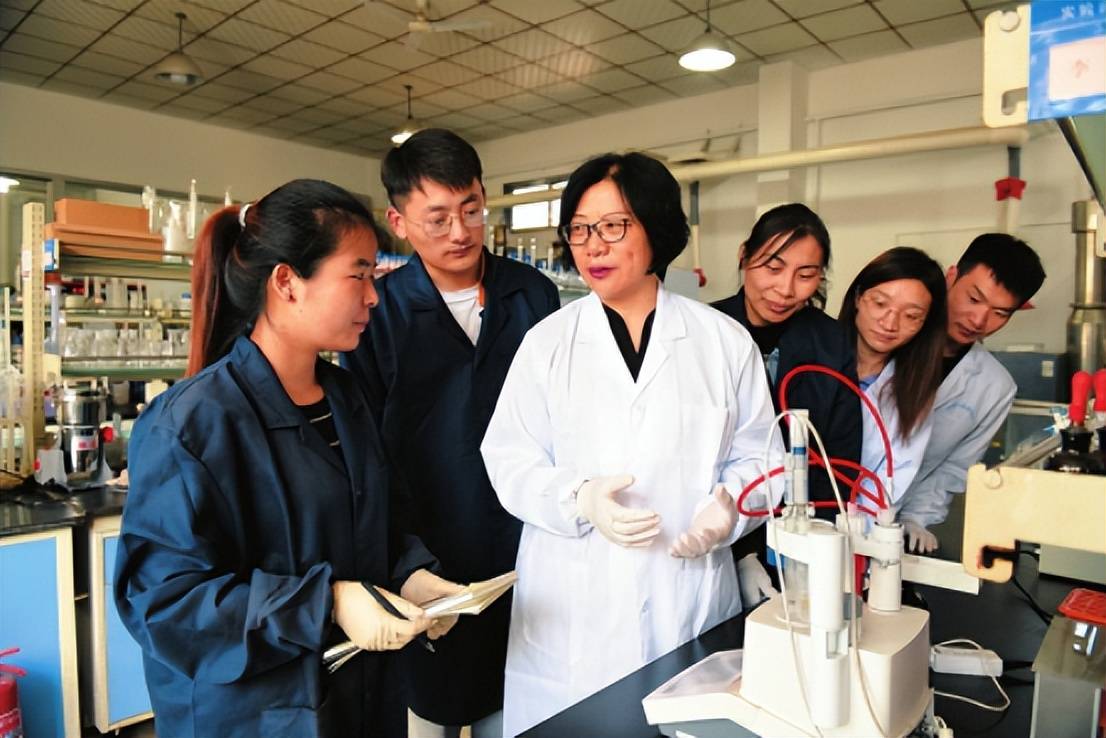
Core Points - The "pay after use" model for technology achievements has been launched in Gaochun District, Nanjing, allowing enterprises to use technology results without upfront costs [1][2] - This initiative aims to address the challenges of "universities being hesitant to share and enterprises being reluctant to invest" [2] Group 1: Implementation Framework - Gaochun has established a comprehensive implementation system consisting of five components: "method first, agreement promotion, policy incentives, platform support, and financial protection" [1] - A trial implementation method for the "pay after use" model has been developed, and a joint technology transfer center has been established with four universities and research institutions [2] Group 2: Insurance and Risk Management - A specialized insurance product named "Chun Ke Bao" has been launched by China People's Insurance Company to cover losses related to technology transfer costs, patent infringement, and patent licensing credibility [2] - This insurance aims to provide comprehensive protection for the "pay after use" model, enhancing confidence among enterprises [2] Group 3: Benefits and Future Directions - The "pay after use" model allows enterprises to validate technology before committing financially, reducing barriers and trial costs for accessing technology [2] - Gaochun District plans to further enhance the technology transfer mechanism, focusing on industry innovation needs and addressing existing bottlenecks [2]