
医美

Search documents
玻尿酸龙头炮轰胶原神话!医美三巨头“成分大战”背后:业绩集体失速,概念炒作退潮
Hua Xia Shi Bao· 2025-05-30 09:07
Core Viewpoint - The recent controversy surrounding hyaluronic acid and recombinant collagen products has led to significant scrutiny and volatility for leading companies in the medical beauty biotechnology sector, including Huaxi Biological, Juzhi Biological, and Jinbo Biological [2][11]. Group 1: Controversy and Market Reactions - Huaxi Biological publicly criticized brokerage reports for promoting the "hyaluronic acid is outdated" narrative, suggesting that the recombinant collagen concept is being overly hyped [3][11]. - Juzhi Biological faced public backlash due to a report indicating that its product "Kefumei" contained only 0.0177% recombinant collagen, below the legal threshold of 0.1% [4][11]. - Jinbo Biological's stock price was affected by the overall negative sentiment in the collagen sector, experiencing a significant drop of 17.23% from its peak [5][7]. Group 2: Financial Performance - Huaxi Biological reported its worst performance since going public in 2024, with revenue of 5.371 billion yuan, a year-on-year decrease of 11.61%, and a net profit of 174 million yuan, down 70.59% [9][10]. - Juzhi Biological achieved a revenue of 5.539 billion yuan in 2024, a year-on-year growth of 57.2%, but its core product's growth rate has been declining for four consecutive years [9][10]. - Jinbo Biological reported a revenue of 1.443 billion yuan in 2024, a year-on-year increase of 84.92%, but its growth rate has also shown signs of slowing down [10]. Group 3: Industry Dynamics - The ongoing "ingredient dispute" highlights the competition between hyaluronic acid and recombinant collagen technologies, with Huaxi Biological emphasizing the scientific value of hyaluronic acid [11][13]. - The controversy may intensify competition in technology development, market promotion, and brand building within the medical beauty industry, pushing for more emphasis on product efficacy and scientific validation [13].


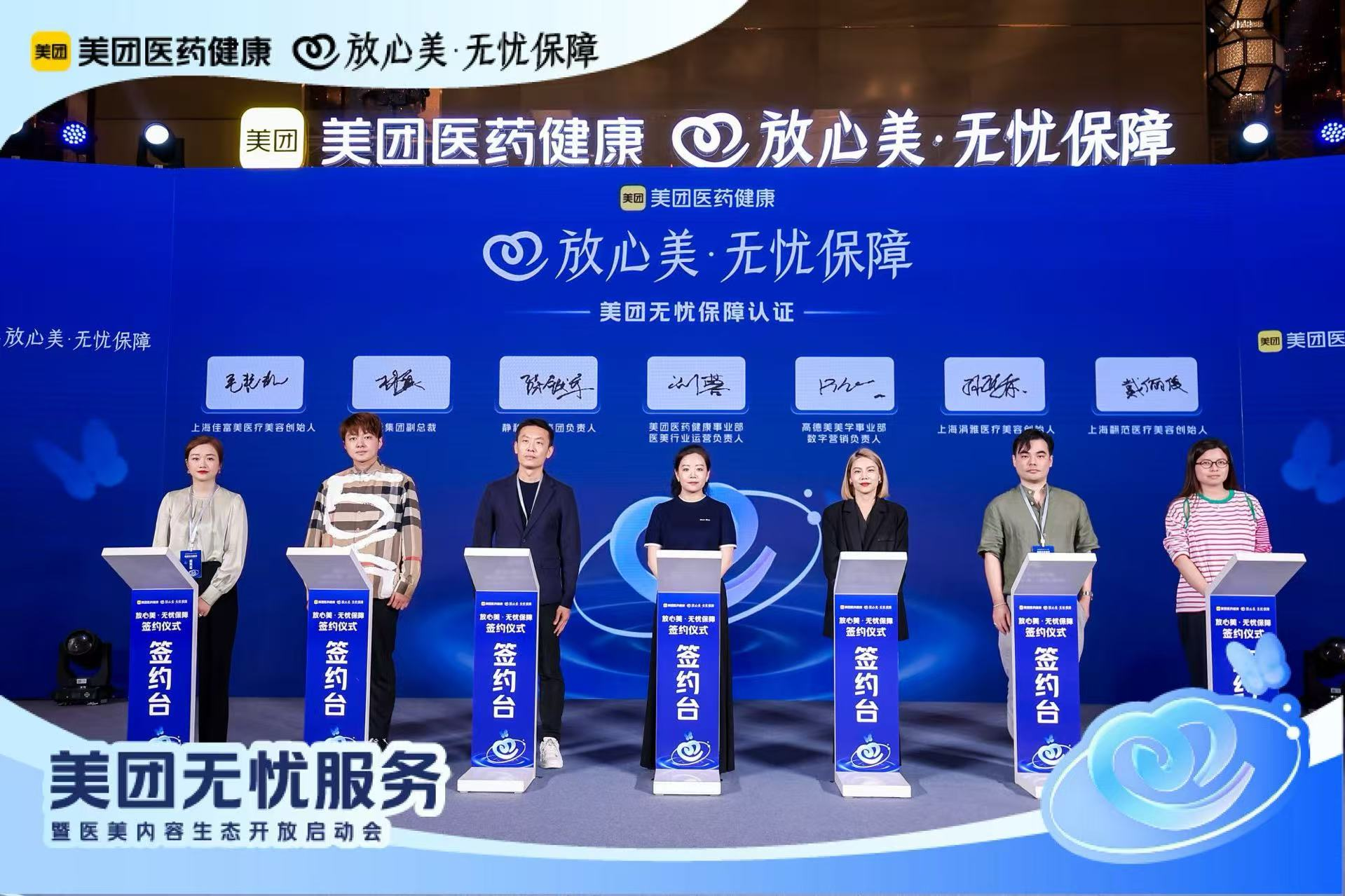
美团医美推出“方案+保障”新型服务范式
Guang Zhou Ri Bao· 2025-05-30 07:10
Core Insights - The "颜值经济" (beauty economy) is thriving, with a growing preference for minimally invasive and immediate effect body shaping procedures, despite concerns over market information and effectiveness [2] - Meituan Medical Health launched the "放心美·无忧保障" (Worry-Free Beauty Assurance) service to address user concerns by providing a doctor-centered service model that ensures simple decision-making, transparent pricing, and guaranteed results [2] - The initial offering includes a fixed-price "V-face" plan with four key guarantees, and additional plans for other body parts will be introduced throughout the year [2] Group 1 - The "无忧保障" (Worry-Free Assurance) service is an upgrade to the "放心美" (Worry-Free Beauty) system launched in 2022, which has expanded to cover 2,000 medical beauty institutions and over 4,000 smart verification devices by the end of 2024 [3] - Meituan Medical Health aims to enhance the consumer experience in the medical beauty sector through collaboration with institutional partners, optimizing product and service processes [3] - The platform offers support to institutions participating in "无忧保障," including traffic allocation, exclusive assurance branding, and scene marketing, attracting 122 institutions across 12 cities [3]

美团医美推出“放心美·无忧保障”,并联合大众点评大力建设医生内容生态
Di Yi Cai Jing· 2025-05-30 04:02
Core Insights - The "beauty economy" is experiencing explosive growth driven by social media and consumer upgrades, with a particular rise in demand for minimally invasive body shaping procedures [1][3] - Meituan Medical Beauty has launched the "Worry-Free Beauty·No Worry Guarantee" service to address consumer concerns regarding decision-making and post-purchase experiences in the aesthetic medical sector [1][6] - The platform emphasizes a standardized service model that includes a transparent pricing structure and guarantees on the quality of medical professionals involved [1][4] Group 1: Service Offerings - The "Worry-Free Guarantee" includes a fixed-price model with four key consumer rights: adequate usage, no additional charges at the clinic, guaranteed operation by qualified doctors, and assurance against counterfeit drugs [1][6] - The initial offerings focus on facial procedures, with three pricing tiers (Light, Premium, Luxury) based on the materials used, sourced from reputable brands [6][7] - The platform has partnered with leading medical institutions to ensure that all services meet high standards of quality and safety [1][6] Group 2: Professional Ecosystem - The initiative aims to build a robust ecosystem for medical professionals, allowing them to focus on their expertise rather than marketing [3][4] - A dedicated information page for doctors will showcase their qualifications and patient reviews, enhancing transparency and trust [4][5] - The platform is also opening its content ecosystem to medical professionals, enabling them to share knowledge and experiences through user-generated content [4][5] Group 3: Market Impact - Approximately 40% of potential users express confusion over the plethora of marketing information available, indicating a significant market opportunity for standardized offerings [6][7] - The "Worry-Free Guarantee" is expected to streamline the decision-making process for consumers, reducing the time and effort required to choose services [7] - The initiative is part of a broader strategy to enhance consumer trust and satisfaction in the aesthetic medical industry, which is crucial for its sustainable growth [8]
早盘直击 | 今日行情关注
申万宏源证券上海北京西路营业部· 2025-05-30 02:06
Group 1 - A-shares experienced a significant rebound on Thursday, ending a period of low trading volume, driven by news of a U.S. court ruling that suspended the implementation of new tariffs announced by the Trump administration [1][3] - The market sentiment improved notably due to the court's decision, leading to a rise in U.S. stock index futures and a general increase in Asia-Pacific markets [1][3] - The future direction of tariff-related events remains uncertain, with potential implications for market performance depending on whether the Trump administration will appeal the ruling and how ongoing tariffs will be managed [1] Group 2 - June is expected to continue being driven by event-based thematic trading, with low-position sectors such as consumption and pharmaceuticals showing promise, alongside well-adjusted technology growth sectors [2] - The focus on expanding domestic consumption is a key task for 2025, with expectations for policy support to boost sectors like dairy products, IP consumption, leisure tourism, and medical aesthetics [2] - The trend towards domestic production of robotics is anticipated to grow, with opportunities arising in sensor, controller, and dexterous hand sectors as robots become more integrated into daily life [2] - The semiconductor industry is expected to continue its domestic production trend, with attention on semiconductor equipment, wafer manufacturing, materials, and IC design [2] - The military industry is projected to see a rebound in orders by 2025, with signs of recovery already visible in various sub-sectors [2] - The innovative pharmaceutical sector is entering a recovery phase after nearly four years of adjustment, with positive net profit growth expected to continue into 2025 [2]

国际化妆品医美公司25Q1业绩跟踪报告:业绩下滑或增长降速,国际集团复苏尚需时日
Shenwan Hongyuan Securities· 2025-05-28 08:41
Investment Rating - The report maintains a "Positive" outlook on international cosmetics and medical beauty companies for Q1 2025 [2]. Core Insights - The global beauty market is projected to grow at a rate of 4.5% in 2024, a decline from the 8% growth seen in 2023, with significant regional disparities [3][12]. - The North Asia market, particularly China, has shown signs of improvement, but overall performance remains subdued, with North America exhibiting signs of fatigue [3][12]. - International beauty groups are still grappling with performance declines or slower growth, which may become the new normal due to various factors including the pandemic and macroeconomic conditions [3][15]. - Companies are adopting localization strategies and investing in local brands to maintain market share amid fierce competition from domestic brands [3][19]. Summary by Sections 1. Global Beauty Market Trends - The beauty market continues a stable trend from 2024, with Europe outperforming other regions at a 7.5% growth, while North Asia has seen a 2% decline [3][12]. - The international beauty groups are facing a challenging environment with performance fluctuations and strategic adjustments [15]. 2. L'Oréal Performance - L'Oréal's Q1 2025 revenue growth slowed to 4.4%, with the Chinese market remaining flat and tourism retail channels under pressure [3][27]. - The company is actively investing in local brands and expanding its product matrix to compete with domestic brands [3][27]. 3. Estée Lauder Performance - Estée Lauder reported a 9.9% decline in revenue for Q1 2025, continuing a trend of three consecutive quarters of revenue decline [3][51]. - The company is undergoing strategic reforms to address issues related to brand and product positioning [47][51]. 4. Shiseido Performance - Shiseido's revenue decreased by 8.5% in Q1 2025, with its main brand struggling while the ELIXIR brand showed growth [3][18]. - The company is focusing on strategic product launches and price adjustments to enhance profitability [3][27]. 5. Investment Recommendations - Recommended companies include Up Beauty and Proya for their strong brand matrices and growth potential, as well as Marubi for leveraging Douyin traffic [4]. - In the medical beauty sector, companies with strong R&D capabilities and broad product pipelines, such as Aimeike, are highlighted as key investment opportunities [4].
报名:一场高效链接医美人的社交局 | Aesthetic LinkLab
思宇MedTech· 2025-05-28 08:29
Core Viewpoint - The event organized by SiYu MedTech aims to create a unique experience by enhancing information density and social efficiency within a three-hour timeframe, allowing participants to connect more deeply and learn extensively about the medical aesthetics technology landscape [1][2]. Product Flash Presentation - The event will feature a "Product Flash Presentation" segment where up to 20 technology companies can present their core value in a 3-minute pitch, covering various areas such as injection products, energy devices, postoperative recovery, and materials [2][3]. - This segment is designed to help attendees efficiently understand the current technological trends and developments in the medical aesthetics sector [2]. Group Social Interaction - A structured social interaction segment will be implemented, allowing participants to engage in multiple rounds of discussions, each lasting approximately 20 minutes, with different groups of attendees [6][7]. - The grouping mechanism will be determined by an algorithm based on the registration information, aiming to maximize networking opportunities and enhance social efficiency, potentially allowing participants to meet 60 to 80 professionals in just over an hour [9]. Free Networking - The event will conclude with a free networking session, providing attendees the opportunity to connect with others in the medical aesthetics industry, share ideas, and explore collaboration opportunities [10]. - Participants are encouraged to fill out registration forms accurately to facilitate effective grouping and networking [9]. Registration Information - Two types of registrations are available: for the "Product Flash Presentation" and for full attendance at the event, with a limit of 300 participants and an approval process in place [4][10]. - The event is scheduled for June 12, 2025, at the Beijing Zhongguancun Conference Center [10].
早盘直击 | 今日行情关注
申万宏源证券上海北京西路营业部· 2025-05-28 02:33
Core Viewpoint - A-shares show resilience amid external market adjustments, indicating a strengthening internal trend supported by recent monetary policy changes and trade negotiations [1][2]. Market Outlook - The current market has largely priced in the tariff events and the first phase of trade negotiations, with a need for additional catalysts to break through March highs [2]. - The extreme drop on April 7 was a one-time reaction to the "equal tariffs" event, and the market has since undergone substantial recovery [2]. - Future challenges to March highs will require new policies, trade negotiation progress, or significant economic indicators [2]. Hot Sectors - June is expected to be driven by event-based thematic trading, with focus on low-position sectors like consumption and pharmaceuticals, as well as adjusted technology growth [3]. - Key areas of interest include: 1. Consumption expansion and domestic demand as a priority for 2025, with expectations for policy support in sectors like dairy, IP consumption, leisure tourism, and medical aesthetics [3]. 2. The trend of robot localization and integration into daily life, with opportunities in sensors, controllers, and dexterous hands [3]. 3. The ongoing trend of semiconductor localization, focusing on semiconductor equipment, wafer manufacturing, materials, and IC design [3]. 4. The military industry is expected to see order recovery by 2025, with signs of bottoming out in various sub-sectors [3]. 5. Innovative drugs are entering a recovery phase after four years of adjustment, with positive net profit growth expected to continue into 2025 [3]. Market Review - A-shares experienced narrow fluctuations with reduced trading volume, while consumption and pharmaceuticals rebounded [4]. - The market showed overall weakness, with 31 primary sectors exhibiting mixed performance, led by textiles, pharmaceuticals, beauty care, environmental protection, and real estate [4].

隆基绿能连续六个季度亏损后,李振国辞任总经理,90后女儿“接棒”任董事
Sou Hu Cai Jing· 2025-05-27 15:31
Core Viewpoint - The resignation of Li Zhenguo from his positions at Longi Green Energy marks a significant shift in the company's management, as he aims to focus on research and development in photovoltaic technology while the company faces declining financial performance [2][3]. Management Changes - Li Zhenguo has stepped down as director, general manager, and legal representative of Longi Green Energy but will continue as the head of the Central Research Institute and Chief Technology Officer [2]. - Li Zhenguo's wife and he collectively hold 19.1% of Longi Green Energy's shares, making them the de facto major shareholders [2]. - The board has appointed Zhong Baoshan, the current chairman, to also serve as the general manager following Li's resignation [2]. Financial Performance - In 2024, Longi Green Energy's revenue decreased by 36.23% to 82.523 billion yuan, and the company reported a net loss of 8.618 billion yuan after two years of negative growth [3]. - Longi Green Energy has experienced six consecutive quarters of losses, with its stock price at 14.44 yuan per share, resulting in a market capitalization of approximately 109.4 billion yuan, down over 40 billion yuan from its peak in 2021 [3]. Strategic Focus - The company is accelerating the upgrade and expansion of its advanced BC production capacity, shifting investment from a previously planned project to a new 12GW high-efficiency monocrystalline battery project [3]. - Longi Green Energy's management cited the need to adapt to the cyclical adjustments in the photovoltaic industry and the uncertainty in supply-side capacity clearance as reasons for the strategic shift [3]. Succession Planning - Li Zhenguo's daughter, Li Shuxuan, has been nominated as a non-independent director candidate for Longi Green Energy's sixth board, indicating a potential succession plan [4]. - Li Shuxuan, born in 1993, currently works as a brand promotion manager at Xi'an Juzi Biological Technology Co., Ltd., which has seen significant stock price increases this year [4]. - She also holds a 23.5% stake in Dongguan Hive Smart Technology Co., Ltd., where she serves as a director [5]. Industry Trends - The entry of the next generation into leadership roles within photovoltaic companies is becoming more common, with several second-generation leaders, particularly women, stepping into significant positions in the industry [6].


人民财评:“轻医美”,乱象迭出谁担责?
Ren Min Wang· 2025-05-27 01:01
Core Viewpoint - The rise of "light medical beauty" has led to numerous issues and consumer harm, raising questions about its effectiveness and safety [1][2][3] Group 1: Market Dynamics - The user base of the "light medical beauty" market has been growing, attracting businesses that prioritize profit over ethics, leading to risky practices [1] - Some medical beauty institutions lure consumers with promises of easy and low-cost beauty solutions, often accompanied by misleading advertising [1] - The presence of illegal institutions complicates the market, with issues such as incomplete operating qualifications and lack of transparent pricing [1] Group 2: Regulatory Challenges - "Light medical beauty" has become a hotspot for consumer complaints, highlighting the lag in regulatory oversight [2] - Despite the issuance of guidelines in 2023 aimed at strengthening the regulation of the medical beauty industry, many institutions continue to evade compliance [2] - Recent measures, such as the release of the "Medical Advertising Supervision Work Guidelines," aim to tighten regulations on medical beauty advertising and clarify the responsibilities of internet platforms [2] Group 3: Recommendations for Improvement - To address the chaos caused by "light medical beauty," a comprehensive regulatory framework and a credit punishment mechanism, such as a "blacklist," are necessary [3] - Consumers need to overcome misconceptions and avoid falling into aesthetic traps that could lead to negative experiences [3]
人民财评:“轻医美”,“小而美”变“伤不起”
Ren Min Wang· 2025-05-26 06:34
Core Viewpoint - The "light medical beauty" market in China is booming, driven by consumer demand, but it is also plagued by issues such as false advertising, price fraud, and illegal operations, which harm consumers economically, health-wise, and psychologically [1][2]. Group 1: Market Overview - The Chinese medical beauty market is expected to exceed 500 billion yuan in 2024, with "light medical beauty" being the main driving force [2]. - "Light medical beauty" refers to non-invasive procedures like injections and light therapy that offer significant results with lower risks compared to traditional surgeries [2]. Group 2: Industry Issues - Price gouging is prevalent, with some medical beauty institutions charging exorbitant fees for services, such as thousands of yuan for procedures that can be found for a few hundred yuan elsewhere [3]. - Many institutions rely on misleading advertising, exaggerating results and fabricating success stories to attract customers, leading to unrealistic expectations [3][4]. - There is a high incidence of accidents and malpractice in the industry, with unqualified operations and substandard products being common, which not only results in financial loss for consumers but also disrupts market order and damages the industry's reputation [4].