
商业地产

Search documents
上海市徐汇区 让流量成为发展新动能
Jing Ji Ri Bao· 2025-08-30 23:20
Group 1: Economic Development through Cultural and Sports Events - Xuhui District is actively promoting the integration of culture, tourism, commerce, and sports, transforming traditional commercial areas and exploring new business layouts to drive economic growth [1][2] - The hosting of major events like the concert by the Times Youth League attracted over 300,000 attendees, resulting in a significant increase in foot traffic and revenue for the Xujiahui commercial area, with total revenue exceeding 145 million yuan [2][3] - The 2025 UFC Fight Night in Shanghai also contributed to the local economy, with the event being part of a series of major international and domestic events held in the area [2][3] Group 2: Impact of Major Events on Local Economy - In August 2025, Xuhui District hosted over 200 events, with ticket sales linked to various commercial areas, generating a total consumption of 2.686 billion yuan and a direct economic impact of nearly 3 billion yuan [3] - The introduction of renowned cultural and sports IPs has significantly boosted the local economy, with events like the Shanghai Marathon and FISE World Series contributing to the growth of related industries such as dining, accommodation, and tourism [3] Group 3: Development of the ACG (Anime, Comic, Game) Economy - Xuhui District is a hub for the ACG culture in Shanghai, hosting major companies like Tencent and miHoYo, and establishing a game industry service center to support this sector [4][5] - The newly announced "Meta World Neo World" aims to enhance the ACG experience by integrating various cultural IPs and creating immersive environments for fans [5][6] Group 4: Transformation of Commercial Spaces - The Xujiahui commercial area is evolving from merely renting space to becoming content operators, exemplified by the "Butter Bear" exhibition that transformed a shopping mall into a themed showcase [7][8] - The district is undergoing a transformation from linear to circular commercial layouts, focusing on attracting younger consumers and innovative business models [8][9] Group 5: Seasonal Economic Activities - Xuhui District is implementing a "Four Seasons Economy" strategy, with seasonal events designed to stimulate economic activity throughout the year, including fashion weeks, art festivals, and technology expos [9] - The district aims to leverage its cultural and commercial resources to create a cohesive marketing strategy that enhances consumer experiences and drives economic growth [9]
星巴克们为什么需要新的“中国合伙人”
Tai Mei Ti A P P· 2025-08-30 06:38
Group 1: Starbucks Case Study - Starbucks is seeking local partners in China by selling a stake in its operations, with a valuation of up to $10 billion [2] - The company plans to retain 30% ownership while distributing the remaining shares among buyers, each holding no more than 30% [2] - Despite facing intense competition, Starbucks maintains a high growth rate in China, with store numbers projected to reach 7,828 by June 2025, accounting for about 20% of its global total [2] - Starbucks' market share has declined from 42% in 2017 to 14% in 2024, while its competitor Luckin Coffee has expanded to 24,097 stores, nearly three times the number of Starbucks locations in China [2] Group 2: IKEA's Strategy in China - Ingka Group, IKEA's sister company, is planning to sell 10 shopping centers in China for approximately 16 billion yuan, with the deal led by Taikang Life [3] - Ingka operates 10 shopping centers in China with a total investment of about 27.5 billion yuan and a leasing area of approximately 943,000 square meters [3] - The sale indicates a shift from a heavy asset management model to a lighter asset operation model due to significant operational pressures [3] Group 3: Challenges Faced by Foreign Enterprises - Foreign companies in China, particularly in the automotive sector, are experiencing increased anxiety due to competitive pressures and changing market dynamics [5] - Many foreign firms are struggling to adapt as they continue to view China primarily as a manufacturing hub, while local competitors have rapidly evolved [5] - Companies that do not innovate or adapt to local market demands are at risk of losing market share to domestic brands [6] Group 4: Innovation and Cultural Differences - The concept of "disruptive innovation" by Clayton Christensen is relevant to understanding the challenges faced by foreign companies in China [7][8] - Foreign firms often struggle with decision-making efficiency due to cultural differences and lengthy approval processes from headquarters [10][11] - The need for local leadership with a deep understanding of both the local market and the company's core values is critical for success in China [12][13] Group 5: Market Adaptation and Future Directions - Starbucks must evolve beyond incremental innovation to maintain its position in the market, especially against local competitors like Luckin and Manner [17] - The selection of local leaders who can bridge cultural gaps and drive strategic changes is essential for foreign brands to thrive in China [12][17] - The ability to adapt to the unique preferences of Chinese consumers will determine the future success of foreign brands in the market [12][17]


CR MIXC LIFESTYLE(1209.HK):MISS DUE TO DECLINE IN INTEREST INCOME
Ge Long Hui· 2025-08-30 03:36
Core Viewpoint - CR Mixc's 1H25 revenue increased by 6.5% YoY to RMB8.5 billion, aligning with estimates, despite declines in developer VAS and community VAS revenues [1] - The company demonstrated strong performance in the commercial segment, with gross margin expansion and significant growth in gross profit [1][2] Financial Performance - Core net profit rose by 15% YoY to RMB2 billion, slightly below the estimated 17.7% growth [2] - Interim DPS surged by 89.6% to RMB0.529, with a special dividend of RMB0.352/share, resulting in a payout ratio of 100% of interim core earnings [2] - Gross profit grew by 16.3% YoY, exceeding estimates, despite a 66.5% YoY decline in interest income [1] Segment Performance - The commercial segment saw shopping mall revenue increase by 30% YoY in 1H25, with retail sales growing by 21.1% YoY and SSSG at 9.7% [3] - Retail sales in luxury malls grew by 13.2% YoY, while non-luxury malls increased by 26.4% YoY [3] - The number of malls in operation increased to 125, with 6 new malls obtained through third-party expansion [3] Property Management Expansion - CR Mixc added 14.32 million sqm of contracted area in 1H25, with 71.2% being public projects [4] - Total contracted GFA increased from 450.5 million sqm at the end of 2024 to 452.1 million sqm, while total GFA under management rose from 413.1 million sqm to 420.5 million sqm [4] Valuation and Market Position - The target price is set at HK$42.91, derived from a 23x 2025E P/E, with the stock currently trading at 20.1x 2025E P/E [5] - The company offers a 4.7% 2025E dividend yield, reflecting its competitive position in the commercial segment and industry-leading gross margin [5]
高度携手甜度 云端见证爱情 上海中心特色婚姻登记点正式启用 每月将开放一次
Jie Fang Ri Bao· 2025-08-30 02:19
Group 1 - The Shanghai Center marriage registration point was officially opened on Qixi Festival, marking a significant event for couples in the city [1][2] - A total of 2,310 couples registered for marriage in Shanghai on Qixi, the highest number in the past decade for that day [1] - The registration point is located on the 52nd floor of the Shanghai Center, providing a stunning view of the city and enhancing the romantic experience for couples [2] Group 2 - The registration point features various functional spaces that ensure a ceremonial atmosphere while showcasing the city's skyline [2] - Couples participated in themed activities, such as creating handmade gifts, enhancing the overall experience of their wedding day [2] - The Shanghai Center marriage registration point will open once a month, with plans to introduce additional unique registration locations in the future [2][3] Group 3 - The new registration point symbolizes Shanghai's commitment to improving public services and enhancing the marriage registration experience [3] - Starting September 1, a new marriage registration service standard will be implemented, offering comprehensive services from appointment to marriage counseling [3]
以运营思维重塑业态 北京房山一“沉睡”资产变身“网红”地标
Zhong Guo Jing Ying Bao· 2025-08-29 19:50
Core Insights - The article discusses the revitalization of the Xiyue Street project in Beijing's Fangshan District, transforming previously idle assets into a vibrant commercial and residential hub [3][4][5]. Project Overview - The Xiyue Street project, located near the Liangxiang University Town subway station, faced challenges due to the impact of commercial policies that left parts of the development idle after completion [4]. - The project team focused on innovative restructuring and functional re-creation to activate approximately 110,000 square meters of "sleeping assets," making it a notable case in Beijing's urban renewal efforts for 2024 [3][5]. Market Strategy - The project emphasizes the importance of maintaining overall synergy and long-term viability in commercial real estate, contrasting with previous strategies of simple sales [5]. - The team conducted thorough market research to tailor the project to the needs of local demographics, including over 180,000 students and a large young consumer base in the area [5][6]. Commercial Offerings - The updated commercial space includes over 300 brands, featuring popular and unique stores, enhancing competitive differentiation [6]. - The project introduced diverse offerings such as a music bar, various dining options, and retail experiences to cater to a wide range of consumer preferences [6]. Residential Development - The project repurposed the Twin Towers into long-term rental apartments, addressing the demand from local students and young professionals, with a flexible pricing strategy [7][8]. - The occupancy rate for the rental units reached nearly 50% within two months of opening, indicating strong demand [8]. Community Impact - The revitalization has improved the area's livability by enhancing public spaces and integrating commercial and residential functions, thus addressing the long-standing issue of work-life balance in the region [9][10]. - The project aims to become a central hub for various activities, including office spaces, creative industries, and student entrepreneurship, contributing to the local economy [10]. Conclusion - The Xiyue Street project serves as a model for urban renewal, demonstrating how precise positioning, creative transformation, and smart operations can breathe new life into existing assets [10].


新城发展(01030.HK)上半年营收221.74亿元 商业管理业务经营稳步提升
Ge Long Hui· 2025-08-29 15:36
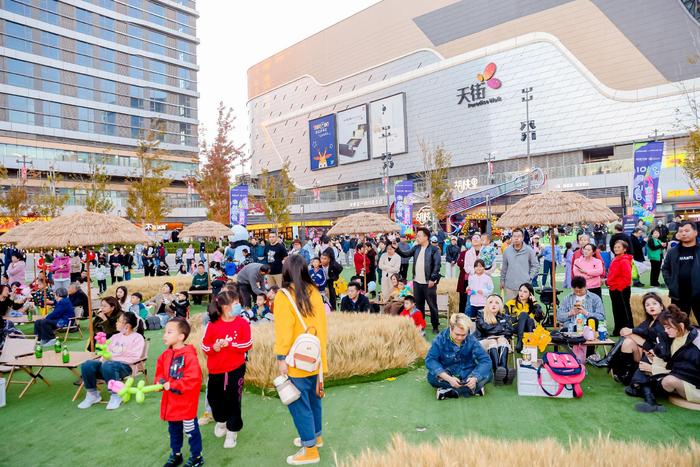
Group 1 - The core viewpoint of the articles highlights the financial performance and strategic transformation of the company, New City Development, in the first half of 2025 [1][2] Group 2 - In the first half of 2025, the company's revenue was approximately RMB 22.174 billion, with commercial property management and rental income reaching about RMB 6.425 billion, reflecting a year-on-year growth of 10.7% [1] - The gross profit for the same period was approximately RMB 5.401 billion, resulting in a gross profit margin of 24.4% [1] - The net profit attributable to equity holders was approximately RMB 0.692 billion, with a net debt-to-equity ratio of 54.6% [1] - The weighted average cost of financing tools, including bank loans and bonds, was 5.84%, a decrease of 0.18 percentage points year-on-year [1] - The total revenue from commercial management business reached RMB 6.944 billion, marking an 11.8% year-on-year increase [1] - As of June 30, 2025, the company operated 174 Wuyue Plazas nationwide, with the opening of its first "Gold Standard" project in Changzhou on June 27, 2025 [1] Group 3 - The company is actively seeking business transformation and exploring new growth avenues, as evidenced by the establishment of the Digital Asset Research Institute on August 29, 2025 [2] - The institute's formation signifies the company's upgrade in business transformation, focusing on systematic incubation of the Wuyue Plaza content ecosystem [2] - The company plans to promote the tokenization of quality IP resources and asset revenues under compliance, including the issuance of digital collectibles based on Wuyue Plaza's unique IP [2] - The exploration of RWA products based on the asset revenues of Wuyue Plaza and the financial asset rights of New City Development is also a key focus [2]
*ST阳光上半年营收1.35亿元同比增65.68%,归母净利润-3919.13万元同比降173.94%,毛利率下降17.89个百分点
Xin Lang Cai Jing· 2025-08-29 15:29
Group 1 - The core viewpoint of the article highlights the financial performance of *ST Yangguang in the first half of 2025, showing significant revenue growth but substantial losses in net profit [1][2]. - The company reported a revenue of 135 million yuan, representing a year-on-year increase of 65.68% [1]. - The net profit attributable to shareholders was -39.19 million yuan, a decline of 173.94% compared to the previous year [1]. Group 2 - The basic earnings per share for the reporting period was -0.05 yuan, with a weighted average return on equity of -1.71% [2]. - The current price-to-earnings ratio (TTM) is approximately -10.88 times, with a price-to-book ratio of about 0.62 times and a price-to-sales ratio of 3.54 times [2]. - The gross profit margin for the first half of 2025 was 53.91%, down 17.89 percentage points year-on-year, while the net profit margin was -24.13%, a decrease of 19.09 percentage points [2]. Group 3 - The company's operating expenses for the first half of 2025 amounted to 83.45 million yuan, an increase of 31.36 million yuan compared to the same period last year [2]. - The expense ratio was 61.91%, a decrease of 2.12 percentage points year-on-year, with sales expenses increasing by 133.03% [2]. - As of the end of the first half of 2025, the total number of shareholders was 26,300, a decrease of 8,725 households, or 24.93% [2]. Group 4 - *ST Yangguang is primarily engaged in commercial operation management, property leasing, and residential sales, with commercial leasing contributing 53.85% to its revenue [3]. - The company is classified under the real estate sector, specifically in commercial real estate development, and is part of various concept sectors including ST stocks and small-cap stocks [3].
市地产集团CMBS在深交所挂牌上市
Sou Hu Cai Jing· 2025-08-29 14:09
Group 1 - The listing of the CMBS product marks its official entry into the public market, providing innovative financing paths for enterprises and optimizing their capital structure [1] - The CMBS issued by the municipal real estate group is the first of its kind from a state-owned enterprise in Chongqing, with a total scale of 2.06 billion and a term of 24 years at a coupon rate of 2.08%, the lowest in the central and western regions [1] - The project utilizes commercial properties as underlying assets, transforming the operation of existing commercial properties from "holding operation" to "capital operation," thereby enhancing asset allocation and efficiency [1] Group 2 - A special exchange meeting was held to discuss asset revitalization and securitization, with officials from the municipal state-owned assets supervision and administration commission and the housing and urban-rural development committee sharing policies and strategies [2] - There was a consensus among participants to maintain close communication and deepen cooperation in asset securitization, aiming to optimize capital structure and accelerate asset value release [2]
星盛商业(06668):派息提升,稳健运营
Ping An Securities· 2025-08-29 11:20
Investment Rating - The report maintains a "Buy" recommendation for the company [1][7][12] Core Views - The company has demonstrated a solid operational foundation with a focus on enhancing shareholder returns through increased dividends, proposing a mid-term dividend of 5 HKD cents per share, a 4.2% increase year-on-year [4][7] - Despite a decline in revenue and net profit in the first half of 2025, the company shows resilience with a same-store traffic growth of 4.4% and a same-store sales growth of 11.4% [4][7] - The company is strategically positioned in the Greater Bay Area and Yangtze River Delta, with ongoing projects expected to enhance its market presence [7] Financial Summary - For the first half of 2025, the company reported revenue of 284 million HKD, a decrease of 9.4% year-on-year, and a net profit of 87 million HKD, down 2.5% year-on-year [4] - The company’s projected revenue for 2025 is estimated to be 657 million HKD, with a slight growth forecast of 2.0% [6][10] - The gross margin improved to 52.3%, reflecting a 0.7 percentage point increase, primarily due to better performance in the leasing model [7] Operational Highlights - The company maintains a high occupancy rate of 92.5% amidst competitive market conditions [7] - Cash reserves are robust, with 1.368 billion HKD available at the end of the reporting period, supporting the increased dividend payout [7] - The company has a total contracted area of approximately 2.65 million square meters, with 1.65 million square meters already operational [7] Future Outlook - The company is expected to continue its focus on the Greater Bay Area and Yangtze River Delta, with new projects planned for opening in the second half of 2025 [7] - Earnings per share (EPS) is projected to remain stable at 0.16 HKD for 2025-2027, with corresponding price-to-earnings (P/E) ratios of 7.7, 7.5, and 7.3 respectively [7][10]
新城发展(01030)发布中期业绩 归母净利润8.95亿元 同比减少32.11%
Zhi Tong Cai Jing· 2025-08-29 10:51
Core Viewpoint - The company reported a significant decline in revenue and net profit for the first half of 2025, but emphasized resilience and strategic adjustments in response to market challenges [1][5]. Financial Performance - The company achieved an operating revenue of 22.1 billion yuan, a year-on-year decrease of 34.82% [1][5]. - The net profit attributable to shareholders was 895 million yuan, down 32.11% year-on-year [1][5]. - The basic earnings per share stood at 0.4 yuan [1]. Sales and Delivery - The company reported a contract sales area of 1.335 million square meters, a decline of 59.08% year-on-year [2]. - The total contract sales amount reached 10.33 billion yuan, down 56.15% year-on-year [2]. - The company successfully delivered over 16,000 high-quality properties nationwide in the first half of 2025 [2]. Commercial Operations - The company operates 205 Wuyue Plazas across 141 cities, with 174 currently in operation and a total area of 16.08 million square meters [3]. - The occupancy rate of Wuyue Plazas reached 97.81% [3]. - The total foot traffic for Wuyue Plazas was 950 million visits, a year-on-year increase of 16.0%, with total sales exceeding 51.5 billion yuan, up 16.5% [3]. Strategic Adjustments - The company is focusing on cash flow preservation, project delivery, and asset value protection, seeking a balance among these priorities [2]. - The company reported a total commercial operation revenue of 6.944 billion yuan, an increase of 11.78% year-on-year, showcasing its ability to navigate through market cycles [4]. Asset Overview - As of the end of the reporting period, the company had total assets of 288.33 billion yuan and net assets attributable to shareholders of 61.799 billion yuan [5]. - The company completed the delivery of 36 sub-projects with a total area of 2.7765 million square meters [5]. - There are currently 158 sub-projects under construction, with a total building area of 17.4847 million square meters [5].