
机器人

Search documents
马斯克点赞Seedance 2.0:发展速度太快,字节:还远不完美;34岁清华学霸28个月造出百亿独角兽;宝马将在全球召回数十万辆汽车丨邦早报
创业邦· 2026-02-13 00:08
Group 1 - The core viewpoint of the article highlights significant advancements in AI technology and its applications across various sectors, including video generation, robotics, and e-commerce [3][5][16]. - The release of Seedance 2.0 by Doubao Video Generation Model marks a notable step in AI-driven content creation, with plans for further improvements based on human feedback [3]. - Starry Sky, a company founded by a 34-year-old Tsinghua graduate, achieved a valuation of over 10 billion yuan within 28 months, indicating rapid growth in the embodied intelligence sector [7][9]. Group 2 - Zhao Ming, former CEO of Honor, is set to join Qianli Technology as co-chairman, focusing on AI business model strategies [11]. - ByteDance's AI chip team has expanded to over 1,000 members, reflecting the company's increasing emphasis on chip development to meet growing computational demands [11]. - Grab reported a net profit of $200 million for the year, reversing a previous loss, with a 20% revenue growth to $3.37 billion [16]. Group 3 - Anthropic raised $30 billion at a valuation of $380 billion, positioning itself among the most valuable private tech companies globally [16]. - Apptronik completed a $520 million financing round, with notable investors including Google and Mercedes-Benz, indicating strong interest in humanoid robotics [16]. - Xiaomi announced the open-sourcing of its first-generation robot VLA model, showcasing advancements in visual language understanding and real-time execution capabilities [18].


“鸿蒙造”人形机器人,要来了?
Robot猎场备忘录· 2026-02-13 00:04
Core Viewpoint - The article discusses the emergence of humanoid robots based on the HarmonyOS ecosystem, highlighting the establishment of a new subsidiary by Deep Harmony and its collaboration with Digital Huaxia to develop domestically produced humanoid robots [2][4][6]. Group 1: Company Developments - Deep Harmony has established a subsidiary called Kaihong Qiyuan Innovation Center in Shenzhen, with key stakeholders including Digital Huaxia and ChinaSoft International [2]. - The company has launched M-Robots OS, the first distributed heterogeneous multi-machine collaborative robot operating system based on open-source HarmonyOS, marking a significant advancement in China's robotics capabilities [4]. - Digital Huaxia, a prominent player in the humanoid robot sector, has maintained a close relationship with Huawei, showcasing its robots at Huawei's exhibition and being one of the first partners in Huawei's Global Embodied Intelligence Center [4][6]. Group 2: Industry Context - The collaboration between Deep Harmony and Digital Huaxia aims to create a fully domestic humanoid robot solution, addressing the reliance on foreign technology, particularly in critical areas like GPU platforms from NVIDIA [6]. - The article emphasizes the urgency of developing a comprehensive domestic control platform for humanoid robots, covering everything from chips to operating systems and algorithms, in light of increasing competition in the AI sector between China and the U.S. [6].
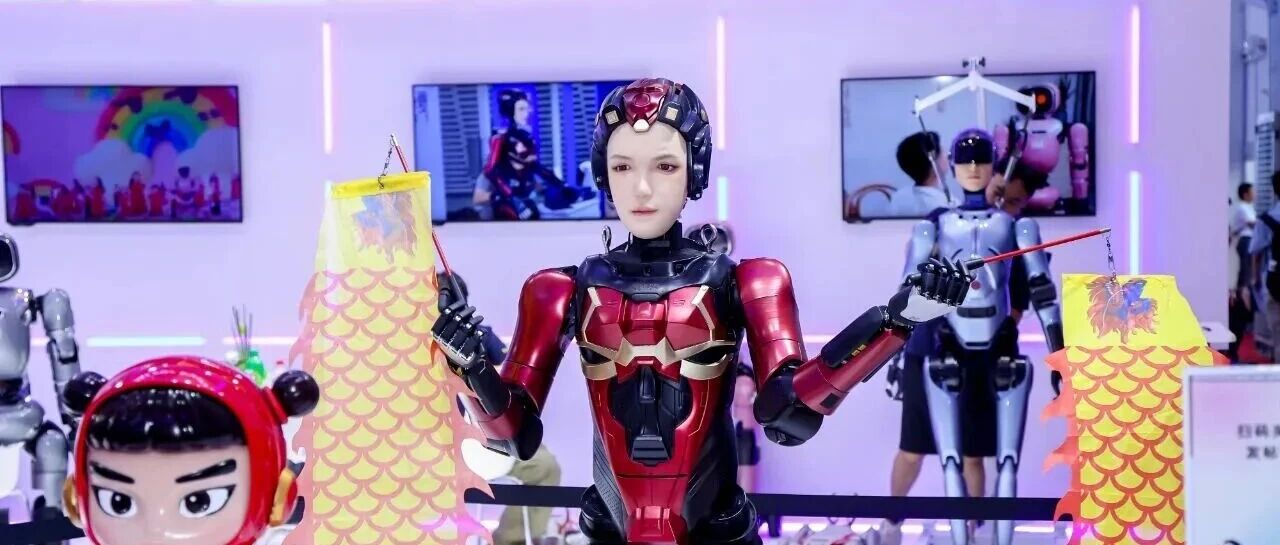
刚融资超7亿元,这家“卖铲子”的公司想成为“华为鸿蒙”
Xin Lang Cai Jing· 2026-02-13 00:02
Core Viewpoint - The company aims to establish itself as a foundational platform in the humanoid robotics industry, likening its role to that of "selling shovels" in a gold rush, focusing on service rather than immediate commercialization [5][42]. Company Overview - Beijing Humanoid Robot Innovation Center was established at the end of 2023 with an initial investment of 460 million yuan from various stakeholders [2][39]. - The CEO, Xiong Youjun, emphasizes a work culture that allows for mistakes but does not tolerate stagnation, aiming for continuous exploration in technology [4][41]. Technological Development - The company is navigating a chaotic phase in the industry, debating whether to focus on VLA models or world models, and whether to rely more on simulation data or real data [4][41]. - A significant goal is to release the first generation of the "Embodied Tiangong" robot in 2024, followed by the "Wisdom Open Object" platform in 2025, and to enhance capabilities with the "Embodied Tiangong 3.0" in 2026 [4][41][42]. Market Positioning - The company positions itself within a projected trillion-dollar market for embodied intelligence, asserting that current technological breakthroughs are merely stepping stones and do not yet create a competitive moat [5][42]. - The company aims to create an Android-like ecosystem in the robotics field, focusing on open-source technology to foster industry growth [5][23]. Funding and Investment - The company recently completed its first market-oriented financing round, raising 700 million yuan, which was initiated in late 2025 due to favorable market conditions [7][45]. - The CEO notes that there are no performance guarantees set by investors, reflecting confidence in the company's technological advancements [9][48]. Industry Context - Comparatively, domestic humanoid robot companies are valued at over 10 billion yuan, while leading companies like Ubiquity are valued below 100 billion yuan, contrasting with U.S. companies valued in the hundreds of billions [12][47]. - The CEO argues that the perception of a bubble in the industry stems from a lack of understanding of the future market potential [12][48]. Open Source Strategy - The company has opened its platforms, "Embodied Tiangong" and "Wisdom Open Object," significantly lowering barriers for other companies to enter the humanoid robotics space [19][57]. - The open-source approach is seen as a way to accelerate industry maturity and does not conflict with the company's commercial goals [23][60]. Challenges and Solutions - The company faces numerous challenges, including technological, product, talent, and funding issues, and is focused on building a robust platform to address these gaps [15][69]. - A mid-test verification platform has been established, achieving a production capacity of 5,000 units annually, which aims to bridge the gap between laboratory prototypes and industrial applications [33][70].
灵心巧手张延柏:从北京出发,打造世界级灵巧手产业生态
Xin Jing Bao· 2026-02-12 23:12
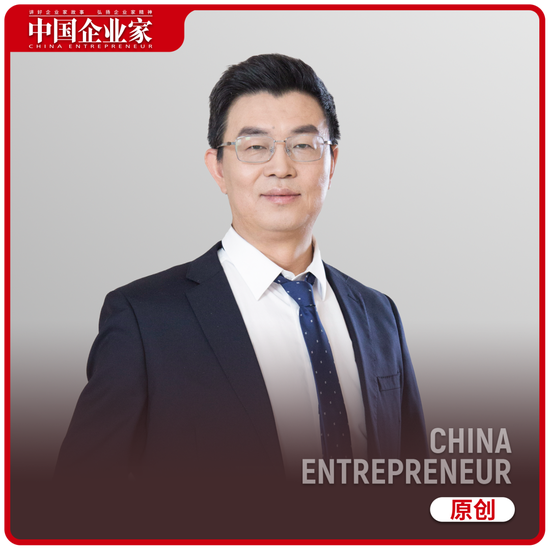
据央视新闻,2月9日,习近平总书记来到位于北京亦庄的国家信创园,开启今年首次国内考察。在这 里,总书记察看代表性科技创新成果展示,并同科研人员和科技企业负责人代表亲切交流。 创新成果展台上,来自北京具身智能核心部件企业"灵心巧手"的一双灵巧手,完成了一场高难度的"穿 针引线"演示——捏起一枚绣花针,将细若发丝的线对准针眼,轻轻一穿,线头稳稳穿过。 灵心巧手联合创始人张延柏在接受新京报贝壳财经记者专访时表示,对于此次展示,整个公司深感激动 与鼓舞。这不仅是对公司技术水平的认可,更体现了国家对具身智能全产业发展的关注。 张延柏口中,灵巧手作为具身智能的"最后一厘米",是技术攻坚的关键环节,是决定机器人操作能力的 最终因素。 在全球灵巧手市场里,"灵心巧手"的名字并不陌生。这家成立于2023年的年轻企业,凭借技术突破与产 品落地,完成了从实验室到市场引领者的转变,产品在全球高自由度灵巧手市场中占据超过80%的份 额,成为全球唯一实现高自由度灵巧手千台量产的公司。 张延柏曾阐述对"好灵巧手"的定义:有高自由度,有很高的耐用性和性价比,有很多生态算法的解决方 案,要有跟世界交互的能力。基于这一理念,公司打造了Linke ...
创新创造 推动转型升级 ——因地制宜发展新质生产力一线故事(下)
Ren Min Ri Bao· 2026-02-12 23:07
广东深圳 冲刺"人形机器人第一城" 本报记者程远州 近日,去广东深圳市K11商场看电影的市民惊奇地发现,递上爆米花的居然是一台人形机器人。识别指 令、抓取纸杯、装填爆米花、递给顾客……这台由深圳市越疆科技股份有限公司生产的机器人,单日可 以连续工作14小时,日均完成超1000杯爆米花的制作与售卖,全程零失误。 "最大的难题是'眼、脑、手'协同——机器人既要精准识别环境变化,又要快速决策,还要实现毫米级 的精细操作。"越疆科技创始人兼首席执行官刘培超说,项目启动初期,机器人存在抓取纸杯时用力过 猛捏扁杯身、装填爆米花时撒落等问题,遇到顾客移动杯子、物料撒落等突发情况,更是直接"罢工"。 对于机器人而言,售卖爆米花看似简单实则挑战性极强。越疆科技组建硬件、算法、软件等多部门联合 攻关小组,反复调试机器人指尖压力传感器,让机器人能秒级识别环境变化,反复模拟爆米花撒落、容 器移位等20多种场景,让机器人能自主诊断偏差、重新规划动作,无需人工干预即可续行任务。 钻研技术,换来突破。越疆人形机器人搭载自研的端到端模型,融合视觉感知、语言理解与动作生成, 配合具有高度稳定性和操作精度的硬件,从而在电影院柜台环境中实现了自主 ...
6倍大牛股,首次披露魔法原子资本化路径
Zhong Guo Ji Jin Bao· 2026-02-12 22:43
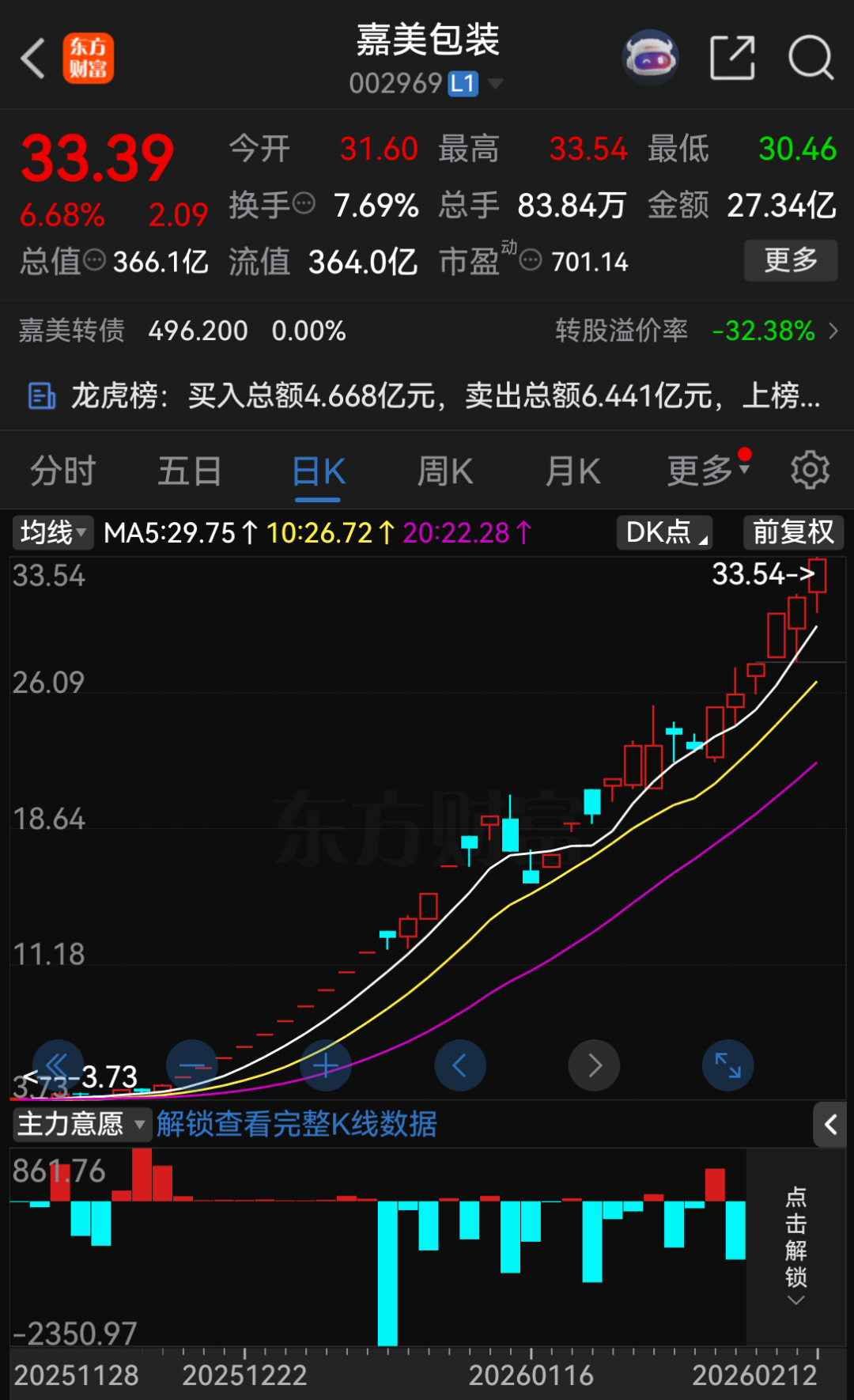
Group 1 - The core announcement from Jia Mei Packaging clarifies that the capital operation path of Magic Atom Robotics is independent and unrelated to the listed company [1][4] - Magic Atom Robotics focuses on embodied intelligent robotics, with products including humanoid and quadruped robots for various applications [4][5] - The company has completed two rounds of financing exceeding 100 million yuan, with funds aimed at advancing core technology and accelerating product deployment in industrial and commercial settings [4][7] Group 2 - Jia Mei Packaging's stock price increased by 632.24% from December 17, 2025, to February 12, 2026, closing at 33.39 yuan per share with a market capitalization of 36.61 billion yuan [1][13] - The control change of Jia Mei Packaging is still pending, with uncertainties regarding the approval of financing for the acquisition [9][11] - The company’s main business remains focused on food and beverage packaging, with no significant changes expected in the next 12 months [12]
海尔深耕六大产业生态 努力创造更美好的生活
Ren Min Ri Bao· 2026-02-12 22:24
Group 1 - The company focuses on six major industrial ecosystems: smart home, health care, digital economy, robotics, new energy, and automotive, while actively developing artificial intelligence technology to enhance the "user-centered" philosophy [1][2] - The key to smart homes is making artificial intelligence more intuitive to daily life, exemplified by the three-tub washing machine, which has sold over 400,000 units online, showcasing user participation in product co-creation [1] - The number of smart terminals linked to the platform has exceeded 100 million, providing users with more convenient smart home services [1] Group 2 - The company leverages the Kaos industrial internet platform to deepen its engagement in the digital economy, having developed the Tianzhi industrial model, which integrates over 4,700 mechanism models and 200 expert algorithms to assist enterprises in digital transformation [2] - The transition from a home appliance company to an ecosystem enterprise is underway, with ongoing expansion into new industries such as robotics, new energy, and automotive [2] - The competition in the future is expected to shift from individual companies to dialogues between ecosystems, as stated by the company's chairman and CEO [2]

深企里程碑 上市600家 深圳上市公司总市值超19万亿元,稳居全国大中城市第二位
Shen Zhen Shang Bao· 2026-02-12 18:34
Group 1 - Shenzhen has reached a milestone with over 600 listed companies, including 426 domestic and 174 overseas, with a total market capitalization exceeding 19 trillion yuan as of January 2026 [1] - The history of Shenzhen's listed companies reflects the evolution of China's modern corporate system, starting from the first stock issued in Bao'an in 1983 [2] - The establishment of the SME Board in 2004 and the Growth Enterprise Market in 2009 opened capital channels for private technology enterprises, with Shenzhen companies occupying significant positions [3] Group 2 - Recent years have seen a new wave of companies redefining "Shenzhen speed," with notable listings such as Yuntian Lifei and Youbixuan, showcasing rapid growth and innovation [4] - New companies listed on the Science and Technology Innovation Board and the Growth Enterprise Market indicate Shenzhen's proactive embrace of capital market reforms and alignment with cutting-edge technology [5] - In the first three quarters of 2025, Shenzhen-listed companies achieved a total revenue of 5.20 trillion yuan and a net profit of 457.8 billion yuan, reflecting strong growth in the manufacturing sector [7] Group 3 - The Hong Kong market has seen significant activity, with 27 new companies raising a total of 29.57 billion HKD, and over 70% of these companies experiencing stock price increases on their first trading day [7] - The strong performance of companies like BYD, which raised over 43.5 billion HKD in a single refinancing, highlights the robust capital market environment in Shenzhen [7] - Shenzhen's high-tech exports, including drones and 3D printers, grew by 10.1% in 2025, supported by a solid foundation of national high-tech enterprises [7] Group 4 - The journey from the first stock in 1983 to 600 listed companies today illustrates Shenzhen's transformation from a pilot city to a benchmark for capital markets in China [8] - Each listed company represents a milestone for Shenzhen, indicating that reaching 600 is not an endpoint but a new starting point for further growth [8]

“硬科技军团”领跑全国
Shen Zhen Shang Bao· 2026-02-12 18:33
Group 1 - Shenzhen's listed companies are experiencing a surge in "new quality productivity" focused on hard technology and future industries, with R&D investment nearly doubling during the 14th Five-Year Plan period, reaching 210.3 billion yuan in 2024, a 91.35% increase from 2020 [1] - In the first three quarters of 2025, disclosed R&D expenses totaled 156.33 billion yuan, marking a historical high with a year-on-year growth of 11.59%, significantly outpacing the national average [1] - Approximately 80% of newly listed companies are from the Sci-Tech Innovation Board and the Growth Enterprise Market, with a total of 216 companies, representing over half of A-share Shenzhen enterprises, leading among major cities in China [1] Group 2 - A notable "innovation matrix" has formed in Shenzhen, with companies like UBTECH Robotics, Youjia Innovation, and SUTENG Juchuang leading in future industry directions, showcasing Shenzhen's advantages in the new technological revolution and industrial transformation [2] - The "Robot Valley" in Nanshan, centered around companies like UBTECH and Huichuan Technology, has created an industrial ecosystem, with UBTECH's Walker S1 robot being utilized in factories of major companies like BYD and Geely [2] - Huichuan Technology, valued at nearly 200 billion yuan, has increased its R&D investment from 1.023 billion yuan to 3.147 billion yuan over the past five years, successfully developing key components for humanoid robots [2] Group 3 - Innovation is not limited to individual companies but is also evident in collaborative evolution across industries, exemplified by Shenzhen Hanno Medical's breakthrough in developing China's first ECMO system, set to enter the EU market in May 2025 [3] - Mindray Medical, a major shareholder of Hanno Medical, has played a crucial role in supporting its technological advancements, illustrating the model of larger companies fostering innovation in smaller firms within the industry chain [3]
电力等领域具身智能商业化提速
Zheng Quan Ri Bao Zhi Sheng· 2026-02-12 16:07
Core Insights - The integration of artificial intelligence with the real economy is accelerating, particularly in the electricity sector, where intelligent robotic technology is moving from laboratory testing to commercialization [1][4] - Beijing Humanoid Robot Innovation Center and China Electric Power Research Institute are collaborating to establish a "Joint Laboratory for Electric Power Embodied Intelligence," aiming to create fully autonomous solutions for electric power operations [1][3] Group 1: Technological Advancements - The "Fully Autonomous Electric Power Operation Embodied Intelligence Solution" signifies a shift from semi-automation to a new phase of human-robot collaboration, enhancing operational efficiency [2][4] - The "Tiangong Walker DEX," a humanoid robot developed by Beijing Humanoid and UBTECH, showcases significant improvements in stability, motion control, and autonomous operation capabilities [1][2] Group 2: Industry Challenges and Solutions - Historically, electric power robots faced limitations due to "preset trajectory execution and weak environmental adaptability," making it difficult to operate in complex scenarios [3][4] - The collaboration between Beijing Humanoid and China Electric Power Research Institute aims to overcome these challenges by utilizing AI technology for real-time environmental perception and task execution [3][4] Group 3: Market Dynamics - The acceleration of embodied intelligence in the electric power sector is attracting listed companies to position themselves strategically within the industry [5] - The deployment of embodied intelligent robots is expected to transform electric grid equipment from mere operational objects to interactive intelligent terminals, creating new market opportunities for secondary equipment manufacturers [5][6] Group 4: Future Outlook - The electric power sector is anticipated to become one of the first vertical industries to achieve large-scale commercialization of robotics, serving as a model for other high-risk special operations in mining, chemical, and rail transportation [6]