纺织

Search documents
中国GDP被低估20万亿?为何统计数字差这么大?答案在这些产业
Sou Hu Cai Jing· 2025-05-19 10:24
Group 1 - The article discusses the contrasting measurements of China's GDP using exchange rate and purchasing power parity (PPP), highlighting a significant discrepancy in the perceived economic size of China compared to the US [5][10][12] - According to exchange rate calculations, China's GDP is approximately $19 trillion, about 65% of the US GDP of $29 trillion, while PPP estimates China's GDP at around $38 trillion, suggesting it surpasses the US [5][10][12] - The article emphasizes the importance of understanding the underlying economic structures and the implications of these measurements on global perceptions of China's economic strength [12][26][38] Group 2 - China's agricultural output has consistently ranked first globally over the past decade, producing nearly 100 million tons more than the US, indicating a strong foundation for its economy [14][16] - In industrial production, China dominates global supply chains, contributing over 50% of the world's steel production, around 60% of electrolytic aluminum, and close to 45% of copper [18][20][24] - The manufacturing sector in China is robust, with the country leading in automobile production, home appliances, and electronics, holding significant global market shares [20][24] Group 3 - The article points out that the statistical methods used to measure GDP may overlook significant contributions from emerging service sectors and informal economies, leading to an underestimation of China's economic output [28][30][34] - The rise of gig economy workers and small businesses, which often operate outside traditional economic measurements, contributes to a substantial but unaccounted economic value [30][34] - The undervaluation of the Chinese yuan in international markets may also distort GDP figures when converted to foreign currencies, further complicating the assessment of China's economic size [36][38] Group 4 - The future of China's economic measurement may improve with more detailed service sector statistics and the ongoing internationalization of the yuan, which could provide a more accurate reflection of its economic standing [40]

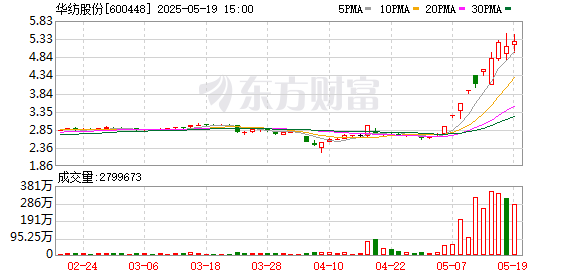
华纺股份龙虎榜:营业部净卖出733.84万元
Zheng Quan Shi Bao Wang· 2025-05-19 09:51
融资融券数据显示,该股最新(5月16日)两融余额为1.39亿元,其中,融资余额为1.39亿元,融券余额 为34.11万元。近5日融资余额合计增加358.84万元,增幅为2.66%。融券余额合计增加7.68万元,增幅 29.04%。 4月30日公司发布的一季报数据显示,一季度公司共实现营业收入7.57亿元,同比增长14.49%,实现净 利润47.46万元,同比下降49.80%。(数据宝) 华纺股份5月19日交易公开信息 证券时报·数据宝统计显示,上榜的前五大买卖营业部合计成交1.71亿元,其中,买入成交额为8164.81 万元,卖出成交额为8898.65万元,合计净卖出733.84万元。 具体来看,今日上榜营业部中,第一大买入营业部为东方财富证券股份有限公司拉萨团结路第一证券营 业部,买入金额为1918.40万元,第一大卖出营业部为国盛证券有限责任公司深圳梅园路证券营业部, 卖出金额为2049.39万元。 近半年该股累计上榜龙虎榜11次,上榜次日股价平均涨5.96%,上榜后5日平均涨23.27%。 资金流向方面,今日该股主力资金净流出4445.59万元,其中,特大单净流出2972.08万元,大单资金净 流出14 ...

凤竹纺织: 凤竹纺织第八届监事会第十七次会议决议公告
Zheng Quan Zhi Xing· 2025-05-19 09:10
证券代码:600493 证券简称:凤竹纺织 公告编号:2025-016 本次会议以举手表决方式审议通过了《关于监事会换届选举暨提名监 事候选人的议案》,表决结果为:3 票赞成,0 票反对,0 票弃权。公司第八 届监事会任期即将届满,根据《公司法》及《公司章程》的有关规定,公 司监事会拟进行换届选举。按照《公司章程》的有关规定,经公司大股东 推荐,公司监事会同意提名罗理和先生、郭秀珍女士为公司第九届监事会 监事候选人,与经公司职工代表大会选举的职工代表监事胡志吉先生共同 组成公司第九届监事会(简历附后) 上述监事候选人将提请公司股东大会予以审议,并采取累积投票制对 上述监事候选人进行选举。上述监事候选人经公司股东大会选举后当选为 公司第九届监事会监事的,其任期为三年,自公司股东大会选举通过之日 起计算。 特此公告。 福建凤竹纺织科技股份有限公司 监 事 会 附件: 罗理和,男,1977 年 2 月出生,福建晋江人,大专学历。1999 年 10 月参加工作,2005 年 3 月进入公司,曾任公司外贸业务部经理,现任本公 司海外事业部业务总监。 郭秀珍,女,1974 年 12 月出生,福建漳州人,大专学历。1995 ...

浙江湖州出台加快推动招商场景建设实施方案
Zhong Guo Chan Ye Jing Ji Xin Xi Wang· 2025-05-19 08:16
Core Viewpoint - Huzhou City in Zhejiang Province has launched a plan to accelerate the construction of investment attraction scenarios, focusing on "scene innovation empowering industries" to integrate technological and industrial innovation, aiming to build a trillion-level industrial ecosystem by 2027 [1][2] Group 1: Investment Attraction and Industrial Development - The plan outlines five key directions: strengthening and supplementing industrial chains, expanding emerging industries, upgrading traditional industries, cultivating future industries, and building smart cities [1] - Huzhou aims to establish over 10 demonstration parks (buildings) with local characteristics and create more than 6 benchmark scenarios for industrial transformation and upgrading by 2027 [1][2] Group 2: Focus on Emerging Industries - Key industries targeted include new energy vehicles and key components, semiconductors and optoelectronics, and intelligent logistics equipment, utilizing a collaborative model of "leading enterprises + application scenarios + SMEs + research institutions" [1] - In the new energy vehicle sector, the focus will be on leading enterprises to promote collaboration among upstream and downstream companies, creating an integrated scenario of "complete vehicles - components - aftermarket" [1] Group 3: Traditional Industry Upgrades - Traditional industries such as modern home furnishings and textiles will adopt digital scenarios like mass customization and flexible supply chains, while classic industries like Huzhou pens and silk will explore new business formats such as metaverse workshops and 3D design [2] - The plan aims to transform "old brands" towards high-end and fashionable markets [2] Group 4: Future Industry Layout - Huzhou is targeting fields such as artificial intelligence, low-altitude economy, and precision medicine, establishing an innovation ecosystem that includes "R&D + pilot testing + funds + scenarios" [2] - The city plans to create advanced interdisciplinary research platforms and concept verification centers to provide testing grounds for new technologies [2] Group 5: Smart City Initiatives - The smart city focus will include governance, transportation, and cultural tourism, promoting scenarios like smart governance and immersive tourism to attract tech companies for urban digitalization [2] - Huzhou will prioritize resource allocation for major scenario projects, hosting over 10 investment attraction scenario release events annually and promoting at least 20 new technology and product projects [2] Group 6: Initial Projects and Investment Scale - The first batch of 15 iconic scenarios and 25 landmark investment attraction projects has been released, covering areas such as green ecology, low-altitude economy, and artificial intelligence, with a total investment scale exceeding 10 billion [2]
因关税调整对美出口订单增加,央视报道多家外贸企业赶工生产
Yang Shi Xin Wen Ke Hu Duan· 2025-05-19 08:08
Group 1 - Recent adjustments in US-China tariff policies have led to a resurgence in exports from foreign trade companies in Shanghai and Jiangxi, with factories quickly ramping up production for the US market [1] - A knitting factory in Shanghai has resumed production for US clients, with plans to ship out orders by May 17, indicating a strong demand from American customers [1] - A textile company in Jiangxi has received a significant new order for 100,000 sets of children's clothing from the US, with production schedules extending into September [1] Group 2 - Ganyu Technology Co., based in Ganzhou, has received a request to resume the supply of over 500,000 sports helmets to US clients, highlighting the recovery of demand in the US market [2] - The foreign trade logistics sector is experiencing a peak in shipments to the US, with a notable increase in inquiries from international freight forwarding companies [3] - Yantian Port in Shenzhen is adjusting its scheduling to accommodate the surge in shipments to the US, with over 2,000 containers being processed for a single vessel [4]
普拉博沃正式回应美国关税危机!四大应对方案出台
Sou Hu Cai Jing· 2025-05-19 07:51
Core Viewpoint - Indonesia's President Prabowo emphasizes the need for an independent economic system in response to the US imposing tariffs of up to 32% on Indonesian goods, opting for diplomatic solutions rather than retaliatory tariffs [2][10]. Group 1: Government Response Strategy - Indonesia plans to hold a meeting with ASEAN leaders on April 10 to discuss a unified stance on the tariff issue [5]. - The government aims to enhance cooperation with the US through four main strategies: revamping the Trade and Investment Framework Agreement (TIFA), reducing non-tariff barriers, increasing imports of US products, and implementing incentive policies to boost export competitiveness [7][8]. Group 2: Economic Impact Assessment - The economic impact of the US tariffs on Indonesia is considered limited, with exports constituting only 23.8% of GDP and exports to the US making up 10% of total exports [10]. - Despite the challenges, Indonesia retains a relative advantage over other exporting countries like Vietnam and Bangladesh, particularly in sectors such as electronics, clothing, and footwear [11]. Group 3: Market Opportunities - The government sees potential in labor-intensive industries like textiles and footwear to explore new market opportunities in the US, leveraging lower tariff burdens compared to other Southeast Asian nations [13]. - The focus on finding new markets and adjusting industrial structures is expected to enhance foreign exchange income for the country [13].

金额同比增超10倍,证监会新规有望将并购重组推向新高潮
Xuan Gu Bao· 2025-05-18 23:40
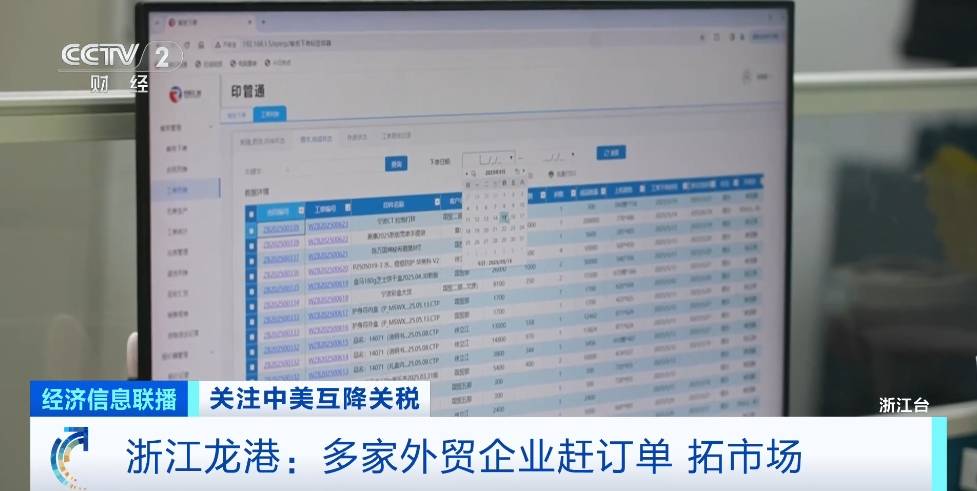
Group 1 - The China Securities Regulatory Commission has implemented revised regulations for major asset restructuring of listed companies, optimizing the review process, innovating transaction tools, and enhancing regulatory inclusiveness [1] - Since the release of the "Six Merger Rules," the scale and activity of the merger and acquisition market have significantly increased, with over 1,400 asset restructuring disclosures and more than 160 major asset restructurings reported [1] - In 2023, listed companies have been more proactive in planning asset restructurings, with over 600 disclosures, representing a 1.4 times increase compared to the same period last year; the total amount of completed major asset restructuring transactions has exceeded 200 billion yuan, an increase of 11.6 times year-on-year [1] Group 2 - The revised regulations allow eligible merger and acquisition transactions to bypass the stock exchange's review committee and complete registration within five working days, significantly reducing the review process from several months to within two weeks [1] - The new regulations reflect a substantial increase in regulatory tolerance for mergers and acquisitions, encouraging traditional industries to enhance concentration and optimize industry structure through restructuring [1] - Central state-owned enterprises and hard technology mergers and acquisitions are identified as two core trends in the current wave of mergers and acquisitions, driven by multiple factors including state-owned enterprise reform policies and industry transformation [1] Group 3 - Policies supporting mergers and acquisitions for technology companies have been frequently released, emphasizing priority support for mergers and acquisitions that focus on key core technology breakthroughs [2] - The increasing activity in mergers and acquisitions among listed companies is expected to enhance the effectiveness of capital market functions, with securities firms likely to play a more active role as intermediaries, leading to increased revenue from financial advisory projects [2] - A table of companies with their latest market values and PB ratios indicates potential investment opportunities, including companies like Tunnel Shares (600820.SH) with a market value of 187.07 billion yuan and a PB ratio of 0.61, and Tianjin Port (600717.SH) with a market value of 127.91 billion yuan [2]
“发货越快越好!”中美互降关税后多地外贸企业开足马力赶订单
Sou Hu Cai Jing· 2025-05-18 14:09
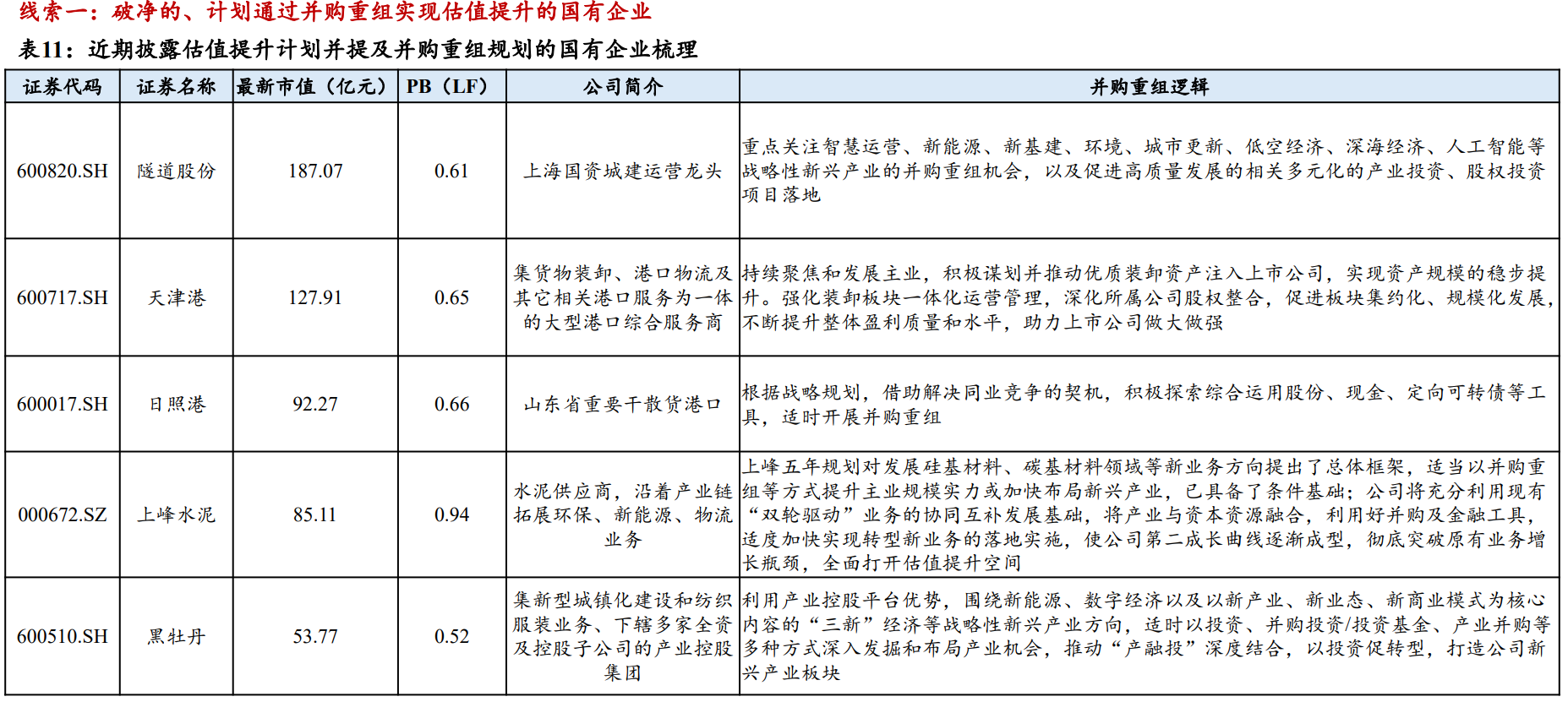
Group 1 - After the latest adjustments in China-US tariff policies, many foreign trade companies have resumed their supply to the US market and restarted production and promotion of export products [1][7] - In Longgang, Zhejiang, a surge in foreign trade has been observed with numerous US orders returning, leading to a busy production environment in packaging companies [3] - A high-tech company focused on food packaging is currently rushing to fulfill a batch of orders worth nearly $200,000 for the US market [5] Group 2 - Following the announcement of reduced tariffs, many foreign trade companies in Xiamen, Fujian, received urgent order requests from US clients [7] - A packaging technology company in Zhejiang has prioritized US orders, aiming for rapid delivery within 90 days and plans to establish subsidiaries in Mexico and Europe to adapt to tariff measures [8] - A shoe company reported that over 60% of its overseas business comes from the US, and after the tariff adjustments, it has started shipping previously accumulated inventory and received numerous new orders [10][11] Group 3 - A textile export company in Xiamen is actively shipping out previously accumulated inventory worth 10 million yuan and has received new orders totaling $2.7 million [13] - The general manager of a textile import-export company in Fujian emphasized the need to diversify by developing markets in other countries and launching a domestic brand this year [15]
多重利好加持 纺织行业稳中向好势头获有力支撑
Zhong Guo Zheng Quan Bao· 2025-05-16 20:33
● 本报记者张鹏飞 还是以华纺股份和孚日股份为例。2024年,公司实现营业收入29.34亿元,同比增长4.89%;归属于上市 公司股东的净利润为-5551.55万元,同比由盈转亏。2025年一季度,公司实现营业收入7.57亿元;归属 于上市公司股东的净利润47.46万元。孚日股份2024年实现营业收入53.46亿元;利润3.48亿元,同比增 长21.39%。作为公司基本盘,2024年,孚日股份家纺业务实现营业收入38.53亿元,毛利率达23.31%, 较上年同期提升2.55个百分点,盈利能力持续提升。 近日,受益于中美大幅降低双边关税水平等多重利好,A股纺织板块迎来强势复苏,行业景气度也稳步 回升。分析人士指出,企业应积极把握政策窗口期,抓住市场机遇,加大创新力度,谋求长远发展。 迎来多重利好 根据海关总署数据,2024年我国纺织品服装出口额为3011亿美元,再次突破三千亿美元大关,同比增长 2.8%。其中,纺织品出口1419.6亿美元,同比增长5.7%;服装出口1591.4亿美元,同比增长0.3%。 业内人士指出,美国作为中国纺织品的主要出口目的地,降低关税将使纺织品订单加速回流。以华纺股 份(600448 ...

苏倒退速度最快的城市,曾经闻名世界,如今却沦落到三线城市
Sou Hu Cai Jing· 2025-05-16 08:12
Core Insights - Yangzhou, once a prosperous city in China, has seen its GDP ranking drop to seventh in Jiangsu province, highlighting a significant decline from its historical prominence [1][3] Economic Performance - In 2021, Yangzhou's GDP was 669.6 billion, with a growth rate of 7.4%, placing it at the bottom among Jiangsu's thirteen cities [3] - The city has been outpaced by neighboring regions, with Suqian achieving a growth rate of 10.1% [3] Industrial Challenges - Yangzhou's industrial base is heavily reliant on outdated sectors such as chemicals, machinery, and textiles, while neighboring Suzhou has advanced into nanomaterials and biomedicine [3] - The city's industrial growth rate for 2024 is projected at 5.2%, ranking third from the bottom in the province [7] Infrastructure and Connectivity - Yangzhou's geographical disadvantages include fewer cross-river transport options compared to Suzhou, leading to congestion on key routes like the Runyang Bridge [5] - The local railway, which was expected to enhance connectivity, has been criticized for being ineffective, serving primarily as a "provincial sightseeing train" [5] Talent and Innovation - There is a significant outflow of talent, with 70% of graduates from Yangzhou University moving to southern Jiangsu for better opportunities [5] - The city's innovation index ranks eighth in the province, trailing behind less developed areas like Lianyungang [5] Tourism and Cultural Heritage - Yangzhou's tourism revenue in 2023 was just over 100 billion, less than one-third of Suzhou's, indicating a struggle to capitalize on its cultural heritage [5] - The city's tourism strategy has been criticized for being ineffective, with high ticket prices failing to attract visitors [5] Conclusion - Yangzhou's decline serves as a cautionary tale for cities relying on historical prestige without adapting to modern economic realities, emphasizing the need for innovation and strategic development [7]