
外卖

Search documents
财经观察丨外卖竞局尚未撤席,AI牌局开场已酣
Qi Lu Wan Bao· 2025-09-02 09:43
Core Insights - The intense competition in the food delivery industry is highlighted by the latest financial reports from major players like Alibaba, Meituan, and JD.com, revealing their strategies and market positions [1][2][4]. Financial Performance - Alibaba's Taobao Flash experienced a peak daily order volume of 120 million in August, with a monthly active user count reaching 300 million, reflecting a 200% increase since April [2]. - Meituan reported a revenue of 91.84 billion yuan for Q2 2025, marking an 11.7% year-on-year growth, with monthly active users surpassing 500 million [2]. - JD.com achieved a revenue of 356.7 billion yuan, a 22.4% increase year-on-year, with its food delivery business driving a 199% growth in new business revenue [4]. Strategic Moves - Alibaba has integrated Ele.me and Fliggy into its China e-commerce group, indicating a strategic restructuring to enhance its core e-commerce operations [2][3]. - Meituan's CEO emphasized the company's commitment to maintaining its market leadership while exploring new business opportunities [4]. - JD.com is focusing on integrating its supply chain advantages into food delivery and hospitality services, positioning instant retail as a critical battleground [4]. AI and Technology Investments - Meituan is actively pursuing AI advancements, with significant investments exceeding 10 billion yuan annually, and has launched several AI applications to enhance its service offerings [5]. - Alibaba's new AI framework, AgentScope 1.0, aims to outperform competitors in both technical and commercial aspects, with substantial investments in AI and flash sales expected to drive growth [6]. Offline Retail Expansion - The competition extends to offline retail, with both JD.com and Meituan launching new discount supermarket formats to capture local consumer demand [9][10]. - JD.com's discount supermarkets focus on direct sourcing and private label products, while Meituan's "Happy Monkey" stores aim to provide affordable goods to community residents [9][10]. - The shift towards offline retail reflects a broader strategy among these companies to establish a comprehensive ecosystem and enhance market positioning [10].


阿里市值暴涨4000亿,“外卖大战”目前受伤最深的是美团
Zhong Guo Jing Ying Bao· 2025-09-02 08:11
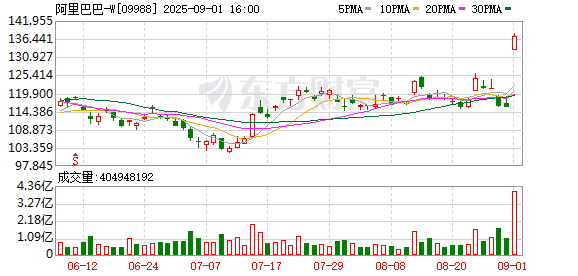
Core Viewpoint - The recent earnings reports from Alibaba, Meituan, and JD.com reveal a competitive landscape in the food delivery market, characterized by rising marketing expenses and a struggle for profitability despite revenue growth [3][5][6]. Group 1: Earnings Performance - Alibaba reported Q1 FY2026 revenue of 247.65 billion yuan, a 2% year-on-year increase, and saw its market value rise by over 400 billion HKD on September 1 [2][3]. - Meituan's Q2 FY2025 revenue reached 91.84 billion yuan, reflecting an 11.7% year-on-year growth, but its stock fell significantly post-earnings release [2][3]. - JD.com achieved Q2 FY2025 revenue of 356.66 billion yuan, a 22.4% increase year-on-year, with relatively stable stock performance compared to its peers [2][3]. Group 2: Marketing Expenses - JD.com significantly increased its marketing expenses to 27.01 billion yuan in Q2 FY2025, up 127.63% from the previous year [3][4]. - Alibaba's marketing expenses rose to 53.18 billion yuan, a 62.64% increase year-on-year, with the expense ratio climbing from 13.4% to 21.5% of revenue [3][4]. - Meituan's marketing spending reached 22.52 billion yuan, a 51.8% increase, but it faced the most significant profit decline among the three companies [4][5]. Group 3: Competitive Dynamics - The food delivery market is experiencing intense competition, with JD.com initiating a subsidy war that prompted Alibaba and Meituan to respond [3][6]. - Meituan's market share has been pressured, leading to a forced entry into the subsidy battle, while JD.com and Alibaba view food delivery as a means to enhance their core retail businesses [6][7]. - Analysts suggest that the long-term impact of the subsidy war will be more detrimental to Meituan, as food delivery is its core business, while for JD.com and Alibaba, it is a supplementary service [6][7]. Group 4: AI and Future Investments - Alibaba's cloud revenue surged by 26% to 33.40 billion yuan, with a commitment to invest 380 billion yuan in AI over the next three years [8][9]. - Meituan has also made strides in AI, recently open-sourcing its self-developed model, indicating a competitive push in this area [8][9]. - The capital market perceives Alibaba and ByteDance as stronger players in AI, while Meituan and JD.com are still developing their capabilities [9].

幽灵外卖店,用AI门头照撑门面
创业邦· 2025-09-02 03:09
Core Viewpoint - The article discusses the rise of AI-generated storefront images used by takeout restaurants to mislead consumers, creating a disparity between the online representation and the actual physical store conditions [6][19]. Group 1: Consumer Experience - Consumers are increasingly deceived by takeout restaurants using AI-generated images that portray them as bustling dine-in establishments, leading to disappointment upon discovering the reality [7][8]. - A specific case is highlighted where a consumer, Chen Ying, was attracted to a restaurant based on its appealing online image, only to find it was a small takeout shop with no dine-in options [8][11]. Group 2: Social Media and Public Reaction - Many users on social media platforms like Xiaohongshu and Weibo have shared similar experiences of being misled by AI-generated storefront images, indicating a widespread issue [11][13]. - A pattern has emerged where consumers notice that restaurants using AI images often have little to no correlation with their actual storefronts, leading to a growing distrust [11][15]. Group 3: AI Image Generation and Industry Practices - The article notes that the proliferation of AI tools has enabled the mass production of these misleading storefront images, with various software available for generating such visuals [19][21]. - An emerging industry has developed around providing these AI-generated images, with services available on e-commerce platforms for as little as 10 to 40 yuan [21][23]. Group 4: Regulatory Response - In response to the rise of "ghost kitchens" and misleading practices, food delivery platforms like Meituan and Ele.me have increased their efforts to combat these issues, with Meituan reporting a 41% increase in the number of problematic merchants dealt with in 2024 compared to 2023 [23][24]. - Both platforms are enhancing their verification processes to ensure the legitimacy of merchants, including the use of AI technology to identify and eliminate fraudulent listings [24][25].

美团、阿里和京东,鹿死谁手?
Sou Hu Cai Jing· 2025-09-02 03:07
Core Viewpoint - The discussion around Meituan, Alibaba, and JD.com highlights the competitive dynamics in the food delivery and e-commerce sectors, with Meituan being more focused on food delivery while Alibaba and JD.com leverage their broader business portfolios to subsidize their operations [1][3]. Group 1: Business Performance and Market Dynamics - Meituan holds a dominant position in the food delivery market with a 70% market share, but faces increasing competition from Alibaba and JD.com, who are entering the market aggressively [3][4]. - Alibaba's recent financial report indicates a significant loss in its food delivery segment, estimated at around 15 billion RMB, reflecting the high costs associated with competing in this space [4][6]. - The competition has led to a decline in Meituan's market share by at least 10%, as consumers tend to choose the cheapest option available [6][8]. Group 2: Strategic Focus and Future Outlook - Alibaba's future growth is expected to come from AI and international e-commerce, rather than just food delivery, which is seen as a means to drive overall platform engagement [3][16]. - The ongoing battle in the food delivery market is anticipated to continue into 2026, with all three companies facing significant competitive pressures [15][16]. - Meituan's resilience in operational efficiency and user engagement is highlighted as a potential advantage over Alibaba and JD.com, despite the current competitive landscape [12][16].
外卖大战打了3个月,一家少赚100亿
3 6 Ke· 2025-09-02 01:24
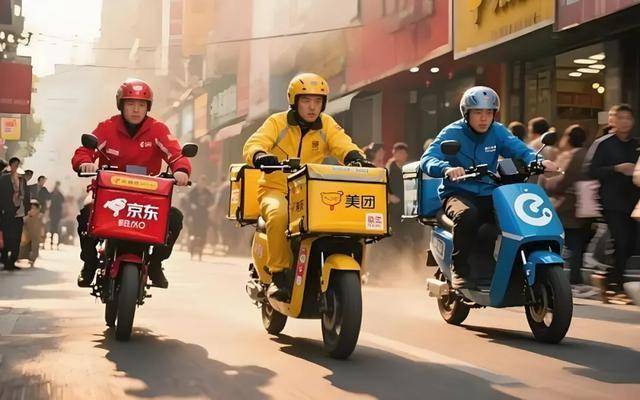
Fast Reading 8月29日晚,随着阿里财报的发布,持续半年多的外卖大战第一次对外展露了残酷的一面。 这场几乎关系到每一个人日常生活的战争,由京东在2月11日挑起,于5月2日被淘宝闪购推向高潮,美团全力防守。在这几个月里,消费者喝到了2元一杯 的奶茶,商家的外卖订单堆积如山,外卖骑手有送不完的订单,但是参战的三家平台的利润都显著减少了。 雪豹财经社了解到,阿里在与投资人的业绩Preview上表示,Q2淘宝闪购整体亏损为100亿元。一位长期关注阿里的卖方分析师告诉我们,据他测算,淘宝 闪购的实际亏损额约110亿元。 据雪豹财经社了解,在外卖大战开打前夕,阿里的一位高阶业务主管在被问到是否要设定一个投入预算时表示:"打仗不能让别人知道你的底线在哪里, 如果预设亏损底线,仗就没法打。" 巨额投入为淘宝闪购带来了明显的单量增长。 6月23日,淘宝闪购与饿了么联合宣布日单量突破6000万单。7月7日,这一数字跳级到8000万。到8月,淘宝闪购又围绕"秋天的第一杯奶茶",把日订单峰 值进一步推高到1亿单。 在阿里巴巴Q2的财报电话会上,阿里巴巴中国电商事业群CEO蒋凡透露,淘宝闪购8月的日均订单峰值为1.2亿单, ...

花旗:为何中国可能即将破裂_原中文
花旗· 2025-09-02 00:42
Investment Rating - The report indicates a bearish outlook for the Hong Kong stock market, suggesting a potential decline of at least 8% following the fear and greed index reaching 80 [1][7]. Core Insights - The report identifies four bubbles in the market: artificial intelligence (AI), Bitcoin, credit markets, and the Chinese market, with a particular focus on the potential bursting of the Chinese market bubble [2][8]. - The report highlights that the Hong Kong stock market's performance is closely tied to the strength of the US dollar, raising concerns about a possible strengthening of the dollar impacting market expectations [1]. - The report notes that the Chinese stock market is experiencing an unusual rally, largely driven by margin trading, which has raised concerns among regulators [3][4]. Summary by Sections Market Indicators - The Hong Kong fear and greed index has reached 80, historically indicating a significant market downturn, with an average decline of 11% following such signals [1][7]. - The report mentions that a specific stock, which is heavily held and has a large margin trading volume, could see a decline of approximately 23.5% if current trends continue [7]. Chinese Market Analysis - The report discusses the high correlation between the Chinese stock market and margin trading since November 2024, suggesting that the current rally may not be sustainable [2][3]. - It draws parallels to the 2015 Chinese stock market bubble, indicating that regulatory measures may be implemented to prevent a similar situation from occurring again [3]. - The report expresses concerns over the stagnation of corporate earnings in China, with a noted 12% underperformance compared to investor expectations during the earnings season [5][6]. Investment Trends - The report highlights a shift in investment flows, with foreign investors moving funds from other Asian markets into China, driven by a low risk perception as indicated by the CDCH risk indicator [6]. - It notes that the current valuation levels in the Chinese market are at a high point, suggesting a potential bubble, especially in the context of stagnant earnings growth [6][8]. Broader Market Implications - The report warns that a bursting of the Chinese market bubble could trigger a chain reaction affecting other bubbles, including Bitcoin, which could see a price drop from approximately $112,000 to $102,000 [7]. - It emphasizes the importance of market positioning and investor sentiment in the formation and potential bursting of bubbles, drawing on historical examples from various markets [9].
淘宝闪购日订单峰值1.2亿,蒋凡:同行效率更优,努力缩小差距
Sou Hu Cai Jing· 2025-09-01 23:40
Core Insights - Alibaba has achieved initial success in the first phase of its food delivery battle, focusing on user scale and market presence, as stated by the CEO of Alibaba's China e-commerce division, Jiang Fan [1][2] - Despite a decline in adjusted EBITA and net profit due to increased investment in instant retail, the impact on Alibaba's overall performance is less severe compared to competitors like JD and Meituan [1][2] User and Order Growth - Since its launch four months ago, Taobao Flash has exceeded expectations in order volume, user base, merchant supply, and delivery capacity, leading the industry in home delivery order share [2] - In August, Taobao Flash reached a peak of 120 million daily orders, with an average of 80 million orders on Sundays; monthly active users grew to 300 million, a 200% increase since April [2] - The number of active delivery riders has surpassed 2 million, tripling since April, indicating significant growth in operational capacity [2] Impact on E-commerce - Taobao Flash has positively influenced the overall e-commerce business, with an increase in daily active users (DAU) for the Taobao app by 20% in August due to the higher frequency of purchases [2] - Increased user engagement is expected to lead to higher e-commerce revenue, driven by rising traffic and reduced marketing expenses [2][3] Long-term Strategy - Jiang Fan believes that the positive trends will continue to expand, enhancing e-commerce revenue in the long term; the investment logic for Taobao Flash considers comprehensive returns over different time frames [3] - The company anticipates that Flash and instant retail will generate an additional 1 trillion yuan in transactions over the next three years [7] Operational Efficiency - Alibaba is focusing on improving operational efficiency to reduce losses, including optimizing user structure, order structure, and delivery efficiency [10] - The company aims to halve its unit economics (UE) losses in the short term through enhancements in logistics and order optimization while maintaining current consumer incentives [10] Financial Position - Alibaba has a strong financial position with cash and cash equivalents totaling 585.7 billion yuan, allowing for significant investments in new service-oriented e-commerce markets [10] - The company is committed to investing 50 billion yuan over several years to tap into a market potential exceeding 10 trillion yuan [10] Competitive Landscape - As the food delivery battle continues, Alibaba is positioned to capture a larger share of the "food delivery + instant retail" market [11]

外卖时代或将终结,一个全新的行业正在加速突围,你准备好了吗?
Sou Hu Cai Jing· 2025-09-01 17:34
Core Viewpoint - The rise of pre-prepared meals is transforming the food delivery and restaurant industry, potentially leading to the decline of traditional food delivery services as consumers prefer the convenience and cost-effectiveness of retail pre-prepared meals [3][13]. Industry Trends - The number of food delivery users in China has surpassed 550 million, indicating that one in every two internet users has ordered food delivery [1]. - Over 70% of restaurant chains have adopted a central kitchen model, with some large brands like Zhen Gongfu and Xi Bei using pre-prepared meals for over 80% of their offerings [5]. - The pre-prepared meal market is projected to reach a scale of 485 billion yuan in 2024, with a year-on-year growth of 33.8%. It is expected to grow to 617.3 billion yuan in 2025 and 749 billion yuan by 2026, indicating a potential trillion-yuan market in the coming years [7]. Consumer Behavior - Consumers are increasingly aware that many food deliveries consist of pre-prepared meals, leading to a shift towards purchasing these meals directly for home preparation, which offers more control over cooking and portion sizes [3][13]. - The convenience of pre-prepared meals allows restaurants to reduce wait times from over ten minutes to just a few minutes, enhancing operational efficiency and increasing revenue potential [7]. Safety and Quality Concerns - There are ongoing debates regarding the safety and nutritional value of pre-prepared meals. Supporters argue that industrial production ensures quality and safety, while critics highlight risks associated with improper storage and the loss of nutrients through reheating [9]. - The National Market Supervision Administration has issued guidelines for the pre-prepared meal industry, emphasizing the need for a comprehensive traceability system from production to sales to ensure safety standards [10]. Future Outlook - While the food delivery era is not expected to end imminently, the increasing use of pre-prepared meals and the growth of the pre-prepared meal market suggest a significant shift in consumer preferences towards home-cooked convenience [13]. - The industry is likely to see enhanced regulatory measures and technological innovations in preservation techniques, which will improve the quality and safety of pre-prepared meals, potentially increasing consumer acceptance [11][13].

醉翁之意不在酒 阿里改造即时零售的决心远超预期丨力见
2 1 Shi Ji Jing Ji Bao Dao· 2025-09-01 13:57
Core Viewpoint - The fierce competition among the three major food delivery giants, Meituan, JD.com, and Alibaba, has led to significant profit declines, with Meituan's net profit down 89%, JD.com's down 50.8%, and Alibaba's down 18% in Q2 2025, resulting in a total profit loss of approximately 20 billion yuan compared to the same period last year [2] Group 1: Financial Performance - Meituan's net profit dropped by 89% year-on-year in Q2 2025, while JD.com and Alibaba saw declines of 50.8% and 18% respectively [2] - The total profit loss for the three companies in this quarter is estimated to be around 20 billion yuan [2] - Alibaba's stock price surged by 18.5% following its earnings report, contrasting with Meituan's nearly 10% drop and JD.com's over 3% decline after their earnings announcements [2] Group 2: Strategic Initiatives - Alibaba's stock performance is bolstered by market expectations surrounding its AI and cloud strategy, with AI contributing 20% to Alibaba Cloud's revenue this quarter [2] - Alibaba's CEO of the China e-commerce division, Jiang Fan, emphasized that the current focus of Taobao Flash Purchase is on user cultivation and scale expansion rather than immediate profitability [2] - Taobao Flash Purchase has achieved a peak daily order volume of 120 million in August, with a weekly average of 80 million, leading to a 200% increase in monthly active buyers compared to April [6] Group 3: Market Dynamics - The competition in the food delivery sector is intensifying, with JD.com preparing substantial funds to challenge Meituan and Ele.me, while Alibaba's commitment to transforming instant retail exceeds JD.com's expectations [3] - Meituan has called for an end to irrational competition, highlighting the need for a more sustainable approach to market practices [7] - The three platforms are expected to increase their subsidy expenditures in the upcoming quarter, with estimates suggesting a potential burn of 92 billion yuan over the next 12 months [5] Group 4: Marketing Strategies - Taobao Flash Purchase has signed 15 celebrity endorsements in the past three months, indicating a significant marketing budget aimed at reaching a broader user base [6] - The marketing strategy includes substantial investments in sports collaborations and events, reflecting a shift towards aggressive promotional tactics [6] - Meituan and JD.com are also investing heavily in celebrity endorsements to enhance their market presence [6] Group 5: Future Outlook - The instant retail business, including Taobao Flash Purchase and Ele.me, has seen a 12% revenue growth, although this is perceived as modest given the significant increase in order volume [6] - Jiang Fan projects that over the next three years, one million stores will join the instant retail ecosystem, potentially generating one trillion yuan in transaction growth [11] - The ongoing development in the instant retail sector is expected to positively impact consumer spending, with a reported 3.4% growth in fast-moving consumer goods sales in Q2 2025 [12]
醉翁之意不在酒 阿里改造即时零售的决心远超预期
2 1 Shi Ji Jing Ji Bao Dao· 2025-09-01 13:56
Core Insights - The core competition among Alibaba, Meituan, and JD.com is centered around the transformation of brand e-commerce into instant retail, with food delivery serving as an initial entry point [1][8]. Financial Performance - In Q2 2025, Meituan's net profit fell by 89% year-on-year, JD.com's net profit decreased by 50.8%, and Alibaba's net profit dropped by 18%, collectively losing approximately 20 billion yuan compared to the previous year [1]. - Despite the profit declines, Alibaba's stock surged by 18.5% on September 1, while Meituan's stock fell nearly 10% after its earnings report [1]. Strategic Focus - Alibaba's CEO of the China e-commerce division, Jiang Fan, emphasized that the current goal of Taobao Flash Purchase is not profitability but user cultivation and market share expansion, with a focus on improving efficiency in the next phase [2]. - The competition is not merely spontaneous; JD.com is prepared with substantial financial resources to challenge Meituan and Ele.me [2]. Marketing and Subsidies - Meituan's management warned of potential losses in Q3, while JD.com indicated that short-term profit margins may fluctuate due to industry competition and investment pace [3]. - There has been a noticeable reduction in subsidies from Taobao Flash Purchase, JD.com, and Meituan, with expectations that the next quarter's financial reports may show increased subsidy expenses [3][5]. User Engagement and Growth - Taobao Flash Purchase achieved a peak daily order volume of 120 million in August, with a weekly average of 80 million, leading to a monthly active buyer count of 300 million, a 200% increase from April [4]. - Instant retail revenue, including Taobao Flash Purchase and Ele.me, grew by 12%, indicating higher subsidy investments despite significant order volume increases [5]. Market Dynamics - Meituan has established a strong market position with over 500 million monthly active users and record-high transaction frequencies [7]. - The competition landscape is shifting, with Meituan calling for an end to irrational competition and emphasizing the need for a more sustainable market environment [6]. Future Outlook - Jiang Fan projected that over the next three years, one million stores would join the instant retail ecosystem, potentially generating 1 trillion yuan in transaction growth [9]. - The growth of instant retail is supported by the "experience economy," with a 3.4% increase in fast-moving consumer goods sales in Q2, driven by younger consumers willing to pay a premium for instant delivery services [10].