化工

Search documents
杜邦股价创新高,受财报及乐观业绩指引推动
Jing Ji Guan Cha Wang· 2026-02-11 17:21
Core Viewpoint - DuPont's stock price reached a historic high of $51.63 on February 11, 2026, driven by strong quarterly earnings and optimistic guidance for 2026 [1] Stock Price Movement Reasons - The fourth quarter performance exceeded expectations, with adjusted earnings per share of $0.46, surpassing analyst estimates of $0.43, and net sales of $1.69 billion meeting expectations, primarily due to growth in the healthcare sector and business restructuring [2] - The company provided a positive earnings outlook for 2026, projecting adjusted earnings per share between $2.25 and $2.30, above the analyst forecast of $2.14, and net sales guidance of $7.08 billion to $7.14 billion, exceeding the market expectation of $7.06 billion [2] - Morgan Stanley raised DuPont's target price from $44 to $52, further enhancing market optimism [2] - A market style shift occurred, with the Dow Jones Industrial Average performing strongly while the Nasdaq index weakened, benefiting DuPont as a leader in traditional industrial materials amid a rotation of funds towards value sectors [2] Financial Status - Despite a negative net profit of $114 million for the fourth quarter of 2025, the market focused on the company's adjusted profitability and future growth potential, with a gross margin maintained at 31.13%, indicating strong cost control [3] Future Development - The record high stock price of DuPont is attributed to a combination of exceeding performance expectations, optimistic guidance, favorable broker ratings, and market style shifts [4] - Investors should monitor the achievement of the 2026 performance targets and the progress of business restructuring, such as the spin-off of the electronics business [4]

多家公募机构看好持股过节
Zheng Quan Ri Bao· 2026-02-11 16:17
Group 1 - The core viewpoint of the article emphasizes the debate among investors regarding whether to hold stocks or cash during the upcoming Spring Festival, with many public fund institutions advocating for holding stocks based on historical data and current macroeconomic conditions [1][2]. - Historical data from FuGuo Fund indicates that the A-share market tends to perform weakly before the Spring Festival but shows significant strength afterward, with average returns of -2.20% in the second week before the festival and 2.03%, 0.86%, and 0.83% in the first, second, and third weeks after the festival, respectively [1]. - Public fund managers suggest that the current macro environment supports holding stocks, citing improved liquidity conditions and a stable external environment as key reasons [2]. Group 2 - Fund managers recommend focusing on two main investment directions: technology and domestic demand value, with specific sectors such as food, retail, tourism, and resources being highlighted for their potential benefits from the Spring Festival consumption [3]. - The expectation of a "red envelope market" post-festival is noted, with anticipated strong consumption data and increased market activity due to concentrated capital inflow and positive policy expectations [3]. - Investment strategies should be tailored to individual risk preferences, with higher-risk investors encouraged to maintain higher positions, while lower-risk investors may consider reducing exposure to mitigate potential volatility during the holiday period [3].
“双碳”政策专家电话会
2026-02-11 15:40
Summary of Conference Call on Carbon Neutrality and Chemical Industry Industry Overview - The conference focused on the chemical industry in the context of China's dual carbon goals, specifically the 14th Five-Year Plan (14th FYP) and the transition towards carbon neutrality by 2060 [1][2]. Key Points and Arguments 1. **Carbon Peak and Neutrality Goals**: - China aims to reach carbon peak by 2030 and achieve carbon neutrality by 2060, with a specific target of reducing total carbon emissions by 7% to 10% after reaching the peak [2][4]. - The transition from intensity-based targets to total emission reduction is a significant shift in policy [4][6]. 2. **Policy Implementation**: - The 14th FYP emphasizes a comprehensive green transformation across all industries, moving from energy consumption control to carbon emission control [5][6]. - A carbon emission budget mechanism will be established at provincial and municipal levels, with specific targets allocated to each region [6][7]. 3. **Inclusion of Industries in Carbon Market**: - Currently, eight major industries, including power, cement, aluminum, and steel, are included in the carbon market, which accounts for 65% of national carbon emissions [7][8]. - By 2027, additional sectors such as petrochemicals, chemicals, paper, and construction materials will be integrated into the carbon market [7][8]. 4. **Carbon Management and Monitoring**: - Companies will be required to incorporate carbon management into their operational frameworks, with carbon emissions data becoming a prerequisite for project approvals [8][9]. - A product carbon footprint database will be established to track and certify carbon emissions associated with products [9][10]. 5. **Development of Zero-Carbon Facilities**: - The government plans to establish 100 national-level zero-carbon parks by 2030, with ongoing efforts to create zero-carbon factories in high-emission industries [9][10]. 6. **Market Mechanisms and Cost Implications**: - The introduction of paid carbon allowances is anticipated, with a gradual shift from free allocation to auction-based distribution [11][12]. - The carbon market will also facilitate voluntary emission reduction projects, allowing non-regulated companies to participate [12][13]. 7. **Impact on Chemical Industry**: - The chemical industry faces significant pressure due to its reliance on coal, which constitutes over 40% of its emissions [16][17]. - The projected carbon emissions from the chemical sector are expected to increase slightly, posing challenges for compliance with future carbon reduction targets [16][17]. 8. **Technological Innovations**: - The industry is encouraged to adopt renewable resources and improve production processes to reduce carbon emissions, including the use of Carbon Capture, Utilization, and Storage (CCUS) technologies [17][18]. Additional Important Content - The transition to a carbon-neutral economy will require a comprehensive understanding of the carbon footprint across various production processes, particularly in the chemical sector [17][18]. - The government is expected to monitor and adjust carbon emission allowances based on real-time data, although the current monitoring system is still under development [45][46]. - The dual carbon goals will necessitate a balance between maintaining industrial competitiveness and achieving environmental sustainability, particularly in coal-dependent sectors [38][39]. This summary encapsulates the critical discussions and insights from the conference call regarding the implications of China's carbon neutrality goals on the chemical industry and related sectors.
双碳-政策专家电话会
2026-02-11 15:40
Summary of Key Points from the Conference Call on Carbon Neutrality Policies Industry Overview - The conference focused on China's carbon neutrality policies, particularly the chemical and petrochemical industries, and their implications during the 14th Five-Year Plan (2021-2025) period [1][2]. Core Points and Arguments 1. **Carbon Peak and Neutrality Goals**: China aims to peak carbon emissions around 2028 and achieve a 7%-10% reduction in emissions by 2035 after reaching the peak. The long-term goal is carbon neutrality by 2060 [2][10]. 2. **Strict Control Measures**: The chemical and petrochemical industries will face stringent controls, including local carbon budget assessments, inclusion in carbon markets, and enhanced carbon management practices [1][2]. 3. **New Mechanisms for Energy Consumption Control**: A dual control mechanism for energy consumption will be implemented, focusing on total volume control rather than just intensity, with strict evaluations at the local government level [6][5]. 4. **Expansion of Carbon Market**: By 2027, eight high-energy-consuming industries will be included in the national carbon market, with a combination of free and paid quota distribution methods to enhance emission reductions [1][9]. 5. **Challenges from Climate Change**: The chemical industry faces challenges from climate change and extreme weather, necessitating a shift from coal to renewable resources and the adoption of technologies like Carbon Capture, Utilization, and Storage (CCUS) [1][10]. 6. **Carbon Market Development**: The national carbon market has been steadily advancing since its establishment in 2021, with plans to tighten quota issuance requirements starting in 2027 [1][11]. 7. **Support for Enterprises**: The government will provide multi-dimensional support for enterprises to reduce emissions, including financial subsidies, green loans, and trading profits from carbon credits [25][26][27]. Additional Important Content 1. **New Project Approval**: New capacity additions require approval from the National Development and Reform Commission (NDRC), ensuring that total emissions do not exceed provincial limits [3][14]. 2. **Carbon Footprint Accounting**: A carbon footprint accounting system will be established for products to comply with international standards, such as the Carbon Border Adjustment Mechanism (CBAM) [5][10]. 3. **Monitoring and Data Collection**: Real-time monitoring of carbon emissions data is being improved, with expectations for more accurate data collection by 2027 [23][29]. 4. **Market Mechanisms for Emission Reduction**: The government will implement market mechanisms to encourage emission reductions, including voluntary reduction projects and the ability for non-regulated enterprises to participate in the carbon market [8][9]. 5. **Long-term Industry Transition**: The chemical industry, heavily reliant on coal, is expected to gradually reduce its coal usage from over 56% to lower levels, with a focus on sustainable development through carbon cost integration [19][20]. This summary encapsulates the critical insights and implications of the conference call regarding China's carbon neutrality policies and their impact on the chemical and petrochemical industries.
专利当“门票”、技术变“信用”,潍坊破解科技型企业融资难题
Qi Lu Wan Bao· 2026-02-11 14:22
Group 1: Company Overview - Shandong Lichuang Mould Co., Ltd. has developed a 4.0 intelligent automated flexible production line for tire molds, significantly reducing the number of operators needed from 11 to 2, enhancing product consistency, precision, and reliability [1] - The company has received multiple recognitions, including being a national high-tech enterprise and a "specialized, refined, distinctive, and innovative" small giant enterprise in Shandong, establishing its leading position in the domestic tire mold industry [2] - Shandong Lichuang Mould has accumulated 22 invention patents and 38 utility model patents, and has established long-term strategic partnerships with major domestic tire manufacturers, exporting products to markets in South Korea, Thailand, and Russia [2] Group 2: Financial Support and Innovation - The company invested over 40 million yuan in the construction of its new production line, leading to increased funding needs for raw material procurement, production preparation, and technology upgrades [2] - Rizhao Bank provided a 10 million yuan pre-approved credit limit through its "Kechuang Yidai" online product, facilitating easier access to financing for the company [2] - The bank also offered a knowledge property pledge interest subsidy loan, allowing the company to secure 10 million yuan in subsidized funds within two weeks [2][3] Group 3: Industry Trends and Challenges - Technology-intensive companies like Shandong Lichuang Mould often face financing challenges due to asset-light structures and insufficient collateral [3] - The local financial institutions are innovating financing models, such as the "technology flow" approval method, to support companies with strong technological capabilities but limited physical assets [4] - By the end of 2025, the balance of technology-related loans in Weifang reached 223.29 billion yuan, with significant growth in loans to specialized and innovative small and medium-sized enterprises [5][6]


PPI上行验证,继续重视涨价链
Ge Long Hui· 2026-02-11 14:09
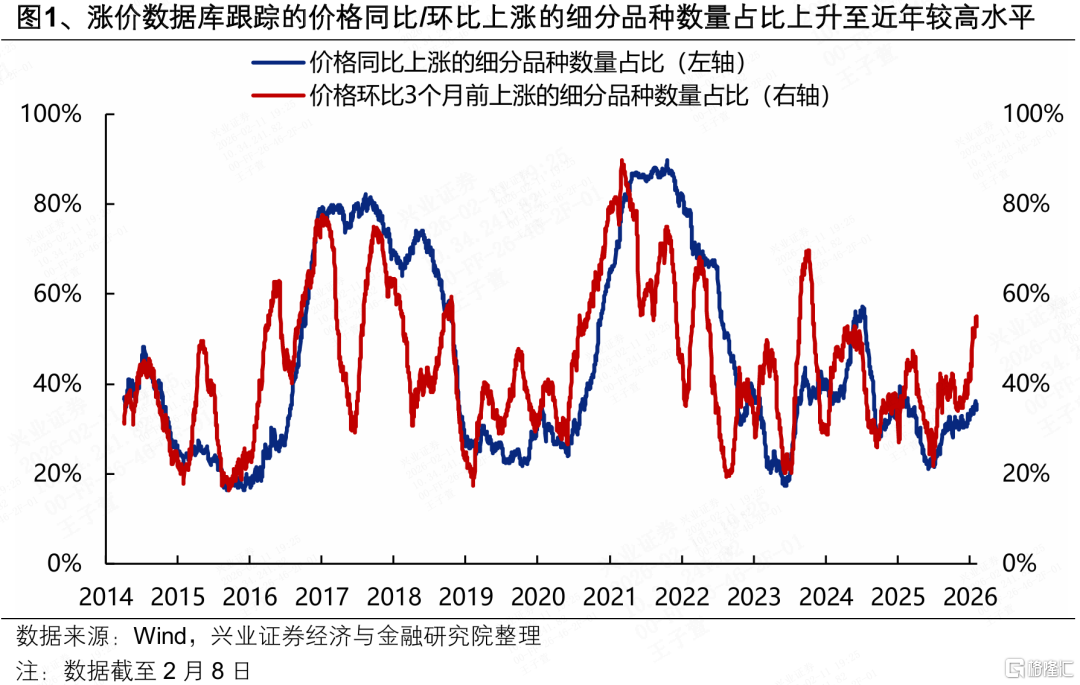
Core Viewpoint - The recovery of prices is identified as the most critical logic supporting corporate profit improvement in 2026, which may also influence market styles [1]. Price Trends and Data Analysis - The first inflation data of the year validates the momentum of price improvement, with the Producer Price Index (PPI) reaching a year-on-year high not seen since August 2024 and a month-on-month high since October 2023 [1]. - The proportion of price-increasing subcategories in the comprehensive price database has risen to a relatively high level, indicating a strong correlation with the month-on-month PPI trends [1]. - Recent price increases are characterized by a broader range and richer clues, driven by international commodity price transmission, favorable policies, and trends in the technology industry [4]. Sector-Specific Insights - The sectors with significant month-on-month PPI increases in January include non-ferrous metals, non-metallic mineral products (such as building materials), black metals, technology manufacturing, chemical fibers, and agricultural processing [4]. - The price increases in these sectors correspond with the high-frequency tracked price subcategories, indicating a robust link between input inflation and domestic price recovery [4]. Price Increase Clues - The proportion of subcategories with price increases over the past three months is at its second-highest level since 2016, only surpassed by the supply-side reform period in 2017 and the significant inflation period in 2021 [4]. - A detailed table shows various subcategories with significant price increases in January, such as oxygen pressure (62.5%), lithium concentrate (52.3%), and DRAM index (35.7%), indicating strong upward price trends across multiple sectors [6][7]. Future Outlook - The post-holiday period is seen as a critical window for validating price increases, with expectations for further price clues to emerge as the spring construction season begins and policies are implemented after the March meetings [9]. - Historical data suggests that the first quarter is typically a key period for PPI acceleration during inflation cycles, indicating a potential for sustained price increases [9]. Sector Performance Expectations - The relative performance of sectors such as TMT (Technology, Media, and Telecommunications), advanced manufacturing, and resource & infrastructure chains is expected to be strong post-Spring Festival, with higher win rates anticipated [10]. - A statistical analysis shows that industries with a positive correlation to PPI include chemicals, steel, building materials, transportation, petrochemicals, non-ferrous metals, and coal, among others [14].

细分领域景气上行,化工行业景气修复可期,化工ETF国泰(516220)收涨2.2%
Mei Ri Jing Ji Xin Wen· 2026-02-11 13:28
Group 1 - The chemical industry is experiencing a recovery, with specific sectors such as dyes, PVA, and vitamins showing signs of improvement, as indicated by a 2.2% increase in the Guotai Chemical ETF (516220) on February 11 [1] - Leading dye companies have raised prices due to tight supply of core intermediates, while PVA prices are increasing due to higher export orders following extreme weather affecting overseas facilities [1] - Vitamin prices are also rising as major manufacturers plan production halts for maintenance and increase their quotes, leading to tighter supply expectations post-holiday [1] Group 2 - The Guotai Chemical ETF (516220) tracks a specialized chemical index (000813) that includes listed companies from various sectors such as fertilizers, pesticides, and coatings, reflecting the overall performance of high-growth and specialized chemical enterprises [1] - The index focuses on specific chemical products and technologies, aiming to highlight structural opportunities within the chemical industry [1]
002759,被立案!影响18万股东
Zhong Guo Ji Jin Bao· 2026-02-11 13:01
Core Viewpoint - Tianji Co., Ltd. is under investigation by the China Securities Regulatory Commission (CSRC) for suspected violations of information disclosure regulations [2] Group 1: Investigation and Regulatory Actions - The CSRC has decided to initiate a case against Tianji Co., Ltd. due to alleged violations of information disclosure laws [2] - Tianji Co., Ltd. reported that its production and operational activities are currently normal and that the investigation will not significantly impact its operations [5] - The Guangdong Regulatory Bureau issued an administrative regulatory decision citing issues such as improper goodwill impairment testing and inaccurate financial accounting [5][6] Group 2: Management Accountability - Key executives, including Chairman Wu Xidun, CFO Yang Zhixuan, and Secretary Zheng Wenlong, are held primarily responsible for the company's violations of disclosure regulations [5][6] - The company has received administrative measures requiring corrective actions and has been issued warning letters for the responsible executives [5][6] Group 3: Company Operations and Products - Tianji Co., Ltd. primarily produces lithium hexafluorophosphate and related fluorochemical products, sodium hypophosphite and related phosphochemical products, as well as small household appliances [7] - As of February 11, the company's stock price was reported at 43.96 yuan per share, with a total market capitalization of 22 billion yuan [8] Group 4: Shareholder Information - As of January 30, Tianji Co., Ltd. had over 180,000 shareholders, reflecting a recent increase of 3,598 shareholders, or a 2.02% change [9][10]


持股过节,关键在找对股,马年两热点:AI和涨价
Sou Hu Cai Jing· 2026-02-11 12:52
Group 1 - The current sentiment in the A-share market suggests that investors are more focused on returning home for the holidays rather than on stock performance, yet holding stocks during this period is recommended as it may prevent investors from becoming latecomers after the holiday [1] - The A-share market is still in a bull phase, with the Shanghai Composite Index just a few points away from its historical high, making it difficult for cash holders to watch stocks rise [1] - The investment strategy should consider not only the value of stocks but also the potential buyers in the future, indicating that cash holders will likely become the future trading targets for stockholders [1] Group 2 - The best stocks to hold during the holiday season should focus on three main themes: hot topics created during the Spring Festival, concepts related to the National People's Congress (NPC), and earnings expectations from upcoming financial reports [3][5] - The first theme includes AI-related stocks and popular cultural events, which are expected to drive market interest post-holiday, with AI being a significant focus in the capital market this year [3] - The second theme revolves around government spending and infrastructure, particularly in electricity and communication sectors, with transformer concepts gaining attention due to recent performance [3] Group 3 - The third theme emphasizes the anticipation of financial reports, where companies with strong earnings expectations, particularly in the consumer health sector, may become new hotspots in the A-share market [5] - The performance of stocks like Kweichow Moutai will be closely watched, especially regarding its ability to withstand pricing pressures, with potential for investors to leverage earnings reports for strategic buying [5] - Current economic indicators show a 0.2% increase in January's Consumer Price Index (CPI) and a 0.4% rise in the Producer Price Index (PPI), suggesting a positive economic outlook focused on AI and price increases [5][6] Group 4 - The rise in certain sectors, such as fiberglass and chemicals, is attributed to price increases in raw materials, indicating that price trends should be a critical consideration in investment decisions [6]

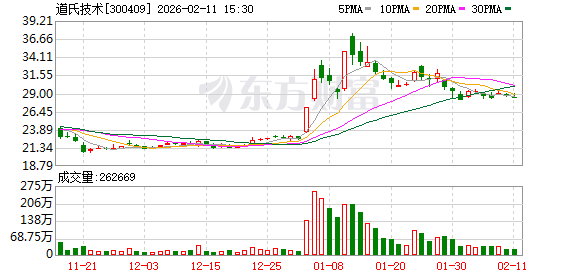
道氏技术:公司单壁管粉体产品性能如纯度、比表、G/D值等与进口单壁管性能相当
Mei Ri Jing Ji Xin Wen· 2026-02-11 12:49
Core Viewpoint - The company highlights the advantages of single-walled carbon nanotubes (SWCNT) in solid-state batteries, emphasizing their role as conductive additives and interface optimization materials, which significantly enhance ionic conductivity and electronic transmission efficiency [2] Group 1: Application in Solid-State Batteries - SWCNTs serve as conductive additives and interface optimization materials in solid-state batteries, leveraging their unique one-dimensional nanostructure and high conductivity to create efficient three-dimensional conductive networks [2] - The use of SWCNTs improves the ionic conductivity of solid electrolytes and the electronic transmission efficiency of electrodes, contributing to better battery performance [2] Group 2: Mechanical and Safety Benefits - SWCNTs possess excellent mechanical flexibility, which alleviates volume expansion stress during charge and discharge cycles, thereby enhancing the stability and safety of the battery [2] - The incorporation of SWCNTs helps suppress lithium dendrite growth, further improving the cycle stability and energy density of the batteries [2] Group 3: Material Characteristics - The high specific surface area and functionalization capabilities of SWCNTs enhance interface compatibility, making them a key material for next-generation high-performance solid-state batteries [2] - The company's SWCNT powder products match the performance of imported counterparts in terms of purity, specific surface area, and G/D ratio, while their SWCNT slurry, developed with proprietary dispersants, outperforms imported products in viscosity and solid content [2]