商用车

Search documents
丰田、戴姆勒官宣!日本商用车两大巨头合并
Zhong Guo Qi Che Bao Wang· 2025-07-01 09:18
Core Viewpoint - Toyota and Daimler Trucks have reached a final agreement to merge their subsidiaries, Hino Motors and Mitsubishi Fuso Truck and Bus Corporation, by April 2026, aiming to create a new holding company and list it on the Tokyo Stock Exchange, significantly impacting the competitive landscape of Japan's commercial vehicle sector [2][3]. Group 1: Merger Details - Toyota currently holds 50.11% of Hino, while Daimler Trucks owns 89.3% of Mitsubishi Fuso. The new holding company will be jointly owned, with both companies holding 25% of the shares, but with differing voting rights [3]. - The new company will be headquartered in Tokyo, employing over 40,000 staff, with Karl Deppen, the current CEO of Mitsubishi Fuso, appointed as CEO of the new entity [3]. - The merger aims to enhance competitiveness in the global commercial vehicle market by integrating resources and maintaining brand and sales networks in Japan and overseas [8]. Group 2: Background and Challenges - The merger follows a scandal involving Hino's falsification of engine emissions and fuel efficiency data, which severely impacted its financial performance, leading to significant losses in fiscal years 2021 and 2022 [4]. - Hino faced collective lawsuits in multiple markets, including the U.S. and Australia, but reached a $1.2 billion settlement with the U.S. Department of Justice in January 2025, allowing merger negotiations to progress [5]. - The merger is seen as a strategic response to the urgent need for the commercial vehicle industry to transition towards electrification and automation, with significant investments required to remain competitive [8]. Group 3: Strategic Implications - The merger is viewed as a critical move for Japan's automotive industry to adapt to global supply chain restructuring, aiming to enhance bargaining power and risk resilience in the market [9]. - Both companies plan to collaborate on next-generation technologies, including decarbonization and autonomous driving, leveraging Toyota's e-TNGA electric platform and fuel cell technology [9]. - The merger is expected to solidify Japan's position in traditional markets like Southeast Asia and the Middle East, especially in light of the rapid expansion of Chinese commercial vehicle brands [10].


重塑行业价值标准 远程中国VAN家族上新
Zhong Guo Qi Che Bao Wang· 2025-07-01 07:43
Core Viewpoint - The launch of the new remote star enjoy V7E marks a significant addition to the remote new energy commercial vehicle lineup, redefining the value ecosystem of urban distribution and intercity logistics with its three core advantages: smart driving control, premium space, and versatile functionality [1][8]. Group 1: Market Context - The logistics market in China is currently complex, with both challenges and opportunities arising from the global economic environment. The ownership of new energy VAN products in China has exceeded 1.2 million units, with over 40% market share from January to May this year, establishing them as the main force in urban distribution logistics [3][4]. - The market faces challenges such as product homogenization, where different brands and models exhibit high similarity in features, leading to a "copycat" product matrix [3]. Group 2: Product Positioning and Features - The remote star enjoy V7E fills the product gap between the remote star enjoy V6E and the remote super VAN, enhancing the brand's global layout and product matrix [8]. - The V7E is designed for short-distance urban distribution, built on the third-generation urban new energy light vehicle platform, and features the remote Xuanwu powertrain, which integrates multiple technologies to meet user demands for efficiency and safety [9][11]. - The vehicle is equipped with a 51.4 kWh Xuanwu battery, offering a CLTC range of 375 kilometers, with plans to expand to a 460-kilometer range in the future. It achieves a low energy consumption of 13.8 kWh per 100 kilometers [11]. Group 3: Loading and Safety Features - The V7E boasts a cargo compartment length of 2870mm, expandable to 4100mm, with a maximum cargo volume of 7.5m³, making it highly competitive in its price range. It features a 270° magnetic tailgate and side sliding doors for easy loading and unloading [13]. - The Xuanwu battery offers the industry's longest warranty of 10 years or 800,000 kilometers and has passed rigorous safety tests, ensuring high durability and safety standards [15]. Group 4: Business Model and User Engagement - The company has shifted from a simple vehicle sales model to a more integrated ecosystem approach, offering a five-in-one solution that includes sales, value protection, easy leasing, vehicle-battery separation, and worry-free rentals [16]. - The launch event introduced seven major purchase benefits for the first batch of vehicle owners, covering all usage scenarios and enhancing user engagement through partnerships with platforms like Didi Freight [18].

9.2万辆!逆天了!6月重卡全面上涨 | 光耀评车
第一商用车网· 2025-06-30 15:45
Core Viewpoint - The heavy truck market in China experienced a significant increase in sales in June, with a year-on-year growth rate of 29%, marking the third consecutive month of growth in 2023 [1][4][5]. Sales Performance - In June 2025, approximately 92,000 heavy trucks were sold, representing a 4% increase from May and a 29% increase from the same month last year [4][5]. - Cumulatively, from January to June 2023, the heavy truck market in China sold about 533,300 units, reflecting a year-on-year growth of approximately 6% [7]. - The retail sales of heavy trucks also saw a year-on-year increase exceeding 36% in June, with a slight month-on-month rise [7][14]. Market Drivers - The primary reason for the sales surge in June, traditionally a "slow season," is attributed to environmental policies, particularly the implementation of a vehicle scrappage and replacement program initiated by three ministries on March 18 [8][9]. - The program has led to increased demand for new heavy trucks as older vehicles are replaced, contributing to the market's growth despite challenges in the freight market [9][10]. Segment Performance - The electric heavy truck segment has shown remarkable growth, with sales exceeding 15,000 units in June, a year-on-year increase of over 120%, and a market penetration rate surpassing 24% [16][17]. - Diesel heavy trucks also performed well, with a year-on-year growth rate of around 52% in June [17]. - Conversely, the natural gas heavy truck segment continues to decline, with sales dropping over 22% year-on-year in June, primarily due to unfavorable price differentials and delayed policy implementation in key regions [16][17]. Future Outlook - The ongoing effects of the scrappage policy are expected to sustain the demand for new heavy trucks, with projections indicating a significant year-on-year increase in sales for the third quarter of 2023, particularly in September [19].

这家企业冲击中国新能源智能化商用车美股第一股!
第一商用车网· 2025-06-30 15:45
Core Viewpoint - The merger between Scage International and Finnovate Acquisition Corp. marks a significant milestone in advancing global decarbonization in commercial transportation, with plans for Nasdaq listing and expansion into new markets [1][3]. Group 1: Merger Details - Scage International has completed its business combination with Finnovate Acquisition Corp, with the new company, Scage Future, set to trade on Nasdaq under the ticker "SCAG" starting June 30, 2025 [1]. - The merger has received approval from Finnovate's shareholders and all remaining conditions have been satisfied or waived [1]. Group 2: Company Strategy and Vision - The CEO of Scage International emphasized that the Nasdaq listing will enhance market visibility and broaden financing channels, facilitating the commercialization of next-generation hybrid, electric, and hydrogen fuel cell trucks [3]. - The company plans to expand production capacity, invest in hydrogen infrastructure, and extend its global footprint in regions such as China, Central Asia, Southeast Asia, and the Middle East, while preparing to enter the European and American markets [3]. - Scage International aims to create long-term value for shareholders through a strong order backlog and an expanding portfolio of zero-emission products [3]. Group 3: Company Background - Scage International is a leading provider of zero-emission technology in China, focusing on accelerating the decarbonization of global commercial transportation through advanced heavy-duty new energy vehicle products and innovative clean fuel systems [4]. - The company has extensive experience in the design, production, and testing of the next generation of heavy-duty new energy commercial vehicles, with key products including the Longwang II plug-in hybrid dump truck and the Galaxy II plug-in hybrid truck [4].

【周观点】6月第3周乘用车环比+21.6%,继续看好汽车板块
东吴汽车黄细里团队· 2025-06-30 14:23
Core Viewpoint - The automotive sector is expected to continue its growth trajectory, driven by technological innovation and the rise of AI and robotics, with a focus on three main themes: dividends, smart technology, and robotics [5][6][12]. Weekly Review Summary - In the third week of June, the compulsory insurance for vehicles reached 548,000 units, showing a week-on-week increase of 21.6% and a month-on-month increase of 40.0% [2][42]. - The performance of various automotive segments ranked as follows: SW automotive parts (+4.6%), SW commercial passenger vehicles (+3.2%), SW automotive (+2.9%), SW motorcycles and others (+2.4%), SW passenger vehicles (+0.1%), and SW commercial freight vehicles (0.0%) [2][9]. Industry Core Changes - Xiaomi launched the YU7, a mid-to-large luxury high-performance SUV, with prices starting from 253,500 CNY for the single-motor rear-drive version and going up to 329,900 CNY for the dual-motor high-performance version [4][11]. - Li Auto updated its Q2 2025 delivery forecast to 108,000 units, reflecting a slight decrease of 0.5% year-on-year but an increase of 16% compared to the previous quarter [4][11]. - Black Sesame Intelligence and Nullmax collaborated to create a mainstream production solution for assisted driving, utilizing a single Wudang C1236 chip [4][11]. - The YU7 model is equipped with a standard electric power steering system [4][11]. Sector Perspective Reaffirmation - The market remains optimistic about the automotive sector, particularly following the impressive pre-sale of the Xiaomi YU7, which surpassed 240,000 units in just 18 hours, setting a historical record [5][12]. - The recommendation is to increase the allocation towards dividend stocks in the automotive sector for the second half of the year, focusing on three main themes: dividends and good patterns, AI smart technology, and AI robotics [6][12]. Current Automotive Sector Configuration - The automotive sector is advised to focus on technological innovation as a means to achieve healthy development [6][12]. - Key stocks to consider include: - Dividend and good pattern theme: Yutong Bus, China National Heavy Duty Truck, and various automotive parts manufacturers [6][12]. - AI smart technology theme: Preferred stocks include Xpeng Motors, Li Auto, and Xiaomi Group in Hong Kong, and companies like Seres and BYD in A-shares [6][12]. - AI robotics theme: Recommended stocks include Top Group, Joyson Electronics, and others [6][12].

重磅!中国重汽(03808)迎来新任董事长 | 头条
第一商用车网· 2025-06-30 07:01
6月27日,中国重汽(香港)有限公司发布重要公告,宣布多项高层人事变动及董事委员会架 构调整。 FALE DE SINOTRUK SINOTRUK (HONG KONG) LIMITED 中國重汽(香港)有限公司 (於香港註冊成立的有限公司) (股份代號:03808) 本公司董事長、執行董事及總裁變動 設立環境、社會及管治委員會 原执行董事刘正涛获委任为董事长、执行委员会主席以及战略及投资委员会主席,并因此辞任 总裁一职。 及 董事委員會人士變動 本公司董事長、執行董事及總裁變動及董事委員會人士變動 董事會謹此宣佈,自2025年6月27日起: (iv) 王德春先生已辭任執行總裁;及 (v) 韓峰先生已獲委任為執行董事及執行委員會成員。 在高层人事变动方面 (i) 王志堅先生已辭任董事長、執行董事、執行委員會主席以及戰略及投資委員 會主席; (ii) 劉正濤先生獲委任為董事長、執行委員會主席以及戰略及投資委員會主席及 因此辭任總裁; (iii)劉偉先生已獲委任為執行董事、總裁、執行委員會成員以及戰略及投資委員 會成員; 中国重汽(香港)董事会宣布,自2025年6月27日起:王志坚已辞任董事长、执行董事、执 行委 ...

商用车的“智电革命”全面提速,中集车辆发力纯电动头挂列车
第一商用车网· 2025-06-30 07:01
Core Viewpoint - The "smart electric revolution" in the commercial vehicle sector is accelerating due to the combined effects of policy, market, and technology, presenting unprecedented development opportunities for the industry and companies involved [1]. Group 1: Market Trends and Sales Data - In the first five months of 2025, domestic sales of new energy heavy trucks reached 61,200 units, a year-on-year increase of 195% [1]. - In May 2025, sales of new energy heavy trucks hit 15,100 units, marking a historical high for the same period and a year-on-year increase of 190.7% [1]. - The market for new energy heavy trucks is expected to grow significantly, with projections of 180,000 to 200,000 units sold in 2025 and 650,000 units by 2030 [4]. Group 2: Product Development and Innovation - The new energy heavy truck segment includes pure electric heavy-duty special vehicles, new energy head trailers, and pure electric head trailers, with the latter optimized for better economic, power, safety, and handling performance [6]. - In 2023, the company launched a pure electric semi-trailer mixer truck, receiving positive market feedback, and in 2024, it introduced its self-developed pure electric head trailer J-RT1.0 mixer truck for operations in Xi'an [10]. - The company has established a project organization for the "Hannover Plan" to develop a product platform for pure electric head trailers, focusing on both engineering and logistics applications [12]. Group 3: Technological Advancements and Strategic Collaborations - The company is driving both electrification and intelligence in the pure electric head trailer sector, addressing industry challenges such as driver shortages and safety issues through technological innovation and strategic partnerships [17]. - Collaborations with major manufacturers aim to enhance integrated solutions in braking and control systems, addressing long-standing issues in commercial vehicle operations [17]. - The company has invested in firms like Karl Power and Moudi Technology to advance autonomous driving and smart logistics, reflecting its strategic vision in the new energy and intelligent connected vehicle sectors [19]. Group 4: Future Outlook and Industry Potential - The commercial vehicle industry is transitioning towards a "smart electric revolution," driven by urgent industry needs and the potential for new market opportunities [25]. - The increasing penetration of pure electric heavy trucks is expected to elevate the value of trailer products, with the company positioned to benefit from this trend due to its strong R&D and market capabilities [25]. - The future of logistics is envisioned to integrate pure electric head trailers with autonomous driving technologies, aiming to enhance efficiency and reduce costs in the commercial vehicle sector [23].

636度电破局!三一江山SE636杀入快递干线市场 | 头条
第一商用车网· 2025-06-29 13:29
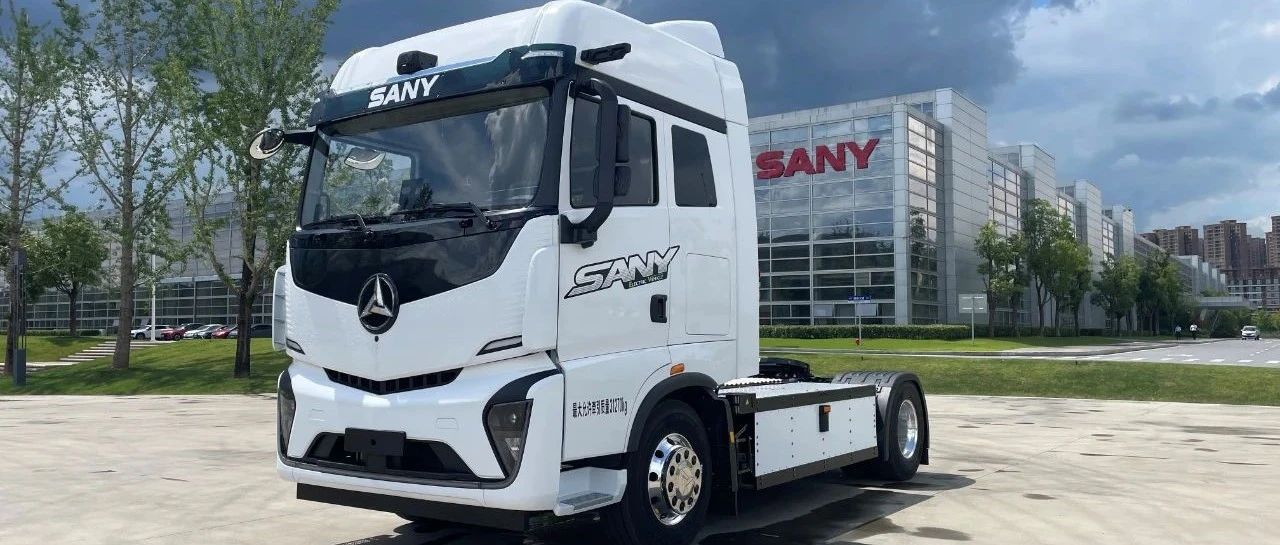
Core Viewpoint - The article emphasizes the significant economic advantages of electric heavy-duty trucks in commercial vehicle electrification, particularly in the express trunk logistics sector, where the SANY Jiangshan SE636 electric truck is positioned as a game-changer for cost reduction and efficiency enhancement in the industry [1][3]. Group 1: Economic Efficiency - The SANY Jiangshan SE636 features a 636 kWh battery, enabling a real-world range of 500 kilometers, which meets the needs of major express trunk routes in China [4]. - The truck's weight is optimized to 10.6 tons, which is over 0.5 tons lighter than mainstream competitors, allowing for additional cargo capacity and increased revenue per trip [6]. - The "smart energy management system" of the SE636 allows for an average energy consumption of just 1.1 kWh per kilometer, potentially saving over 100,000 yuan annually in energy costs for a fleet operating 200,000 kilometers per year [8][10]. Group 2: Operational Efficiency - The SE636 utilizes an 800V high-voltage architecture and 1000A fast-charging technology, allowing for a 30-minute charge from 20% to 80%, equating to approximately 300 kilometers of range [14]. - The truck's dual-motor and dual-transmission system provides 870 horsepower, surpassing traditional diesel trucks in performance, and offers robust climbing capabilities on steep gradients [16]. - Advanced chassis technology and air suspension enhance operational efficiency and comfort, reducing the physical strain on drivers during long hauls [18]. Group 3: Driver Experience and Safety - The SE636's cabin design maximizes space and comfort, featuring a flat floor and a spacious sleeping area, catering to long-distance drivers [22]. - It is equipped with an L2-level intelligent driving assistance system, providing comprehensive safety features to reduce fatigue and enhance driving safety [24]. - The "Smart Transport" platform allows fleet managers to monitor vehicle status in real-time, optimizing operations for safety and efficiency [26]. Group 4: Market Positioning - The SE636 is positioned as a reliable solution for the express logistics sector, addressing the urgent need for cost-effective electric heavy-duty trucks [28]. - SANY's commitment to a direct sales and service model, along with comprehensive support services, strengthens customer confidence in the SE636 [28].
欧盟委员会提议免除通行费 以提振对零排放卡车和公共汽车的需求
news flash· 2025-06-27 10:13
欧盟委员会提议免除通行费 以提振对零排放卡车和公共汽车的需求 智通财经6月27日电,为了刺激和支持可持续道路运输的竞争力,欧盟委员会提议免除零排放重型车辆 的道路通行费和使用费。欧盟委员会提议将目前的豁免期从2025年12月31日延长至2031年6月30日,为 公司投资零排放重型车辆提供重大激励。拟议的豁免期将与欧盟的CO2新型重型车辆的排放性能标准其 目标是到2030年将排放量减少43%。 ...
日野汽车:发动机、变速器将砍掉一半
Zhong Guo Qi Che Bao Wang· 2025-06-27 07:20
Core Viewpoint - Hino Motors is pursuing a merger with Mitsubishi Fuso, setting financial targets to improve operating profit margins to 5% by FY2026 and 8% by FY2030, while initiating efficiency optimization plans before the merger is finalized [1][3][7] Group 1: Merger Background and Financial Goals - The merger plan between Hino and Mitsubishi Fuso was initiated in May 2023, with the aim to complete integration by the end of 2024, but was delayed due to Hino's emissions scandal [3] - Hino faced significant financial losses due to the scandal, reporting net losses of 84.7 billion yen in FY2021 and 117.6 billion yen in FY2022, prompting the need for external capital and the merger [3] - The new holding company will have Toyota and Daimler Trucks each holding 25% of shares, with Daimler having a slight edge in voting rights, indicating Hino's departure from being a subsidiary of Toyota [6] Group 2: Cost Management and Operational Efficiency - Hino plans to achieve its operating profit margin targets primarily through internal efforts and operational synergies post-merger, with a focus on reducing the variety of key components by 50% [7] - The company anticipates a net loss of 217.7 billion yen in FY2024 due to substantial settlement costs, necessitating cost-cutting measures in the following years [7] - Hino has already sold its Hamura plant for 150 billion yen to Toyota, which will be used to cover losses and invest in electrification [7] Group 3: Industry Context and Competitive Landscape - The merger is seen as a strategic response to the dual challenges of electrification and globalization in the commercial vehicle sector, with the new entity expected to form a significant competitive group alongside Isuzu and UD Trucks [8] - The consolidation aims to enhance scale and competitiveness against the rapid expansion of Chinese commercial vehicle brands in overseas markets, particularly in Southeast Asia and the Middle East [8]