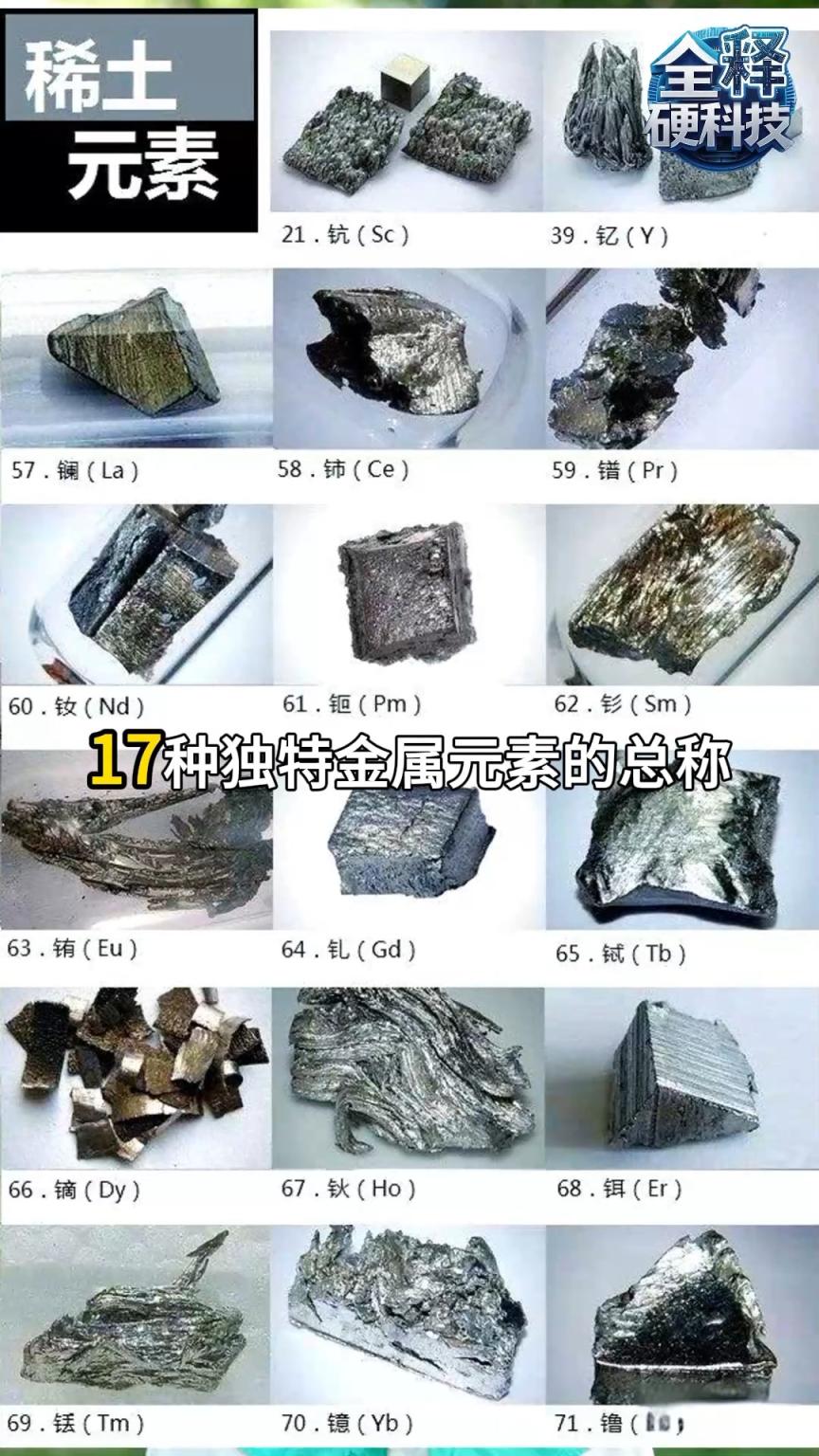
稀土

Search documents
中国稀土从“软肋”到“王牌”的逆袭之路
Bei Jing Wan Bao· 2025-11-07 03:27
Group 1 - The article highlights the transformation of rare earth elements in China from a weakness to a strategic advantage, emphasizing their critical role in modern technology and industry [1][9][11] - Rare earth elements consist of 17 unique metallic elements, each possessing distinct properties that make them essential for various applications, such as high-performance motors and advanced display technologies [9][11] - China holds nearly half of the world's rare earth reserves, positioning itself as a dominant player in the global rare earth market, thanks to significant advancements in extraction and refining technologies [11][13] Group 2 - The development of rare earth industries in China has evolved from a low-efficiency, high-pollution model to a more regulated and high-quality production approach, reflecting decades of scientific and industrial progress [13] - The contributions of scientists like Xu Guangxian have been pivotal in achieving breakthroughs in rare earth extraction techniques, enabling China to lead in production and export [11][13]


广晟有色涨2.01%,成交额1.92亿元,主力资金净流入975.44万元
Xin Lang Cai Jing· 2025-11-07 03:23
Core Points - Guangsheng Nonferrous Metal Co., Ltd. has seen a stock price increase of 92.05% year-to-date, with a recent decline of 2.77% over the last five trading days [1] - The company reported a significant decrease in revenue for the first nine months of 2025, amounting to 4.634 billion yuan, a year-on-year decrease of 46.97%, while net profit attributable to shareholders increased by 146.30% to 128 million yuan [2] - The company has a market capitalization of 17.969 billion yuan and a trading volume of 192 million yuan as of November 7 [1] Financial Performance - For the period from January to September 2025, Guangsheng Nonferrous achieved operating revenue of 4.634 billion yuan, a decrease of 46.97% compared to the previous year [2] - The net profit attributable to shareholders for the same period was 128 million yuan, reflecting a year-on-year increase of 146.30% [2] Shareholder Information - As of September 30, 2025, the number of shareholders increased to 60,900, up by 9.77% from the previous period [2] - The average number of circulating shares per shareholder decreased by 8.90% to 5,522 shares [2] - New institutional shareholders include Hong Kong Central Clearing Limited and several mutual funds, indicating increased interest in the company [3]

稀土霞光——记“中国稀土之父”徐光宪的卓越人生
Zhong Guo Hua Gong Bao· 2025-11-07 02:31
Core Viewpoint - Xu Guangxian, known as the "Father of Chinese Rare Earths," dedicated his life to the development of China's rare earth industry through independent innovation and strategic alignment with national needs [1][4]. Group 1: Early Life and Education - Xu Guangxian was born in 1920 in a scholarly family in Shaoxing and faced significant challenges during his education due to the war [2]. - He graduated from Ningbo High School in 1940 and worked as a technician while attending night classes at Shanghai Jiao Tong University [2]. - In 1948, he received a government scholarship to study at the University of Washington, where he excelled academically and later pursued a Ph.D. at Columbia University [3]. Group 2: Return to China and Academic Career - After the founding of the People's Republic of China, Xu decided to return to China in 1951, rejecting lucrative offers in the U.S. to contribute to his homeland [4]. - He became a professor at Peking University, where he taught for decades and mentored many students, some of whom became academicians [4][5]. Group 3: Research Focus and Contributions - Xu's research shifted multiple times in response to national strategic needs, starting with quantum chemistry, then nuclear fuel extraction, and finally rare earth separation [5]. - In 1972, he led a team to tackle the global challenge of rare earth solvent extraction, ultimately developing the "constant mixed extraction ratio" principle and the cascade extraction theory [6][7]. - The cascade extraction theory revolutionized China's rare earth industry, significantly improving the purity of rare earth products and addressing long-standing production challenges [7]. Group 4: Recognition and Legacy - Xu Guangxian received numerous awards, including the National Highest Science and Technology Award in 2008, recognizing his lifelong contributions to rare earth research and education [8]. - His achievements reflect not only his scientific prowess but also his commitment to national development and education, earning him respect and admiration in both China and the international scientific community [8].
江宇舟:15年稀土梦碎,美国真就是“体制问题”
Guan Cha Zhe Wang· 2025-11-07 00:29
Core Viewpoint - The article discusses the recent developments in the U.S. rare earth strategy under the Trump administration, highlighting the inconsistencies and challenges faced in breaking China's dominance in the rare earth sector. It emphasizes systemic issues within the U.S. that hinder effective policy implementation and industry growth. Group 1: U.S. Rare Earth Strategy - The Trump administration has shown a strong interest in rare earth elements, signing agreements with Japan and claiming to break China's control over the sector within two years [1][12][13] - The U.S. Geological Survey does not list Ukraine as a major rare earth holder, contradicting claims made by Trump regarding significant rare earth resources in Ukraine [2][3] - The U.S. has been attempting to reduce its reliance on Chinese rare earths for over 15 years, with various legislative efforts aimed at rebuilding domestic production and supply chains [6][7][12] Group 2: Challenges in Implementation - Despite numerous policies and plans, the U.S. has made limited progress in establishing a competitive rare earth industry, with only one major mine, Mountain Pass, currently operational [11][13][28] - The average time for mineral exploration and development in the U.S. is significantly longer than in other countries, leading to delays in production [25][28] - The U.S. faces a talent shortage in the mining sector, with only a small number of graduates entering the rare earth field each year, compared to thousands in China [24][25] Group 3: International Collaboration and Market Dynamics - The U.S. is seeking partnerships with allies like Australia to develop rare earth supply chains, but faces challenges in achieving significant production levels [20][31] - The global market for rare earths is relatively small, which limits the economic viability of large-scale investments in the U.S. [31][32] - The U.S. Department of Defense has been involved in financing rare earth projects, but the effectiveness of these investments remains uncertain [32][33] Group 4: Systemic Issues - The article highlights systemic problems within the U.S. government that impede the efficiency of rare earth policy implementation, including bureaucratic hurdles and a lack of cohesive strategy [36][39] - The U.S. has struggled to compete with China's established rare earth industry, which has a well-developed supply chain and technological advantages [44][51] - The article concludes that the U.S. needs to address these systemic issues to make meaningful progress in its rare earth strategy and reduce dependence on China [39][49]

为美国稀土自给“买单”:MP Materials(MP.US)牺牲对华销售致Q3亏损 磁体工厂年底实现首批产出
智通财经网· 2025-11-06 23:41
Core Viewpoint - MP Materials reported an expanded loss in Q3 due to a halt in sales to Chinese customers as per an agreement with the U.S. government, but the performance exceeded Wall Street expectations [1] Financial Performance - The company recorded a quarterly loss of $41.8 million (loss of $0.24 per share), compared to a loss of $11.2 million (loss of $0.16 per share) in the same period last year [1] - Excluding one-time items, the loss per share was $0.10, better than the analyst expectation of a loss of $0.18 per share [1] - Revenue for the quarter was $53.55 million, a 15% year-over-year decline, slightly below the analyst expectation of $54.92 million [1] Sales and Product Development - The company did not record any revenue from rare earth concentrate sales during the quarter, which had been a major revenue source, due to a July investment agreement with the U.S. Department of Defense prohibiting future shipments [1] - MP Materials reported $21.9 million in sales revenue from magnetic precursor products, which are essential materials for manufacturing magnets [2] - Revenue growth of $11.7 million was driven by increased sales of neodymium-praseodymium oxide and metal, supported by enhanced separation product output over the past 12 months [2] Future Plans - The company anticipates commercial sales of magnets from its Oklahoma facility to commence by the end of the year [2] - To produce magnets, MP Materials plans to build a "heavy rare earth" processing plant, expected to be operational by mid-2026, sourcing raw materials from its California mine and third-party suppliers [2][3] Cash Position - As of the end of Q3, MP Materials held a total of $1.94 billion in cash, cash equivalents, and short-term investments [4]

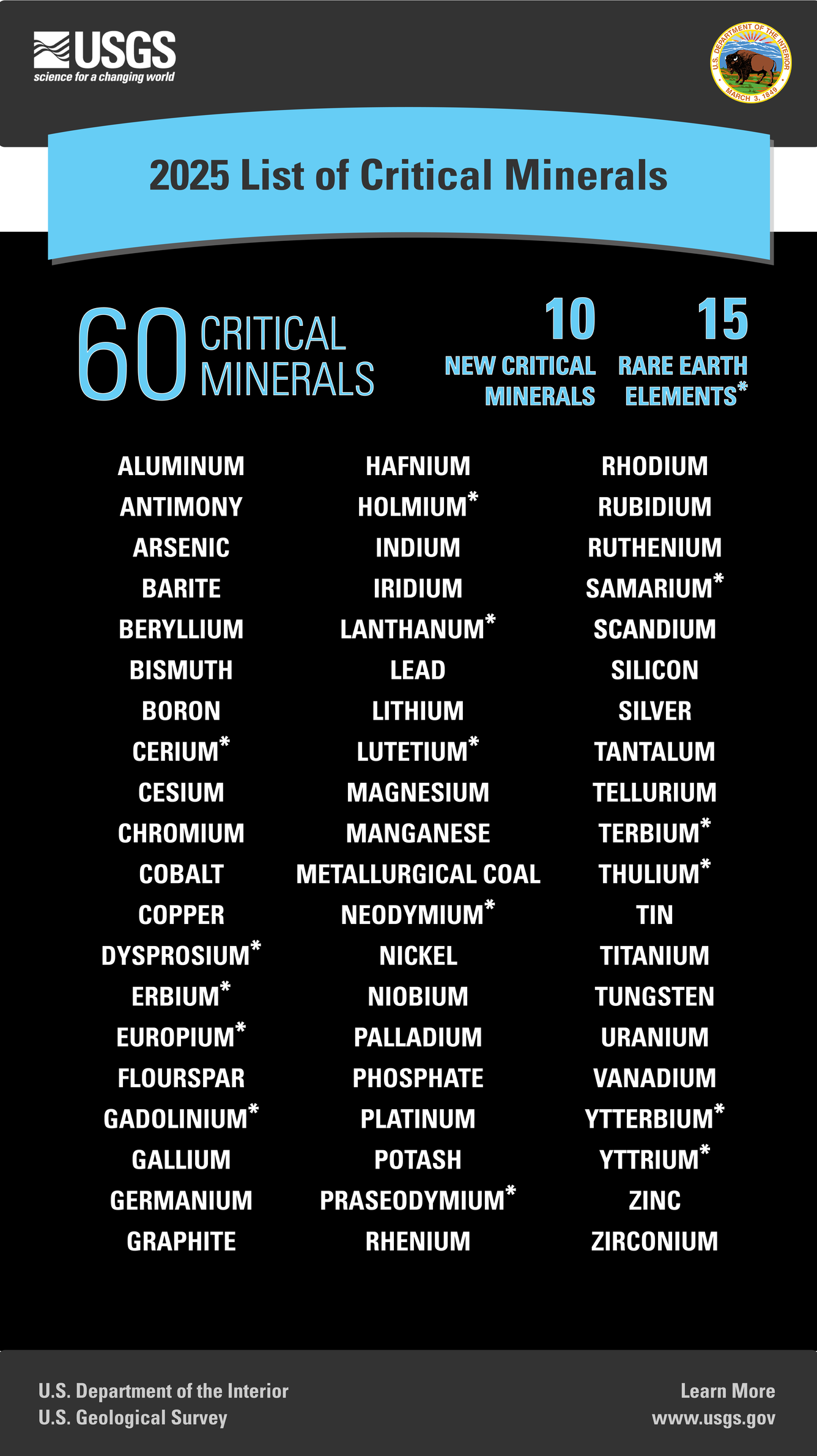
美国正式公布新版关键矿产清单,首次纳入铜,银铀钾肥也入列
Hua Er Jie Jian Wen· 2025-11-06 16:19
Core Viewpoint - The U.S. government has made its largest adjustment to the critical minerals list since its inception, directly impacting the Section 232 investigation announced by the Trump administration, which may lead to tariffs and trade restrictions on related products [1]. Group 1: Key Minerals Added - Copper has been added to the critical minerals list for the first time, marking a significant change since the list was first published in 2018 [1]. - The updated list also includes uranium, silver, metallurgical coal, potash, rhenium, silicon, and lead, replacing the 2022 version [1]. - The inclusion of these minerals aims to reduce U.S. dependence on imports and expand domestic production [1]. Group 2: Market Reactions - Following the announcement of the new critical minerals list, copper ETFs rose approximately 2%, while Southern Copper Corporation increased by 1.6%. In contrast, Freeport and McEwen saw declines of 1.2% and 1.9%, respectively [4]. - The decision on the critical minerals list will influence mining investments, recycling of mining waste, tax incentives for mineral processing, and mining permit approval processes [4]. Group 3: Strategic Importance of Copper and Potash - Copper is recognized for its strategic importance due to its applications in transportation, defense, and power network construction, especially as demand for electricity rises with the growth of data centers and artificial intelligence [5]. - The U.S. imports nearly half of its copper consumption, primarily from Chile, Peru, and Canada, with most global refining capacity concentrated in China [5]. - Potash, primarily used in fertilizer production, has been included due to potential trade barriers from major supplying countries, with about 80% of U.S. potash imports coming from Canada [5]. Group 4: Concerns Over Silver - The addition of silver to the critical minerals list has raised concerns among precious metal traders and manufacturers reliant on the material, as the U.S. heavily depends on imports to meet domestic silver demand [6]. - Silver is widely used in electronics, solar panels, and medical devices, and any tariffs on silver could significantly impact the metal market [6]. Group 5: New Assessment Methods - A new assessment method has been introduced to evaluate the economic consequences of supply shocks and highlight vulnerabilities associated with reliance on single domestic producers [7]. - The updated list includes metallurgical coal and uranium, which were not part of the draft published in August, indicating a comprehensive evaluation process [7]. - Arsenic and tellurium have been removed from the critical minerals list due to changes in domestic production and supply risk assessments [7].
稀土卡住美国脖子,却救不了这对父子:90万饭局背后的百亿迷局
Sou Hu Cai Jing· 2025-11-06 13:05
更令人震惊的是蒋鑫的车库。车库中停满了奢华跑车,每一辆都价值不菲。两辆定制版布加迪威龙,每 辆5200万元;还有一辆帕加尼风之子,一辆法拉利恩佐和上海首辆法拉利812等。光这些超跑的总价值 就超过了2亿元。更夸张的是,蒋鑫有些车甚至一次都没有开过,只是摆在车库里,纯粹为了满足个人 的收藏癖好。即使是王思聪在蒋鑫面前也不得不逊色三分。 账单的发布者名为Snake_Kane,他的微博认证身份是HAC顶级跑车俱乐部的成员。这个神秘人的真实 身份很快被揭露出来,他是中国稀土控股有限公司创始人蒋泉龙的独子——蒋鑫。蒋鑫,1987年出生, 是典型的富二代。他毕业于英国曼彻斯特大学,主修国际商业、金融及经济学,之后还曾在威尔士大学 学习过商业研究。2008年,年仅24岁的他便进入父亲的公司,并迅速升任总经理。2016年底,他又成为 泛亚环保集团的董事会主席。按理来说,蒋鑫的履历已经相当耀眼,但他还拥有另一个身份——上海四 少之一。在上海的富二代圈子中,蒋鑫以敢花钱闻名,大额的饭局对他来说几乎不值一提。 10月7日,美国众议院发布了一份报告,建议对中国实施更加严格的半导体设备出口禁令,声称这将是 史上最严的禁令。中国方面迅速 ...

北方稀土(600111):25年三季报业绩点评:稀土行业Q3景气度持续上行,公司实现量价齐升
Western Securities· 2025-11-06 12:04
Investment Rating - The report assigns a rating of "Accumulate" for the company [6][11]. Core Views - The rare earth industry has seen a significant increase in prosperity in Q3 2025, with the company achieving both volume and price growth [1][2]. - For the first three quarters of 2025, the company reported operating revenue of 30.292 billion yuan, a year-on-year increase of 40.50%, and a net profit attributable to shareholders of 1.541 billion yuan, a year-on-year increase of 280.27% [1][3]. - The substantial growth in Q3 performance is primarily attributed to a significant rise in rare earth prices [1][3]. Summary by Sections Financial Performance - In Q3 2025, the company achieved operating revenue of 11.425 billion yuan, a year-on-year increase of 33.32% and a quarter-on-quarter increase of 19.27% [1][2]. - The net profit attributable to shareholders for Q3 was 610 million yuan, a year-on-year increase of 69.48% and a quarter-on-quarter increase of 21.84% [1][2]. - The non-recurring net profit for Q3 was 466 million yuan, a year-on-year increase of 85.91% and a quarter-on-quarter increase of 0.8% [1][2]. Production and Sales - The production of rare earth oxides reached 22,000 tons in the first three quarters of 2025, a year-on-year increase of 93.45% [2]. - The production of rare earth salts was 109,800 tons, a year-on-year increase of 3.7%, and rare earth metals reached 36,300 tons, a year-on-year increase of 26.67% [2]. - In Q3 2025, the production of rare earth magnetic materials was 19,700 tons, a year-on-year increase of 15.68% [2]. Price Trends - The market price of praseodymium-neodymium oxide in Q3 2025 was 540,000 yuan per ton, a year-on-year increase of 39.10% and a quarter-on-quarter increase of 24.96% [3]. - The average market price for the first three quarters of 2025 was 467,300 yuan per ton, a year-on-year increase of 21.81% [3]. Earnings Forecast - The company is expected to have EPS of 0.67, 0.86, and 1.10 yuan for the years 2025, 2026, and 2027 respectively, with corresponding PE ratios of 71.9, 56.0, and 43.6 [3][4].

关于稀土,商务部最新发声
券商中国· 2025-11-06 10:37
Group 1 - The Ministry of Commerce held a press conference on November 6, addressing a question regarding the U.S. White House report on China's export licenses for certain rare earth elements, highlighting a discrepancy with China's own announcement [1] - The spokesperson emphasized that rare earth elements have significant dual-use properties, and China conducts licensing reviews according to laws and regulations, granting licenses for compliant applications [1] - China reiterated its willingness to enhance communication and cooperation with all parties, aiming to optimize the licensing process and promote compliant trade of controlled export items to ensure the stability of global supply chains [1]
稀土限制缓行一年,意味着什么?
Sou Hu Cai Jing· 2025-11-06 08:40
a. 19 find in and | 121 Well I as in a SICI r 2017 23 t 2 吉隆坡谈判双方各退一步,基本回到了马德里达成的共识,非常好。 如果做一个简单的描述。 马德里谈判后,美国认为在时间的赛跑上,中国不具有优势,特别强调了房地产给中国经济带来的压力,贝森特认为中国将不得不在下一轮关税谈判中退 让,于是开始做压力测试,如以安全为由,将15家中国公司列入"实体清单"。 对此,中国打出了稀土牌,在一系列的文章,我一直坚持一个观点,稀土是谈判筹码,不能当成屠龙刀,因为中国不具有长期垄断稀土生产的可能性,事实 证明我是对的。 l a · ■ 上一 l p 1 s t and L 1 稀土限制与美国一连串的压力测试有一个极大的不同,美国是单向的,完全以中国为靶向,而稀土牌是对应着全球市场,这一点很重要,因为它会立即催生 稀土产业的重构,资本涌向稀土,提纯技术的提高与创新定义未来的格局:中国将从稀土垄断转向过剩,没有悬念。它与芯片不同,前者是传统产业,而后 者是时代级的创新。 牌已经打出,的确打中了美国及西方发达国家的软肋。 稀土是美日带起来的产业,考虑到重污染,基本关停了,比较 ...