绿色金融

Search documents
绿色金融市场需求持续升温 多元产品体系日趋完善
Zheng Quan Ri Bao· 2025-10-23 19:05
Core Viewpoint - The development of China's green finance system is accelerating, with increasing financial support for green and low-carbon transitions, leading to a more comprehensive product system that aids in the overall green transformation of the economy and society [1][2]. Group 1: Market Development - The demand for green finance is rising during the "14th Five-Year Plan" period, with efforts to meet the reasonable funding needs of financing entities for green and low-carbon transitions [1]. - China's green finance market has established a leading scale, optimized structure, diverse tools, and improved risk control, with a product system that is increasingly complete [1][4]. - As of the end of Q2 2025, the balance of green loans is approximately 42.39 trillion yuan, and the balance of green bonds exceeds 2.2 trillion yuan, positioning China at the forefront globally [1]. Group 2: Policy Support - The rapid development of green finance is significantly supported by policy initiatives, with numerous related policies introduced this year [3]. - In August, the People's Bank of China and seven departments jointly issued guidelines to leverage green finance for supporting the green and low-carbon circular development of industries [3]. - The Ministry of Finance released a framework for green sovereign bonds in February, aiming to issue these bonds internationally to attract foreign investment for domestic green and low-carbon development [3]. Group 3: Future Outlook - China's green finance market is transitioning from a phase of scale expansion to one of quality enhancement, with policy innovation, product iteration, and international cooperation expected to deepen integration into the new industrialization process [4]. - The "dual carbon" goals create significant development space for green finance, with ongoing policy benefits likely to accelerate market expansion [4]. - Future trends in green finance product innovation will focus on enhancing service capabilities for the real economy, targeting specific sectors, and deepening international cooperation [4].
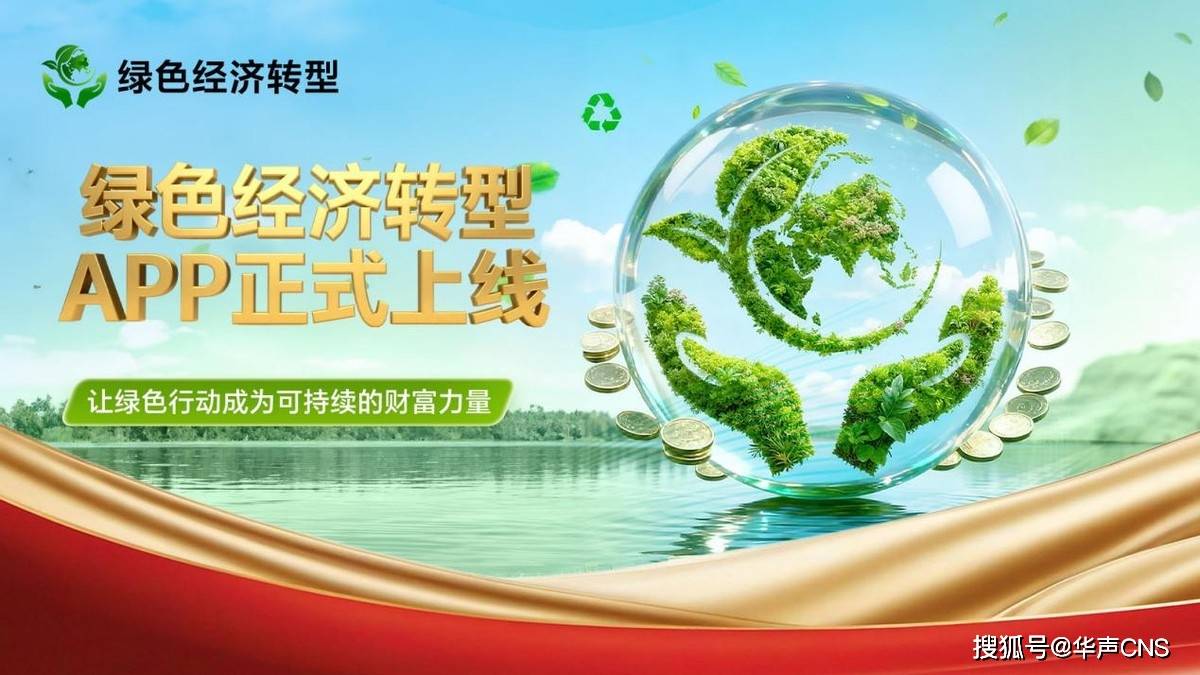
让绿色行动成为可持续力量!绿色经济转型:构建绿色经济生态体系
Sou Hu Cai Jing· 2025-10-23 08:03
Core Insights - The launch of the Green Economy Transition APP marks a significant milestone in China's green finance digital service system, supporting the deep integration of economy and ecology [1][3] - The platform is developed under the national strategy to accelerate comprehensive green transformation, aiming to facilitate carbon reduction, pollution control, and sustainable growth [3][4] Summary by Sections Platform Overview - The Green Economy Transition APP serves as a comprehensive service platform for the green economy, connecting policy information, financial resources, and ecological data through digital technology [4] - It represents a shift from top-level design to systematic implementation in the field of green economy [4] Core Functional Modules - **Policy Intelligence Platform**: Aggregates national and local green policies, tax incentives, and industry support, utilizing smart algorithms for precise policy matching and personalized recommendations [5] - **Green Finance Supermarket**: Consolidates green credit, funds, and carbon financial products, providing verifiable and traceable financing and investment channels for users [6] - **Carbon Account System**: Introduces the concept of "personal green assets," allowing users to track their green consumption and carbon reduction efforts, quantifying ecological contributions into wealth [7] Future Directions - The platform aims to enhance its functionalities, promote the deep integration of green data, policies, and financial systems, and explore new paths for international cooperation in green finance [7]

他山之石|韩国如何借助绿色金融推进废旧电池回收?
Zhong Guo Huan Jing Bao· 2025-10-23 00:19
Core Insights - The rapid development of the global renewable energy industry has made the recycling and reuse of waste batteries a significant issue, with South Korea establishing a unique model in this area through innovative green finance tools, effectively alleviating environmental pressure and promoting the development of a circular economy [1] Group 1: Key Measures of South Korea's Green Finance Support for Waste Battery Recycling - South Korea has prioritized waste battery recycling and reuse as a key area for green finance support, creating a multi-layered financial support system through policy guidance, product innovation, and market cultivation [2] - A dual-driven mechanism of "legal compulsion + financial incentives" has been established, with the revised Resource Conservation and Recycling Act of 2021 mandating battery producers to take on recycling responsibilities, linking recycling targets to green finance support [2] - As of 2024, 23 waste battery recycling companies in South Korea have received certification under the "Battery Circular Finance Certification System," leading to an average reduction of 1.8 percentage points in industry financing costs [2] Group 2: Analysis of the Advantages and Disadvantages of the South Korean Model - The South Korean model shows significant advantages, including deep collaboration between policy and financial tools, with recycling targets integrated into green finance certification standards, creating a closed loop of "legal requirements—financial incentives—market response" [3] - Comprehensive financial services covering the entire industry chain have been developed, with targeted credit, leasing, and securitization products addressing funding needs at various stages from collection to reuse [3] - A robust risk prevention mechanism is in place, utilizing government risk compensation and specialized insurance products to mitigate environmental and market risks during the recycling process [3] - However, there are shortcomings, such as insufficient financial support for imported waste batteries and a mismatch between the average term of green loans (3-5 years) and the typical profitability timeline of waste battery recycling projects (5-8 years) [3] Group 3: Implications for China's Resource Recycling and Reuse - It is recommended that China constructs a comprehensive green finance support system, drawing on South Korea's "policy guidance + product innovation" model, incorporating waste battery recycling targets into the green finance evaluation system and providing financing incentives for compliant enterprises [4] - Establishing a "waste battery recycling risk compensation fund" could help mitigate risks associated with loans issued by financial institutions for recycling [4] - To promote balanced regional development, pilot programs for "battery recycling green finance" could be initiated in provinces with concentrated new energy vehicle industries, integrating credit, funds, and insurance tools [4] - The South Korean experience demonstrates that green finance is an effective tool for promoting waste battery recycling, but its effectiveness requires policy coordination, product innovation, and international cooperation [4]
绿色产业五年增五亿元,把握“十五五”发展要求
2 1 Shi Ji Jing Ji Bao Dao· 2025-10-17 11:41
Group 1 - The global warming has surpassed the critical threshold of 1.5 degrees Celsius, marking the first climate tipping point, with significant coral reef deaths as a notable indicator [1] - The "14th Five-Year Plan" period has seen a comprehensive acceleration in China's green transition, establishing green as the foundation for high-quality economic development [2][3] - By 2025, the value added of the green industry is expected to increase by 5 trillion yuan compared to 2020, driven mainly by new energy, green transportation, and green finance sectors [2] Group 2 - China's green transition is reflected in multiple key areas, including the establishment of green factories and supply chains, with green factories accounting for 20% of manufacturing output [3] - The country has built the world's largest clean steel production system and renewable energy infrastructure, with one-third of electricity consumption coming from green sources [3] - China has effectively protected 90% of terrestrial ecosystem types and 74% of key wildlife species, achieving significant progress in ecological civilization construction [3] Group 3 - As of mid-2025, the balance of green loans in China reached 42 trillion yuan, and the balance of green bonds exceeded 2.2 trillion yuan, supporting the green transition [4] - The innovation in new energy technologies has led to a significant reduction in global wind and solar power generation costs, contributing to global emission reductions [5] Group 4 - The period from the "15th Five-Year Plan" to 2035 is crucial for China's modernization, presenting both challenges and opportunities for green low-carbon transition [6] - The transition faces structural pressures and high carbon characteristics in the energy structure, with significant challenges in balancing high-quality development and high-level protection [6][7] - The improvement of the green institutional framework and the enhancement of public awareness of low-carbon living are seen as foundational supports for the green transition [7] Group 5 - The traditional pollution control and environmental management models are evolving, with a focus on new environmental quality requirements and risk management [8] - Recommendations include leveraging existing experiences, innovating governance models, and enhancing market mechanisms supported by artificial intelligence [8] Group 6 - There is a need for better data support and monitoring for sustainable development indicators, with a significant portion lacking effective tracking [9] - Suggestions include aligning China's ecological civilization indicators with the United Nations Sustainable Development Goals for better international understanding [9][10]
全文|国际关系与可持续发展中心(CIRSD)主席武克·耶雷米奇:中国是可持续发展冠军,是可持续发展成功实践
Xin Lang Zheng Quan· 2025-10-17 03:17
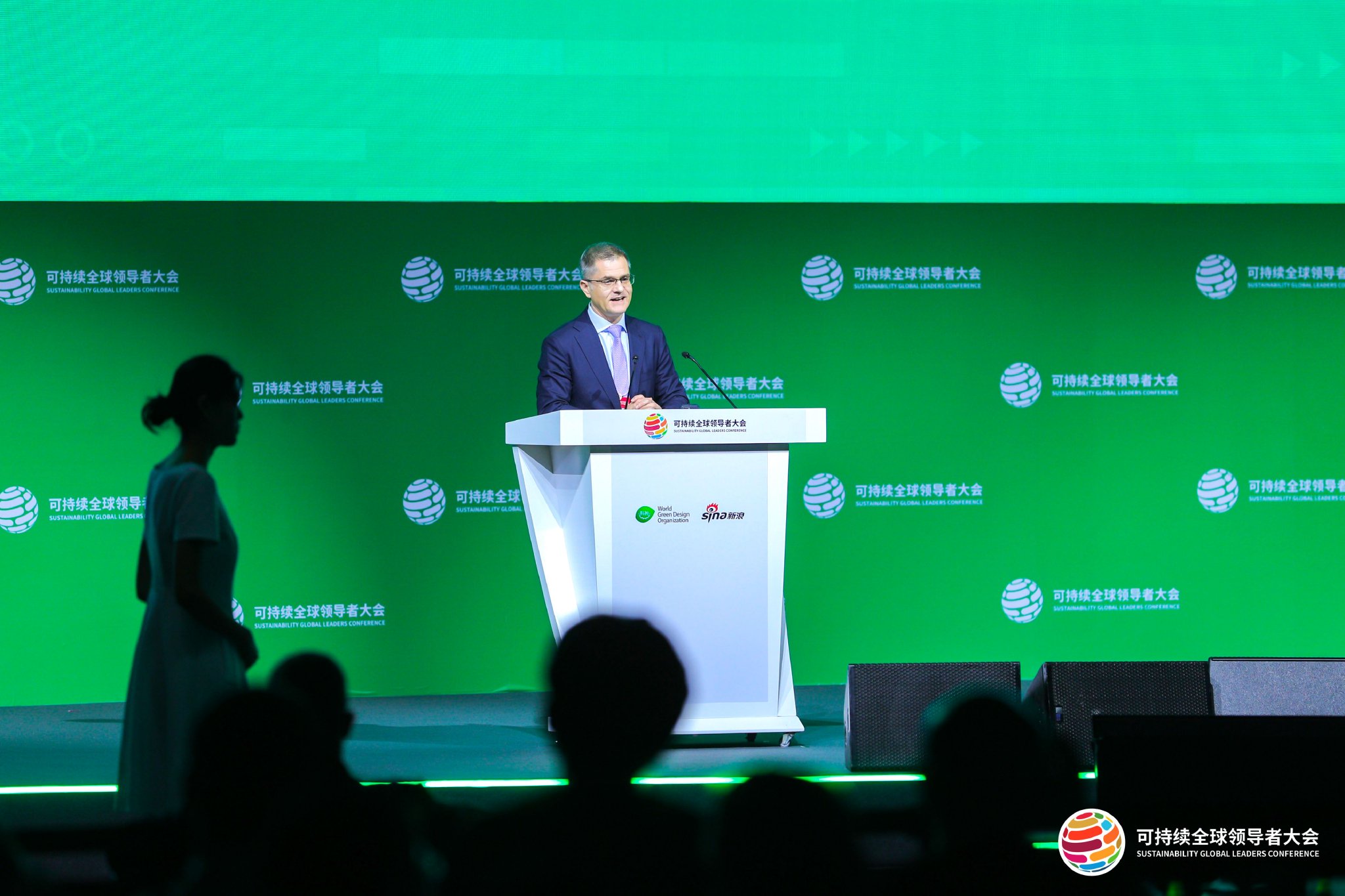
Core Points - The 2025 Sustainable Global Leaders Conference is scheduled to take place from October 16 to 18 in Shanghai, focusing on global cooperation and innovation in sustainable development [1][4] - Vuk Jeremic, the chairman of the International Relations and Sustainable Development Center, emphasized China's achievements in sustainable development and the importance of global collaboration to address challenges [2][10] Group 1: Conference Overview - The conference is co-hosted by the World Green Design Organization and Sina Group, with support from the Shanghai Huangpu District Government [4] - The event aims to gather around 500 prominent guests, including international leaders, Nobel laureates, and representatives from Fortune 500 companies, to discuss nearly 50 topics related to sustainable development [4] Group 2: Key Themes and Discussions - Vuk Jeremic highlighted the need for countries to move beyond "national priority" thinking in the current geopolitical climate, advocating for the "community of shared future for mankind" concept proposed by China [2][10] - The conference will cover various subfields, including energy and carbon neutrality, green finance, sustainable consumption, and technology for public welfare [4]
“北京塔”来了!这个区域将建高度275米新地标
Xin Jing Bao· 2025-10-16 03:49
Group 1 - The core viewpoint is that the Canal Business District in Beijing is set to release 750,000 square meters of office space over the next three years, focusing on a diverse industrial ecosystem centered around headquarters economy, wealth management, green finance, and fintech [1] - The total planned area of the Canal Business District is 20.38 square kilometers, which includes the core startup area, the New City Financial Service Park, and the comprehensive transportation hub area [1] - The Canal Business District has a total planned building area of 13.79 million square meters, encompassing various sectors such as office, commercial, apartments, and hotels [1] Group 2 - Currently, 172 buildings have been completed in the Canal Business District, with 33 buildings over 100 meters tall and 4 buildings over 200 meters tall [2] - The "Yunhe Tian" super high-rise building, reaching a height of 249.9 meters, has completed its main steel structure and will become a commercial complex [2] - The "Beijing Tower" project in the core startup area is expected to be the tallest building in the sub-center at 275 meters [2]
限时报名|“2025进博会上海会议活动”之第一财经可持续发展系列论坛即将开启
第一财经· 2025-10-15 10:22
Group 1 - The article emphasizes that sustainable development has become the core logic and inevitable direction for transformation and innovation across various sectors in the context of advancing "dual carbon" goals and the comprehensive implementation of the "Healthy China" strategy [1][4] - During the 2025 China International Import Expo, two thematic forums will focus on sustainable development: one on "Zero Carbon Park China Solution" to explore financial empowerment paths and business model breakthroughs for industrial park green and low-carbon transformation [1][10] - The Zero Carbon Park Forum aims to gather government, enterprises, and academic institutions to discuss implementation paths, innovative technologies, and collaborative mechanisms for zero carbon park construction, sharing advanced experiences and typical cases from both domestic and international contexts [4][16] Group 2 - The "Medical and Health Industry Sustainable Innovation" forum will discuss how the medical health industry can deeply practice sustainable concepts amid technological iterations and industrial upgrades [10][11] - The forum will feature discussions on the challenges and opportunities for multinational corporations (MNCs) in navigating the new landscape, particularly in addressing issues related to the accessibility of innovative drugs and medical devices [11][14] - Both forums aim to create a platform for intellectual exchange and resource linkage among elites from government, industry, academia, and research, facilitating higher quality growth in the relevant fields during the new development stage [16][17]
这个领域,A股上市银行平均每家投8000亿
和讯· 2025-10-14 09:25
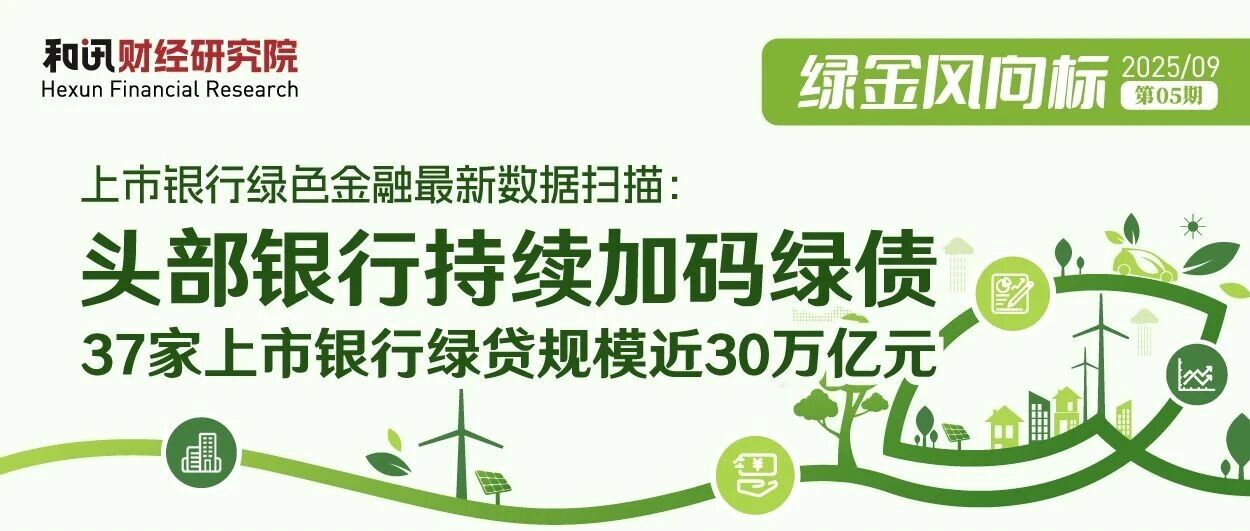
Core Insights - The report highlights the continuous growth of green finance in China, with green loans reaching a total of 29.22 trillion yuan across 37 listed banks, indicating a robust upward trend in green financing [1][2] - The green bond market showed significant recovery in September, with 104 new bonds issued, totaling approximately 102.77 billion yuan, reflecting increased institutional financing demand [3][4] - The carbon market experienced heightened trading activity, with total transaction volume reaching 32.7 million tons and total transaction value at 2.004 billion yuan, although prices showed a downward trend [5][6] Group 1: Green Loan Expansion - As of the end of Q2 2025, the balance of green loans in China reached 42.39 trillion yuan, showing significant year-on-year and month-on-month growth [2] - The six major state-owned banks accounted for over 70% of the total green loan balance, with Industrial and Commercial Bank of China leading at over 6 trillion yuan [2][30] - The average green loan balance per listed bank was approximately 800 billion yuan, indicating a strong commitment to green financing across the sector [2] Group 2: Green Bond Market Activity - In September, the green bond market saw a total of 104 new issuances, with a total scale of approximately 102.77 billion yuan, marking a 112.24% increase in the number of bonds and a 190.72% increase in total issuance compared to August [3][33] - The average issuance size of new green bonds in September was 9.88 million yuan, up from 7.21 million yuan in August, indicating larger project sizes and stronger financing needs [3][33] - The proportion of bank green financial bonds increased from 35.36% in August to 42.91% in September, while asset-backed securities (ABS) also saw a significant rise in issuance [4][33] Group 3: Carbon Market Dynamics - The carbon market in September exhibited a "volume increase + price decline" characteristic, with total transaction volume reaching 32.7 million tons and total transaction value at 2.004 billion yuan, both showing substantial growth from August [5][39] - The average closing price for carbon emissions allowances (CEA) in September was 62.94 yuan per ton, down 11.5% from August, indicating a downward price trend [5][36] - Predictions suggest that carbon prices may continue to decline, with expected buy and sell prices for October at 55.39 yuan and 60.63 yuan per ton, respectively [5][41] Group 4: Policy and Market Developments - September saw multiple significant policy implementations aimed at enhancing green finance, including guidelines for sustainable corporate disclosures and new energy market regulations [11][12] - Local governments and enterprises are actively innovating in green finance, with notable projects such as the issuance of offshore green bonds and the introduction of biodiversity-linked loans [6][44] - The establishment of various green finance tools and frameworks is facilitating the transition from traditional financing methods to more diversified and innovative approaches [6][44]






把握我国碳金融发展的未来方向与政策路径
Zhong Guo Yin Hang· 2025-10-11 01:15
Group 1: Current State of Carbon Finance in China - Carbon finance in China is still in its early development stage, with the national carbon market officially launched in 2021 and local markets starting from 2013[7] - As of August 2022, the Shanghai carbon market had conducted 16 carbon quota pledge financing transactions totaling over 41 million yuan, while the Guangdong market had 31 transactions totaling 93 million yuan[8] - The financing scale of carbon finance is insufficient compared to the over 40 trillion yuan in green loans available in China[8] Group 2: Future Directions for Carbon Finance Development - The national carbon market is expected to cover 8 billion tons of carbon emissions by 2025, making it the largest carbon market globally[10] - The development of financing tools should be prioritized to enhance the role of the carbon market in promoting green finance[11] - It is estimated that achieving carbon neutrality in China may require over 100 trillion yuan in cumulative investment[15] Group 3: Policy Recommendations for Carbon Finance - Emphasizing carbon pledge financing as a key area, with a need to clarify the financing model and extend loan periods beyond the current compliance cycle[26] - Developing a comprehensive financing product system that includes carbon repurchase agreements and carbon bonds to provide both short-term and long-term financing[27] - Establishing a quota reserve and market adjustment mechanism to prevent extreme price fluctuations in the carbon market[30]
绿色金融产业景气度持续扩张 | 金融与科技
清华金融评论· 2025-10-08 09:52
Core Viewpoint - The green industry is experiencing a slight recovery in September 2025, with continued expansion and positive indicators in various sectors [6][7]. Group 1: Green Industry Performance - The Green Prosperity Index (GPI) for September 2025 is 50.94%, reflecting a slight increase of 0.3 percentage points from the previous month [7]. - The new orders index remains above the critical point, while the export index has risen to a one-year high, increasing by 5.7 percentage points [10]. - Production and capacity utilization indices have improved, indicating a recovery in supply, with production index up by 1.4 percentage points and capacity utilization index up by 4.6 percentage points [10]. - The procurement index has increased by 10.8 percentage points, showing heightened purchasing activity in the green industry [10]. Group 2: Cost Pressures and Financial Conditions - The cost index has risen by 2.5 percentage points, indicating increased cost pressures primarily due to rising prices of raw materials, transportation costs, and labor supply issues [10]. - Despite the cost pressures, the overall cost index remains at a relatively low historical level, consistent with recent trends in the Producer Price Index (PPI) [10]. Group 3: Sector-Specific Insights - The green manufacturing and renewable energy generation sectors are both experiencing a simultaneous increase in their prosperity indices, with green manufacturing up by 5.5 percentage points and renewable energy generation up by 6.3 percentage points [15]. - Policies supporting the development of green high-end energy equipment and promoting the consumption of renewable energy are contributing to the recovery in these sectors [19]. Group 4: Small and Medium Enterprises - The prosperity index for small and medium-sized green environmental enterprises has improved to 54.2%, an increase of 3.4 percentage points from the previous month [21]. - In contrast, larger green environmental enterprises have shown a decline in their prosperity indices, although they remain above the threshold of expansion [21].