
保险业

Search documents
重磅新规落地!账户医疗险、分红健康险来了
第一财经· 2025-09-30 15:53
Core Viewpoint - The article discusses the significant role of health insurance in China's national health security system by 2030, as outlined in the recent guidelines issued by the Financial Regulatory Bureau. It emphasizes the need for innovation and diversification in health insurance products to meet the growing demand for health protection among the population [3][5][6]. Group 1: Development Goals and Innovations - By 2030, health insurance is expected to play a more crucial role in the national health security system, with a multi-layered market structure that meets diverse needs across the population and lifecycle [5][6]. - The guidelines introduce innovative concepts such as account-based medical insurance and dividend health insurance, which expand the business forms and scope of commercial health insurance [6][7]. - The guidelines support the development of personal account-based long-term medical insurance, which is a model seen in countries with advanced health insurance systems [7][8]. Group 2: Regulatory Changes and Market Dynamics - The guidelines allow for an increase in the cost-sharing ratio of health management in health insurance products, which previously had a cap of 20%, enabling health insurance companies to enhance their service offerings [8][9]. - The guidelines encourage collaboration between health insurance companies and pharmaceutical/device firms to explore innovative payment methods for new drugs and technologies, thereby integrating health insurance with the medical and pharmaceutical sectors [9][10]. Group 3: Addressing High-Cost Treatments - The article highlights the role of commercial health insurance in providing coverage for high-cost treatments, such as CAR-T therapy, which is not yet included in the national health insurance directory [10][11]. - The guidelines aim to improve the multi-payment ecosystem, facilitating access to advanced medical technologies for patients [11][12]. Group 4: Future Directions - The Financial Regulatory Bureau plans to enhance the regulatory environment for health insurance, focusing on the development of floating yield health insurance and ensuring compliance with the new guidelines [11].

重磅新规落地!账户医疗险分红健康险来了
Xin Lang Cai Jing· 2025-09-30 15:44
Core Viewpoint - The new regulatory guidelines issued by the Financial Regulatory Bureau on September 30 aim to enhance the role of health insurance in the national health security system by 2030, introducing significant innovations in commercial health insurance [1] Group 1: Regulatory Developments - The guidelines outline the overall development strategy and phased goals for health insurance in the near future [1] - Key innovations discussed include account-based medical insurance and dividend health insurance, which expand the business forms and scope of commercial health insurance [1] Group 2: Industry Impact - The guidelines are expected to have a significant impact on commercial health insurance, addressing previously discussed points with industry regulators [1] - There is an emphasis on increasing the proportion of health management in net premiums, indicating a shift towards more comprehensive health insurance products [1]
浮动收益型健康保险、个人账户式长期医疗保险要来了!详解健康保险高质量发展蓝图
Shang Hai Zheng Quan Bao· 2025-09-30 12:48
Core Viewpoint - The recent guidelines issued by the Financial Regulatory Bureau aim to promote the high-quality development of health insurance in China, addressing existing challenges and enhancing the sustainability of health insurance services to support the Healthy China strategy [1][2]. Group 1: Expansion of Health Insurance Products - The guidelines encourage the development of commercial medical insurance and the expansion of health insurance product forms and functions, including the incorporation of new medical technologies, drugs, and devices into insurance coverage [2][3]. - There is a focus on establishing a comprehensive, multi-tiered commercial medical insurance product system, which will enhance the payment capabilities for new medical products through innovative payment methods [2][3]. Group 2: Long-term Medical Insurance Development - The guidelines support the development of long-term medical insurance by encouraging pricing based on risk categories and improving the matching of insurance rates with underwriting risks [3][4]. - The introduction of personal account-based long-term medical insurance is a notable aspect, allowing funds to cover out-of-pocket medical expenses and health management services [4]. Group 3: Integration of Health Insurance and Health Management - The guidelines propose a new health service guarantee system that integrates prevention, management, and protection, promoting the provision of medical, rehabilitation, and nursing services as part of health insurance [5][6]. - Insurance companies are encouraged to establish health management subsidiaries to enhance their service capabilities and better meet the health management needs of the public [6]. Group 4: Support for Well-rated Insurance Companies - The guidelines support well-rated insurance companies in launching new business initiatives, including dividend-type long-term health insurance and trial programs for increasing the cost-sharing ratio of health management in net premiums [7]. - This initiative aims to combine the floating income mechanism with public health needs, enhancing the profitability of insurance companies while benefiting consumers [7].
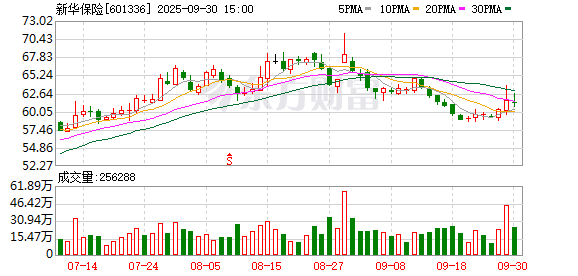
新华保险:拟不再设立监事会
Bei Jing Shang Bao· 2025-09-30 12:28
Core Points - Xinhua Life Insurance Co., Ltd. announced plans to amend its Articles of Association to optimize corporate governance in compliance with relevant laws and regulations [2] - The proposal to amend the Articles of Association and abolish the supervisory board will be submitted to the shareholders' meeting for special resolution [2] - Upon approval by the shareholders' meeting, the new Articles of Association will require approval from the National Financial Regulatory Administration to take effect, leading to the dissolution of the current supervisory board and the termination of existing supervisors [2]

金融监管总局:促进健康保险与医疗、医药深度融合
Bei Jing Shang Bao· 2025-09-30 12:08
北京商报讯(记者 李秀梅)9月30日,金融监管总局印发了《关于推动健康保险高质量发展的指导意 见》(以下简称《意见》)。 《意见》提到,促进健康产业协同发展,加强保险公司健康服务网络建设,推进大健康产业协同发展。 促进健康保险与医疗、医药深度融合,助力卫生健康事业和生物医药产业突破发展。支持与药械企业建 立联动合作机制,探索按照市场化原则自主协商谈判、按疗效付费等创新药械多元化支付方式。 ...
人民银行:截至8月末银行间债券市场的法人机构成员共3984家
Bei Jing Shang Bao· 2025-09-30 12:08
Core Insights - The People's Bank of China released the financial market operation report for August 2025, highlighting the status of the interbank bond market [1] Group 1: Market Participants - As of the end of August, there are 3,984 institutional members in the interbank bond market, all of which are financial institutions [1] - The top 50 investors in corporate credit bonds hold 53.0% of the total bond holdings, primarily consisting of public funds (asset management), large state-owned commercial banks (proprietary trading), and insurance financial institutions (asset management) [1] - The top 200 investors account for 83.9% of the total bond holdings [1] Group 2: Bondholder Statistics - The maximum, minimum, average, and median number of bondholders for a single corporate credit bond are 114, 1, 12, and 12, respectively [1] - Bonds with fewer than 20 holders make up 88.8% of the total number of credit bonds [1] Group 3: Trading Activity - In August, the top 50 investors in corporate credit bonds accounted for 60.8% of the trading volume, mainly concentrated among securities companies (proprietary trading), fund companies (asset management), and bank wealth management subsidiaries (asset management) [1] - The top 200 investors represent 91.1% of the trading volume [1]
友邦保险(01299.HK)拟没收未领取的2019年中期股息
Ge Long Hui· 2025-09-30 09:08
Core Viewpoint - AIA Group Limited (01299.HK) announced that the interim dividend of HKD 0.3330 per share, which was declared on September 26, 2019, will be forfeited and returned to the company if not claimed by October 31, 2025 [1] Summary by Category - **Company Announcement** - AIA Group Limited will forfeit the unclaimed interim dividend from 2019 if it remains unclaimed by the specified date [1]

鑫闻界|浮沉A股29年,天茂集团摘牌,国华人寿隐忧待解
Qi Lu Wan Bao· 2025-09-30 08:44
Core Viewpoint - Tianmao Group, controlled by Liu Yiqian, has voluntarily delisted from the A-share market after 29 years due to continuous losses at its subsidiary, Guohua Life Insurance, and difficulties in disclosing its 2024 annual report [2][9]. Company History - Tianmao Group was originally established as Zhongtian Co., Ltd. in November 1993 and was later renamed Baike Pharmaceutical before becoming Tianmao Group in 2006 [3][5]. - Liu Yiqian became the largest shareholder of Baike Pharmaceutical in 2001, acquiring 28.97% of the shares for 206 million [3]. Financial Performance - Tianmao Group's performance improved significantly after acquiring 51% of Guohua Life in 2015, with revenue soaring to 16.99 billion in 2016, a 14-fold increase, and a net profit of 1.779 billion [5]. - However, Guohua Life faced declining profitability from 2020 to 2023, with net profits dropping from 1.11 billion to a loss of 1.155 billion in 2023 [8][9]. Regulatory Challenges - The company has been under investigation by the China Securities Regulatory Commission (CSRC) for failing to disclose its annual report on time, leading to its eventual delisting [9][10]. - Guohua Life's solvency ratios fell below regulatory requirements, prompting significant capital injections and raising concerns about its financial health [6][8]. Delisting Process - Tianmao Group submitted its application for voluntary delisting on September 4, 2025, and the Shenzhen Stock Exchange decided to terminate its listing on September 25, 2025, with the actual delisting occurring on September 30, 2025 [9][10]. Investor Concerns - Investors have raised concerns regarding the low cash option price of 1.60 per share, which is significantly below the net asset value of 4.41 per share, leading to accusations of market manipulation [10][11]. - The stock price of Tianmao Group has dropped over 50% since the announcement of its annual report difficulties, from 3.38 to 1.45 per share [11].


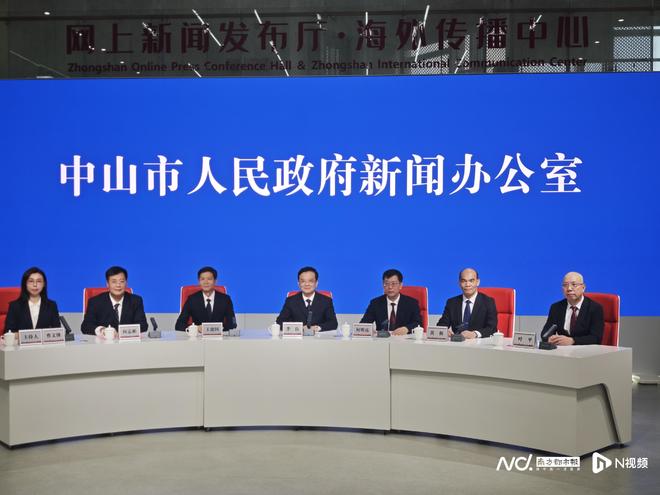
打破行业技术壁垒,中山创新“气象+保险+通信”模式
Nan Fang Du Shi Bao· 2025-09-29 08:15
Core Insights - The article discusses the innovative "Meteorology + Insurance" service model trial implemented in Zhongshan, aimed at addressing the increasing risks posed by extreme weather events, such as urban flooding and vehicle submersion [3][4]. Group 1: Background and Context - Extreme weather events have become more frequent, posing significant challenges to public safety and property [3]. - Zhongshan has pioneered a multi-faceted system combining meteorology, insurance, and communication to shift disaster management from post-disaster compensation to pre-disaster intervention [3]. Group 2: Implementation and Results - The trial will commence in mid-2025 in three towns in southern Zhongshan, with significant economic benefits and a notable reduction in insurance payouts [3]. - During Typhoon "Hagupit," vehicle loss estimates in Zhongshan were around 800,000 yuan, showing a marked decrease compared to the previous typhoon event [3]. - The trial has achieved precise identification of rainstorm flooding risks and provided early warnings one hour in advance [4]. Group 3: Mechanism and Effectiveness - The model enables insurance companies to transition from passive claims processing to proactive disaster prevention without increasing premiums [4]. - During a rainstorm on June 17, 2025, the trial area saw a 66% reduction in car insurance payouts compared to the same period in 2024, indicating significant effectiveness in disaster mitigation [4]. - A closed-loop mechanism for warnings has been established, converting alerts into actionable instructions sent directly to vehicle owners [4]. Group 4: Future Plans - Zhongshan plans to deepen the "Meteorology + Insurance + Communication" model and expand its application scenarios, aiming to create a replicable model for nationwide implementation [5].
金融服务农村改革 赋能乡村全面振兴
Jin Rong Shi Bao· 2025-09-29 07:23
Core Viewpoint - The rural revitalization strategy is a crucial foundation for the great rejuvenation of the Chinese nation, with financial services playing an indispensable role in promoting comprehensive rural revitalization [1] Group 1: Financial Service Reform in Rural Areas - The shift from "blood transfusion" to "blood production" reflects a change in financial service philosophy, emphasizing the need for financial innovation to activate rural endogenous development [2] - The balance of agricultural loans reached 51.4 trillion yuan by the end of 2024, with small and micro enterprise re-loans at 1.75 trillion yuan, indicating increased credit support for agriculture [2] - The focus is now on empowering rural areas through financial services rather than merely providing funds [2] Group 2: Upgrading Financial Service Methods - The transition from "inclusive" to "precise" financial services aims to meet the differentiated and personalized financial needs of rural revitalization [3] - By the end of 2024, 592,800 rural bank card service points had been established, with 124,500 also offering e-commerce functions [3] - Customized financial products, such as "planting e-loans" and "grain purchase loans," have been developed to enhance service effectiveness [3] Group 3: Expanding Financial Service Boundaries - The integration of various financial services, including insurance and futures, is necessary to support the multi-dimensional aspects of rural revitalization [4] - By the end of 2024, 326 rural revitalization notes worth 250.55 billion yuan had been issued, with 118.59 billion yuan allocated to rural revitalization [4] - Innovative financial service models, such as "insurance + credit," are being explored to address financing challenges in agriculture [4] Group 4: Challenges Facing Financial Service Reform - There is a significant contradiction between supply and demand in rural financial services, with 75.32% of businesses applying for loans under personal names due to a lack of effective collateral [5][6] - The rural financial infrastructure is inadequate, with a low internet penetration rate of 69.2% in rural areas, hindering the effective application of digital financial services [7] - The risk management capabilities of rural financial institutions are insufficient, with 95.85% of high-risk banks being rural cooperative institutions and village banks [8] Group 5: Recommendations for Financial Service Reform - It is essential to promote precise matching of supply and demand in rural financial services, encouraging policy-driven financial support for infrastructure and innovation [9] - Strengthening rural credit systems and enhancing digital financial infrastructure are critical for improving service capabilities [10] - Establishing a multi-level collaborative risk prevention system is necessary to ensure the sustainable development of rural financial services [12]