钢铁

Search documents
“对等关税”被美国高院驳回,特朗普还有什么招?
Xin Lang Cai Jing· 2026-02-21 00:19
Core Viewpoint - The U.S. Supreme Court's ruling does not dismantle the tariff barriers established by former President Trump, as he may still utilize various legal tools to reinstate large-scale tariffs [1][8]. Group 1: Legal Tools for Tariffs - The 1962 Trade Expansion Act's Section 232 is the most relied upon tool for tariffs, allowing the President to impose tariffs on imports for national security reasons without limits on rates or duration [2][9]. - Section 301 of the 1974 Trade Act empowers the U.S. Trade Representative to impose tariffs on countries deemed discriminatory against U.S. businesses, with no upper limit on rates [3][10]. - Section 122 of the 1974 Trade Act permits the President to impose tariffs of up to 15% for a maximum of 150 days in response to significant international payment imbalances, without prior investigation [12][13]. Group 2: Limitations and Challenges - Section 232 requires a Department of Commerce investigation, which can take up to 270 days, limiting its immediate implementation [2][9]. - Section 301 involves a complex process of investigation and public consultation, making it cumbersome for targeting multiple smaller countries [4][11]. - Section 201 of the 1974 Trade Act allows tariffs if increased imports threaten U.S. manufacturers, but it also requires an investigation and has a maximum tariff rate of 50% [6][14]. Group 3: Controversial Options - The 1930 Smoot-Hawley Tariff Act's Section 338 allows the President to impose tariffs of up to 50% without prior investigation, but it has not been used historically due to concerns about its impact on global trade [5][15]. - There are political concerns regarding the potential use of Section 338, as evidenced by a resolution from five Democratic Congress members seeking its repeal [7][16].


华迪国际股价单日跌超10%,业绩亏损扩大拖累市场信心
Xin Lang Cai Jing· 2026-02-20 21:21
Core Viewpoint - Hudi International's stock experienced a significant decline on February 20, 2026, closing at $1.15, reflecting a daily drop of 10.16% due to weak fundamentals and ongoing losses [1][2]. Company Fundamentals - The company's financial performance is under pressure, with a reported revenue decline of 15.32% year-on-year to $62.9 million for the fiscal year ending September 30, 2025. The net loss attributable to shareholders widened to $1.4 million, an increase of 1115.80%, resulting in a net profit margin of -2.22% [2]. - The main business segment, stainless steel pipes, accounts for 99.35% of revenue but shows insufficient growth and weak profitability [2]. Market Environment - On February 20, the overall U.S. stock market rebounded, with the Dow Jones index rising by 0.39% and the Nasdaq index increasing by 0.73%. However, the steel sector, to which Hudi International belongs, experienced a slight decline of 0.26% [2]. - The decline in Hudi International's stock price is primarily driven by company-specific factors, diverging from the overall market trend. The continuous losses may negatively impact investor confidence [2].
加拿大对美最高法涉关税裁决表欢迎
Xin Lang Cai Jing· 2026-02-20 20:41
Core Viewpoint - The Canadian government welcomes the U.S. Supreme Court's ruling that deemed the Trump administration's imposition of large-scale tariffs unlawful, reinforcing Canada's long-standing position against these tariffs [1] Group 1: Government Reactions - Canadian Trade Minister Dominic LeBlanc stated that the Supreme Court's decision supports Canada's view that the U.S. tariffs imposed under the International Emergency Economic Powers Act are "unreasonable" [1] - Ontario Premier Doug Ford described the ruling as an "important victory" but emphasized that the fight against U.S. tariffs on automotive, steel, aluminum, and forestry products must continue until these barriers are fully removed [1] Group 2: Future Challenges - The Canadian government acknowledges the ongoing challenges ahead, particularly in supporting domestic industries and workers affected by U.S. tariffs in the steel, aluminum, and automotive sectors [1]
全市众多工业企业春节假期连续生产
Xin Lang Cai Jing· 2026-02-20 20:41
Group 1 - Tianfa Hydropower has resumed work since the third day of the Lunar New Year, with over 100 employees back on site by the fourth day, aiming to ensure timely delivery of key hydropower projects [1] - The company has completed multiple unit upgrades before the holiday, laying a solid foundation for continuous production during the festival [1] - Key projects include the Mudanjiang Linhai project, Guangxi Shanxiu renovation project, and others, with tight deadlines for installation planned for mid-March [1] Group 2 - Tianjin Pump Industry has also resumed work on the fourth day of the Lunar New Year, focusing on ensuring timely delivery of critical projects, including a key oil depot expansion and overseas ship orders [2] - The company has successfully secured two asphalt ship projects before the holiday, contributing to a strong start in the first quarter [2] - Continuous production during the holiday is aimed at maintaining market reputation and fulfilling urgent orders for both domestic and international clients [2] Group 3 - Huan Sheng New Energy has maintained continuous production during the holiday to ensure timely delivery of urgent orders, particularly for international clients [2] - The company has retained half of its production capacity during the holiday to minimize equipment downtime and ensure a smooth transition post-holiday [2] - Anticipated changes in customs tax policies for the solar industry are expected to boost order volumes in the first quarter [2] Group 4 - Tianjin Haihe Dairy has also resumed production during the holiday, with a daily output of 500 tons of milk, ensuring a steady supply of over 100 dairy products nationwide [2] - The company has experienced steady growth in market sales, with plans to expand into Southeast Asia while maintaining a strong domestic presence [2] Group 5 - Tianjin Langyu Robotics has been working overtime during the holiday due to high demand for its new AI-powered AGVs, with over 300 units pre-ordered [3] - The company expects a sales growth of over 100% year-on-year in January, with projections for a 200% increase in the first quarter [3] Group 6 - According to the Municipal Bureau of Industry and Information Technology, 89 out of the top 300 industrial enterprises in the city operated continuously during the holiday, representing 29.7% [4] - In the oil and chemical sector, 23 out of 35 key enterprises maintained continuous production, accounting for 65.7% [4] - The bureau plans to enhance support for enterprises to ensure stable operations and timely resumption of work, with an expected overall resumption rate of 86.3% by February 24 [4]
World leaders cheer Supreme Court tariff ruling — but businesses must still navigate 'murky waters'
CNBC· 2026-02-20 16:50
Core Viewpoint - The U.S. Supreme Court's decision to strike down significant parts of President Trump's trade policy on global tariffs has been met with cautious optimism from U.S. trading partners, although global trade bodies express concerns about ongoing uncertainty regarding import levies [1]. Group 1: Impact on Trade Policies - The Supreme Court ruled that the law underpinning the import duties "does not authorize the President to impose tariffs," with a majority decision of six to three [1]. - Trump's tariff regime affected numerous countries, including the U.K., India, and the European Union, with ongoing negotiations for some nations like Vietnam and Brazil [2]. Group 2: U.K. Trade Relations - The U.K. government plans to collaborate with the White House to understand the implications of the ruling on tariffs affecting the U.K. and globally, emphasizing support for U.K. businesses as more details emerge [2]. - The U.K. maintains the lowest reciprocal tariffs globally and anticipates that its favorable trading position with the U.S. will persist, despite the ruling [3]. - The U.K. had previously established a comprehensive trade deal with the U.S. in May, which included a broad 10% levy on various goods but allowed for specific exemptions on steel, aluminum, cars, and pharmaceuticals [3]. Group 3: Ongoing Uncertainty - The Supreme Court's ruling primarily addressed reciprocal tariffs, leaving much of the U.K.'s trade deal with the U.S. intact, including preferential tariffs on key sectors [4]. - The British Chambers of Commerce (BCC) highlighted that the Supreme Court's decision contributes to the existing uncertainty surrounding import levies [4].

印度1月主要行业产出同比增长4%
Xin Lang Cai Jing· 2026-02-20 12:24
Core Insights - India's major industrial output grew by 4% year-on-year in January [1] Group 1: Industry Performance - Crude oil production decreased by 5.8% year-on-year [1] - Coal production increased by 3.1% year-on-year [1] - Natural gas production declined by 5% year-on-year [1] - Refinery products output remained flat year-on-year [1] - Fertilizer production rose by 3.7% year-on-year [1] - Steel production increased by 9.9% year-on-year [1] - Cement production grew by 10.7% year-on-year [1] - Electricity generation increased by 3.8% year-on-year [1]
国运来了挡不住!50亿吨铁矿现世,美媒:中国将改写全球格局
Sou Hu Cai Jing· 2026-02-20 11:05
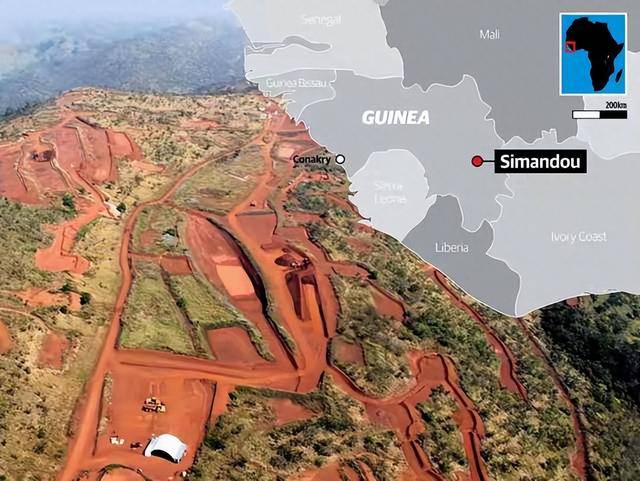
Core Insights - The global iron ore market has been dominated by Western mining giants for over a century, with China, the world's largest steel producer, heavily reliant on imports for over 80% of its iron ore needs [1][5][7] Group 1: Supply and Demand Dynamics - China has maintained an annual iron ore import volume of over 1.1 billion tons, reflecting a long-term dependency on foreign sources due to limited domestic resources [5][7] - The international iron ore supply has been highly concentrated, with companies like Rio Tinto, BHP, and Vale controlling significant export shares, leading to price volatility that impacts downstream industries [7][21] Group 2: Development of the Simandou Project - The Simandou iron ore project in Guinea, with a total resource of approximately 5 billion tons, has recently gained traction with a $15 billion investment for joint development, including infrastructure like railways and ports [3][9][12] - The project aims to produce 120 million tons annually, potentially making Guinea the third-largest iron ore exporter globally by 2030, thus diversifying supply sources and reducing reliance on traditional markets [19][21] Group 3: Economic and Strategic Implications - The establishment of a stable supply from the Simandou project is expected to enhance China's resource security and reduce price fluctuations, benefiting the steel industry and supporting the transition to high-end manufacturing and green metallurgy [19][23] - The project exemplifies a new model of resource development, where China not only secures raw materials but also invests in infrastructure, fostering sustainable economic growth in resource-rich countries [25][27] Group 4: Long-term Trends and Future Outlook - The successful implementation of the Simandou project marks a shift in China's approach to resource acquisition, moving from passive procurement to active development, thereby enhancing its influence in global resource markets [29][31] - This initiative is part of a broader strategy to secure stable supplies of various strategic minerals, reinforcing China's position in the global supply chain and contributing to its industrial competitiveness [31]
日本钢铁技术真相如何?领先世界30年,连中美俄都甘拜下风?
Sou Hu Cai Jing· 2026-02-20 04:22
美国为了对抗苏联、遏制共产主义,把日本当成工业后盾,1945到1971年援助超43亿美元,直接投资14亿美元。 朝鲜战争和越南战争时,美国把日本当军需后方,源源不断的订单,既让日本钢企恢复产能,也逼着他们提升技术。 1950年代,日本政府启动生产合理化计划,重点扶持钢铁等重工业,用低息贷款、税收优惠吸引民间投资。 40%的民间投资都被引到钢铁等支柱产业,民营资本加国家资源,快速造出了一批现代化钢厂。 日本还主动引进技术,1951年引美国带钢连轧技术,后来又引奥地利LD转炉工艺,让炼钢效率提了10倍。 但日本不满足于照搬,组织专家优化创新,慢慢走上了自主研发的路,1980年粗钢产量超越美国,还保持了18年第一。 日本能站稳脚跟,靠的还有专利封锁和精益管理,特殊钢占全球33%以上市场,炼钢专利占比超71%。 新日铁和JFE五年就申请1.07万项相关专利,在关键工艺上建了全流程知识产权壁垒。 日本钢企的定制化能力也很强,比如日本制钢所是全球唯一能造核电站压力容器大锻件的企业。 生产管理上,日本钢企把精细化做到极致,早早就用自动化系统和质量追踪平台,让生产线高效运转。 很多人可能不知道,波音787的起落架、F1赛车的 ...

特朗普欲撕毁北美贸易协定?外媒爆料白宫正密谋“踢掉”加拿大!
Xin Lang Cai Jing· 2026-02-20 00:44
Group 1 - The U.S. officials are threatening significant adjustments to trade agreements with Mexico and Canada, potentially excluding Canada from the current framework [1][6] - Trump is using a new leverage point, a bridge expected to open this year, to pressure Canada into making trade concessions [1][6] - The U.S. is increasing pressure on Canada, with a list of demands including concessions on the protected dairy industry [1][8] Group 2 - Canada’s Prime Minister, Carney, has angered U.S. officials by strengthening trade relations with other countries, leading to threats of 100% tariffs on Canadian goods [2][7] - The ongoing disputes have not yet resulted in new tariffs, but both parties are entering formal trade negotiations under a backdrop of extreme discord [2][7] - The potential abandonment of the trilateral agreement in favor of bilateral agreements with Mexico and Canada could have disastrous implications for companies reliant on the current agreement [2][7] Group 3 - Despite the existence of the agreement, Trump has imposed tariffs on Canada, severely impacting industries such as lumber, automotive, steel, and aluminum [3][8] - U.S. Trade Representative Greer indicated that there is no "natural reason" for the USMCA to remain a unified agreement, suggesting separate discussions with Mexico and Canada on different issues [3][8] - The Canadian government is preparing for a potential breakdown of negotiations, with low expectations for a comprehensive renewal of the agreement [3][8] Group 4 - U.S. officials have begun talks with the Mexican government since January, with Mexico appearing more optimistic about negotiations [4][9] - The "divide and conquer" strategy has been previously employed, where the U.S. advanced negotiations with Mexico while threatening to abandon Canada [4][9]
2026低价掘金指南:5元以下潜力股逻辑与机会全解析
Sou Hu Cai Jing· 2026-02-19 23:06
Core Viewpoint - The article emphasizes that stocks priced below 5 yuan are not necessarily poor investments, but rather potential opportunities that have been overlooked by the market, especially in the context of supportive policies and solid performance metrics in 2026 [1][3]. Summary by Categories Screening Criteria for Potential Stocks - The article outlines a four-part framework for identifying potential stocks under 5 yuan, which includes: 1. Excluding ST and delisting risk stocks, as per the latest regulations [3]. 2. Ensuring a price-to-earnings (P/E) ratio greater than 0 and less than 20, indicating stable profitability and undervaluation [4]. 3. Total market capitalization of at least 5 billion yuan and an average daily trading volume of at least 50 million yuan to ensure liquidity [5]. 4. Aligning with 2026 policy priorities such as long-term special bonds and infrastructure investments [6]. Promising Investment Sectors - The article identifies four key sectors that are expected to benefit from the current market conditions: 1. **Infrastructure and Power Infrastructure**: Supported by a 936 billion yuan special bond for equipment updates and infrastructure investments, with many stocks priced between 2-4 yuan and P/E ratios of 10-13 [8]. 2. **Local Banks**: Stocks of local banks priced at 2-3 yuan with P/E ratios of 5-9 and dividend yields of 4-5%, providing a stable income stream [10]. 3. **Steel and Basic Materials**: Benefiting from a recovery in manufacturing and equipment updates, with stocks priced at 2-3 yuan and P/E ratios under 20, indicating a favorable supply-demand balance [11]. 4. **Public Utilities and Port Logistics**: These stocks, often priced at 2-3 yuan, provide consistent cash flow and dividends, making them resilient investments [12]. Investment Strategy - The article advises a cautious approach to investing in low-priced stocks, emphasizing that they are not a quick path to wealth but rather a strategy for steady returns through valuation recovery and policy support [12]. - Key practical tips include diversifying investments, focusing on earnings rather than speculative concepts, and setting stop-loss limits to manage risks effectively [13][14][15].