
保险

Search documents
恒生指数早盘跌1.93% 智谱逆市反弹20%
Zhi Tong Cai Jing· 2026-02-24 04:04
Group 1 - The Hang Seng Index fell by 1.93%, dropping 521 points to close at 26,560 points, while the Hang Seng Tech Index decreased by 2.36%. The early trading volume in Hong Kong stocks was HKD 138.7 billion [1] - Major AI companies saw a rebound, with Zhihui (02513) rising over 20% and MINIMAX-WP (00100) increasing by more than 7%. After a profit warning, Kintor Group (00148) rose by 4.5%, while Kintor Laminates (01888) surged over 11% due to rising prices and volumes of copper-clad laminates and upstream materials [2] - Tongguan Gold (00340) increased by over 5%, with expected profit growth of approximately 289% to 298% year-on-year. Dongfang Electric (600875) (01072) rose over 6%, driven by a long-term supply-demand gap in gas turbines and potential export expansion [3] - Changfei Optical Fiber (601869) saw its optical cable stock (06869) rise over 5%, reaching a new high, indicating a sustained upward trend in the optical fiber and cable market [4] Group 2 - China Duty Free Group (601888) (01880) fell over 9%, with a cumulative drop of more than 20% over three days, as institutions stated that the stock price has already reflected the strong performance of Hainan's duty-free sales [5] - Gaming stocks collectively declined, with Macau's average daily gaming revenue during the Spring Festival falling short of expectations, leading Citigroup to lower its February revenue forecast. MGM China (02282) dropped by 4.2% [6] - Insurance stocks experienced a broad decline, with New China Life Insurance (601336) (01336) falling over 5%, as insurers may face short-term profit fluctuations due to investment volatility in Q4 [7] - Maoyan Entertainment (01896) dropped over 7%, reaching a nine-month low, attributed to weak box office performance during this year's Spring Festival [8]
马年开工启新篇,奔赴黄金好赛道|泰康大健康事业合伙人春季人才招募火热进行中
Sou Hu Cai Jing· 2026-02-24 03:57
Core Insights - The article emphasizes the opportunity for individuals to join the TaiKang Health Business Partner program, highlighting the potential for personal and professional growth in the health industry during the new year [1][6] - TaiKang Insurance Group is celebrating its 30th anniversary in 2026, marking a significant milestone and reinforcing its commitment to the "insurance + healthcare" ecosystem [3][6] Group 1: Business Model and Strategy - TaiKang has developed an innovative "payment + service + investment" model, integrating virtual insurance with physical healthcare services to create a comprehensive ecosystem focused on longevity, health, and wealth [4] - The company aims to provide a stable foundation for health and wealth planning through a robust range of financial insurance products, supported by a full-service network covering medical, elderly care, rehabilitation, and palliative care [4] Group 2: Marketing and Support - TaiKang offers a unique "super-body marketing" system that empowers partners with extensive support, facilitating rapid growth and efficient business development [5] - A comprehensive training system is in place to help partners transition from newcomers to industry experts, alongside clear promotion pathways and a fair development mechanism [5] Group 3: Recruitment and Future Vision - The recruitment campaign for TaiKang Health Business Partners is actively seeking individuals who are eager to innovate and grow alongside the company in the health industry [6] - The company positions itself as a platform without ceilings, encouraging potential partners to seize the historical opportunity presented by the longevity era and to define their future careers [6]


未知机构:东吴非银春节假期行业大事与投资观点更新1保险监管披露25-20260224
未知机构· 2026-02-24 03:50
Summary of Conference Call Records Industry: Insurance Key Points 1. **Industry Asset Growth and Solvency Ratios** The insurance industry assets exceeded 41 trillion yuan, with a year-on-year growth of 15.1% expected to reach 41.3 trillion yuan by the end of 2025. However, the solvency ratios for life insurance companies decreased, with comprehensive and core solvency ratios at 169% and 115%, down 21 percentage points and 9 percentage points respectively, primarily due to rising interest rates affecting the fair value of AFS bonds, indicating potential refinancing needs for some insurance companies [1][1][1]. 2. **Investment Allocation Trends** The balance of insurance funds is expected to reach 38.5 trillion yuan by the end of 2025, reflecting a 15.7% increase, marking the highest growth rate since 2021. The allocation to core equities is expected to increase significantly, while the pace of bond allocation is slowing down [1][1][1]. 3. **Positive Outlook for Leading Insurers** The investment outlook remains optimistic for leading insurers such as Ping An and China Life. The new policy premium growth is confirmed to continue, with these companies leading the industry. The performance of the asset side in the stock market is stable, and if the 10-year government bond yield continues to rise, it will benefit insurance stocks' fixed-income investments and interest margin recovery [2][2][2]. 4. **Valuation and Market Position** Current valuations of insurance stocks and public fund holdings are still at historical lows. With improvements in the fundamentals, there is potential for upward valuation adjustments [4][4][4]. Industry: Securities Brokerage Key Points 1. **Regulatory Issues and Penalties** Tianfeng Securities announced it received three penalties or investigations related to past violations, including a fine of 15 million yuan for providing financing to former major shareholders without disclosure. This has led to a suspension of certain business operations for two years [4][5][6]. 2. **Refinancing Trends** The securities industry is experiencing a normalization of refinancing activities. Since 2025, there have been frequent refinancing events, with Tianfeng Securities completing a 4 billion yuan private placement and other firms like Zhongtai Securities and Nanjing Securities also engaging in significant fundraising activities [7][8][8]. 3. **Market Activity and Recovery** The market remains highly active, with trading volumes significantly increasing. The average daily trading volume (ADT) is approximately 3.2 trillion yuan, a year-on-year increase of 113%. The margin financing balance is around 2.6 trillion yuan, up 43% year-on-year [8][9][9]. 4. **Valuation Recovery Potential** The valuation of brokerage firms remains low, with the CITIC II index at approximately 1.3 times the estimated price-to-book ratio for 2026. Given the high expected growth rates, there is potential for valuation recovery, particularly for leading low-valuation brokerage firms such as Huatai, Guotai Junan, and Haitong [10][10][10].
未知机构:广发非银开工大吉迎接开门红短期避险情绪消化马年A股有望迎-20260224
未知机构· 2026-02-24 03:45
短期避险情绪消化,马年A股有望迎来开门红。 A股休市期间,港股非银普遍上涨2%-5%。 两市成交量有望回升,非银板块基本面好、估值低,建议参与估值修复行情。 【广发非银】开工大吉,迎接开门红 短期避险情绪消化,马年A股有望迎来开门红。 A股休市期间,港股非银普遍上涨2%-5%。 两市成交量有望回升,非银板块基本面好、估值低,建议参与估值修复行情。 证券:一是估值低,该涨未涨,合理折价30%以上;二是业绩好,ADT大幅增长,股债双牛,Q1显著好于去年同 期;三是可期待,存款搬家、衍生品新规打开增长空间。 【广发非银】开工大吉,迎接开门红 推荐国泰、华泰、中信、东财、招商、东方、兴业等。 保险:一是负债持续高增长,截止目前新单增速普遍在40%以上,短期利好NBV持续增长,长期利好负债成本加 速下行;二是慢牛利好保险资产端,预计26上半年利润有望高速增长;三是政策呵护,提升行业集中度。 A股平安、太保、新华;H股国寿、平安、太平。 多元:推荐证券IT、渤海租赁、中国船舶租赁。 证券:一是估值低,该涨未涨,合理折价30%以上;二是业绩好,ADT大幅增长,股债双牛,Q1显著好于去年同 期;三是可期待,存款搬家、衍生品新 ...
开年重磅!“2026年度金石奖暨金融消保优秀案例评选”正式开幕
Xin Lang Cai Jing· 2026-02-24 03:43
Core Viewpoint - The "2026 Annual Jinshi Award and Excellent Cases of Financial Consumer Protection" aims to enhance the protection of financial consumers' rights and promote high-quality development in the financial industry through the recognition of exemplary cases in various sectors [1][15]. Group 1: Event Overview - The event is organized by Sina Finance and focuses on financial consumer protection, with case submissions open from February 24 to March 9, 2026 [1][15]. - The initiative is supported by the Financial Regulatory Bureau, the People's Bank of China, and the China Securities Regulatory Commission, emphasizing a coordinated approach to consumer protection [1][15]. Group 2: Evaluation Categories - Seven categories for awards include: 1. Excellent Financial Consumer Protection Institutions 2. Excellent Cases in Banking Consumer Protection 3. Excellent Cases in Credit Card Consumer Protection 4. Excellent Cases in Insurance Compensation 5. Excellent Cases in Financial Fraud Prevention 6. Excellent Cases in Convenient Services for the Elderly 7. Excellent Cases in Financial Technology Innovation Services [1][16]. Group 3: Submission and Evaluation Process - The submission deadline for cases is March 9, 2026, at 24:00 [3][13]. - An evaluation committee composed of representatives from financial institutions and experts will assess the cases based on typicality, innovation, effectiveness, and social impact [3][18]. - The evaluation period is set from March 10 to March 13, 2026 [4][19]. Group 4: Specific Case Requirements - Each category has specific requirements for submissions, focusing on areas such as consumer education, dispute resolution, and innovative service delivery [4][19][20][21][22][23][24][25][26]. - Institutions are encouraged to describe their initiatives in detail, including the scale of consumer education efforts and the effectiveness of their dispute resolution processes [4][19][20][21][22][23][24][25][26]. Group 5: Reporting Requirements - Only headquarters, direct branches, and first-level subsidiaries are eligible to submit cases [11][27]. - Submissions should include background, specific content, outcomes, and analysis by professionals [12][27].
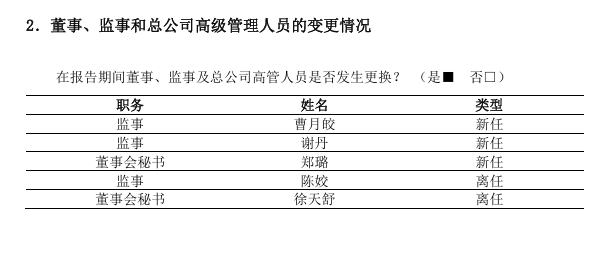
徐天舒卸任信美相互人寿董秘,原职工监事郑璐出任
Jin Rong Jie· 2026-02-24 03:19
近日,据信美相互人寿2025年第四季度偿付能力报告,徐天舒卸任董事会秘书职务,由原职工监事郑璐 出任。 | 职务 | 姓名 | 类型 | | --- | --- | --- | | 版事 | 曹月蛟 | 新任 | | 版事 | 谢丹 | 新任 | | 董事会秘书 | 郑璐 | 新任 | | 服事 | 陈姣 | 离任 | | 董事会秘书 | 徐天舒 | 离任 | 信美相互人寿官网显示,徐天舒,1973年生,现任信美相互人寿副总经理、首席投资官、管理执行委员 会委员,曾任中信证券基金管理部经理,澳洲 Whenners 私募基金公司基金经理,海康人寿投资总监等 职。 郑璐,1987年生,现任信美相互人寿董事会秘书、上海分社总经理、合伙人、管理执行委员会委员,曾 任交通银行总行个人金融业务部高级规划经理,信美人寿相互保险社风云团队总监、风云团队负责人、 高客业务部、市场企划部、会员服务部总经理。其于2025年7月提交的职工监事辞任申请于2025年12月 16日正式生效。 关键词阅读:信美相互人寿 徐天舒 董秘 责任编辑:山上 ...
非银行业周报(2026年第六期):关注券商并购重组主线,行业迎来估值业绩双修复-20260224
AVIC Securities· 2026-02-24 03:16
Investment Rating - The industry investment rating is "Overweight," indicating that the growth level of the industry is expected to exceed that of the CSI 300 index over the next six months [3][44]. Core Views - The report highlights that the securities sector is experiencing a dual recovery in valuation and performance, driven by an active capital market and favorable policy conditions. The integration process within the industry is accelerating, with a clear regulatory direction emphasizing risk prevention and high-quality development [2][6]. - The report notes that the current price-to-book (PB) ratio for the brokerage sector is at 1.34 times, suggesting that valuations are still at historical lows, which, combined with ongoing policy support and improving market conditions, presents a strong case for a dual recovery in both valuation and performance [2][6]. Summary by Sections Securities Weekly Data Tracking - The average daily trading volume of A-shares for the week (February 9-13, 2026) was 21,111 billion yuan, a decrease of 12.28% from the previous week. The average turnover rate was 3.28%, down by 0.31 percentage points [13]. - As of February 13, 2026, the total equity financing scale reached 1,672.22 billion yuan, with IPOs contributing 148 billion yuan and additional offerings accounting for 1,455 billion yuan. The bond underwriting scale for January 2026 was 12,080.27 billion yuan, reflecting a year-on-year increase of 12.56% and a month-on-month increase of 45.38% [15]. Insurance Weekly Data Tracking - The insurance sector reported a total original insurance premium income of 61,194.18 billion yuan in December 2025, representing a year-on-year increase of 7.43%. The life insurance segment saw a premium income of 46,491.44 billion yuan, up by 9.05% year-on-year, while the property insurance segment reported 14,702.74 billion yuan, an increase of 2.60% [29][30]. - The overall asset scale of the insurance industry as of November 2025 was 413.145 billion yuan, with a year-on-year growth of 15.06%. The asset management companies showed a significant increase of 14.00% [29]. Industry Dynamics - The report emphasizes that mergers and acquisitions (M&A) remain a crucial theme for the development of the brokerage industry, with resources increasingly concentrating in high-quality leading brokerages. The report suggests monitoring potential M&A targets and leading firms like CITIC Securities and Huatai Securities [6]. - The regulatory environment is encouraging industry consolidation, which is expected to enhance overall competitiveness and resource allocation within the market [6].





港股内险股全线回落 新华保险跌超6%
Mei Ri Jing Ji Xin Wen· 2026-02-24 03:11
Group 1 - Hong Kong insurance stocks experienced a widespread decline, with significant drops in share prices [1] - Xinhua Insurance (01336.HK) fell by 6.03%, trading at 56.85 HKD [1] - China Life (02628.HK) decreased by 5.61%, with a current price of 32.66 HKD [1] - China Pacific Insurance (02601.HK) saw a decline of 4.12%, now priced at 36.8 HKD [1] - China Property & Casualty Insurance (02328.HK) dropped by 1.71%, currently at 16.64 HKD [1]


资讯早间报:隔夜夜盘市场走势-20260224
Guan Tong Qi Huo· 2026-02-24 03:04
Report Summary 1. Report's Industry Investment Rating No relevant information provided. 2. Core Viewpoints - Global financial markets are affected by multiple factors including geopolitical tensions, tariff policies, and corporate earnings, leading to significant fluctuations in various asset classes. For example, the US stock market declined due to Trump's tariff plan and EU's suspension of the trade - agreement approval, while the precious metals market rose due to increased risk - aversion [5][6]. - The energy market is influenced by the Iran - US nuclear negotiation, with expectations of increased Iranian oil supply putting downward pressure on oil prices [7]. 3. Summary by Directory Overnight Night - Market Trends - **Stock Markets**: US major indices (Dow, S&P 500, Nasdaq) fell, with IBM and American Express leading the decline. European indices (DAX, CAC40, FTSE 100) also closed lower. The reasons include Trump's tariff plan and EU's suspension of trade - agreement approval [5]. - **Precious Metals**: COMEX gold and silver futures rose due to increased risk - aversion from geopolitical tensions, tariff policy changes, and other factors [6]. - **Energy**: US crude oil and Brent oil futures fell as the Iran - US nuclear negotiation showed signs of progress, increasing the expectation of more Iranian oil supply [7]. - **Base Metals**: Most London base metals declined, except for LME tin which rose [7]. Important News Macro News - Shanghai Export Container Settlement Freight Index for European routes dropped 2.1%. The US will stop collecting certain illegal tariffs. There is still a risk of US military strikes against Iran. India postponed a trade delegation plan. China is assessing the impact of US tariff rulings and urges the US to cancel unilateral tariffs. The EU suspended the approval of a trade agreement with the US. The Trump administration is considering new "national security tariffs" [9][11]. Energy Futures - Saudi Aramco sold condensate oil. Methanol supply in Southeast Asia is restricted due to planned maintenance. Goldman Sachs and Morgan Stanley have different forecasts for oil prices, with Goldman Sachs raising price forecasts for Q4 2026 and 2027, and Morgan Stanley expecting a short - term increase followed by a decline [14][16][18]. Metal Futures - The US energy storage market is expected to grow 21%. Lebanon may sell part of its gold reserves. UBS is positive on gold, with a target price of $6200/ounce [20][21]. Black - Series Futures - China's iron ore arrivals decreased, but global iron ore shipments increased. Vietnam plans to build a large - scale steel plant. The blast furnace capacity utilization rate of Chinese pig - iron enterprises decreased, and inventory increased [23][25]. Agricultural Products Futures - Malaysian palm oil production and exports decreased in February. Argentina's soybean moisture conditions improved, and the production forecast remains unchanged [27][28]. Financial Markets Financial - 143 companies have submitted IPO applications in the Hong Kong stock market in 2026. Deloitte predicts a better performance in the Hong Kong IPO market this year [30]. Industry - Payment transactions on Chinese New Year's Eve increased. The real - estate market may show more stabilization signals. China's AI governance system is maturing [31]. Overseas - The US may adjust tariff application methods and continue steel - aluminum tariffs. The Fed has about 75 basis - points to reach the neutral rate. India plans to invest $200 billion in AI. The Australian central bank may tighten policy. UK unemployment reached a new high [32][34][35]. International Stock Markets - US and European stock markets rose, while the Japanese market fell. High - end companies made significant stock - position adjustments. The UK may adjust accounting rules to attract Chinese companies. Australia simplifies corporate governance rules. Some companies announced major transactions or reported good earnings [36][38][41]. Commodities - Precious metals, oil, and most base metals futures fell due to factors such as progress in the Iran - US nuclear negotiation and reduced risk - aversion [43]. Bonds - US Treasury yields had mixed changes. Japanese bonds rose, and the 2029 fiscal - year bond issuance may increase [45]. Foreign Exchange - The US dollar index rose slightly, and most non - US currencies fell [46]. Upcoming Economic Data and Events - **Economic Data**: Include Japan's trade balance, UK's inflation and housing - price index, US's new - home construction, and other data [48]. - **Events**: New Zealand's central - bank rate decision, European Central Bank officials' speeches, and the Fed's release of meeting minutes [50]. - **Market Closures**: Chinese, South Korean, and Vietnamese stock markets are closed due to the Spring Festival [52].






最高法:2025年全国法院受理保险纠纷39.2万件,同比增长3%
Xin Lang Cai Jing· 2026-02-24 03:00
2月24日金融一线消息,最高人民法院民二庭庭长王闯在最高人民法院新闻发布会上表示,2025年全国 法院受理保险纠纷39.2万件,同比增长3%,各地法院通过多元化解纠纷、发布示范判决等方式,依法 维护保险消费者合法权益。 2月24日金融一线消息,最高人民法院民二庭庭长王闯在最高人民法院新闻发布会上表示,2025年全国 法院受理保险纠纷39.2万件,同比增长3%,各地法院通过多元化解纠纷、发布示范判决等方式,依法 维护保险消费者合法权益。 责任编辑:秦艺 责任编辑:秦艺 ...