制造业

Search documents
2025年工业经济实现向新向优发展
Xin Lang Cai Jing· 2025-12-26 20:00
Group 1 - The core viewpoint of the meeting emphasizes the need for the industrial economy to advance towards new and superior development by 2025, achieving qualitative improvements and reasonable quantitative growth [1] - It is projected that by 2025, the total revenue from telecommunications services and software business will grow by approximately 9% and 12% year-on-year, respectively, while the digital industry revenue is expected to increase by around 9% [1] - The meeting highlights the importance of consolidating the positive momentum of the industrial economy in 2026, enhancing the resilience and security of the industrial chain, and accelerating technological innovation capabilities [1] Group 2 - The meeting outlines the goal of fostering emerging and future industries, specifically mentioning the development of key sectors such as integrated circuits, new displays, new materials, aerospace, low-altitude economy, and biomedicine [2] - It calls for the implementation of a new round of key industry growth plans, focusing on stabilizing effective investment in manufacturing and enhancing the quality of industrial chains [2] - The initiative includes the cultivation of "little giant" enterprises, manufacturing champions, and national-level characteristic industrial clusters for small and medium-sized enterprises [2]
工业和信息化部部署2026年重点工作
Shang Hai Zheng Quan Bao· 2025-12-26 18:58
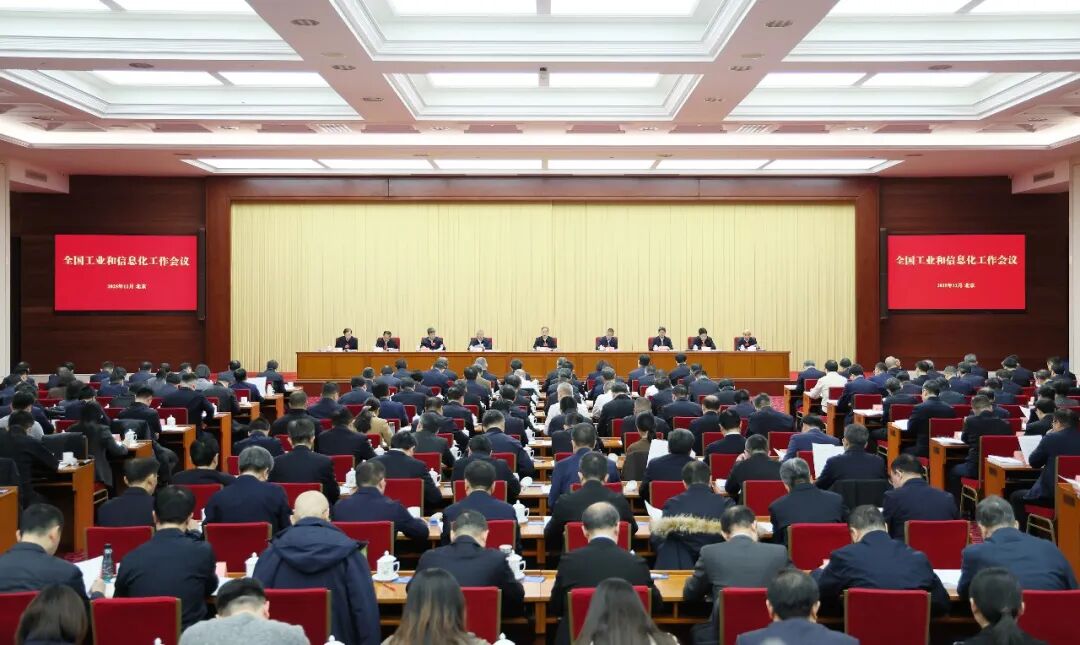
Core Insights - The national industrial and information technology work conference held on December 25-26 outlined key tasks for 2026, focusing on stabilizing growth, enhancing innovation, promoting integration, optimizing governance, and preventing risks to achieve qualitative and quantitative improvements in the industrial economy [1] Group 1: Stabilizing Growth - The primary task for 2026 is to stabilize growth in the industrial economy, with a focus on implementing a new round of ten key industry growth plans and supporting major industrial provinces [1] - There will be an emphasis on increasing the supply of green products, trendy products, and products for the elderly, while systematically cultivating a lineup of high-quality consumer goods [1] - Enhancing the resilience and safety of industrial chains is crucial for stabilizing growth, with actions planned for high-quality development of key industrial chains and promoting the development of characteristic mineral resource industries [1] Group 2: Optimizing Industrial Structure - The conference called for optimizing and upgrading traditional industries through standard guidance, equipment updates, process upgrades, digital empowerment, and management innovation [2] - There will be a focus on nurturing emerging and future industries, including integrated circuits, new displays, new materials, aerospace, low-altitude economy, and biomedicine, along with support for artificial intelligence initiatives [2] - The establishment of national emerging industry development demonstration bases and innovative industrial clusters is planned, alongside innovation tasks in future industry segments [2] Group 3: Strengthening Innovation - The goal for 2026 includes overcoming core technologies that drive industrial development and strengthening high-level manufacturing pilot platforms [3] - The creation of a national integrated technology market and the promotion of a "pay after use" reform for technological achievements are key initiatives [3] - The conference emphasized the need for deep integration of information technology and industrialization, with the establishment of high-quality industry data sets and digital transformation scenarios [3] Group 4: Optimizing Governance - The conference highlighted the need to accelerate the implementation of the "14th Five-Year" series of plans in the industrial and information technology sector and to address "involution" competition [4] - There will be a focus on enhancing the supply capacity of high-quality standards and fostering the development of "little giant" enterprises and national-level specialized industrial clusters [4] - Promoting green and low-carbon development in the industrial sector is also a priority, with initiatives for energy-saving transformations and the establishment of national green factories and industrial parks [4]
政策高频 | 中财办详解经济工作会议精神(申万宏观·赵伟团队)
赵伟宏观探索· 2025-12-26 16:02
文 | 赵伟、贾东旭、侯倩楠 联系人 | 侯倩楠 报告正文 (一)中财办解读 2025 年中央经济工作会议精神 中央财办有关负责同志12月16日接受中央主要媒体采访,围绕宏观政策、提振消费、扩大投资、全国统 一大市场建设、高质量充分就业等主题深入解读中央经济工作会议精神。财政政策方面:政策力度上,保持 必要的财政赤字、债务总规模和支出总量;政策质效上,提高精准性和有效性;实施时机上,主动靠前发 力。货币政策方面:把促进经济稳定增长、物价合理回升作为货币政策的重要考量;加力支持扩大内需、科 技创新、中小微企业等重点领域。 | 图表 18: 中财办同志解读 2025年中央经济工作会议精研 | | | --- | --- | | 时间 主题 | 解读内容 | | | 展望明年,世界经济有望延续温和增长态势,但变数较多。从国内看,我们面临的困难挑战不少,但经济基础稳、优势多、和性强、潜 | | 经济形势 | 能大等长期向好的支撑条件和基本趋势没有改变...投资和消费增速明年有望恢复,产业转型升级加快,科技和产业创新进入成果集中爆发 | | | 阶段,我国经济发展前景是十分光明的。 | | | 政策力度上,保持必要的财 ...

工信部部署2026年重点工作,事关人工智能、低空经济
Xin Lang Cai Jing· 2025-12-26 13:54
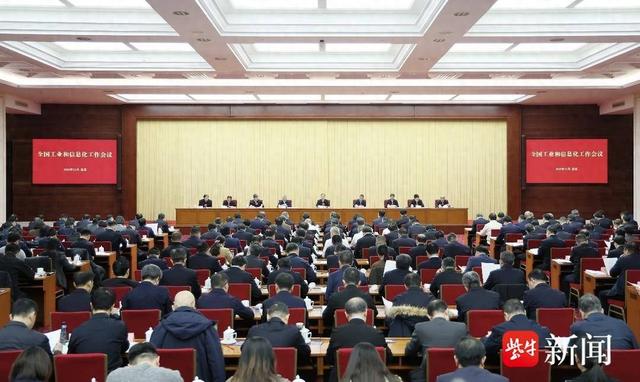
Core Insights - The National Industrial and Information Technology Work Conference was held from December 25 to 26, focusing on the development of emerging industries and future industries, including integrated circuits, new displays, new materials, aerospace, low-altitude economy, and biomedicine, while supporting artificial intelligence initiatives [2][4] Group 1: Industrial Economic Performance - The industrial economy is expected to show steady progress, with telecommunications business volume and software business revenue projected to grow by approximately 9% and 12% year-on-year, respectively, and digital industry revenue also expected to increase by around 9% [3] - From January to November, the added value of high-tech manufacturing and equipment manufacturing industries grew by 9.2% and 9.3% year-on-year, respectively, with the core AI industry exceeding 1 trillion yuan and new energy vehicle exports surpassing 2 million units [3] Group 2: Key Focus Areas for 2026 - The year 2026 marks the beginning of the "15th Five-Year Plan," emphasizing the integration of technological and industrial innovation, and the need to stabilize growth, enhance innovation, promote integration, optimize governance, and mitigate risks [4] - Ten key areas of focus for 2026 include consolidating the positive trend of the industrial economy, enhancing industrial chain resilience, accelerating technological innovation, optimizing traditional industries, and fostering emerging and future industries [5][6] Group 3: Technological and Industrial Integration - The conference highlighted the importance of deepening the integration of information technology and industrialization, including the establishment of high-quality industry data sets and the promotion of digital transformation in key industries [6] - Initiatives to support the integration of AI and manufacturing, as well as the development of industrial internet platforms, were also emphasized [6] Group 4: Green and Sustainable Development - The promotion of green and low-carbon development in the industrial sector is a priority, with efforts to enhance energy efficiency and carbon reduction in industrial enterprises, and the establishment of standards for carbon footprint accounting [6][7] - The conference also called for the cultivation of national green factories and industrial parks, as well as the promotion of comprehensive utilization of industrial solid waste [7] Group 5: Enterprise Development and Governance - The conference aims to foster high-quality enterprises, including "little giant" companies and manufacturing champions, while addressing issues related to overdue payments to enterprises [7] - Enhancing governance efficiency in the industrial and information sectors is crucial, with a focus on curbing "involution" competition and promoting policy coordination across industries [7]
固就业之基 稳民生之本
Xin Lang Cai Jing· 2025-12-26 13:53
Group 1 - The core viewpoint emphasizes the importance of high-quality and sufficient employment as a priority for economic and social development, with various measures implemented to stabilize and expand employment opportunities [1] - The current employment landscape is undergoing structural changes due to industrial transformation, with traditional industries upgrading and new strategic emerging industries creating demand for skilled and versatile talent [1] - The need to align employment expansion with high-quality development is highlighted, aiming to create more job opportunities while enhancing the stability and sustainability of employment [1] Group 2 - Policies are being reinforced to ensure employment stability, with a focus on integrating employment stabilization requirements into policy formulation and implementation across various sectors [2] - The industrial support system is being strengthened to drive employment growth, emphasizing the development of modern agriculture, advanced manufacturing, and modern services to create job opportunities locally [2] - Support for small and micro enterprises is crucial, with targeted assistance to help them thrive and contribute significantly to employment stability and livelihood protection [2] Group 3 - The focus on enhancing employment quality is underscored, with a call for a robust lifelong vocational training system to meet market demands and improve job stability [3] - A comprehensive employment service system is being developed to improve labor resource allocation efficiency, utilizing digital technology for better job matching [3] - Continuous support for individuals facing employment difficulties is essential, ensuring that employment policies are effectively implemented and provide meaningful assistance [3]
加快提升产业科技创新能力,有哪些着力点?
Xin Hua She· 2025-12-26 13:19
Core Insights - The article emphasizes the importance of enhancing industrial technological innovation capabilities by applying scientific and technological achievements to specific industries and supply chains to improve competitiveness [1] Group 1: Technology Innovation and Industry Development - The national industrial and information technology conference highlighted the need to focus on "0 to 1" innovations, specifically targeting core technologies that drive industrial development, indicating a strong alignment of technological innovation with industry needs [2] - The approach of "industry posing questions and technology providing answers" is deemed crucial for building a modern industrial system, with a focus on addressing current needs through targeted innovation and aligning with broader industrial transformation trends [2] Group 2: Manufacturing and Pilot Platforms - China has established over 2,400 pilot platforms for manufacturing, with a reported 80% success rate for industrialization of technologies that have undergone pilot testing, compared to only 30% for those that have not [3] - The conference called for strengthening high-level manufacturing pilot platforms and creating a nationwide service network to enhance the utilization of these platforms, aiming to solve the "last mile" challenge in technology transfer [3] Group 3: Market-Oriented Technology Transfer - To facilitate technology transfer, a "pay after use" reform pilot will be implemented in 2026, aimed at lowering barriers for technology adoption and reducing innovation risks for enterprises, thereby encouraging more companies to engage with high-value technological achievements [4] Group 4: Emerging Industries and Innovation - The focus for the upcoming year includes developing emerging pillar industries such as integrated circuits, new displays, new materials, aerospace, low-altitude economy, and biomedicine, alongside supporting AI advancements and satellite IoT commercial trials [5] - The government plans to nurture quality enterprises by identifying and supporting "little giant" companies, manufacturing champions, and national-level industry clusters, while also addressing overdue payments to businesses [5]
“斩杀线”下的美国:年薪百万的中产,也怕一次意外
凤凰网财经· 2025-12-26 12:44
Core Viewpoint - The term "cut-off line" has emerged from discussions among Chinese expatriates and students in the U.S., highlighting the precarious financial situations faced by many Americans, particularly the middle class, who can quickly fall into financial distress due to rising living costs and unexpected events [1][2][4]. Group 1: Survival Threshold - The official poverty line for a family of four in the U.S. is set at an annual income of $32,150, a figure that is outdated and does not reflect current living costs [6][7]. - To maintain a basic standard of living, a family of four would need an annual income of approximately $136,500, equivalent to about 960,000 RMB [7]. - A quarter of American households are living paycheck to paycheck, with nearly all income going towards essential expenses [9]. - 37% of Americans cannot cover an emergency expense of $400, indicating widespread financial vulnerability [10]. - Even middle-class individuals are not immune, as demonstrated by a programmer in Seattle who, despite a $450,000 salary, faced financial ruin due to high living costs and unexpected medical expenses [12][15]. Group 2: Homelessness Crisis - The U.S. is experiencing an unprecedented homelessness crisis, with the total number of homeless individuals rising by 18% in 2024 compared to the previous year [18][19]. - Young people under 25 now make up 27% of the homeless population, with their numbers increasing by 29% [20]. - The number of homeless children has surged by 33%, with at least 148,000 minors living in shelters or on the streets [21]. - Older adults, particularly those aged 55 and above, are the fastest-growing segment of the homeless population, with many living below the official poverty line [26][27]. Group 3: Economic Disparities - The "cut-off line" phenomenon is rooted in the structural imbalances of the U.S. economy, characterized by a "K-shaped" recovery where wealth is increasingly concentrated among the affluent [29][32]. - The contribution of AI-related investments to GDP growth has surpassed that of private consumption, indicating a shift towards a technology-driven economy [30]. - The manufacturing sector's value added has dropped below 10%, highlighting a shift away from traditional economic drivers [31]. - Wealth creation is heavily skewed towards capital owners, exacerbating the financial fragility of working-class families [32]. Group 4: Policy Implications - The U.S. labor market is facing a "double weakness" in supply and demand, with rising unemployment and job instability for low-income workers due to technological advancements [35]. - The average commercial electricity prices have increased by about 30% since 2019, adding to the financial burden on households [36]. - Economic policies have disproportionately benefited the wealthy, with lower-income families facing net losses while high-income families gain significant tax benefits [36]. - Policymakers are struggling to balance the needs of capital markets with the rising cost of living for ordinary citizens, which could lead to significant economic risks if not managed properly [37][39].

北交所IPO审核进入收官倒计时!一周四审上会企业均获通过
Xin Jing Bao· 2025-12-26 12:43
Core Viewpoint - The Beijing Stock Exchange (BSE) is accelerating its IPO review process, with a focus on the sustainability and authenticity of company performance, as well as the necessity of fundraising projects [1][2]. Group 1: IPO Review Process - The BSE's listing committee held its 46th to 49th review meetings from December 22 to 26, 2025, approving four companies: Ying's Holdings, Longyuan Co., Puan Medical Technology, and New Hengtai New Materials, all meeting the issuance and listing requirements [1]. - Key concerns during the review included the sustainability of performance growth, accuracy of revenue recognition, reasons for declining gross margins, and the authenticity of online sales revenue [1]. Group 2: Company Performance - Ying's Holdings reported revenues of 1.296 billion yuan, 1.758 billion yuan, 1.974 billion yuan, and 1.132 billion yuan from 2022 to the first half of 2025, with net profits of 114 million yuan, 216 million yuan, 190 million yuan, and 136 million yuan [2]. - Longyuan Co. achieved revenues of 519 million yuan, 699 million yuan, 869 million yuan, and 475 million yuan during the same period, with net profits of 97 million yuan, 118 million yuan, 112 million yuan, and 61 million yuan [2]. - New Hengtai and Puan Medical also showed optimistic performance, with New Hengtai's revenues reaching 530 million yuan, 679 million yuan, 774 million yuan, and 384 million yuan, and net profits of 45 million yuan, 101 million yuan, 91.76 million yuan, and 51.35 million yuan [2]. Group 3: Quality of Companies in the Pipeline - As of December 25, 2025, there are 168 companies in the BSE's IPO queue, with only one company projected to be unprofitable in 2024, indicating an overall improvement in the quality of companies seeking to go public [4]. - Among the 168 companies, 50 have net profits exceeding 100 million yuan, accounting for 29.8% of the total [4]. - New companies entering the IPO process, such as Hubei Benxing New Materials, reported revenues of 3.726 billion yuan, 3.606 billion yuan, 4.445 billion yuan, and 2.287 billion yuan from 2022 to the first half of 2025, with net profits of 451 million yuan, 356 million yuan, 389 million yuan, and 199 million yuan [4].
阿尔特:12月26日召开董事会会议
Mei Ri Jing Ji Xin Wen· 2025-12-26 11:40
Group 1 - The core point of the article is that Alter (SZ 300825) held its 25th meeting of the fifth board of directors on December 26, 2025, to discuss the proposal for the 2026 first extraordinary shareholders' meeting [1] - For the first half of 2025, Alter's revenue composition was 94.34% from professional technical services and 5.66% from manufacturing [1] - As of the report date, Alter's market capitalization was 4.8 billion yuan [1]

工信部重要会议,2026年这样干!
Zheng Quan Shi Bao· 2025-12-26 11:33
Core Insights - The meeting focused on deploying key tasks for 2026, emphasizing the importance of new industrialization and the implementation of the 14th Five-Year Plan while preparing for the 15th Five-Year Plan [1][6] Summary by Sections Industrial Economic Performance - In 2025, under the leadership of the central government, the industrial economy is expected to show steady progress, with telecommunications and software business revenues projected to grow by approximately 9% and 12% respectively, and digital industry revenue also expected to increase by around 9% [3] - The resilience of industrial supply chains is improving, with significant advancements in key manufacturing sectors and breakthroughs in landmark technologies and products [3] Technological Innovation and Manufacturing Upgrades - From January to November, the added value of high-tech manufacturing and equipment manufacturing increased by 9.2% and 9.3% respectively, with the core AI industry exceeding 1 trillion yuan and exports of new energy vehicles surpassing 2 million units [3] - Over 7,000 advanced and 500 excellent smart factories have been established, with over 20,000 industrial 5G private networks and more than 8,000 5G factories [3] Key Focus Areas for 2026 - The meeting outlined ten key areas for focus in 2026, including consolidating the positive trend of the industrial economy, enhancing supply chain resilience, and accelerating technological innovation [7][8] - Emphasis was placed on fostering emerging industries such as integrated circuits, new materials, and biomedicine, while also promoting the deep integration of information technology and industrialization [8][9] Industry Governance and Policy Implementation - The meeting highlighted the need for improved industry governance, including the implementation of a series of plans for the industrial and information sectors during the 15th Five-Year Plan [10] - There is a strong focus on enhancing the quality of enterprises, with initiatives to support small and medium-sized enterprises and to eliminate overdue payments to businesses [9][10] Political and Organizational Support - The meeting underscored the importance of the Party's leadership in ensuring the success of various initiatives, emphasizing the need for political construction and the enhancement of talent and organizational capabilities [11] - It called for a unified approach to implementing the central government's decisions and fostering a positive political environment [12]