咖啡

Search documents
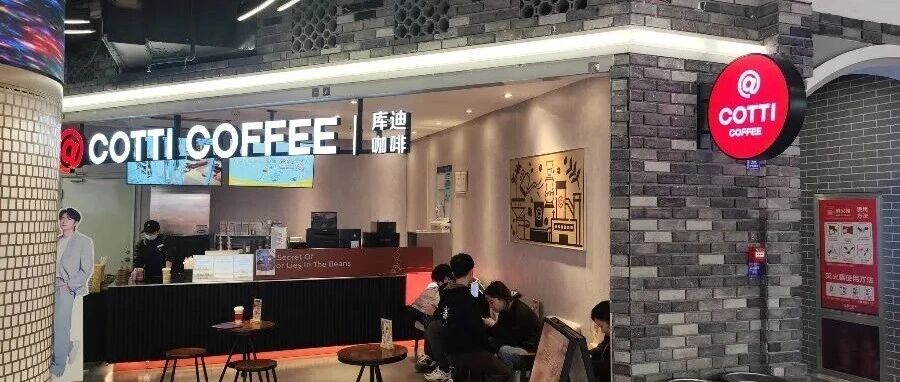
库迪核心单品涨价超30%,取消全场9.9元,店员称对生意影响不大
21世纪经济报道· 2026-02-03 12:49
Core Viewpoint - Kudi Coffee has ended its "all products at 9.9 yuan" promotion earlier than expected, with plans to adjust prices and maintain profitability starting February 2024 [1][4]. Group 1: Pricing Strategy Changes - Starting February 1, 2026, Kudi will retain 3-7 products at the promotional price of 9.9 yuan, while other products will see price increases to 11.9-16.9 yuan, with some core items rising by 30%-60% [1][4]. - The new store opening coupon has increased from 6.9 yuan to 8.8 yuan, and the new user gift coupon has risen from 8.8 yuan to 9.9 yuan, with continued participation in various delivery platform subsidies [1][4]. Group 2: Market Dynamics and Competition - The end of the 9.9 yuan promotion is attributed to a cooling off in the delivery market, which previously fueled Kudi's growth [4][6]. - Kudi's pricing strategy was influenced by intense competition in the delivery market, where brands like Luckin and Mixue benefited from significant subsidies [4][6]. - The coffee market is experiencing a shift as the necessity for aggressive price wars diminishes, with Kudi's expansion reaching a potential bottleneck, having 18,000 stores, which is below original targets [8][10]. Group 3: Consumer Behavior and Sales Performance - Despite the price adjustments, Kudi's stores remain busy, with peak sales observed during specific hours, indicating that consumer demand is still strong [10]. - The impact of low pricing on overall sales appears to be declining, as evidenced by the limited contribution of the lowest prices to total sales figures [10].

咖啡新战事,矛头向瑞幸
3 6 Ke· 2026-02-03 11:45
Core Insights - The coffee industry is experiencing significant changes driven by Starbucks' performance, coffee futures prices, and the impact of low-priced competitors like Luckin Coffee [1][2] Group 1: Starbucks' Strategy and Performance - Starbucks China reported an 11% revenue growth, while its U.S. coffee futures prices remain high at 335.25 cents per pound [1] - The company plans to sell 60% of its Chinese operations to Boyu Capital for $4 billion, aiming to leverage local expertise to enhance market penetration [9][10] - Starbucks' latest financial report shows a 5.5% revenue increase to $9.915 billion globally, but a 62.44% drop in net profit to $293 million [8] Group 2: Competition Landscape - Luckin Coffee has surpassed Starbucks in store count, with over 30,000 locations, while Starbucks has around 8,000 [12][13] - The competitive environment is intensifying, with new entrants like Manner Coffee and cross-industry players like Gu Ming entering the market [14][15] - Luckin faces pressure from various competitors, including low-priced offerings from Lucky Coffee and new product lines from tea brands [14][16] Group 3: Market Trends and Challenges - The growth rate of China's fresh coffee market has slowed from 38% in 2020 to a projected 15% by 2025, indicating a maturing market [6] - Starbucks' strategy shift towards lower-tier markets reflects its struggle to adapt to local consumer preferences [7][9] - The rise of coffee robots and automated solutions poses a new challenge to traditional coffee shop models, potentially undermining Luckin's competitive advantages [15][16]

9.9元咖啡越来越难买?有搅局者把价格打到“5分钱”
Sou Hu Cai Jing· 2026-02-03 10:21
Group 1 - The core point of the article is the decline of the "9.9 yuan coffee" price war initiated by Kudi Coffee, with the company announcing the end of its unlimited 9.9 yuan promotion after three years, while still offering some products at this price [1][2] - Kudi Coffee's strategy of aggressive pricing led to significant market expansion, with over 18,000 stores, surpassing Starbucks China, and aiming to compete with Luckin Coffee's 30,000 stores [2] - Despite the rapid expansion, profitability remains a challenge, as the long-term low pricing strategy has negatively impacted overall gross margins, with Luckin Coffee reporting a rare loss of 65.11 million yuan in Q1 2024 attributed to the price war [3] Group 2 - A new player, Wallace, has entered the market with a "9.9 yuan coffee monthly card," allowing customers to redeem up to 210 cups in a month, significantly lowering the average price per cup [4][5] - Wallace's strategy appears to focus on using coffee as a high-frequency draw to increase store traffic, hoping customers will also purchase other items like fried chicken and hamburgers [5] - The coffee market is characterized by shifting pricing strategies, indicating that there are no permanent price points, only evolving competitive dynamics [6]
库迪咖啡提前结束全场9块9:店员称影响有限
2 1 Shi Ji Jing Ji Bao Dao· 2026-02-03 10:08
Core Viewpoint - Kudi Coffee has decided to end its promotional pricing of 9.9 yuan earlier than expected, with a shift back to regular prices ranging from 11.9 to 16.9 yuan starting February 1, 2026, indicating a strategic adjustment in response to market conditions and competition [1][3][10] Pricing Strategy - From February 1, 2026, Kudi will maintain a limited selection of products at the promotional price of 9.9 yuan, while core products will see price increases of 30% to 60%, such as the salted caramel vanilla latte rising from 9.9 yuan to 15.9 yuan [1] - Kudi's promotional activities have also been adjusted, with new store opening vouchers increasing from 6.9 yuan to 8.8 yuan, and new user rewards rising from 8.8 yuan to 9.9 yuan [1] Market Impact - The early termination of the 9.9 yuan promotion appears to have a limited impact on Kudi's operations, as store employees reported that customers were not significantly concerned about the price changes [2] - The competitive landscape has shifted, with Kudi and other brands like Luckin Coffee and Mixue Ice City benefiting from the previous aggressive pricing strategies, as evidenced by significant sales milestones on platforms like JD.com [3][5] External Factors - The external delivery market has cooled down, which has contributed to Kudi's decision to end the low-price strategy, as the intense competition and subsidies have pressured operational strategies across the industry [3][10] - Regulatory scrutiny has increased, with the National Market Supervision Administration conducting investigations into the competitive practices of delivery platforms, aiming to foster a fair market environment [8][9] Operational Insights - Kudi's expansion appears to be reaching a plateau, with the total number of stores at 18,000, which is below initial projections, suggesting that the effectiveness of the 9.9 yuan strategy for expansion is diminishing [11] - Despite the price adjustments, Kudi's stores remain busy, indicating that customer demand may not be as sensitive to price changes as previously thought [11]
“另类”的挪瓦咖啡,如何成为万店“黑马”?
东京烘焙职业人· 2026-02-03 08:31
Core Viewpoint - The article discusses the rapid expansion of Nowwa Coffee in China's coffee market, highlighting its unique "convenience store parasitic model" that allows for low-cost entry and rapid scaling, but also points out the challenges it faces in brand recognition and product quality compared to established competitors like Luckin and Kudi [4][11][18]. Group 1: Company Overview - Nowwa Coffee was founded in 2019 and has quickly become the fourth coffee chain in China to surpass 10,000 stores by 2025, following Luckin, Kudi, and Lucky Coffee [7][10]. - By the end of 2024, Nowwa had over 1,000 stores, establishing a foothold in the chain coffee industry [9]. - The brand's rapid growth is attributed to its partnership with convenience stores, allowing for a significant number of locations without the need for standalone stores [11][12]. Group 2: Business Model - Nowwa Coffee operates primarily through a "mini coffee shop" model within convenience stores, requiring minimal investment from store owners, which includes a deposit of 10,000 yuan for equipment and a small space of 2-4 square meters [14]. - This model reduces the operational risk for convenience store owners and has attracted significant capital investment, with recent funding rounds totaling several hundred million yuan [14]. - The pricing strategy initially allowed convenience store partners to earn a profit of 4-5 yuan per cup, but this has since decreased to around 2 yuan, reducing the attractiveness of the partnership [23]. Group 3: Market Position and Challenges - Despite its rapid expansion, Nowwa Coffee's brand recognition is significantly lower than that of its competitors, as many customers purchase coffee from convenience stores without specifically seeking the Nowwa brand [18]. - The lack of dedicated baristas in convenience stores means that the quality of coffee may not be consistently high, impacting customer satisfaction [20]. - As the coffee market transitions from rapid expansion to refined operations, the ability to create standout products will be crucial for Nowwa's long-term success [21].

湖北返乡创业主体达13.9万户 政策赋能带动36.8万人就地就业
Chang Jiang Shang Bao· 2026-02-03 00:23
Group 1 - The core viewpoint highlights the significant growth of returnee entrepreneurship in Hubei Province, with 139,000 business entities expected by 2025, creating 368,000 local jobs, thereby stimulating the county economy and promoting common prosperity [1][2] - The Hubei government has implemented a comprehensive policy framework to support returnee entrepreneurship, including 21 specific measures and a "six subsidies and one benefit" policy package, which includes rent reductions, guaranteed loans, social security subsidies, and tax incentives [2][3] - The establishment of a three-tiered platform for entrepreneurship, including county entrepreneurship parks, town incubation bases, and village family workshops, has facilitated the growth of 376 agricultural entrepreneurship platforms and 2,343 various entrepreneurial carriers [3][4] Group 2 - The rise of returnee entrepreneurship has led to the emergence of supporting industries, with examples such as a coffee shop in the cultural and creative park generating over 30,000 yuan in daily revenue due to government rent reduction policies [4][5] - Continuous upgrades in service guarantees have streamlined the returnee entrepreneurship process, with the establishment of a database to match returnees' skills and entrepreneurial intentions with projects, mentors, and policies [4][5] - Hubei has organized a thousand service specialists to provide one-on-one support to 7,132 enterprises, addressing 169,900 employment issues, and has implemented a data-driven service model to enhance employment services [5]

9块9的咖啡自由结束了?
36氪· 2026-02-02 09:39
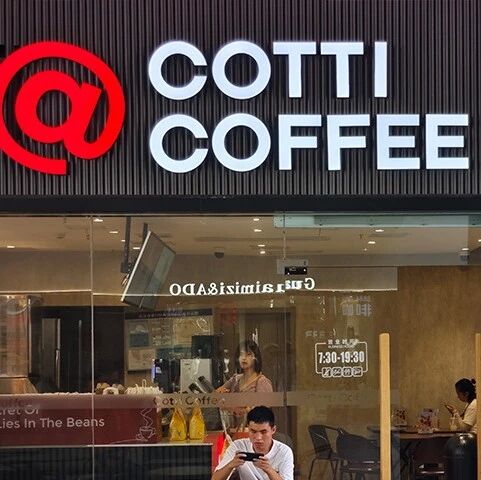
Core Viewpoint - The article discusses the evolving landscape of the Chinese coffee market, highlighting the end of Kudi's 9.9 yuan unlimited drink promotion and its implications for pricing strategies among coffee brands in China [5][11][16]. Group 1: Market Dynamics - The Chinese coffee market has rapidly developed over the past decade, with a market size reaching hundreds of billions and over 100 million coffee users established [7]. - Kudi's pricing strategy has significantly influenced consumer perceptions, establishing a price anchor of 9.9 yuan for quality coffee [10][9]. - The end of Kudi's promotion marks a shift in the competitive landscape, where price is no longer the sole competitive factor, leading to a focus on brand and product differentiation [8][28]. Group 2: Competitive Landscape - Major coffee brands in China, including Luckin and Kudi, have entered the "ten-thousand store era," with Luckin surpassing 30,000 stores and Kudi rapidly expanding to over 18,000 stores within two years [24][27]. - The competitive environment is shifting towards refined operations, emphasizing user retention and profit maximization rather than just scale [31]. - The emergence of a supply crisis due to adverse weather in Brazil is expected to increase coffee prices, providing a basis for price adjustments that consumers may accept [31]. Group 3: Future Projections - The number of coffee drinkers in China is projected to grow from 130 million in 2023 to 260 million by 2026, indicating a robust market expansion [23]. - The Chinese fresh coffee market is expected to grow from 151.5 billion yuan in 2023 to 383.6 billion yuan by 2028, with a compound annual growth rate of 20.4% [23]. - The current pricing adjustments and market dynamics may present an opportunity for the entire coffee industry in China to upgrade and adapt to new consumer expectations [31].

9块9的咖啡自由结束了?
东京烘焙职业人· 2026-02-02 09:31
Core Viewpoint - The article discusses the significant changes in the Chinese coffee market, particularly focusing on the price adjustments made by Kudi Coffee, which has ended its 9.9 yuan unlimited drink promotion, impacting the pricing landscape for coffee in China [4][11][16]. Group 1: Market Dynamics - Kudi Coffee's price adjustment marks a pivotal moment in the Chinese coffee market, as it had previously established a strong price anchor for consumers, making 9.9 yuan a common expectation for quality coffee [5][9][10]. - The rapid growth of the Chinese coffee market has been driven by local brands like Luckin and Kudi, with the market size reaching hundreds of billions and over 100 million coffee users established in just a decade [6][24]. - The end of Kudi's promotional pricing signals a shift from price competition to a focus on brand and product differentiation among coffee chains, as they enter a new era of refined operations [7][29]. Group 2: Competitive Landscape - The competitive landscape in the Chinese coffee market has evolved, with major brands like Luckin and Starbucks entering the "ten-thousand store era," indicating a saturation of the market and a need for brands to focus on customer retention and product quality [26][28][31]. - Kudi Coffee, which was founded in 2022, has rapidly expanded its presence, reaching over 18,000 stores globally within two years, showcasing the aggressive growth strategies employed by new entrants in the market [25][23]. - The article highlights that the leading coffee brands are now prioritizing operational efficiency and customer loyalty over mere expansion, as the market matures and consumer preferences evolve [31]. Group 3: Future Outlook - The Chinese coffee market is projected to continue its rapid growth, with the number of coffee drinkers expected to rise from 130 million in 2023 to 260 million by 2026, driven by the popularity of freshly brewed coffee [24]. - The market is anticipated to grow from 151.5 billion yuan in 2023 to 383.6 billion yuan by 2028, with a compound annual growth rate of 20.4% [24]. - A global coffee supply crisis, exacerbated by adverse weather in Brazil, is expected to lead to increased coffee prices, providing a basis for price adjustments that consumers may accept, thus presenting an opportunity for the industry to upgrade [31].

一家上海大模型公司, B+ 轮融了50亿丨投融周报
投中网· 2026-02-02 07:33
Key Insights - The article highlights the ongoing investment trends in various sectors, particularly in hard technology and healthcare, with significant funding rounds reported for several companies [4][5][26][27]. Group 1: Hard Technology - The semiconductor sector remains a hot investment area, with韬润半导体 completing a new round of financing worth several hundred million yuan, led by熙诚金睿 and supported by multiple institutions [4][16]. - 润芯微科技, a provider of smart base solutions, announced nearly 400 million yuan in B+ round financing, with participation from various state-owned and industrial capital [4][22]. - 中茵微电子 secured several hundred million yuan in C round financing, led by京投公司 and other investors [11]. Group 2: Healthcare - 新景智源, focused on TCR-T immunotherapy for solid tumors, completed over 200 million yuan in B round financing, led by杏泽资本 and a well-known industrial fund [4][26]. - 纽欧申医药, specializing in CNS treatments, raised several million dollars in A+ round financing, led by礼来亚洲基金 [4][28]. - 弼领生物 raised over 200 million yuan in B round financing, with participation from宏诚投资 and other investors [4][27]. Group 3: Internet and AI - Mindverse, a Personal Intelligence company, completed a Pre-A round financing exceeding 20 million USD, led by蚂蚁集团 and supported by红杉中国 [5][33]. - ThetaWave AI, an AI content company, secured several million USD in Pre-A round financing, with investments from BAI Capital and高瓴创投 [5][35]. -阶跃星辰, a startup in the large model space, completed over 5 billion yuan in B+ round financing, with participation from various institutional investors [32]. Group 4: Other Notable Financing -挪瓦咖啡 completed a C round financing worth several hundred million yuan, with investments from multiple prominent institutions [7]. -英汉思动力 announced consecutive financing rounds exceeding 100 million yuan, led by红杉中国 and other investors [8]. -DeepWay raised 1.177 billion yuan in Pre-IPO financing, led by普华资本 and supported by various investors [15].

李亚鹏6小时直播销售额达1.6亿;月之暗面公开喊话百度;黄仁勋否认对OpenAI不满,透露将巨额投资;国际巨头被曝拟裁员3万人...
Sou Hu Cai Jing· 2026-02-02 01:26
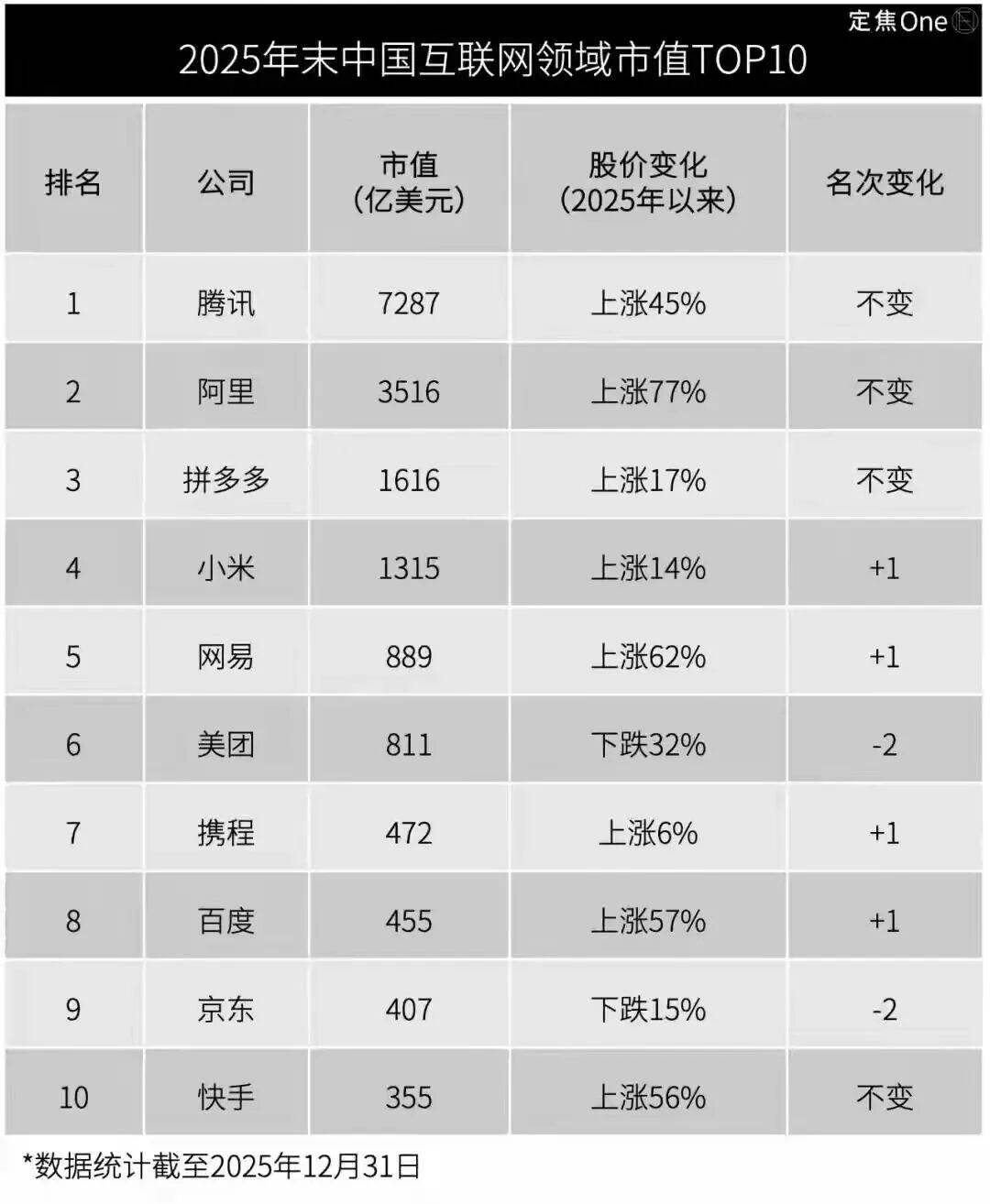
Group 1: Market Capitalization of Chinese Internet Companies - Tencent leads the market with a valuation of $72.87 billion, experiencing a 45% increase since the beginning of 2025 [1] - Alibaba follows with a market cap of $35.16 billion, showing a 77% rise [1] - Pinduoduo ranks third with a valuation of $16.16 billion, up by 17% [1] - Xiaomi's market cap is $13.15 billion, increasing by 14% [1] - NetEase has a valuation of $8.89 billion, with a significant 62% increase [1] - Meituan's market cap is $8.11 billion, but it has seen a decline of 32% [1] - Ctrip's valuation stands at $4.72 billion, with a modest increase of 6% [1] - Baidu's market cap is $4.55 billion, reflecting a 57% rise [1] - JD.com has a valuation of $4.07 billion, down by 15% [1] - Zhongren ranks last with a market cap of $3.55 billion, with a drastic drop of 245,606% [1] Group 2: Tax Policy Changes - The Ministry of Finance and the State Administration of Taxation announced a new VAT exemption policy for small-scale taxpayers, effective from January 1, 2026 [3] - The new threshold for monthly sales is set at 100,000 yuan, and for quarterly sales at 300,000 yuan [3] - For single transactions, the threshold is 1,000 yuan, applicable on a daily basis for multiple transactions [3] Group 3: AI and Technology Developments - Nvidia's CEO Jensen Huang denied any dissatisfaction with OpenAI and announced plans for a significant investment in the company [5] - Apple is reported to have acquired the Israeli company Q.ai for approximately $2 billion, marking its second-largest acquisition in history [5] - Waymo is seeking to raise about $16 billion at a valuation close to $110 billion, with Alphabet expected to contribute $13 billion [18] Group 4: Corporate Actions and Market Reactions - Oracle is reportedly considering laying off 30,000 employees due to financial pressures from AI infrastructure investments [11] - The company is also evaluating the sale of its healthcare software division, Cerner, acquired for $28.3 billion [11] - Recent fluctuations in gold prices have led to increased consumer activity in gold purchases in Shenzhen [3]