
新能源车

Search documents
图解2025中国经济数据
市值风云· 2026-01-19 10:09
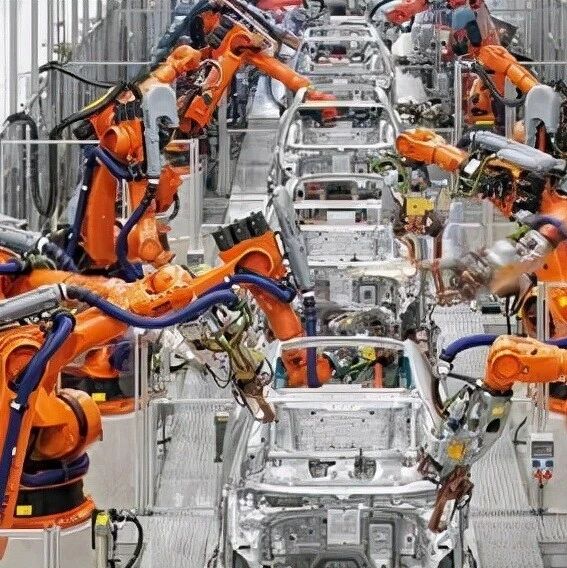
Core Viewpoint - The national economy is showing positive growth with a GDP exceeding 140 trillion yuan, achieving a 5.0% increase compared to the previous year, meeting expectations [3]. Group 1: Economic Performance - The industrial production is growing rapidly, with the added value of industrial enterprises above designated size increasing by 5.9% [3]. - The service industry is steadily growing at a rate of 5.4% [4]. - The total retail sales of consumer goods increased by 3.7%, indicating an expansion in consumption scale [4]. Group 2: Sector-Specific Growth - The production of 3D printing equipment, industrial robots, and new energy vehicles has seen significant year-on-year growth of 52.5%, 28.0%, and 25.1% respectively [3]. - Despite a decline in fixed asset investment by 3.8% due to decreased real estate development investment, manufacturing investment continues to grow [4]. - The import and export of goods have stabilized with a growth rate of 3.8% [4]. Group 3: Employment and Demographics - Overall employment and prices remain stable, with continuous growth in residents' income [4]. - There is a slight decrease in the total population, while the urbanization rate continues to increase [4].

港股科技ETF(513020)回调超1.6%,港股科技或将迎来“戴维斯三击”
Mei Ri Jing Ji Xin Wen· 2026-01-19 07:01
Core Viewpoint - The Hong Kong technology sector is expected to experience a "Davis Triple Play" by 2026, becoming one of the most elastic investment directions [1] Valuation and Investment Potential - Current valuations of the Hong Kong technology sector are lower than those of the A-share market, with the PE valuation nearing historical lower limits, indicating limited downside and potential for upside [1] - The sector is seen as having a high odds space for investment returns in the medium to long term [1] Shift in Capital Expenditure - As the return on investment for AI computing power declines, capital expenditure is anticipated to shift from upstream computing infrastructure to downstream AI applications, which are expected to have significantly higher elasticity in future market conditions [1] ETF and Index Performance - The Hong Kong Technology ETF (513020) tracks the Hong Kong Stock Connect Technology Index (931573), which includes core assets in sectors such as internet, innovative pharmaceuticals, and new energy vehicles [1] - The Hong Kong Stock Connect Technology Index has outperformed the Hang Seng Technology Index, with a cumulative return of 224.25% from the end of 2014 to the end of 2025, exceeding the Hang Seng Technology Index's return of 83.87% by over 140% [1]
2025年全社会用电量首超10万亿千瓦时:彰显中国经济发展韧性与活力
Ren Min Ri Bao Hai Wai Ban· 2026-01-19 02:46
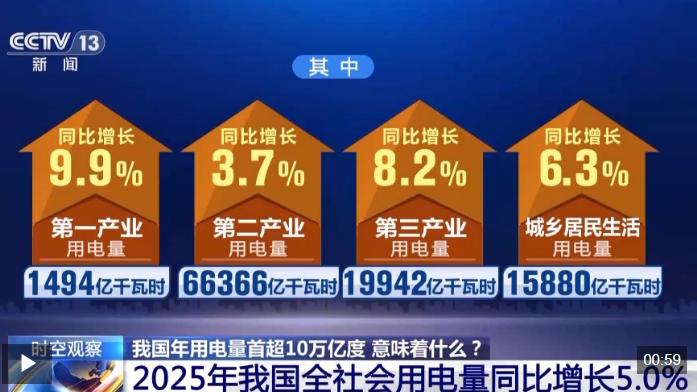
Core Insights - China's total electricity consumption is projected to reach 10,368.2 billion kilowatt-hours by 2025, marking the first time a single country surpasses the 10 trillion kilowatt-hour threshold globally [1][2] - The growth in electricity consumption is driven by the tertiary sector and urban-rural residential electricity use, contributing to 50% of the overall increase [1] Industry Analysis - The first industry electricity consumption is expected to be 149.4 billion kilowatt-hours, with a year-on-year growth of 9.9% [1] - The second industry will consume 6,636.6 billion kilowatt-hours, showing a year-on-year growth of 3.7% [1] - The third industry is projected to consume 1,994.2 billion kilowatt-hours, with a year-on-year growth of 8.2% [1] - Urban and rural residential electricity consumption is anticipated to reach 158.8 billion kilowatt-hours, growing by 6.3% year-on-year [1] Growth Drivers - High-end manufacturing is expected to become a key growth point for electricity consumption, with electric vehicle and wind power equipment manufacturing sectors seeing growth rates exceeding 20% and 30%, respectively [2] - The rapid development of the digital economy and emerging technologies is driving a significant increase in electricity demand, with new infrastructure such as charging stations and 5G base stations contributing to over 30% growth in internet and related services electricity consumption [2] - The charging and swapping service industry is projected to see nearly 50% year-on-year growth in electricity consumption [2]
我国用电量首次突破10万亿千瓦时
Sou Hu Cai Jing· 2026-01-19 01:13
Core Insights - China's total electricity consumption is projected to exceed 10 trillion kilowatt-hours by 2025, reaching 10.4 trillion kilowatt-hours, representing a year-on-year growth of 5% [1][5] - This milestone is unprecedented for a single country, equating to more than double the annual electricity consumption of the United States and surpassing the combined annual consumption of the EU, Russia, India, and Japan [6] Group 1: Factors Driving Electricity Consumption Growth - The growth in electricity consumption is driven by a stable macroeconomic environment and increased demand for residential electricity due to high temperatures and enhanced electrification [2][7] - Notably, it took China just over a decade to increase its annual electricity consumption from 5 trillion to 10 trillion kilowatt-hours, a growth rate unmatched by other major economies [2][7] Group 2: Sectoral Contributions to Electricity Demand - High-end manufacturing is becoming a key driver of electricity consumption growth, with electricity usage in the new energy vehicle and wind power equipment manufacturing sectors expected to grow by over 20% and 30%, respectively [3][8] - The rapid development of the digital economy and emerging technologies is creating new electricity demand points, with internet services and related sectors seeing over 30% growth, and the charging and swapping industry approaching a 50% increase in electricity consumption [3][8] Group 3: Electricity Supply and Infrastructure - A robust electricity supply system has been established, focusing on collaboration between power generation, grid management, and demand-side management [3][8] - On the generation side, coal, hydro, nuclear, and thermal power are working together to ensure a stable supply, while renewable energy sources are being rapidly deployed to manage fluctuations [3][8] - The construction of a unified national electricity market is accelerating, with policies like time-of-use pricing being implemented to align electricity demand with supply [3][8] Group 4: Trends in High Energy-Consuming Industries - While electricity consumption in emerging industries is rising, the overall growth rate in high energy-consuming sectors is declining, with specific industries like black metal smelting and non-metal mineral products experiencing decreases [4][9] - The shift towards energy efficiency and the exit of outdated production capacities are contributing to a continuous decline in energy consumption per unit of GDP, indicating a greener economic trajectory [4][9]
恒生科技指数暴涨3%,腾讯控股市值重返港股前三
Sou Hu Cai Jing· 2026-01-18 15:11
Group 1: Core Drivers - Policy incentives are accelerating, with the central economic work conference emphasizing "technological innovation" and the Ministry of Industry and Information Technology promoting domestic AI chip procurement, establishing a 100 billion yuan industry fund, and aiming for a 70% localization rate of key equipment by 2025 [1] - Global liquidity is improving, as the central bank's 0.5% reserve requirement ratio cut releases 1.2 trillion yuan in liquidity, alongside a reduction in long-term holding risk factors for insurance companies, releasing approximately 20 billion yuan in capital [1] - The Hang Seng Tech Index constituents are showing strong performance, with companies like SMIC reporting a nearly 130% quarter-on-quarter net profit increase, and Li Auto's retail penetration rate for new energy vehicles exceeding 50% for the first time [1] Group 2: Tencent's Financial and Strategic Dynamics - Tencent's revenue for 2024 is projected at 660.3 billion yuan, an 8% year-on-year increase, with net profit expected to reach 194.07 billion yuan, reflecting a 68% growth [4] - The AI strategy is being upgraded with the MoE architecture for the Mix Yuan model, applied in over 700 scenarios, and a partnership with DeepSeek has driven the DAU of the Yuanbao App to 3.6 million [4] - Tencent's capital expenditure on AI is projected to be 76.7 billion yuan in 2024, a 221% increase, but efficiency improvements in GPU and cloud business returns are expected to cover costs, keeping profit margin pressures manageable [4] Group 3: Market Impact and Future Outlook - Structural opportunities are emerging in sectors like technology, consumption, and pharmaceuticals, driven by policy and demand, particularly in the AI industry chain, new energy vehicles, and biomedicine [6] - The Hang Seng Tech Index's price-to-earnings ratio is approximately 23 times, significantly lower than that of the Nasdaq and ChiNext, indicating strong value [7] - Institutional earnings forecasts for the Hang Seng Tech Index are optimistic, with a projected 42.6% earnings growth rate by 2026, and Tencent's gaming business expected to grow by 10% in 2025 [7]

春季躁动中场休息
AVIC Securities· 2026-01-18 14:56
Core Insights - The report highlights that the A-share market is currently experiencing a phase of regulatory adjustments aimed at controlling excessive market enthusiasm while ensuring sustainable growth [8][9][10] - It emphasizes the importance of the AI technology revolution and the trend of de-globalization, which are expected to persist for the next 5-10 years, creating investment opportunities in related sectors [9][10][22] - The report suggests that the Chinese economy is in a transition phase, benefiting from a unified market policy and a low-interest-rate environment, which may lead to increased foreign capital inflows into RMB assets [10][12] Market Overview - The A-share market saw a significant trading volume of 3.99 trillion yuan on January 14, marking a historical high, but subsequently retreated to around 3 trillion yuan, indicating a cooling of market exuberance [8][9] - The report notes that the recent increase in the financing margin ratio from 80% to 100% by the regulatory authority reflects a counter-cyclical adjustment strategy [8][9] Investment Opportunities - The report recommends focusing on investment opportunities in commodities such as copper, rare earths, and gold, which are expected to gain value amid geopolitical tensions and the ongoing trend of de-globalization [10][18][20] - It also points out that the rapid development of AI is likely to drive demand for computing power and related infrastructure, benefiting sectors like new energy vehicles and resource materials [22][24] Economic Trends - The report anticipates that the global economy will continue to experience a loose monetary policy environment, with fiscal expansions expected in major economies, which may further enhance liquidity and support resource sectors [20][22] - Historical data indicates that periods of RMB appreciation are often accompanied by significant foreign capital inflows into Chinese assets, suggesting a favorable outlook for the A-share market [10][12]
视频丨年用电量首超10万亿度 展现中国经济发展活力
Yang Shi Xin Wen Ke Hu Duan· 2026-01-18 12:50
Core Insights - China's total electricity consumption is projected to exceed 10 trillion kilowatt-hours in 2025, marking the first time any country has reached this milestone, which is more than double the annual electricity consumption of the United States and surpasses the combined consumption of the EU, Russia, India, and Japan [2][4][5] Group 1: Electricity Consumption Breakdown - In 2025, total electricity consumption is expected to reach 10,368.2 billion kilowatt-hours, representing a year-on-year growth of 5.0% [2] - The breakdown of electricity consumption by sector includes: - Primary industry: 149.4 billion kilowatt-hours, up 9.9% - Secondary industry: 6,636.6 billion kilowatt-hours, up 3.7% - Tertiary industry: 199.4 billion kilowatt-hours, up 8.2% - Urban and rural residential electricity: 158.8 billion kilowatt-hours, up 6.3% [2] Group 2: Driving Forces Behind Growth - The tertiary sector and residential electricity consumption are the main drivers of overall electricity growth, contributing to 50% of the increase [4] - Within the tertiary sector, the electric vehicle charging and swapping services, as well as information transmission, software, and IT services, have seen significant growth rates of 48.8% and 17.0%, respectively [4][6] Group 3: Structural Changes in Energy Consumption - The second industry remains the primary electricity consumer, accounting for approximately 64%, with growth shifting from high-energy-consuming industries to high-end manufacturing [6] - In 2025, electricity consumption in the computer, communication, and other electronic device manufacturing sectors is expected to exceed 50 billion kilowatt-hours, surpassing traditional industries like steel and chemicals [6] Group 4: Digital Economy and Innovation - The digital economy is experiencing rapid growth, with the "East Data West Computing" initiative driving significant increases in electricity consumption in the data industry, particularly in Guizhou, where internet data service electricity consumption surged by 95.01% [8] - The demand for computing power is also rising exponentially, as evidenced by the Huawei Cloud data center in Guian New Area, which has seen a 56.92% increase in electricity consumption [8] Group 5: Implications of Exceeding 10 Trillion Kilowatt-Hours - The surpassing of 10 trillion kilowatt-hours indicates a robust and stable economic development across various sectors, reflecting the resilience of China's energy infrastructure and the strong integration capabilities of its modern industrial system [4][5] - The shift towards high-tech, high-value-added industries and the increasing share of green electricity supply signal a positive outlook for the development of a new energy system centered around renewable sources [8]
中国新能源车出口关税形势改善
GUOTAI HAITONG SECURITIES· 2026-01-18 05:09
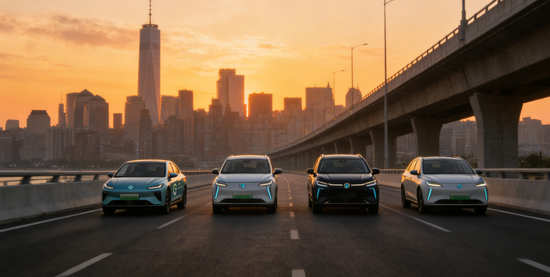
Investment Rating - The report assigns an "Overweight" rating for the industry [4]. Core Insights - The report highlights an improving trend in the high tariff issues for Chinese new energy vehicle exports to Europe and Canada, recommending companies with significant contributions from exports such as XPeng Motors, SAIC Motor, Leap Motor, and Geely Automobile [2][4]. - Canada is actively adjusting its measures regarding the import of Chinese electric vehicles, providing an annual quota of 49,000 vehicles that will enjoy a 6.1% Most Favored Nation tariff rate, eliminating the previous 100% additional tax [4]. - Progress has also been made in resolving tariff issues for pure electric vehicle exports to Europe, with a framework consensus reached between China and the EU to replace high tariffs with a constructive "minimum price commitment" mechanism [4]. Summary by Sections Export Tariff Improvements - The Canadian government will grant a quota for 49,000 Chinese electric vehicles annually, with a gradual increase in quota numbers over the years [4]. - The EU has agreed to a framework that allows Chinese electric vehicle companies to submit price commitment applications to avoid anti-subsidy tariffs, which previously reached up to 35.3% [4]. Company Recommendations - Recommended companies include XPeng Motors, SAIC Motor, Leap Motor, and Geely Automobile, as well as Lotus and Polestar, which are expected to benefit from the improving export conditions [4]. - XPeng Motors' chairman expressed confidence in significant growth in overseas markets, anticipating that overseas sales could match domestic sales in the future [4]. Performance Metrics - SAIC Motor reported overseas sales of 1.071 million units in 2025, with MG sales in Europe exceeding 300,000 units, marking a nearly 30% year-on-year increase [4]. - Polestar expanded its European channels by 50% in 2025, projecting annual sales of approximately 60,000 units, a 34% increase year-on-year [4].

新能源车的“硬核”战事,2026年卷向何处?
Xin Lang Cai Jing· 2026-01-18 02:02
Core Insights - The electric vehicle (EV) industry in China is transitioning from reliance on government policies to market-driven growth, marking the end of the "policy infusion" era and the beginning of "self-sustaining" operations [2][4][17] Group 1: Market Dynamics - In 2025, the penetration rate of new energy vehicles (NEVs) in China surpassed 50%, reaching 59.5% by November, indicating a significant shift towards electric vehicles [5][25] - The charging infrastructure has improved significantly, with a total of 19.32 million charging points by the end of November 2025, a 52% year-on-year increase, and over 5,000 battery swap stations established [5][25] - The competition landscape has changed, with Tesla's retail sales in China declining by 4.8% to 625,698 units, while domestic brands like BYD, Geely, and Changan have seen substantial growth [5][27] Group 2: Sales Performance - BYD led the NEV sales in 2025 with 3.48 million units sold, despite a 6.3% year-on-year decline, holding a market share of 27.2% [6][27] - Geely and Changan reported significant sales increases of 81.3% and 26.8%, respectively, with Geely selling 1.56 million units and Changan 789,141 units [6][27] - New entrants like Leap Motor and Xiaomi have emerged as strong competitors, with Leap Motor's sales increasing by 86.3% to 529,503 units and Xiaomi entering the rankings with 411,837 units, a 200.9% increase [6][27] Group 3: Technological Advancements - The focus on "intelligent driving" has intensified, with companies like BYD, NIO, and Xpeng launching advanced driver-assistance systems and AI-driven models [11][32] - Despite advancements, there remains a gap between technology and user experience, with consumers expressing concerns over the reliability of intelligent driving systems [11][35] - The industry is witnessing a shift towards more comprehensive AI models that aim to enhance decision-making capabilities in complex driving scenarios [12][33] Group 4: Future Outlook - Starting in 2026, the EV industry will face new challenges as the government reduces subsidies, shifting the focus to market-driven strategies and user experience [15][38] - The competitive landscape is expected to evolve with a mix of pure electric, hybrid, and range-extended vehicles, as traditional automakers and new entrants adapt to changing consumer preferences [19][40] - Companies are increasingly looking to expand internationally, marking a new phase of competition that emphasizes technology depth, cost efficiency, and brand loyalty [20][41]





用电量首破10万亿千瓦时 见证中国经济的强劲活力
Xin Lang Cai Jing· 2026-01-17 22:51
Core Insights - China's total electricity consumption is projected to exceed 10 trillion kilowatt-hours by 2025, marking a historic milestone and reflecting the country's robust economic resilience and transition towards a greener economy [1][2]. Group 1: Electricity Consumption Growth - The total electricity consumption in China is expected to reach 10.4 trillion kilowatt-hours by 2025, representing a year-on-year growth of 5% [1]. - This figure is unprecedented for a single country, surpassing the annual electricity consumption of the United States by more than double and exceeding the combined total of the EU, Russia, India, and Japan [1]. - The rapid increase from 5 trillion to 10 trillion kilowatt-hours occurred in just over a decade, highlighting China's unique growth rate among major economies [2]. Group 2: Factors Driving Electricity Demand - The growth in electricity consumption is driven by a stable macroeconomic environment and increased demand for electricity due to high temperatures and enhanced electrification levels [2]. - New energy vehicles and wind power equipment manufacturing are projected to see electricity consumption growth rates exceeding 20% and 30%, respectively, by 2025 [3]. - The digital economy and emerging technologies are creating new electricity demand points, with internet services and related infrastructure seeing over 30% growth in electricity consumption [3]. Group 3: Energy Supply and Infrastructure - China has established a collaborative supply system involving power sources, grids, and demand management to support the anticipated electricity consumption [3]. - The energy supply system includes a mix of coal, hydro, nuclear, and renewable energy sources, with a focus on stabilizing output through advanced storage solutions [3]. - The construction of a unified national electricity market is progressing, with policies like time-of-use pricing being implemented to align electricity demand with supply [3]. Group 4: Structural Changes in Energy Consumption - While electricity consumption in emerging industries is steadily increasing, high-energy-consuming sectors are experiencing a slowdown, with some industries like black metal smelting showing a decline [4]. - The overall trend in high-energy industries is towards structural adjustment and energy-saving transformations, leading to a continuous decrease in energy consumption per unit of GDP [4]. - The achievement of 10 trillion kilowatt-hours reflects the solid foundation of China's manufacturing sector and the steady improvement in electrification levels, indicating a shift towards high-tech and high-value-added industries [4].