
油脂加工

Search documents
油脂周报:棕榈油高频数据较差施压油脂-20251122
Wu Kuang Qi Huo· 2025-11-22 14:02
Report Industry Investment Rating - No relevant content provided Core Viewpoints - The high - yield of palm oil in Malaysia and Indonesia suppresses the palm oil market. The current situation of inventory accumulation due to large supply in the short - term may reverse in the fourth quarter and the first quarter of next year. If Indonesia's high - yield does not persist, the de - stocking time may come earlier. However, if Indonesia maintains high - yield, palm oil will remain weak. It is recommended to view the market with an oscillatory perspective and turn to a bullish mindset if there are signals of production decline [11][12][13] Summary by Directory 1. Weekly Assessment and Strategy Recommendation - **Market Overview**: This week, the three major oils showed weak trends. Palm oil was still underweighted by foreign investors, and long positions in other oils also decreased. High - frequency data from palm oil producing areas were average. From November 1st to 15th, Malaysian palm oil yield increased by 1.82% month - on - month, oil extraction rate increased by 0.43%, and production grew by 4.09%. High - frequency exports from November 1st to 20th decreased by 14.1% - 20.5%. Rapeseed oil stocks continued to decline due to the shutdown of most coastal oil mills, but the supply from Russia and Australia limited its upside. Soybean oil mainly followed the market's oscillations [11] - **International Oils**: Based on normal production levels and international demand in previous years, palm oil will enter a rapid de - stocking phase in the first quarter of next year. However, this year's production in Malaysia and Indonesia is larger than the same period last year, and the first quarter is a low - demand season. If Southeast Asian palm oil production remains high, the expected de - stocking may reverse [11] - **Domestic Oils**: This week, the spot basis of domestic oils was stable. Total domestic oil stocks continued to decline, with sufficient supply. As soybean crushing decreased due to lower arrivals, soybean oil production declined. Rapeseed oil stocks continued to decline due to low imports, and palm oil stocks remained stable due to low imports [11] - **Viewpoint Summary**: The high - yield of palm oil in Malaysia and Indonesia suppresses the palm oil market. The short - term inventory accumulation due to large supply may reverse in the fourth quarter and the first quarter of next year. If Indonesia's high - yield does not persist, the de - stocking time may come earlier. However, if Indonesia maintains high - yield, palm oil will remain weak. It is recommended to view the market with an oscillatory perspective and turn to a bullish mindset if there are signals of production decline [11][12][13] 2. Futures and Spot Market - The report presents the basis and seasonal basis charts of palm oil, soybean oil, and rapeseed oil, including the FOB price of Malaysian palm oil, the 01 contract price, and the spot price of different regions, to show the relationship between futures and spot prices [18][20][22][24] 3. Supply Side - **Production and Exports**: The report shows the monthly production and export volume charts of Malaysian and Indonesian palm oil, the weekly arrival and port inventory of soybeans, and the monthly import volume of rapeseed and rapeseed oil to reflect the supply situation of different oils [27][28][29][31] - **Weather in Palm - producing Areas**: The report presents the weighted precipitation charts of Indonesian and Malaysian palm - producing areas and the NINO 3.4 index chart, which may affect palm oil production [33][34] 4. Profit and Inventory - **Total Inventory**: The report shows the total inventory chart of domestic three major oils and the inventory chart of Indian imported vegetable oils [40] - **Inventory of Different Oils**: It includes the import profit and commercial inventory of palm oil, the spot crushing profit and major oil mill inventory of soybean oil, the coastal spot average crushing profit and commercial inventory of rapeseed oil, and the palm oil inventory in Malaysia and Indonesia [43][45][46][48] 5. Cost Side - **Palm Oil Cost**: The report shows the reference price chart of Malaysian palm fresh fruit bunches and the import cost price chart of Malaysian palm oil [50][52] - **Rapeseed and Rapeseed Oil Cost**: It includes the CNF import price chart of rapeseed oil and the import cost price chart of rapeseed [54] 6. Demand Side - **Oil Transactions**: The report shows the cumulative transaction volume charts of palm oil and soybean oil in the crop year [57] - **Biodiesel Profit**: It presents the POGO spread chart (Malaysian palm oil - Singapore low - sulfur diesel) and the BOHO spread chart (soybean oil - heating oil) to reflect the profit situation of biodiesel [59]
Mhy20251120油脂晚评:豆棕同频大幅回调
Xin Lang Cai Jing· 2025-11-20 10:45
Market Overview - China's General Administration of Customs reported that in October, palm oil imports decreased by 11.7% year-on-year to 220,000 tons, while the cumulative imports from January to October fell by 15.3% to 1.96 million tons [1] - In contrast, soybean oil imports in October increased by 38.2% year-on-year to 20,000 tons, with a total of 290,000 tons imported from January to October, marking a 7.3% increase [1] - Canola oil and rapeseed oil imports in October dropped by 10.1% year-on-year to 140,000 tons, but the total imports from January to October rose by 18.7% to 1.74 million tons [1] Soybean Processing - The National Oilseed Processors Association (NOPA) reported that member companies crushed 227.647 million bushels of soybeans in October, a 15.1% increase from September's 197.863 million bushels and a 13.9% increase from October 2024's 199.943 million bushels [1] Palm Oil Exports - AmSpec reported that Malaysia's palm oil exports from November 1-15 were 702,692 tons, a decrease of 10% compared to the same period last month, and from November 1-20, exports were 828,680 tons, down 14.1% from the previous month [2] Oil Production Forecast - Russian Deputy Prime Minister Novak stated that Russia's oil production forecast for 2025 remains unchanged at 510 million tons, and the country does not plan to actively reduce oil production, adhering to the OPEC+ agreement [2] Market Trends - The biodiesel theme's support appears to be short-lived, with palm oil prices in Malaysia significantly retreating to around 4,150. Domestic palm oil and soybean oil also declined, indicating a return to industry-driven market logic [4]

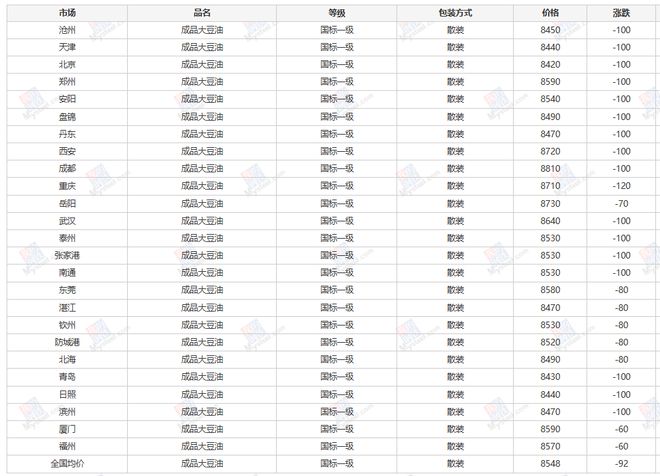
油脂日报:油脂供需结构稳定,盘面震荡调整-20251120
Hua Tai Qi Huo· 2025-11-20 03:07
Group 1: Report Investment Rating - The investment rating for the industry is neutral [4] Group 2: Core View - The supply - demand structure of oils and fats is stable, and the market is in a state of volatile adjustment [1] Group 3: Market Analysis Futures - The closing price of the palm oil 2601 contract was 8,852.00 yuan/ton, with a day - on - day change of +144 yuan (+1.65%) - The closing price of the soybean oil 2601 contract was 8,356.00 yuan/ton, with a day - on - day change of +36.00 yuan (+0.43%) - The closing price of the rapeseed oil 2601 contract was 9,813.00 yuan/ton, with a day - on - day change of - 61.00 yuan (-0.62%) [1] Spot - The spot price of palm oil in Guangdong was 8,780.00 yuan/ton, with a day - on - day change of +130.00 yuan (+1.50%), and the spot basis was P01 - 72.00, with a day - on - day change of - 14.00 yuan - The spot price of first - grade soybean oil in Tianjin was 8,540.00 yuan/ton, with a day - on - day change of +40.00 yuan/ton (+0.47%), and the spot basis was Y01 + 184.00, with a day - on - day change of +4.00 yuan - The spot price of fourth - grade rapeseed oil in Jiangsu was 10,160.00 yuan/ton, with a day - on - day change of - 60.00 yuan (-0.59%), and the spot basis was OI01 + 347.00, with a day - on - day change of +1.00 yuan [1] Market News - The C&F price of Argentine soybean oil (December shipment) was 1,164 dollars/ton, up 21 dollars/ton from the previous trading day; the C&F price of Argentine soybean oil (February shipment) was 1,165 dollars/ton, up 24 dollars/ton from the previous trading day - The C&F price of Canadian rapeseed oil (December shipment) was 1,100 dollars/ton, unchanged from the previous trading day; the C&F price of Canadian rapeseed oil (February shipment) was 1,080 dollars/ton, unchanged from the previous trading day - The C&F price of Canadian rapeseed (January shipment) was 537 dollars/ton, up 3 dollars/ton from the previous trading day; the C&F price of Canadian rapeseed (March shipment) was 546 dollars/ton, up 4 dollars/ton from the previous trading day - The C&F price of US Gulf soybeans (December shipment) was 510 dollars/ton, down 3 dollars/ton from the previous trading day; the C&F price of US West soybeans (December shipment) was 505 dollars/ton, down 2 dollars/ton from the previous trading day; the C&F price of Brazilian soybeans (December shipment) was 499 dollars/ton, down 3 dollars/ton from the previous trading day - The import soybean premium quotes for the Mexican Gulf (December shipment) was 240 cents/bushel, unchanged from the previous trading day; the US West Coast (December shipment) was 225 cents/bushel, unchanged from the previous trading day; the Brazilian port (December shipment) was 210 cents/bushel, unchanged from the previous trading day - Foreign media expected that the EPA was preparing to submit the final RVO plan to the White House. After the SRE redistribution, the RVO quantity in the EPA's final plan would be higher than that in the proposed plan in June - China's palm oil imports in October were 220,000 tons, a year - on - year decrease of 11.7%. From January to October, palm oil imports were 1.96 million tons, a year - on - year decrease of 15.3% [2] Group 4: Price Support Factors - The prices of the three major oils fluctuated. The record - high US soybean crushing volume, a 38.2% year - on - year increase in China's soybean oil imports in October, and market expectations of possible changes in the US EPA's biofuel blending ratio (RVO) provided some support for soybean oil [3] Group 5: Figures - The report includes 30 figures related to the prices, yields, trading volumes, and inventories of palm oil, soybean oil, and rapeseed oil, with data sources mainly from Steel Union Data and the Huatai Futures Research Institute [5]
南华期货油脂产业周报:驱动未明,等待远月利多兑现-20251118
Nan Hua Qi Huo· 2025-11-18 08:35
1. Report Industry Investment Rating No investment rating information is provided in the report. 2. Core Views of the Report - The short - term weak reality suppresses the upward momentum of the oil market, and the market is running weakly. It is necessary to wait for the US energy policy and further news about Indonesia's B50 to boost the market. The strategy is mainly to stay on the sidelines. For the far - month P05 contract, there may be an opportunity to go long as palm oil is about to enter the production - reduction season and the Ramadan in Southeast Asia is earlier next year. It is also advisable to be bullish on the expanding spreads between rapeseed - palm and soybean - palm oils and the P1 - 5 reverse spread [2]. - The current core contradictions in the oil market include the digestion of palm oil inventory pressure in producing areas, the uncertainty of the US biodiesel policy, and the game between the weak domestic reality and international expectations [1][2]. 3. Summary by Relevant Catalogs 3.1 Core Contradictions and Strategy Recommendations 3.1.1 Core Contradictions - **Palm oil**: In the October MPOB report, Malaysia's palm oil production increased by over 11%, inventory by over 4%, and exports by over 18%. With the entry into the production - reduction season, the cost - performance of palm oil is expected to increase. The B50 plan in Indonesia has uncertainties, and there are also limitations on production due to the transfer of plantation ownership [1]. - **Soybean and rapeseed oils**: The US biodiesel policy is unclear. The resumption of US soybean purchases may increase domestic supply pressure. The supply of rapeseed oil is expected to be tight due to the less - optimistic China - Canada talks [2]. - **Domestic situation**: The overall supply of the three major domestic oils is sufficient in the short term, but there will be a slow destocking at the end of the year, and there are short - term strength - weakness relationships within the sector [2]. 3.1.2 Trading - Type Strategy Recommendations - **Trend judgment**: Short - term shock adjustment, with the possibility of the price center rising in the medium term. The price ranges are P2601 [8400 - 9000], Y2601 [8000 - 8500], and OI [9300 - 10000]. Pay attention to the far - month rebound opportunity of palm oil [15]. - **Technical analysis**: Go long on the P05 contract on dips, and be bullish on the expanding spreads between rapeseed - palm and soybean - palm oils [15]. - **Basis, monthly spread, and hedging arbitrage strategies**: The basis is expected to be weakly volatile in the short term. Consider a reverse spread for P1 - 5. Be bullish on the expanding spreads between rapeseed - palm and soybean - palm oils [16][17]. 3.1.3 Industry Customer Operation Recommendations - **Price range prediction**: The price range for soybean oil is 8000 - 8500, and for rapeseed oil is 9300 - 10300 [18]. - **Hedging strategies**: Traders with high oil inventories can short soybean oil futures to lock in profits. Refineries with low inventory can buy soybean oil futures to lock in procurement costs. Oil mills can short soybean oil futures to prevent losses from high - inventory imports [20]. 3.2 This Week's Important Information and Next Week's Attention Events 3.2.1 This Week's Important Information - **Positive information**: In October, the US soybean crushing volume far exceeded market expectations, reaching a record high [24]. - **Negative information**: The November USDA report was slightly negative for the US soybean market. Malaysia's palm oil exports from November 1 - 15 decreased, and the inventory increased [25]. - **Spot trading information**: The trading volume of palm oil and soybean oil decreased, while that of rapeseed oil increased [26]. 3.2.2 Next Week's Important Events to Follow - Domestic high - frequency weekly inventory data, high - frequency production and export data of Malaysian palm oil, MPOB data, the progress of the US small refinery exemption re - allocation decision, and the progress of China - Canada trade negotiations [35] 3.3 Disk Interpretation 3.3.1 Domestic Market - **Unilateral trend**: The oil market was mainly in shock this week. Although the market sentiment is bearish, the downward space is limited due to uncertain factors such as the US energy policy and the approaching production - reduction season in producing areas [31]. - **Fund movement**: Positions in palm oil, soybean oil, and rapeseed oil were cautious. Palm oil had a slight increase in short positions from foreign investors and retail investors, and weak long - position confidence. Soybean oil's positions changed little, and foreign short - positions in rapeseed oil decreased slightly. Rapeseed oil's long - positions decreased due to the expected easing of China - Canada relations [32]. - **Monthly spread structure**: The soybean and rapeseed oil markets showed a Back structure, which became shallower this week. The palm oil market had a complex structure, with 05 being the strongest and 09 relatively weak [33][36]. - **Basis structure**: The basis of the main oil contracts continued to be weak due to high domestic inventory and general downstream demand [33]. - **Spread structure**: The spreads between soybean - palm and rapeseed - palm oils strengthened, and the rapeseed - soybean spread rebounded slightly. Rapeseed oil remained strong in the sector, while palm oil was the weakest [53]. 3.3.2 Overseas Market - The overseas market was mainly in shock. The negative factors in palm - oil producing areas were temporarily exhausted. The US soybean market was affected by the slightly negative November USDA report. The cost of US soybeans supported the soybean oil market, and the supply gap of rapeseed oil made it stronger than palm oil [56]. 3.4 Valuation and Profit Analysis 3.4.1 Upstream and Downstream Profit Tracking in the Industry Chain - The POGO and BOHO spreads continued to decline. The price of palm oil in producing areas was weakly volatile, and the production cost of bio - fuel decreased slightly. The cost of producing biodiesel from US soybean oil remained at a multi - year low [64]. 3.4.2 Import and Export Profit Tracking - As China is a net importer of palm oil, the import profit changed slightly with the low - level consolidation of the origin price, and there were few new purchases under the negative basis [67]. 3.5 Supply - Demand and Inventory Deduction 3.5.1 Supply - Side Deduction - **Palm oil**: With the negative basis, traders' purchasing willingness is low. During the production - reduction season at the end of the year, the supply pressure is not expected to increase, and the driving force from the producing areas may be reflected in the 05 contract [72]. - **Soybean oil**: The arrival of raw materials will decline in December, the crushing volume may decrease, and the supply pressure will gradually ease [72]. - **Rapeseed oil**: The current domestic inventory is high, but it will gradually destock in the fourth quarter. If the China - Canada relationship does not ease, there may be a supply shortage from the end of this year to the first quarter of next year [72]. 3.5.2 Demand - Side Deduction - The inventory pressure of the three major oils is high in the short term, and the demand is weak. Although the fourth quarter is a traditional consumption peak season, the boost to the market after the festival stocking is limited, and the overall terminal demand is expected to remain weak [74].
狠抓项目强投资 产业支撑能力提升
Sou Hu Cai Jing· 2025-11-18 05:44
Core Insights - The article emphasizes the importance of project construction as a carrier for industrial development and a cornerstone for high-quality economic growth in Changchun City [1] Investment Growth - In the first three quarters of this year, industrial investment in Changchun increased by 1.2% year-on-year, which is 10.6 percentage points higher than the overall investment growth rate, accounting for 23.2% of total social investment [1] Project Construction - A total of 424 industrial projects with an investment of over 50 million yuan have commenced or resumed construction, including key projects like the OLED display materials development and the new 600,000 tons/year oil processing project by COFCO [1] - The city has established a positive cycle of "building a batch, reserving a batch, and planning a batch" with steady progress in ongoing projects and accelerated implementation of new projects [1] National Support - Changchun successfully applied to become a pilot city for new-type technological transformation in manufacturing, securing 300 million yuan in national matching funds for support [1] Industrial Economic Performance - The industrial economy of Changchun has shown significant progress, driven by the transformation of the automotive industry, the rise of emerging industries, digital empowerment, innovation-driven breakthroughs, and robust project construction [1] - The article concludes that the path of "innovation" for Changchun's industry will continue to broaden from this new development starting point [1]
油脂日报:USDA报告发布,油脂持续震荡-20251118
Hua Tai Qi Huo· 2025-11-18 02:41
Report Industry Investment Rating - The investment strategy for the oils and fats industry is neutral [4] Report's Core View - The USDA released its monthly supply and demand report on Friday night, lowering the U.S. soybean yield, which was in line with market expectations, but raising Brazil's production forecast. The overall supply side is favorable, and with the smooth sowing in Brazil recently, the expectation of a bumper harvest persists. The overall supply - demand pattern of oils and fats remains unchanged, and the prices will fluctuate [3] Summary by Related Catalogs Market Analysis Futures - The closing price of the palm oil 2601 contract yesterday was 8,680 yuan/ton, a环比 increase of 36 yuan or 0.42% [1] - The closing price of the soybean oil 2601 contract yesterday was 8,282 yuan/ton, a环比 increase of 26 yuan or 0.31% [1] - The closing price of the rapeseed oil 2601 contract yesterday was 9,880 yuan/ton, a环比 decrease of 43 yuan or 0.43% [1] Spot - The spot price of palm oil in Guangdong was 8,570 yuan/ton, a环比 decrease of 10 yuan or 0.12%. The spot basis was P01 + - 110 yuan, a环比 decrease of 46 yuan [1] - The spot price of first - grade soybean oil in Tianjin was 8,470 yuan/ton, a环比 increase of 20 yuan/ton or 0.24%. The spot basis was Y01 + 188 yuan, a环比 decrease of 6 yuan [1] - The spot price of fourth - grade rapeseed oil in Jiangsu was 10,230 yuan/ton, a环比 decrease of 40 yuan or 0.39%. The spot basis was OI01 + 350 yuan, a环比 increase of 3 yuan [1] Recent Market Consultation - According to AmSpec, Malaysia's palm oil exports from November 1 - 15 were 702,692 tons, a 10% decrease from the same period last month. According to SGS, the expected exports from November 1 - 15 were 334,295 tons, a 44.9% decrease from the same period last month [2] - As of last Thursday, 71% of Brazil's 2025/26 soybean planting area and 85% of the first - season corn planting area in Brazil's central - southern region had reached the expected area [2] - The C&F price of Canadian rapeseed (January shipment) was 529 US dollars/ton, a decrease of 2 US dollars/ton from the previous trading day; the C&F price of Canadian rapeseed (March shipment) was 537 US dollars/ton, a decrease of 2 US dollars/ton from the previous trading day [2] - The C&F price of Argentine soybean oil (December shipment) was 1,134 US dollars/ton, a decrease of 12 US dollars/ton from the previous trading day; the C&F price of Argentine soybean oil (February shipment) was 1,135 US dollars/ton, a decrease of 10 US dollars/ton from the previous trading day [2] - The C&F price of Canadian rapeseed oil (December shipment) was 1,100 US dollars/ton, an increase of 15 US dollars/ton from the previous trading day; the C&F price of Canadian rapeseed oil (February shipment) was 1,080 US dollars/ton, an increase of 15 US dollars/ton from the previous trading day [2]
油脂早报-20251117
Da Yue Qi Huo· 2025-11-17 02:57
Report Industry Investment Rating No relevant content provided Core Viewpoints - The prices of oils and fats are expected to fluctuate and consolidate. The domestic fundamentals are loose, and the domestic supply of oils and fats is stable. Sino-US relations are tense, which puts pressure on the price of new US soybeans. The inventory of Malaysian palm oil is neutral, and demand has improved. Indonesia's B40 policy promotes domestic consumption, and the B50 plan is expected to be implemented in 2026. The domestic fundamentals of oils and fats are neutral, and the import inventory is stable [2][3][4] - The main logic currently revolves around the relatively loose global fundamentals of oils and fats. The main risk is the El Nino weather [5] Summary by Related Catalogs Supply - As of September 22, the commercial inventory of soybean oil was 1180000 tons, a month-on-month increase of 20000 tons and a year-on-year increase of 11.7% [2] - As of September 22, the port inventory of palm oil was 580000 tons, a month-on-month increase of 10000 tons and a year-on-year decrease of 34.1% [3] - As of September 22, the commercial inventory of rapeseed oil was 560000 tons, a month-on-month increase of 10000 tons and a year-on-year increase of 3.2% [4] - Other supply aspects mentioned include soybean meal inventory, oil mill soybean crushing, palm oil inventory, rapeseed inventory, and domestic total inventory of oils and fats [8][10][17] Demand - Demand aspects mentioned include the apparent consumption of soybean oil and soybean meal [12][14] Price Expectation - Soybean oil Y2601 is expected to fluctuate in the range of 8100 - 8500 [2] - Palm oil P2601 is expected to fluctuate in the range of 8500 - 8900 [3] - Rapeseed oil OI2601 is expected to fluctuate in the range of 9700 - 10100 [4] Market Analysis - For soybean oil, the basis shows that the spot price is at a premium to the futures price, the inventory is increasing, the futures price is above the 20 - day moving average, and the long positions of the main contract are decreasing [2] - For palm oil, the basis shows that the spot price is at a discount to the futures price, the inventory is increasing but the year - on - year decrease is significant, the futures price is below the 20 - day moving average, and the long positions of the main contract are increasing [3] - For rapeseed oil, the basis shows that the spot price is at a premium to the futures price, the inventory is increasing, the futures price is above the 20 - day moving average, and the long positions of the main contract are increasing [4] Factors Affecting the Market - Bullish factors: The US soybean stock - to - use ratio remains around 4%, indicating tight supply [5] - Bearish factors: The prices of oils and fats are at a relatively high historical level, the domestic inventory of oils and fats is continuously increasing, the macro - economy is weak, and the expected production of relevant oils and fats is high [5]
棕榈油周期展望
2025-11-16 15:36
Summary of Palm Oil Industry Conference Call Industry Overview - The palm oil industry is experiencing significant changes due to government policies in Indonesia and China, which are expected to impact supply and demand dynamics in the coming years [2][6][27]. Key Points Indonesian Policies - Indonesia plans to implement the B50 biodiesel policy in the second half of 2026, which is expected to significantly increase palm oil demand. However, short-term capacity additions are limited, potentially leading to a supply gap [2][10]. - The Indonesian government is recovering illegal palm oil plantations, but mismanagement by the military has led to a 30%-60% decrease in yield, with an estimated annual loss of about 4 million tons expected to manifest in 2026 [2][13][30]. - The government is also adjusting tax policies to maintain high revenue levels, which may support domestic industry interests [6][10]. Demand Dynamics - China's biodiesel policy indicates future demand growth potential, with China Aviation Oil planning to implement a B5 aviation kerosene policy, expected to drive an additional 1.5 million tons of demand for palm oil [2][5]. - India is expected to replenish palm oil stocks from December 2025 to January 2026, with monthly purchases of about 420,000 tons, which could support palm oil prices [2][24]. Supply Constraints - Global vegetable oil supply is tight, with a projected reduction of 11.24 million tons in soybean oil exports by 2026. This tight supply situation is expected to persist, supporting palm oil prices [2][12]. - The palm oil price has experienced fluctuations, with a recent decline due to increased production in Malaysia and Indonesia, as well as competition from soybean oil in India [3][19]. Price Trends - Palm oil prices are expected to gradually increase, with projections indicating a low of around 8,000-8,500 CNY per ton in 2025 and a potential high of over 10,000 CNY if the B50 policy is implemented [19][20]. - The price difference between crude palm oil (CPO) and soybean oil has reached 45-50 USD, making CPO a more attractive option for buyers [3][5]. Market Sentiment - The oil market is anticipated to stabilize in the coming months, with a potential upward trend starting around mid-December 2025, influenced by external factors such as U.S. biodiesel policies [4][29]. - The palm oil market is currently in a destocking phase, with Indonesia and Malaysia adjusting their inventories in response to market conditions [23]. Other Considerations - The palm kernel oil (PKO) market is also expected to see price increases due to tight supply conditions, influenced by overall palm fruit processing rates [15][18]. - The U.S. biodiesel blending policy is expected to be implemented in Q1 2026, which will positively impact the palm oil market [25][27]. Conclusion - The palm oil industry is at a critical juncture with various government policies shaping its future. The interplay between supply constraints, demand growth, and price dynamics will be crucial for stakeholders in the coming years [2][6][12][19].
Mhy20251112油脂晚评:印尼B40进度稍慢
Xin Lang Cai Jing· 2025-11-12 10:55
Market Focus - Indonesia's biodiesel consumption reached 1,225 million liters of palm oil-derived fatty acid methyl ester (FAME) as of November 10, with a target of 15.6 million KL for 2025 [1] - Canadian Agriculture Minister indicated signs of thawing relations with China, which is crucial for Canadian farmers and canola exporters, as tariffs on canola have restricted exports to China, previously Canada's largest seed export market [1] - Malaysia's palm oil exports from November 1-10 were reported at 459,320 tons, a decrease of 12.28% compared to the same period last month [1] Inventory Summary - As of November 7, the total commercial inventory of soybean oil, palm oil, and rapeseed oil in key regions of China was 2.2047 million tons, down by 119,900 tons week-on-week, but up by 173,000 tons year-on-year [2] - The commercial inventory of soybean oil was 1.1572 million tons, decreasing by 58,600 tons week-on-week, while it increased by 56,000 tons year-on-year [2] - Palm oil inventory in key regions was 597,300 tons, increasing by 4,500 tons week-on-week, and up by 58,500 tons year-on-year [2] Market Trends - Recent trends show palm oil underperforming compared to soybean and rapeseed oils, attributed to increased supply pressures and a slowdown in the implementation of the B40 policy [5] - Weak crude oil prices and increasing losses in biodiesel production have led to reduced market interest, raising concerns about the feasibility of the B50 policy for next year [5]
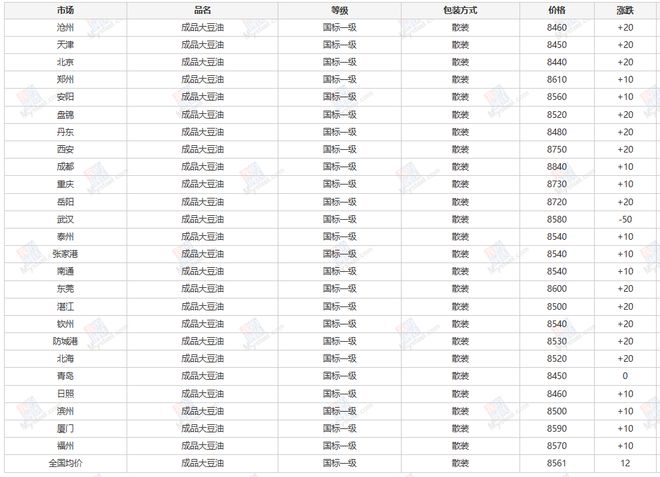
油脂产业周报:近月油脂维持震荡,远月价格仍有望上行-20251111
Nan Hua Qi Huo· 2025-11-11 09:57
Report Industry Investment Rating No relevant content provided. Core Viewpoints - The short - term weak reality suppresses the upward momentum of the oil market, and the market is running weakly. It is necessary to wait for the final US energy policy to boost the oil market and further news on Indonesia's B50. It is recommended to stay on the sidelines. Due to palm oil entering the production - reduction season and the early arrival of Ramadan in Southeast Asia next year, there may be an opportunity to go long on the far - month P05. At the same time, the short - term support for rapeseed oil and soybean oil is more obvious, and it is advisable to continue to be bullish on the widening of the rapeseed - palm and soybean - palm spreads and the P1 - 5 reverse spread [1][2]. - The future oil market will mainly focus on the final determination of the US biofuel obligation volume, the supply - demand balance game in palm oil producing areas, and the smooth arrival of US soybeans and the progress of China - Canada relations [10]. Summary by Directory Chapter 1: Core Contradictions and Strategy Recommendations 1.1 Core Contradictions - The core contradiction in the current oil market lies in the supply - demand balance of global oils, with the core drivers mainly in the foreign market. Key contradictions include the digestion of inventory pressure in palm oil producing areas, the uncertainty of the US biodiesel policy, and the game between the weak domestic reality and international expectations [1][2]. 1.2 Trading - Type Strategy Recommendations - **Trend Judgement**: Short - term shock adjustment, with the possibility of the price center rising in the medium term. - **Price Range**: P2601 fluctuates in the range of [8400 - 9000], Y2601 in the range of [8000 - 8500], and OI in the range of [9300 - 10000]. Pay short - term attention to the far - month rebound opportunity of palm oil. - **Technical Analysis**: Unilaterally, one can choose to go long on the P05 contract on dips; for arbitrage, one can go long on the rapeseed - palm and soybean - palm spreads. - **Basis Strategy**: Currently, the basis should be regarded from the perspective of short - term weak shock. - **Calendar Spread Strategy**: Considering the Ramadan in Southeast Asia in the first quarter of next year and Indonesia's B50 plan, palm oil has upward potential, and the P1 - 5 spread can be considered from the perspective of reverse spread. - **Hedging Arbitrage Strategy**: The rapeseed - palm spread and the soybean - palm spread will widen [26]. 1.3 Industry Customer Operation Recommendations - **Price Range Forecast**: The price range of soybean oil is 8000 - 8500, rapeseed oil is 9300 - 10000, and palm oil is 8400 - 9000. - **Hedging Strategy**: Different hedging strategies are recommended for traders, refiners, and oil mills according to their inventory and price expectations [27]. Chapter 2: This Week's Important Information and Next Week's Events to Watch 2.1 This Week's Important Information - **Positive Information**: The US Senate passed a temporary appropriation bill, ending the government shutdown. As of November 7, 2025, the total commercial inventory of the three major oils decreased week - on - week. The October MPOB report showed a significant increase in Malaysian palm oil exports [32]. - **Negative Information**: Malaysian palm oil inventory and production increased in October. Malaysian palm oil exports decreased from November 1 - 10 compared with the same period last month. As of November 7, the national palm oil commercial inventory increased week - on - week [33]. - **Spot Transaction Information**: The transactions of palm oil and soybean oil declined, and there was almost no transaction in rapeseed oil [34]. 2.2 Next Week's Important Events to Watch - Domestic high - frequency weekly inventory data, Malaysian palm oil high - frequency production and export data, MPOB data, the progress of the US small refinery exemption redistribution decision, the progress of China - Canada trade negotiations, and US government information and USDA data [42]. Chapter 3: Market Interpretation 3.1 Price - Volume and Capital Interpretation - **Domestic Market** - **Unilateral Trend**: The oil market was mainly in shock this week. Although the market sentiment turned bearish, the downward space was limited due to uncertain factors such as the US energy policy and the upcoming production - reduction season in producing areas. Attention should be paid to the bottom - fishing opportunity of palm oil [41]. - **Capital Movement**: The positions of key profitable seats in palm oil, soybean oil, and rapeseed oil were cautious. Palm oil foreign and retail investors slightly increased short positions, and long - position confidence was insufficient. The position change of soybean oil was relatively small, and foreign short - position holders slightly reduced positions. Rapeseed oil long - position holders left the market due to the expectation of eased China - Canada relations [41]. - **Basis Structure**: The basis of the main oil contracts continued to grind the bottom this week, and the basis remained weakly due to high domestic inventory and general downstream demand [43]. - **Calendar Spread Structure**: The oil market was differentiated. Soybean oil and rapeseed oil showed a Back structure, which became shallower this week. Palm oil did not have a clear structure, with the spot being the weakest and the 05 contract the strongest, showing a contango structure, but the 09 contract was relatively weak, and the 05 and 09 contracts showed a back structure [43]. - **Spread Structure**: This week, the soybean - palm and rapeseed - palm spreads strengthened, while the rapeseed - soybean spread weakened slightly. This was mainly because there was a lot of negative information in the palm oil market, rapeseed oil lacked clear information, and soybean oil was relatively strong due to the optimistic expectation of China - US trade talks [51]. - **Foreign Market**: The foreign market was mainly in shock this week. The negative factors in palm oil producing areas were temporarily exhausted, and the oil and oilseed sector maintained a shock operation. The cost of US soybeans supported the soybean oil market, and rapeseed oil was stronger than palm oil due to the lack of expectation of eased China - Canada relations [53]. Chapter 4: Valuation and Profit Analysis 4.1 Upstream and Downstream Profit Tracking in the Industry Chain - This week, the POGO and BOHO spreads continued to decline. The production cost of bio - fuels decreased slightly due to the decline in palm oil prices, and the cost of producing biodiesel from US soybean oil remained low due to sufficient global soybean supply [58]. 4.2 Import and Export Profit Tracking - China is a net importer of palm oil. Recently, the cost price decreased slightly due to the decline in origin quotes, but the profit changed little, and there were almost no new purchase orders under the negative basis [60]. Chapter 5: Supply - Demand and Inventory Deduction 5.1 Origin Supply - Demand Balance Sheet Deduction - In October, Malaysian palm oil production and inventory slightly exceeded market expectations, but the negative impact of increased production was offset by a significant increase in exports. The La Nina climate has appeared in the producing areas, and the subsequent impact remains to be observed. After October, it will enter the seasonal production - reduction season, and attention should be paid to the inventory - reduction progress in the producing areas [64]. 5.2 Supply - Side and Deduction - **Palm Oil**: Under the negative basis, traders' purchasing willingness is extremely low, and it is expected that there will be little possibility of new near - month purchase orders. In the fourth quarter, the supply pressure is not expected to increase [66]. - **Soybean Oil**: The current arrival of soybeans is still high, but the supply pressure will gradually weaken from December as the arrival of soybeans decreases [66]. - **Rapeseed Oil**: The current domestic inventory is high, and the downstream demand is limited. However, the inventory will gradually decrease in the fourth quarter. If China - Canada relations do not ease, there may be a supply shortage from the end of this year to the first quarter of next year [66]. 5.3 Demand - Side and Deduction - In the short term, the inventory pressure of the three major oils is large, and the demand is sluggish. Although the fourth quarter is the traditional consumption peak season for oils, the market boost after the festival stocking is limited, and the overall terminal demand for oils remains weak [70].