
生物医药研发

Search documents
聚焦企业赴港上市,陆家嘴金融沙龙第37期解析新机遇与挑战
财联社· 2025-11-25 03:08
Core Viewpoint - The article discusses the recent trends and opportunities in the Hong Kong IPO market, highlighting the significant increase in IPO financing and the favorable conditions for companies considering listing in Hong Kong [3][4][5]. Group 1: Hong Kong IPO Market Performance - In 2023, Hong Kong's IPO financing exceeded 30 billion USD, with over 80 companies listed [4][5]. - The Hang Seng Index and Hang Seng Tech Index are expected to see substantial increases by 2025, although current valuations remain relatively low [4]. - The average daily trading volume in the Hong Kong market has nearly doubled, reaching approximately 130 billion HKD [4]. Group 2: Reasons for Companies to List in Hong Kong - Companies are increasingly choosing to list in Hong Kong as a step towards internationalization, allowing access to global capital and enhancing brand recognition [5]. - The Hong Kong Stock Exchange (HKEX) has introduced various rules, such as the 18A and 18C regulations, to accommodate companies at different stages, including those without commercial revenue [5][6]. Group 3: IPO Trends and Investor Participation - The top ten IPOs in Hong Kong accounted for over two-thirds of the total financing, indicating the importance of large projects in the market [8]. - The average first-day gain for IPOs was 38%, with a decrease in the IPO break-even rate from 34% last year to 23% this year [8][9]. - Over 85% of new IPOs included cornerstone investors, with a significant increase in the amount raised from these investors compared to the previous year [9]. Group 4: Challenges and Future Outlook - The article notes that while the market shows promise, it still faces uncertainties related to geopolitical factors and company valuations [9]. - The biopharmaceutical sector is highlighted as particularly capital-intensive, with the average cost to develop a new drug exceeding 2 billion USD [11]. - The HKEX's new measures are expected to facilitate the listing process for A-share companies, potentially increasing the number of firms opting for secondary listings in Hong Kong [6][12]. Group 5: Regulatory and Structural Considerations - The process for companies to list in Hong Kong typically involves either H-share or red-chip structures, with the latter requiring more complex arrangements [14]. - The China Securities Regulatory Commission (CSRC) has implemented a new overseas listing filing management system, which emphasizes legal compliance and data security [15][16]. - The average time for H-share projects to complete the CSRC filing is around 146 days, while more complex structures like VIE can take up to 287 days [16].

中科院上海药物所最新Science论文:解析GPR1信号调控全貌,带来肥胖和炎症治疗新思路
生物世界· 2025-11-24 10:08
撰文丨王聪 编辑丨王多鱼 该研究发现,被趋化素激活后,GPR1 通过至少四种方式与 β-arrestin 1 结合,体现了两者从"预结合"到"稳定结合"状态的动态过程。这是首次在原子水平阐明 一种 GPCR 与 arrestin 相互作用的动态调控模式,为理解阻遏蛋白介导受体脱敏及内吞的分子机制提供了重要信息,同时也提出了靶向多种构象状态开展药物研 发的必要性,将促进开发特异性靶向阻遏蛋白信号通路的新型偏向性药物。 排版丨水成文 趋化素 (chemerin) 是一种重要的脂肪因子,参与调控脂质代谢和胰岛素敏感性,与肥胖、糖尿病等代谢性疾病的发生发展密切相关。同时,趋化素还能介导免 疫细胞定向迁移至炎症部位,参与机体抵御病原入侵、维持稳态和修复组织损伤等重要生理过程,在炎症与代谢之间发挥"桥梁"作用。 趋化素的生物学效应由其受体介导,包括 CMKLR1 和 GPR1 。其中,CMKLR1 作为一种典型的 G 蛋白偶联受体 (GPCR) ,通过 G 蛋白信号通路驱动脂质 代谢与炎症反应,而 GPR1 则是一种非典型的 GPCR,依赖于阻遏蛋白 (arrestin) 介导的信号通路和受体内吞,清除过量的趋化素。趋化 ...

辽宁成大:新一届管理层推动公司轻装前行,强化主业聚焦与科技赋能
Mei Ri Jing Ji Xin Wen· 2025-11-21 12:40
Core Viewpoint - Liaoning Chengda Co., Ltd. has decided to permanently suspend operations at Xinjiang Baoming Mining Co., Ltd. and will not make further large cash investments, focusing instead on introducing strategic investors to address funding and development issues [1] Group 1: Management Changes - The company held its first temporary shareholders' meeting in 2025, where the board of directors was re-elected, and Xu Biao was elected as the chairman [1] - Xu Biao has extensive experience and familiarity with the company, having served on the board since 2020 and currently holding positions in Guangdong Minying Investment Co., Ltd. [1] - Zhang Shanwei, the new president, has a background in industrial investment and management, contributing to the company's strategic direction [2] Group 2: Strategic Focus and Collaborations - The new management team is promoting a culture of achievement and openness, aiming for a shift towards innovative development and technology [2] - Liaoning Chengda's subsidiary, Chengda Bio, has signed a cooperation agreement with Zhongke Zhidong Taichu to establish an "AI + Vaccine Research Joint Laboratory" [2] - A strategic cooperation agreement was also signed with the Institute of Microbiology of the Chinese Academy of Sciences, focusing on emerging infectious diseases [2][3] Group 3: Financial Strategies and Debt Management - The company is optimizing its debt structure and enhancing its financing capabilities, which has led to a reduction in financing costs [3] - In 2025, the company issued short-term financing bonds totaling 14 billion yuan, with decreasing interest rates [3] - The company plans to issue exchangeable bonds to improve resource allocation and strengthen its core competitiveness [4]

百利天恒与中国银行四川省分行签订战略合作协议
Zhi Tong Cai Jing· 2025-11-19 13:51
Core Viewpoint - The company, Baillie Gifford Tianheng (688506.SH), has signed a strategic cooperation agreement with the Bank of China Sichuan Branch to establish a long-term comprehensive strategic partnership, which includes a commitment to provide no less than 8 billion yuan in credit support for the company's development strategy [1] Group 1: Strategic Cooperation - The agreement involves specific business operations that will require separate contracts to be signed [1] - The Bank of China has acknowledged the funding needs faced by the company in the process of innovative drug research and industrialization [1] Group 2: Financial Support - The strategic cooperation is expected to accelerate the company's strategic layout in the global biopharmaceutical frontier, reinforcing its leading position in fields such as antibody-drug conjugates (ADC) and multi-specific antibodies [1] - This partnership aims to seize new opportunities in the global biopharmaceutical industry, promoting mutual benefits and joint development [1]

佰金生命科学附属拟入股投资优环生物 打造全球领先的环状RNA(circ RNA)技术研发平台
Zhi Tong Cai Jing· 2025-11-19 08:45
Core Insights - Baijin Life Sciences (01466) has signed a strategic cooperation framework agreement with Youhuan (Suzhou) Biopharmaceutical Technology Co., Ltd. to invest in Youhuan through equity subscription, aiming to establish a leading global circRNA technology R&D platform and enhance innovation in cell therapy [1][2] Group 1: Company Overview - Youhuan (Suzhou) Biopharmaceutical Technology Co., Ltd. focuses on circRNA technology platform development and innovative drug development, also providing CRO services [2] - The company has successfully obtained U.S. patent authorization for "Circular RNAs and Preparation Methods thereof" and Chinese invention patent authorization for "A Residue-Free Sequence Circular RNA Based on Ribozyme Self-Splicing and Its Preparation Method" [2] Group 2: Collaboration Focus Areas - The initial collaboration will prioritize exploring long-acting, stable expression of cytokines and enzymes for treating liver metabolic diseases [3] - Development of circRNA delivery systems using exosome and cell delivery technologies, leveraging Baijin's exosome and cell platforms [3] - Engineering enhanced exosome and cell drugs for cardiovascular and tissue repair applications, targeting conditions such as myocardial infarction, cerebral infarction, Alzheimer's, and Parkinson's diseases [3] - Development of precise, efficient, and safe cell reprogramming and differentiation technologies for genetic disease treatment [3]
佰金生命科学(01466.HK)附属北京佰金将透过认购优环生物股权的方式对优环生物进行投资
Ge Long Hui· 2025-11-19 08:37
Core Insights - Baijin Life Sciences (01466.HK) has signed a strategic cooperation framework agreement with Youhuan (Suzhou) Biopharmaceutical Technology Co., Ltd. to invest in Youhuan through equity subscription, aiming to establish a leading global circRNA technology research platform and enhance innovation in cell therapy [1][2] Group 1: Company Overview - Youhuan is a dual-driven biopharmaceutical company focusing on circRNA technology platform research and innovative drug development, while also providing CRO services [2] - The company has successfully obtained U.S. patent authorization for its proprietary "Circular RNAs and Preparation Methods" and a Chinese invention patent for a method based on ribozyme self-splicing [2] Group 2: Collaboration Focus - The initial collaboration will prioritize exploring long-acting, stable expression of cytokines and enzymes for treating liver metabolic diseases [3] - Development of circRNA delivery systems using exosome and cell delivery technologies, leveraging Youhuan's platforms [3] - Engineering enhanced exosome and cell drugs for cardiovascular and tissue repair applications, targeting conditions such as myocardial infarction, stroke, and neurodegenerative diseases like Alzheimer's and Parkinson's [3] - Development of precise, efficient, and safe cell reprogramming and differentiation technologies for genetic disease treatment [3]
一场秋日的产业对话
Hang Zhou Ri Bao· 2025-11-19 02:22
杭州市生物医药产业近年来实现了跨越式发展,成为全国重要的生物医药创新高地。从2000年到 2024年,总产值从40亿元增长到超1000亿元,现有规上工业企业超300家。然而,随着产业的枝繁叶 茂,推动协同创新,正成为大家共同的期盼。 日前,全市生物医药产业科技创新和产业创新融合对接座谈会举行。记者冒着淅淅沥沥的秋雨赶到 会场,推开门,暖意扑面而来——回字形摆放的会议桌前坐得满满当当,大家翻阅着面前的会议资料, 了解高校、科研院所、医疗机构和企业的情况。 "组织这场活动,就是希望搭建一个平台,让'科研端'的智慧与'产业端'的需求能够直接对话。"主 持人开门见山。 听到高等院校、科研院所代表提到的先进技术,贝达药业股份有限公司副总裁兰宏尤其兴奋。"我 们非常感兴趣!"他说,"作为企业研发人员,我认为企业更擅长临床阶段,比如把有苗头的分子进一步 优化,推进临床开发,而这个苗头分子的出现是我们需要寻找的,非常希望与科技创新界建立合作。" 雨声渐密,市经信局工作人员的笔记本记了满满两页纸,"我们会尽快梳理交流成果,推动各方需 求与资源的精准匹配,让今天的'好想法'变成未来的'好项目'。" 散会时已是黄昏,但参会代表们都 ...
百诚医药:公司在神经生物学、自身免疫和肿瘤等领域已布局多条自主研发的新药管线
Zheng Quan Ri Bao Wang· 2025-11-18 13:11
Core Viewpoint - The company emphasizes the importance of innovation in drug development for oncology, autoimmune diseases, and neurobiology, highlighting unmet clinical needs and significant market demand in these areas [1] Group 1: Oncology - Oncology remains a key focus for innovative drug development, with ongoing clinical demand for breakthroughs in immunotherapy, targeted therapy, and personalized medicine due to increasing drug resistance [1] Group 2: Autoimmune Diseases - Autoimmune diseases such as rheumatoid arthritis, systemic lupus erythematosus, and inflammatory bowel disease are critical areas of interest for biopharmaceutical companies, particularly as they affect the younger workforce and have lower treatment efficacy and adherence [1] Group 3: Neurobiology - Neurodegenerative diseases like Alzheimer's, Parkinson's, and diabetic neuropathy are gaining significant attention from global pharmaceutical companies and research institutions, driven by the rapid increase in patient numbers due to global aging [1] Group 4: Company Pipeline - The company has established multiple self-developed drug pipelines in neurobiology, autoimmune diseases, and oncology, having obtained three IND approvals for Class I new drugs and ten IND approvals for Class II new drugs [1]
港股速报|港股低开 多家车企公布业绩 小鹏汽车早盘跌超7%
Mei Ri Jing Ji Xin Wen· 2025-11-18 02:50
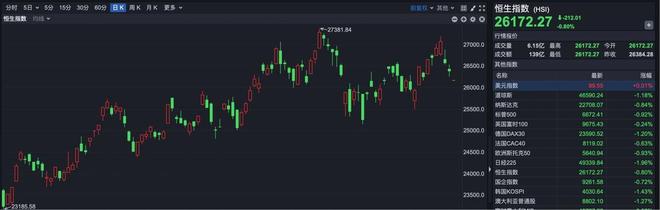
Market Overview - The Hong Kong stock market opened lower today, with the Hang Seng Index at 26,172.27 points, down 212.01 points, a decline of 0.80% [1] - The Hang Seng Tech Index reported at 5,684.81 points, down 72.07 points, a decrease of 1.25% [2] Company Performance - XPeng Motors (09868.HK) saw a drop of over 7% in early trading. The company reported total revenue of RMB 20.38 billion for Q3, a year-on-year increase of 101.8%. The net loss attributable to ordinary shareholders was RMB 380 million (USD 50 million), compared to RMB 1.81 billion in the same period last year [4] - Leap Motor (09863.HK) experienced a decline of over 2%. The company announced a net profit of RMB 150 million for Q3 2025, with a total net profit of RMB 180 million for the first three quarters. The gross margin for Q3 was 14.5%, up 0.9 percentage points from Q2 2025, with total vehicle deliveries of 173,852 units and revenue of RMB 19.45 billion, a year-on-year growth of 97.3% [6] - Geely Automobile (00175.HK) reported Q3 2025 revenue of RMB 89.192 billion, a year-on-year increase of 27%. The net profit attributable to shareholders surged by 59% to RMB 3.82 billion [6] Sector Performance - The technology sector saw widespread declines, with Kuaishou, Tencent, NetEase, and Baidu all dropping over 1%. Alibaba opened down over 1% but quickly rebounded [7] - Insurance stocks opened lower, with AIA Group falling over 1%. Gold stocks also retreated, with Chifeng Jilong Gold Mining and Zijin Mining down over 2% [7] - The biopharmaceutical sector showed signs of recovery, with BeiGene and Zai Lab rising over 4%. The semiconductor sector strengthened, with Hua Hong Semiconductor and SMIC both up over 1% [7] Market Outlook - Morgan Stanley has set a mid-to-long-term target for the Hang Seng Index at 27,500 points, with a bullish scenario reaching 34,700 points and a bearish scenario potentially dropping to 18,700 points. This outlook considers potential liquidity improvements, such as the Federal Reserve possibly halting balance sheet reduction in December, along with the anticipated "spring rally" early next year. However, external factors like Federal Reserve policies and U.S. stock market volatility remain significant variables [8]


和铂医药20251117
2025-11-18 01:15
Summary of Conference Call Notes Company and Industry Overview - **Company**: 和铂医药 (HaploMed) and its subsidiary 诺纳生物 (Nona Bio) - **Industry**: Biopharmaceuticals, focusing on innovative drug development and clinical research Key Points and Arguments Nona Bio's Strategic Positioning - Nona Bio aims to provide integrated delivery services, differentiating itself from traditional CROs by offering comprehensive solutions rather than fragmented services [2][5] - The company has four key technology platforms: 1. HMI humanized transgenic mouse platform 2. ADC/RDC/AOC delivery systems 3. Novel in vivo CAR systems 4. AI research platform [2][6] Future Expansion Plans - Nona Bio plans to expand from the Discovery phase to CMC and clinical concept validation stages over the next three years [3][8] - Collaborations with top GLP and CDMO companies are intended to enhance capabilities in GLP and high-end formulation development [3][8] AI Integration in Drug Development - AI is a crucial part of Nona Bio's strategy, with plans to establish an AI innovation center in Shanghai to enhance drug discovery efficiency [7][10] - The company aims to utilize accumulated high-quality data to improve antibody discovery processes [7][10] Clinical Development of 4,003 Project - The 4,003 project, a Treg cell-clearing therapy, has shown significant efficacy in preclinical studies, demonstrating a potency 100 times greater than the control group [2][21] - In clinical trials for MSS colorectal cancer, the objective response rate (ORR) was 34.8%, with a 12-month overall survival (OS) rate of 84% [3][22] Market Potential and Unmet Needs - Colorectal cancer (CRC) represents a significant market opportunity, with approximately 1.9 million new cases globally each year, and 95% of patients being MSS CRC [33][34] - The 4,003 project addresses unmet needs in MSS CRC, where current treatments are limited [22][34] Safety and Efficacy of 4,003 - The safety profile of 4,003 is comparable to existing checkpoint inhibitors, with manageable adverse events primarily at grade 1 or 2 [23][24] - The project is positioned to explore further indications beyond colorectal cancer, maximizing its therapeutic potential [25][26] Competitive Landscape - Nona Bio's 4,003 project is distinct from traditional CTLA-4 therapies, focusing on Treg cell clearance rather than blocking CTLA-4 function [27][28] - The company is actively seeking partnerships to enhance the development and commercialization of HBM 403, retaining rights in key markets like China [29] Financial Projections - Nona Bio aims to achieve normalized revenue of 1 billion RMB by 2028, with projected growth rates of 50%-80% in 2026-2027 [12][19] Workforce Expansion - The company plans to double its workforce by 2026 and again by 2028 to support business growth [16] Additional Important Insights - Nona Bio's unique advantage lies in its ability to generate high-quality data through its proprietary platforms, enhancing AI model training and drug discovery efficiency [14][15] - The company does not currently have plans for a separate IPO and focuses on its core competencies in preclinical stages [35][36]