电子电器

Search documents
全国技能大赛闭幕 技能人才打擂台比什么?“新”在哪儿?
Yang Shi Wang· 2025-09-23 23:15
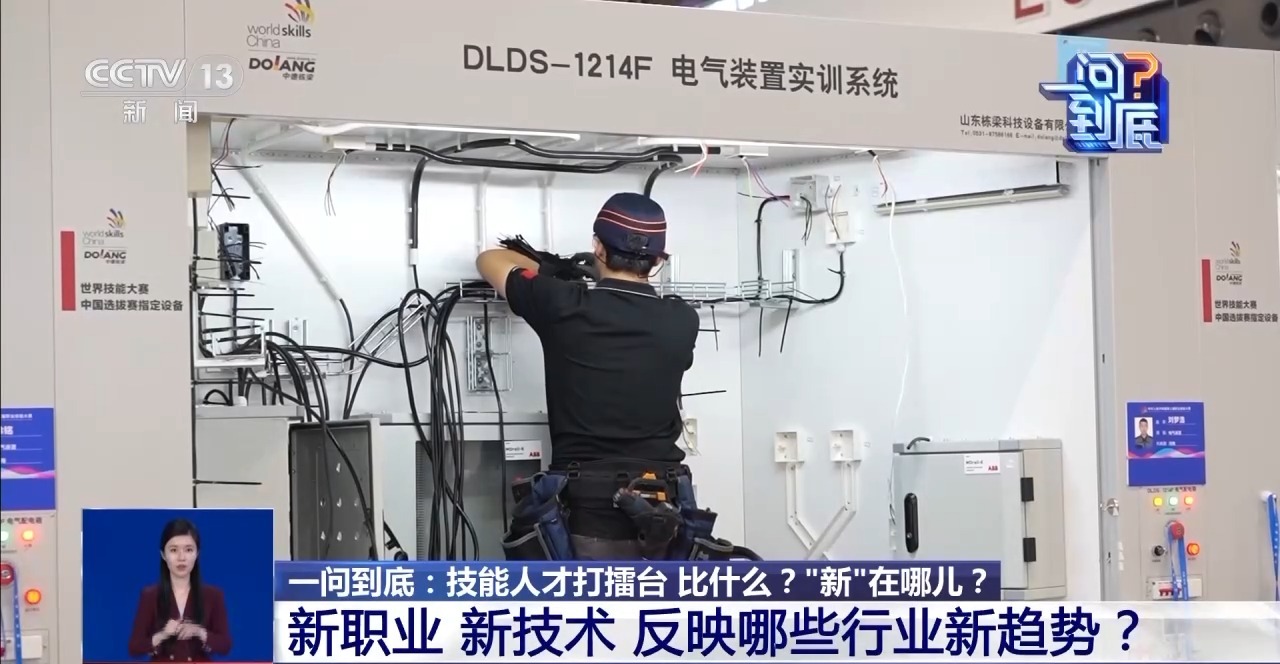
Core Insights - The third National Skills Competition showcased 106 competition projects, attracting 3,420 participants and 3,275 judges, highlighting new professions and technologies in various industries [1] - The competition emphasized new trends in industry skills, with over 50% of projects focusing on smart manufacturing, high-end equipment, digital technology, and renewable energy [1] Group 1: New Projects and Trends - The competition introduced six new selection projects for the World Skills Competition, including drone systems, smart security technology, software testing, digital interactive media design, dental restoration technology, and retail [3] - The inclusion of rural revitalization as a competition category reflects the event's alignment with current social production needs and the direction of vocational education reform [3] Group 2: Participant Characteristics - A notable trend among participants is the high educational background, with 13 PhDs, 286 Master's degrees, and 843 Bachelor's degrees, making up 33% of all competitors, particularly in advanced technology fields [4] - The age range of participants spans from 16 to 57 years, indicating a focus on lifelong skill development [5] - The proportion of enterprise employees participating in the national selection projects exceeded 50%, enhancing innovation and technical skills within the workforce [7] Group 3: Technological Applications - Many projects involved robotics, requiring participants to master various technical skills, including programming and understanding industry standards to ensure reliability and precision in robot operations [10] - The competition featured service robots performing tasks like delivery and waste sorting, showcasing the practical applications of robotics in daily life [8] Group 4: New Productive Forces - Projects like smart security technology incorporated AI, requiring participants to program AI for specific tasks, reflecting the integration of new technologies into traditional fields [14] - The dental restoration technology project demonstrated significant advancements, reducing the production time of dentures from one week to one day through digital techniques, enhancing patient experience [16] Group 5: Skill Demonstrations - Participants showcased exceptional skills, such as a competitor from Shandong who demonstrated precision in stacking glasses using a forklift, highlighting the rigorous training and practice involved in mastering such skills [19] - The exhibition of intangible cultural heritage skills, such as sand painting and mechanical clock-making, illustrated the blend of traditional craftsmanship with modern skill competitions [21]

商都郑州跑出开放“加速度”
Zheng Zhou Ri Bao· 2025-09-22 00:53
Core Viewpoint - Zhengzhou is enhancing its international trade capabilities and positioning itself as a hub for global commerce through innovative policies and strategic initiatives aimed at boosting foreign trade and investment [1][2][4]. Group 1: International Trade and Economic Growth - Zhengzhou's foreign trade has shown significant growth, with a total import and export value of 3634.9 billion yuan in the first eight months of the year, representing a year-on-year increase of 27.7% [4]. - The city has successfully attracted foreign investment, with foreign-invested enterprises achieving an import and export value of 779.1 billion yuan in the first half of the year, a year-on-year increase of 83.2% [5]. Group 2: Policy Innovations and Institutional Reforms - Zhengzhou has implemented a series of institutional innovations, with 394 innovation results formed in the past eight years, 14 of which have been replicated nationwide [2][3]. - The city is focusing on optimizing the business environment at ports and enhancing cross-border trade facilitation through new models such as "zone-port integration" [3]. Group 3: Global Connectivity and Partnerships - Zhengzhou has established trade relations with 226 countries and regions, with the EU, ASEAN, Japan, India, and the US being the top five trading partners [7]. - Recent international cooperation initiatives include trade negotiations with Brazil and Chile, and the signing of 13 key cooperation projects during the "Air Silk Road" forum in Kuala Lumpur [7][8]. Group 4: Infrastructure and Logistics Development - The city is enhancing its logistics capabilities with new transportation models that reduce cargo damage and improve transfer efficiency at air cargo stations [2]. - Zhengzhou is actively integrating into global supply chains and enhancing its logistics infrastructure to support its growing trade activities [6].
超捷股份:接受通过全景网“投资者关系互动平台”参与2025年半年度网上业绩说明会的投资者调研
Mei Ri Jing Ji Xin Wen· 2025-09-19 10:15
Core Viewpoint - Chaojie Co., Ltd. announced an online performance briefing for the first half of 2025, scheduled for September 19, 2025, where the chairman and general manager will address investor inquiries [1] Company Summary - For the fiscal year 2024, Chaojie Co., Ltd. reported the following revenue composition: Automotive sector accounted for 80.56%, Electronics and Electrical sector for 14.39%, Other businesses for 2.6%, Aerospace for 2.33%, and Communication industry for 0.12% [1] - As of the report date, Chaojie Co., Ltd. has a market capitalization of 6.3 billion yuan [1]
第2季“工业出口状况调查“受访厂商对澳门未来六个月出口前景态度转向稍微乐观
智通财经网· 2025-09-17 11:05
Core Viewpoint - The outlook for Macau's export situation has turned slightly optimistic among surveyed manufacturers for the next six months, with a notable increase in positive sentiment compared to the previous quarter [1] Export Outlook - In the second quarter of 2025, the main export products include garments, pharmaceuticals, electronic products/appliances, tobacco and alcohol, and metal products [1] - The European Union is identified as the market with the best export outlook, with a market quarterly order situation composite index change of 25.1% [1] Order Situation - The average number of months of orders on hand for surveyed manufacturers in the second quarter is 2.7 months, with pharmaceuticals leading at 4.4 months, followed by garment manufacturing at 3.2 months, and electronics/appliances at 2.5 months; other non-textile products have an order duration of 1.2 months [1] Future Export Expectations - 53.1% of surveyed manufacturers expect no significant change in export outlook over the next six months, an increase of 32.3 percentage points from the previous quarter's 20.8% [1] - 27.3% of manufacturers are optimistic about the export outlook, a slight increase of 0.4 percentage points from the previous quarter's 26.9% [1] - The percentage of manufacturers with a pessimistic view on export prospects has significantly decreased to 19.6%, down 32.7 percentage points from the previous quarter's 52.3% [1]
松下全球副总裁本间哲朗:以AI与能源驱动,从“本土创新”迈向“全球赋能”
Guo Ji Jin Rong Bao· 2025-09-04 08:14
Group 1: Financial Performance - Panasonic's sales and operating profit in the Northeast Asia region for FY2024 are projected to grow to 103% and 110% of the previous year, respectively [1] - In Q1 FY2025 (April-June), sales reached 103% year-on-year, while operating profit increased by 126% [1] Group 2: AI and Business Growth - The investment boom in global generative AI servers has significantly boosted Panasonic's business in Northeast Asia, with capacitor sales doubling and electronic materials sales increasing by 133% [4] - Panasonic is accelerating capacity expansion to meet market demand, including new factories in Guangzhou and Shanghai for electronic materials [4] Group 3: Global Strategy - Panasonic is replicating its successful strategies from the Chinese market globally, transitioning from "Made in China for China" to "Made in China for the World" [6] - The company has over 6,000 suppliers in China and is leveraging local procurement to supply components globally [6] Group 4: Energy Sector Developments - Panasonic is advancing its operations in both the North American and Chinese markets, with a new factory in Kansas for electric vehicle batteries and a significant investment in Dalian for battery production [7] Group 5: Trade Shows and Strategic Partnerships - Panasonic has actively participated in the China International Import Expo (CIIE), using the platform to showcase products and establish strategic partnerships [8] - The company plans to highlight AI products at the upcoming CIIE, sharing experiences with other Japanese companies operating in China [9] Group 6: Market Positioning - Panasonic emphasizes the importance of unique value over price competition in the Chinese market, focusing on technology, design, and practicality [9] - The company has localized decision-making and development functions to better cater to Chinese consumer expectations [9]
河南鹤壁:创新驱动传统产业焕新升级
Zhong Guo Jin Rong Xin Xi Wang· 2025-08-27 11:07
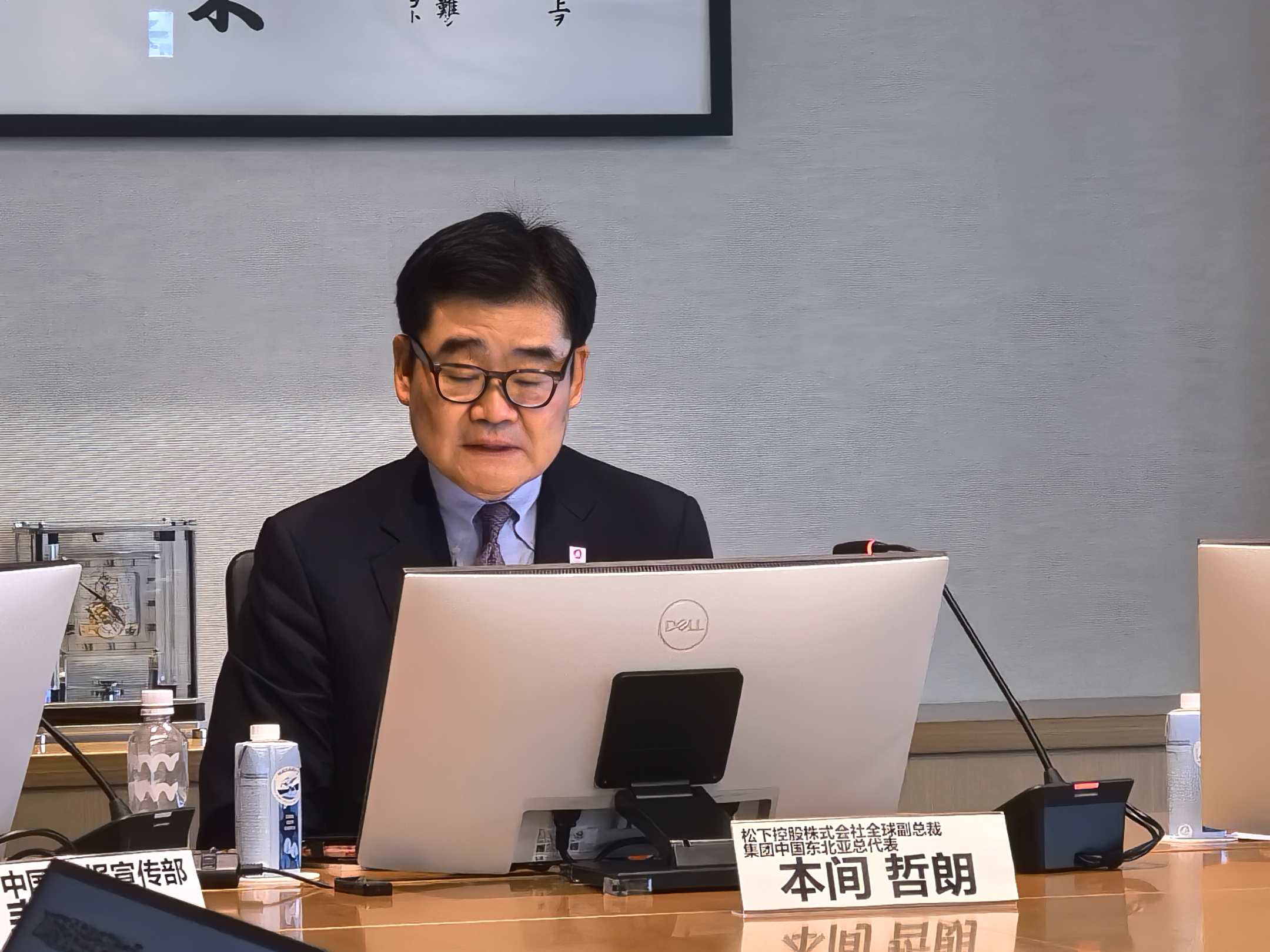
Core Viewpoint - The city of Hebi in Henan Province is accelerating the transformation and upgrading of its resource-based economy by focusing on three traditional industries: magnesium-based new materials, electronics and electrical appliances, and functional new materials, aiming to enhance industrial value and extend products to end markets through innovation [1][12]. Magnesium-based New Materials - The Hebi Economic and Technological Development Zone's Hai Li Magnesium Alloy Lightweight Equipment Industrial Park produces components for display systems, new energy vehicle power systems, automotive seat armrests, central console frames, and dashboard supports, with applications extending to home appliances and drones [2]. - The China Aluminum (Hebi) Magnesium-based New Materials Industrial Test Base project employs a new "aluminothermic method" to replace the traditional "Pijang method," achieving a 40% reduction in carbon emissions, a 50% decrease in energy consumption, and over 90% recovery rate of metallic magnesium [4]. Electronics and Electrical Appliances - The electronic and electrical industry cluster in Hebi is showing a trend towards high-end development, with Hebi Haichang Intelligent Technology Co., Ltd. producing intelligent equipment and software for sectors including automotive, home appliances, 5G, medical, semiconductor, and "3C" products, establishing close partnerships with international companies like Bosch and Siemens [6]. - Tianhai Group has led the formulation of 10 national standards for the automotive industry, with its new energy business accounting for 60% of its operations, and it holds over 20% market share in domestic automotive wiring harnesses and electronic connectors [6]. Functional New Materials - The Hebi Baoshan Economic and Technological Development Zone's Meirui Technology Polyurethane Industrial Park has a total investment of 15 billion yuan, with its first phase already in operation, featuring four first-of-their-kind processes that fill domestic technological gaps [8]. - The special nylon town led by Zhongwei Chemical Fiber Co., Ltd. has gathered dozens of upstream and downstream enterprises, producing over 20 series of "Nylon 66" products, aiming to become renowned in Henan, China, and globally [11]. Overall Industrial Upgrade - Through technological iteration and industrial upgrading, traditional industries in Hebi are rapidly climbing the value chain, with magnesium-based new materials, electronics and electrical appliances, and functional new materials becoming new driving forces for high-quality transformation and development [12].
TCL电子(01070):产品结构持续优化,费用管控助力盈利增长
Changjiang Securities· 2025-08-25 23:30
Investment Rating - The investment rating for TCL Electronics is "Buy" and is maintained [7]. Core Views - The report highlights that TCL Electronics achieved a revenue of HKD 54.777 billion in the first half of 2025, representing a year-on-year growth of 20.4%. The net profit attributable to shareholders reached HKD 1.09 billion, a significant increase of 67.8% year-on-year. The adjusted net profit attributable to shareholders was HKD 1.06 billion, up 62.0% year-on-year [4][6]. Summary by Sections Business Performance - The display business continues to improve, with TCL TV global shipments reaching 13.46 million units in the first half of 2025, a year-on-year increase of 7.6%. Mini LED TV shipments surged by 176.1% to 1.37 million units, maintaining the global leading position. In the Chinese market, the high-end strategy has shown significant results, with Mini LED TV shipments' market share increasing by 12.6 percentage points to 21.2% [7][8]. - The international market for TCL TVs saw a year-on-year shipment increase of 8.7%, with Mini LED TV shipments growing by 196.8%. In North America, while total shipments declined, the product structure improved significantly, with shipments of TVs larger than 65 inches increasing by 60.5% [7][8]. Financial Metrics - The overall gross margin for the company decreased by 0.6 percentage points to 15.3%, primarily due to the increased revenue share from the lower-margin solar business. However, the gross margin for the display business improved by 0.1 percentage points to 15.6% due to the advancement of the high-end strategy and product structure optimization [7][8]. - The report indicates that the overall expense ratio decreased by 1.0 percentage points to 11.5%, with sales and distribution expenses decreasing by 1.1 percentage points to 7.3% [7][8]. Future Outlook - The report suggests that the black electrical appliance industry continues to present structural opportunities. TCL is expected to expand its global market share in black electrical appliances, enhance the proportion of high-end products, and optimize operational efficiency to achieve high profit growth. The projected net profits for 2025, 2026, and 2027 are HKD 2.405 billion, HKD 2.868 billion, and HKD 3.386 billion, respectively, with corresponding P/E ratios of 10.17, 8.53, and 7.22 [7][8].
TCL电子(01070):25H1经调整归母净利润同比+62%,看好全年增长势能
HUAXI Securities· 2025-08-24 12:32
Investment Rating - The investment rating for TCL Electronics is "Buy" [1] Core Views - TCL Electronics reported a significant increase in adjusted net profit for H1 2025, with a year-on-year growth of 62% [2] - The company achieved a revenue of HKD 54.78 billion, reflecting a 20.4% increase year-on-year [2] - The adjusted net profit reached HKD 10.6 billion, marking a 62% increase compared to the previous year [2] Business Performance Summary - **Display Business**: Revenue from the large-size display segment was HKD 33.41 billion, up 10.9% year-on-year, with a gross margin of 15.6% [3] - Large-size display revenue was HKD 28.35 billion, a 9.4% increase, with a gross margin of 15.9% [3] - Mini LED TV shipments increased by 176.1% year-on-year [3] - In the Chinese market, TCL TV shipments rose by 3.5%, with a revenue increase of 4.4% to HKD 8.72 billion [3] - Internationally, TCL TV shipments grew by 8.7%, with revenue up 11.8% to HKD 19.632 billion [3] - **Internet Business**: Revenue reached HKD 1.46 billion, a 20.3% increase, with overseas revenue growing by 46.3% [3] - The gross margin for the internet business improved to 54.4% [3] - **Innovative Business**: Revenue from innovative segments was HKD 19.88 billion, a 42.4% increase, with solar business revenue soaring by 111.3% to HKD 11.14 billion [4] - Smart home and connectivity business revenue reached HKD 0.9 billion, with a gross margin of 23.6% [4] Profitability and Cost Control - The overall gross margin for H1 2025 was 15.3%, a decrease of 0.6 percentage points year-on-year [5] - The company maintained good control over expenses, with sales, management, and R&D expense ratios at 7.3%, 4.2%, and 2.1% respectively [5] - The net profit margin improved to 2.0%, an increase of 0.6 percentage points year-on-year [5] Brand and R&D Strategy - TCL is enhancing its global brand presence and increasing R&D investments to drive technological innovation and improve core brand competitiveness [6] - The company is focusing on high-end market strategies and leveraging new media marketing to boost brand visibility [6] Financial Forecast - The revenue forecast for 2025-2027 is adjusted to HKD 117.14 billion, HKD 132.94 billion, and HKD 149.22 billion respectively [8] - The expected net profit for the same period is projected at HKD 2.35 billion, HKD 2.82 billion, and HKD 3.23 billion respectively [8] - The earnings per share (EPS) are forecasted to be HKD 0.93, HKD 1.12, and HKD 1.28 for 2025-2027 [8]
大“妖股”四川长虹归来,80万股民坐上华为+AI“快车”,924行情曾创历史新高,谨防中报突发利空
Jin Rong Jie· 2025-08-20 03:08
Group 1 - Sichuan Changhong's stock price surged by 4.5% in early trading, reaching a peak of 12.80 yuan and a trading volume of nearly 9 billion yuan, with a turnover rate exceeding 15% [1][3] - The stock previously experienced a significant rise during the "924 market," where its price increased from approximately 4.5 yuan to 18 yuan, marking a 300% increase [3] - The company is benefiting from its partnership with Huawei, particularly with the launch of Huawei's HarmonyOS and Mate 70 products, which has generated market enthusiasm [3] Group 2 - Sichuan Changhong is associated with multiple concepts, including artificial intelligence, military-civilian integration, and the Western Development strategy, making it a popular target for speculative trading [3] - The company's controlling shareholder, Changhong Holdings, holds equity in Huawei's Kunpeng ecosystem company, Huakun Zhenyu, which is a major player in the domestic computing sector [3] - Despite the positive market sentiment, Sichuan Changhong's mid-year performance forecast indicates a potential decline in net profit after excluding non-recurring gains, marking the first drop in five years [3]

日本中年返贫史
虎嗅APP· 2025-08-18 13:39
Core Viewpoint - The article discusses the economic struggles faced by Japan's 60s generation, highlighting their transition from being the "lucky generation" to experiencing significant debt and unemployment crises during their middle age [4][5]. Debt Crisis of the 60s Generation - The 60s generation faced severe debt issues, with average household debt reaching nearly 20 million yen in 1994, the highest among all generations [6][8]. - Many in this generation bought homes at the peak of the real estate bubble in the 1980s, leading to substantial financial burdens as property values plummeted after the bubble burst [7][8]. - By 2005, the average home price had regressed to 1981 levels, leaving many households with negative equity [8]. Midlife Unemployment Crisis - Following the economic bubble's collapse, companies struggled with high labor costs, leading to a significant rise in layoffs and salary reductions starting in 1995 [11][12]. - From 1995 to 2005, disposable income for the 60s generation decreased by nearly 25%, with unemployment rates for middle-aged workers rising from 1.5% to 3% [12][13]. - The introduction of labor dispatch laws favored younger workers, making it difficult for older employees to find new jobs after layoffs [12][13]. Credit Loan Crisis - Many households resorted to high-interest credit loans to manage their debts, with the credit loan industry growing from 4.5 trillion yen in 1994 to over 10 trillion yen by 2000 [14][16]. - The average interest rates for these loans exceeded 30%, leading to a cycle of debt for many families [14][16]. - By 2005, approximately 4.5% of the population was trapped in credit loan crises, with a significant portion being families aged 35 and older [16]. Divorce Wave - The 60s generation also faced a significant increase in divorce rates, with over 2.77 million families registering for divorce from 1995 to 2005 [18][19]. - Economic instability and the inability of single-income households to sustain family expenses led to increased marital conflicts [19]. - Many housewives, lacking work experience, struggled to re-enter the job market, exacerbating family tensions [19]. Overall Impact and Reflection - The article reflects on the broader societal implications of these economic challenges, noting a cultural nostalgia for the prosperous Showa era and the psychological toll on the 60s generation [20][22]. - By 2022, the average debt for families in this generation remained around 6 million yen, indicating a long-lasting impact of the economic downturn [25].