
计算机设备

Search documents
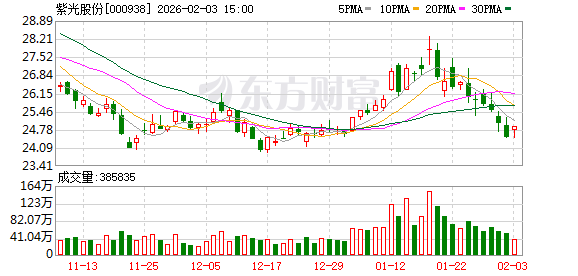
紫光股份:2025年度经营情况将于2026年4月29日披露
Zheng Quan Ri Bao· 2026-02-03 09:06
(文章来源:证券日报) 证券日报网讯 2月3日,紫光股份在互动平台回答投资者提问时表示,公司2025年度经营情况请详见公 司拟定于2026年4月29日披露的《2025年年度报告》。 ...


中国长城股价涨5.11%,华夏基金旗下1只基金重仓,持有57.15万股浮盈赚取45.72万元
Xin Lang Ji Jin· 2026-02-03 06:00
华夏中证大数据产业ETF(516000)基金经理为司帆。 截至发稿,司帆累计任职时间4年214天,现任基金资产总规模73.41亿元,任职期间最佳基金回报 84.4%, 任职期间最差基金回报-30.98%。 声明:市场有风险,投资需谨慎。 本文基于第三方数据库自动发布,不代表新浪财经观点,任何在本 文出现的信息均只作为参考,不构成个人投资建议。如有出入请以实际公告为准。如有疑问,请联系 biz@staff.sina.com.cn。 2月3日,中国长城涨5.11%,截至发稿,报16.45元/股,成交18.26亿元,换手率3.52%,总市值530.64亿 元。 责任编辑:小浪快报 资料显示,中国长城科技集团股份有限公司位于广东省深圳市南山区科技园中电长城大厦,成立日期 1997年6月19日,上市日期1997年6月26日,公司主营业务涉及网络安全与信息化、高新电子、电源、园 区与物业服务及其他业务。主营业务收入构成为:计算产业80.86%,系统装备13.52%,其他(补 充)5.62%。 从基金十大重仓股角度 数据显示,华夏基金旗下1只基金重仓中国长城。华夏中证大数据产业ETF(516000)四季度减持1400 股, ...

联想集团发布最新CIO报告:AI投资回报率飙升至179%,企业有望进一步释放效率红利
Ge Long Hui· 2026-02-03 02:54
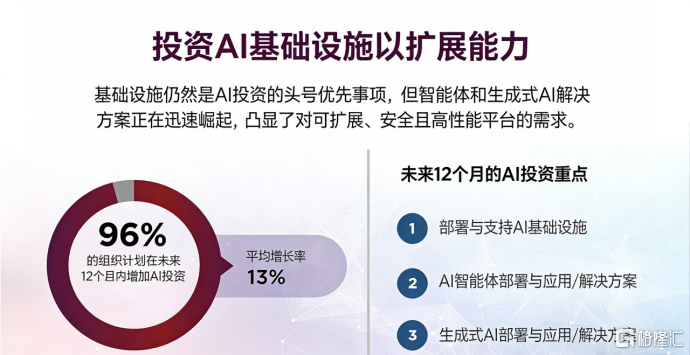
Core Insights - The report indicates that enterprises are increasingly optimistic about the return on AI investments, with a potential return rate of up to 179% as Agentic AI becomes more widely adopted [2][3] - Despite the high expectations, there is a significant gap in AI readiness among organizations, with only 27% having established a robust AI governance framework [2][3] - The transition from Generative AI to Agentic AI is anticipated to occur by 2026, with Agentic AI expected to become the primary focus for CIOs [7][9] Investment Expectations - Enterprises expect AI investments to yield substantial returns, with nearly half (46%) of AI proof-of-concept projects successfully moving into production [3] - A majority (96%) of respondents plan to increase AI investments in the next 12 months, with an average growth rate of 13% [3][11] AI Readiness and Governance - While 60% of organizations believe they are in the mid-to-late stages of AI application, only 27% have a well-established AI governance framework [6][11] - The lack of data quality, skilled personnel, and organizational collaboration is widening the gap between AI aspirations and reality [6] Deployment Trends - Hybrid AI is becoming the preferred deployment model, with 62% of surveyed enterprises choosing it as their main architecture [2][7] - Currently, only 21% of CIOs have deployed Agentic AI in actual business operations, with over half (55%) still in exploratory or pilot phases [2][7] Infrastructure and Support - The successful implementation of Agentic AI will depend on organizations' long-term capabilities, including secure and efficient infrastructure and flexible hybrid architectures [9][11] - Lenovo is introducing solutions to help enterprises transition from pilot projects to scalable AI applications, emphasizing the importance of governance frameworks [11][12] Future Outlook - The role of AI is evolving from a supportive tool to a production entity, necessitating advanced reasoning capabilities and low-latency feedback [7][9] - AI PCs and edge devices are becoming critical components in enterprise AI strategies, directly empowering employees and ensuring business process security [10]

计算机设备板块2月2日跌1.63%,同有科技领跌,主力资金净流出12.57亿元
Zheng Xing Xing Ye Ri Bao· 2026-02-02 09:15
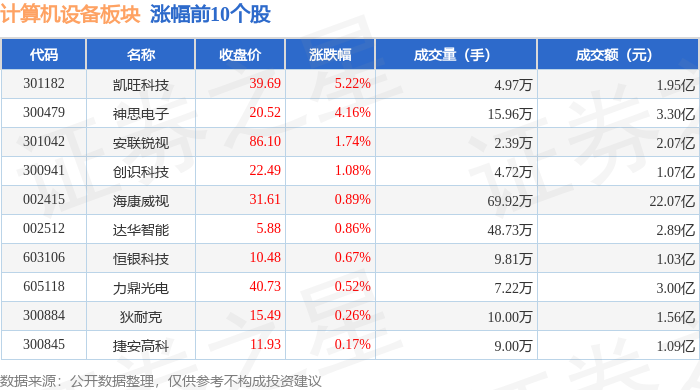
Market Overview - The computer equipment sector declined by 1.63% on February 2, with Tongyou Technology leading the drop [1] - The Shanghai Composite Index closed at 4015.75, down 2.48%, while the Shenzhen Component Index closed at 13824.35, down 2.69% [1] Stock Performance - Key gainers included: - Kaiwang Technology (301182) with a closing price of 39.69, up 5.22% [1] - Shen'en Electronics (300479) at 20.52, up 4.16% [1] - Anlian Ruishi (301042) at 86.10, up 1.74% [1] - Notable decliners included: - Tongyou Technology (300302) at 19.73, down 13.08% [2] - Xuanban Information (300324) at 5.57, down 9.58% [2] - Lang Technology (300042) at 33.58, down 9.41% [2] Capital Flow - The computer equipment sector experienced a net outflow of 1.257 billion yuan from institutional investors, while retail investors saw a net inflow of 1.01 billion yuan [2] - The sector's overall capital flow indicates a mixed sentiment among different investor types [2] Individual Stock Capital Flow - Hikvision (002415) had a net inflow of 272 million yuan from institutional investors, but a net outflow of 191 million yuan from retail investors [3] - Kaiwang Technology (301182) saw a net inflow of 206 million yuan from institutional investors, with a net outflow of 339 million yuan from retail investors [3] - Shen'en Electronics (300479) had a net inflow of 169 million yuan from institutional investors, while retail investors experienced a net outflow of 130 million yuan [3]

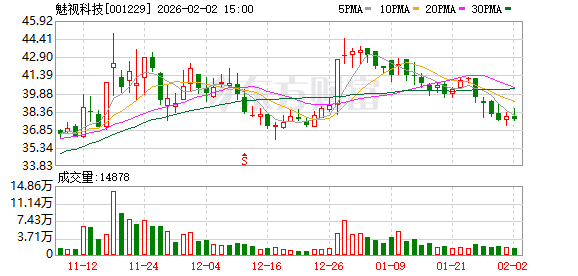
魅视科技:公司高度重视市值管理
Zheng Quan Ri Bao· 2026-02-02 08:41
Core Viewpoint - The company emphasizes the importance of market value management and is focused on enhancing investment value and shareholder returns through various strategies [2] Group 1: Company Management and Performance - The company is committed to improving operational performance, investor relations management, information disclosure, cash dividends, and equity incentives [2] - The performance assessment of senior management is conducted based on labor contracts and relevant regulations [2]
信创ETF(159537)回调超4%,AI景气利好行业,回调或可布局
Mei Ri Jing Ji Xin Wen· 2026-02-02 06:56
Core Viewpoint - The semiconductor industry is experiencing price increases in power devices like Mosfets, with expectations for similar trends in analog devices and MCUs, driven by rising raw material costs and recovering demand, particularly from AI applications [1] Group 1: Power Devices - Power devices such as Mosfets have seen initial price increases, with expectations for analog devices and MCUs to follow due to rising raw material costs and recovering demand from AI [1] - The SiC market is expected to benefit from long-term demand driven by AI data centers and the evolution of 800V architectures in new energy vehicles, with significant cost reductions leading to increased applications in diodes and transistors [1] - IGBTs are at a critical supply-demand juncture, with potential boosts from energy storage and new energy demands [1] Group 2: Packaging Industry - The packaging industry is experiencing improved market conditions, with rising capacity utilization rates and strong demand for both advanced and traditional packaging, leading some leading manufacturers to initiate price increases [1] - Advanced packaging is identified as a long-term trend due to the physical limits of semiconductor processes, with performance improvements increasingly reliant on advanced packaging techniques [1] Group 3: Storage Industry - The storage sector maintains a positive outlook, with new AI applications expected to drive terminal storage demand as a growth point [1] Group 4: Investment Trends - There is a strong expectation for increased capital expenditure from North American cloud service providers, driven by investments in AI infrastructure [1] - The Xinchuang ETF (159537) tracks the Guozhen Xinchuang Index (CN5075), which selects listed companies in the semiconductor, software development, and computer equipment sectors to reflect the overall performance of the information technology innovation theme [1]
中科曙光跌2.05%,成交额16.37亿元,主力资金净流出1.90亿元
Xin Lang Cai Jing· 2026-02-02 06:03
Core Viewpoint - Zhongke Shuguang's stock price has experienced fluctuations, with a recent decline of 2.05% and a total market capitalization of 128.65 billion yuan, indicating potential volatility in investor sentiment and market performance [1]. Financial Performance - For the period from January to September 2025, Zhongke Shuguang reported a revenue of 8.82 billion yuan, reflecting a year-on-year growth of 9.68%, while the net profit attributable to shareholders was 966 million yuan, showing a significant increase of 25.55% [2]. - The company has distributed a total of 2.02 billion yuan in dividends since its A-share listing, with 1.19 billion yuan distributed over the past three years [3]. Shareholder and Market Activity - As of January 20, 2025, the number of shareholders for Zhongke Shuguang reached 398,100, an increase of 0.58% from the previous period, while the average circulating shares per person decreased by 0.58% to 3,674 shares [2]. - The stock has seen a net outflow of 190 million yuan in principal funds recently, with significant buying and selling activity from large orders [1]. Company Overview - Zhongke Shuguang, established on March 7, 2006, and listed on November 6, 2014, is based in Beijing and specializes in high-performance computing, general servers, and storage products, with IT equipment accounting for 88.79% of its revenue [1]. - The company operates within the computer industry, specifically in the computer equipment sector, and is associated with concepts such as supercomputing and computing power [1].

优刻得(688158):全栈云计算布局,AI智算平台为新增长
NORTHEAST SECURITIES· 2026-02-01 14:58
Investment Rating - The report initiates coverage with a "Buy" rating for the company [3][5]. Core Insights - The company's public cloud business shows steady growth, with hybrid and private cloud segments performing exceptionally well. The product matrix includes computing, networking, storage, databases, and cloud security, catering to various sectors such as mobile internet, entertainment, education, finance, and government [1]. - The AI computing platform and overseas expansion are driving growth, with a clear strategic layout. The "Kongming" AI computing platform supports diverse GPU access and offers distributed training capabilities, while the UModelVerse platform allows quick AGI application setup [2]. - Revenue projections for 2025-2027 are estimated at 1.84 billion, 2.23 billion, and 2.66 billion yuan, with net profits expected to be -76 million, 28 million, and 95 million yuan respectively, indicating a significant turnaround in profitability [3][4]. Financial Summary - The company's revenue for 2023 is projected at 1.515 billion yuan, with a decline of 23.17% from the previous year. However, a recovery is expected with a growth rate of 22.42% in 2025 [4]. - The net profit margin is expected to improve from -16.0% in 2024 to 3.6% in 2027, reflecting a positive trend in profitability [4]. - The company has a total market capitalization of approximately 17.12 billion yuan, with a share price range of 16.60 to 40.10 yuan over the past 12 months [5].

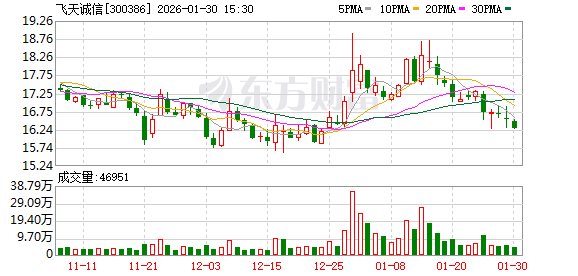
飞天诚信:预计2025年净利润为400万元-600万元
Zheng Quan Ri Bao· 2026-01-30 15:31
Core Viewpoint - Feitian Chengxin announced an expected net profit of 4 million to 6 million yuan for the fiscal year 2025, a significant recovery from a loss of 77.2346 million yuan in the same period last year [2] Company Summary - The company projects a turnaround in profitability for 2025, indicating a positive shift in financial performance compared to the previous year's substantial loss [2]

2025年第四季度信用债违约分析:民企新增债券违约率环比下降,新增两家企业违约
Yuan Dong Zi Xin· 2026-01-30 13:50
1. Report Industry Investment Rating No relevant content provided. 2. Core Viewpoints of the Report - In Q4 2025, the number of newly defaulted bonds and the corresponding bond balances decreased compared to the previous quarter and the same period last year. The new issuer default rate and new bond default rate also declined. The new bond default rate of private enterprises dropped significantly, and no new bond defaults occurred among state - owned enterprises [2][6][9]. - The bond default of Huaming Intelligence in Q4 was caused by poor operating conditions, high short - term debt ratio, increased liquidity pressure, risk warnings from regulatory authorities, and high refinancing pressure [22]. - Since 2020, the default rates of state - owned enterprises and private enterprises in the bond market have been significantly different. The default rate of private enterprises is relatively high, which weakens their attractiveness to investors, increases financing difficulties and costs, and there is a large gap in net financing ability between state - owned and private enterprises [23][25][30]. - From 2020 to Q4 2025, the default rates of bond issuers in different industries varied. Industries such as real estate, transportation, and automobile had relatively more newly defaulted issuers, while industries like public utilities, banks, and petroleum and petrochemicals had no defaulting issuers. Industries such as communication, automobile, textile and apparel, media, and real estate had relatively high default rates [25][32]. 3. Summary by Relevant Catalogs 3.1 Fourth - Quarter Credit Bond Default Overall Situation - In Q4 2025, 3 new bonds defaulted, with a total default balance of 2.414 billion yuan, involving 3 defaulting issuers, 2 of which were first - time defaulters. The number of newly defaulted bonds and the default balance decreased compared to the previous quarter and the same period last year [6]. - The new issuer default rate (by number of issuers) in Q4 was 0.04%, lower than the previous quarter (0.07%). The new issuer default rate of private enterprises was 0.17%, significantly lower than the previous quarter (0.44%), and no new issuer defaults occurred among state - owned enterprises. The new bond default rate (by balance) was 0.01%, lower than the previous quarter (0.02%). The new bond default rate of private enterprises was 0.04%, significantly lower than the previous quarter (0.19%), and no new bond defaults occurred among state - owned enterprises [9]. 3.2 Fourth - Quarter Credit Bond Default Case Analysis - Huaming Intelligence, a company engaged in the R & D, manufacturing, and sales of automatic fare collection system terminal equipment, had its convertible bond "Huaming Dingzhuan" default on December 24, 2025. After paying part of the funds, 15.8513 million yuan was postponed for payment [11]. - Since 2019, due to changes in the market environment, the company has been in a state of continuous losses. From 2021 to 2024, the cumulative loss reached 307 million yuan. The company's asset - liability ratio has decreased steadily, but the conservative quick ratio has declined, indicating weakened liquidity. The scale of interest - bearing debt has decreased, but the proportion of interest - bearing debt in total debt has increased, and interest expenses have eroded profits. The debt structure is dominated by short - term debt, and the coverage of short - term debt by operating cash flow has fluctuated significantly [12][14][17]. - The company has exposed internal governance and financial compliance issues, triggering risk warnings. It has also faced many new lawsuits and arbitrations, with a large amount involved. Since 2020, the company's financing cash flow has been in a continuous net outflow state, resulting in high refinancing pressure [19][20][22]. 3.3 Recent Bond Market Default Changes - Since 2020, the new issuer default rate of state - owned enterprises has remained below 0.3%, while that of private enterprises has generally declined, reaching a maximum of nearly 2.5%. In 2025, the new issuer default rate of private enterprises was 1.31%, lower than the previous year (1.37%). In Q4 2025, it was 0.17%, significantly lower than the previous quarter (0.44%) [23]. - The relatively high default rate and frequent default events of private enterprises have weakened their attractiveness to bond market investors, increasing their bond financing difficulties and costs. In 2024, the net bond financing of private enterprises was - 3.9912 billion yuan, and that of state - owned enterprises was 339.04509 billion yuan. In 2025, the net bond financing of private enterprises was 3.2873 billion yuan, and that of state - owned enterprises was 37.07585 billion yuan. In Q4 2025, the net bond financing of private enterprises was 273.6 million yuan, and that of state - owned enterprises was 12.34815 billion yuan [25]. - From 2020 to Q4 2025, in terms of the number of newly defaulted issuers, industries such as real estate, transportation, and automobile had relatively more newly defaulted issuers, while industries like public utilities, banks, and petroleum and petrochemicals had no defaulting issuers. In terms of the marginal default rate of issuers over the years, industries such as communication, automobile, textile and apparel, media, and real estate had relatively high default rates [25][32]. 3.4 Summary - In Q4 2025, 3 new bonds defaulted, with a total default balance of 2.414 billion yuan, involving 3 defaulting issuers, 2 of which were first - time defaulters. The number of newly defaulted bonds and the default balance decreased compared to the previous quarter and the same period last year [30]. - The first - time defaulters in this quarter were Huaming Intelligence and Tianan Life Insurance. Huaming Intelligence had poor profitability and high refinancing pressure [30]. - Since 2020, the default rate of state - owned enterprises has remained low, while that of private enterprises has declined but is still significantly higher. There is a large gap in net financing ability between state - owned and private enterprises [30]. - From 2020 to 2025, the default rates of bond issuers in different industries varied. In Q4 2025, there was 1 new defaulting issuer in the computer industry and 1 in the non - banking financial industry, and no first - time defaults occurred among bond issuers in other industries [32].
