
服装

Search documents
鸭绒大涨价,羽绒服市场咋“没感觉”
Qi Lu Wan Bao· 2025-11-27 07:39
Core Insights - The price of duck down has surged to 564.06 yuan per kilogram, an increase of 11.91% year-on-year, while the price of white goose down has decreased by 14.66% to 938.52 yuan per kilogram [1][3] Supply and Demand Dynamics - The supply of duck down has significantly decreased due to a reduction in duck farming, with production dropping to about 1/2 to 1/3 of previous levels as farmers face losses from low duck meat prices [3][4] - The current price of duck meat is around 4000 yuan per ton, down from 5000-6000 yuan per ton last year, contributing to the decline in duck farming [3] - Increased demand for down products, driven by expectations of a cold winter and low inventory levels, has led to a spike in procurement activities [3][4] Market Behavior and Consumer Response - Despite rising raw material costs, retailers have managed to keep consumer prices stable through promotions and discounts, with many consumers reporting significant discounts on down jackets [5][6] - The trend of rational consumer behavior is evident, as many consumers are not feeling the impact of rising raw material prices due to ongoing sales and the durability of down jackets [6][7] Product Evolution - Down jackets are evolving with improved materials and manufacturing processes, including the use of larger duck down particles for better insulation and machine-washable designs [7] - The market is expected to stabilize as high duck down prices may ease, leading to a demand-driven equilibrium [7]
云溪小镇举办商户自媒体引流培训 赋能个体经济高质量发展
Qi Lu Wan Bao· 2025-11-27 07:35
为进一步优化营商环境,助力辖区内商户把握自媒体机遇、拓展经营思路,近日,枣庄高新区云溪小镇 成功举办商户自媒体引流培训活动,推动个体经济实现高质量发展。 云溪小镇运营部经理王祥说:"本次培训活动,我们从前期调研商户需求到设计课程内容,都力求实 用、接地气。从商户反馈来看,效果挺不错的,不少商户已经能借助学到的技巧着手搭建自媒体账号。 下一步,我们会根据商户在实际操作过程中遇到的问题,开展针对性的进阶培训,还会一对一指导商户 优化自媒体账号和视频内容,进一步帮大家把线上流量转化成线下客源,助力大家把生意做得更红 火。" 云溪小镇商户张秀茹说:"我刚刚上完课感觉不孬,太好了,老师讲得非常的实在。我以前在学校门口 摆摊,不懂怎么吸引年轻人。现在经常来这里学习,生意比之前好多了,新来的都是年轻人,非常感谢 老师们。" 此次培训吸引了云溪小镇20余名商户参加,涉及餐饮、服装、零售等多个行业,基本实现商圈业态全覆 盖。在培训课程中,除了对基础操作进行讲解之外,还进一步系统讲解了账号定位、内容策划、流量获 取等进阶知识,旨在帮助商户不仅"会用",更要"用好"自媒体,从而精准找到线上引流的突破口。 培训现场,授课讲师围绕实体 ...
鸭绒价格与哪些因素相关?揭秘羽绒服涨价背后的逻辑
Bei Jing Wan Bao· 2025-11-27 07:09
"涨价狂潮""一天一个价""迈入千元时代"……虽然最近降温不甚明显,但羽绒服还是以涨价的方式登上 热搜。 记者调查发现,近年来每到冬季,都会有羽绒服涨价的消息传来。今年羽绒服涨价了吗?因为什么?记 者通过对专业人士的采访,为您揭秘羽绒服涨价背后的逻辑。 线上的羽绒服涨价热潮,目前还没有影响到北京的线下市场。 现场 "准确说是天气一冷就涨" "涨了吗?这个价格一直都是这样的。"百荣世贸商城一家品牌羽绒服店面的销售,给出了与涨价消息不 一致的回应,线上的涨价潮还没有传递到北京的线下市场。 这座北京最著名的服装批发市场,给羽绒服开辟了专属分区,三楼有一大块区域属于各种品牌的羽绒 服。波司登、雪中飞、雅鹿、鸭鸭等市面上主流的国产羽绒服品牌,在这里都有店面。 有店面的90白鸭绒(含绒量90%)长款女式羽绒服售价均在1200元以上,90鹅绒长款女式羽绒服售价均在 1500元以上。"今年没涨,白鸭绒跟去年基本上是持平的,鹅绒的价格甚至还稍微便宜一点。" 在这家店隔壁,另一个品牌相似款式的羽绒服,含绒量、充绒量、蓬松度相同,售价还便宜500元左 右。这些店面,几乎都将长款女式羽绒服摆放在店面核心位置,而这类产品也是店里售价最 ...


降温还得靠老式保暖穿搭 排骨羽绒服、加绒秋裤等保暖装备京东服饰热销中
Zhong Jin Zai Xian· 2025-11-27 06:01
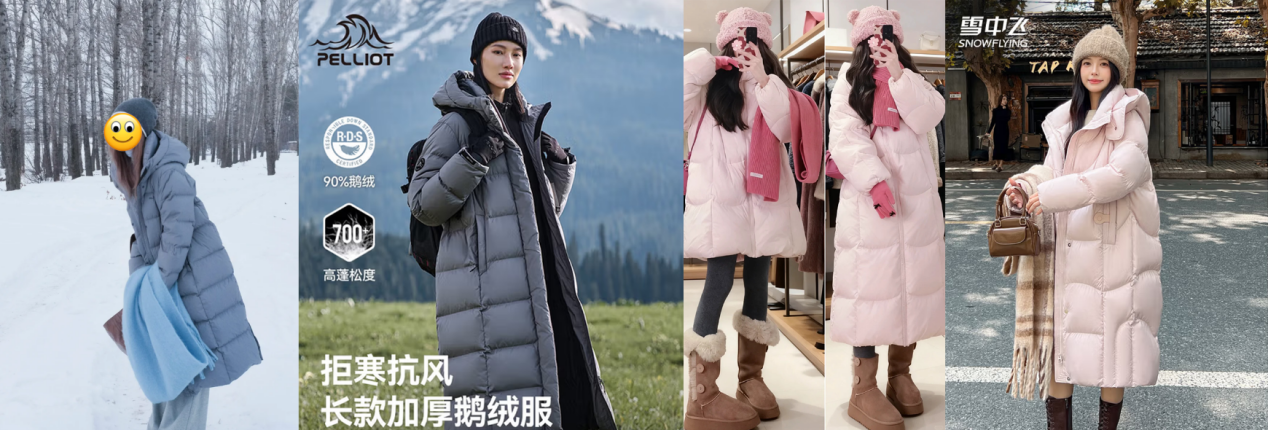
Core Insights - The Central Meteorological Observatory has issued multiple cold wave warnings, leading to a significant drop in temperatures across various regions, prompting consumers to seek traditional warm clothing options [1] - JD Fashion has introduced a guide for selecting traditional warm clothing, catering to the increased demand for winter apparel [1] Group 1: Traditional Warm Clothing - The "big quilt down jacket" has gained popularity due to its quilt-like appearance and excellent warmth retention, with products like the BERSHI and Aurora MAX long down jackets featuring 90% goose down content and high fill power [1] - The Snow Flying mid-length down jacket for women is designed for a sweet aesthetic, offering 90% down content and a comfortable fit, ideal for cold weather [1] - The Yalu cashmere silk thermal underwear is highlighted for its high-density warmth and skin-friendly materials, making it a recommended base layer [1] Group 2: Footwear Trends - UGG's new women's short snow boots are noted for their classic design and high-quality materials, combining warmth and style [3] - The ZHR women's suede platform shoes are trending, praised for their lightweight and comfortable design, suitable for daily commutes [3] Group 3: Children's Winter Apparel - The Duck Duck Ice Shell series children's long down jackets feature high down content and a 3D athletic cut for ease of movement [4] - Moody Tiger's 2025 winter collection includes mid-length down jackets for girls, made with high-end white goose down and designed to withstand variable weather conditions [4] Group 4: Accessories - Johnstons of Elgin cashmere scarves are positioned as investment pieces, made from 100% cashmere and available in various colors [5] - JEEP SPIRIT's mink fur ear hats and Canada Goose's Arctic hats are highlighted for their quality and unique designs, suitable for various styles [5] Group 5: Outdoor Sports Apparel - Decathlon's women's sleeveless cotton vests are recommended for winter sports, providing warmth without bulk, ideal for morning runs and commutes [7] - The Camel stand-up collar down vest features water-resistant properties and a flattering design, making it suitable for outdoor activities [7] Group 6: Shopping Trends - The emphasis on practicality in winter clothing is noted, with JD offering a wide range of high-cost performance winter items for consumers [9]
解锁未来消费!冰箱自动生成购物清单、人形机器人也能“温情陪伴”
Bei Jing Ri Bao Ke Hu Duan· 2025-11-27 05:03
Core Insights - The Chinese government is promoting policies to enhance the adaptability of supply and demand in consumer goods, with a focus on artificial intelligence (AI) as a catalyst for consumption growth [1][3]. Group 1: AI User Base and Market Trends - As of the first half of this year, the user base for generative AI products in China has reached 515 million, with continuous expansion of application scenarios and a surge in new AI terminal products [1]. - AI is transforming consumption from merely purchasing products to subscribing to a lifestyle, indicating a shift in consumer behavior [3]. Group 2: Product Innovation - The government plans to drive product innovation by integrating AI and big data into the digital transformation of key consumer goods sectors, aiming to establish a digital ecosystem that connects user demand, intelligent design, flexible production, and precise services [4]. - In the home appliance sector, there is support for developing smart appliances that utilize user behavior data for decision-making, enhancing user experience through features like automatic shopping lists [4]. Group 3: Scenario Expansion - The initiative will promote the integration of AI into more consumer scenarios, creating new experiences and stimulating demand, such as in smart home environments and health care for the elderly [5]. - Examples include AI glasses that provide hands-free navigation and personalized services, and the development of AI-powered health monitoring products aimed at improving elderly care [5]. Group 4: Future Directions - The Ministry of Industry and Information Technology will focus on demand-driven, technology-led, and ecosystem-coordinated approaches to deepen the integration of AI with the consumer goods sector, continuously expanding new consumption scenarios [6].

工信部:未来的消费不再是购买一件商品,而是订阅一种生活
Sou Hu Cai Jing· 2025-11-27 04:45
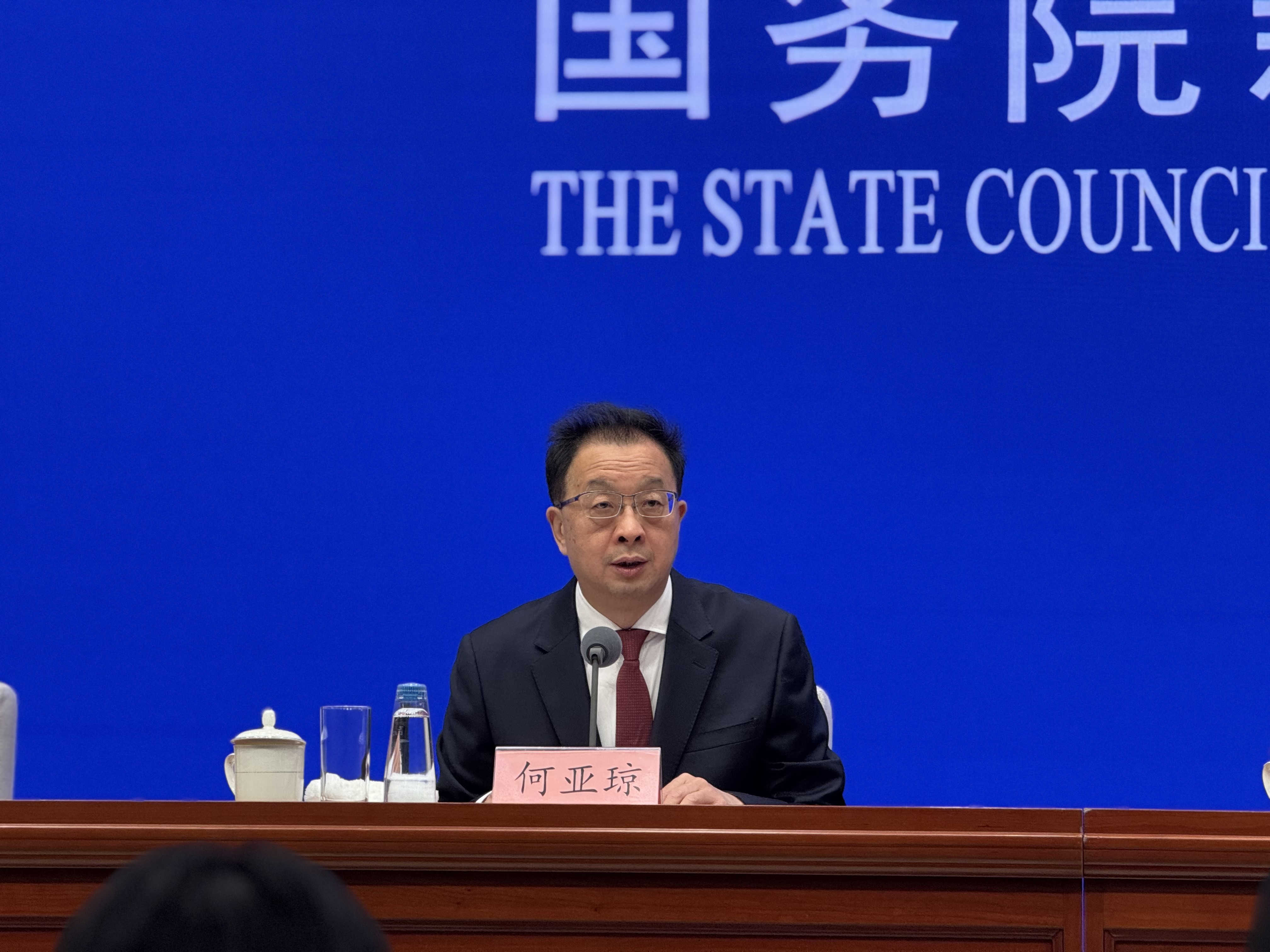
Core Viewpoint - China's consumer goods supply has entered a new development stage characterized by high quality and reasonable pricing, meeting the basic needs of the population, but structural mismatches in supply and demand still exist in certain sectors [1][5][9]. Group 1: Supply and Demand Issues - There are structural mismatches in supply and demand, with some products experiencing oversupply while high-quality offerings remain insufficient, particularly in high-end brands for jewelry, bags, and cosmetics [1][5][9]. - The transition from old to new growth drivers is ongoing, with a lack of innovative products that meet the quality and personalization demands of consumers [1][5][9]. - Certain consumer hotspots, such as elderly care, cultural tourism, and smart consumption, have strong demand, but the supply of personalized products like elderly care items and smart devices is inadequate [1][5][9]. Group 2: Implementation Plan - The Ministry of Industry and Information Technology (MIIT) has jointly issued an implementation plan to enhance the adaptability of consumer goods supply and demand, which includes the application of generative artificial intelligence and 3D digital design tools [1][5][9]. - The plan aims to develop AI terminal products that provide entertainment, health, and companionship services [1][5][9]. Group 3: AI Product Development - As of mid-2023, the user base for generative AI products in China has reached 515 million, with continuous expansion of application scenarios and a surge in new AI terminal products [6][10]. - The MIIT will focus on product and scenario innovation to accelerate the integration of AI technology in the consumer goods sector [6][10]. Group 4: Digital Transformation - The MIIT plans to promote the integration of AI and big data technologies to build a digital ecosystem that encompasses user needs, intelligent design, flexible production, and precise services [6][10]. - In the home appliance sector, there is support for developing smart appliance ecosystems based on user behavior data, which has already shown positive user feedback [6][10]. Group 5: Scenario Expansion - The MIIT has released 213 application scenarios for digital technology to enhance product variety, quality, and branding, aiming to identify solutions that address industry pain points and improve manufacturing efficiency [7][11]. - In the "AI + smart home" scenario, the MIIT will promote the development of interconnected smart home systems, creating immersive and proactive smart living experiences [7][11]. - In the "AI + health and elderly care" scenario, initiatives will focus on developing rehabilitation aids, health monitoring products, and humanoid robots to transition from mechanical care to emotional companionship [7][11].

FT中文网精选:东南亚的投资机会初探(上)
日经中文网· 2025-11-27 02:53
Core Insights - The article discusses the evolving trade dynamics between China and the United States, highlighting a shift towards a "divergent restructuring" of bilateral trade relations, while emphasizing the growing trade volume between China and ASEAN countries, particularly Vietnam and Thailand [6][5]. Group 1: Trade Dynamics - The trade relationship between China and the U.S. is entering a phase of "competitive cooperation," with a noticeable trend of restructuring in trade patterns [6]. - The proportion of bilateral trade between China and the U.S. is decreasing, while trade with ASEAN countries has increased by 54% over the past five years [6]. - In 2024, China's trade surplus with Vietnam is projected to be approximately 450 billion RMB, while the surplus with Thailand is expected to be around 270 billion RMB [6]. Group 2: Economic Conditions in Thailand and Vietnam - Thailand's economic development remains stable, characterized by a steady growth trajectory [6]. - Historically, Thailand was recognized as a rising economic star in Southeast Asia, particularly during its economic boom from the 1980s to the 1990s, with an average growth rate of 6%-8% [7]. - The success of Thailand's export-oriented industrialization has been driven by the transfer of industries from Japan and the "Asian Tigers," focusing on textiles, apparel, automotive parts, and electronics assembly [7].
分红“港”知道|最近24小时内,万保刚集团、香港信贷、冠忠巴士集团、富士高实业等10家港股上市公司公告分红预案!
Mei Ri Jing Ji Xin Wen· 2025-11-27 02:45
Group 1: Dividend Announcements - Wanbo Group announced a dividend of HKD 0.0025 per share, with an ex-dividend date of December 8, 2025, and a payment date of December 23, 2025 [1] - Hong Kong Credit declared a dividend of HKD 0.016 per share, with an ex-dividend date of December 30, 2025, and a payment date of January 14, 2026 [1] - HYPEBEAST announced an interim dividend of HKD 0.0018 per share and a special dividend of HKD 0.0029 per share, with an ex-dividend date of December 9, 2025, and a payment date of December 23, 2025 [1] - Aji Bang Leasing declared a dividend of HKD 0.0023 per share, with an ex-dividend date of December 9, 2025, and a payment date of December 24, 2025 [1] Group 2: Additional Dividend Announcements - Haode Holdings announced a dividend of HKD 0.0008 per share, with an ex-dividend date of December 18, 2025, and a payment date of January 22, 2026 [2] - Kwan Chung Bus Group declared an interim dividend of HKD 0.04 per share and a special dividend of HKD 0.06 per share, with an ex-dividend date of December 8, 2025, and a payment date of December 19, 2025 [2] - Xinjia International announced a dividend of HKD 0.04 per share, with an ex-dividend date of December 10, 2025, and a payment date of December 23, 2025 [2] - Fujikou Industrial declared a dividend of HKD 0.01 per share, with an ex-dividend date of December 9, 2025, and a payment date of December 31, 2025 [2] Group 3: Further Dividend Announcements - Jiali International announced a dividend of HKD 0.015 per share, with an ex-dividend date of December 11, 2025, and a payment date of December 31, 2025 [3] - China Dongxiang declared an interim dividend of HKD 0.0114 per share and a special dividend of HKD 0.0114 per share, with an ex-dividend date of December 8, 2025, and a payment date of December 23, 2025 [3] - Note: The ex-dividend date indicates when a stock begins to be traded without the right to receive the upcoming dividend [3]
观察·生产聪明、消费满意、循环顺畅 技术赋能延伸至消费全流程价值创造
Yang Shi Wang· 2025-11-27 02:26
Core Viewpoint - The implementation plan aims to enhance the adaptability of supply and demand for consumer goods, targeting the formation of three trillion-level consumption sectors and ten hundred-billion-level consumption hotspots by 2027 [1][9][12]. Group 1: Key Tasks and Strategies - The plan outlines 19 key tasks across five areas: expanding new increments, deepening existing stock, segmenting markets, empowering scenarios, and optimizing the environment [3][14]. - Emphasis is placed on accelerating the application of new technologies and innovative models, including the promotion of efficient manufacturing responses and the integration of artificial intelligence [3][9]. - The plan aims to expand the supply of unique and new products, focusing on green products, rural consumption upgrades, and the development of leisure and health products [3][9]. Group 2: Market Dynamics and Consumer Engagement - The plan highlights the importance of creating new consumption scenarios and business models that integrate various technologies, which can attract consumers and enhance their shopping experience [5][12]. - The use of generative artificial intelligence and 3D digital design is encouraged to shift from standardized production to personalized customization, addressing diverse consumer demands [7][9]. - The goal is to transform manufacturers into solution providers for consumer needs, moving towards a more experience-oriented market [12][20]. Group 3: Economic Context and Future Goals - The plan is seen as a response to the structural mismatch in supply and demand, where low-end supply coexists with a shortage of quality offerings [18][20]. - By 2030, the plan aims to establish a virtuous cycle of interaction between supply and demand, promoting high-quality consumption and production [12][22]. - The focus on precision and forward-looking adaptability is intended to create a sustainable economic environment that fosters consumer satisfaction and economic growth [15][22].

原材料暴涨导致羽绒服越来越贵?揭秘背后真相
Yang Shi Xin Wen· 2025-11-27 02:19
Core Insights - A new cold wave is sweeping across the country, leading to a peak sales season for down jackets, with significant temperature drops reported in various regions [1][2] - The rising prices of down jackets have become a hot topic, with reports indicating that the price of duck down has surged from 170,000 to 580,000 yuan per ton [1][2] - Consumers are increasingly prioritizing quality and design in their down jacket purchases, with many willing to spend more for better products [2][7] Price Trends - The price of duck down has increased significantly, with ordinary white duck down priced between 420 to 550 yuan per kilogram, and white goose down priced between 840 to 1200 yuan per kilogram [2][3] - The price of white duck down has risen by approximately 13.69% year-on-year, with a near 20% increase in the last two months [3][5] Supply Chain Dynamics - The increase in down jacket prices is attributed to a significant rise in raw material costs, with duck and goose down prices up by 50% since October, leading to a 20% increase in down jacket production costs [2][5] - The supply of ducks has decreased, contributing to a tight supply situation, with projections indicating that the number of white feather meat ducks will remain stable in the coming years [6][7] Consumer Behavior - There is a noticeable shift in consumer preferences towards mid to high-end down jackets, with many consumers expressing dissatisfaction with lower-priced options due to quality concerns [2][7] - The demand for down jackets is not only driven by warmth but also by factors such as design, functionality, and lifestyle considerations, prompting brands to innovate in product development and market positioning [7]