
商业地产

Search documents
古法黄金第一股,大涨!
Zhong Guo Ji Jin Bao· 2025-08-04 10:25
Market Overview - The Hong Kong stock market experienced a collective rise on August 4, with the Hang Seng Index increasing by 0.92% to close at 24,733.45 points, and the Hang Seng Technology Index rising by 1.55% [2][3] - The total market turnover for the day was HKD 234.7 billion, with a rare net outflow of southbound funds amounting to HKD 18.092 billion [2] Company Highlights - Lao Pu Gold saw a significant rebound, closing at HKD 733.00 per share, up 6.23%, with a year-to-date increase of 179.85% [10][12] - The company announced a positive earnings forecast, expecting revenue between RMB 12 billion to 12.5 billion, a year-on-year increase of 241% to 255%, and a net profit of RMB 2.23 billion to 2.28 billion, a growth of 279% to 288% [12] - Bank of America raised its adjusted net profit forecasts for Lao Pu Gold for the next two years by 11% and 6%, projecting revenues of RMB 13.8 billion for the second half of the year, a 178% increase year-on-year [12] - In the semiconductor sector, InnoTek surged by 30.47% to HKD 75.15 per share after announcing a partnership with NVIDIA [6] - Zhongke Biological experienced a dramatic increase of 47.76%, closing at HKD 0.99 per share, with speculation of potential index inclusion driving investor interest [8] Sector Performance - The gold sector performed well overall, with Shandong Gold rising by 10.7% and Chifeng Gold increasing by 8.89% [12] - The real estate market in Hong Kong showed mixed signals, with July's property transaction contracts totaling 7,212, a year-on-year increase of 37.1%, but a month-on-month decrease of 0.8% [13]

古法黄金第一股,大涨!
中国基金报· 2025-08-04 10:18
Core Viewpoint - The article highlights the strong performance of the Hong Kong stock market, particularly focusing on the significant rebound of certain stocks like Lao Pu Gold, which surged by 6.23% on August 4, 2023, amid rising demand for gold as a safe-haven asset due to international uncertainties [2][19]. Market Performance - On August 4, the Hong Kong stock indices collectively rose, with the Hang Seng Index increasing by 0.92% to close at 24,733.45 points, the Hang Seng Tech Index up by 1.55%, and the Hang Seng China Enterprises Index rising by 1.01% [2][3]. - The total market turnover for the day was HKD 234.7 billion, with southbound funds experiencing a rare net outflow of HKD 18.092 billion [2]. Stock Highlights - Lao Pu Gold reported a significant increase in its stock price, closing at HKD 733.00 per share, with a year-to-date increase of 179.85%. The company expects to achieve revenue between RMB 12 billion and 12.5 billion for the first half of the year, reflecting a year-on-year growth of 241% to 255% [19][21]. - In the semiconductor sector, InnoTek surged by 30.47% to HKD 75.15 per share after announcing a partnership with NVIDIA to promote a new power architecture for AI data centers [9]. - Zhongke Biological experienced a dramatic increase of 47.76%, closing at HKD 0.99 per share, with speculation about its potential inclusion in certain indices driving investor interest [11][13]. - Conversely, China New City saw a significant decline of 27.86%, partially reversing its earlier gains, although it still recorded a year-to-date increase of 26.25% [15][17]. Sector Performance - The gold sector showed strong performance overall, with notable increases in stocks such as Shandong Gold, which rose by 10.7%, and Chifeng Gold, which increased by 8.89% [22]. - The article also notes that the demand for gold is being driven by economic uncertainties, reinforcing its status as a safe-haven asset [19].
二季度三里屯太古里租用率99%
Bei Jing Shang Bao· 2025-08-04 08:55
Group 1 - The core viewpoint of the article highlights the operational performance of Swire Properties for the second quarter of 2025, showcasing strong occupancy rates across its retail properties in mainland China [1] Group 2 - In Beijing, the occupancy rate of Taikoo Li Sanlitun reached 99%, up from 98% in the same period last year [1] - Guangzhou Taikoo Hui maintained a 100% occupancy rate, consistent with the previous year [1] - Beijing Yintai Center achieved a 100% occupancy rate, an increase from 98% year-on-year [1] - Chengdu Taikoo Li reported a 97% occupancy rate, up from 96% year-on-year [1] - Shanghai Xingye Taikoo Hui's occupancy rate was 94%, an increase from 93% year-on-year [1] - Shanghai Qiantan Taikoo Li maintained a stable occupancy rate of 98%, unchanged from the previous year [1] Group 3 - In terms of development, the total floor area of Beijing Taikoo Fang is 375,837 square meters, with completion expected to begin in mid-2026 [1] - Construction is currently underway for the above-ground, curtain wall, and electromechanical installation works [1] - Xi'an Taikoo Li and Sanya Taikoo Li are projected to be completed starting in 2027, with relevant construction also in progress [1]

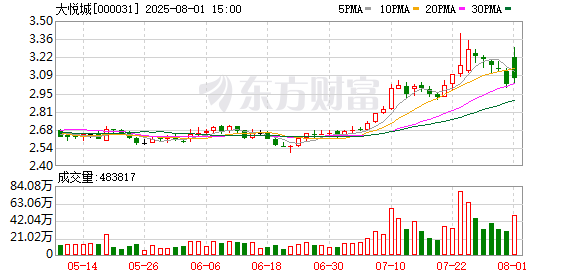
大悦城地产拟29亿港元私有化退市 大悦城三年累亏73亿持续扭亏待检
Chang Jiang Shang Bao· 2025-08-03 23:31
Core Viewpoint - The privatization of Joy City Property Limited is seen as a strategic move by Joy City Holdings to optimize its long-term value during a period of deep adjustment in the real estate industry [1][3]. Group 1: Privatization Details - Joy City Holdings announced that its subsidiary, Joy City Property, will repurchase shares for approximately HKD 29.32 billion and plans to delist from the Hong Kong Stock Exchange, ending its 12-year listing history [1][2]. - The share repurchase will allow Joy City Holdings to increase its ownership from 64.18% to 96.13%, effectively gaining almost complete control over Joy City Property [2][3]. - Joy City Property has faced liquidity issues and limited financing capabilities, with its stock price remaining below HKD 1 since May 2018, and an average daily trading volume of less than HKD 3 million prior to suspension [2][3]. Group 2: Financial Performance - Joy City Holdings has reported consecutive losses over the past three years, with total losses amounting to CNY 73.25 billion from 2022 to 2024 [3]. - The company anticipates a turnaround in its financial performance, projecting a net profit of CNY 80 million to CNY 120 million for the first half of 2025, compared to a loss of CNY 364 million in the same period last year [3]. Group 3: Strategic Implications - The privatization is expected to enhance resource allocation and operational efficiency, allowing for better integration of business segments and projects [4][5]. - Joy City Property's delisting will eliminate restrictions imposed by the board or shareholders, thereby shortening decision-making cycles and reducing operational costs [5]. - The move is also anticipated to resolve existing competition issues between Joy City Holdings and Joy City Property, allowing for a more unified operational strategy [5][6]. Group 4: Future Outlook - Post-privatization, Joy City Property aims to focus on improving the operational quality and asset value of its 32 commercial projects across 24 cities [6]. - The integration of resources is expected to unleash the synergistic potential of core business segments, contributing to the long-term development of the company [6].

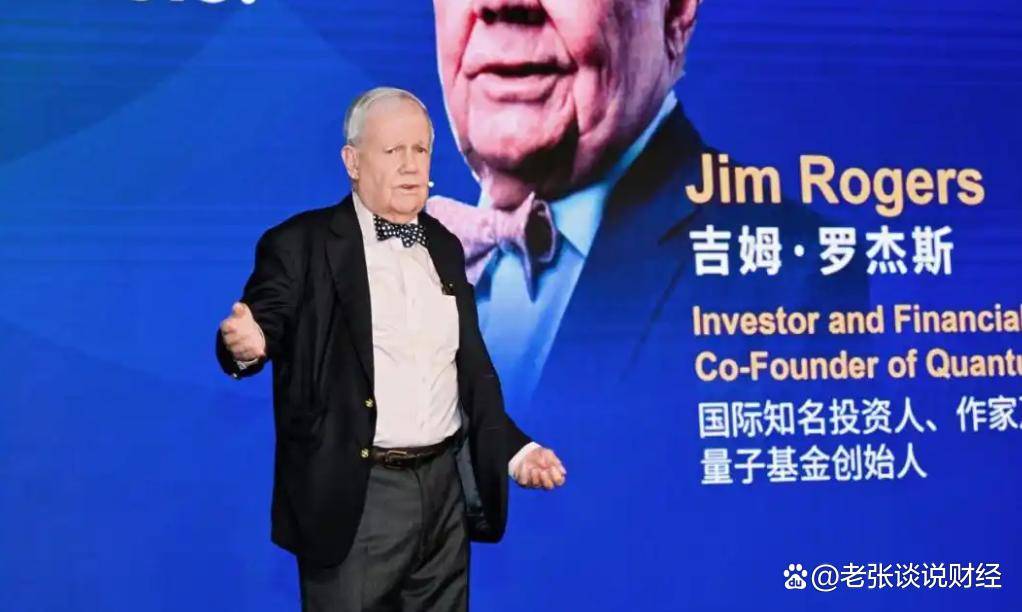
劲爆消息!罗杰斯已清空所有美国股票,并用颤抖的声音说:下一次美国危机,将是我有生以来最严重的
Sou Hu Cai Jing· 2025-08-03 14:26
Core Viewpoint - The current atmosphere in the US stock market appears unsettling, with signs of institutional investors pulling out despite the market's apparent stability [1][3]. Market Conditions - As of mid-July 2025, the S&P 500 has risen over 18% for the year, largely driven by the performance of major tech companies, with Apple, Nvidia, and Microsoft contributing over 70% to the index's gains [3]. - The market's upward momentum is not supported by the real economy but rather by the Federal Reserve's signals regarding future interest rate cuts [3]. Investor Behavior - Notably, investor Rogers has liquidated all his US stock positions, indicating a strategic retreat due to perceived systemic risks [6][4]. - Historical precedents show that Rogers has successfully exited markets before major downturns, raising concerns about the current market's stability [6]. Sector-Specific Risks - The commercial real estate sector is facing significant challenges, with the national office vacancy rate reaching a historical high of 21.4%, up 3.2 percentage points from the previous year [8]. - Many commercial properties are unable to refinance, leading to potential technical defaults that could impact regional banks heavily tied to these assets [8]. Broader Economic Concerns - State-level fiscal deficits are expanding, with over 20 states facing budget shortfalls for the 2025 fiscal year, including California's projected deficit of over $50 billion [8]. - The reliance on debt issuance by these states raises the risk of defaults if interest rates do not decrease [8]. Market Sentiment - The current market structure is heavily reliant on a few tech stocks, making it vulnerable to shocks if any part of this structure falters [10]. - Investor confidence is eroding, leading to budget cuts and hiring freezes across various sectors, indicating a shift towards a more conservative financial strategy [10].
华夏中海商业REIT申购价值深度分析
Shenwan Hongyuan Securities· 2025-08-03 12:12
Group 1 - The core asset of the 华夏中海商业 REIT is the 佛山映月湖环宇城, which has shown a strong growth in foot traffic and revenue with a CAGR of 17% and 15% from 2022 to 2024 respectively, and a stable occupancy rate above 97% since 2023 [3][31] - The project is strategically located in the core commercial area of 佛山, serving a population of 430,000 within a 3 km radius and over 800,000 within 5 km, which enhances its service capacity and customer base [9][14] - The original equity holder, 中海环宇商业, is a leading commercial operation brand with a rich asset reserve, which supports the project's growth and operational efficiency [24][26] Group 2 - The project's revenue has steadily increased, with total revenues of 1.01, 1.12, 1.37, and 0.32 billion from 2022 to Q1 2025, driven by improved occupancy rates and optimized tenant mix [36][38] - The EBITDA margin has been under pressure, with EBITDA figures of 0.85, 0.89, 0.90, and 0.21 billion during the same period, indicating a need for ongoing operational improvements [36][39] - The project maintains a high occupancy rate of 97%-98% since 2023, which is above the average of comparable REITs, indicating strong demand and effective management [41][42] Group 3 - The expected fair value of the project assets is estimated to be between 11.32 and 13.91 billion, with an IRR ranging from 5.52% to 6.50%, which is significantly higher than the average of listed consumer REITs [3][4] - The projected capitalization rates for 2025 and 2026 are 5.15%-6.15% and 5.60%-6.62% respectively, which are higher than comparable REITs, indicating a favorable investment environment [4][20] - The forecasted distribution rates for 2025 and 2026 are 4.52% and 4.92% respectively, which are significantly higher than the latest distribution rates of comparable REITs, suggesting strong cash flow potential [4][20]

1350亿央企地产巨头,筹谋退市
21世纪经济报道· 2025-08-02 17:49
Core Viewpoint - Dalian Wanda Commercial Properties is planning to privatize by repurchasing shares and delisting from the Hong Kong Stock Exchange, aiming to consolidate its operations under the parent company, Dalian Wanda Holdings, to enhance operational efficiency and strategic flexibility [1][11]. Group 1: Share Buyback and Privatization - The company announced a share buyback involving 4.73 billion shares at a maximum cost of approximately HKD 29.32 billion, which will be fully canceled post-transaction [1][6]. - The buyback price of HKD 0.62 per share represents a 67.57% premium over the last trading price of HKD 0.37 before the announcement [6]. - The buyback will result in Dalian Wanda Holdings increasing its ownership from 64.18% to 96.13%, significantly enhancing its equity stake [15]. Group 2: Financial Performance and Market Conditions - Dalian Wanda Commercial Properties has faced liquidity pressures, with negative cash flow for two consecutive years, amounting to -4.4 billion RMB by the end of 2024 [9]. - The company's stock price has been trading below its net asset value, with a net asset value of 16.2 billion RMB and a per-share net asset value of HKD 2.63 [9]. - The company reported a revenue increase of nearly 50% in 2024, reaching 19.83 billion RMB, with a significant contribution from property sales [19][18]. Group 3: Strategic Considerations - The privatization is seen as a strategic move to eliminate internal governance barriers caused by operating under different public platforms, which has hindered decision-making efficiency [13]. - The integration of Dalian Wanda Commercial Properties into the parent company is expected to streamline operations and enhance collaboration across business units [18][11]. - The company aims to leverage its commercial assets, which generated sales of 40.13 billion RMB in the previous year, to improve overall financial performance post-privatization [18][20].

始终没能收割中国,美联储死不降息,说白了就是在等中国先扛不住
Sou Hu Cai Jing· 2025-08-02 04:49
Group 1 - The resilience of the Chinese economy poses a significant challenge to the Federal Reserve's high-pressure monetary policy, which has not achieved its intended effects on China [1] - The U.S. federal debt is projected to exceed $36 trillion by 2025, with annual interest payments reaching $1.5 trillion, leading to a burden of nearly $5,000 per taxpayer [3] - The Federal Reserve's strategy involves maintaining high interest rates to create a liquidity siphoning effect, aiming to induce capital outflows from emerging markets like China [3] Group 2 - China's economy has demonstrated unprecedented resilience, supported by $3 trillion in foreign exchange reserves, which acts as a protective barrier against market shocks [3] - The Chinese central bank has effectively intervened in the market to stabilize it during periods of capital outflow, preventing panic selling [4] - China's financial strategy has shifted from pure defense to a more balanced approach, including significant reductions in U.S. Treasury holdings and increased investments in gold [4] Group 3 - The traditional dominance of the U.S. dollar in international trade is being challenged by the growing use of the renminbi in cross-border payments among developing countries [6] - In contrast to China's economic growth, the U.S. economy faces multiple challenges, including high vacancy rates in commercial real estate and increasing bank failures [8] - China's macroeconomic data shows strong performance in sectors like new energy vehicle exports and shipbuilding, highlighting its competitive edge [8] Group 4 - Emerging market countries are reducing their reliance on the U.S. dollar, with economies based on real production showing greater resilience amid interest rate fluctuations [9] - The Federal Reserve's expectation that China would falter under pressure appears to be a misguided assumption, as China's industrial activity remains robust [9]
终结12年港股历程,大悦城地产拟私有化退市,复牌股价暴涨超40%
Hua Xia Shi Bao· 2025-08-01 14:09
Core Viewpoint - Dalian Wanda Group plans to repurchase shares of its subsidiary Dalian Wanda Commercial Properties for approximately HKD 29.32 billion and intends to delist from the Hong Kong Stock Exchange, ending a 12-year listing history [2][4]. Group 1: Share Repurchase and Delisting - Dalian Wanda Commercial Properties will repurchase shares from all shareholders except for Dalian Wanda Group and its indirect wholly-owned subsidiary [3]. - The repurchase price is set at HKD 0.62 per share, totaling around HKD 29.32 billion for the cancellation of 4.73 billion shares [3]. - Following the transaction, Dalian Wanda Group's ownership in Dalian Wanda Commercial Properties will increase to 96.13% [4]. Group 2: Financial Performance - Dalian Wanda Commercial Properties reported a revenue of RMB 19.83 billion for 2024, a year-on-year increase of 49.4%, with a net profit of RMB 779 million [5]. - In contrast, Dalian Wanda Group's revenue for 2024 was approximately RMB 35.79 billion, a decrease of 2.7% from 2023, with a net loss of RMB 2.977 billion, an increase of 103.14% compared to the previous year [5]. - The total loss for Dalian Wanda Group over the past three years exceeds RMB 7 billion [5]. Group 3: Strategic Implications - The delisting is seen as a strategic move to simplify the corporate structure and enhance operational efficiency, allowing for more agile responses to market changes [6][4]. - Both companies believe that the transaction will optimize resource allocation and improve overall operational efficiency, enhancing competitive strength [6]. - The removal of the listing is expected to resolve existing competition issues between the two entities, streamlining decision-making processes [7][6].
商业地产行业点评:大悦城地产拟私有化,优质商场迎价值重估
Shenwan Hongyuan Securities· 2025-08-01 07:38
Investment Rating - The industry investment rating is "Positive" [3] Core Viewpoints - The proposed privatization of Dayuecheng Real Estate is expected to lead to a significant revaluation of quality commercial properties, enhancing the ownership concentration of Dayuecheng in premium shopping centers [3][4] - The privatization transaction is valued at a price-to-book (PB) ratio of only 0.27 times, which is considered low, and is anticipated to increase Dayuecheng's net assets by approximately 25% [3][4] - The transaction is seen as a recognition of the value of quality commercial assets by industrial capital, potentially leading to a revaluation of premium consumer-related assets in the market [3][4] Summary by Sections Privatization Details - Dayuecheng's shareholding in Dayuecheng Real Estate will increase from 64% to 96.1% post-privatization, significantly enhancing its stake in quality commercial properties [3] - The total share capital of Dayuecheng Real Estate is 15.33 billion shares, with Dayuecheng holding 9.13 billion shares (64.2%) and market shareholders holding 4.73 billion shares (33.2%) [3] Financial Projections - Dayuecheng Real Estate's rental and related service income for 2024 is projected to be 4.18 billion RMB, primarily from shopping centers, with an average occupancy rate of 95% [3] - The privatization is expected to increase Dayuecheng's net assets by 2.62 billion RMB, representing 24.7% of the projected net assets for 2024 [3] Market Implications - The privatization is likely to attract attention to the valuation of quality commercial real estate assets in China, with potential implications for companies like China Resources Land, Longfor Group, and New Town Holdings [3] - The report maintains a "Positive" rating for the real estate and property management sectors, recommending companies with strong product capabilities and those with undervalued recovery potential [3][4]