咖啡

Search documents
活力青岛 爱在城阳|青岛尚小咖咖啡季启幕,中韩消费新场景点燃夏日热情
Sou Hu Cai Jing· 2025-06-21 00:05
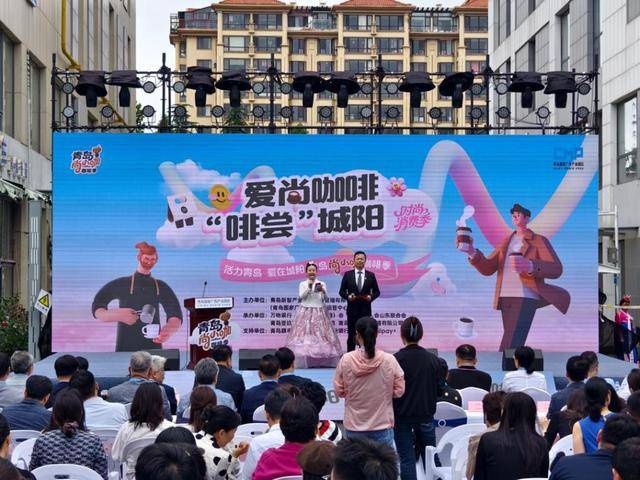
Group 1 - The event "Vibrant Qingdao Love in Chengyang Coffee Season" was launched on June 20, featuring coffee as a medium to integrate Korean products and local heritage, with 9 thematic sections and 80 unique booths [1] - The event attracted thousands of consumers from China and South Korea, creating a cross-cultural consumption experience that boosts regional consumer activity and draws in Korean tourists [1][3] Group 2 - The event showcased popular Korean coffee brands, creating an immersive consumption experience with over 60 coffee brands and various activities such as hand-brewed coffee tasting and latte art demonstrations [3] - A carefully designed route connected various Korean-themed consumption experiences, enhancing the integration of coffee culture and tourism resources for Korean visitors [3][5] Group 3 - The opening day featured engaging activities like games and performances, with influencers leading coffee shop visits, highlighting the successful blend of coffee and Korean-style pancakes [5] - The event's timing coincided with the benefits of the visa-free policy for South Korean tourists, emphasizing the local government's focus on attracting international visitors [7] Group 4 - The event is expected to attract around 30,000 visitors over three days, aiming to activate local consumption and showcase Qingdao's openness and vibrancy [7] - Chengyang District plans to leverage its cultural and economic ties with South Korea to create diverse consumption scenarios, enhancing inbound and outbound consumer flows [7]

茶咖日报|咖啡黄酒“双刺激”?古越龙山回应:适量饮用无负担
Guan Cha Zhe Wang· 2025-06-20 12:41
Group 1: Company Developments - Guyue Longshan stated that its coffee yellow wine product, "Fei Huang Teng Da," is suitable for young consumers and can be consumed in moderation without health concerns [1] - Luckin Coffee's new innovation production center in Qingdao aims to become the largest coffee roasting production base in China, with an expected annual output of 55,000 tons of roasted coffee beans and an annual output value of 3 billion yuan [3] - Baifei Dairy announced plans to establish "Guangxi Baifei Tianrui Dairy Buffalo Breeding Co., Ltd." to develop dairy buffalo breeding, following its recent IPO acceptance on the Shanghai Stock Exchange [4] Group 2: Industry Trends - Cafebreak announced its partnership with the "Su Super" Jiangsu City Football League to enhance brand promotion and fan engagement through various marketing activities [2] - Hu Shang A Yi revealed that the tea beverage market is expected to exceed 400 billion yuan by 2028, with fruit tea and milk tea being the most popular categories among consumers [5]


高端咖啡“降咖位”,咸淡如何|经济观察
Chang Sha Wan Bao· 2025-06-18 23:59
Core Insights - Starbucks has initiated a price reduction for several of its popular non-coffee beverages, with average price cuts around 5 yuan, making the starting price for large drinks approximately 23 yuan [1][3] - The price drop is primarily focused on non-coffee products, while coffee beverages largely maintain their original prices [3][6] - The competitive landscape has intensified, with other high-end coffee brands also reducing their prices, making premium coffee more accessible, with some offerings dropping below 15 yuan [3][5] Pricing Strategy - The new pricing strategy aims to attract more customers, as evidenced by increased foot traffic in Starbucks locations following the price cuts [5][6] - Online platforms are offering significant discounts, with some products available for as low as 10 yuan, driven by promotional subsidies [3][7] - Despite the lower prices, there are concerns regarding the overall value proposition compared to other brands that maintain lower price points [6][8] Market Dynamics - The current beverage market is increasingly competitive, with a notable shift towards tea drinks, which are projected to surpass the coffee market in size by over 1 billion yuan by 2025 [8] - Starbucks is adapting its strategy to include a broader product matrix that caters to various consumer preferences and scenarios [8][9] - The rising cost of coffee beans poses a challenge to sustaining low prices, as the price of coffee futures has reached historical highs [8][9] Future Considerations - The ongoing price competition raises questions about the sustainability of low pricing strategies among high-end coffee brands [8][9] - The industry faces a critical juncture where brands must balance cost, quality, and consumer perception to maintain their market position [9]

产业观察:“老供销”如何闯出“新路子”?
Zhong Guo Xin Wen Wang· 2025-06-18 19:17
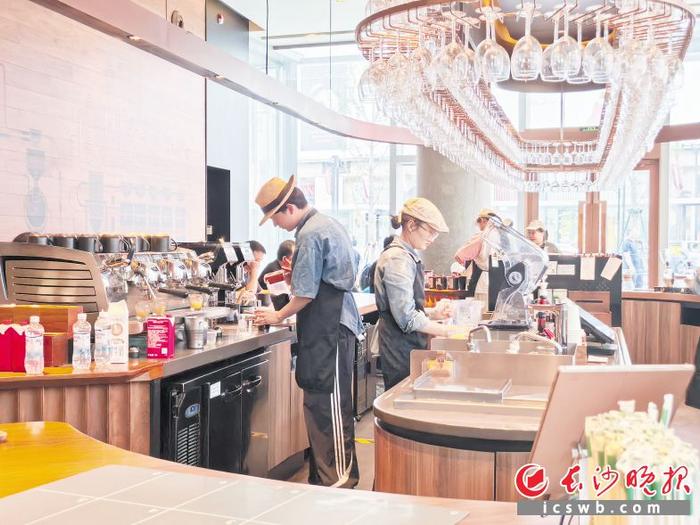
Core Insights - The article highlights the revival of supply and marketing cooperatives in Wenzhou, Zhejiang, through innovative models such as "supply and marketing + cultural tourism" and "idle assets + new business formats" [1][2][3] Group 1: Business Innovations - The "Supply and Marketing Preferred" store in Yandang Mountain has become a popular spot for young tourists, showcasing a blend of traditional and modern products, such as iron skin dendrobium tea and trendy milk tea [1] - The "That Year Coffee" store, opened by the Yuhang Liushi Supply and Marketing Cooperative, creatively combines premium coffee with direct sales of over 30 types of high-quality agricultural products, attracting a younger demographic [2] - The Yujing Dajing Supply and Marketing Cooperative has launched a new energy charging station project, which has seen an average of over 100 charging sessions per day since its opening in January 2025, with peak days reaching 150 sessions [2] Group 2: Market Expansion and Strategy - The Yuhang Supply and Marketing Cooperative has integrated resources from 14 specialty agricultural cooperatives and over 200 suppliers to enhance its agricultural product brand matrix and sales channels [2] - The cooperative has established six "Supply and Marketing Preferred" brand stores and two convenient pickup points, generating an average monthly sales of over 300,000 yuan in local specialties [2] - Future plans include enriching the supply and marketing service system, establishing stable high-quality product channels, and promoting agricultural product monetization to increase farmers' income [3]
新华时评丨“南博之约”以开放之钥启动区域繁荣引擎
Xin Hua Wang· 2025-06-18 05:52
Core Viewpoint - The 9th China-South Asia Expo aims to enhance regional cooperation and economic development through open collaboration, attracting businesses from South Asia and Southeast Asia to Kunming [1][2]. Trade and Economic Cooperation - The trade volume between China and South Asian countries is projected to approach $200 billion in 2024, doubling over the past decade with an average annual growth rate of approximately 6.3% [1][2]. - South Asian products such as cashmere, lapis lazuli, and spices are gaining popularity among Chinese consumers, presenting significant market opportunities [1]. - Investment cooperation is also on the rise, with projects like the China-Pakistan Economic Corridor and various energy and infrastructure projects in Sri Lanka, Bangladesh, and Nepal contributing to regional economic growth [2]. Policy and Institutional Support - The China-Maldives Free Trade Agreement has come into effect, and negotiations for an investment agreement with Bangladesh are underway, aimed at facilitating trade and investment [2]. - China is providing zero-tariff treatment for 100% of products from several least developed South Asian countries, enhancing their export capabilities to China [2]. Regional Connectivity and Development - Yunnan province is positioned as a key hub connecting China with South Asia and Southeast Asia, leveraging its geographical advantages to promote trade and logistics [3]. - The province is actively implementing measures to enhance regional connectivity, including the construction of the China-Laos Railway and various trade facilitation initiatives [3]. Global Economic Context - The backdrop of rising protectionism and unilateralism in global trade necessitates stronger cooperation among developing countries, including those in South Asia, to enhance economic resilience [3][4]. - China is committed to opposing protectionism and fostering an open economic environment through various national and international trade exhibitions [4]. Collaborative Future - The expo serves as a platform for countries to unite in collaboration and development, aiming to create new growth points and drive regional prosperity [5].
广州萨莉亚门店占中国市场一半;饿了么将再砸 10 亿元扶持新店
Sou Hu Cai Jing· 2025-06-18 05:18
广州有222家萨莉亚门店,约占中国大陆门店总数的一半;饿了么将再砸10亿元用于新店流量扶持;星巴克将与OpenAI合作开发AI助手。详情 请看红餐网《每日餐讯》。 蓝鲸新闻消息,近日,不少柠檬供应商和茶饮加盟商都在社交媒体"抱怨"起了柠檬价格。目前,安岳黄柠檬的单价基本上在7.5-10元/斤左右,单箱价格也 飙至200元/箱,这个价格较3-4元/斤的低价时几乎翻了近三倍。因此,有茶饮加盟商感叹,"现在的黄柠檬价格搞得像黄金似的一天一个价"。据一位安岳 黄柠檬供应商透露,今年安岳柠檬价格上涨主要是因为源头减产。 整编|红餐网_萧霖 △图片来源:萨莉亚官方微博 星巴克将与OpenAI合作开发AI助手 智通财经消息,6月11日,星巴克宣布,本月将与微软Azure的OpenAI平台合作开发的生成式AI助手 "绿点助手"(Green Dot Assistant),计划本月内在北 美35家门店试点。星巴克希望通过自动化流程简化咖啡师工作,将每份订单的服务时间从目前的平均六分钟缩短至四分钟,并计划在2026财年秋季启动全 美推广。 最高近30元/公斤,柠檬价格疯涨 "萨莉亚在中国大陆拥有上海、北京和广州三家分公司,为加速集 ...

咖啡,5月开店1792家
3 6 Ke· 2025-06-18 02:22
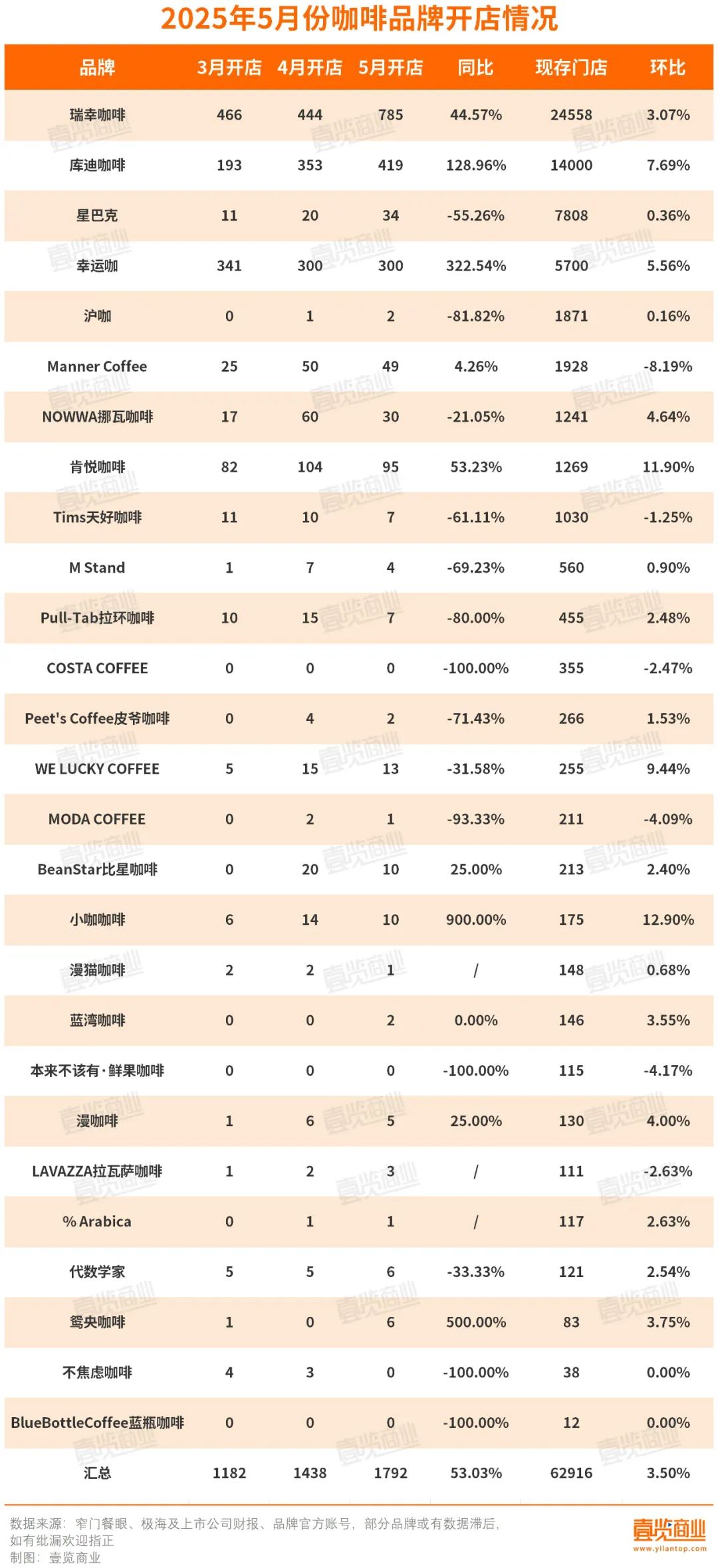
Core Insights - The coffee shop industry experienced significant growth in May, with a total of 1,792 new stores opened, representing a month-on-month increase of 24.62% and a year-on-year increase of 53.03% [1][4] - The total number of coffee shops reached 62,916, with a month-on-month growth of 3.50%, indicating that the growth in new openings may be accompanied by adjustments in existing stores [1][4] - Leading brands such as Luckin Coffee, Kudi Coffee, and Lucky Coffee contributed significantly to the new openings, accounting for 83.93% of the total new stores in May [4][5] Brand Performance - Luckin Coffee opened 785 new stores in May, a 76.80% increase from April, maintaining its position as the market leader [4][5] - Kudi Coffee saw the fastest growth with 419 new stores, while Lucky Coffee opened 300 stores, maintaining its previous month's count [4][5] - Starbucks opened 34 new stores, reflecting a 70% month-on-month increase, but its existing store count only grew by 0.36%, indicating a strategic adjustment in store layout [8] Product Innovation - A total of 85 new SKUs were launched across 27 brands in May, with Lucky Coffee leading with 14 new products [8][10] - The focus of new product development has shifted towards refreshing flavors suitable for summer, with an emphasis on fruit and sparkling coffee beverages [11][12] - Brands are increasingly extending their product lines to include non-coffee beverages to capture a share of the afternoon tea market, with notable launches from Luckin and Kudi [11][12] Marketing Strategies - The coffee industry is witnessing a shift from aggressive co-branding to a focus on product quality and uniqueness, with a total of 14 co-branding activities in May, a decrease from previous months [12] - Brands are prioritizing the alignment of co-branding partners with their market positioning, as seen in collaborations like Starbucks with Mayday and NOWWA with Miraculous [12] - The competitive landscape is evolving, with domestic leading brands leveraging their scale and innovation capabilities, while international brands and smaller players are adjusting their strategies for survival and growth [12]

开奶茶店、咖啡店、火锅店,家电巨头 “不务正业”?
3 6 Ke· 2025-06-17 04:18
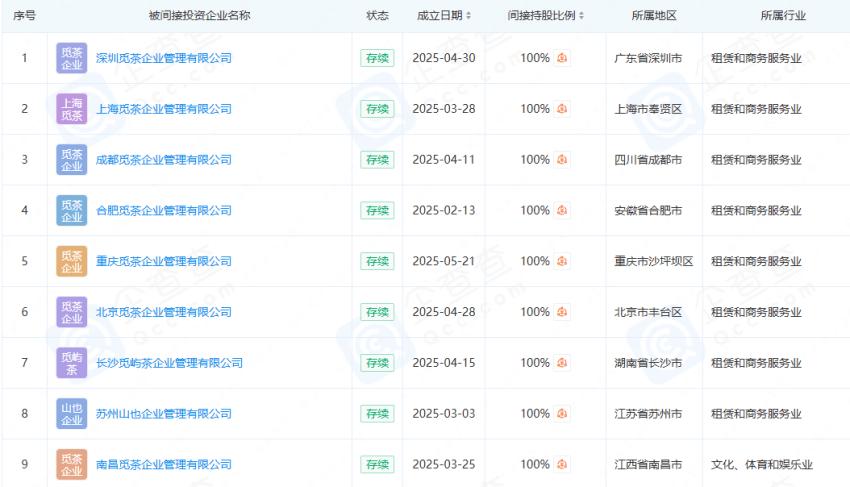
Core Viewpoint - Smart home appliance giant, Zhui Mi Technology, is intensifying its investment in the food and beverage sector, particularly through its tea brand "Shan Ye Mi Cha" [1][3][4]. Company Expansion - Zhui Mi Technology has recently established several management companies linked to "Shan Ye Mi Cha," including entities in Shenzhen, Chongqing, and other cities, indicating a strategic push into the tea beverage market [1][2]. - The brand "Shan Ye Mi Cha" was founded in September last year and focuses on traditional-style milk tea, with prices ranging from 15 to 18 yuan, positioning itself in the mid-range of the new tea beverage market [4]. Market Performance - The first three stores of "Shan Ye Mi Cha" opened in April this year, with the Suzhou location reportedly generating nearly 50,000 yuan in daily revenue and serving over 2,000 cups [4]. - As of now, "Shan Ye Mi Cha" has opened a total of six stores across various cities, with plans for international expansion, particularly targeting Southeast Asia, aiming for hundreds of global locations by the end of the year [4][3]. Broader Industry Trends - Zhui Mi Technology is not only focusing on tea but is also venturing into coffee and hot pot sectors, showcasing a broader strategy to diversify its business portfolio [7][9]. - The competitive landscape in the food and beverage industry is intensifying, with many industry giants, including China Post and Yuanfudao, also entering the market, indicating a trend of cross-industry investments [10][12].
柠檬价格飙涨似黄金,茶饮店老板做不起柠檬水了
Guan Cha Zhe Wang· 2025-06-16 13:38
Group 1: Lemon Price Surge - The price of lemons has surged significantly, with yellow lemons priced between 7.5-10 yuan per jin, nearly tripling from the previous low of 3-4 yuan per jin [1] - The increase in lemon prices has directly impacted downstream tea beverage franchisees, with varying effects depending on the size of the franchise [1] - Larger brands like Mixue Ice City and Gu Ming have their own lemon production bases, mitigating the impact of price increases, while smaller brands face significant cost pressures [1] Group 2: Milk Tea Industry Growth - The number of milk tea-related enterprises in China has surged by 140% over the past five years, nearing 400,000, contributing to a market exceeding 350 billion yuan [2] - The primary consumer demographic for milk tea is the post-95 and post-00 generations, accounting for over 60% of market share, with 20-30 year-olds making up 59% [2] - Shenzhen leads in the number of milk tea shops, with 13,804 locations, followed by Guangzhou and Chongqing [2] Group 3: Nestlé and Eastern Airlines Collaboration - Nestlé and China Eastern Airlines have launched a co-branded "Yunnan Single Origin Drip Coffee" as part of their 15-year partnership [3] - The collaboration coincides with the launch of a new direct flight route from Shanghai to Geneva, enhancing cultural trade and cooperation [3] - Nestlé has been involved in the Yunnan coffee industry since 1988, supporting local farmers and achieving 100% 4C certification for its coffee beans [3] Group 4: IFBH Limited's IPO Progress - IFBH Limited, the parent company of the coconut water brand "if," has passed the listing hearing with the Hong Kong Stock Exchange just two months after submitting its prospectus [4] - IFBH has dominated the coconut water market in China since 2020, holding a market share of approximately 34% in 2024 [5] - The company's revenue for 2023 and 2024 is projected at $87.44 million and $158 million, respectively, with net profits of $16.75 million and $33.32 million [5] Group 5: Gu Ming's Market Position - Gu Ming is recognized as a leading brand in the ready-to-drink tea market, with a market share of 17.7% in 2023 [6] - The company employs a regional expansion strategy and a franchise system to capture the lower-tier market, with 78.8% of its stores located in second-tier cities and below [6] - Gu Ming's self-built supply chain and product innovation are expected to create competitive advantages, with projected net profits of 2 billion yuan in 2025 [6]
从普洱山野到瑞士云端,云南咖啡的蜕变之路
Zhong Guo Jing Ji Wang· 2025-06-16 10:10
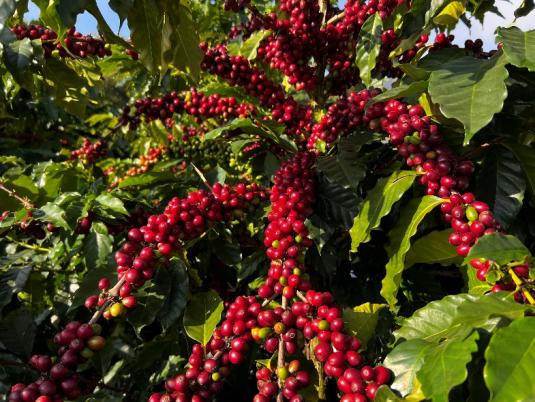
中国经济网6月16日讯(记者 鞠然)近日,雀巢(中国)有限公司与中国东方航空联合推出"云南单一 产地挂耳咖啡",开启了创新跨界合作的新篇章。 此外,雀巢于2020年推出"雀巢咖啡2030计划",自2021年起在中国云南携手咖农共同向再生农业转型。 面向未来,雀巢计划在2030年前投资超10亿瑞士法郎,推进"雀巢咖啡2030计划",依托现有项目,在可 持续发展方面持续发力。 云南省普洱市的咖啡果 由雀巢公司供图 自2015年起,雀巢在云南采购的咖啡豆已实现100%通过国际公认的咖啡行业可持续性标准——4C认 证,覆盖近20万亩的种植面积。公司累计助力1000多位合作伙伴获得认证,惠及4.6万余名咖农,成功 改写云南咖啡"零散种植"的历史。 6月4日,我国发布首批传统优势食品产区和地方特色食品产业重点培育名单,云南咖啡便跻身其中。据 昆明海关统计,2024年云南出口咖啡3.25万吨,同比增长358%,主要出口至荷兰、德国、美国、越南 等29个国家和地区,云南咖啡以其"浓而不苦,香而不烈,略带果酸"的独特风味,在国际市场上崭露头 角。 6月16日,中国东方航空正式开通上海浦东往返瑞士日内瓦的直飞航线。"2025年恰 ...