
茶饮

Search documents
被茶饮做局了!“瘦瘦瓶”“纤体瓶”瘦的是瓶身 不是我
Zhong Guo Xin Wen Wang· 2025-08-04 06:22
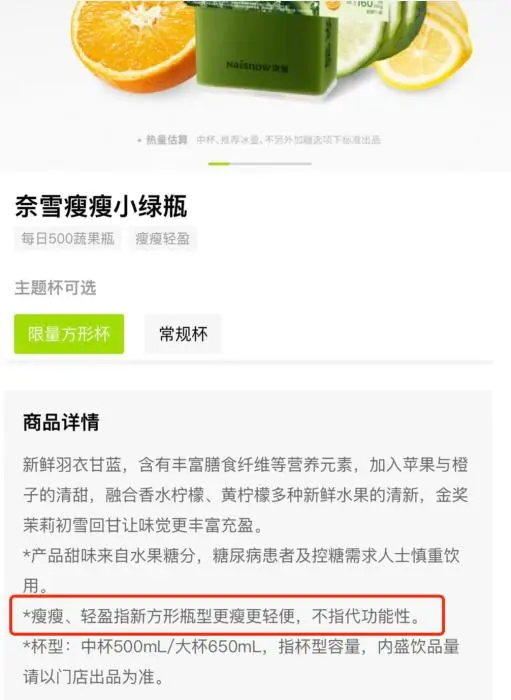
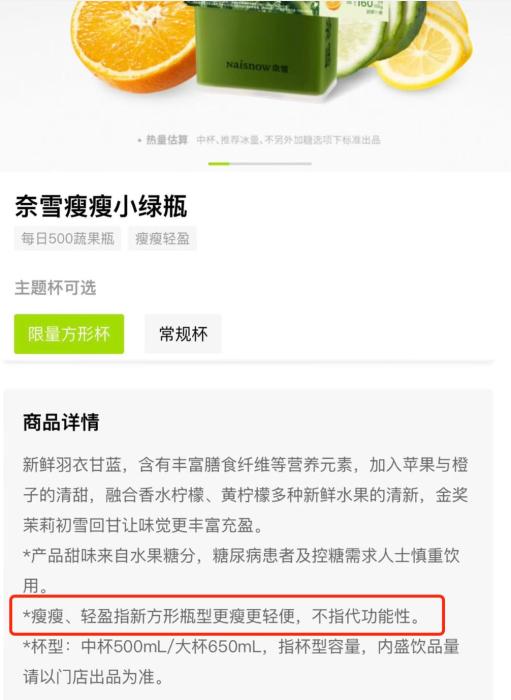
Core Viewpoint - The rise of kale-based beverages marketed as "slimming" or "light" by major tea brands in China is misleading, as these drinks do not provide direct weight loss benefits despite their marketing claims [1][3][14]. Group 1: Marketing Strategies - Major tea brands like Heytea and Nayuki are promoting kale drinks with terms like "slimming" and "light," creating a perception of health benefits [3][17]. - Disclaimers are often hidden in product details, clarifying that terms like "slimming" refer to the bottle design rather than the drink's effects [3][10]. - The use of terms such as "superfood" and "dietary fiber" is prevalent, but these claims are often not substantiated by scientific evidence [1][7][14]. Group 2: Nutritional Content - Despite being marketed as healthy, drinks like Nayuki's "Slimming Green Bottle" contain significant calories, with a 500ml serving having 183 calories, comparable to a bowl of rice [10][13]. - Many kale drinks are mixed with fruits and other ingredients to improve taste, which can increase sugar and calorie content [11][13]. - Experts indicate that kale itself does not directly contribute to weight loss, and the processing of kale into juice can lead to a loss of dietary fiber and minerals [13][18]. Group 3: Legal and Ethical Concerns - The use of suggestive language in marketing may mislead consumers into believing these drinks have weight loss properties, potentially violating advertising laws [14][15]. - Previous instances of misleading advertising have led to penalties for brands, highlighting the risks associated with such marketing practices [15]. - Legal experts emphasize the importance of transparency in labeling ingredients and nutritional information to protect consumer rights [14][18]. Group 4: Industry Trends - The popularity of kale drinks surged after successful product launches by brands like Heytea, prompting a wave of imitation across the industry [17][18]. - The low barriers to entry in the tea beverage market have led to a homogenization of products, with many brands offering similar kale-based drinks [17][18]. - The focus on health-related marketing strategies reflects a broader trend of brands leveraging consumer health anxieties for competitive advantage [18].

喜茶在美上线首个海外自营外卖业务,海外门店一年增6倍、门店超100家
Xin Lang Ke Ji· 2025-08-04 03:57
Core Insights - Heytea has officially opened its first store in Cupertino, California, marking its entry into the headquarters of Apple and launching a new limited drink called "iYerba" [1] - The company has seen significant growth in its overseas market, with the number of international stores exceeding 100 and a sixfold increase in the past year, particularly in the U.S. market where it grew from 2 to over 30 stores [1][3] Expansion and Market Presence - Heytea has entered eight overseas markets including Singapore, the UK, Canada, Australia, Malaysia, the U.S., South Korea, and Japan, covering 28 cities in total [3] - The classic product "Coconut Mango" has sold nearly 2.5 million cups overseas, with over 1 million cups sold in the U.S. alone [3] - Since 2025, over 10 popular products from China have been launched in international markets, with the "Refreshing Guava" series quickly gaining popularity after its release [3] Product Innovation and Collaborations - Heytea has developed over 20 original drinks tailored to local tastes and cultures, with products like "Matcha Coconut Blue" selling out upon launch in the U.S., UK, and Canada [3] - The company has engaged in collaborations with renowned artists and brands, hosting pop-up events and launching exclusive drinks like "California Sunset" [4] - Heytea has established multiple warehouses on both coasts of the U.S. and partnered with major suppliers like Sysco to ensure a steady supply of core ingredients [4] Digital Initiatives - In January 2025, Heytea launched its self-operated delivery service in the U.S., becoming the first new tea brand to implement such a system [4]
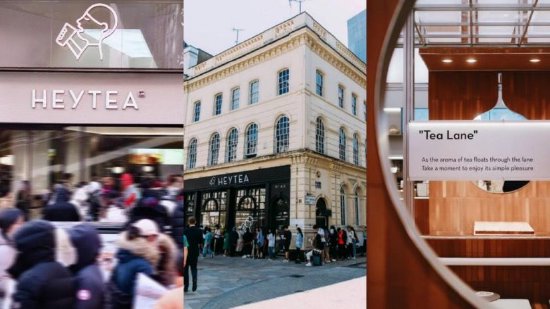
喜茶海外门店超100家
Bei Jing Shang Bao· 2025-08-04 03:42
Core Insights - The core point of the article is that Heytea has significantly expanded its overseas presence, with over 100 stores now operating internationally, marking a growth of more than six times in the past year [1] Expansion and Market Presence - Heytea has entered eight overseas markets, including Singapore, the UK, Canada, Australia, Malaysia, the US, South Korea, and Japan [1] - In the US market, the number of Heytea stores has increased from 2 to over 30 within the past year [1] Global Operations and Supply Chain - Heytea has established a comprehensive global operational system that covers the entire business chain for its overseas operations [1] - A specialized local team has been set up in the US, focusing on brand marketing, product development, operational management, supply chain management, and quality control to ensure consistent store operations and customer experience [1] - Multiple warehousing centers have been established in the US (both coasts), the UK, Malaysia, and Sydney and Melbourne in Australia to provide efficient storage and logistics services for local stores [1] - Core product ingredients for overseas stores are supplied uniformly by Heytea to maintain product quality consistency [1] - In the US, Heytea has partnered with suppliers like Sysco for localized procurement of 13 core categories, including milk and fruits [1] - The North American supply chain team has developed a "regional center warehouse + forward warehouse" model to address challenges related to dairy product stability and fruit freshness, ensuring stable supply of ingredients to stores [1]
喜茶开到苹果总部 海外门店数量超100家
Xin Lang Ke Ji· 2025-08-04 02:16
Core Insights - The core point of the article highlights the rapid expansion of Heytea in the overseas market, particularly in the United States, where it has significantly increased its store count and established a strong presence in key locations [1] Group 1: Expansion and Growth - Heytea's overseas store count has surged sixfold over the past year, exceeding 100 locations [1] - In the U.S. market, the number of Heytea stores has increased from 2 to 30, making it the new tea beverage brand with the most locations in the country [1] Group 2: Market Reception - Heytea's main product is priced at $7.99, which has been widely accepted by the mainstream consumer market [1] - The daily sales volume at the stores reaches thousands of cups, indicating strong consumer demand [1] Group 3: Strategic Location - The opening of a new store at Apple's headquarters marks Heytea as the first new tea beverage brand to enter the core area of Silicon Valley [1]
我被做了局?花19元买了个“瘦瘦”的瓶子
Zhong Guo Xin Wen Wang· 2025-08-03 23:20
Core Viewpoint - The rise of kale-based beverages marketed as "slimming" or "light" by major tea brands in China is misleading, as these drinks do not have proven weight loss effects and often contain high calories [1][10][12] Group 1: Product Marketing and Consumer Perception - Major tea brands like Heytea and Nayuki are promoting kale drinks with terms like "slimming" and "light," creating a perception that these products aid in weight loss [2][13] - Despite the marketing, disclaimers on product pages clarify that terms like "slimming" refer to the bottle design rather than any functional benefits [2][10] - The actual calorie content of these drinks can be high; for instance, a 500ml kale drink from Nayuki contains 183 calories, comparable to a bowl of rice [9][10] Group 2: Industry Trends and Competition - The popularity of kale drinks surged after the launch of the "Kale Slimming Bottle" by Heytea, which sold over 3.5 million cups in its first month [13] - The tea industry is experiencing a trend of product homogeneity, with many brands quickly replicating successful products, leading to a saturated market [13][14] - The low technical barriers and mature supply chains in the tea industry facilitate rapid imitation of popular products, resulting in a competitive landscape focused on health claims [14] Group 3: Regulatory and Ethical Considerations - Legal experts highlight that the use of terms like "slimming" may mislead consumers into believing these drinks have weight loss benefits, potentially violating advertising laws [10][11] - Previous instances of misleading advertising in the industry have led to penalties, indicating a need for brands to ensure truthful marketing practices [12]
独家|对话柠季汪洁:深度剖析出海节奏与东南亚战略
虎嗅APP· 2025-08-03 03:48
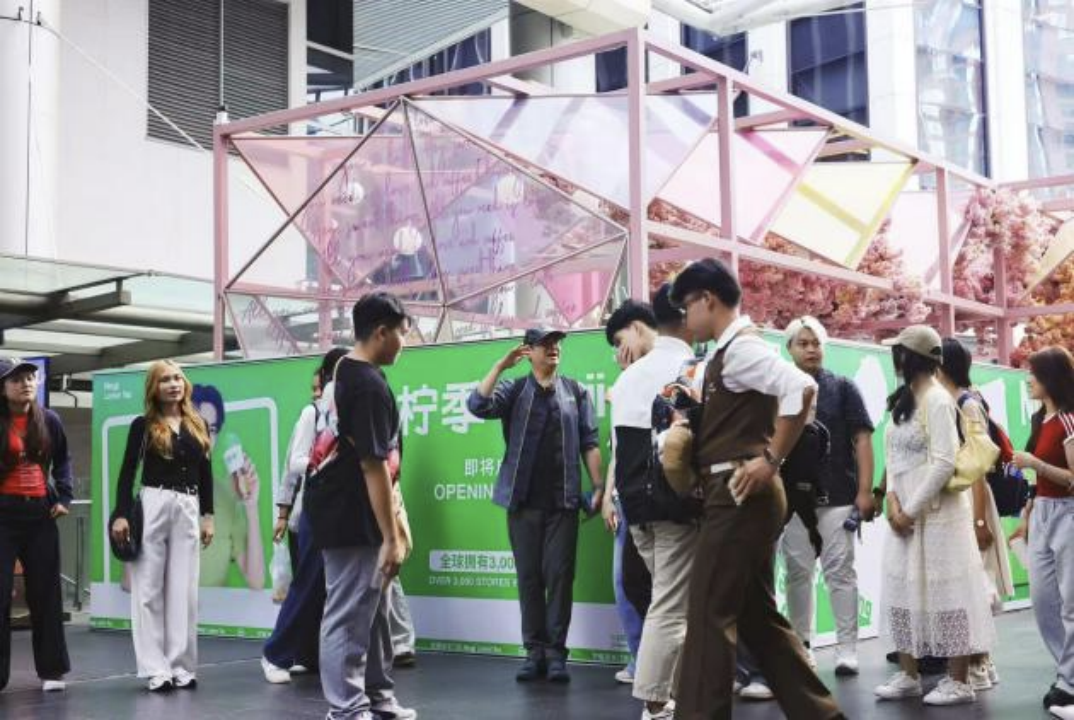
Core Viewpoint - The article discusses the international expansion strategy of the tea brand "柠季" (Ningji), emphasizing a controlled and deliberate approach to entering overseas markets, particularly the United States and Southeast Asia, while adapting to local consumer preferences and operational challenges [7][14][38]. Group 1: International Expansion Strategy - 柠季 has opened 3 overseas stores and signed contracts for 18 more, with a focus on the U.S., Malaysia, Cambodia, Australia, New Zealand, and Singapore [6][21]. - The brand's founder, 汪洁, emphasizes that global expansion is not about replicating domestic success but about understanding and adapting to local markets [7][8]. - The U.S. market is viewed as a "developing country" for tea, with potential for growth, despite the slower pace of store openings compared to domestic expansion [14][19]. Group 2: Market Entry and Adaptation - The first overseas store in the U.S. was opened in July 2023, after extensive research and adaptation of the brand name to "BOBOBABA" to fit local recognition [8][14]. - In contrast to the U.S. market's slow pace, Southeast Asia is characterized by a "speed war," with a higher number of stores planned and opened in a shorter timeframe [20][21]. - 柠季's strategy includes testing models in less central locations to minimize risks and costs before expanding to more prominent areas [23][24]. Group 3: Operational Challenges - The brand faces significant operational challenges in the U.S., including lengthy approval processes and the need for bilingual documentation, which contrasts sharply with the faster pace of operations in China [16][18]. - The team is adapting to local cultures and consumer preferences, such as offering products that cater to the Muslim population in Malaysia [27][28]. - 柠季's internal structure allows for flexibility and adaptation, with a focus on building a strong foundational team before scaling operations [30][31]. Group 4: Future Trends and Goals - The company anticipates a trend towards consolidation and mergers in the tea industry, with larger brands acquiring smaller ones to enhance their market position [32][38]. - Future expansion plans include exploring markets in Brazil and Mexico, leveraging existing infrastructure from platforms like Meituan and Didi [33][38]. - The overarching goal is to ensure that overseas operations not only succeed commercially but also represent Chinese brands positively on the global stage [36][38].

独家|对话柠季汪洁:深度剖析出海节奏与东南亚战略
Hu Xiu· 2025-08-02 23:05
Core Insights - The company, 柠季, has opened its first overseas store "BOBOBABA" in Los Angeles, California, marking its entry into the international market with a focus on bubble tea [1] - The company has a total of 3 operational overseas stores and has signed contracts for 18 additional locations across various countries, including Australia, New Zealand, Malaysia, and Singapore [1][2] - The founder, 汪洁, emphasizes a strategic approach to international expansion, prioritizing a measured pace rather than rapid replication of domestic success [2][3] Expansion Strategy - The company plans to expand internationally with a focus on the U.S. market, which is seen as a "developing country" for bubble tea, while also exploring opportunities in Southeast Asia [7][12] - The initial strategy involved waiting for established brands to test the waters before entering the U.S. market, allowing for a more refined approach [3][6] - The company has adopted a "test model" strategy in Southeast Asia, opening stores in less central locations to minimize risk and gauge local consumer preferences [15][19] Market Challenges - The U.S. market presents unique challenges, including slower operational processes and complex regulations, which require a longer planning and execution timeline compared to domestic operations [9][10] - The company has faced difficulties with local regulations, such as lengthy approval processes for signage and store design, which can take 6 to 12 months [11][10] - In contrast, the Southeast Asian market is characterized by a faster pace of expansion, with a significant number of stores already planned or opened [13][14] Product Localization - The company emphasizes the importance of localizing its product offerings to cater to regional tastes, such as introducing halal-certified products in Malaysia and adapting menu items for the U.S. market [17][19] - The branding and product names have been adjusted to resonate better with local consumers, avoiding direct translations that may confuse [17][9] - The company aims to create a balance between maintaining its brand identity and adapting to local market preferences [20][22] Organizational Structure - The company has a diverse leadership team with backgrounds in technology and operations, which aids in navigating the complexities of international expansion [21][22] - The internal culture promotes flexibility and creativity, allowing teams to adapt to local market conditions without rigid performance metrics in the early stages [22][27] - The company is focused on building a strong foundation before scaling, ensuring that the operational model is sustainable and replicable [31][28] Future Outlook - The company plans to continue exploring new markets, including Brazil and Mexico, while also considering potential acquisitions to enhance its market presence [23][28] - The founder predicts a trend towards consolidation in the industry, with larger brands acquiring smaller ones to strengthen their market position [27][28] - The emphasis will remain on a gradual and thoughtful approach to both international expansion and potential mergers and acquisitions [30][31]
从网红奶茶到苏浙餐馆 上海银行办“食”事促消费
Zhong Guo Jin Rong Xin Xi Wang· 2025-08-02 13:39
Group 1 - Shanghai Bank is actively supporting the food and beverage industry to boost consumption through tailored financial services [1] - The innovative tea brand "Chunfeng" is targeting young professionals with health-focused drinks, receiving a customized financial package from Shanghai Bank to facilitate its expansion from a regional brand to a city-wide chain [2] - Shanghai Bank's Lujiazui branch provided a timely loan of 2 million yuan to "Xinranfu," a restaurant management company, enabling it to renovate stores and upgrade its supply chain, thus enhancing its operational efficiency [3] Group 2 - The financial services provided by Shanghai Bank include a combination of guarantee loans and enterprise loans, addressing the funding needs of local businesses [2] - The bank's service team established effective communication with clients to optimize payroll management, demonstrating a commitment to human-centered financial services [3]

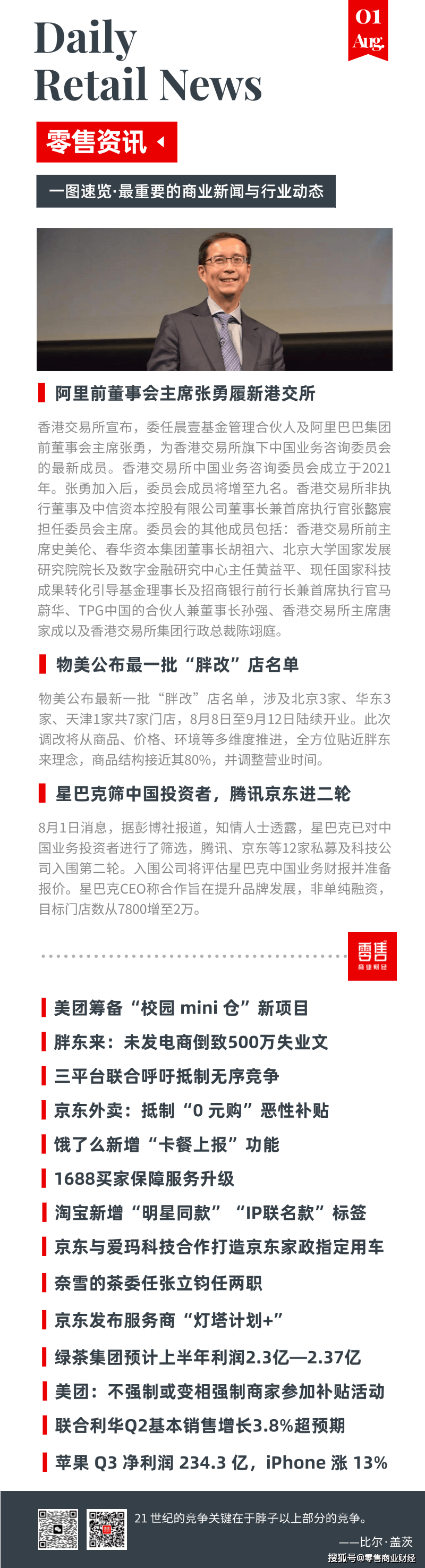
阿里前董事会主席张勇履新港交所;物美公布最一批“胖改”店名单
Sou Hu Cai Jing· 2025-08-01 12:25
Group 1 - Alibaba's former chairman Zhang Yong has been appointed as a new member of the Hong Kong Stock Exchange's China Business Advisory Committee, increasing the committee's membership to nine [6] - The committee was established in 2021 and is chaired by Zhang Jianchen, the non-executive director of the Hong Kong Stock Exchange [6][7] Group 2 - Wumart has announced the latest batch of "Fat Transformation" stores, involving seven locations across Beijing, East China, and Tianjin, set to open between August 8 and September 12 [8] - The transformation will focus on multiple dimensions including product offerings, pricing, and store environment, aiming to align closely with the Fat Donglai concept [8] Group 3 - Starbucks is reportedly screening investors for its China business, with Tencent and JD.com among the twelve companies advancing to the second round [10] - The collaboration aims to enhance brand development rather than merely seeking financing, with a target to increase store count from 7,800 to 20,000 [10] Group 4 - Meituan is preparing a new instant retail project called "Campus Mini Warehouse," targeting university campuses with small warehouses for high-frequency items [11] - The project will adopt a platform model, recruiting partners for warehouse and delivery services, prioritizing those with campus experience [11] Group 5 - The Green Tea Group expects a profit of approximately 230 million to 237 million yuan for the first half of 2025, a year-on-year increase of about 32% to 36% [22] - Adjusted net profit is anticipated to be around 247 million to 254 million yuan, reflecting a growth of 38% to 42% compared to the previous year [22] Group 6 - Unilever reported a 3.8% increase in underlying sales growth for Q2, exceeding expectations, with a slight decline in sales in the Chinese market [25] - The company is undergoing multiple transformations, including the planned spin-off of its ice cream business in November [25] Group 7 - Apple reported a net profit of $23.43 billion for Q3 2025, a 9% year-on-year increase, with revenue reaching $94.04 billion, up 9.6% [27] - iPhone revenue grew by 13% to $44.58 billion, and service revenue also increased by 13% to $27.42 billion, both exceeding market expectations [27]
蜜雪想再造一个“蜜雪
Jing Ji Guan Cha Wang· 2025-08-01 11:34
Core Insights - The article discusses the rapid expansion of the coffee brand Lucky Coffee, which aims to reach 10,000 stores by 2025, having already established 7,000 stores as of July 2023. The competitive landscape has changed significantly since the establishment of its parent company, Mixue Ice City, which also had a similar growth trajectory [1][2][3]. Expansion Strategy - Lucky Coffee has lowered the franchise entry barriers, offering a support policy that reduces the first-year franchise fee to 17,000 yuan. In key provinces and high-potential locations, franchise fees and management costs are waived. In major cities, total subsidies can reach up to 34,000 yuan per store [2][3]. - The company has doubled its market personnel to over 400 to accelerate store openings, with each market team responsible for 1,000 to 3,000 stores [2][3]. Historical Context - Lucky Coffee was incubated by Mixue Group in 2017 and became an independent brand after a full acquisition in 2020. The initial goal was to replicate the success of Mixue Ice City, which had reached 7,000 stores at that time [3][4]. - The brand's vision focuses on providing high-quality, affordable coffee globally, which led to significant price reductions for its products [3][4]. Market Positioning - Lucky Coffee initially targeted third to fifth-tier cities, filling a market gap where few chain coffee shops existed. This strategy positioned it among the top three brands in terms of store count by 2020 [7]. - The competitive landscape has intensified, with major players like Luckin Coffee and Kudi rapidly expanding their presence in the market [8][9]. Financial Performance - In 2022, Lucky Coffee experienced rapid growth, increasing its store count from 465 to 2,301, driven by the introduction of popular products and effective marketing strategies [6]. - The average single-cup price is around 7 yuan, providing a competitive edge against price wars initiated by rivals [8][9]. Supply Chain and Operational Efficiency - Lucky Coffee has adopted cost-saving measures, such as using semi-automatic coffee machines instead of more expensive fully automatic ones, which helps keep franchise costs lower [12]. - The brand benefits from a shared supply chain with Mixue Group, enhancing operational efficiency and reducing costs [15][16]. Future Outlook - The coffee market in China is expected to grow significantly, with per capita coffee consumption projected to increase. Lucky Coffee aims to leverage this growth potential to expand its store network further [15]. - Despite the competitive pressures, Lucky Coffee believes it has a strong foundation due to its backing from Mixue Group and its established supply chain [16].