
高等教育

Search documents
学科专业优化三年行动方案出炉,低空学科超常布局
2 1 Shi Ji Jing Ji Bao Dao· 2025-08-29 13:10
Core Viewpoint - A new round of adjustments and optimizations in higher education discipline and major settings has been initiated, aiming to align with technological advancements and national strategic needs [1][5]. Group 1: Recent Developments - The Ministry of Education has reported that in the past two years, 3,715 new undergraduate programs were established, while 6,638 were canceled or suspended [2][5]. - The plan includes optimizing about 20% of higher education disciplines by 2025, with a focus on new technologies and industries [1][2]. Group 2: Specific Actions and Mechanisms - The action plan outlines six major mechanisms, including coordination, supply-demand matching, and evaluation systems, alongside six major actions such as urgent discipline layout and foundational discipline enhancement [5][6]. - The urgent discipline layout action has gained attention, with several top universities applying to establish new programs in low-altitude technology and engineering [6][7]. Group 3: Regional Progress - Hunan Province plans to cancel 349 undergraduate programs and add 86, achieving an adjustment ratio of 20.6%, exceeding national requirements [3][4]. - By 2027, Hunan aims to adjust approximately 50% of its discipline settings [4]. Group 4: Innovative Educational Models - Fudan University is developing a new talent cultivation model that emphasizes project-based learning and interdisciplinary integration, moving away from traditional discipline-based education [8][9]. - The university has initiated various dual-degree programs to foster high-level interdisciplinary talents [9].
战略急需学科专业超常布局,增设29种经济社会发展急需本科专业
Xin Jing Bao· 2025-08-29 09:13
Group 1 - The Ministry of Education has added 29 urgently needed undergraduate majors, including health and medical security, intelligent audio-visual engineering, and international cruise management, resulting in a total of 1,839 new undergraduate program points while canceling 1,428 and suspending 2,220 programs that do not meet demand [1] - The Ministry aims to implement the "Education Strong Country Construction Plan Outline (2024-2035)" and the three-year action plan by supporting the establishment of "Low Altitude Technology and Engineering" as a new discipline, breaking the three-year review cycle for degree authorization [1][2] - Beijing University of Aeronautics and Astronautics (BUAA) has taken the lead in drafting guidelines for the construction of the low altitude technology and engineering discipline, prompting 120 universities nationwide to apply for the establishment of related disciplines [2] Group 2 - The Ministry emphasizes maintaining high-quality teaching standards and talent cultivation in newly established disciplines, ensuring they align with national strategic needs and have adequate support systems [2] - BUAA has implemented a systematic approach to discipline construction, integrating six colleges and seven disciplines, and has initiated a project-based teaching system for students to work on real projects from their second to fourth years [3] - The university has also planned and initiated low altitude professional textbooks and established a collaborative management system across multiple campuses to enhance the development of the low altitude sector [3]
“学术型学科博士+专业型AI硕士”,复旦大学创新双学位培养
Xin Jing Bao· 2025-08-29 09:04
Group 1 - Fudan University is implementing a dual-degree program combining academic doctoral degrees with professional AI master's degrees, focusing on ten key disciplines including philosophy, economics, and biology [1][2] - The university is optimizing its academic program structure to accelerate the development of disciplines that are urgently needed by the nation, including fields like integrated circuits and national security [1] - A new talent cultivation model called "integration of undergraduate and graduate education" will be launched in 2024, targeting urgent talent needs and emphasizing innovation capabilities [2] Group 2 - The dual-degree program aims to cultivate high-level interdisciplinary talents with a strong ability in cross-disciplinary research and practical application, leveraging AI technology [2][3] - Fudan University has established a mechanism for adjusting academic programs to better align with national strategic needs, focusing on urgent disciplines such as quantum science and technology [1][2] - The university's approach emphasizes project-based learning and interdisciplinary integration as effective methods for addressing future challenges and nurturing innovative talents [3]
粤语×游戏,华农学子让语言学习变“好玩”
Nan Fang Nong Cun Bao· 2025-08-29 08:33
Core Viewpoint - The article highlights the innovative approach taken by South China Agricultural University to teach Cantonese to children through engaging games and cultural activities, addressing the decline in Cantonese usage among the younger generation [5][10][29]. Group 1: Challenges in Cantonese Language Preservation - The increasing urbanization and the prevalence of Mandarin have led to a significant decline in the use of Cantonese among children, raising concerns about the potential loss of this dialect [7][8]. - Many young children are unable to speak Cantonese, primarily communicating in Mandarin, which reflects a broader trend of diminishing dialect usage in daily life [6][9]. Group 2: Innovative Learning Approaches - The teaching team has creatively integrated Cantonese learning into fun games and real-life scenarios, moving away from traditional, rigid language instruction methods [11][27]. - Activities such as "Cantonese Word Treasure Hunt" and "Magical Animal Storytelling" have made learning Cantonese enjoyable, allowing children to grasp commonly used words and phrases through play [12][14]. Group 3: Cultural Integration - The use of Cantonese nursery rhymes and local cultural elements in lessons has helped children connect with the language on a deeper level, making abstract cultural practices more tangible [20][21][23]. - The program emphasizes experiential learning, where children engage in activities that promote cultural understanding alongside language acquisition, fostering a sense of cultural identity [18][29]. Group 4: Community and Educational Collaboration - The initiative represents a successful collaboration between higher education institutions and local communities, aiming to create a sustainable model for cultural transmission through language education [24][31]. - Parents and community leaders have expressed strong support for the program, recognizing its role in enhancing children's cultural identity and language skills [30][32].


银杏教育上半年股东应占溢利同比减少5.95%
Zheng Quan Shi Bao Wang· 2025-08-29 05:07
在2024/2025学年,银杏学院的学生人数增至约20745名,增长0.1%。2025年6月,学院共有4332名毕业 生,就业率为86.1%。 银杏教育公布2025年上半年的中期业绩。公司上半年收益为人民币2.08亿元,同比增长3.13%;股东应 占溢利为人民币1.00亿元,同比减少5.95%,每股盈利为人民币0.20元。 收益增长主要得益于学费(人民币1.836亿元,增长1.9%)和住宿费(人民币1460万元,增长6.6%)的增加, 这归因于2024/2025学年学生人数的增加以及平均学费和住宿费的上涨。 ...
这所双非院校,首次发表Science论文
生物世界· 2025-08-29 04:29
撰文丨王聪 编辑丨王多鱼 排版丨水成文 诸如 跳跃 之类的快速动作需要将大量势能迅速转化为动能。对于 机器人系统 而言,这可能会使机载电源达到极限。 空化效应 ( Cavitation ) , 指液体在低压或高温区域形成蒸汽气泡的过程,通常具有破坏性,但其能量也可被用于驱动执行器和机器人。 在这项最新研究中,研究团队通过抑制空化的即时能量释放 (直至达到稳定性极限) ,利用其在过热液体中积累大量能量。这些高能且不稳定的 气泡会剧烈坍缩,爆发高功率和高作用力,从而驱动运动。 值得注意的是,研究团队 基于空化效应的发射机制开发了毫米级微型器件,其通过空化发射可实现 1.5 米的跳跃高度,达到 12 m/s的峰值速度 、 7.14×10⁴m/s²的加速度以及 0.64% 的能量转换效率 ;该器件还能够以 12 cm/s 的速度在水面游动。 该研究首次创新性地提出并验证了一种 基于 空化效应 的高效发射机制 ,通过精确控制液体中气泡的剧烈溃灭过程,将传统上具有破坏性的空化现 象转化为可控、高效的动力源,成功实现了微小型器件的高速跳跃、游泳和精准运动,在 智能生物技术 领域展现出重要的应用潜力。 而现在,来自 浙江农林 ...
预算8465万元!中北大学近期大批仪器采购意向
仪器信息网· 2025-08-29 03:59
电液复合空间3自由度试验台 电液复合空间3自由度试验台",这是一个结合了电气驱动和液压驱动技术,用于模拟和测试在三维空间内具有三个独 立运动自由度(例如,俯仰、偏航、滚转,或X、Y、Z方向的平移)的复杂机电液一体化设备。 详细采购清单: 摘要 : 近日,中北大学发布多批政府采购意向,仪器信息网特对其中的仪器设备品目进行梳理,统计出2项仪器设备采购意向,预算 总额达8465万元。 特别提示 微信机制调整,点击顶部"仪器信息网" → 右上方"…" → 设为 ★ 星标,否则很可能无法看到我们的推送。 近日, 中北大学发布 2 项仪器设备采购意向,预算总额达 8465万 元,涉及电感耦合等离子体发射仪、电液复合空 间3自由度试验台、飞秒激光瞬态吸收光谱系统、质谱仪、红外光谱仪、全自动高端倒置荧光显微镜、激光测速系统、 剪切散斑干涉测量系统等,预计采购时间为202 7 年 7~8 月。 部分采购仪器: 飞秒激光瞬态吸收光谱系统 飞秒激光瞬态吸收光谱系统(Femtosecond Trans ient Absorption Spectroscopy , f s-TA)是一种超快光谱技 术,用于研究物质在光激发后发生的超快动 ...

产科教融合:要从追求短期转向可持续
Zhong Guo Hua Gong Bao· 2025-08-29 03:02
Core Viewpoint - The integration of education, technology, and talent is a key strategy for enhancing national innovation capabilities and supporting industrial transformation and upgrading, although challenges remain in talent quality and research outcome efficiency [1] Group 1: Achievements in Integration - China University of Petroleum (East China) has invested over 800 million yuan to establish 13 national key research platforms and has formed partnerships with companies like Shandong Energy Group to create a dual leadership system in education [2] - The university has developed a "four-stage" training pathway and implemented order-based talent classes, enhancing the alignment between educational and industrial chains [2] - The establishment of the Jixia Academy's integration research center aims to create a new ecosystem for collaborative education, successfully implementing the "N1N integration model" to drive efficient research outcome transformation [3] Group 2: Challenges in Integration - The shift of higher education management to local authorities has weakened the direct support from industries, leading to a decline in education quality and reduced willingness for collaboration from enterprises [4] - There are discrepancies in the evaluation standards and growth paths between enterprises, which focus on economic benefits, and universities, which prioritize comprehensive student development [4] - A lack of unified quantitative assessment standards for various stakeholders in the integration process has been identified as a core challenge [4] Group 3: Future Directions - Experts emphasize the need for a long-term investment mindset in the integration process, advocating for a shift from short-term gains to sustainable development [7] - The establishment of a mutually beneficial goal between educational institutions and enterprises is crucial for aligning talent development with industry needs [7] - A collaborative effort among universities, enterprises, governments, and associations is essential to create a scientific benefit-sharing and evaluation mechanism for deeper integration [7]
热词变成课表,课表变成产业 高校注重培养适应未来变局“多面手”
Yang Shi Wang· 2025-08-28 21:28
Group 1 - The core viewpoint is that traditional academic disciplines may not meet the demands of the times, necessitating a "reshuffle" of university programs to align education with societal needs, particularly in emerging fields like artificial intelligence and low-altitude economy [1] - The Ministry of Education has initiated an extraordinary layout mechanism for urgently needed academic disciplines to quickly respond to the demand for high-level talent in national strategic areas, breaking the traditional three-year review cycle for degree authorization [2] - In the low-altitude economy sector, universities such as Tsinghua University and Beihang University have been supported to establish new disciplines, allowing for immediate enrollment to address talent shortages [4] Group 2 - A total of 29 new undergraduate programs have been added, including "International Cruise Management," "Health and Medical Security," and "Intelligent Audio-Visual Engineering," reflecting urgent societal needs [5] - In the 2024 academic year, 1,839 new undergraduate program points will be established, while 1,428 existing programs will be removed and 2,220 will cease enrollment due to misalignment with societal demands [5] - The Ministry of Education is developing a national talent supply and demand data platform, akin to a "weather forecast" for the talent market, to shift talent cultivation from experience-based decision-making to data-driven approaches [8] Group 3 - Recent trends show that new academic programs are increasingly aligned with emerging social phenomena, such as the rise of the "ice and snow economy" and the "pet economy," leading to the establishment of specialized programs like "Ice and Snow Dance Performance" and "Companion Animal" studies [13] - Traditional engineering disciplines, such as electrical, automation, and mechanical engineering, are experiencing a resurgence due to the transition to renewable energy and advanced manufacturing [14] - The development of academic programs is closely linked to local industry needs, with cities like Beijing seeing an increase in digital economy and big data programs, while provinces like Anhui focus on smart vehicle engineering to support their automotive industry [16]
大学专业三年优化启动 急需学科专业实施超常布局
Di Yi Cai Jing· 2025-08-28 16:38
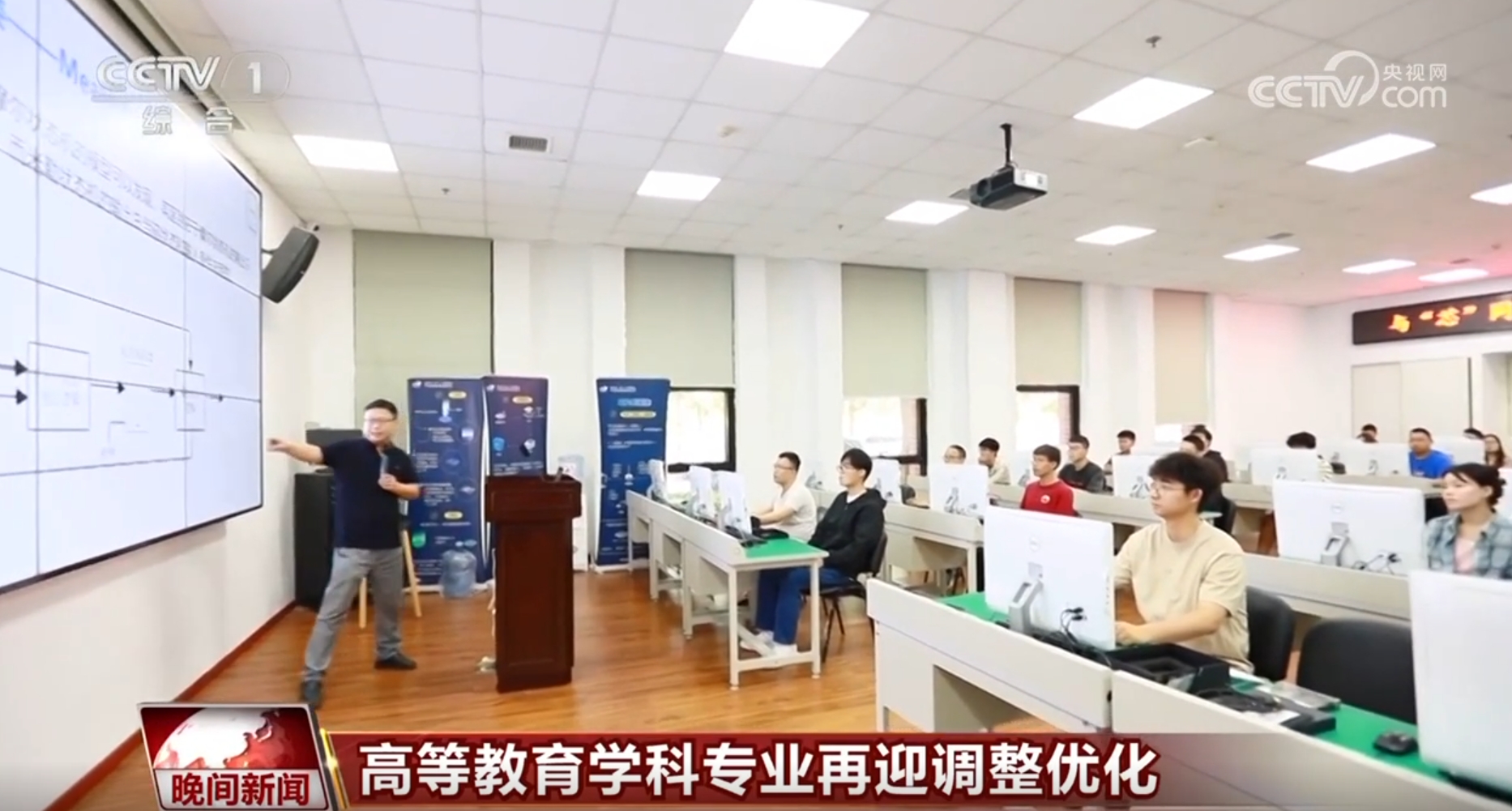
Core Insights - The recent educational reform plan emphasizes the need for interdisciplinary studies to meet the demands of emerging industries and future technologies [1][2][3] - The plan includes actions for rapid deployment of urgently needed disciplines, enhancement of foundational subjects, and optimization of existing programs [1][2] Group 1: Interdisciplinary Focus - The plan highlights the importance of interdisciplinary studies, with a specific focus on emerging fields such as integrated circuit science and national security [2][3] - Since 2021, interdisciplinary studies have been recognized as a new category in higher education, with 616 interdisciplinary programs established across 455 universities [2][3] - The establishment of the ninth division of the National Natural Science Foundation, focusing on interdisciplinary sciences, reflects the growing emphasis on this area [3] Group 2: Educational Institutions' Initiatives - Shanghai Jiao Tong University is creating a highly interdisciplinary educational environment, allowing students to combine different fields such as "electrochemistry + materials" [4] - Fudan University has launched several interdisciplinary programs in fields like integrated circuits and nanoscience, focusing on high-level talent cultivation [4][5] - Beijing University of Aeronautics and Astronautics is also expanding its offerings in emerging disciplines, particularly in low-altitude technology [5] Group 3: Artificial Intelligence Integration - The integration of artificial intelligence into educational programs is accelerating, with 3,229 new undergraduate programs established since February 2023, particularly in engineering [6][7] - The demand for AI professionals is significant, with a reported talent gap of over 5 million in China, highlighting the urgency for educational institutions to adapt [6][7] - Fudan University has introduced an "AI Big Course" to equip students with AI knowledge applicable across various fields, emphasizing the need for interdisciplinary talent [8]